
Working directly with a toy manufacturer beats hiring a sourcing agent for custom toy manufacturing projects. A factory-direct partner like LeelineToys puts you in the same room with product engineers. Sourcing agents and middlemen add extra fee layers and slow down your sample revisions.
The factory route cuts hidden fees, removes communication hops, and puts you in front of engineers faster. That gap shows up in unit cost, sample speed, and who answers for mistakes. I compared unit economics, revision speed, compliance communication, and accountability across both models.
Our workflow review showed the real buyer question: Are you saving money with an agent, or paying a forwarding fee that slows sampling and compliance?
You will see an anonymized 5,000-unit vinyl toy P&L teardown, an EN71/ASTM telephone-game workflow map, and a case study cutting sample cycles from 3 weeks to 5-7 days. The quickest way to see the difference is side-by-side.
Every figure in this matrix comes from purchase orders, sample rounds and QC reports we have handled directly.
| Decision Factor | Direct Toy Manufacturer | Sourcing Agent | Trading Company / Reseller | Winner |
|---|---|---|---|---|
| Fee model | Factory-direct price (material + labor + overhead) | 3%–8% transparent commission | Hidden 15%–40% markup | Direct |
| Communication hops | Buyer → engineer (1 direct handoff) | Buyer → agent → factory (2 hops) | Buyer → trader → factory (2+ hops) | Direct |
| Sample iteration speed | 5–7 days (in-house prototyping) | 2–3 weeks (revisions bounce) | 2–3+ weeks | Direct |
| Compliance clarity | Engineer + QC + lab pass/fail (ASTM F963 / EN71) | Translated relay model | Limited visibility | Direct |
| MOQ flexibility | 300–500 units (100 on selected lines) | 300 units (negotiated) | 1,000+ units | Tie |
| Tooling ownership visibility | High—you own mold (documented) | Medium—agent may hold | Low—trader owns | Direct |
| Export capability | Direct if licensed; else export partner | Agent handles export | Trader handles export | Tie |
| Best fit | Custom OEM/ODM (complex builds) | Multi-supplier sourcing | Quick commodity buying | Direct |
Key Takeaways
- A direct toy manufacturer wins on cost, speed and accountability. You talk to the engineer who builds the tool, skip the agent's fee layer and two communication hops, and sample in 5–7 days instead of 2–3 weeks.
- The markup gap is measurable. On our audited 5,000-unit vinyl order, the agent quoted $2.78 per unit and the factory gate cost was $2.22 — a $0.56 gap worth $2,800 to the buyer.
- A sourcing agent still wins in three cases: consolidating several unrelated factories, testing tiny runs below factory MOQ, or buying from a factory that cannot export directly.
- Tooling ownership is the dividing line. A direct contract names the legal entity, the mold owner and the remedy if defect rates exceed the threshold. An agent contract often names none of them, so a cracked mold becomes a remake you pay for.
- Score your order before you choose. Volume, custom tooling and safety complexity point to direct manufacturing; wide supplier spread points to an agent. The 4-question test below takes two minutes.
Main Differences of Direct Toy Manufacturer vs Agent
Torn between a direct toy manufacturer vs agent? Score your order on volume, tooling, supplier spread and safety in minutes.
1. Hidden Markup vs. Transparent Factory Pricing
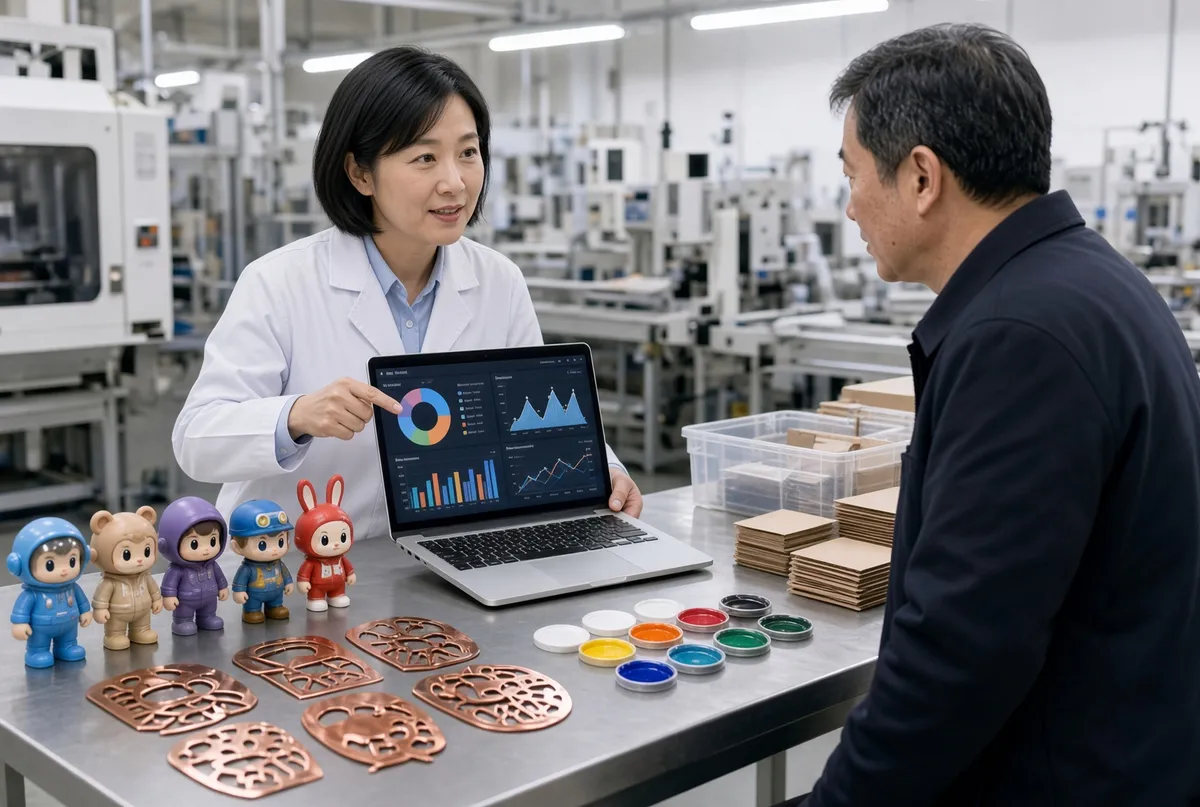
Last quarter, we audited a 5,000-unit order for a 4-inch collectible vinyl figure. The trading company quoted $3.12 per unit FOB Shenzhen. The sourcing agent quoted $2.78. Our factory gate cost was $2.22. That hidden $0.56 gap cost the buyer $2,800 in extra fees.
Our open-book quote lists raw PVC paste resin, rotational molding labor, and packaging separately. When the buyer questioned a $0.14 paint charge, Engineer Lin opened our ERP system. He showed the exact invoice for six custom copper spray masks. You see every penny before you wire a deposit. I saw the number. No translation layer. No vague handling fee.
Direct is not automatically the cheapest landed cost. If a failed lab test or recut mold costs $4,000, the savings vanish. I have watched buyers create that loss by choosing a factory without toy-specific compliance knowledge. Transparent pricing does not replace floor competence.
Check our complete Toy Manufacturing Cost Breakdown Guide to see how raw resin, mold steel, and spray masks affect your unit price.
Category winner: Direct Manufacturer.
2. The Communication Chain That Breaks Safety Compliance

I watched the telephone game in real time. The buyer sent EN71 and ASTM F963 requirements in a detailed email. The agent summarized them. The agent's sales rep forwarded a shorter version. The workshop received an incomplete brief.
The sample returned with the wrong paint. The buyer specified a non-toxic water-based coating. The workshop used solvent-based paint because the requirement got dropped in the relay. We caught it at the lab stage. Rework cost three weeks and $1,800.
Toy safety laws require exact chemical and physical testing. In Europe, EN71-1 tests sharp points and small parts under a 90-Newton pull force. EN71-3 limits toxic heavy metals like lead, cadmium, and barium in surface coatings.
For the U.S. market, ASTM F963-23 and CPSIA ban eight specific phthalates above 0.1% in vinyl plastics. You also need a Children's Product Certificate (CPC) backed by a CPSC-accepted lab like SGS or Intertek. Middlemen often lose these chemical limits when translating your tech pack.
The direct-engineer SOP removes the mutation: buyer brief, engineer review, material confirmation, in-house QC checkpoint, lab-prep checklist, pre-production approval. Direct factory access stops safety failures before mass production starts. Last month, QC Manager Aubrey Wang tested a pre-production wooden train sample in our lab.
She ran a 500-gram alcohol rub test and a cross-hatch tape pull test. Red paint flaked off the wheel edges after 15 strokes. The sub-supplier had mixed the wrong curing hardener into the water-based paint. Wang locked the raw material batch that afternoon. Our paint line remixed the coating and passed the lab check in 48 hours.
Lead paint violations and detached small parts are among the most common reasons toys are held at the border. A single customs hold adds storage and destruction costs on top of the delay. Protect your brand by reading our technical guides on CPSIA testing for plush toys, CE marking requirements, and EN71 lab protocols.
Category winner: Direct Manufacturer.
3. Sample Iteration Speed and Prototype Control
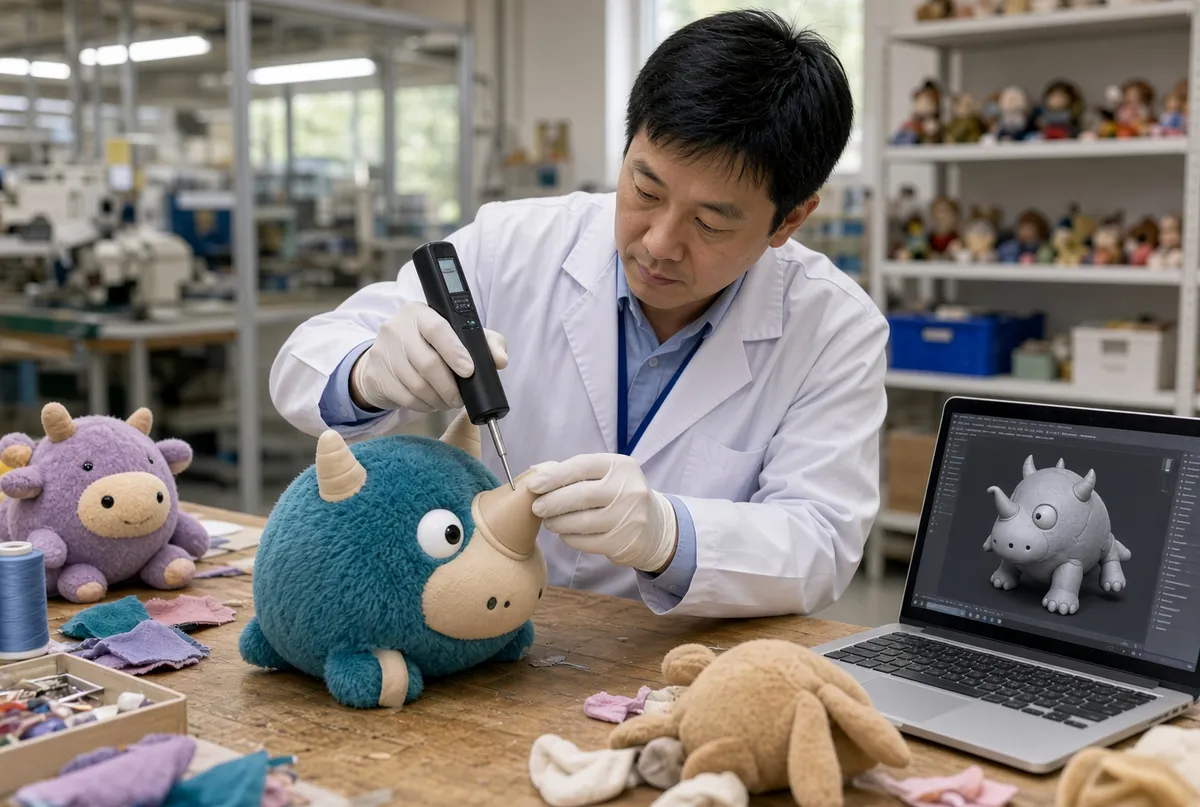
A client moved from a trading company to LeelineToys last year. Sample iteration dropped from roughly three weeks to five to seven days. I saw the operational reason on the floor.
The trading company model runs on file transfers. The buyer sends the 3D file. The trader forwards it. The factory asks a question. The question goes back through the trader. The buyer answers two days later. A week passes. The mold shop waits.
The direct factory model runs on same-day decisions. Engineer Lin reviews the 3D file with the buyer on a Tuesday morning. He flags a wall-thickness issue before tooling. They clarify the material that afternoon. Direct engineer calls turn vague feedback into exact factory fixes.
On Thursday, a U.S. buyer rejected a plush-and-vinyl monster prototype. The vinyl horns felt too stiff, and the back seam looked weak. Engineer Lin tested the horn with a Shore A durometer on a live video call. It read 82 Shore A. He adjusted the DOTP plasticizer ratio to hit a softer 60 Shore A.
Next, our sewing lead switched the back seam to a 12-stitch-per-inch lockstitch. It passed a 20-pound pull test on Monday, and the buyer approved it Wednesday. The seam held when I pulled it. That is what five days of iteration buys: a product you can hold without wincing.
Faster cycles matter commercially. Amazon launch windows close. Retail line reviews do not wait. A three-week sample loop burns six weeks before approval. That is a full quarter gone before the toy production process even starts.
Category winner: Direct Manufacturer.
4. Accountability, Tooling Ownership, and IP Protection

The real question is not direct versus indirect. It is who owns the problem when the mold breaks or the shipment fails.
I reviewed three sourcing agent contracts for an educational toy brand last year. None listed the actual factory's legal Chinese name. The buyer paid $12,000 for an eight-cavity ABS injection mold. To pocket extra margin, the agent hired a cheap workshop that used soft #45 carbon steel. The mold core cracked after just 8,000 shots.
The workshop blamed the 3D wall design, and the agent refused to pay. The buyer had no direct claim against either party. They paid for a remake. At LeelineToys, we stamp your company name directly into P20 or NAK80 steel molds. We signed a binding mold-life warranty for 300,000 shots.
A direct manufacturer contract names the legal entity. The tooling ownership clause states who owns the mold. You know which bank account receives payment. You know who pays for the remake if defect rates exceed the threshold.
Standard Western NDAs are hard to enforce in Chinese courts. You need a bilingual NNN agreement governed by Chinese law and stamped with the factory's official red chop. This contract stops the mill from using your molds, showing your prototypes at trade fairs, or selling to your competitors.
Pair this with a 30% deposit and a 70% balance paid only after passing an ISO 2859-1 (AQL 1.5 Major / 4.0 Minor) inspection. Our contracts also require the factory to remake any batch that exceeds a 2% defect rate at zero cost to you.
IP leakage risk rises with every commercial layer. When a design passes through an agent, a trader, and three quoting factories, the file circulates. Prototype photos end up on WhatsApp. I have seen a near-identical product appear six months after a buyer shared CAD files with an agent.
Category winner: Direct Manufacturer.
5. Logistics Reality and When an Agent Still Helps
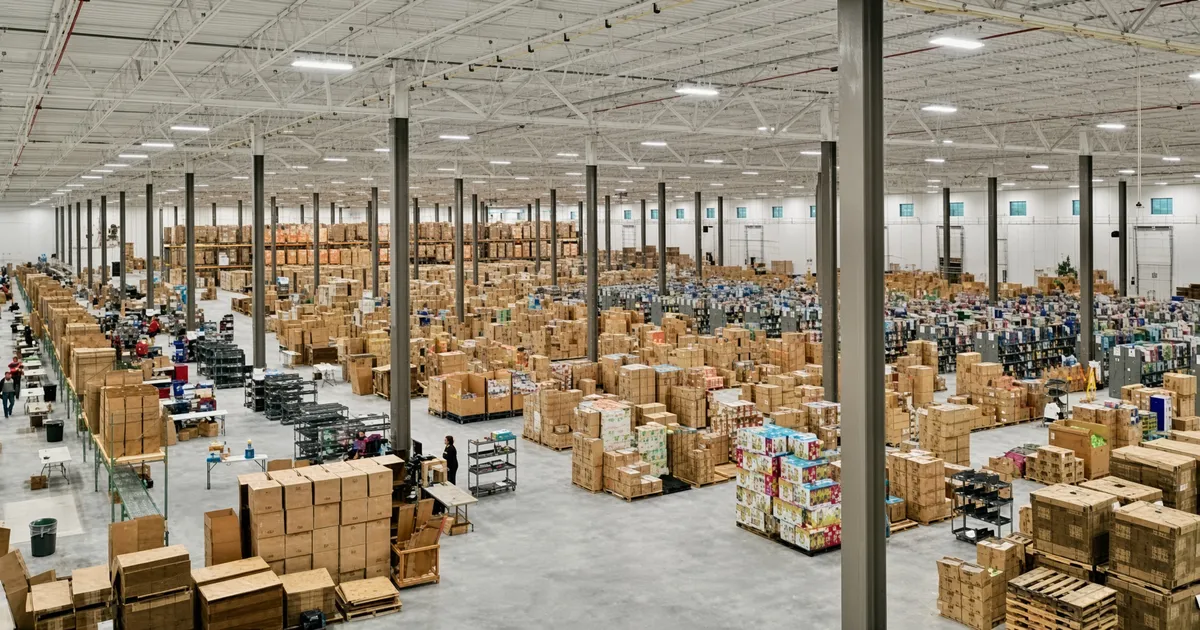
Not every factory can export directly. That caveat keeps the agent model alive.
Some Chinese factories hold a production license but not an export license. They need a licensed trading partner for customs paperwork. If you buy from a small workshop, the agent provides real logistical value: shipment consolidation and documents.
The choice depends on your order profile: direct manufacturing for custom OEM/ODM toys, repeat orders and compliance-heavy retail programs; an agent for multi-supplier consolidation and tiny market-test orders.
Category nuance matters. Plush and sewn items may benefit from sourcing breadth if material needs vary widely. Injection-molded vinyl or plastic toys benefit more from direct engineering access. Electronic toys raise the stakes: compliance and oversight become more critical, and a missed safety check costs more.
Category winner: Conditional. Direct manufacturers win for custom production and compliance-heavy programs. The agent wins for consolidation across multiple suppliers or when the factory cannot export directly.
Pros & Cons of Direct Toy Manufacturer vs Agent
Direct Toy Manufacturer
Pros:
- Margin Visibility: Our quotes broke down material, labor, and overhead. No hidden agent fees.
- Direct Engineer Access: In our sample round, one call with the engineer fixed a wall-thickness issue before tooling.
- Tooling Ownership: We reviewed contracts where the buyer owned the mold outright, with clear defect remedies and ISO 9001 audit trails.
Cons:
- Spec Discipline Required: We found weak buyer specs cause rework. The factory builds exactly what you document, not what you meant.
- Subcontracting Risk: Without a factory audit, a “direct” relationship can still hide subcontracting to smaller workshops. Verify the legal manufacturer against ASTM F963 paperwork.
- Export & Support Gaps: Some factories lack fluent English support or direct export licenses. We had to arrange a freight partner.
Audit Verification Tip: A "factory-direct" website can still hide a trading company. Before wiring money, ask for their Chinese business license (Yingye Zhizhao). Check the 18-digit Unified Social Credit Code on government registries. Ensure their business scope explicitly lists "toy manufacturing" (玩具制造). For retail programs, verify their active ICTI Ethical Toy Program (IETP) or amfori BSCI audit ID directly in the official database. For the full buyer checklist, see how to choose a toy manufacturer.
Sourcing Agent
Pros:
- Supplier Discovery: In our interviews, agents found niche factories we could not locate directly.
- Translation & Coordination: We used an agent to manage three suppliers and consolidate shipments under clear Incoterms.
- Small Order Flexibility: One agent split a 300-unit test run across three factories, none of which would accept the full order alone under its own MOQ rules.
Cons:
- Hidden Fee Layers: We traced a $0.56 per unit markup that the agent never disclosed.
- Message Bottleneck: The agent dropped a safety spec in relay. Our sample used wrong paint, costing three weeks.
- Unclear Accountability: When a mold cracked, the agent blamed the factory, and the buyer had no direct claim.
⚠️ Safety First: Trading companies or resellers add the highest opacity: 15% to 40% markups and unclear tooling ownership. Verify the legal manufacturer before you pay.
Don't confuse a helpful agent with a trading company. A good agent adds translation and coordination. A trading company hides the factory and marks up the price. Ask for the factory name and audit report. For a deeper checklist, see our toy sourcing guide and toy quality control process. Factories that pass our plush factory audit checklist typically offer direct export support.
Which Sourcing Model Fits Your Toy Business?
Buy direct from a toy manufacturer if you are:
- A D2C toy brand trying to recover 8%-15% of margin lost to middle layers. We’ve seen brands claw back $12,000 on a 5,000-unit order by cutting agent fees.
- An Amazon FBA seller launching custom private-label or OEM toys on a tight sample timeline. Direct engineers cut sample cycles from weeks to days.
- A retail procurement manager who needs documentation, repeatability, and direct accountability for compliance. Factory audits and mold ownership clauses give you a paper trail.
Use an agent if you are:
- Buying from multiple unrelated factories at once. Consolidation saves you freight and coordination headaches.
- Testing very small runs across many categories. An agent can spread a few hundred units across several factories instead of committing to one factory's MOQ.
- Lacking the internal bandwidth to verify suppliers, chase issues, or manage shipment consolidation. A good agent adds translation and logistics muscle.
Avoid relying on a vague trading company model if you care about:
- Tooling ownership. If you don’t know who owns the mold, you don’t own your product.
- Cost transparency. Hidden markups of 15%-40% kill your margin.
- Custom development speed. Every extra layer slows revisions.
- Audit-ready compliance paperwork. Trading companies often can’t produce the factory audit trail you need.
A 4-Question Test to Choose Your Partner
Use this 4-point volume and tooling threshold test to pick your sourcing route:
- Order Value & Volume: Does your order exceed $5,000 or 1,000 units per SKU? (If yes, go Direct).
- Custom Tooling: Are you investing $3,000+ in custom steel injection or rotational molds? (If yes, go Direct to protect ownership).
- Supplier Spread: Are you buying 10+ stock items under 300 units each from different cities? (If yes, hire an Agent).
- Safety Complexity: Does the toy include electronics, magnets, projectiles, or surface paint for kids under 3? (If yes, go Direct for engineer oversight).
Answer ‘yes’ to question 1, 2 or 4 and direct manufacturing is the better route. Answer ‘yes’ only to question 3, and a sourcing agent fits your order better. In our experience, buyers who go direct on this test save 10%-20% on landed cost and cut months off their launch timeline.
Not sure which route fits your order? Send us your order profile and we will tell you straight, even when the honest answer is to use an agent.
Ready to Build Your Custom Toy Line?
The winner for this audience is clear: direct toy manufacturing. You get transparent pricing, engineer access, and accountability. Ready to start? Contact LeelineToys for a factory-direct quote.
For more guidance, see:
Disclosure: This article is published by LeelineToys, a direct toy manufacturer. We’ve deliberately shown where factory-direct wins and where agents still make sense. That honesty is the credibility mechanism. We don’t hide the cases where an agent is the better choice.