
Recently, I visited our partner factory in Shenzhen and audited a ready-to-ship order of 5,000 custom plush bears on their inspection floor. We rigorously vet external suppliers to protect your brand. The client's holiday launch, final payment release, and defense against retailer chargebacks depended on passing the AQL 2.5 Standards.
When mitigating toy sourcing risks, the biggest threat is an invisible defect rate destroying your margins upon arrival. Unchecked manufacturing defects drive most consumer product recalls, according to data from the Consumer Product Safety Commission.
Supply chain managers often misinterpret this standard. AQL (Acceptable Quality Limit) is a statistical sampling decision rule, not a guarantee of perfection. It dictates exactly how many defects you tolerate before rejecting a production lot. Ignore this reality during your toy supply chain management, and you invite disaster.
We explain AQL limits and defect classifications below. In this guide, I break down one 5,000-unit plush inspection workflow, include a Q&A with Lead QA Manager Jingjing Lu, and provide a downloadable LeelineToys QC Protocol PDF for lot sizes from 500 to 10,000 units.
We act as your independent sourcing team, visiting external supplier factories to audit their production lines and pulling raw data directly from their floors to ensure unbiased quality control for your brand.For teams that need a factory-side review workflow immediately, contact our engineers.
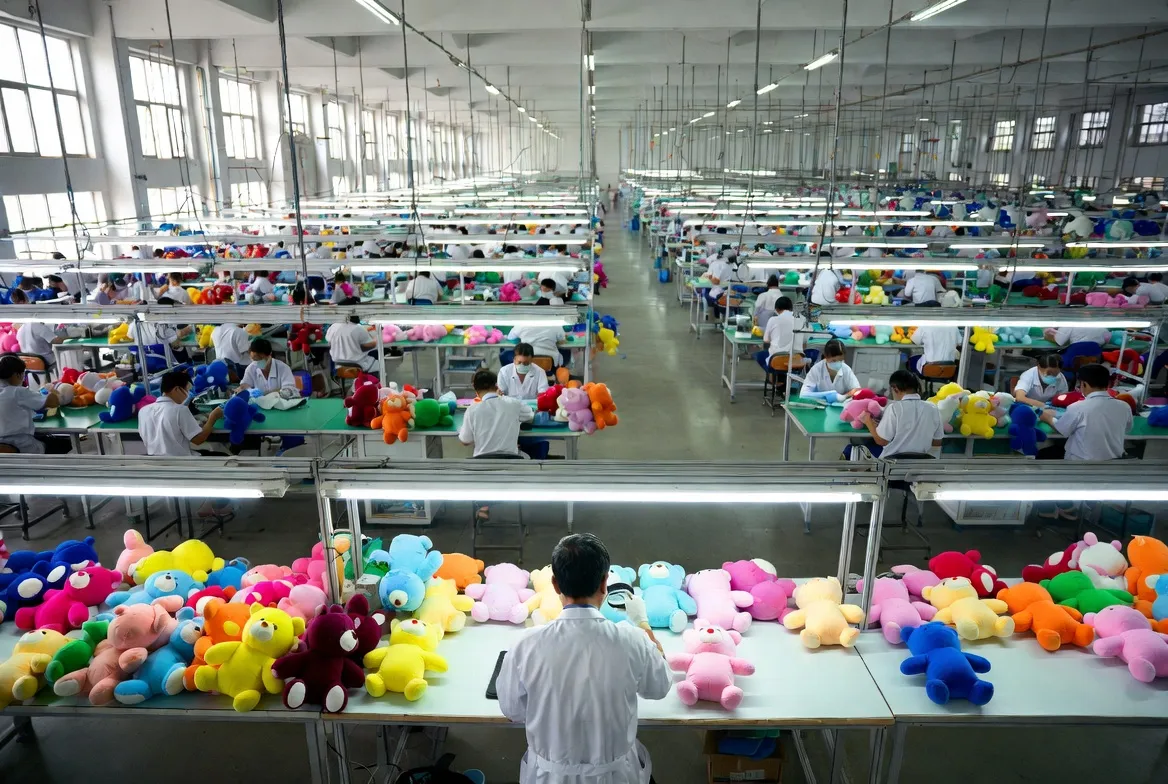
What are AQL 2.5 Standards?

In manufacturing, AQL 2.5 Standards (Acceptable Quality Limit) dictate the exact number of defective units you will tolerate in a production batch before rejecting the entire order. According to the American Society for Quality (ASQ), AQL is a strict statistical sampling method, not a random guess.
Think of AQL like tasting soup. A chef tastes one spoonful to judge a 10-gallon pot. They do not drink the whole pot. In custom toy manufacturing, we test a calculated sample to judge a massive lot quickly and safely.
Clients often ask me, "Does AQL 2.5 mean exactly 2.5% of my shipment will arrive defective?" No. In my years managing factory floors, I find this is the most dangerous misunderstanding in sourcing. AQL 2.5 is a pass/fail rule used to judge a sample size. It does not dictate the final defect rate of your entire container.
During our toy production process, we classify flaws using the standard consumer-goods setup: Critical 0, Major 2.5, Minor 4.0.
- Critical defects (AQL 0): Zero tolerance. These create immediate safety or legal risks. Last Tuesday, Quality Control Manager James Ha spotted a sharp metal wire protruding from a plush toy arm. We stopped the assembly line instantly.
- Major defects (AQL 2.5): These ruin functionality or saleability. A jammed zipper on a plush backpack falls here.
- Minor defects (AQL 4.0): Small cosmetic issues that do not materially affect use. An uneven internal care tag is a minor defect.
Our QA team follows a strict mathematical workflow. First, the total lot size determines the general inspection level. That level gives us a specific code letter. Finally, that letter dictates the exact sample size and the precise acceptance or rejection numbers.
AQL belongs everywhere in your timeline. We use it during pre-production alignment, inline checks, and the final random inspection. When you research how to find a toy manufacturer or evaluate a toy ODM/OEM partner, secure your baseline immediately. Put this exact phrase in your initial RFQ and Purchase Order: "Mass production will be audited under strict AQL 2.5 standards."
🌍 Real-World Context: I inspect thousands of units weekly, and I can confirm that setting clear AQL expectations in your first contract prevents 90% of future quality disputes.
The Mechanics of AQL: How We Calculate the Sample
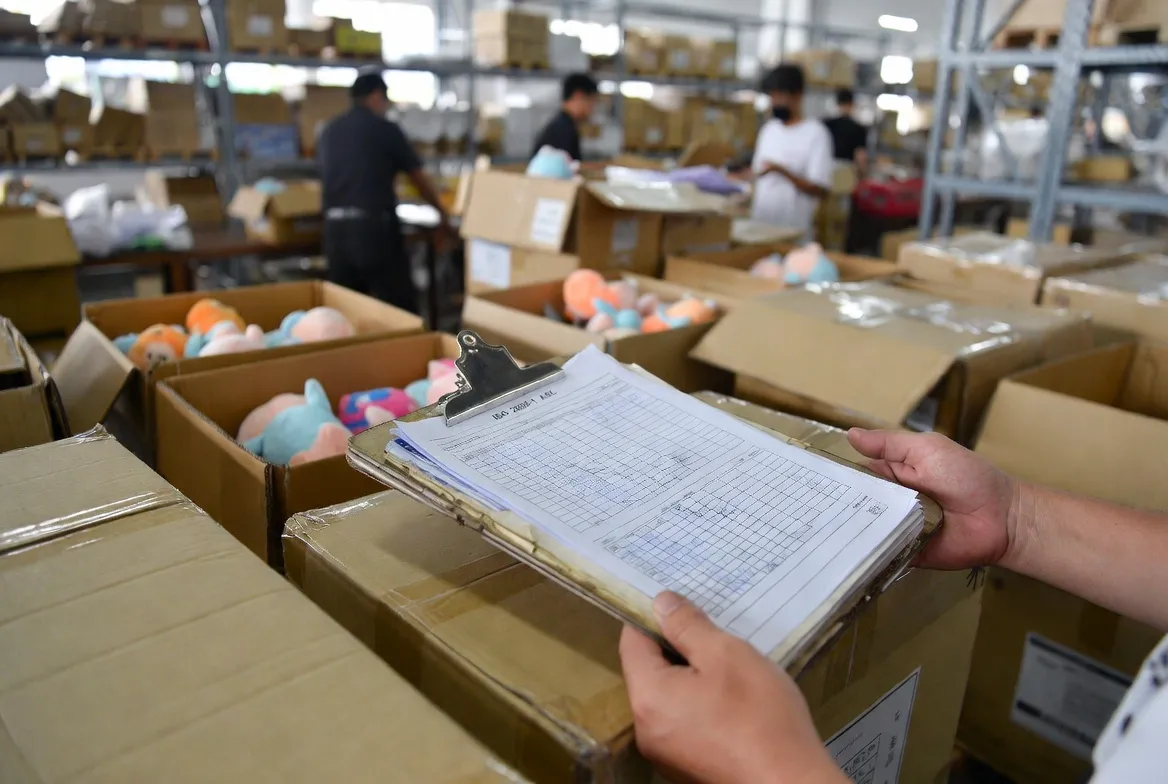
Our team visits multiple supplier facilities every week, spending hours tearing apart plush samples, collecting raw data directly from assembly lines, and holding every vendor accountable.
We calibrate our own 90N pull-testers and collect raw data directly from the assembly lines. Calculating the AQL 2.5 Standards requires a strict mathematical workflow. We never grab random toys from a box. We follow a precise sequence to reach an objective pass or fail decision.
Here is how we trace the signal from a massive production run down to a final outcome:
- Confirm the lot size: We count the total finished units sitting in the staging area.
- Choose the inspection level: We select General Inspection Level II, the baseline requirement for consumer goods.
- Find the code letter: We map the lot size and inspection level to a specific letter using the ISO 2859-1 inspection standard table.
- Pull the sample size: We use the code letter to dictate the exact number of units to extract from the cartons.
- Apply the defect limits: We establish the Accept and Reject thresholds for Critical (0), Major (2.5), and Minor (4.0) defects.
Let us review a concrete numeric example you can reuse.
Imagine you order a 4,000-unit lot. First, we reference the ISO table. For 4,000 units under General Level II, we locate Code Letter L. Code L dictates a sample size of 200 units. Under a Major AQL 2.5 standard, the table sets an acceptance number of 10 and a rejection number of 11.
If we find 10 major defects in those 200 units, the shipment passes. If we find 11, the entire 4,000-unit lot fails and requires immediate rework.
Plush Toy Defect Classification Matrix
Numbers mean nothing without context. Inspectors must compare every single unit against your approved Golden Sample and written specifications. Do not rely on the factory to define quality. We use a plush-specific matrix to classify defects accurately. This framework protects Amazon sellers scaling volume, specialty baby brands requiring strict toy safety standards, and promotional buyers ordering rapid merchandise.
| Defect | Why it matters | Class | Typical Action |
|---|---|---|---|
| Detached plastic eyes/noses | Creates a fatal choking hazard for infants. | Critical | Reject a lot immediately. Re-test all eye fixtures. |
| Failed 90N pull test | Checks whether a child can detach a small part. | Critical | Halt line. Investigate machine tension. |
| Open seams / Exposed stuffing | Seam strength prevents stuffing exposure. | Major | Sort and re-sew defective units. |
| Severe shape distortion | Ruins the cosmetic appeal of the character. | Major | Rework stuffing distribution. |
| Thread tails over 1cm | Looks messy without impacting structural integrity. | Minor | Trim excess threads immediately. |
| Slight color shade variation | Shows cosmetic inconsistency across batches. | Minor | Adjust future fabric dyeing batches. |
Our Lead QA Manager, Jingjing Lu, audits every external partner. She enforces strict quality gates before any shipment leaves China. Jingjing judges every plush toy by the end user experience.
Q: How do you distinguish a major defect from a minor defect on the floor?
Jingjing Lu: "I evaluate the end user experience. If an Amazon buyer requests a refund, it counts as a major defect. Broken zippers or upside-down logos represent major defects. A slight thread tail constitutes a minor defect because the toy still functions perfectly."
Q: Why is stitch integrity a major defect while a thread tail is minor?
Jingjing Lu: "Seam strength prevents stuffing exposure. If a seam opens on a custom weighted stuffed animal, the internal glass beads fall out. That ruins the toy completely. A thread tail just requires a quick scissor snip."
Q: What defects automatically trigger an escalation?
Jingjing Lu: "Sharp points or choking hazards stop production immediately. If a metal detector finds a broken needle, I halt the sample count. Flammability controls ignition risk. A failed fabric burn test triggers an instant release pause."
Shipping toys to the US or Europe demands zero critical defects. Passing these strict checks ensures CPSIA compliance for plush toys and secures the proper CE Marking for Toys or EN71 compliance.
Real-World Inspection Log: Auditing 5,000 Plush Units Under AQL 2.5
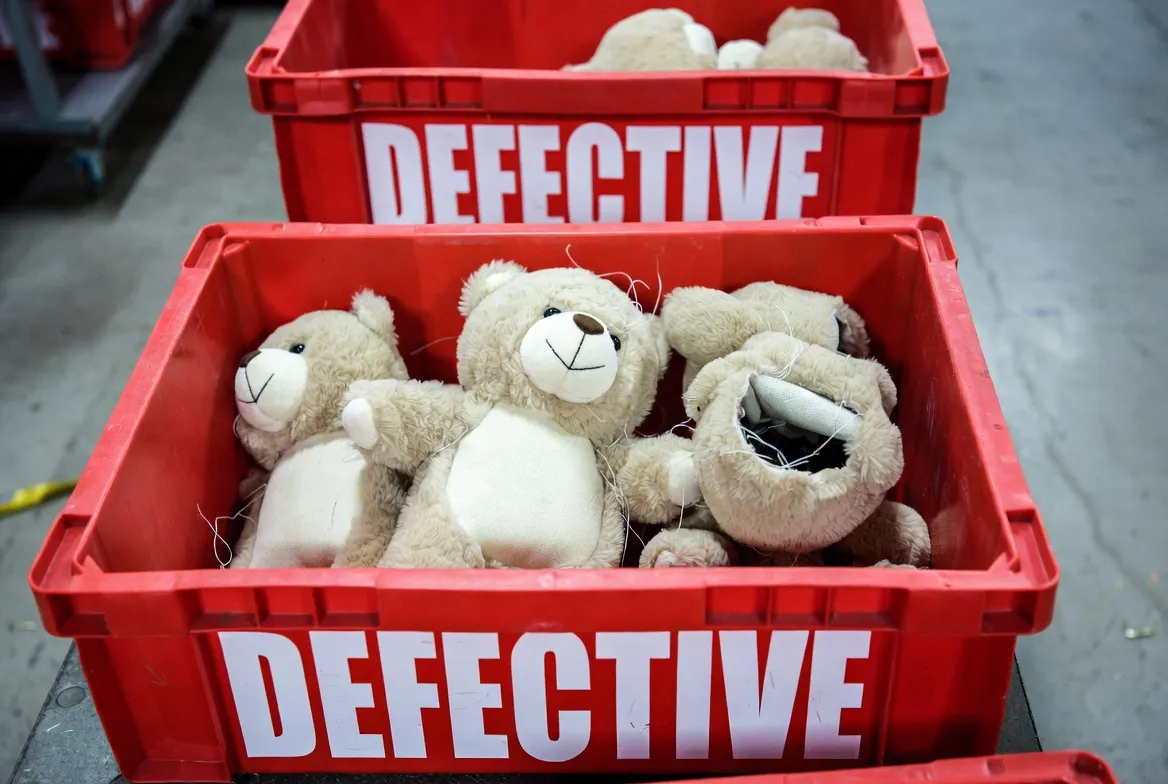
We pull raw data directly from field inspections to demonstrate this process in action. Our team runs a standardized plush factory audit checklist for every production run.
- Shipment Overview: 8-inch custom plush bears for a UK regional retailer.
- Total Lot Size: 5,000 units.
- Inspection Level: General Level II.
- Code Letter: L.
- Sample Size: 200 units.
- Cartons Opened: 15 random cartons selected from the staging area.
The UK government toy safety guidelines mandate strict structural integrity. We test seam tension aggressively during extraction.
The Defect Tally:
- Critical Defects: 0 (Allowed: 0).
- Major Defects: 6 (Allowed: 10). We documented 4 units with exposed stuffing and 2 units with misaligned embroidery.
- Minor Defects: 12 (Allowed: 14). We found untrimmed thread tails and two wrinkled care labels.
Pass/Fail Decision: PASS.
Corrective Action: The lot passed the AQL 2.5 threshold, but we isolated the 6 major defect units. Operators reinforced the back-stitching on the affected seams at the Juki sewing stations before returning the units to the cartons.
🚨 Escalation Note: If inspectors find a critical defect or spot a systemic pattern, they pause the release immediately. We escalate the sampling scope instead of mechanically finishing the count.
📥 Download the LeelineToys QC Protocol PDF
Implement this exact workflow on your own factory floor. Download our complete internal QC manual to standardize your inspections. The document includes:
- Step-by-step sample size lookup tables.
- Our master plush defect checklist.
- Carton marking and packaging checks.
- Our factory reinspection protocol.
Click here to request the PDF from our engineering team.
Value Analysis for Commercial Readers

During my margin audits for an Australian importer, I proved AQL 2.5 Standards are not QA formalities: they are strict cost-control tools. You secure your profits on the factory floor.
You must calculate your true landed costs early. Anticipate the complete Australian import framework. Factor in ex-factory prices, sea freight, and 10% GST. Secure your ChAFTA certificates to claim preferential customs duties legally.
Many buyers miss early compliance costs. I always build [accredited AS/NZS ISO 8124 lab testing]([Link to accredited lab or standards body for AS/NZS ISO 8124 testing scope]) into initial margins to prevent surprise fees when you import toys from China.
Eliminates Expensive Shipment Surprises
AQL sets a hard acceptance rule before you release final payment. Last month, I withheld a $40,000 transfer because our AQL inspection caught a 15% seam-failure rate on a nylon plush order. We found the issue before cartons boarded the vessel. The factory reworked the goods on their dime, saving the client from shipping unsellable inventory.
Creates a Common Manufacturing Language
This framework standardizes defect terminology. It aligns buyers, engineers, and inspectors. We never debate quality standards with factory managers. I point directly to the ISO inspection chart. The statistical math makes the final decision. This strict system forces suppliers to meet your expectations. The math decides the outcome.
Protects Your Landed Margin
Shipping defective merchandise artificially inflates your plush toy landed cost Australia. Every broken unit absorbs freight and taxes, actively stealing margin from perfectly good inventory.
📈 ROI Check: The Hidden Cost of Defects Imagine landing 1,000 toys. The ex-factory cost is $3. Freight, GST, and handling add $2, creating a $5 baseline landed cost.
If 20% arrive defective, you still paid $400 in landing fees on garbage. Your effective cost for the 800 sellable units instantly jumps to $6.25. AQL catches this liability in China, protecting your long-term ROI when you sell toys on Amazon.
The Honest Limitations of AQL 2.5
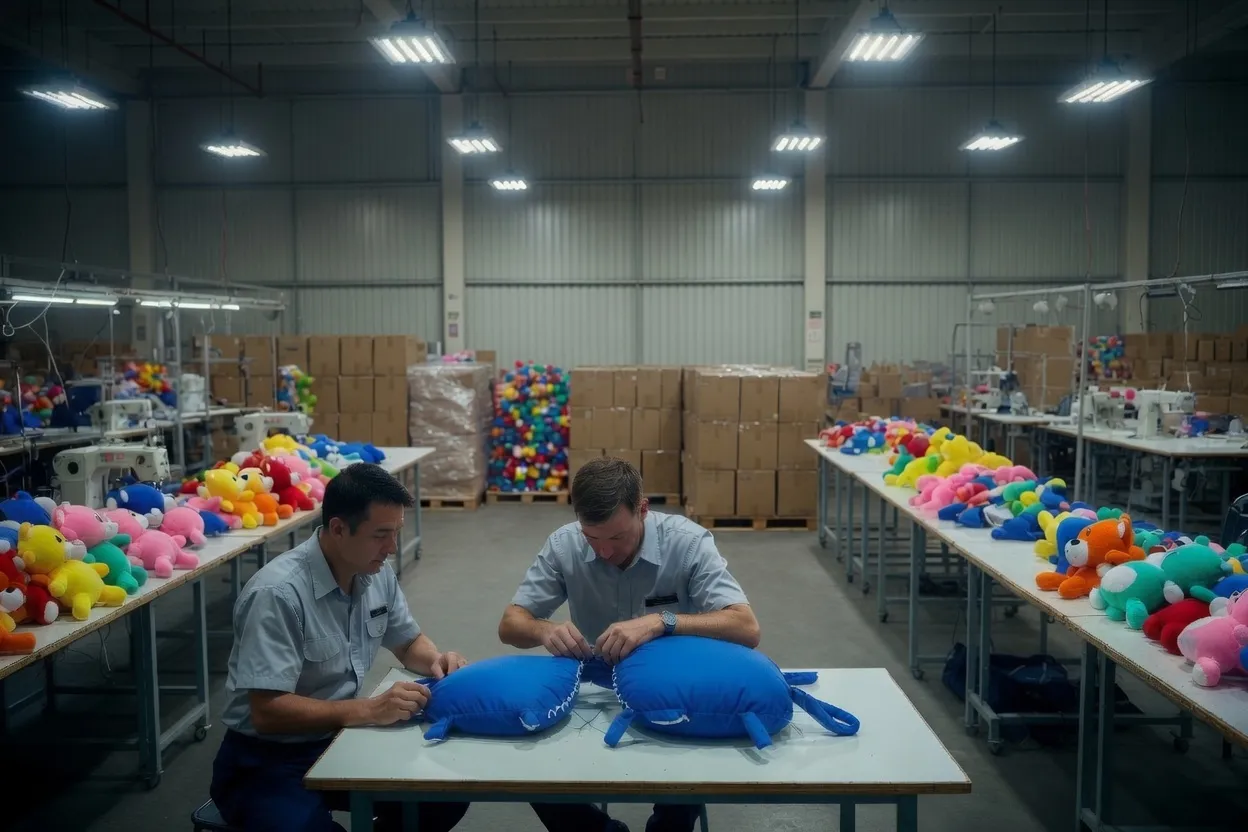
We rely on AQL 2.5 Standards daily, but we must confront a harsh reality. Passing an AQL inspection does not prove your entire shipment is defect-free. It only proves a random sample met a statistical minimum. Over-trusting this metric exposes buyers to severe toy sourcing risks.
Vague Definitions Miss Systemic Flaws
Without strict definitions, factories interpret flaws generously. Random sampling also misses clustered defects. Last quarter, a client rejected a batch from an eco-friendly toy manufacturer. We found the stuffing lacked density.
I confronted the external supplier. Their floor manager, Mr. Chen, checked the hopper. He admitted the machine jammed often. Only one out of ten bears felt light. A random sample completely misses this hidden pattern. A random sample easily skips this specific pattern.
Visual Inspections Ignore Chemical Compliance
A shipment can pass a visual AQL audit but fail Australian safety laws. Inspectors do not test for banned chemicals. The ACCC enforces strict AS/NZS ISO 8124 standards regarding physical and chemical safety.
We sent a flawless PVC toy to an accredited testing lab. The item failed strict chemical toxicity limits. You must demand independent lab testing weeks before the final inspection. Visual checks simply cannot spot toxic materials.
⚠️ Critical Warning: Visual AQL checks never satisfy legal toxicity requirements.
Bulky Economics and Customs Penalties
Bulky plush toys destroy your profit margins. Freight costs easily exceed the product value. You must optimize the carton CBM. Always validate your packing lists before booking a vessel.
Furthermore, landed-cost models break instantly without valid ChAFTA documents, as noted in our toy sourcing guide. Last month, a client paid 5% extra duty because they booked a vessel before validating their Certificate of Origin.
⚖️ The Trade-off: Cheap unit prices often hide crippling volumetric freight costs.
🛡️ Mitigation: Use this pre-shipment checklist to protect margins. When evaluating how to choose a toy manufacturer, enforce these terms in your PO:
- Define plush-specific major versus minor defects.
- Approve a physical golden sample before production.
- Require inline inspections for orders over 1,000 units.
- Budget for ISO lab testing before shipping.
- Validate destination fees and GST basis with an Australian customs broker.
The Verdict: Secure Your Margins on the Factory Floor
AQL 2.5 never guarantees perfection. We use this strict mathematical rule to approve or reject shipments. Based on my experience auditing thousands of units, the ISO table means nothing without strict, written defect definitions.
For Australian importers, letting a failed batch ship destroys your margins. Defective units still absorb freight, GST, duty, testing, and local charges, devastating your final landed cost.
While enforcing AQL 2.5 requires upfront friction to define your standards, it is the only viable defense against container-level failure. As global supply chains tighten, catching defects before export is a mandatory survival tactic. We recommend a non-negotiable operating model.
You must lock in written defect criteria, approve a physical golden sample, enforce AQL 2.5 inspections, mandate compliance testing, and finalize your landed-cost planning. If you accept vague "good enough" promises from suppliers, look elsewhere. If you demand precision, build this system.
You have two practical next steps. If you want our engineers to manage your quality control directly on the factory floor, use our consultation service.
Disclaimer: I am not paid by any testing lab or third-party manufacturer to promote these findings. This guide is designed as an operational education resource. Final testing, tariff treatment, and customs clearance should be confirmed with accredited labs and licensed customs professionals.