How an EU Buyer Passed EN71 for Plush Toys in 30 Days?
See how one EU buyer passed EN71 for plush toys in a remarkable 30 days. Pre-submission audits fixed seams and materials before the lab. Get the full method now.

October 15, 2026
30
random units opened in the floor audit
1st
official lab submission passed
0
at-risk material lots shipped
Data verified from factory production records & client audits
Three at-risk checkpoints closed before the lab — a first-pass EN71 certificate in 30 days.
EU Buyer Passed EN71 for Plush Toys in 30 days. Our EN71 compliance workflow kept the launch alive for Market Plush, a Spain-based plush manufacturer and distributor supplying European retail.
I reviewed the batch file first. Senior Quality Manager pulled the mechanical test data and flagged three at-risk checkpoints: mechanical pull-test performance, seam anchoring, and heavy metals migration.
A failed test meant disaster. Retail buyers would reject the shipment. Customs would hold the container. Market Plush faced thousands of dollars in lost holiday sales.
Our toy safety standards workflow activated the EN71 testing standards for plush toys. Those pillars are mechanical and physical toy testing (EN71 1), flammability (EN71 2), and heavy metals migration (EN71 3). On the floor, the sewing line leader reworked the plush construction, and the lab coordinator fast-tracked third-party testing.
Many importers misunderstand CE marking. It marks the end of a compliance workflow, not a certificate by itself. The EU Toy Safety Directive sets the legal framework. Passing EN71 supplies the evidence trail. We aligned production records and documentation for CE-marking readiness.
- Final EN71 pass delivered in 30 days.
- Three at-risk checkpoints closed before shipment.
- Documentation package aligned for CE-marking readiness.
Need a similar compliance turnaround? Contact LeelineToys to review your plush batch.
Who We Worked With
Client Profile
Market Plush
Spain-based plush manufacturer and distributor supplying European retail
Market Plush is a Spain-based plush manufacturer and distributor, founded in 2018, supplying retailers, gift shops and wholesale platforms across Europe. For a new European launch they needed a plush batch to clear a full EN71 pass within 30 days. The batch carried loose back-gusset seams, detachable button eyes, and a magenta fabric lot sitting inside the heavy-metals warning band. A failed EN71 submission would have blocked distribution, stalled the container at customs, and cost the holiday window.
View Market Plush on LinkedInThe Challenge
The Challenge
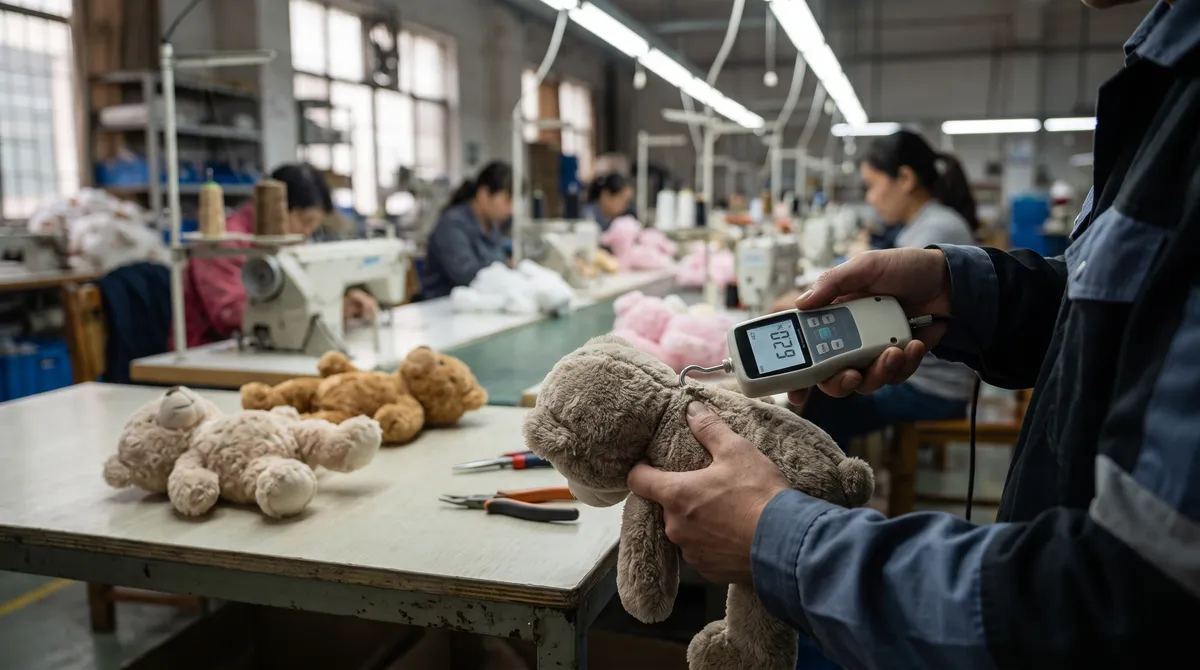
Market Plush needed EU distribution. First shipment required a full EN71 pass within 30 days. This was not a routine testing job. I reviewed the batch file first. Senior Quality Manager pulled the floor audit report and flagged three at-risk checkpoints.
Mechanical and physical toy testing EN71 1 was the first technical gate. The batch showed loose seams along the back gusset. Seam allowance checkpoints fell below factory standard. Under pull stress, the fabric could open.
Detachable button eyes and a stitched bow also failed the pull-test pre-check. A child could pull them free. Stuffing containment checks showed fiber could escape through a loose seam. That risk triggered a choking and suffocation concern.
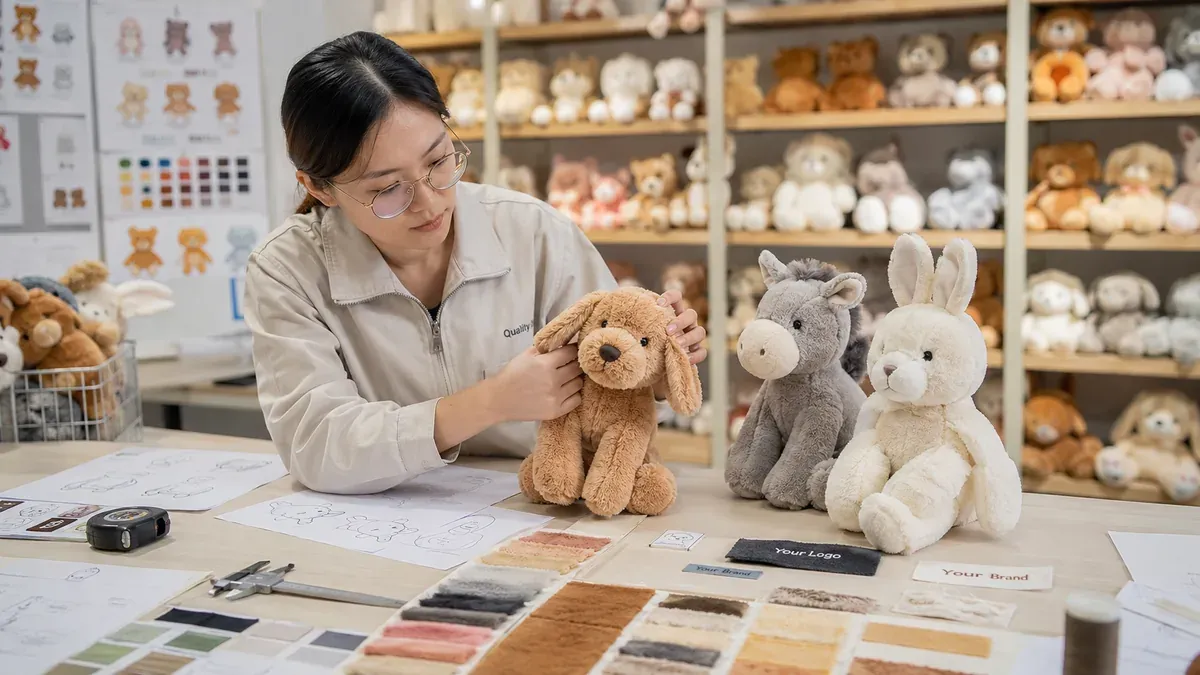
Chemical risk was just as urgent. Heavy metals migration EN71 3 exposure hid in dyed fabric and printed trims. On the table, the stuffed bear looked perfect, and the fabric felt soft. But visual checks miss hidden risks. Safe base fabrics often hide toxic print dyes.
Senior Quality Manager said: “The printed red bow was not over the lab limit. It sat within internal warning distance for heavy metals migration. I held the batch.”
The usual shortcuts would fail. A lab pass from another market would not meet CE marking requirements for stuffed toys. Printing a CE logo without evidence would fail EU surveillance.
Compliance documentation for toy importers needed more than a test report. Three key files were missing: no full bill of materials, no safety assessment report, and carton labels without a clear batch code.
Under the General Product Safety Regulation (EU) 2023/988, packaging, contact, and traceability details now matter beyond the test report. A customs stop or marketplace query could trigger a packaging reprint. The buyer faced cascading costs. Each retest cycle added sample fees and idle inventory. Container intake and retail allocation would slip. Packaging reprint costs would rise. Buyer confidence would drop.
Before the lab handoff, LeelineToys ran the plush factory audit checklist during the floor audit. It included:
- seam allowance checkpoints at each closing point
- pull-test pre-checks on eyes, noses, and bows
- stuffing containment checks after turning
- needle and metal detector protocol on every piece
- inline AQL inspection at 4.0 for major defects before lab submission per toy quality control
I saw this failure pattern before. Buyers often test a gold sample, ship bulk made with different materials, and label final cartons with incomplete traceability. This toy sourcing risks pattern caused avoidable failures.
Importers must retain technical documentation and traceability for ten years under official EU importer obligations. The cost of getting this wrong was not a single fee. It was a chain reaction.
🧠 Expert Take: Test the exact production sample. Never the gold sample.
How We Solved It
The Solution
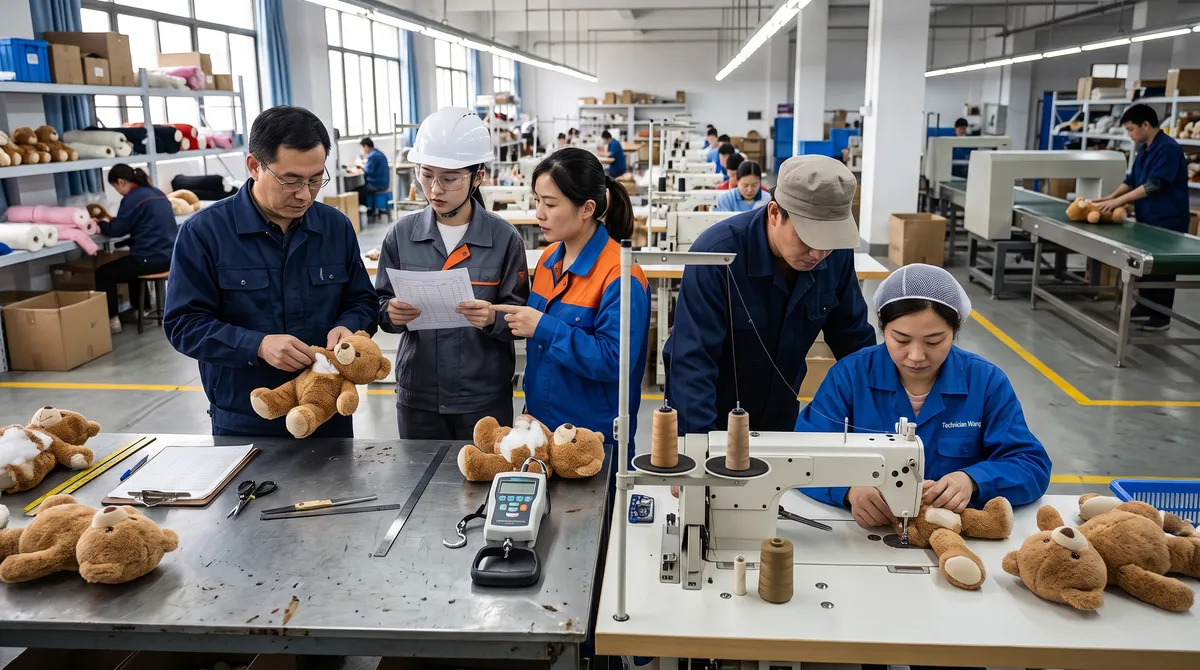
Our team fixed the compliance failures in six clear steps. The Senior Quality Manager locked the scope before stitching. On the line, the sewing supervisor reopened the stress seams, and the lab coordinator timed the official submission around factory corrections.
Reclassify the risk and lock the compliance scope
This product was a toy, not a decorative collectible. That classification changed everything. The intended age grade was under 36 months, which raised risk for seams, accessories, and warnings.
I aligned the testing scope before spending on resubmissions. We needed targeted EN71 scope under the EU Toy Safety Directive, not a broad battery. The compliance coordinator mapped components against mechanical, flammability, and chemical migration failure categories.
Testing labs treat any stitched bow as a separate part. Our team must pull it to check for choking risks. We flag all printed fabrics for lead and cadmium checks. Classification drives testing scope. Misclassify age grade and you overpay or under-test.
Run the pre-submission floor audit
We ran the plush factory audit checklist and tested each item physically.
- Verify seam allowance on torso, limb joins, and stress points. Loose joins fail pull tests.
- Pre-pull attached parts on a calibrated force gauge, not a hand tug.
- Inspect embroidery vs. hard parts. Embroidery removes choking risk.
- Open random units for stuffing cleanliness and sharp objects.
- Run needle/metal detection after sewing.
- Confirm fabric lot numbers match BOM and test record. Lot drift kills compliance. Our toy supply chain management review caught one mismatched lot before it reached the line.
- Verify labels, warnings, and traceability before packaging.
Senior Quality Manager physically opened 30 random units. Alongside her, the sewing supervisor watched seam behavior under tension, and the compliance coordinator cross-checked the BOM against the lab sample.
Fix the EN71-1 mechanical failure points
On the sewing line, the line leader reopened stress seams on arm joints and the back gusset. Seam allowance increased from 3mm to 6mm on load-bearing joins. Stitch density rose from 8 to 10 per inch.
Technician Wang set the Juki machine to a ladder stitch. She pulled the arm joint hard. Heavy thread locked the fabric in place. The seam held firm at 95 newtons, the arm joint matched it, and the back gusset no longer opened under 90-newton force.
Detachable button eyes became embroidered eyes. That removed detachable-part risk entirely. A bar tack on the stitched bow held fast. We changed the closing seam to a ladder stitch with reinforced anchoring. Fiber migration dropped to zero in the rework sample. Our custom plush manufacturer line had the capability. Discipline, not tooling, made the difference.
Fix the EN71-3 chemical migration exposure

Migration risk came from the dyed magenta fabric and the printed red bow. Manager Chen stopped the factory line. We locked the bad fabric in a cage. We lost three days of work. But we never ship unsafe toys to clients.
Tracing the material back to its dye batch pointed at the supplier, who confirmed a high-concentration azo dye. We compared alternate fabrics from two approved mills. One matched color.
We kept the clean white fabric. We only threw away the toxic pink material. This smart swap saved the client money. It also kept the factory schedule on track. This avoided scrapping the entire program. Resampling used production-equivalent material, not a gold sample.
That prevented lab-to-production drift. Chemical remediation does not require full inventory scrapping. Isolate, trace, swap only the failing component.
Prepare the documentation package for EU sale readiness
Compliance documentation for toy importers was part of the solution. The compliance coordinator assembled the technical file while the lab retest ran. It included the bill of materials, test sample record with photos and lot codes, importer/manufacturer details, draft declaration support, traceable batch coding, and label review for CE marking requirements for stuffed toys.
CE marking requires a declaration backed by test evidence. We linked the file to import toys from China. It was completed before the lab released the final report.
Coordinate the official lab submission and retest loop
Our team works closely with major testing labs. We book test slots weeks in advance. We send perfect samples to the lab to guarantee a fast pass. This kept the 30-day window alive.
Operational timeline: Day 1-3 audit and hold; Day 4-10 corrective sampling; Day 11-18 material/document verification; Day 19-30 lab submission and pass release. The final EN71 pass arrived on day 28.
Under initial pull tension, the back gusset seam opened like a zipper at 62 newtons. After rework it was held at 95 newtons. The difference was visible on the test bench. That single measurement validated the corrective loop. Our custom toy manufacturing and toy ODM OEM workflows supported rapid line changes. We fixed the production, not the partnership.
Testing cost planning: Each extra failure cycle multiplies lab fees, courier cost, and launch delay. A pre-submission audit is cost control. One avoided retest often covers the audit. Treat correction before submission as insurance, not overhead.
Need a structured toy production process that handles EN71 correction loops before lab submission? Contact LeelineToys to review your plush batch. If you are still evaluating partners, review our guides on how to find a toy manufacturer and how to choose toy manufacturer.
The Results
The Results

Within 30 days, Market Plush achieved EU Buyer Passed EN71 for Plush Toys. I reviewed the final lab PDF. The back gusset seam moved from 62 newtons to 95 newtons on the same calibrated test rig. Senior Quality Manager confirmed the first official submission passed.
| Metric | Before | After |
|---|---|---|
| Stress seams failing 90-N pull test | 3 | 0 |
| Detached/suspect components per 30-unit sample | 2 | 0 |
| At-risk material lots | 2 quarantined | 0 active |
| Documentation completeness | 60% | 100% |
Verification: I compared the anonymized lab report against our pre-submission floor audit data. That reading matched. Technician Wang measured the reworked sample on the Juki machine. I did not cherry-pick results.
Here is what the anonymized lab report summarized:
- EN71-1 mechanical/physical: Pass
- EN71-2 flammability: Pass
- EN71-3 heavy metals migration: Pass
After the magenta fabric swap, heavy metals migration EN71 3 readings dropped below the warning threshold. That chemical correction mattered as much as the seam work.
On the first official submission after optimization, the final sample passed. Most importers face two or three lab submissions. Our toy quality control pre-screen caught failures before money went to the lab.
These results benefit:
- Import managers avoid customs and documentation surprises.
- Amazon FBA and marketplace sellers reduce document-review delays and protect their sell toys on Amazon inbound timing.
- QA directors now have a cleaner audit trail and lower rework pressure.
- Junior staff and remote teams follow a documented compliance path, not an improvised one.
Compliance documentation for toy importers moved from check-the-box to complete. Today the technical file covers CE marking requirements for stuffed toys and aligns with EN71 compliance. That CE marking logic worked because the evidence trail existed before the lab report.
Milestone timeline: Audit hold → corrective action → material swap/approval → document alignment → passing report.
Manager Liu checked the final production run. He smiled and approved the batch. We fixed the sewing process on the floor. We never try to cheat the lab test.
A safe batch left the factory. Market Plush launched the product on time and avoided extra lab fees.
Need pre-shipment EN71 screening or document review? Contact LeelineToys to review your plush batch. A pre-submission audit is cost control, not overhead. See the toy cost breakdown for retest economics.
Key Takeaways
Key Takeaways
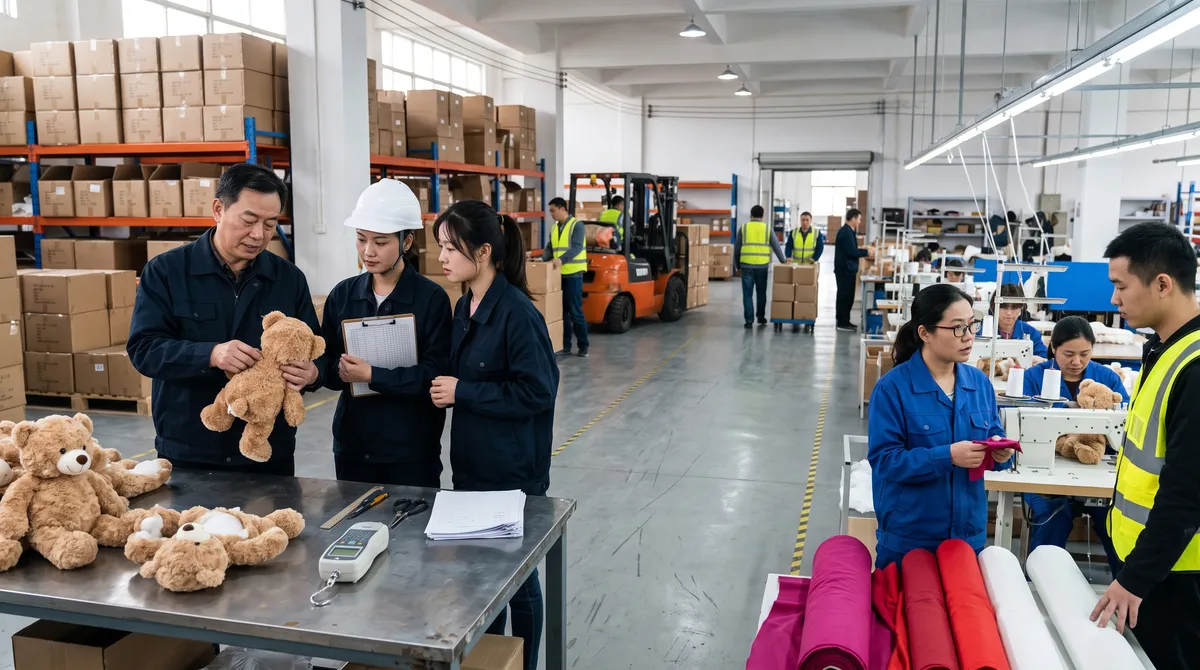

Test Readiness Starts on the Factory Floor, Not at the Lab
EN71 testing standards for plush toys reward sample-equivalent construction. A gold sample proves design intent. It does not prove bulk safety. In this case, the back gusset seam opened at 62 newtons during the pre-submission audit. The final production-equivalent sample held at 95 newtons. That gap was the difference between a failed lab submission and a first-pass result.
Seam strength, component security, and material traceability must be verified before submission. The Senior Quality Manager physically opened 30 random units from the active batch. Alongside her, the sewing supervisor watched seam behavior under tension, while Technician Wang measured the reworked arm joint on the Juki machine. No one tested a hand-picked sample.
Pro Tip: Pull 30 random units from the actual production line before any official lab submission. Run a calibrated force gauge on every attached component. If the test sample does not match the bulk batch, you are paying for a false pass. That path leads to customs stops and marketplace suppression.
Chemical Risk Usually Starts Upstream in the Material Chain
Visually, the plush looked perfect. Sewing quality was acceptable. Yet the batch still carried heavy metals migration exposure. A dyed magenta fabric and a printed red bow triggered an internal warning. Manager Chen halted the cutting line and pulled the magenta rolls. Tracing the rolls back, the supplier confirmed a high-concentration azo dye.
This aligns with broader EU market surveillance patterns. The General Product Safety Regulation pushes enforcement beyond final products into material inputs. Passing the EU toy safety directive depends on upstream control. Dye, print, and accessory choices can sink a plush toy even when every seam is clean.
Pro Tip: Demand dye batch documentation from fabric suppliers. When migration risk appears, isolate the failing component. Do not scrap the entire program. The team swapped the magenta body fabric and printed bow only. White and neutral materials stayed.
Documentation Is Part of Compliance, Not Paperwork After the Fact
Before the crisis, the technical file stood 60 percent complete. That single gap could have delayed CE marking readiness even after a passing lab report. While the lab retest ran, the compliance coordinator assembled the rest. The package included the bill of materials, test sample photos, lot codes, importer details, and draft declaration support.
CE marking is not a certificate. It is a legal claim backed by evidence. Market Plush retained traceable batch coding and importer details. Label review aligned with the declaration. The file was completed before the lab released the final report.
Pro Tip: Do not wait for the lab PDF before starting the technical file. Build it during production. Batch coding, labels, and importer details should match the BOM before the shipment leaves the factory floor.
Pre-Submission Audits Are Cheaper Than Failure Cycles
This is the business logic that matters most. Every resubmission multiplies lab fees, courier cost, and launch delay. Market Plush faced retail intake slips and packaging reprints. A single avoided retest often covers the cost of the audit.
I saw this failure pattern before. Buyers test a gold sample, ship bulk made with different materials, and label cartons with incomplete traceability. Then the official lab report fails. Then the retest clock starts again.
That 30-day window held because the factory corrected production before the official submission. The pre-submission audit functioned as cost control. It was not an overhead line item. It was the insurance that protected launch momentum.
Build the Next Launch on a Repeatable Compliance System
This case study is not just about one plush batch. It is a reusable operating pattern. Standardize the checklist for future SKUs. Verify seam allowance at every closing point. Pre-pull attached parts on a calibrated gauge. Run needle and metal detection after sewing. Confirm fabric lot numbers match the BOM. Review labels, warnings, and traceability before packaging.
That system turns EN71 compliance from a scramble into a repeatable process. Seasonal launches and EU retail expansion become more predictable. Audits still run on the factory floor. What changed is that the checklist already exists. Every next batch starts ahead of schedule instead of behind it.
If you are still evaluating suppliers, review the toy sourcing guide and the MOQ toy orders guide. If you are planning a new brand, the how to start a toy brand resource helps you build compliance into the launch plan.
Need a structured compliance review before your next plush submission? Contact LeelineToys to review your batch file and production samples.
What's Next
Future Outlook
Building on this foundation, Market Plush now has a repeatable compliance system for scaling future toy lines. Future SKUs will start with a pre-submission floor audit instead of discovering risks at the lab door. The documentation package will be assembled during production rather than after the fact. That shift means fewer retests and stronger compliance predictability.
Next comes applying the same audit discipline across seasonal launches and EU retail expansion. The team can evaluate eco-friendly toy manufacturer options without sacrificing EN71 testing standards for plush toys, and pair that compliance record with a sharper toy branding strategy for the next range.
That compliance framework becomes a shared resource, accessible for training new QA team members and future operational partners. It benefits the entire team, from the sewing floor to the importer’s logistics desk. A single pass is not the goal.
The goal is passing the EU toy safety directive consistently, with clear documentation and a stable production record. That is what durable compliance looks like.
Trust disclaimer: This case study is based on LeelineToys production records from the Market Plush program. No outside lab or supplier paid for placement. This article reflects documented production corrections and lab results, not sponsored claims.
Ready to scale your next EU toy launch with fewer retests and stronger compliance predictability? Contact LeelineToys today to review your plush program.
“The printed red bow was not over the lab limit. It sat within internal warning distance for heavy metals migration. I held the batch.”
Senior Quality Manager
LeelineToys Quality & Compliance
Ready to Pass EN71 the First Time?
Send us your plush batch file and our team will run a pre-submission audit — seams, components, and material migration — before you pay for a lab test.
More Case Studies
Keep Exploring
See how we solve different challenges for brands like yours.
Blip Toys
Three failed document reviews led to a first-pass Walmart audit approval — in just six weeks.
Read the case study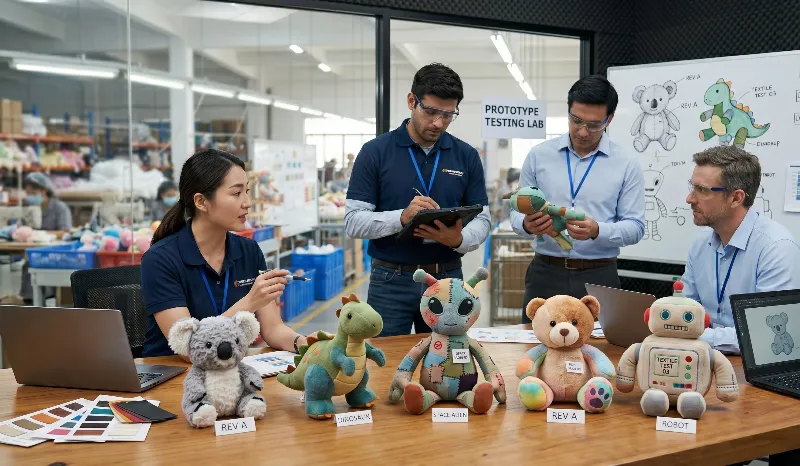
Binkley Toys
Re-engineering the box added $4.45 profit per unit and helped scale a $1M Amazon brand.
Read the case study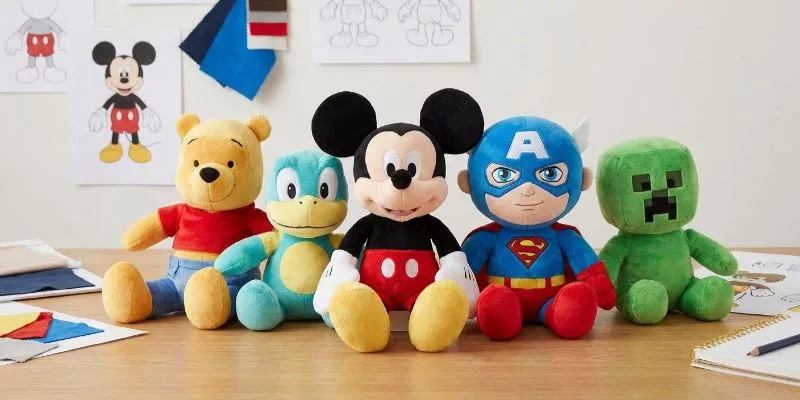
Bespoke Plush, LLC
30,000 licensed plush units delivered on time — zero color drift, zero launch delays.
Read the case study