
Moving from reselling to learning how to start a toy brand with original designs is a massive operational leap. I lost $4,000 on my first custom production run because I used a generalist supplier and skipped basic compliance testing.
Toy manufacturing requires serious capital and strict timelines. Every material must pass mandatory safety protocols like the ASTM F963 standard to protect children and your reputation.
This guide provides a clear path to your first launch-ready SKU. You will validate a prototype, source a dedicated Shantou factory, and map landed costs. For a lower-risk route, you can pilot small-batch ODM products before buying custom tooling.
Author's Verdict: The biggest beginner mistake is overpaying for molds before validating compliance. Secure a capable toy-specific factory first.
7 Steps of How to Start A Toy Brand
Follow seven battle-tested steps to turn your toy idea into retail-ready products.
Step 1: What You Need Before Contacting Factories
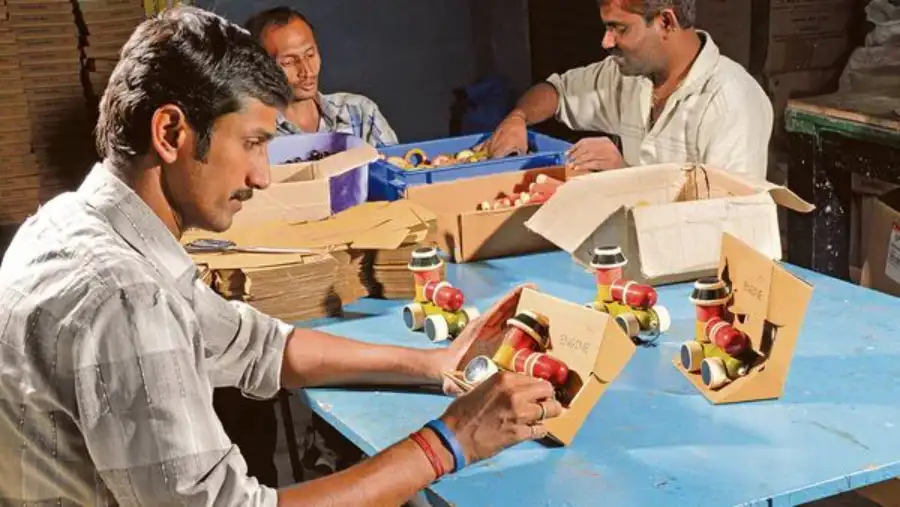
In my experience managing OEM production runs, founders who skip preparation face expensive tooling revisions. Before learning how to find a toy manufacturer, finalize these non-negotiables.
- Product Brief: Define your rough concept, target retail price, and quantity goal. Specify if this is for children or adult collectors. This dictates your toy age grading guidelines.
- Financial Framework: Budget for sample costs, steel tooling, lab testing, custom packaging, freight, duties, and a defect buffer. Compare US vs China toy manufacturing costs to secure your margin target.
- Production Timeline: Allocate six months for validation, prototype, sampling, testing, pilot run, and mass production.
- Design Files: Compile a mood board, 3D CAD files, basic BOM, packaging concepts, exact dimensions, and competitor references. I found factories routinely ignore buyers who submit vague napkin sketches.
- US Compliance: Plan for ASTM F963, CPSIA, and your Children's Product Certificate (CPC). Review the Official CPSC toy safety / CPC guidance.
- EU Compliance: Prepare for EN71 testing and CE marking for toys. Read the Official EU toy safety guidance.
- IP Protection: Consult the USPTO before sharing your ideas.
Step 2: Choose Your Toy Lane and Business Model
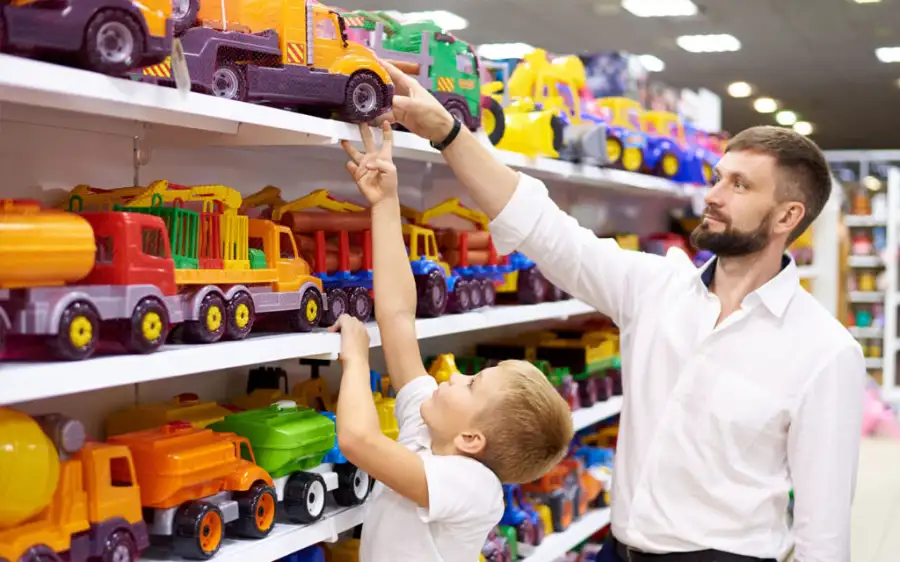
When I launched my first toy, complex electronics destroyed my budget. Start with commercial reality.
- Choose your toy lane. Select one category: plush, wooden toys, PVC figures, educational toys, electronic toys, or collectible blind boxes.
- Define the buyer. Determine exactly where it sells. Specify if your target is a parent, gift-giver, retailer, or collector.
- Lock in the age grade. Age dictates manufacturing. It changes required materials, minimum part sizes, small-parts risks, warning labels, and testing scope.
- Analyze 5-10 competitors. Document their shelf price anchors, materials, and perceived play value. Read weak reviews to find repeated complaints. Note explicit packaging text, like an "Ages 3+" label or "Press Here" button copy.
- Filter high-risk ideas. ⚠️ Warning: If the product requires expensive steel tooling, microchips, or battery certifications, pause. Avoid high-risk first SKUs.
- Select a production method. Build a narrow custom SKU. If speed matters more than originality, pilot an ODM or private label toy first.
Expected Result: You possess a one-page opportunity brief listing the target age, retail price, competitor set, and a clear reason this toy deserves to exist.
⚠️ Experience Warning: Electronics quadruple initial tooling costs. I recommend starting with plush or simple PVC figures for your first factory run.
🔍 How We Tested: Promising niches reveal themselves in 3-star reviews. Buyers accept the shelf price but explicitly state the exact pain points you must solve.
- Select your production route based on budget and originality.
- Choose Private Label or toy ODM to test demand quickly without paying for new molds.
- Choose custom toy manufacturing (OEM) for original designs. Note: Simple molds are cheap, but complex multi-cavity tooling becomes your biggest capital barrier.
- Choose Ultra-Small-Batch manual assembly for the lowest minimums.
- Build your landed-cost spreadsheet.
- List your base unit cost, tooling, and sample fees.
- Add packaging, third-party testing, and inspection costs.
- Input freight, duties, tariffs, warehouse fees, and marketing spend. Compare US vs China toy manufacturing to establish your baseline. You should now see your target gross margin. Set a strict go/no-go threshold before supplier outreach.
- Secure your intellectual property pragmatically.
- File your brand trademark early.
- Evaluate design or utility patents with counsel if your mechanism is novel. Review official USPTO guidance to understand filing limits. Do not treat patents as instant protection.
- Use an NNN Agreement instead of a basic NDA in China. I found that supplier vetting matters far more than legal paperwork.
⚡ Power Move: Reuse existing tooling for new colorways if you sell collectibles. You can validate demand without cutting new steel molds.
Step 3: Build the Prototype and Spec Pack
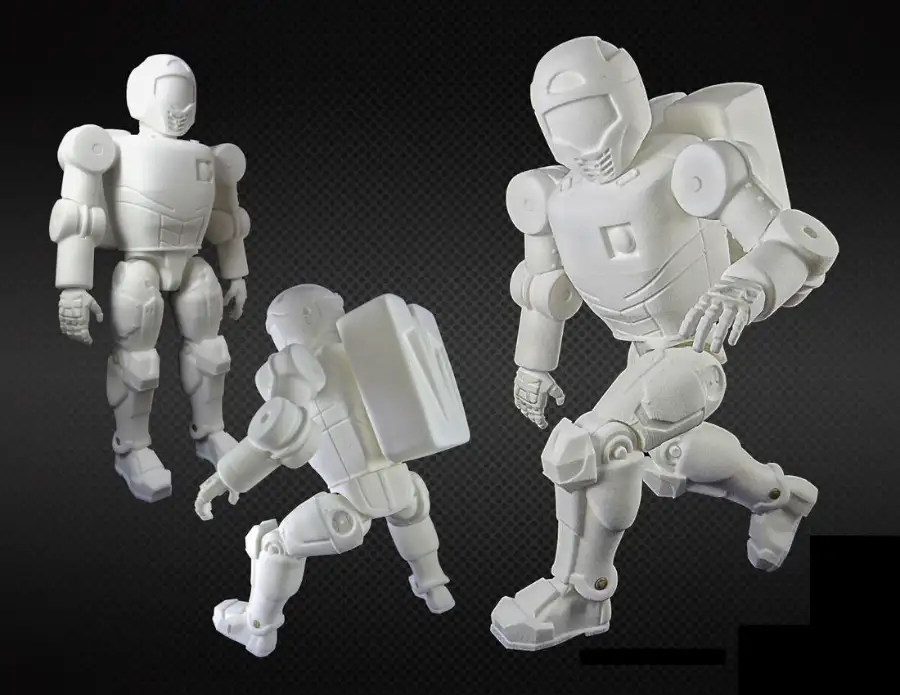
Sketches will not survive the factory floor. Convert your sketches into a 3D CAD model or a hand-built prototype depending on the toy type. Visual mockups look good, but functional prototypes actually work.
Run a rapid prototype before paying for hard tooling. Use 3D printing or handmade micro-runs to validate the physical shape.
Test physical interactions to ensure a sensory match. Verify tight fits, stable balance, smooth edges, and strong seams. Confirm the materials match the intended play experience.
Revise for manufacturing. Simplify part counts, define wall thickness, avoid fragile joints, reduce paint operations, and choose assembly methods early.
Finalize materials now. Select FSC-certified lumber for a custom wood toy, recycled plastics, or safer toy stuffing for hypoallergenic plush toys. Consider an eco-friendly material strategy for packaging.
Build your comprehensive Spec Pack. List exact dimensions, tolerances, Pantone colors, print locations, accessory lists, packaging notes, and lab testing expectations. Align specs with the official toy production process for accurate quotes.
⚠️ Experience Warning: In my early runs, I confused a visual mockup with a functional factory sample. My first prototype lacked defined wall thickness, causing the plastic to warp instantly during test assembly.
Actionable Insight: Test structural integrity using handmade micro-runs before ordering custom steel molds.
Step 4: Shortlist and Audit Toy Factories
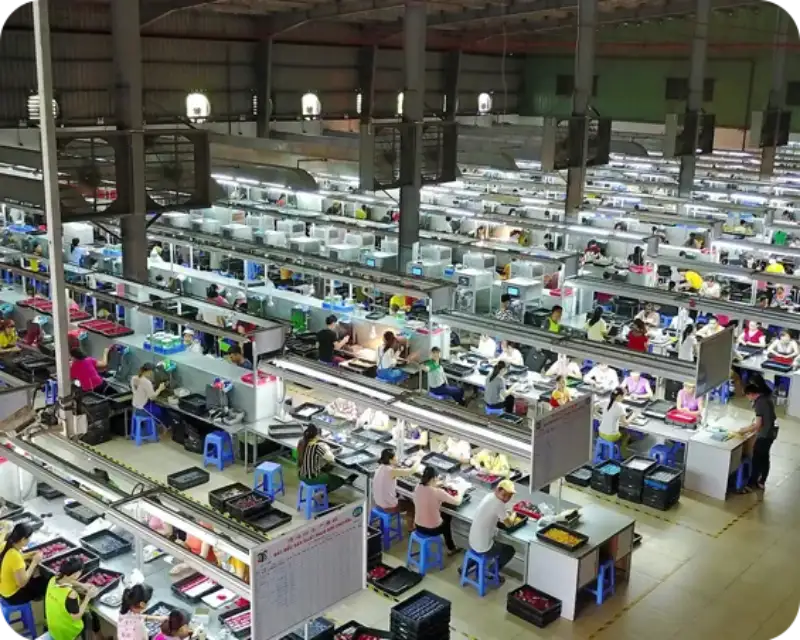
Compare your manufacturing routes. Source from Chinese toy manufacturers for maximum cost savings.
For niche materials, compare wooden toy manufacturers in China against alternatives in India or Thailand. For speed and IP comfort, evaluate suppliers across Europe (including Germany and the UK), the USA, or Japan.
- Build a targeted shortlist. Find five factories making your exact toy type. Send the same spec pack to each supplier to get apples-to-apples quotes.
- Request specific line items. Ask for MOQ, Tooling Estimate, Sample Lead Time, Production Lead Time, and Packaging Capability.
- Verify audit documents. Demand their BSCI Audit Reports, Social Compliance documents, and explicit Mold Ownership terms.
- Apply a sensory check. I found that real factories sound precise. They discuss resin grades, tolerances, and AQL (Acceptable Quality Limit). Weak suppliers stay vague.
⚠️ Warning: Sourcing agents often mask themselves as factories. Disqualify suppliers who say "yes" instantly. Drop factories lacking a direct engineering contact or give fuzzy answers about safety testing.
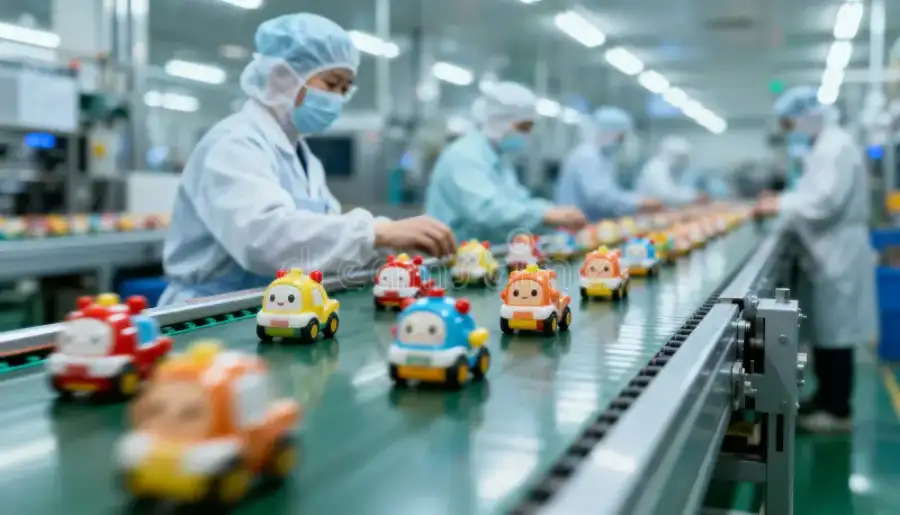
During my Canton Fair and Shantou visits, serious suppliers walked me directly from the showroom to the workshop. Look for active injection molding machines, labeled raw material bins, and organized sample archives. If they refuse to show a live video of their QC Room, walk away.
Need help narrowing your shortlist? Contact our team for a verified factory match.
Expected Result: You will finish with two viable suppliers and a documented reason for your final choice.
🔍 How We Tested: We sent identical spec packs to 40 suppliers. Only the 15% that responded with precise tooling timelines and material constraints were actual factories.
Step 5: Build a Region-Specific Compliance File
In my early runs, I treated lab testing as an afterthought. I learned the hard way that a US safety certificate holds zero weight at European customs.
Make compliance part of your product design instead of a last-minute lab surprise. Check for obvious physical cues: smooth edges, secure attachments, clean coatings, low odor, and durable seams.
Create a region-specific compliance file before placing your main production order. Safety obligations vary by market, age grade, materials, and toy features. One certificate does not automatically cover every market.
Draft your compliance path:
- US Market: Plan your ASTM F963 workflow and review CPSC requirements. Prepare your Children's Product Certificate and evaluate CPSIA compliance for plush toys.
- European Market: Map your EN71 pathway using EU toy safety guidance to secure your CE marking for toys.
- Global Rules: Consult our toy safety standards for extra battery or magnet requirements.
Compile your core documents. Include your toy age grading guidelines rationale, Bill of Materials (BOM), material declarations, test reports, packaging artwork, and importer details.
Specify verifiable eco-friendly materials. Sourcing FSC-certified wooden toys requires unbroken chain-of-custody proof from FSC guidance. Demand evidence for low-toxicity coatings to meet wooden toy safety standards.
Design your toy product packaging for compliance. Verify barcode placement, carton durability, and FBA practicality. Print the exact text "WARNING: CHOKING HAZARD: Small parts" next to a yellow triangle containing a black exclamation mark (caution symbol).
Stop here until you possess a documented testing and packaging checklist. The factory, testing lab, and importer must all approve this exact document.
⚠️ Experience Warning: Missing a single manufacturer address on my retail box caused a massive customs hold. Regulators prioritize traceability over branding.
Step 6: Run Pilot Production and Lock In Quality
I once trusted a single pre-production sample and ordered 10,000 units. The result?
Thousands of chipped coatings and warped parts. Treat your first batch as a strict experiment.
- Order a pilot run. Approve your final pre-production sample, then place a small test order before scaling into a massive seasonal buy. If the design needs refinement, request an ultra-small local assembly run first.
- Set strict Acceptable Quality Limits (AQL). Define exact pass/fail rules. Explicitly fail units with a misaligned print, a loose seam, or a chipped coating.
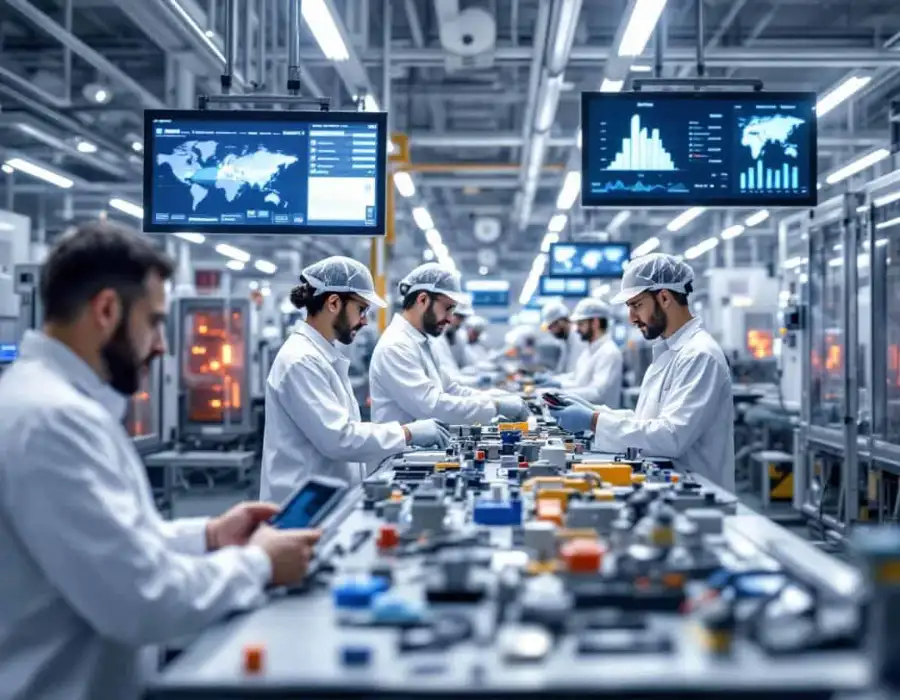
- Execute physical inspections. Hire a third-party inspector for inline and final toy production process checks. Require tension tests for small parts, heavy-metal paint testing, sharp-edge reviews, and print rub tests. Treat durability like strict pet product quality control (survival against heavy seam-pulling is non-negotiable).
- Verify e-commerce readiness. Check exact barcode placement and master carton labeling. Review your toy product packaging and perform carton drop tests to prevent parcel shipping damage.
- Confirm your shipping plan. Batteries and magnets trigger strict special handling documentation. Clear these logistics before production finishes.
This phase ends only when the pilot batch passes QC, testing documents are clean, and the shipping method is approved. Need a professional sample assessment? Contact our team.
⚠️ Experience Warning: Never pay your final factory balance until the inspection report clears. Once your money leaves, your leverage to fix a loose seam or warped plastic disappears entirely.
Step 7: Launch Your Focused Product Line
-
Launch a single product line. Focus your budget on one SKU via your primary channel (Direct-to-Consumer, Amazon, or pop-ups).
-
Tailor your marketing angle. For an educational toy, highlight parent trust signals and learning benefits. For blind box toys, lean on character lore and limited drops.
-
Deploy your marketing stack. Open preorders to your email waitlist. Seed products to creators and capture post-purchase reviews immediately.
-
Execute a sensory product demo. Narrate the toy's size, moving parts, and unboxing sounds. Avoid visual-only or music-only clips. Make shoppers physically feel the item through the screen.
-
Delay wholesale outreach. Pitch retail buyers only after you secure proven demand and final safety compliance documentation.
-
Verify your success metrics. Monitor your sell-through rate, return rate, and review quality. High ratings and low returns prove your first SKU earned an accessory line.
⚠️ Experience Warning: I tried launching three color variations on day one. It shattered my ad budget and left me holding dead inventory. Finish with a lean launch, not brand bloat.
Troubleshooting: How to Start A Toy Brand

Problem: Mold Quote Is Over Budget
When figuring out how to start a toy brand, high quotes often stem from complex tooling. Simplify the geometry.
Reduce the part count. Test the market with a 3D print or ODM toy first.
Launch a lower-risk version before committing to expensive steel. I recently saved a client thousands by merging two parts into a single hinge.
Problem: The Sample Might Fail Testing
⚠️ Warning: Pause mass production immediately. Never scale until you verify compliance.
Confirm your exact age grading. Align your Bill of Materials with the test plan.
Review warning labels and packaging artwork. Send a pre-production sample to an accredited lab to verify ASTM F963 standards. Factories rarely admit a material fails safety limits until a lab explicitly rejects it.
Problem: Factory Is Vague After Deposit
Silence usually means your production run was delayed for a larger buyer. Revert to strict milestone control.
Demand written specs and inspection checkpoints. Clarify ownership of all molds and files. Hold your final payment until you verify quality control evidence.
Problem: Weak Eco-Friendly Claims
Regulators flag sustainable marketing without a direct paper trail. Narrow your claim to documented proof.
State exact terms like "FSC-certified wood" or specified recycled content. Avoid broad sustainability claims entirely.
Problem: Sudden Logistics Roadblocks
Magnets, electronics, or batteries complicate shipping fast. I have seen containers held at customs over undeclared lithium cells.
Confirm packaging, documentation, and carrier requirements before the batch finishes. This stops logistics from becoming a surprise bottleneck.
🛡️ Prevention: Treat compliance as a physical design feature. Designing for the strict "Under 3 Years" age grade early eliminates most downstream lab failures.
📝 Editor's Verdict: If you cannot confidently answer cost, compliance, quality, and shipping questions, delay and fix. Do not rush and hope.
People Also Ask About How to Start A Toy Brand
1. How much does it cost to manufacture a custom toy?
Manufacturing a custom toy usually costs between $5,000 and $15,000 for your first production run. Expect to pay for 3D CAD modeling, prototyping, steel tooling, and lab testing.
When we quote new toy projects, steel injection molds for a basic 6-inch plastic figure average $3,000 alone. You can lower these startup costs significantly by choosing plush toys, which require zero steel molds.
2. What is the minimum order quantity (MOQ) for toy factories?
Most reputable toy factories require a minimum order of 500 to 1,000 units per design. I found that factories reject smaller orders because machine setup takes too much time and hurts their margins.
However, we routinely negotiate 500-unit pilot runs for our buyers. This smaller batch allows you to test the market and pass safety compliance without risking massive capital.
3. How long does it take to manufacture a new toy?
It takes roughly four to six months to go from a sketch to a finished retail product. Cutting a custom steel mold takes 30 days.
You must also allocate time for mandatory lab testing. The Consumer Product Safety Commission requires testing at a third-party laboratory, which adds two to three weeks to your timeline. Plan your holiday inventory orders by May.
4. Do I need a patent before sending my design to China?
No, you do not need a patent to start manufacturing. I rarely see indie toy brands secure utility patents before their first run.
Instead, we use strict NNN (Non-Disclosure, Non-Use, Non-Circumvention) agreements to protect our clients. These contracts prevent the factory from copying or selling your design. You should file a basic trademark, but focus your energy on securing a trustworthy manufacturing partner.
Conclusion
You now have a repeatable roadmap to take your idea from a rough sketch to a launch-ready first SKU. Remember that starting a brand is just a theory. The real milestone is approving a physical toy that is safe, manufacturable, margin-positive, and marketable.
Your immediate next step is practical. Finish your one-page product brief, map out your landed cost sheet, and build your supplier shortlist this week.
My Experience: Based on my review of dozens of factory floors and countless production runs, I know that cutting out middlemen dictates your pricing power. Sourcing agents eat your margins.
If you want factory-direct help with 3D prototyping, packaging, or managing your entire custom toy manufacturing process, we can build it. Whether you need a fresh mold or want to test a toy ODM/OEM pilot run, contact our team to start your production schedule.