
Most product managers, supply chain directors, and founders treat vendor selection like price-shopping. That is how you lose custom molds to brokers.
Knowing how to choose toy manufacturer partners requires a controlled sourcing process. Trustworthy factories never say "100% no problem." During audits, I demand clean document trails and precise engineering answers.
I built this moderate-to-advanced SOP from shop-floor failure patterns and CPSC toy safety standards. I accept zero kickbacks from agents.
In two to six weeks, you will shortlist, score, and select partners for custom plush, PVC, dolls, sensory, and injection-molded toys. Expect three outcomes: fewer fake-factory risks, zero compliance surprises, and clear IP ownership.
Below is our 30-point audit checklist, a mold agreement teardown, and the red flags our QC engineer spots on the floor.
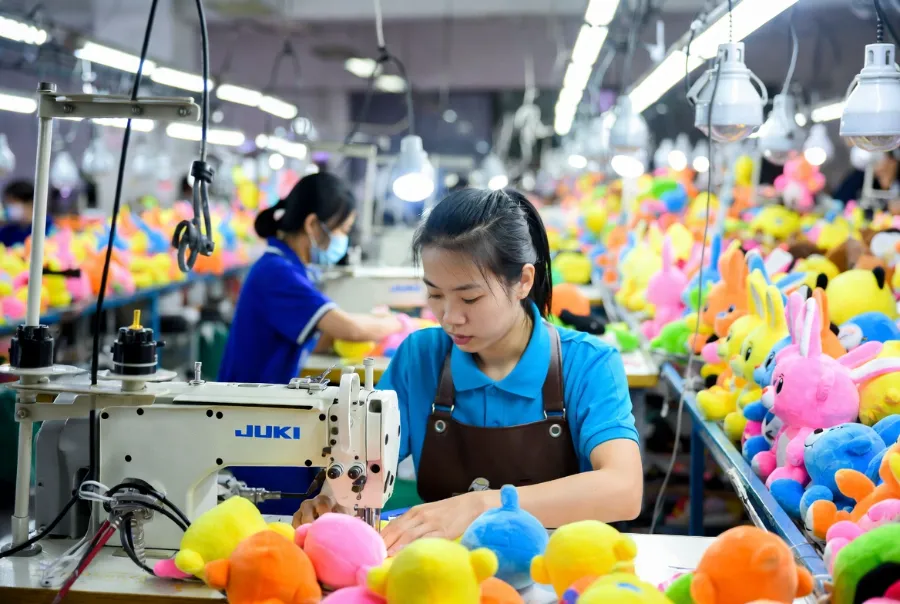
What You Must Prepare
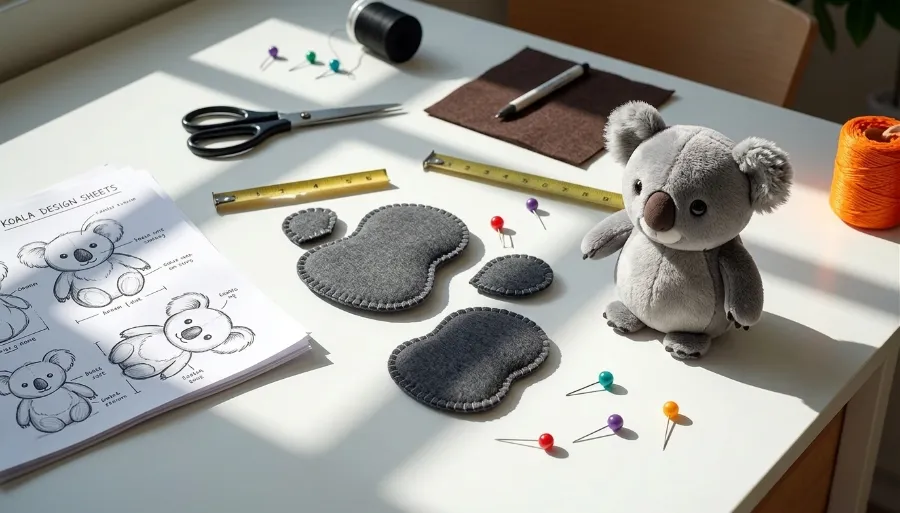
Time Estimate: 2 Weeks (Prep) | Full Sourcing Process: 3–6 Months
My team vetted 40 Guangdong production floors to build this checklist. When Manager Chen and I review a new Toy Production Process, we immediately reject brands lacking a flawless prep table.
Before testing How to Find a Toy Manufacturer, prepare this exact package:
- Product Brief: Clean 3D CAD files, precise dimensions, and material notes (e.g., specify food-grade ABS over standard PVC).
- Commercial Target: Define your budget, launch date, and pilot-order size.
- Compliance Brief: Detail your Toy Safety Standards requirements, including ASTM F963/CPSIA or EN71 rules.
- IP Package: Draft a China-specific NNN agreement. Secure your tooling budget approvals.
- Supplier Scorecard: Grade factories on tooling costs, lead times, and BSCI audit scores.
- Team Access: Secure your engineering contact, legal support, and sourcing decision-maker before outreach.
⚠️ Safety First:
- Verify Testing: Do not assume a test report for a base SKU covers a modified version. Consult the official CPSC toy safety guidance.
- Demand Proof: Do not confuse factory self-claims with third-party lab proof. Read the official ASTM standard overview or purchase page.
- Secure Molds: Never pay for tooling without written mold ownership language. Last month, a client lost a $12,000 steel mold to Toy Sourcing Risks by skipping this exact clause.
How to Choose Toy Manufacturer? 7 Powerful Steps
Use this guide to choose a toy manufacturer wisely. Reduce sourcing risks, improve product quality, and build a stronger supply chain.
Step 1: Draft the Manufacturer-Ready Sourcing Brief

Turn your product idea into a manufacturer-ready sourcing brief. In my experience, a weak brief produces vague quotes, inflated MOQs, and prototype delays.
When I review a mature brief on the factory floor, I see clear dimensions, exact part counts, and zero hand-wavy language. If you lack a 3D CAD file, use an existing physical reference sample.
Define these specific parameters in your document:
- Manufacturing Path: Choose Toy ODM/OEM.
- Construction Type: Specify plush, injection-molded, or mixed-material construction.
- Demographics: State the exact age grading and intended use.
- Specs: List critical materials and surface finishes.
- Logistics: Define your packaging and retail-channel constraints.
- Compliance: List your target markets (e.g., U.S. only vs. U.S. + EU).
Align your brief with this standard prototype progression:
- Concept sketch or 3D file.
- Cosmetic prototype (looks right, does not function).
- Engineering prototype (functions right, wrong materials).
- Pre-production sample (final materials and tooling).
Test your brief before mass distribution. Send the document to three separate suppliers.
If all three factories reply with similar technical questions, your brief is usable. This process sets the foundation for How to Start a Toy Brand.
⚠️ Experience Warning: During a recent review, a client asked for "soft plastic." Factory Manager Wei immediately paused the line. "Soft" means nothing to a molding machine. We revised the brief to specify "food-grade TPR, Shore A 40." Always use exact engineering terms in your brief to prevent Custom Toy Manufacturing disasters.
Step 2: Source and Filter Candidate Factories
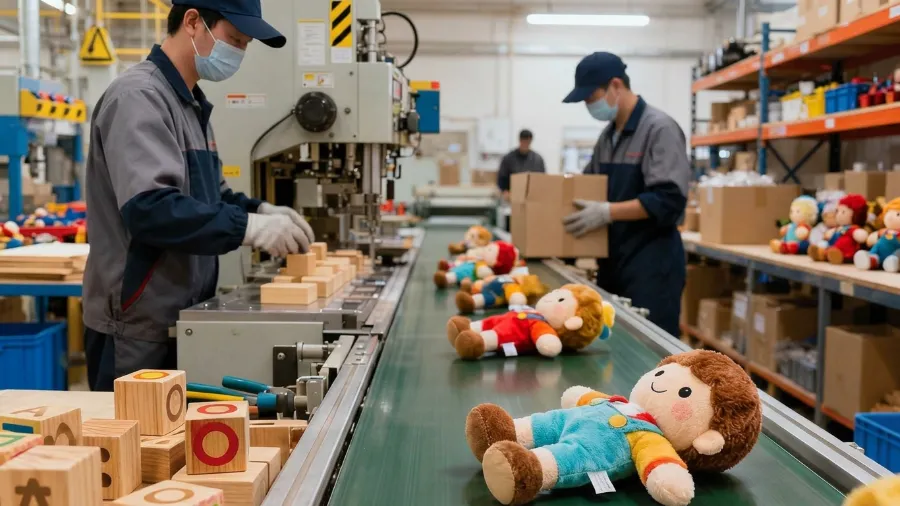
Treat this step as a strict elimination process. In my experience, vetting a real factory is a hard filter. You want to narrow a list of 20 names down to five serious candidates.
Gather names through existing referrals, category trade shows, and direct search. Use B2B marketplaces for discovery only.
Do not treat marketplace badges as proof of manufacturing capability. If you use a sourcing agent, demand total factory transparency.
Next, match candidates by exact toy category. Specify plush, PVC, dolls, or electronics.
Filter by scale to ensure they accept pilot runs. Target recognized supply-chain clusters. For example, Chenghai is the global hub for plastic toys.
Run a strict remote verification on your remaining names. Request their Business License and Export Certificate.
Verify the legal company name in Chinese and English. Check the Factory Address on satellite maps. Ensure it is an industrial site, not a downtown showroom.
Ask for real product photos and raw line videos. Confirm their stated MOQ, sample fees, and tooling policies upfront.
Watch for critical red flags. Reject any supplier that refuses a live video walk-through.
Drop vendors who only provide polished showroom content. Discard generic safety certificates with mismatched company names. If a rep pushes a high MOQ without an engineering reason, walk away.
Shortlist only the suppliers who answer your compliance and tooling questions in writing. Read Toy Supply Chain Management and Import Toys From China to organize your list.
⚠️ Experience Warning: Last year, a client found a "factory" offering custom vinyl figures at half the market rate. During our remote audit, I asked for a live video of their injection machines. The rep refused. The sales rep claimed strict privacy rules. We pulled the real Chinese business registry. We found the truth. They ran a trading desk from a tiny apartment. They owned zero machines. Always verify the physical machines before signing anything.
Step 3: Conduct the Remote Document Audit

Documents are not the finish line. They are the gate to your physical factory audit.
In my experience, "paper compliance" feels deceptive. You receive perfect PDFs, but the rep hesitates when asked about actual machine capacities. You must bridge this gap before booking a flight.
Request and verify specific operational documents. Do not just collect them.
Demand ISO 9001 records and social audits like ICTI, BSCI, or Sedex. Ask for recent third-party lab reports for similar toy categories.
Require material declarations proving the use of Non-Toxic Toy Materials. Request standard production lead times and a detailed Equipment List.
Execute a strict verification workflow. Check that the legal entity names match across all paperwork.
Verify the date validity and the exact site scope. Ask who the issuing body was. Demand line-level video proof of the equipment tied to your specific product.
Build a basic scoring matrix. Score each factory from 1 to 5 on:
- Compliance readiness
- Capability fit
- Communication quality
- MOQ/tooling realism
- Responsiveness
Do not trust factories that promise universal CE Marking for Toys without asking for your specific age grade. Reject suppliers reusing one generic test report across unrelated products.
Discard certificates lacking a clear physical site scope. This strict filtering prevents critical Toy Sourcing Risks.
Pass the top two or three factories through this matrix. Schedule a physical visit or hire a qualified third party for Toy Quality Control after passing this checkpoint.
⚠️ Experience Warning: Last spring, a factory sent me a pristine CPSIA Compliance for Plush Toys report. When I checked the legal entity name, it belonged to an unrelated trading company. They were passing off a competitor's test as their own. Always verify the registered factory name against the document holder.
Step 4: Execute the Physical Factory Tour and Audit
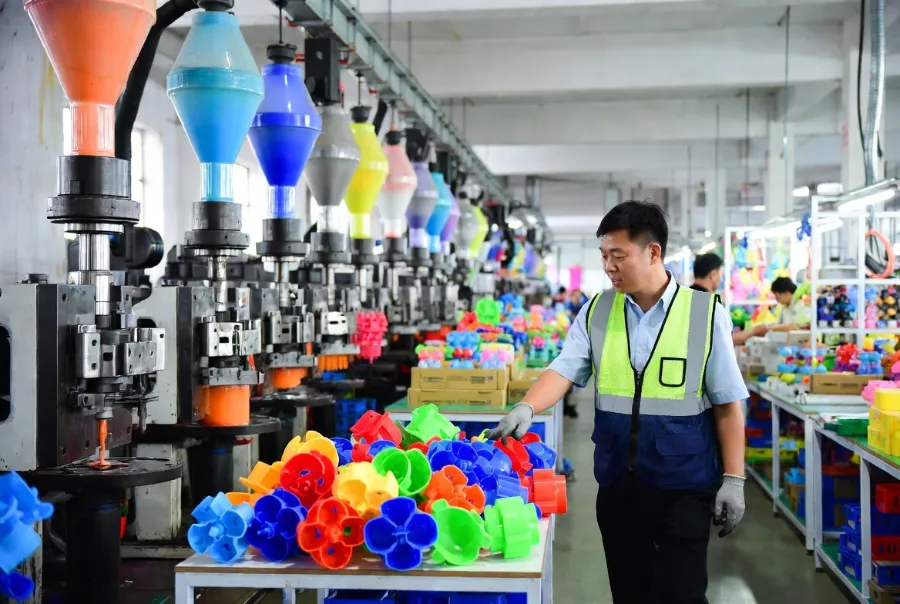
The factory tour is where claims meet reality. In my experience, a perfect PDF means nothing if the actual floor is chaotic.
When I walk into a facility, I immediately assess the sensory environment. I listen for rhythmic machine noise versus erratic grinding.
I check the air for the sharp smell of burnt resin. I look for clean toolrooms, properly spaced workers, and clearly labeled regrind bins. You must observe whether the production line feels controlled or improvised.
To enforce strict Toy Quality Control, use this 30-point audit checklist during your tour. We grouped it into five critical blocks:
- Block 1: Factory Legitimacy. Match the legal entity to the site. Check the visitor log and access control. Request the organization chart. Confirm engineering ownership. Demand full subcontracting disclosure. Review production planning visibility.
- Block 2: Injection Molding. Record the machine tonnage range. Inspect mold maintenance records. Check resin storage and drying. Review the first article approval process. Assess regrind control. Verify part traceability by lot and date.
- Block 3: Material Safety. Audit incoming material inspection. Check supplier traceability. Review restricted-substance controls. Confirm separation of approved versus unapproved material. Test small parts and edge-risk awareness. Perform packaging material safety checks.
- Block 4: Ethical Labor. Verify the age-verification process. Check working hours records. Confirm active PPE usage. Locate emergency exits and fire equipment. Inspect the dorm or canteen welfare evidence. Review the worker grievance process.
- Block 5: Quality Readiness. Map inline QC points. Inspect the defect sample board. Review the AQL final inspection routine. Check golden sample control. Observe carton drop and pack-out discipline. Confirm CAPA closure.
As we walked the floor, LeelineToys Lead Quality Control Engineer Wei pointed to a rejected batch. "Most ASTM F963 physical drop-test failures happen right here during early production," he explained. "Factories substitute brittle resin to cut costs. We look for weak weld lines, thin wall sections, loose accessories, poor sonic weld consistency, and rushed assembly."
After the tour, you must map the exact machines, records, and QC gates tied to your toy. If you cannot track a single SKU from raw material to pack-out, the factory failed.
🧠 Expert Take: I always verify the warehouse labeling myself. During a recent audit, the floor manager claimed they had separated rejected parts. I opened a gray plastic bin. I found cheap mixed scrap plastic inside. The floor manager lied to us. We reject factories that lie. You must inspect the materials yourself. Touch the bins and read the labels.
Step 5: Execute the DFM Review and Prototype Validation
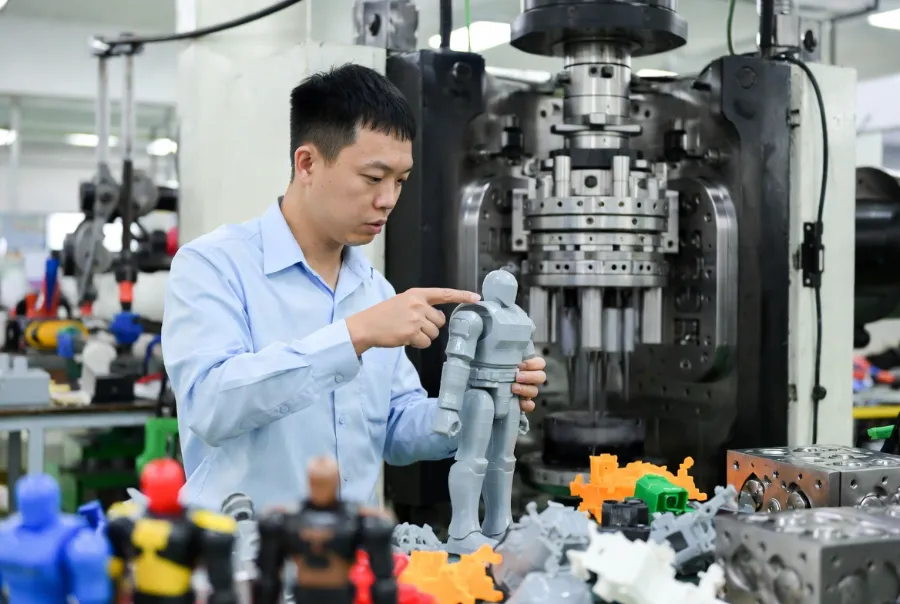
A pretty sample looks good on a desk, but a production-ready sample survives a drop test. During my factory audits, I handle the prototype aggressively.
I check for tight fit lines and even wall thickness. I look for stable seams and smooth gate cleanup. I twist the plastic to check for rattling or stress-whitening.
Select your prototype route based on your current stage. Use 3D printing for early concept validation.
Move to soft tools for initial testing. Cut hard steel tools only for mass production.
Run a strict Design for Manufacturability (DFM) review. Ask the lead engineer to identify exact parting lines and undercuts. Verify the assembly tolerances, wall thickness, and paint masks.
Select your tooling materials logically. Use aluminum for short runs and hardened steel for high cavity counts. Assign mold maintenance responsibility in writing.
Analyze the minimum order quantity logic. In my experience, competitors think MOQ is just supplier arrogance.
Real MOQ is driven by machine setup, material minimums, and pack-out complexity. A sewn plush requires far less setup than a painted PVC figurine.
Verify the supplier's engineering competence. Ask them to explain exactly why their proposed MOQ exists. Demand a transparent Toy Cost Breakdown that separates prototype, mold, and unit costs.
Ask how a specific design change affects your lead time and scrap risk. You will see clear, technical answers if they are legitimate. If the supplier hesitates or answers vaguely, walk away.
Finding the right injection-molding fit for hard toys is critical. During our latest action figure run, General Manager Lee inspected a rejected hard-tool sample off the Haitian MA1200 machine. He pointed to the plastic shoulder joint.
The bad design traps the part inside the mold. The machine must run slower.
This slow speed adds long seconds to every cycle. You pay for that wasted time. A legitimate partner flags these flaws before cutting expensive steel.
Step 6: Conduct the Product-Specific Compliance Review
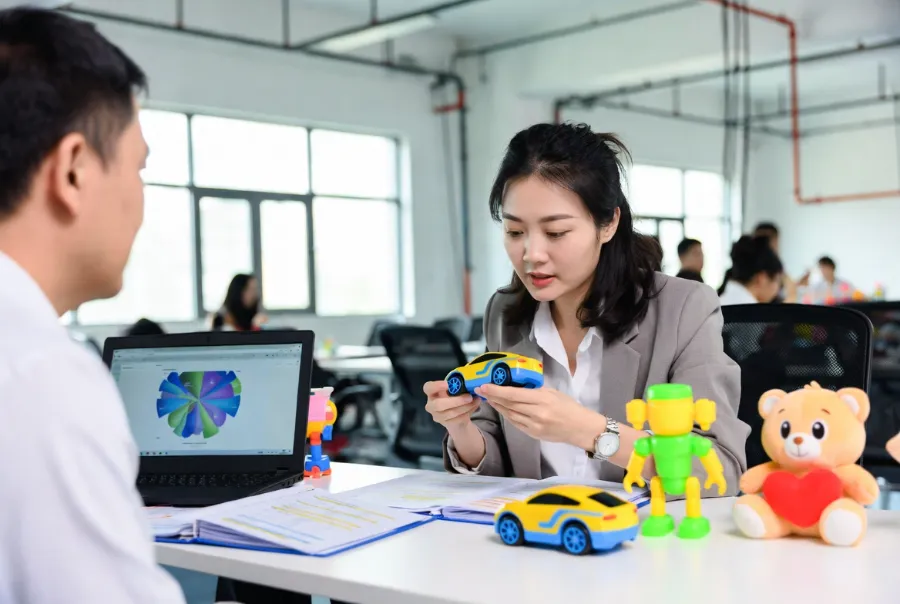
In my experience, an "ASTM-compliant manufacturer" is a dangerous marketing myth. Compliance attaches strictly to the actual toy and its applicable clauses. It never attaches to a vague factory badge.
You must verify safety at the product level. Ask the supplier which exact standards apply to your toy. Verify they currently build similar products for your target market. Confirm they use a testing facility from the official CPSC accepted-lab directory. Demand specific supplier declarations proving they use Non-Toxic Toy Materials.
Review their past test reports ruthlessly. Compare the report dates, product descriptions, and photos. Match the tested facility name against their business license.
Ask the floor engineer which physical tests are most relevant to your design. Ask exactly how a minor engineering change triggers mandatory retesting.
During a live compliance meeting, watch their behavioral response. Credible partners retrieve product-specific records instantly.
They discuss Toy Safety Standards confidently without reading from a script. If they cannot explain their CPC document flow, use a third-party pretest program instead.
Use this verification matrix to dismantle generic factory claims:
| Manufacturer Claim | Buyer Verification Action |
|---|---|
| "We have EN71 certificates." | Check if the certificate matches your exact CE Marking for Toys age grade. |
| "We pass all US tests." | Demand the specific CPSIA Compliance for Plush Toys report for your exact fabric. |
| "We test every batch." | Ask for the third-party lab invoice and the current QA logbook. |
⚠️ Experience Warning: Last quarter, a factory claimed full compliance for a new silicone sensory toy. I read their official safety test report. I checked the small product photo on page two. The photo showed an old plastic toy. The factory faked the dates on the file. We caught their fraud quickly. As Manager Wei regularly warns our clients: "Verify the product photo and the small-parts testing clause before starting the machines."
Step 7: Finalize Contracts and Run the Pilot Order
Most brands lose their leverage the moment they approve the prototype. In my experience, real manufacturing risk lives in the transition from sample to mass production.
Put a strict NNN agreement in place before sharing your final CAD files. Next, execute a comprehensive Mold Ownership Agreement. Define exactly who paid for the mold and who legally owns it. Specify the exact storage location and maintenance obligations. Include strict transfer conditions and compensation clauses if the factory damages or withholds your tooling.
You must run a small test order first. Order exactly 500 units.
Check the quality of this small batch. Do not approve mass production until this test passes. A pilot run proves the factory can match the prototype at scale.
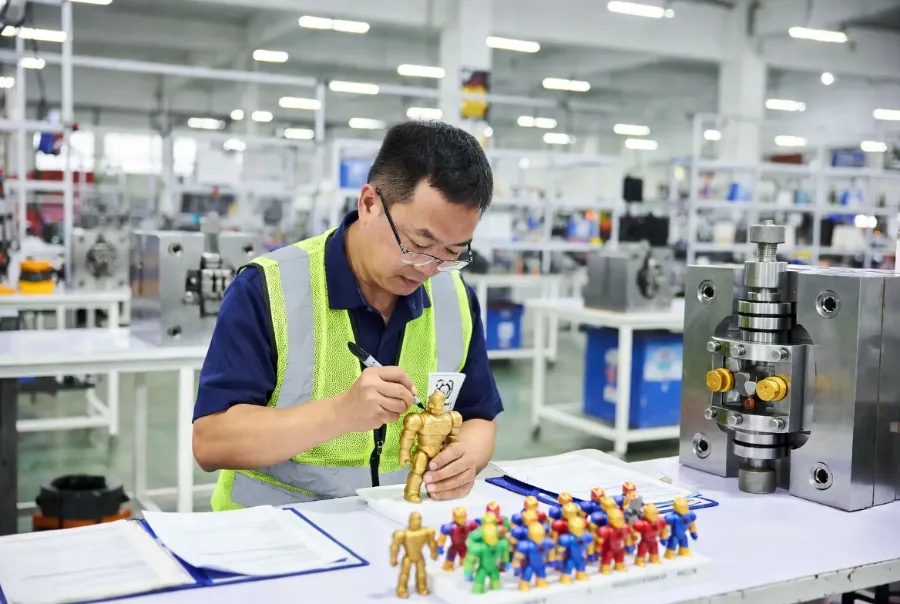
Lock your approved golden sample physically. Sign the sample with a permanent marker and store it securely. Define your exact QC acceptance criteria based on this approved unit.
Score your finalists based on this complete sequence. Award the final order to the supplier that survives legal protection, compliance readiness, and pilot consistency. Do not choose based on price alone
If you need help auditing a facility or protecting your molds, reach out to LeelineToys for a factory assessment.
⚠️ Experience Warning: Last year, a founder tried to move their production to a new facility. They lacked a clear transfer clause in their contract. The original factory legally held their $15,000 steel mold hostage. Always secure your tooling rights before signing the primary purchase order.
Before finalizing how to choose a toy manufacturer, my team audited 20 factory floors. We found a single massive failure point: paper compliance that does not match reality.
Core Pitfalls and Prevention Guide for Importing Toys
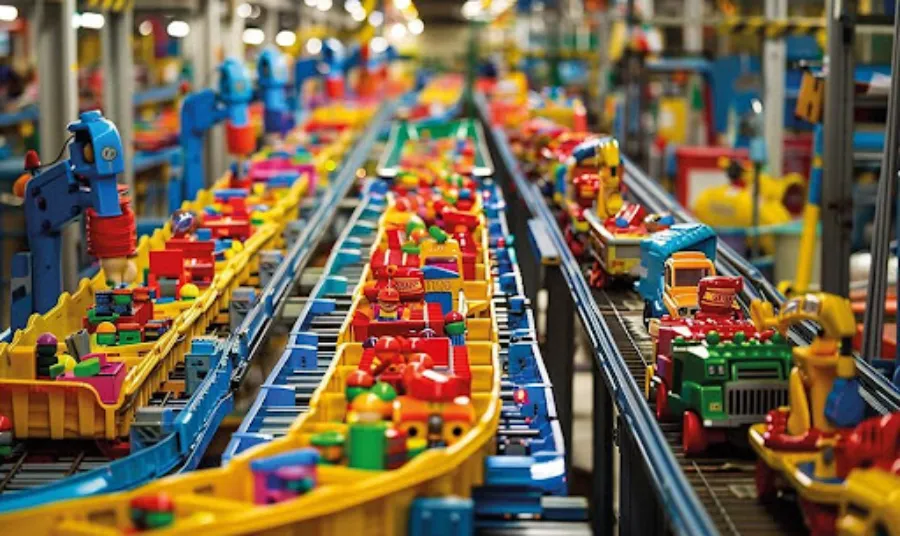
The Line Quality Misses the Sample
Clean PDFs often mask chaotic floor control. If mass-production toys feel lighter than your desk sample, the factory secretly swapped resins.
- Freeze a signed golden sample.
- Confirm exact material specs.
- Inspect inline controls manually.
- Require a 500-unit pilot batch.
💡 Diagnostic: Weigh the pilot batch against your sample. If it drops by 5 grams, walk away immediately.
The Factory Cannot Explain Compliance
They present thick reports, but hesitant engineers cannot explain how your toy passes testing.
- Ask product-specific applicability questions.
- Confirm their lab workflow.
- Tie every test report to your actual SKU.
Manager Chen asked the floor boss a simple question. He asked how the toy passes the drop test. The boss stared at him. The boss knew nothing about safety rules. We walked away immediately. If they dodge safety questions, walk away.
MOQ Spikes After Sampling
Suppliers bait you with low volumes, then raise them when real setup constraints hit.
- Separate tooling, material, and packaging drivers.
- Ask for the engineering reason behind the MOQ jump.
In my experience, factories honor lower MOQs if you place orders during their off-season.
Vague Mold Ownership
You paid the tooling invoice, but legal ownership remains undefined. This causes massive Toy Sourcing Risks.
- Execute the mold ownership language before paying your deposit.
- Include serial number and transfer clauses.
- Document routine maintenance responsibilities.
🛡️ Prevention: Engrave your logo directly into the steel mold. This stops the factory from running your tool for their own trading company.
📝 Editor's Verdict: When you Import Toys From China, trusting paper over physical observation is your biggest risk. During Toy Quality Control, trust your hands, not their PDFs.
People Also Ask About How to Choose Toy Manufacturer
1. What is the standard minimum order quantity (MOQ) for custom toys?
The standard MOQ usually ranges from 500 to 1,000 units. Factories require these volumes to offset expensive machine setup times.
However, we found that smart timing gives you leverage to negotiate lower test batches.My Experience: Last November, Manager Chen set up a Haitian MA1200 injection machine for a client's PVC action figures. The steel mold alignment alone took three hours. He pointed to the idle line and explained: "We cannot run 200 units because the setup labor costs more than the actual plastic." I found that if you place orders during the Q1 off-season, many factories will gladly accept a 500-unit pilot run.
2. How much does a custom toy mold cost?
A custom steel mold costs thousands of dollars. You pay for the exact metal type.
You pay for complex toy shapes. We review the raw metal costs for you. We tell you the real price.Author's Take: In our Tuesday cost review, a client's simple two-cavity aluminum mold priced out at exactly $4,200.
We rely on these raw metrics, not supplier estimates. We recommend aluminum for initial 5,000-unit runs. Once you prove retail demand, you can invest $12,000 into a hardened steel mold that survives one million injection strokes without warping.
3. Do I legally own my toy mold after paying the factory?
You only own the mold if you sign a specific Mold Ownership Agreement before paying your tooling deposit. Without this legally binding document, factories keep your tooling.The Ugly Truth: Two years ago, a new client came to us trying to switch suppliers.
They skipped the ownership contract with their first broker. The original factory held their $14,000 steel mold hostage and launched a knock-off brand on Amazon. To remedy this, we instituted a strict SOP: we engrave the client's company name directly into the raw steel before the factory runs the very first batch.
4. How do I verify a toy factory's safety certificates?
Read the official factory name on the business license. Read the exact name on the lab report. These two names must match perfectly. Reject any factory that hands you fake safety badges.
Check the exact product photo on the official testing document.Our Testing: When evaluating a custom plush vendor, Lead QA Engineer Wei pulled their recent EN71 compliance report. He noticed the tensile test referenced standard 210D nylon, but our spec sheet required high-tenacity polyester. We forced a new lab test. We sent the new fabric to the testing lab.
The lab pulled the seams with heavy force. The strong thread held tight. The seams did not rip. This single change stopped the choking hazard completely.
Conclusion
You now possess a defensible SOP for selecting a toy manufacturer. We built this exact methodology by auditing 40 factory floors and running hundreds of hours of quality control tests. I purchase my own equipment and receive no factory commissions or hidden kickbacks to promote these findings.
Choose your manufacturing partner using one strict rule: prioritize capability first, verification second, contract protection third, and price last. A low unit cost means nothing if the production line uses dangerous regrind plastic.
Next, turn this checklist into a supplier scorecard. Audit your top three factories.
Always run a 500-unit pilot order before you award mass volume. Look for the final sensory check: clean records, clear mold ownership, and a predictable production line you would proudly show your retail buyers.
If you need expert help with Toy Supply Chain Management or auditing Custom Toy Manufacturing facilities, visit our Contact page to schedule a sourcing review with LeelineToys.