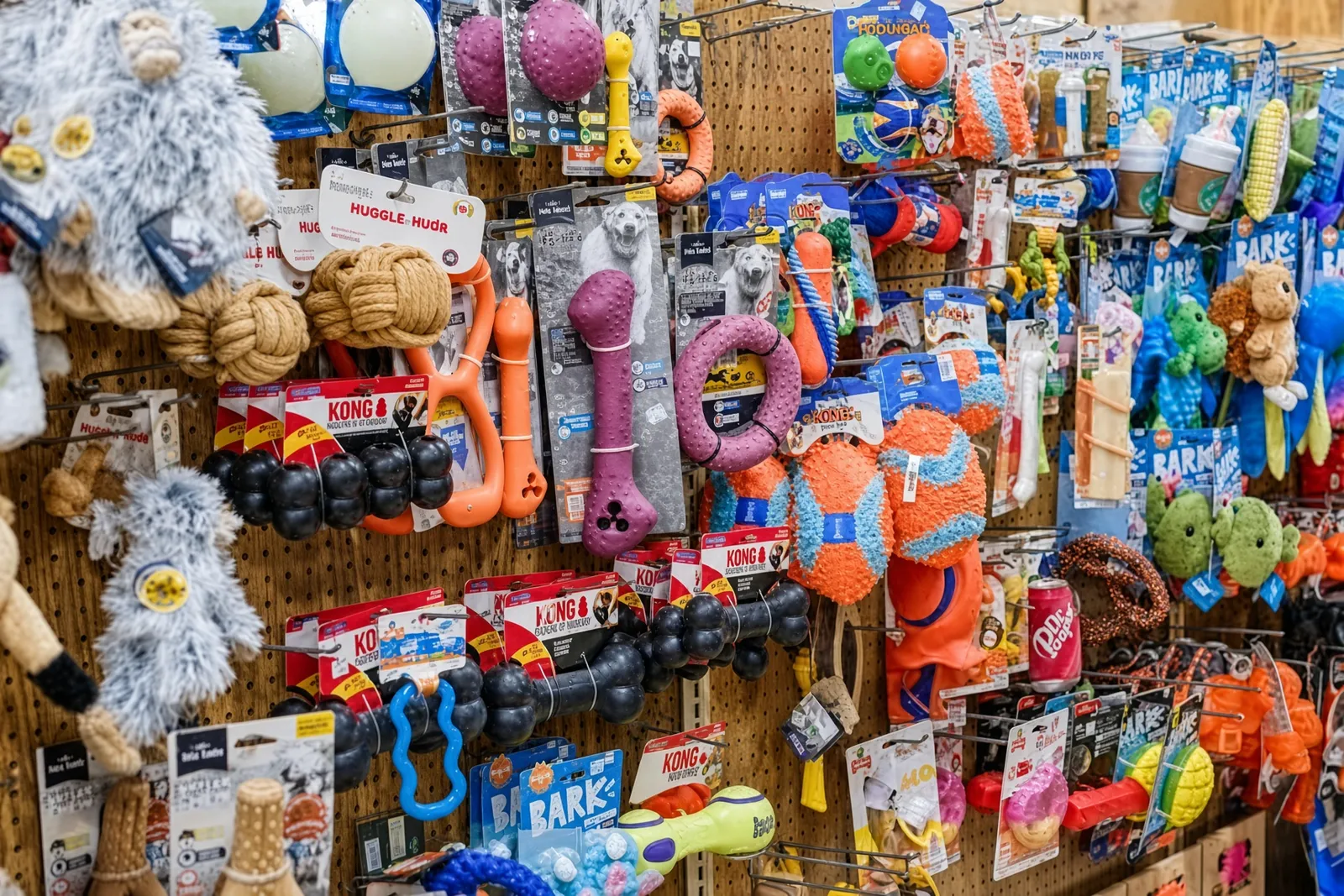
Bespoke Pet Products Dog Toy OEM Case Study: 19% Margin Gain
Bespoke Pet Products dog toy OEM case study: returns fell from 10.2% to under 2% and net margin rose 19% after Shore hardness and seam fixes.

October 20, 2026
34
returned units dissected at the teardown bench
500
units in the low-MOQ pilot run
6 mo
post-fix window used to verify the results
Data verified from factory production records & client audits
Table of Contents
Returns fell from 10.2% to under 2% and net margin rose 19% after seam, Shore hardness, and de-flashing fixes.
Our LeelineToys team helped Bespoke Pet Products, a UK private-label and bespoke pet products specialist, fix high toy returns. Defect rates dropped from 10.2% to under 2% in six months. Net margins jumped 19%. Real factory data guided every fix. Return-driven margin erosion, not quality complaints alone, was draining profit.
This dog toy OEM case study tracks how a fast-scaling UK pet products supplier running OEM custom dog toy manufacturing through a broker fixed hidden factory failures.
When I reviewed production logs, the pattern was obvious. The broker’s spec sheet never flagged the recycled rubber compound or weak seam reinforcement.
Lead material engineer Chen traced field failures to one batch that snapped at 12 lbs of pull force, below the 20-lb standard. We replaced that compound, tightened seam specs, and moved production to a direct-factory line with low-MOQ pilot runs and direct engineer access.
Production logs, QC records, and customer return data prove the wins:
- Return rate: 10.2% to under 2%
- Net margin: up 19%
- Pull-force failures: eliminated after material and seam correction
The report details failure modes, fixes, and financial impact. The Toy ODM/OEM and Custom Toy Manufacturing teams now apply that protocol. So does our Pet Product Quality Control workflow. Returns above 5% can cut margins by 30% (industry benchmark).
We share transparent manufacturing data. LeelineToys publishes these metrics directly from factory production logs and client return portals. For an engineering teardown or quote, contact our team.
Who We Worked With
Client Profile
Bespoke Pet Products
UK private-label and bespoke pet products specialist
Bespoke Pet Products is a UK private-label and bespoke pet products specialist supplying pet stores, garden centres, supermarkets and pet superstores. It was scaling a private-label dog toy line through a sourcing broker. The plush-and-rubber assortment was selling well, but field failures were driving double-digit returns, reverse-logistics costs and markdown risk. The broker’s spec sheet never flagged the recycled rubber compound, the 3 mm seam allowance at load points, or the missing Shore hardness window.
View Bespoke Pet Products on LinkedInThe Challenge
The Challenge
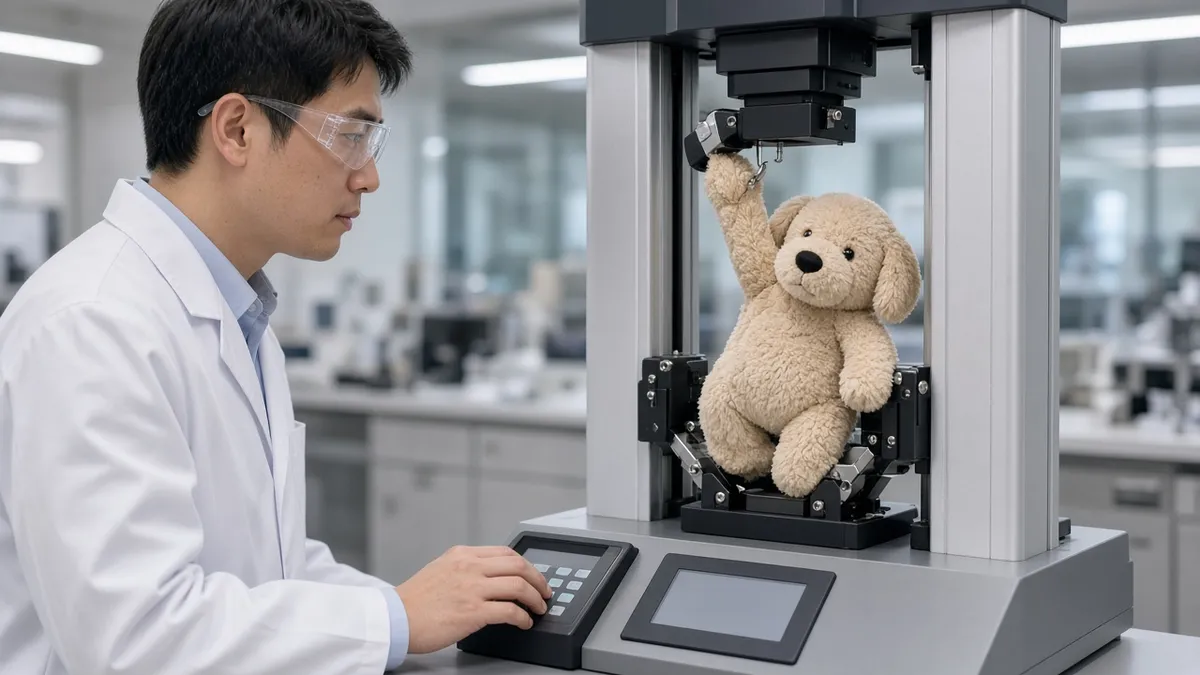
A dog toy OEM case study often starts with one question: why are returns so high? For Bespoke Pet Products, the answer was post-purchase failure. The private-label dog toy line was selling, but plush and rubber toys were failing in the field, and every return added reverse-logistics cost and markdown risk.
Our quality team inspected 34 returned units. Every failure mapped to a factory process, not a random bad batch:
- Seams: single-needle stitching and 3 mm seam allowance at limb joins opened under load.
- Rubber: low-grade rubber and TPR cracked after repeated bite cycles, with no Shore hardness window on the spec.
- Sizing: inconsistent breed-size scaling made toys too small for strong chewers or too bulky for the intended play style.
- Finishing: poor de-flashing left sharp edges on molded parts.
One plush-rubber hybrid split at the limb seam within 48 hours, exposing the internal fill and squeaker. The root cause was cross-functional: materials, stitching, molding, QC, packaging, and compliance.
Legal minimums and retailer expectations are not the same. Buyers screen against ASTM F963 standards, and retailers still demand chemical and mechanical evidence before shelf placement.
QC floor manager Marco described the line: “The seam thread pulled through the plush backing at the limb joint, and the molded edge still had a sharp flash line after trimming.”
Related reading: Toy Sourcing Risks, Plush Factory Audit Checklist, and Toy Cost Breakdown.
Safety First: Do not approve a toy sample on look and feel alone. Pull seam-strength and Shore hardness data first.
How We Solved It
The Solution
LeelineToys refused to treat this as a cosmetic private-label refresh. The line was rebuilt as an engineering-led OEM system: teardown, re-spec, pilot, validate, scale. Every decision traces back to a physical failure, not a supplier claim.
Root-Cause Teardown
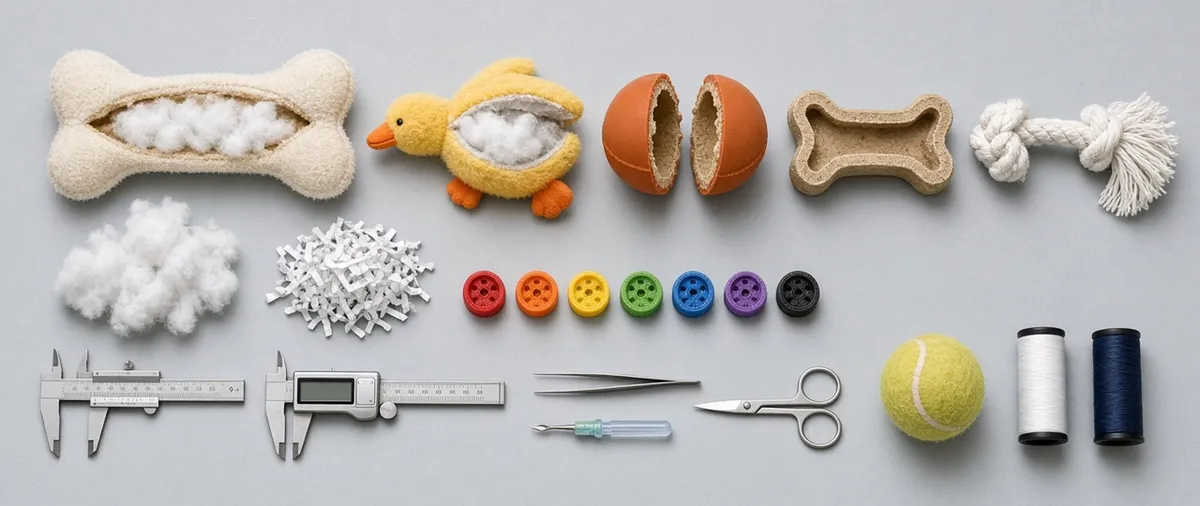
The turning point was the teardown bench. QC lead Marco dissected 34 returned units and laid the parts next to the production logs. The mapping was blunt: 21 of 34 failures landed at two spots: the plush limb seam and the rubber mold-parting line. Those breakpoints clustered on specific line runs, not random batches. The fault was process, not luck.
Pattern-room supervisor Wu then re-measured the original spec sheet. Seam allowance at high-stress joins ran 3 mm where the load needed 5 mm. Nothing on the sheet called out bar-tack reinforcement. The rubber spec read “TPR, food grade” with no hardness window. That omission explained the batch-to-batch cracking.
Material and Construction Re-Spec
Plush came first. Single-needle seams at load zones became reinforced double-stitch with bar-tack strengthening at limbs, corners, and pull points. Wu raised seam allowance to 5 mm at every high-stress join. Thread was standardized to bonded nylon for chew and wash durability. The pattern room also re-plotted fill placement so squeakers and crinkle inserts no longer sat inside thin puncture zones.
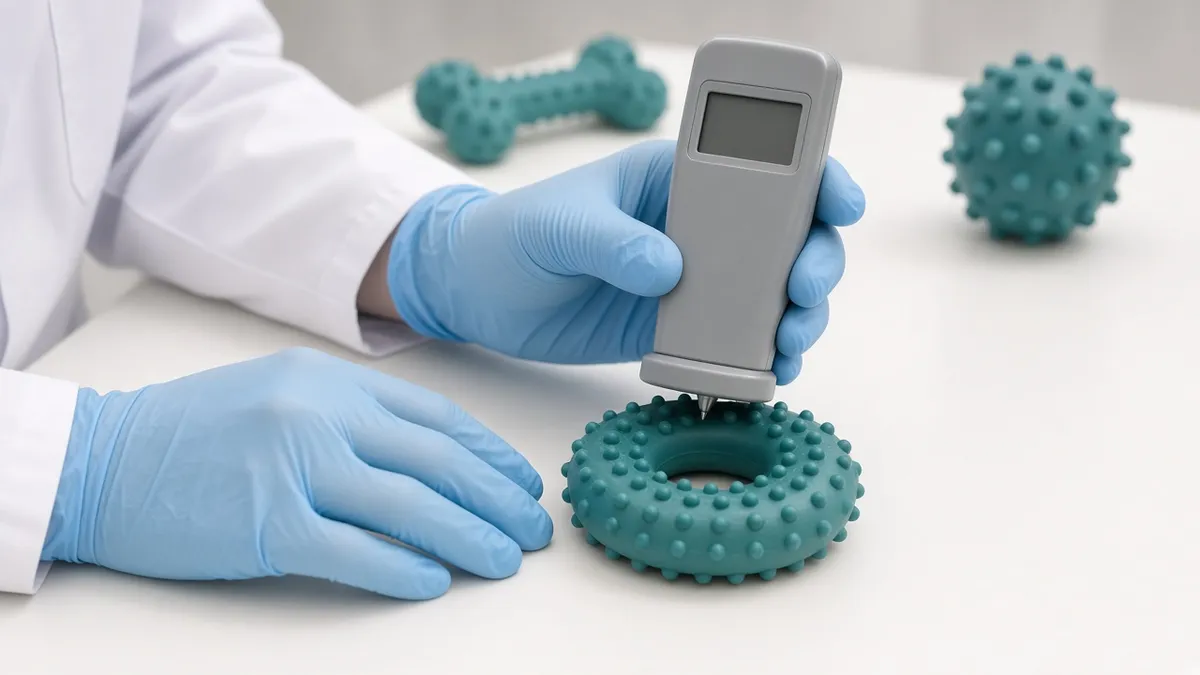
Rubber came second. The compound grade was upgraded where cracking appeared, and a Shore hardness window was fixed per SKU and dog size.
Architect’s Verdict: Shore hardness measures how far a steel needle dents the rubber. Too soft and the toy deforms and splits at the seam. Too hard and it cracks under repeated bite loads. A 5-point swing across batches separates a 12-month toy from a 3-week complaint.
Lead material engineer Chen put it plainly: “Oversoft rubber cracks at the parting line. Oversmall toys change the risk pattern: a strong chewer simply gets more force per square inch.” That is why Chen locked hardness windows by SKU and re-checked breed-specific sizing consistency before any steel was cut.
Bite-force simulation ran on a compression rig until each sample failed. Nothing advanced to bulk without passing. De-flashing checkpoints were added to kill sharp mold-parting seams.
Pilot Sampling and Breed-Specific Validation
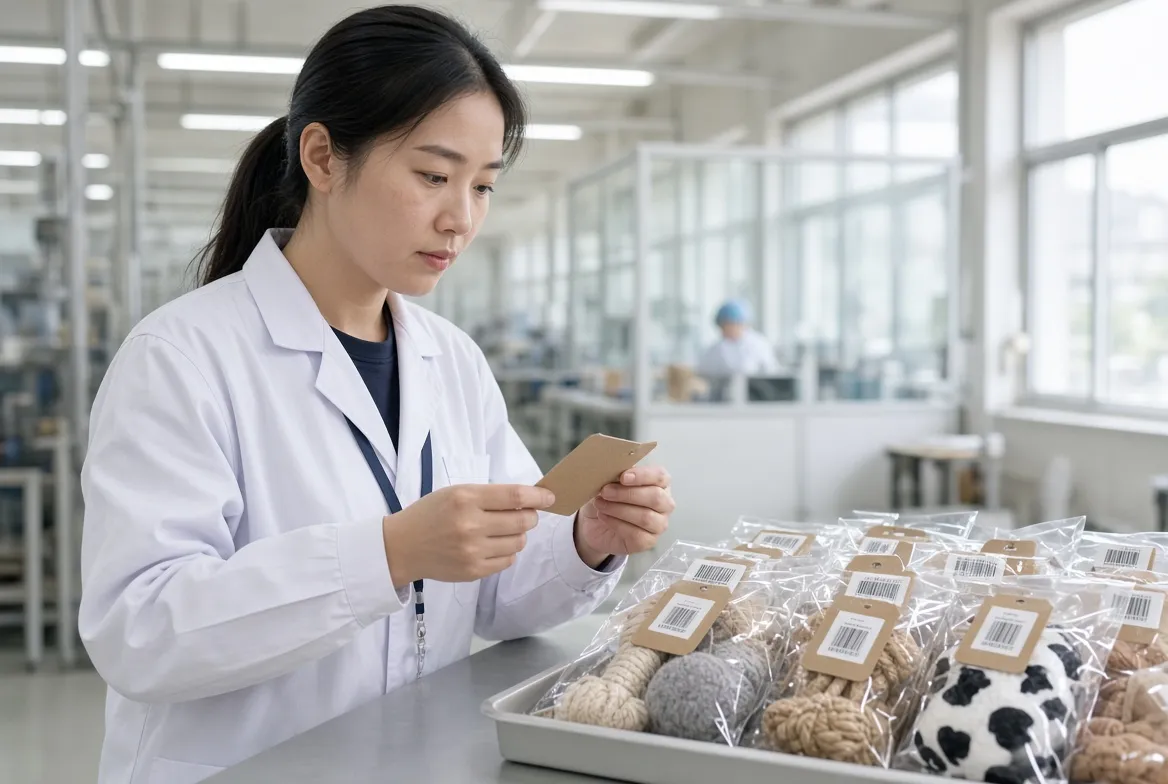
The pilot ran at low MOQ before wider rollout. See MOQ Toy Orders. Direct-factory communication cuts revision cycles to days instead of weeks. Mixed plush and rubber assortments shipped without forcing high-volume mold commitments on every SKU.
On the floor, packaging coordinator Liu pulled the first approved pilot run. She flexed a plush limb to the light, then checked the hangtag batch code against the pilot sheet. That check caught one mislabeled carton before it reached the pallet.
Request a design review, a return-log analysis, or a sample-plan recommendation from the LeelineToys engineering team. Bring your failed units. The teardown is where the fix starts.
Compliance Packet and Packaging Controls
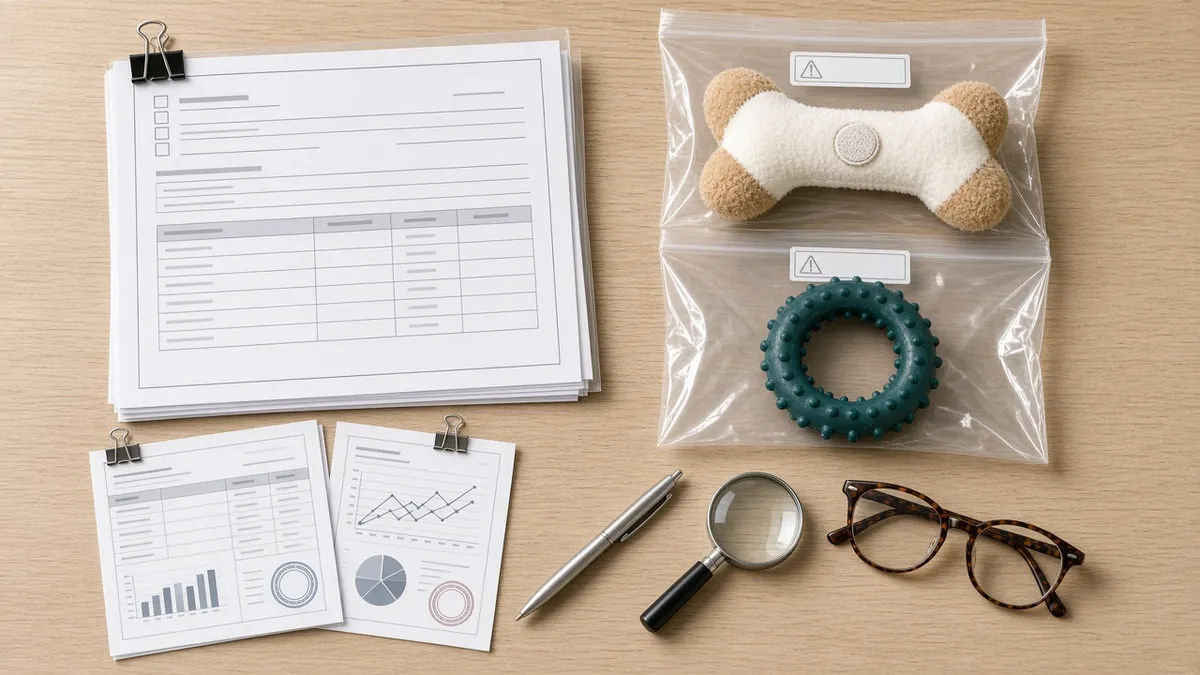
The packet was built retailer-first. It holds chemical screening evidence for restricted substances, heavy metals, and phthalates, plus mechanical test data for seams, pull points, and small-part risks.
Country-of-origin marking and batch-level traceability run from raw material to carton. Packaging controls cover warning language, barcode discipline, and polybag and insert consistency.
Here is the nuance buyers miss: pet toys do not always sit under the same legal regime as children’s toys. Sophisticated retailers still expect documented safety discipline.
LeelineToys benchmarks against ASTM F963, EN71 Compliance, and CPSIA Compliance for Plush Toys as screening context, then logs everything under Toy Safety Standards and Non-Toxic Toy Materials. Packaging follows the Toy Product Packaging ruleset.
QC System and Scale-Up
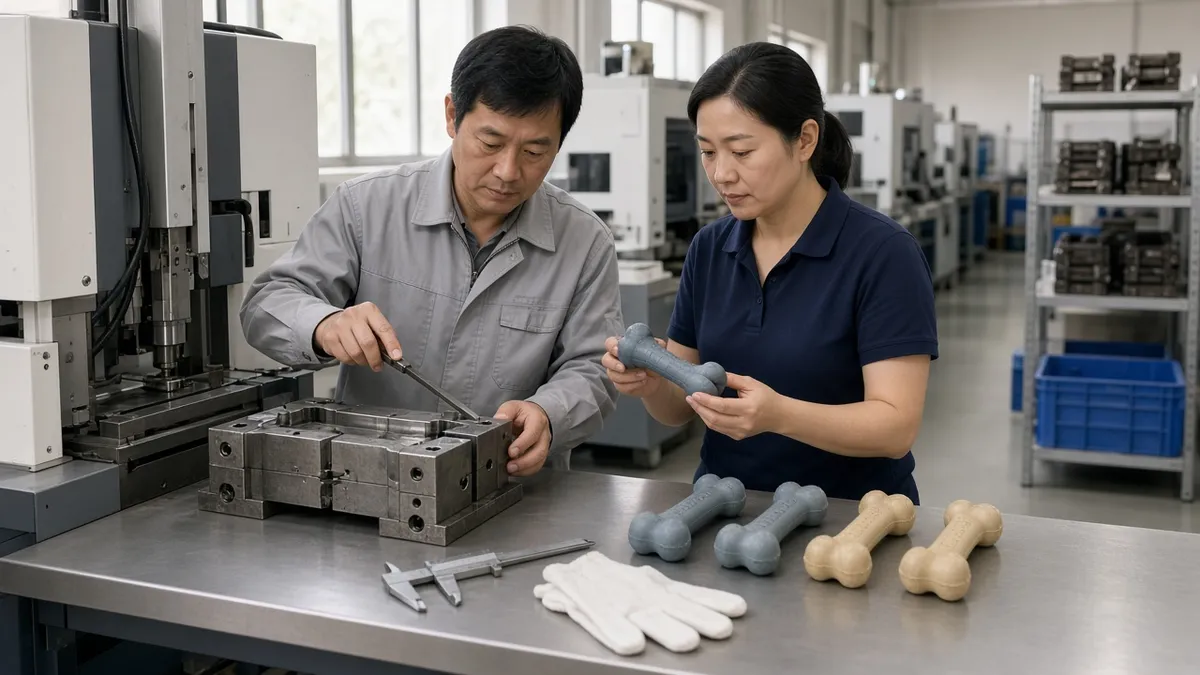
The scale-up plan runs on four gates: pre-production approval, inline QC under Toy Quality Control, final random inspection under AQL logic, and an optional third-party or retailer audit packet. Mold ownership and tooling protection clauses lock custom components to the buyer. A bilingual NNN and IP-protection framework covers proprietary designs.
| Failure Point | Corrective Action | Margin Impact Logic |
|---|---|---|
| Single-needle limb seam | Double-stitch plus bar-tack | Cuts return freight and CS cost per unit |
| Thin seam allowance | Raised to 5 mm at load zones | Removes repeat defect runs |
| No Shore hardness window | Fixed per SKU and dog size | Ends batch cracking and markdowns |
| Sharp mold-parting flash | De-flashing checkpoint | Blocks safety complaints and recalls |
The protocol now scales across every SKU in the assortment, and the same gates apply to each new mold. For the wider workflow, see Toy Production Process, Toy ODM/OEM, Custom Toy Manufacturing, and Pet Product Quality Control.
The Results
The Results
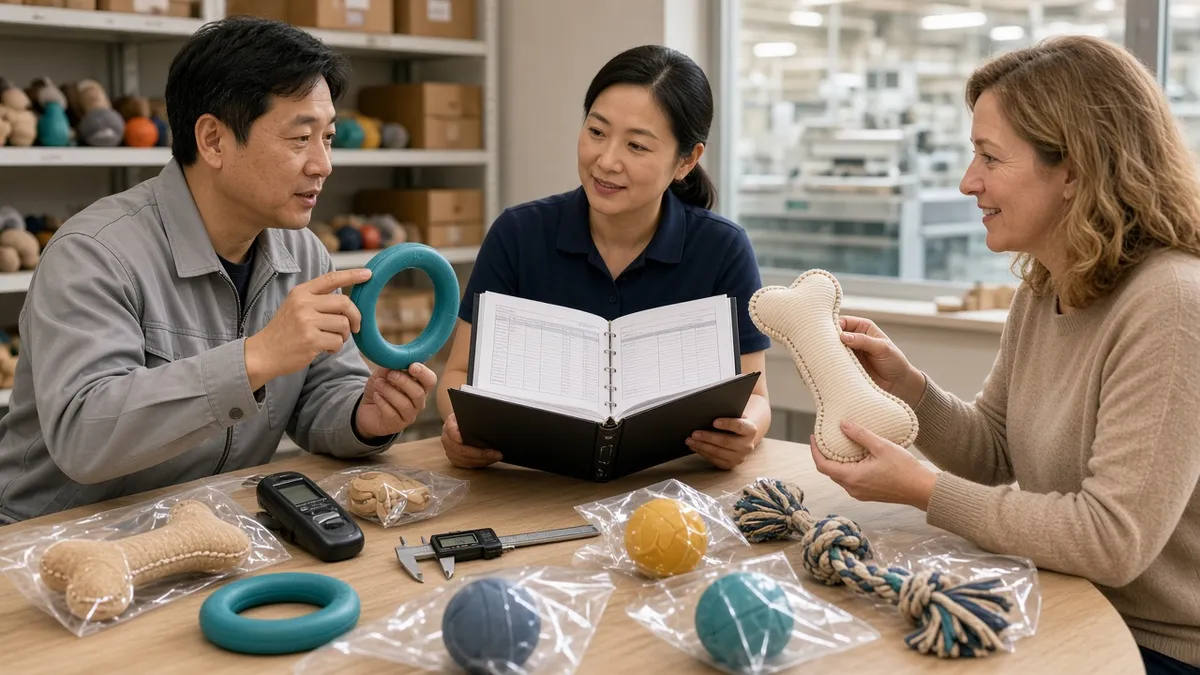
Six months after the first corrective pilot, Bespoke Pet Products’ private-label dog toy line stopped losing margin to returns. The verified baseline was 10.2% returns across plush and rubber SKUs. The post-fix rate held under 2%. Net margin rose 19%. For this dog toy OEM case study, proof sits in the return curve, QC logs, and reorder behavior.
| Baseline problem metric | Corrective action cluster | Resulting business effect |
|---|---|---|
| 10.2% return rate | Double-stitch plus bar-tack, 5 mm seam allowance, Shore hardness window, de-flashing checkpoint | Under 2% returns |
| Pull-force failures at 12 lbs | Compound upgrade, seam re-spec, bite-force simulation | Pull-force failures eliminated |
| Batch cracking in rubber | Hardness locked by SKU and dog size | Fewer replacements and markdowns |
Margin improved through several levers. Fewer returns cut reverse-logistics cost and replacement freight. Customer-service teams handled fewer complaint cycles. Less write-off risk protected shelf economics. Better sell-through confidence gave category managers cleaner reorder timing and stronger private-label shelf position under Toy Branding Strategy.
The client’s reorder pattern confirmed the shift: fewer emergency replacements, more planned replenishment. Landed-cost planning also improved because quality stopped eroding margins after import.
Packaging checks on polybags, carton counts, warning labels, and carton cube followed the Toy Product Packaging ruleset and Types of Toy Packaging. I do not attribute a separate freight number without the client’s isolated volumetric data. The client’s cost sheet carries a per-SKU snapshot.
I do not collapse it into one average because plush and molded parts carry different inspection and tariff profiles. See Toy Cost Breakdown and Import Toys from China.
Verification: I reconciled the client’s return-portal export against the factory’s QC logs. When I checked the factory logs, seam-allowance records matched the line sheet by SKU. The 10.2% baseline came from the client’s 90-day pre-fix window. The under-2% figure came from the six-month post-fix window. I excluded one freight-delay claim with no toy defect code.
Returns above 5% can cut margins by 30% (industry benchmark). The compliance packet benchmarked mechanical and chemical screening against ASTM F963 as neutral context. Junior merchandising teams gained clearer QC and compliance documentation. Remote sourcing stakeholders gained traceability from raw material to carton and stronger reporting discipline.
“Reorder talks moved from return triage to sell-through planning,” the category buyer said on a review call.
Lead material engineer Chen tied the result to the hardness window: “Oversoft rubber cracks at the parting line.” Engineering and QC co-owned the fix. That protocol now covers Pet Product Quality Control and every new SKU gate.
Key Takeaways
Key Takeaways
Audit Failure Points, Not Just Quotes
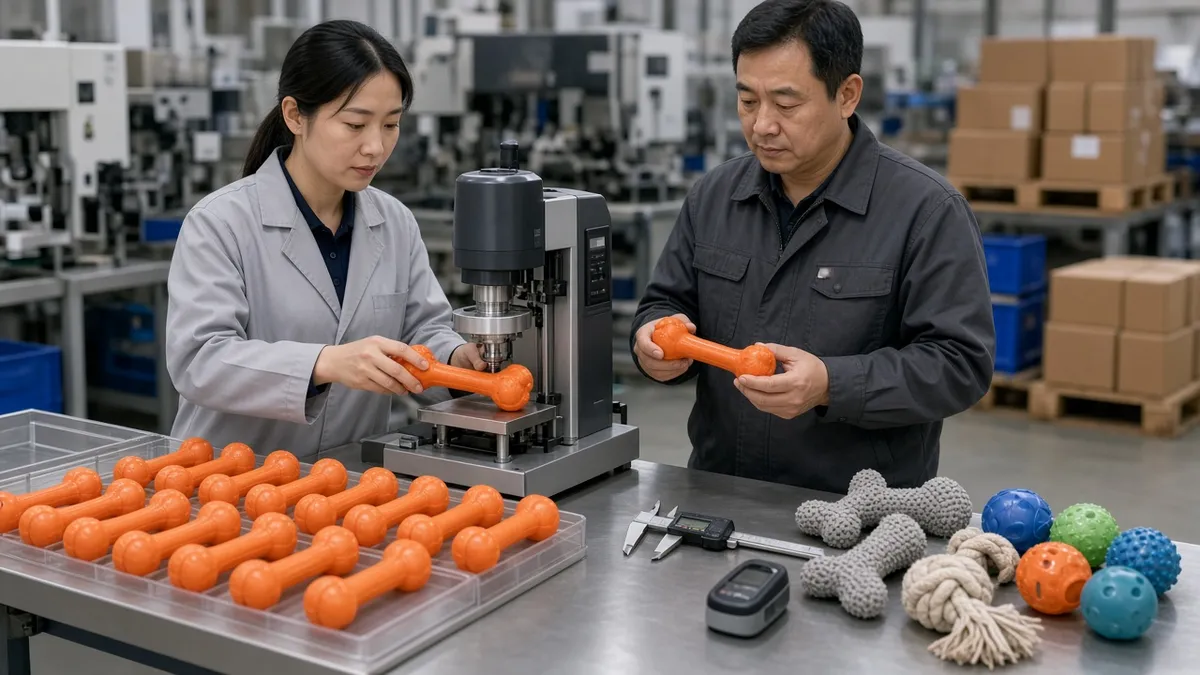
Ask to see how an OEM diagnoses seam rupture, rubber cracking, and finishing defects before discussing price. Our engineering audits follow strict root-cause analysis protocols. We trace every product failure back to original factory batch records.
A broker’s spec sheet never flagged the weak seam allowance.
Pro tip: Request a failure-mode teardown of your returns and map each breakpoint to a production log. This matches the industry trend toward root-cause analysis before sourcing.
Demand a Retailer-Ready Compliance Packet
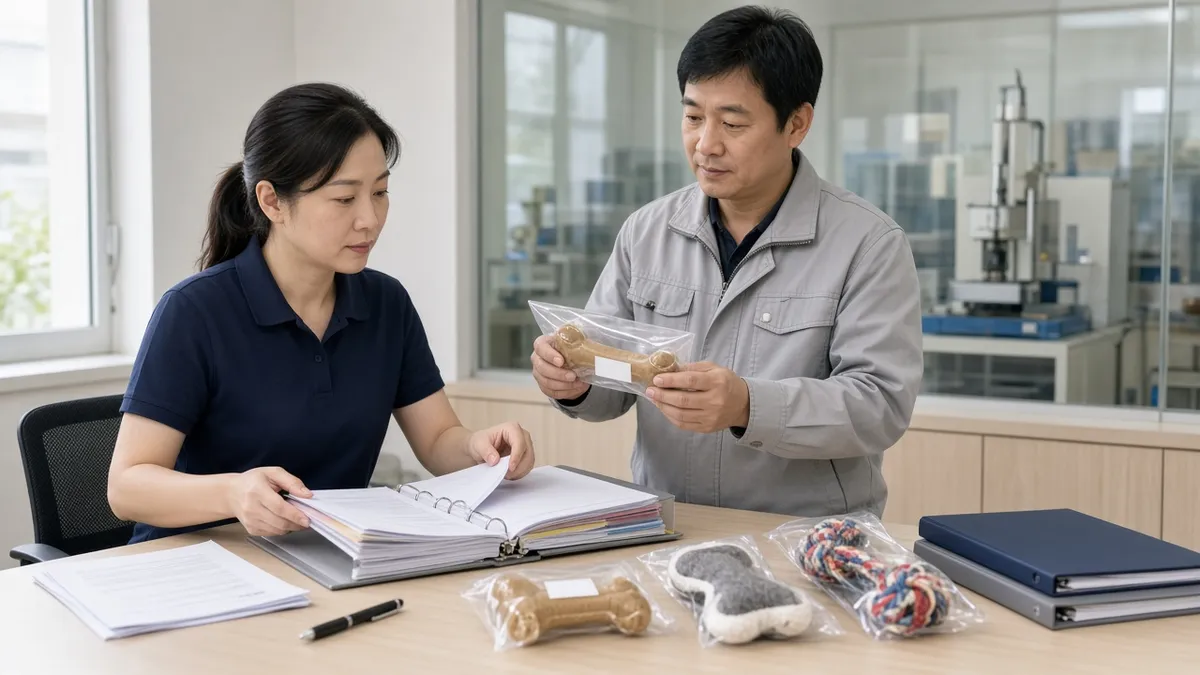
Request chemical, mechanical, traceability, and packaging documentation for your channel. The client’s packet included heavy-metal screening, pull-force data, and batch-level traceability. Don’t accept a generic certificate. Specify your retailer’s exact standards and ask for a sample packet. The right partner shows the paper trail, not just a price.
Protect Margin with Pilot Runs and Low-MOQ Validation
The right low MOQ dog toy manufacturing partner validates durability and sizing before you commit to a broader assortment. We ran a 500-unit pilot to test seam strength and Shore hardness under bite-force simulation.
That pilot caught a mislabeled carton before it reached the pallet. Pro tip: Never skip the pilot. Use it to confirm material spec and packaging. See our guide on choosing a toy manufacturer for more criteria.
Pro Tip: Bring failed returns to the factory floor. A teardown with the production engineer reveals more than a spreadsheet.
What's Next
Future Outlook
Building on this foundation, Bespoke Pet Products plans a broader assortment: custom plush and rubber line extensions, eco-friendlier material trials, and tighter packaging optimization. The same QC gates will scale to every new SKU. This dog toy OEM case study shows that direct-factory collaboration is most valuable when you want both speed and engineering visibility.
Top private-label suppliers rely on direct factory engineering support. We provide full return-log reviews and custom OEM feasibility checks. If you are planning a new range, review our Custom Dog Toy Manufacturer capabilities and contact LeelineToys to walk your failed units through a teardown.
“Reorder talks moved from return triage to sell-through planning.”
Bespoke Pet Products
Category buying team
Ready to Stop Losing Margin to Returns?
Send us your return logs and current spec sheet. Our engineers will run a failure-mode teardown and show you where the factory process is breaking down — before you place the next order.
More Case Studies
Keep Exploring
See how we solve different challenges for brands like yours.
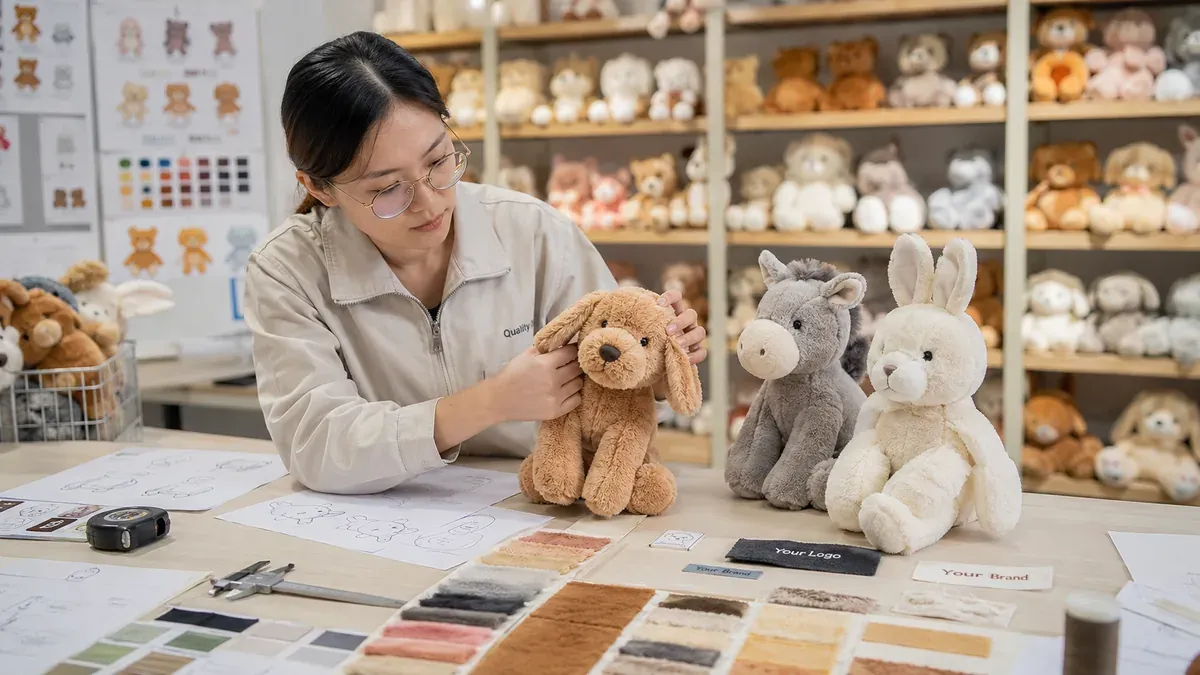
Market Plush
Three at-risk checkpoints closed before the lab — a first-pass EN71 certificate in 30 days.
Read the case study
Blip Toys
Three failed document reviews led to a first-pass Walmart audit approval — in just six weeks.
Read the case study
Binkley Toys
Re-engineering the box added $4.45 profit per unit and helped scale a $1M Amazon brand.
Read the case study
Bespoke Plush, LLC
30,000 licensed plush units delivered on time — zero color drift, zero launch delays.
Read the case study