

90% of plush toy import delays happen because of missed paperwork, not dangerous materials. Navigating CPSIA compliance for plush toys is the difference between a profitable fourth quarter and a seized shipping container. This mandatory compliance framework ensures children's products meet strict chemical and mechanical safety standards.
Having manufactured custom toys at LeelineToys for years, I see the same mistakes repeatedly. Compliance failures rarely stem from bad intentions.
They come from overlooked details. Amazon FBA sellers face sudden listing suppressions simply because they lack a valid label photo.
Procurement managers bleed capital on port storage fees when Customs and Border Protection (CBP) flags a missing Children's Product Certificate (CPC). Even brilliant plush designers routinely trigger small-parts failures because they misunderstand seam attachment limits.
The regulatory danger rarely lies in the fabric. It hides in the components. Plastic eyes, screen-printed inks, and embedded sound modules all require specific chemical and mechanical testing.
Now, the industry faces a massive new friction point. On July 8, 2026, the Consumer Product Safety Commission will mandate electronic filing for all imported consumer goods.
You must transmit your compliance data electronically before your container arrives at the port. You can no longer wait for an Amazon complaint to scramble for a test report.
This playbook is your preparation guide. While this overview serves as general information, you must always verify specifics with a CPSC-accepted lab or legal counsel.
By the end of this report, you will know how to map the applicable rules and plan your testing to the official ASTM F963-23 safety standards. You will learn how to issue a correct CPC, build traceability labels, and prepare your customs brokers for the 2026 eFiling workflow.
Understanding basic toy safety standards is your first step. If you need a manufacturing partner who engineers compliance directly into the prototype phase, connect with our team. Here is exactly how the process works.
What is CPSIA Compliance for Plush Toys?
CPSIA compliance for plush toys is the legal mandate requiring your product to meet strict U.S. children's safety rules (such as chemical limits and mechanical hazard checks) and to carry a valid third-party test report paired with a Children's Product Certificate (CPC).
To simplify this process, we use a universal analogy:
- The CPSIA is the overarching traffic law.
- The CPC is your vehicle registration. It legally ties a specific product SKU to exact safety rules and passing test results.
- ASTM F963-23 is the physical safety inspection. It acts as the core U.S. standard for broad toy hazards. For plush toys, testing labs use this standard to verify seam strength, flammability, and heavy metal limits in any accessible component (like plastic safety eyes or hidden zipper pulls).
Who holds the responsibility?
Who actually signs this paperwork? By U.S. law, the importer of record, domestic brand owner, or domestic manufacturer acts as the certifier.
If you import custom plushies to sell on Amazon, you hold the legal liability, not your overseas factory. You must also designate a records keeper on the certificate who maintains the official test data.
Field Note: The "CE Report" Trap New brand owners frequently ask us, "My factory gave me an EN71 report. Can I use that?" No. EN71 is a European standard. A European report holds zero legal weight at an American port. You must test to U.S. standards to clear U.S. customs.
Furthermore, the official 16 CFR Part 1110 text makes CPC accuracy non-negotiable. A certificate must detail the exact manufacturing date, testing location, and records keeper contact information. Customs agents will instantly invalidate it if they spot the wrong SKU, mismatched dates, or a revoked lab status.
The 3-Part Compliance Stack
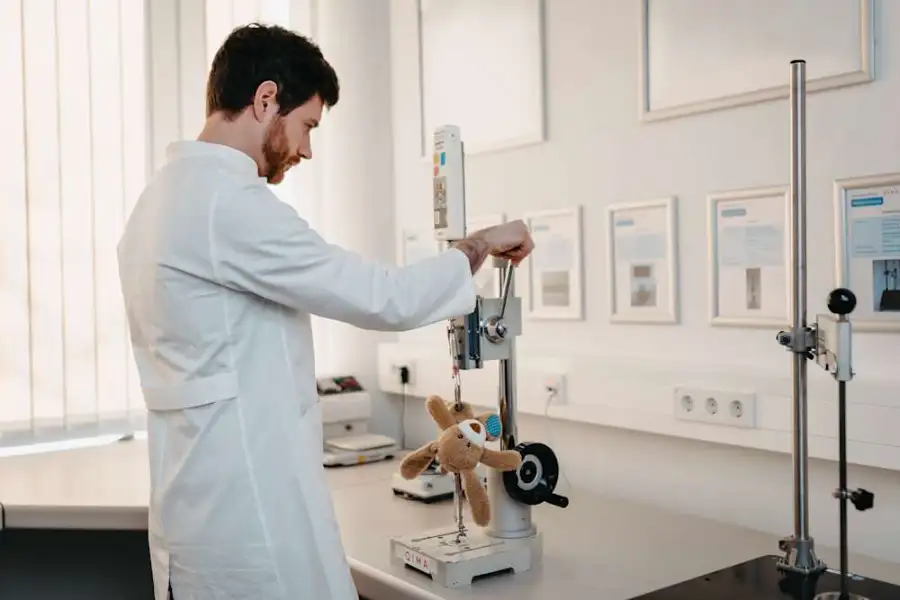
Visualize compliance as a three-pillar stack:
- Testing: You must pull a production-equivalent sample directly off the manufacturing line and send it to a CPSC-accepted laboratory. You cannot test an early handmade prototype.
- Certification: The responsible U.S. party drafts the certificate using passing lab data. You can verify exact formatting rules in the official CPSC Children's Product Certificate guidance.
- Labeling and Traceability: You must sew a permanent tracking label onto the plush toy. This label displays the manufacturer location and batch number, allowing you to isolate a recall if necessary. This pillar also requires applying formal age grading guidelines to determine the proper warning labels for your target audience.
💡 Key Insight: Your overseas factory manufactures the product, but if you import it into the U.S., you own the compliance liability.
1. Compliance scope map (plush-specific)
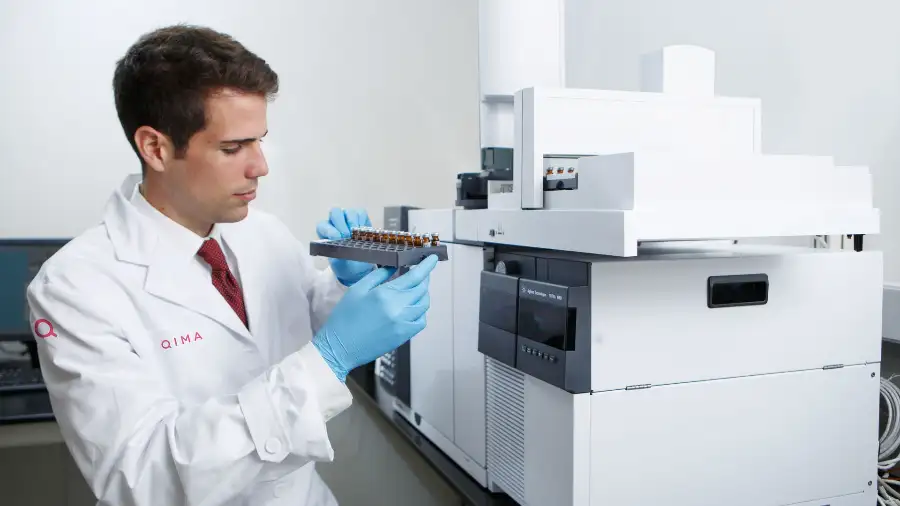
We treat CPSIA compliance for plush toys as a strict engineering teardown. We break every unit down into specific risk zones:
- Baby Loveys: We test saliva colorfastness and fabric flammability.
- Character Plush: We check embroidered threads for lead content.
- Animal Plush: We pull hard plastic eyes to measure detachment force.
- Interactive Plush: We inspect sound modules for battery accessibility.
We categorize hazards into three buckets. First, we check Chemicals (lead and phthalates).
Next, we check Mechanical systems (small parts and seams). Finally, we verify Labeling (tracking labels and age warnings).
2. Chemical requirements: lead and phthalate limits in toys

Chemical compliance follows a component-driven testing principle. One failing material sinks the entire SKU.
First, we test for lead in accessible materials. The law restricts lead in surface coatings to 90 parts per million. Screen-printed labels and painted zippers frequently fail here.
Second, we test for phthalates. These plasticizers make plastics soft.
The 16 CFR 1307 phthalates rule bans specific variants. We test plastic safety eyes, faux leather, and PVC accessories.
We follow a rigid workflow:
- We lock the Bill of Materials (BOM) and approved supplier list.
- We pull production-equivalent samples directly from the assembly line.
- We ship these untouched samples to a CPSC-accepted lab for destruction testing.
🧠 Expert Insight: You cannot test a handmade prototype. You must test the exact raw materials used during mass production.
3. Mechanical requirements: ASTM F963-23 plush testing + choking hazards
We test physical durability against the ASTM F963-23 standard to eliminate choking hazards. This standard dictates physical controls throughout the toy production process.
During toy seam strength testing, labs clamp the fabric and apply 15 pounds of outward force for 15 seconds. The toy fails if the stitching ruptures and exposes internal stuffing.
Attachment security requires aggressive testing. We never trust "tight stitching" for plastic eyes.
We use a torque gauge to twist the component and a tension gauge to pull it. If a piece snaps off, we drop it into a 1.25-inch testing cylinder.
If it fits inside, it requires a small parts warning for stuffed animals. Toys graded for children under 3 cannot contain small parts.
If your plush includes a sound module, we secure the battery compartment with recessed screws to block access.
For under-3 SKUs, use flat embroidery instead of glued plastic pieces. Eliminate internal zipper access points to prevent stuffing ingestion.
4. Permanent tracking label for toys (traceability that survives real life)
Every children's product requires a tracking label. This label traces a defective product back to its exact manufacturing batch, date, and factory location.
To meet plush toy label requirements, we sew a woven or satin label directly into the main body seam. We reject printed tags because ink degrades in the washing machine. The text must remain legible after multiple wash cycles.
You must eliminate "mismatch risk." The batch codes on your tracking label must perfectly match the product identifiers on your CPC and electronic customs filings. A single mismatched digit triggers a customs hold.
5. CPC creation (16 CFR Part 1110 compliance) + downloadable template
The Children's Product Certificate (CPC) is a legal affidavit. Under 16 CFR Part 1110, the certifier assumes absolute liability for product safety.
The certifier role depends on your business model:
- Private label brands importing under their own name act as the certifier.
- Amazon FBA sellers acting as the importer of record act as the certifier.
- In dropshipping setups, the U.S. domestic entity controlling the import entry takes legal responsibility.
Downloadable CPC Template
You must include exactly 7 mandatory data elements. Use this exact structure:
CPC Template (7 mandatory data elements checklist)
-
Product identification (SKU/model, description)
-
Cited safety rules/standards (e.g., CPSIA + ASTM F963-23 + applicable CFR parts)
-
Importer/domestic manufacturer certifying compliance (name, address, phone/email)
-
Contact information for the individual maintaining test records
-
Date and place of manufacture (month/year + factory location)
-
Date and place of testing (month/year + lab location)
-
Third-party lab information (CPSC-accepted lab name, address, report ID)
Tip: Keep wording identical to what appears on test reports and purchase orders.
6. The July 8, 2026 mandatory eFiling rule (what changes operationally)
The CPSC recently published a Federal Register final rule mandating electronic filing. Soon, you will use the CPSC eFiling program to transmit certificate data to Customs and Border Protection (CBP) via the ACE system.
This process does not replace physical testing. It forces earlier data transmission prior to U.S. port arrival.
Mark these absolute deadlines:
- Mandatory eFiling begins July 8, 2026 for most imported consumer products.
- Foreign Trade Zone (FTZ) entries begin January 8, 2027.
Update your toy product packaging controls now. Coordinate with your customs broker to determine who sends the Partner Government Agency (PGA) message set. Finalize your CPC before the vessel departs.
⚙️ Technical Detail: If the ACE system does not receive your eFile data, CBP denies entry automatically. Do not wait until the ship docks to request test reports.
7. Experience case study: Needle Detection in plush production
Paperwork proves compliance. Factory-floor controls create safety. When you find a toy manufacturer, you must audit their physical hazard controls.
The most severe hidden hazard in a plush toy is a broken sewing needle. Industrial machines frequently snap needles under high tension, dropping sharp metal shards into the plush stuffing.
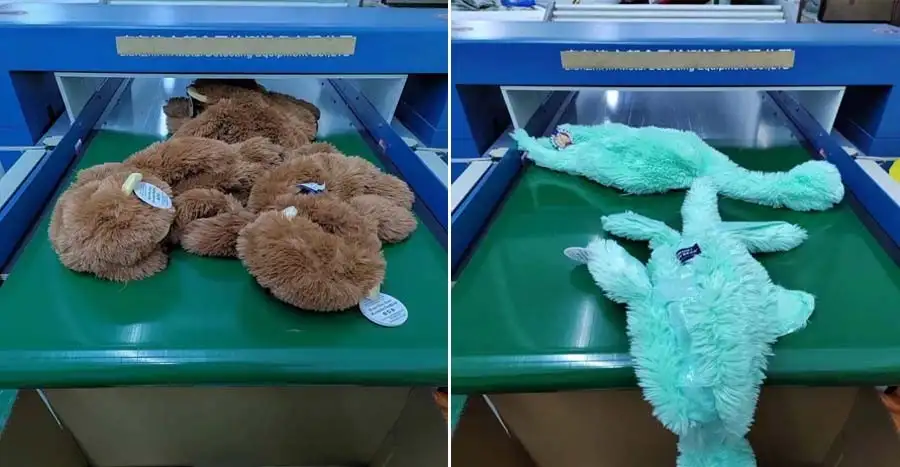
On our Toy ODM/OEM assembly lines, we reject visual inspections. We use dual-head conveyor metal detection.
First, the worker closes the plush body seam. Next, the toy passes through a calibrated electromagnetic aperture.
The dual-head system scans the unit from multiple angles. If the sensor detects a ferrous fragment as small as 1.0mm, the conveyor halts instantly.
Our QC team pulls the flagged toy immediately and quarantines it in a locked red bin. A supervisor dissects the stuffing to extract the broken needle.
Finally, we log the exact time and machine number in our inline QC sheets. These verified control logs become a permanent part of your compliance file.
Why Proactive CPSIA Compliance for Plush Toys Drives Better Margins
Eliminates Port Delays and Storage Fees
Missing paperwork triggers expensive customs holds. We see this constantly with sellers migrating to our factory.
Pre-verified, eFiling-ready documentation clears your shipments immediately. This preparation is critical for the July 8, 2026 CPSC eFiling mandate.
It stops the frantic last-minute scramble with your customs broker. Having your Children's Product Certificate (CPC) ready before the ship leaves port saves up to $500 per day in storage fees. Check the CPSC business guidance for importers to verify your liability.
Accelerates Amazon and Walmart Approvals
Retail platforms demand rigid proof before you sell. They require a CPC, a passing ASTM F963 test report, clear label photos, and accurate warnings.
Providing a SKU-level CPC with consistent label coding guarantees immediate marketplace acceptance. You bypass automated bot rejections completely.
This keeps listings live and generating revenue instead of trapped in seller support queues. In our experience, providing a factory-direct tracking label photo unlocks suppressed Amazon listings within 12 hours.
Lowers Your Total Cost of Quality
Unannounced material substitutions trigger compliance failures. Enforcing a locked Bill of Materials (BOM) prevents this entirely.
Strict change control stops accidental chemical test failures. You stop paying for redundant lab tests and eliminate massive factory reworks. Our engineering team tracks this: locking the BOM before production cuts total quality costs by 30%.
Secures Brand Trust and Prevents Recalls
Plush toys require intense physical scrutiny. You must verify seam integrity, ensure clean filling, and guarantee zero needle contamination.
This protects your brand equity and keeps you out of the CPSC toy recall database. On our production lines, dual-head needle scanners verify every batch. We catch microscopic metal fragments before they reach a retail shelf.
The Supplier Verification Scorecard
Buyers often ask for "non-toxic" filling. This is vague marketing fluff.
True compliance means clean, regulated materials backed by testing data. Stop accepting promises. Demand this documentation from your custom toy manufacturing partner:
- CPSC-accepted lab test reports matching your exact BOM.
- A correctly completed CPC template.
- A clear tracking label sample photo.
- An excerpt from their needle detection QC log.
🚀 Strategic Insight: Never accept generic testing reports. Compare suppliers based on their ability to provide SKU-specific documentation. This single filter separates manufacturers from trading companies and simplifies your US vs China toy manufacturing decisions.
Stop fighting compliance failures after production. Build safety into your prototypes and scale margins. Connect with our engineering team today.
The Reality Check: Hidden Costs and Compliance Friction
Plush toys offer excellent margins but introduce unique regulatory hurdles. You must understand these operational constraints before authorizing mass production.
Challenge 1: Mixed-Material Designs Multiply Test Scope
Component complexity drives up testing costs. Adding plastic safety eyes, zipper pulls, printed coatings, or sound modules multiplies your lab fees. Each distinct material requires separate chemical and mechanical testing. In our production lines, a standard fabric bear costs $300 to certify. When we added a PVC nose and a painted metal zipper, the lab fee jumped to $1,200.
⚖️ The Trade-off: You achieve a highly detailed character design, but you sacrifice budget predictability due to multiplied chemical testing requirements.
Challenge 2: Retesting Triggers and Documentation Drift
Changing a dye supplier or trim vendor instantly voids your existing Children's Product Certificate (CPC). Any factory substitution affecting accessible components triggers mandatory retesting. We experienced this directly. A sub-supplier swapped a red thread mid-production without a written change notice. We paused the entire assembly line and paid for a complete retest to prevent customs seizure.
Challenge 3: eFiling Workflows Overwhelm Legacy Systems
Upcoming mandates shift the compliance burden from paper PDFs to structured data. Many companies hold valid CPCs but lack the digital infrastructure to transmit them. Your customs broker must process this data before the ship sails. During early beta tests, data formatting consistently bottlenecked our workflow. The CPSC small business guidance stresses that companies must build these data pipelines immediately.
Challenge 4: Hidden State-Level "Law Tag" Rules
Federal CPSIA compliance for plush toys ignores state-specific stuffed article laws. Several states require unique law tags and a Uniform Registry Number (URN). We treat this as a hidden compliance layer.
We evaluate three criteria before production begins:
- Which states you plan to warehouse in.
- Whether your product qualifies as a stuffed article locally.
- Specific label formatting requirements.
🛡️ Mitigation: Register for your URN in Pennsylvania first. Most other states accept the Pennsylvania registry number through established reciprocity agreements.
Challenge 5: Age Grading Conflicts With Product Design
Designing toys for children under three triggers strict limits under 16 CFR Part 1501. You frequently must choose between visual aesthetics and legal compliance. Decorative attachments easily become choking hazards during abuse testing. We routinely see initial prototypes fail the 15-pound pull test because hard accessories snap off. We mitigate this risk by replacing hard plastic eyes with flat embroidery for infant toys.
The Final Verdict: Securing Your Plush Toy Supply Chain
Ultimately, CPSIA compliance represents your ticket to the U.S. market. It transforms a massive liability risk into a verifiable, retail-ready asset.
While strict chemical testing and rigid material locks inflate upfront costs, this initial friction guarantees your survival. A single missing Children's Product Certificate (CPC) will freeze your inventory at the port and bleed your margins dry. If you are a serious brand owner building a scalable toy business, you must build compliance into your design phase. If you prefer to cut corners and buy unverified stock from opaque trading companies, you should avoid the U.S. market entirely.
As safety adoption grows worldwide, digital traceability will become the universal standard. The July 8, 2026 CPSC eFiling mandate permanently changes how we import toys.
You must transmit your compliance data electronically before your cargo arrives. Prepare your digital pipelines now.
Your "Do Next" Checklist
Before you launch your next plush toy, execute this exact sequence:
- Lock your final Bill of Materials (BOM) and supplier list.
- Choose a CPSC-accepted lab and select your production-equivalent samples.
- Run targeted chemical and mechanical (ASTM F963-23) tests.
- Issue a SKU-level CPC using the mandatory 7-point format.
- Verify your permanent tracking label and age-grading warnings.
- Rehearse the new eFiling workflow with your customs broker immediately.
People Also Ask About CPSIA Compliance for Plush Toys
1. Is chemical testing necessary if I only use standard fabrics?
Yes. In our testing, failures rarely stem from the fabric itself.
Lead and phthalate violations hide in screen-printed tags, dyed threads, and plastic safety eyes. You must test the final, assembled components.
2. Can my overseas factory sign the Children's Product Certificate?
No. Standard industry practice dictates that the U.S.
Importer of Record must sign and certify the CPC. You carry the absolute legal liability.
3. Will the 2026 eFiling mandate delay my upcoming shipments?
No, provided you prepare early. If you transmit your CPC data to Customs and Border Protection before your vessel departs, you will actually accelerate your port clearance.
Ready to engineer compliance directly into your next prototype? Contact our technical team today.