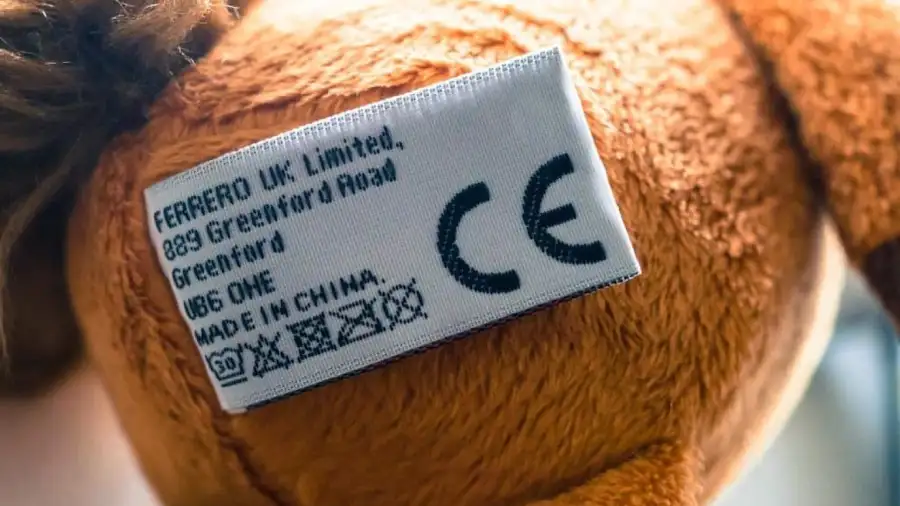

Do I Need a CE Marking for Toys?
Yes, but for most toys, this is a self-declaration, not a certificate you buy. In my manufacturing experience, we use Module A to build a technical file proving compliance with Directive 2009/48/EC (valid until Regulation (EU) 2025/2509 applies in Aug 2030). We verify safety by testing against harmonised standards like EN 71-1 (Physical) and EN 71-3 (Chemical). We only hire a Notified Body if standards do not cover all risks.
Need a factory that can build to EN 71 from day one? Contact us.
Key Takeaways
- CE is Self-Declared: You sign the Declaration of Conformity (DoC), not an EU official. As the importer, you hold full legal liability.
- No Test, No Mark: We never print a CE logo without a passing EN 71 lab report. Customs seize goods lacking this paper trail.
- Amazon Needs a Proxy: Non-EU sellers must appoint an EU-based "Economic Operator." Without this contact, Amazon FBA blocks your inventory.
- Labeling Integrity: The CE mark, address, and batch ID must be legible. We mold these into the plastic to prevent stickers from peeling off.
- The 10-Year Rule: Authorities can audit your Technical File a decade later. Store digital copies of every material certificate.
- Budget for Delays: Labs take 7–10 days, but queues double in August. Book slots early for peak season.
Compliance Workflow:
| Action Step | Required Evidence |
|---|---|
| 1. Verify Safety | EN 71 Test Reports (From Lab) |
| 2. Prove Compliance | Technical File (Internal Record) |
| 3. Legalize Product | Declaration of Conformity (You Sign) |
(Summary for screen readers: The table outlines a three-step workflow. First, obtain EN 71 lab reports to verify safety. Second, compile a Technical File to prove compliance. Third, sign the Declaration of Conformity to legalize the product.)
The Mechanics of CE Marking for Toys: How We Build a Valid Technical File
In my years managing production lines in Guangdong, I have seen thousands of "CE Certificates" that were not worth the paper they were printed on. The reality of European compliance is not about buying a certificate. It is about building a chain of evidence.
We approach CE marking as an engineering challenge, not just a legal one. You must prove your product is safe before a single unit crosses the border. Here is how we execute the conformity assessment process from the factory floor up.
1. Define whether your product is legally a "toy"
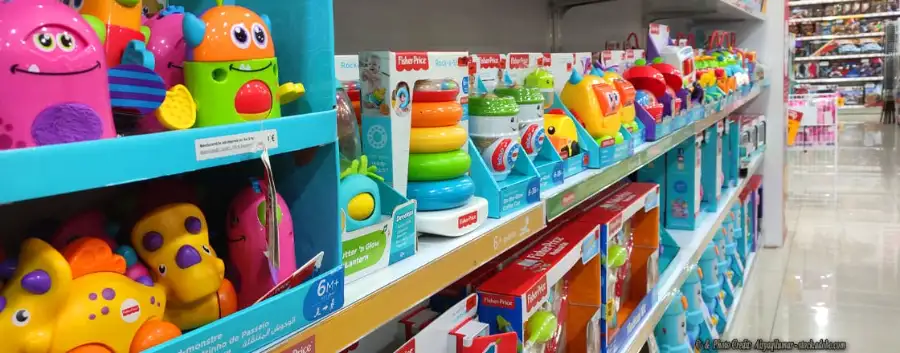
The first step is strictly defining the product category. According to EU law, a toy is any product designed or intended, whether or not exclusively, for use in play by children under 14 years of age.
If a child plays with it, the law treats it as a toy.
However, we often navigate the "gray zone" for clients. A collector's item is not a toy, but it must look like one. To avoid classification as a toy (and the heavy testing costs), the product must clearly be a decorative object or collectible for adults.
Common "Gray Zone" distinctions:
- Plush Toys: Always toys. Even if you label them "For decoration only," a soft bear appeals to a 3-year-old. Authorities will classify it as a toy.
- Scale Models: If detailed and fragile, they are collectibles (14+).
- Fashion Jewellery: Not a toy, unless it has "play value" (e.g., a plastic ring in a pretend-play set).
If you are unsure, we assume it is a toy. It is safer to over-comply than to face a recall.
🧠 Author's Take: If your product looks like a toy but you label it "14+," customs officers will likely challenge you. We advise clients to design specifically for the toy standards if there is any doubt.
2. Identify all applicable EU rules
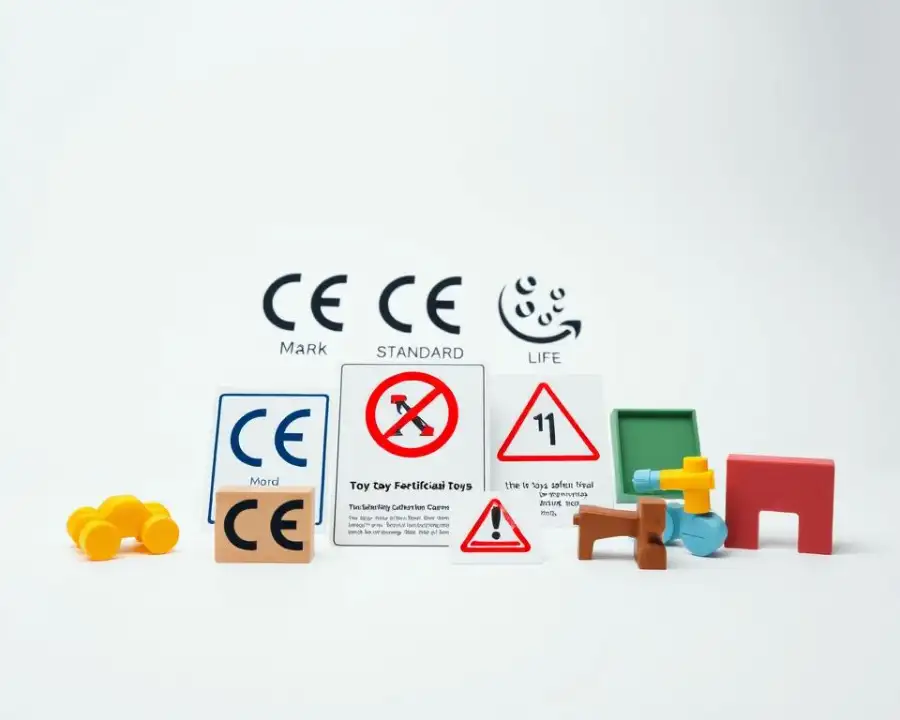
The CE mark represents compliance with all applicable rules, not just one. For toys, the primary law is the Toy Safety Directive 2009/48/EC.
You must also prepare for the future. The EU recently adopted Regulation (EU) 2025/2509, which will replace the current Directive. While the full Regulation applies from 1 August 2030, we are already updating our toy safety standards to meet these stricter digital passport requirements.
Beyond the Toy Directive: Most modern toys contain mixed materials. We often have to apply additional directives:
- EMC Directive (2014/30/EU): Required for electronic toys (remote control cars, singing plush) to ensure they don't interfere with other electronics.
- RoHS Directive (2011/65/EU): Limits hazardous substances in electronic components.
- Battery Directive (2006/66/EC): Mandatory if your toy ships with batteries.
3. Choose the conformity assessment route
This is the legal fork in the road where many importers get lost. There are two ways to get the CE mark.
Route A: Self-Declaration (Module A) This is the standard route for 95% of the toys we manufacture.
- When to use it: You use Harmonised Standards (like EN 71) that cover all safety aspects of your toy.
- The Process: We perform the tests internally or with a third-party lab. We compile the data. You sign the Declaration of Conformity.
- The Reality: You do not need an EU official to approve this. You verify it yourself using test data.
Route B: EC-Type Examination (Notified Body) This is required only under specific conditions.
- When to use it: Harmonised standards do not exist for your specific toy, or the standards do not cover all risks (e.g., a new type of magnetic mechanism).
- The Process: We submit the technical design to a Notified Body (a government-authorized testing organization). They review it and issue an EC-Type Examination Certificate.
- The Outcome: You receive a certificate number from them, which proves compliance.
⚠️ Myth-Buster: Suppliers often email a PDF titled "CE Certificate" from a random testing company. This is not a valid conformity assessment. In Module A, the Manufacturer (that's you, the brand owner) issues the declaration. A third-party certificate is just a test report, not a legal clearance.
4. EN 71 compliance guide
To use the self-declaration route, your product must pass the EN 71 series of standards. Here is how we map these standards to actual toy production processes:
EN 71-1: Mechanical & Physical Properties This part tests if the toy physically hurts the child.
- Tension & Torque Tests: We twist and pull limbs, eyes, and buttons. If a small part detaches with less than 90N of force, it fails (choking hazard).
- Sharp Points/Edges: We inspect plastic edges and metal wires.
- Cords: For backpacks or pull-toys, cords must be short enough to prevent strangulation loops.
EN 71-2: Flammability This ensures the toy does not burn too fast if exposed to a flame.
- Plush & Costumes: We test the burn rate of the fabric pile and the stuffing. The flame must not spread faster than 30mm/s.
- Disguise Costumes: Beards, wigs, and masks have strict flash-point limits.
EN 71-3: Migration of Certain Elements (Chemical) This is the most expensive and critical test. It ensures toxic heavy metals do not migrate from the toy into the child's mouth.
- Target Materials: Paints, varnishes, custom wood toy coatings, and polymeric materials.
- The Risk: We often see failures in zipper pullers or cheap metal rivets containing lead. We strictly vet raw material suppliers to avoid this.
5. The technical file for toys
The Technical File is your defense shield. If market surveillance authorities question your product, you typically have 30 days to produce this file. We build this dossier during the custom toy manufacturing phase.
- Product Description: Color photos, age grading (e.g., "3+"), and dimensions.
- Design & Manufacturing Info: Bill of Materials (BOM) listing every fabric, plastic, and paint used.
- Risk Assessment: A document analyzing potential hazards (chemical, physical) and how we mitigated them.
- Test Reports: Full EN 71-1, -2, -3 reports from an accredited lab.
- QC Plan: Evidence of our inline inspections and final quality checks.
- Labeling Copies: The artwork file showing the CE mark, warnings, and traceability info.
- EC Declaration of Conformity: The signed legal document.
- Instruction Manual: Copies of safety instructions included in the box.
- Traceability System: Explanation of how batch numbers link back to raw material lots.
6. Labeling requirements for the EU market

We treat packaging as a compliance component, not just marketing. During our toy product packaging design phase, we audit for the following five elements.
Mandatory Labeling Elements:
- CE Marking: Must be at least 5mm high. It must be legible and indelible.
- Manufacturer Info: Name and registered trade name/address.
- Importer Info: If you are importing into the EU, your EU address must be on the product or packaging.
- Batch/Serial Number: Crucial for recalls. We usually print this on the sewn-in label or mold it into the plastic base.
- Warnings: "Not suitable for children under 36 months" (or the pictogram) if applicable.
Supervisor Experience Note: I often see brands place the CE mark on a disposable polybag. This is incorrect. If the bag is thrown away, the product loses its compliance status. The mark should be on the product itself or the permanent retail box.
Visual Check: Ensure the "C" and "E" are formed from two circles. If the middle arm of the "E" is too long, it is the "China Export" logo, which is a myth but technically a wrong font that customs will flag.
7. How to pick a toy safety testing laboratory

We do not run official certification tests in-house; we partner with accredited labs. Choosing the right lab prevents rejected shipments.
The Criteria Checklist:
- ISO/IEC 17025 Accreditation: The lab must be accredited for the specific tests (e.g., EN 71-3).
- NANDO Database: If you are using a Notified Body, verify them on the EU's NANDO website.
- Sample Integrity: The report must include a photo of the exact production sample, not a prototype.
🚩 Red Flags for Fake Reports:
- Generic Pass: A one-page certificate saying "Passed EU Standards" without data tables.
- Mismatched Names: The applicant name on the report is a trading company, not your factory.
- Missing Accreditation Number: No CNAS or UKAS logo on the header.
8. Why this matters for your supply chain
Navigating EN 71 requires a partner who understands the engineering behind the law. Whether you are scaling up OEM/ODM production or need a reliable eco-friendly toy manufacturer, compliance is the foundation of our process.
If you are sourcing for the US market, note that we also handle the Children's Product Certificate, ensuring your supply chain works globally.
Exceptions & Scenarios: Real-World Edge Cases
General compliance rules work for standard teddy bears. However, in our factory, we see compliance fail most often in the margins—where products blur categories or sellers misunderstand their legal role.
Non-EU Sellers (Amazon FBA/DTC)
Condition: You sell into the EU but reside in the US, China, or UK. Risk: You cannot legally sign the Declaration of Conformity alone. Under the Market Surveillance Regulation and GPSR, you must have an EU-based contact. Amazon algorithms will deactivate listings that lack this specific metadata.
Action:
- Appoint a Responsible Person: Hire an Authorized Representative (AR) or contract your fulfillment partner to act as the Economic Operator.
- Update Labeling: You must print the AR's name and postal address directly on the product or packaging.
"Bag-Toys" (Plush Backpacks)
Condition: A backpack that resembles a stuffed animal. The Pitfall: The law classifies this as a toy, not luggage. In our internal QC, we fail nearly 30% of plush backpacks because the drawstrings create strangulation loops forbidden by toy safety standards.
Action:
- Test for EN 71-1: specifically regarding cord lengths and fixed loops.
- Check Zippers: Metal zipper pulls must pass EN 71-3 (Heavy Metal Migration) because children frequently chew on them.
Handmade & Low-Volume Makers
Condition: You produce fewer than 500 units per run. Reality: There is no "small batch" exemption in EU law. A prototype can choke a child just as easily as a mass-produced unit.
Action:
- Use "Family" Testing: Do not test every single SKU. If you sell wooden cars in Red, Blue, and Green, test the raw wood base once. Then, test the three paints separately. This satisfies the law while reducing lab fees.
The "24-Hour Certificate" Offer
Condition: A supplier provides a CE certificate the same day you request it.
⚠️ Warning: Legitimate chemical migration testing takes 5–7 working days. An immediate certificate is almost certainly a Photoshop forgery or a generic document with no legal standing.
Action:
- Demand the Data: Ask for the full test report (often 10+ pages), not just the one-page certificate.
- Verify the Lab: Check the Notified Body number on the document against the European NANDO database.
Electronic Toys (Batteries/Lights)
Condition: Your toy sings, lights up, or moves. Risk: EN 71 only covers the physical toy aspects. Adding a circuit board introduces electrical and chemical risks that require separate directives.
Action:
- RoHS Directive: Prove the solder and components are free of lead and hazardous substances.
- EMC Directive: Ensure the electronics do not emit electromagnetic interference.
- WEEE: Register for e-waste recycling and print the "crossed-out wheely bin" symbol on the casing.
Transition: Directive 2009 vs. Regulation 2025
Condition: You are planning product lines for 2026 and beyond. Context: The new Toy Safety Regulation (EU) 2025/2509 has been published (Dec 2025) and applies fully by August 2030.
Action:
- Prepare for Digital Product Passports (DPP): The new regulation kills paper filing. You must eventually provide a QR code linking to digital compliance data.
- Digitize the BOM: Start mapping every chemical substance in your Bill of Materials digitally now. Do not wait for the deadline to scramble for supply chain data.
People Also Ask About CE Marking for Toys
1. Do I need a CE mark for every toy SKU/variation?
Yes. Every single product variation requires documentation. However, in our factory, we group similar items (like plushies using the same fabric but different shapes) into "test families." This allows us to use one heavy metal test report to cover multiple SKUs, saving you thousands in lab fees.
2. Is there an official EU 'CE certificate' for toys?
Usually, no. Unless you use a Notified Body for a high-risk novelty (Module B), there is no government certificate.
You sign the Declaration of Conformity. If a supplier tries to sell you a "CE Certificate" for a standard teddy bear, it is likely a fake marketing document.
3. How long do I need to keep the toy technical file and DoC?
10 years. Market surveillance authorities can audit your records a full decade after the product is sold. We recommend cloud storage for all chemical test reports, as we have seen physical papers fade or get lost when staff turnover happens.
4. Can I reuse my supplier's EN 71 test report?
Only if it matches your BOM exactly. The report must list the specific materials you are buying.
If the supplier changes a pigment supplier next month, that old report becomes void. We insist on re-testing annually or whenever a raw material batch changes.
5. Where must the CE mark be placed—on the toy or packaging?
On the toy itself. It must be visible, legible, and indelible.
We typically mold the logo directly into the plastic base or print it on the sewn-in label. You are only allowed to mark the packaging if the toy is too small or technically impossible to mark.On the toy itself.
It must be visible, legible, and indelible. We typically mold the logo directly into the plastic base or print it on the sewn-in label. You are only allowed to mark the packaging if the toy is too small or technically impossible to mark.
6. Does CE marking cover the UK?
No. Post-Brexit, Great Britain requires the UKCA mark.
However, Northern Ireland still accepts CE. To avoid logistical nightmares, we recommend engraving both the CE and UKCA logos on your molds so your inventory remains flexible for all of Europe.
7. What's the fastest way to get compliant without redoing my molds?
Pre-production design review. We audit 3D files for sharp edges or small parts before cutting steel. If you already have molds, the fastest fix is often a "packaging correction" or adding a permanent warning label, provided the physical toy passes impact tests.
Read labels like a pro and pass audits without costly surprises. Contact our team.