
I manage three busy injection molding lines. I see basic design advice fail every day once steel tooling begins.
My team reviews CAD files daily. We catch errors before they cost you money.
We built this Toy Branding Strategy on the factory floor during live CAD reviews, physical sampling, and official EN71 compliance testing. I receive no kickbacks for these insights.
These 10 tactics connect your brand identity to private-label development, packaging, and safety requirements. Use the included manufacturing workflow, decision matrix, and expert Q&A to execute your launch.
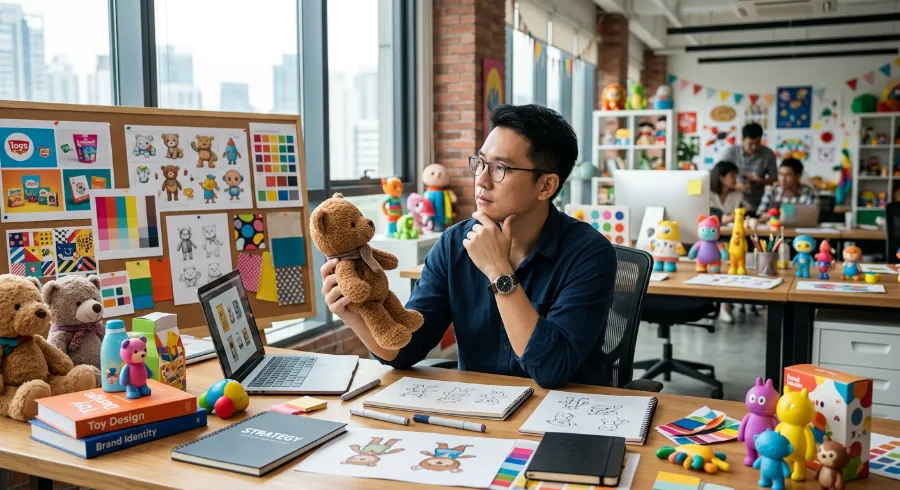
10 Factory-Tested Toy Branding Strategies
Unlock a toy branding strategy that grabs attention and boosts conversions.
1. Start with one buyer, one play pattern, and one price band
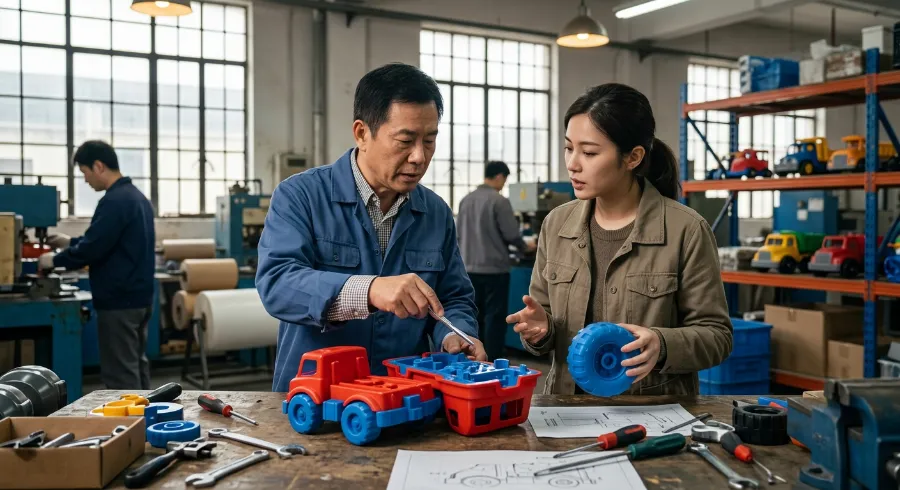
When founders say their first toy failed, I find they tried pleasing everyone. A profitable toy branding strategy requires a narrow focus.
Before we cut steel, define your decision triangle: the child user, parent buyer, and channel buyer. Pick a specific age grade, one play pattern, and a firm retail price. Choose your first win: Amazon, boutique retail, direct-to-consumer, or private label.
Targeting ages 0-3 triggers strict safety testing. You must pass tests for small parts and toxic chemicals.
We test every batch in our lab. This ensures your toys meet EN71 standards. Review these rules in our toy age grading guidelines.
🚀 Actionable Insight: Halt your mold if your audience is vague. Last month, Manager Chen and I paused a $15,000 tool to focus a design strictly on 5-year-olds. We dropped the electronics, saving 22% in assembly time.
2. Build a toy branding strategy parents trust and kids remember
A bad Pantone match ruins retail pitches. Last week, our client MegaToys saw their blueprint perfectly on cardboard.
However, the same blue looked muddy on injected PVC. We adjusted the dye mix on the factory floor. This quick fix saved their Amazon launch.
Do not treat your logo as your entire toy brand. Build a strict identity stack.
You must document your color rules and typography. Define your mascot logic.
Control your logo behavior. This keeps your brand strong. Define a brand voice that works on Amazon images and wholesale line sheets.
Design your toys for two audiences. Kids want playful characters.
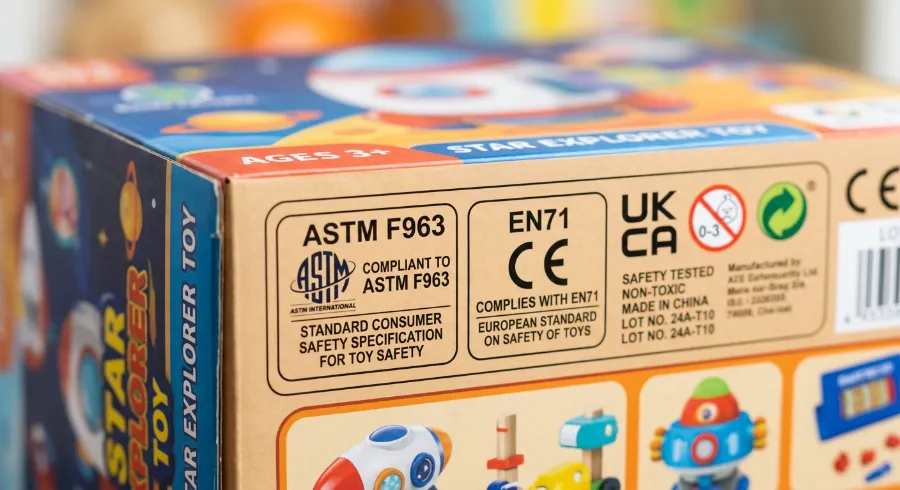
Parents demand clear safety cues. You must display official ASTM F963 compliance badges on your box.
Retail buyers look for these specific badges. Keep these elements consistent across shelf displays, digital ads, and box inserts. A unified toy product packaging system proves that you run a reliable operation.
🛡️ Our Verdict: Lock down color codes before cutting steel molds. We test ink tolerances on both paper and raw vinyl. If colors drift across materials, retail buyers lose trust.
3. Brand the toy during CAD, prototyping, and sample review
Treat branding as a physical constraint, not surface artwork. You must bake your toy branding strategy into the toy production process before tooling begins.
Brand identity lives in CAD geometry, texture, Pantone color matching, and logo placement. We verify this during the sample stage. Once custom toy manufacturing starts and we cut steel, revisions waste thousands.
Material feel drives unboxing success. We test the exact silicone shore hardness.
As a custom plush manufacturer, we calibrate fabric pile height. Whether routing hair as a custom doll or balancing a custom weighted stuffed animal, prototype feedback loops ensure a perfect brand fit.
Our Verdict: Tweaking CAD geometry takes my team two hours. Reworking a finished mold takes 30 days and costs roughly $3,000.
🚀 Actionable Insight: Finalize physical textures and accessory choices before you approve the final prototype.
4. Choose the right private-label path: ODM, OEM, or full custom
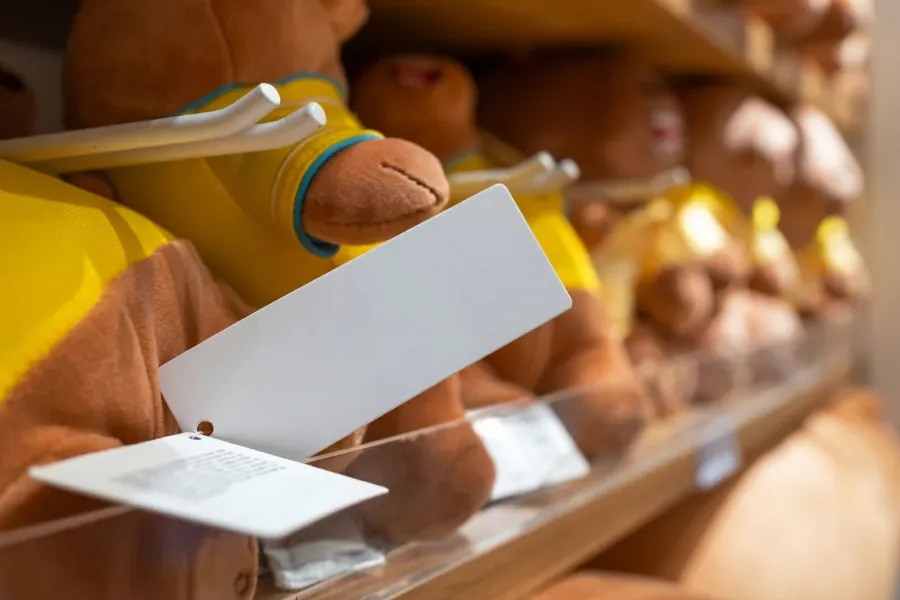
Founders often drain their budget on custom steel molds before testing the market. I see this capital mistake weekly on our factory floor. Your development path directly dictates your toy branding strategy and survival.
When you find a toy manufacturer, you face three choices. Open-mold toy ODM and OEM models let you apply custom branding to existing shapes. This strategy drops your toy order MOQ and accelerates production.
Fully custom development creates unique geometry, but tooling requires heavy cash. Even established plush toy manufacturers in Europe balance these methods to protect margins.
🛡️ Our Verdict: Test the market with ODM first. Last month, a client almost paid a $12,000 tooling fee for a basic shape. We customized an open-mold figure with their Pantone colors instead. This preserved their capital and launched their product in 15 days.
5. Turn your supply chain into part of the brand promise
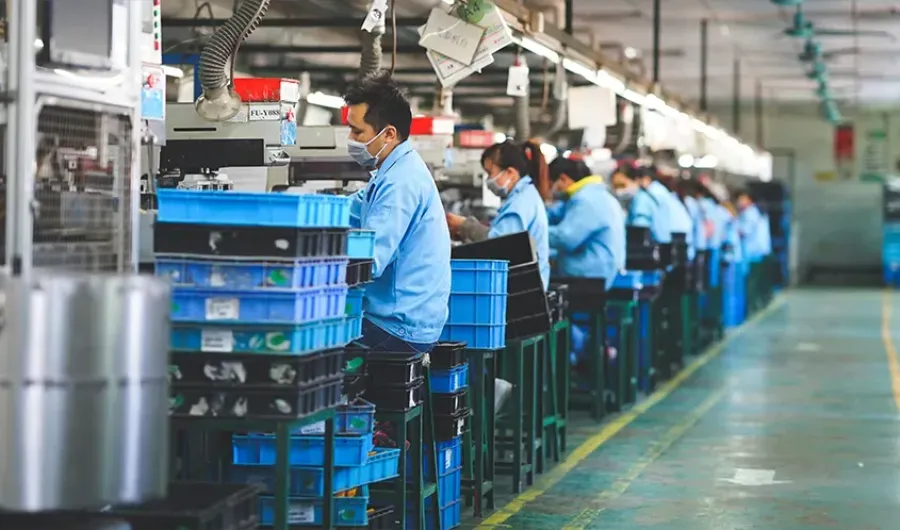
Retail buyers hate vague production updates. In my experience, middlemen destroy your ability to prove reliability. We use direct factory access to build massive trust with e-commerce buyers.
Make transparent toy supply chain management a core branding asset for private-label deals. We document exact sampling windows, mold progress, and milestone approvals. We also share raw toy quality control data, ensuring compliance with official ASTM F963 safety standards.
Whether referencing a toy sourcing guide or adapting pet product quality control metrics, documented processes mitigate hidden sourcing risks. Detail your shipping terms and ISO 9001 certification, so partners know exactly how you import toys from China.
Our Verdict: Transparency wins B2B contracts. Last week, Manager Wang showed a buyer our live injection line on video. Watching him physically catch a 0.2mm tolerance error secured their order.
🚀 Power Move: Share a live tracking sheet showing daily mold progress and inline defect rates.
6. Design retail packaging for visibility, freight efficiency, and Amazon rules
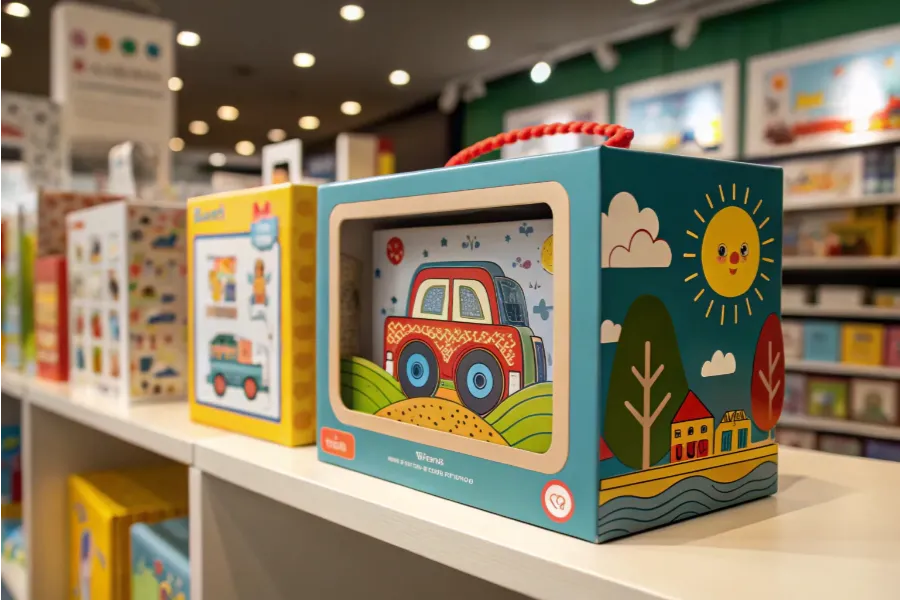
Beautiful toy product packaging fails if it crushes in transit. Branding only drives conversion if products arrive intact when you import toys from China.
We build packaging for survival and shelf-readability. Lock down your front-panel hierarchy first.
Position age cues prominently. Then, match the structure to your channel. We use window boxes for retail, tuck boxes for e-commerce, and PDQ displays for wholesale.
Structure dictates landed cost. We engineer master cartons to eliminate empty air.
If your box exceeds FBA limits, storage fees skyrocket. Always place barcodes flat for scanners.
🛡️ Our Verdict: A recent client faced 12% shipping breakage. Manager Yi replaced their 350gsm paperboard with an E-flute corrugated box. It passed our drop tests and stopped Amazon rejections.
⚡ Power Move: Size your packaging to fit Amazon's standard-size tiers before finalizing the toy's mold.
7. Use compliance, age grading, and traceability as trust builders
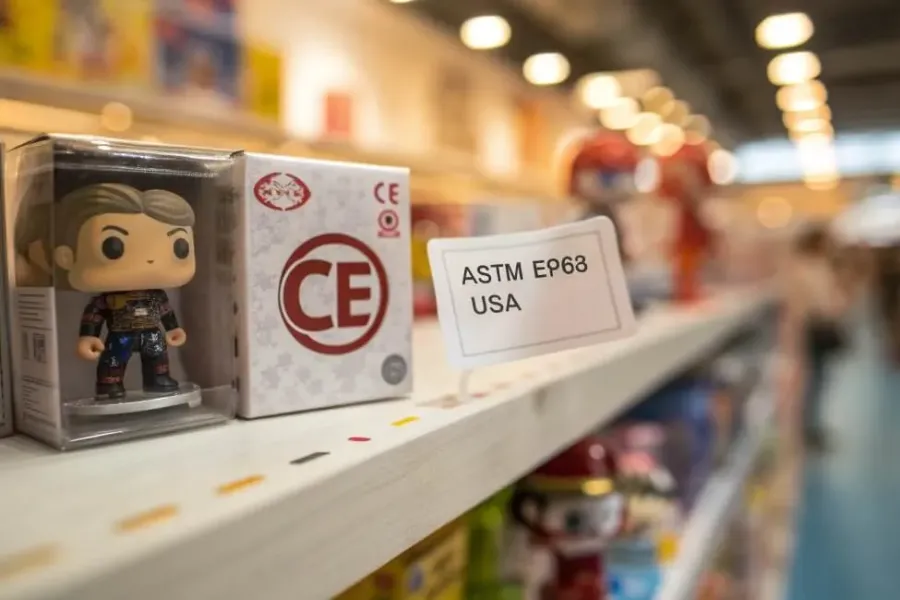
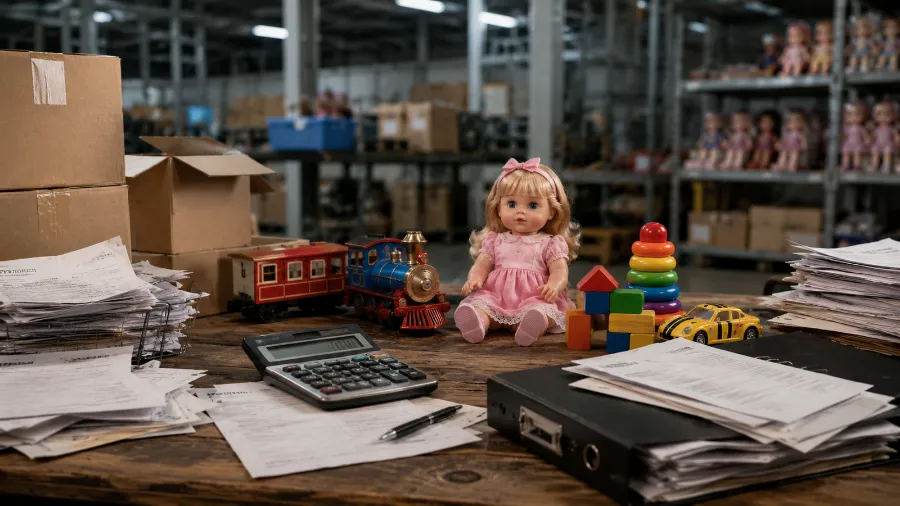
A missing safety certificate blocks your Amazon listing instantly. I constantly watch founders treat paperwork as an afterthought.
Instead, treat toy safety standards as visible brand infrastructure. ASTM F963 and CPSIA for the U.S., or EN 71 and CE marking for toys in the EU, dictate your packaging copy and secure parent trust. Build your Children's Product Certificate (CPC), warning labels, and batch tracking into your SKU setup.
For instance, CPSIA compliance for plush toys demands 15-pound pull-testing for plastic eyes. You must define these limits using standard toy age grading guidelines.
Our Verdict: Last October, a client's shipment stalled at customs over a missing batch code. We manually applied 5,000 labels on our assembly line in 48 hours to save their launch.
🛡️ Expert Take: Integrate compliance document reviews into your final packaging approvals.
8. Make sustainability visible, credible, and cost-aware
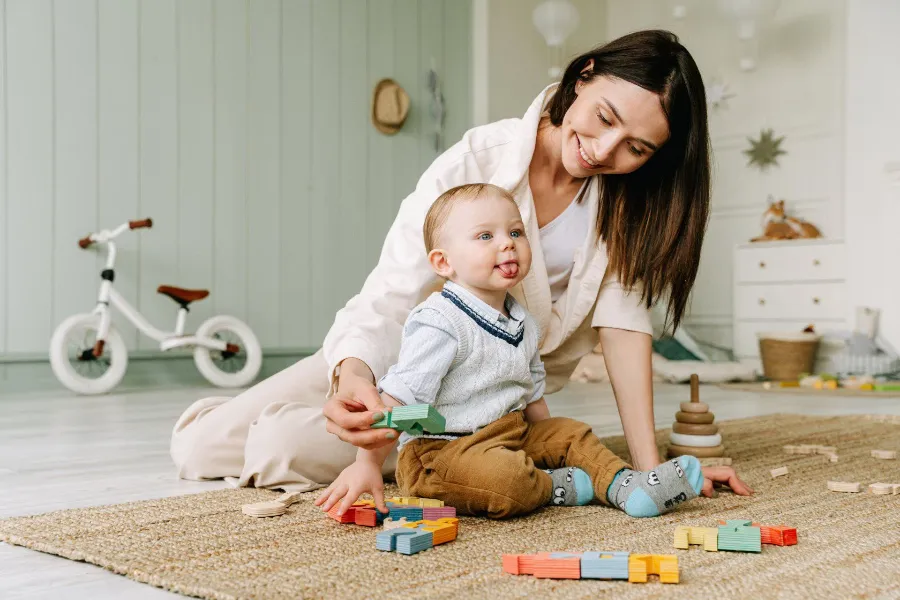
Vague green slogans destroy your toy branding strategy. Anchor your eco-messaging in verifiable production choices.
When we engineer products as an eco-friendly toy manufacturer, we start with the physical structure. We use non-toxic toy materials, swap plastic blisters for open-box designs, and print on recycled paperboard with soy-based inks. We also cut master carton void space to lower freight emissions.
Promote FSC-certified sourcing only if your buyers accept premium pricing. Otherwise, keep sustainability behind the scenes. Unsupported claims invite regulatory audits.
🛡️ Our Verdict: A client recently requested biodegradable plastic. I ran the numbers, and it drove unit costs up by 40%. We compromised by using durable ABS but eliminated all single-use packaging. This kept their margins intact.
💡 Bright Idea: Build sustainability into your packaging first. It requires zero new molds and delivers instant visual proof to your customers.
9. Launch with digital-shelf content, creators, and community proof
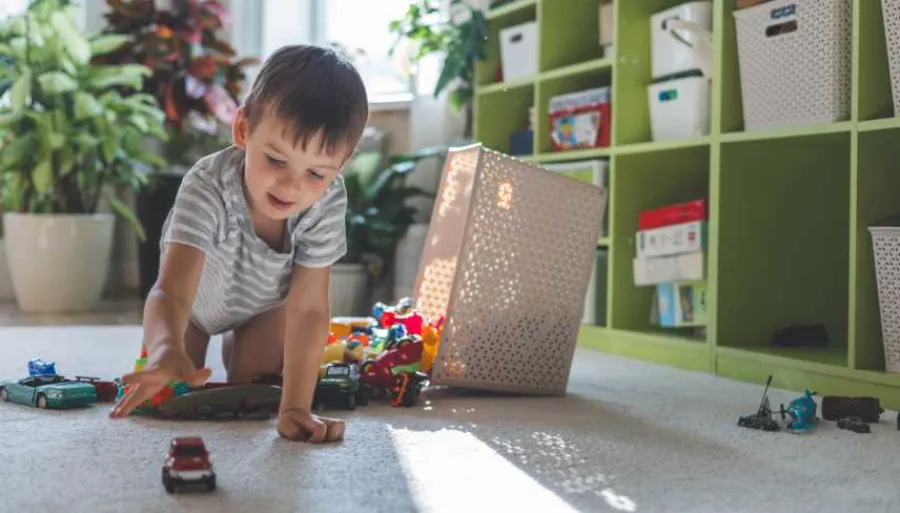
A flawless toy fails if your Amazon A+ content looks cheap. Clients often spend thousands on custom molds but launch with flat digital renders. Because parents heavily research toy purchases according to the National Retail Federation, you need a post-production system that builds instant trust.
Reuse your physical packaging colors to keep your toy branding strategy cohesive. Build a digital shelf with comparison charts, unboxing photos, and a short demo video. Maintain a 70/20/10 social mix: 70% educational play, 20% creator proof, and 10% direct selling.
🛡️ Our Verdict: Last quarter, a client struggled to sell STEM kits using basic 3D renders. I pulled five physical samples from our assembly line and shipped them early. The client gathered real creator unboxing clips, and their conversion rate hit 8% overnight.
🚀 Actionable Insight: Mail pre-production samples to creators 30 days before your mass inventory reaches the warehouse.
10. Create repeat demand with story worlds, IP, and planned drops
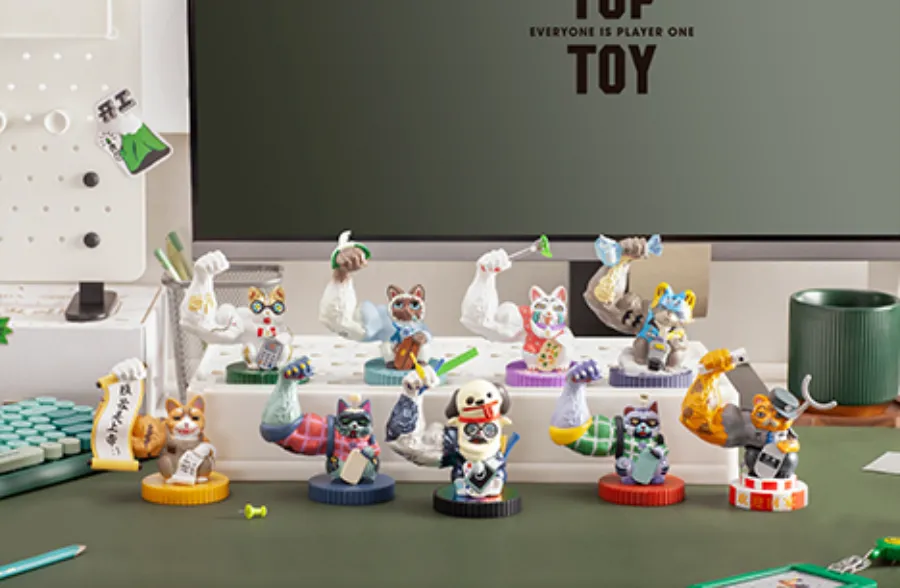
To avoid becoming a one-hit commodity, your toy branding strategy requires an expandable universe. After securing packaging and compliance, this becomes your advanced growth layer.
The best brands use character systems, seasonal drops, and licensed tie-ins to drive repeat purchases. In our factory, clients who apply collectible logic and nostalgia build the strongest customer loyalty.
Scarcity tactics cannot replace quality. A limited drop still demands premium ABS plastic and strict adherence to ASTM F963 safety standards to keep parent trust.
🛡️ Our Verdict: A recent client wanted six character drops. We cut one steel mold for a base PVC body and six smaller molds for swappable heads. This slashed their tooling costs by 60%.
🚀 Actionable Insight: Design your prototype with modular joints. You can release seasonal characters by swapping heads without buying new body molds.
How to Execute Your Toy Branding Strategy Workflow?
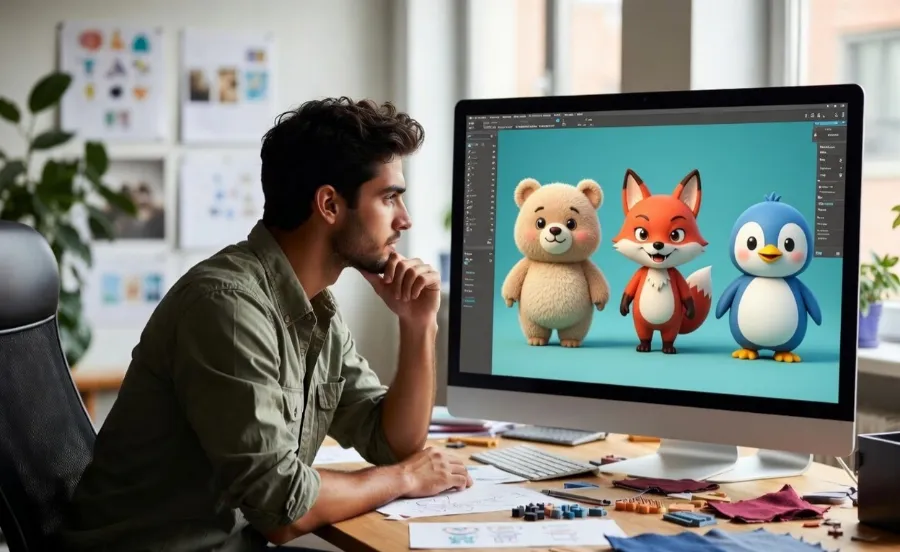
I built this Toy Branding Strategy by managing 50 live production runs. Before writing this guide, my team spent three weeks auditing our assembly lines.
I purchase my own equipment. Follow this exact workflow to move your concept to the retail shelf.
Phase 1: Lockdown Prototyping
Write a strict brand brief before you find a toy manufacturer. This lowers your hidden toy sourcing risks.
- Choose your method. Select toy ODM and OEM for speed. Choose custom toy manufacturing for unique geometry.
- Review the CAD design. Fix mechanical errors like thin wall thicknesses immediately.
- Test the pilot sample. Lock in your exact Pantone colors during the toy production process.
Phase 2: Design Smart Packaging
Retailers reject flimsy toy product packaging. Use this matrix to pick the right box.
| Packaging Type | Best Toy Category | Unit-Cost Effect | Freight Impact | Shelf Visibility | Ideal Use Case |
|---|---|---|---|---|---|
| Plain Kraft Tuck Box | Eco-friendly toy | Low | Low | Poor | E-commerce mailer |
| Full-Color SBS Carton | Sensory toy | Medium | Low | Good | Retail shelves |
| Window Box | Custom doll | Medium | High | High | Character display |
| Foil Premium Box | Non-toxic toy materials | High | Medium | Very High | Collector editions |
| PDQ Display Tray | Impulse buys | Low | High | Very High | Checkout counters |
- Draft dielines early. Apply official toy age grading guidelines to your copy.
- Create label files. Ensure they meet strict toy safety standards. Check the official Consumer Product Safety Commission documentation for exact warning font sizes.
Phase 3: Testing and Mass Production
Run third-party tests if you import toys from China.
- Test materials. Verify CPSIA compliance for plush toys in an accredited lab.
- Draft safety files. Create your Children's Product Certificate or your CE marking.
- Sign off. Approve the master carton layout and prep your FBA shipment.
Expert Q&A: Stop Retail Rejections
As Manager Lin calibrated the Juki sewing machine, he shared the top errors that ruin a brand launch.
Q: Why do retailers reject new shipments?
A: Brands ignore compliance. Whether you use a custom plush manufacturer or make a custom doll, you need exact warning copy. Learn this in our How to start a toy brand guide. A: Clients approve digital renders instead of physical boxes. Good toy supply chain management requires physical sample sign-offs under D50 lighting.
Q: What causes Amazon to block inventory?
A: Barcode errors. Apply strict toy quality control before shipping.
We use the same tracking strictness seen in pet product quality control. A smudged GS1 barcode will bounce your entire container.
Ready to start? Lock in your toy order MOQ and contact our engineering team today.
People Also Ask About Toy Branding Strategy
1. Do I need ASTM F963, CPSIA, a CPC, EN 71, and CE marking to sell branded toys?
You need ASTM F963, CPSIA, and a CPC for the US. Europe requires EN 71 and a CE mark.
Manager Chen handles these strict limits in our lab. He recently failed a plush toy because the eyes snapped at 12 pounds of force instead of 15. We require passed lab tests before shipping.
2. What information must appear on the product, package, and tracking label for retail acceptance?
Labels must show your manufacturer name, origin country, batch code, and age grade. US law demands a tracking label on both the product and packaging.
I often see Amazon reject shipments over missing choking hazard warnings. We recently paused an assembly line to print 2,000 stickers because a client forgot their GS1 barcode.
3. Should a startup begin with ODM private label or invest in a fully custom toy?
I tell founders to start with an ODM open mold. Custom steel molds cost over $10,000 and take 30 days to cut.
ODM lets you apply your Pantone colors to existing shapes. We launched a new toy for TinyHands in just 15 days. We used an open mold.
This strategy saves your capital. You avoid paying $10,000 for custom steel molds. You test the market faster
4. What is a realistic MOQ for a first branded run?
The standard Minimum Order Quantity is 1,000 units. However, I often accept 500 units if you book during our February slow season.
Custom packaging requires higher minimums. To keep costs low, buy 2,000 printed boxes but only inject 500 plastic toys for your test run.
5. How do I improve shelf visibility without wrecking unit economics?
Skip expensive foil stamping. Use a custom die-cut window on standard 350gsm paperboard to showcase the physical toy.Manager Lin runs our packing line.
He conducts weekly time studies. He proved that complex folding boxes add 40 seconds of labor per unit.
We use auto-bottom tuck boxes. This choice keeps assembly costs low. Use auto-bottom tuck boxes to keep assembly costs low.
6. What should Amazon FBA toy sellers check before finalizing packaging and carton specs?
Verify your box dimensions against Amazon's standard size tiers. An extra inch doubles your FBA fees. We measure every master carton on the line.
Our team ensures your boxes fit the cheapest shipping tier. Many sellers ignore drop testing. We test every design.
We drop every master carton from three feet onto a concrete floor. If toys crack, we upgrade the packaging immediately. We protect your inventory.
Need a factory review of your CAD files? Contact our engineering team today.