
On my desk sits a compliance stack for a new vinyl toy. I have the golden sample, a bill of materials, and label artwork. Yet, one missing document stops this container at EU customs.
Clients often request a quick certificate. That is a myth.
Achieving EN71 Compliance requires a complete system. Under the current EU Toy Safety Directive, conformity demands technical documentation, an EC Declaration of Conformity, and CE marking. We use this framework now while the new Regulation phases in.
I built this handoff sequence by coordinating hundreds of factory shipments. This is a practical workflow, not a legal brochure.
Expect one planning session followed by weeks of testing. You will learn to classify products, lock materials, brief the lab, and release an EU-ready toy without requesting wrong documents.
Prerequisites: The Complete Compliance Folder
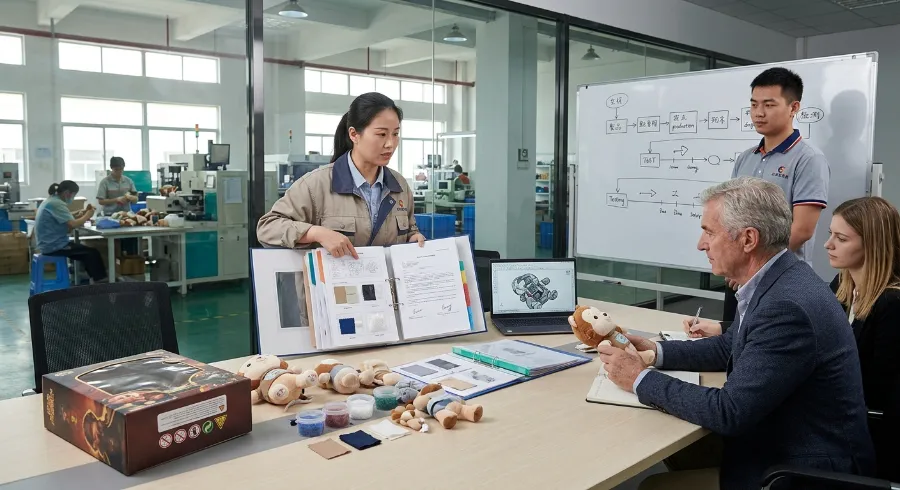
I have managed more than 500 toy exports to Europe. I know what a real compliance folder looks like.
It is a thick physical binder. It holds real fabric samples and signed art proofs.
If your folder feels light, you are not ready. Do not book the lab yet.
It closes flat without loose papers. If you lack this, do not book the lab.
The Required Team assembles these experts before Step 1:
- Product Manager & Factory Merchandiser: Lock the final design.
- QA/QC Lead & Compliance Coordinator: Oversee toy safety standards and the toy production process.
- Packaging Owner & EU Importer: Secure a legal EU contact.
The Non-Negotiable Inputs
- Specs: BOM, CAD drawings, age grade, and intended use.
- Artwork: Final labels, packaging, instructions, warnings, and batch codes.
- Material Proof: Specs, SDS/COAs, and sample photos.
- History: Prior test reports matching this exact SKU, color set, and material stack.
The Factory Vetting Tool
Download our EN71 Pre-Compliance Checklist. Ask your factory:
- What is the exact resin, textile, coating, adhesive, and ink specification?
- Who supplies the raw materials? Did the formulation change?
- Are there magnets, batteries, plated metals, recycled inputs, or mouth-contact components?
- Which components are subcontracted?
Your file supports CE marking, the DoC, and retained technical documentation (Eur-Lex). Bookmark the official Commission toy guidance, DoC / CE guidance, and verification tools for notified bodies.
⚠️ Safety First: Do not approve tooling, packaging, or bulk materials until you freeze the risk assessment. I recently saw a client cut molds early. A forced material switch changed the plastic shrinkage rate, ruining a $5,000 tool. If your supplier cannot provide these files within one week, escalate before spending lab money. Read our toy sourcing guide to avoid hidden toy sourcing risks.
How to Get EN71 Compliance: A Factory-Floor Guide
Stay ahead with EN71 compliance strategies.
Step 1: Classify the Product and Determine EN 71 Scope
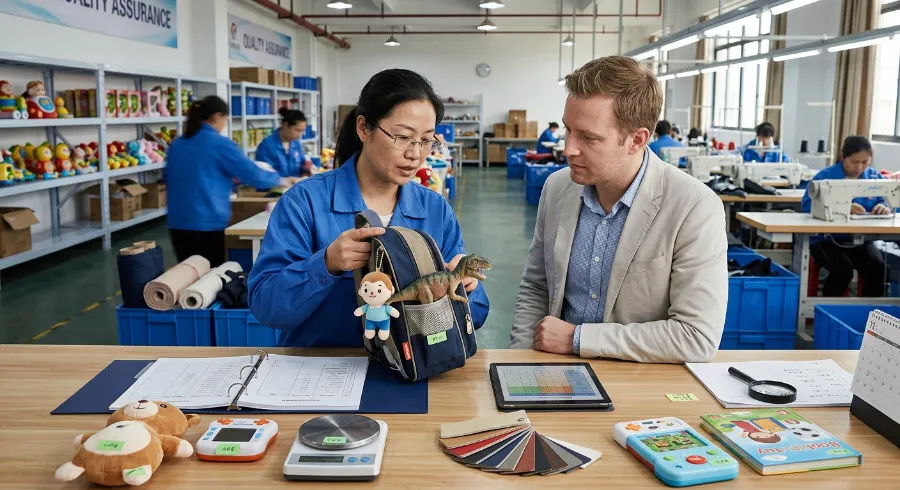
I am currently holding a client's pre-production sample. It is a functional schoolbag featuring a soft plush strap and a detachable character charm.
It has undeniable play value. As a factory engineer, I evaluate this exactly like an EU market-surveillance officer.
I ask one core classification question. Is this item designed or intended for play by children under 14?
Dual-function products still fall inside toy rules. You must classify every item case-by-case.
Clients frequently ask me for a children's product certificate cpc for the EU. I must explicitly correct this confusion.
In the US, a CPC is a CPSC document. If you need US rules, review our CPSIA compliance for plush toys guide. In the EU, your key documents are the EC Declaration of Conformity and the CE marking for toys.
Build a spreadsheet decision matrix to evaluate your product. Answer these strict questions:
- What is the intended age grade?
- What is the play value?
- Could a child reasonably use this as a play object? Consider this even if it is primarily a functional bag or room décor.
- Does it contain specific hazard triggers? Look for mouth-contact areas, small parts, magnets, batteries, cosmetics, or chemical elements.
Grey-Zone Reality Check: My team recently halted production on a novelty accessory because the attached character gave it obvious play value. Do not give yourself final legal advice. If you have a borderline product like a toy/book hybrid, pay an accredited lab for a formal scope review.
Next, map the necessary toy safety standards in plain English. Most standard toys require three baseline tests. EN 71-1 tests physical mechanics like tear strength. EN 71-2 tests flammability. EN 71-3 tests for toxic chemical migration (Intertek). Electronic or chemical features trigger extra parts.
To verify this step, create a one-page applicability table. Create text headers for SKU, Age Grade, Toy Classification, Likely EN 71 Parts, and Extra Rules. Write plain words like "Pass" or "Fail" instead of relying on green or red cell colors to ensure accessibility.
⚠️ Experience Warning: In my experience, misclassifying a dual-use item as a "gift" instead of a "toy" is the fastest way to get your container seized at EU customs. Always assume the strictest classification.
Step 2: Freeze the Bill of Materials and Verify Supplier Evidence
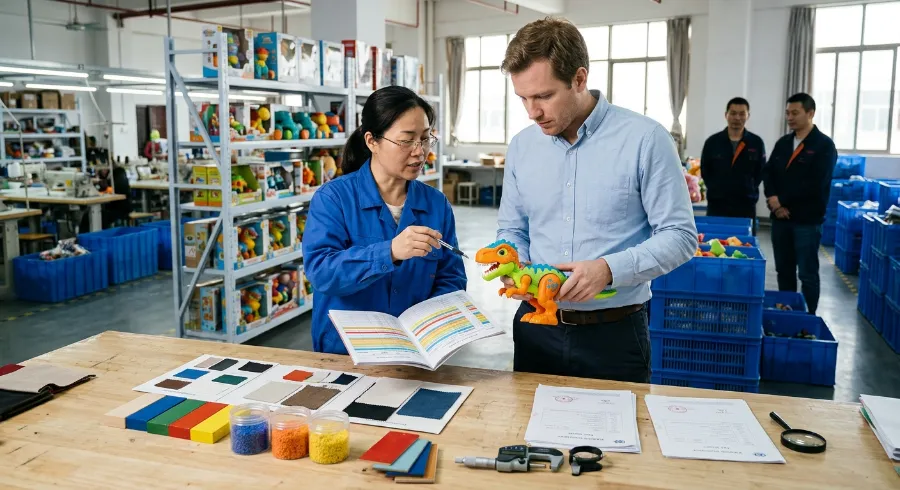
I am standing next to our production sample rack right now. The contrast between an approved sample board and a messy pile of unlabeled substitutions is staggering. I can physically check the raw resin stickers and smell the open adhesive drums.
The factory-floor truth is simple. EN71 failures usually begin with uncontrolled material changes, not with the testing lab. Once your toy concept is approved, you must freeze the Bill of Materials (BOM) at the exact component-and-color level.
Lock down every physical element. Specify the exact resin grade, masterbatch pigment, and textile composition.
Lock the coatings, inks, adhesives, and plated finishes. Record the specific magnets, batteries, stuffing, paints, and trims.
Finally, lock any packaging materials that dictate hazard warnings or chemical exposure logic. Keeping your non-toxic toy materials consistent requires strict documentation.
Next, request this exact document list from your custom toy manufacturing partner:
- SDS/COA for each key material.
- Prior material reports for existing components.
- Supplier declarations for restricted substances.
- Subcontractor identities for outsourced parts.
- Formulation change notice process (how they warn you of changes).
- Lot and batch traceability format.
If you work with a trader instead of a direct toy ODM/OEM factory, force this exact evidence pack upstream from each actual component source.
Now, audit this supplier's paperwork like a strict toy quality control inspector. Match the legal company name exactly.
Match the factory name and address. Verify the SKU, model, age grade, and material description.
Match the report's sample photos directly to the physical product in your hand. Check the standard version cited.
Flag any reports issued for another customer, another batch, or a different color stack. Read the text fields directly; do not just look for a generic pass stamp.
You must check your test lab's license. Fake labs will steal your money.
Use the EU NANDO database to verify European labs. Use the CNAS search tool to check Chinese labs.
Only accept test reports from approved labs. This simple check protects your shipment from customs delays.
Address the composite testing nuance immediately. Some competitors treat composite testing as a universal cost-cutting shortcut.
It is actually a very narrow sampling strategy. Labs allow it only in tightly defined situations.
This constraint matters heavily for an eco-friendly toy manufacturer blending novel biomaterials. Get the lab's exact sampling logic in writing before you rely on it for your EN71-3 testing budget.
You are finished with this step when you hold a frozen BOM, a completed supplier-document scorecard, and written approval of any special sampling logic.
A client tried to save money last month. They swapped red nylon for cheap polyester.
They did not tell us. They did not update the parts list.
We caught this trick on the factory floor. The new fabric would fail the EU heavy metals test. You must inspect your raw materials in person.
If that product shipped, it would have failed the EN71-3 heavy metals test at EU customs. Always verify your materials before proceeding.
Step 3: Prepare the Lab Brief and Component Matrix
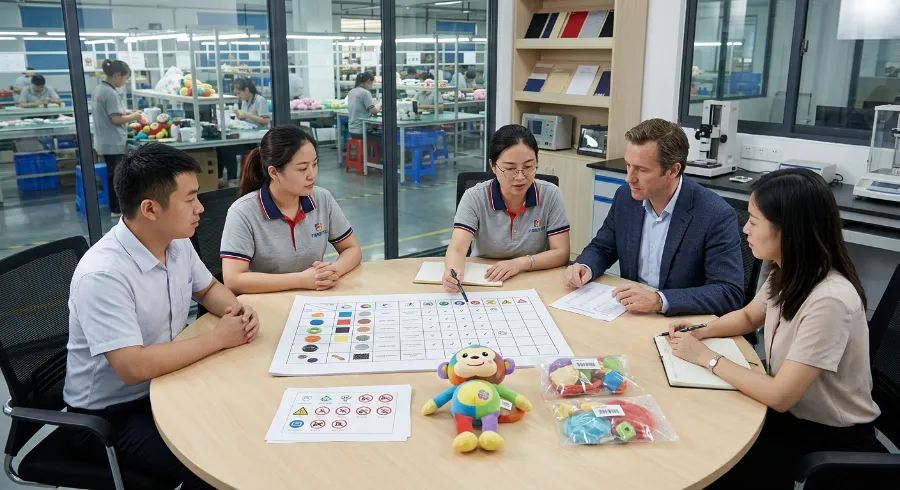
I am looking at a live lab submission right now. I see the sealed, tamper-evident sample bag.
Next to it sits the printed component matrix and the packaging flat. A barcode sticker ties this exact physical sample back to our approved golden sample.
The goal of this brief is absolute clarity. Make it impossible for the lab to guess what the product is.
Do not let them guess how children use it. You must tell them exactly which components matter.
Create a master submission document. Include these exact fields: SKU Name, Age Grade, Intended Play Pattern, and Target Market.
Next, list your materials, colors, and total number of components. State clearly whether parts are accessible or movable. Finally, attach your Label Artwork, Warnings, Instructions, and Packaging.
When you import toys from China, adopt a strict two-stage timing model. Schedule prototype testing early to catch design failures before mass production.
Later, schedule pre-shipment testing to confirm that the actual production goods still match the approved compliance path (compliancegate.com). Review your plush factory audit checklist to align these dates.
You must make EN71-3 testing practical. Test scope and cost rise with every distinct toy material, color, coating, or chemical risk.
Ask the lab exactly what counts as one material. Ask which components you can legally group together.
Testing costs change based on your exact design. A simple wooden block needs very few tests.
A complex plastic toy costs much more. Sound chips, UV paint, and soft plastics add expensive chemical checks.
List every part clearly for the lab. The lab will test everything and overcharge you if you hide parts.
This complexity heavily impacts your overall toy cost breakdown. Manager Chen frequently warns our clients: "If you do not map the parts, the lab will test everything and overcharge you."
Submit your brief using a written RFQ. Include your detailed component matrix directly in the text. Create plain columns for Component ID, Material Type, Color, and Mouthable Risk.
Fill the rows with your verified factory data. Alternatively, hold a live scoping call with the lab engineer. Always follow up to get a written quote confirmation.
You will know this step is complete when you receive a detailed lab quote. The quote must match your actual sample matrix row by row.
If you receive a vague quote for a generic "EN71 test," reject it immediately. That means your toy quality control details were ignored.
⚠️ Experience Warning: Last quarter, a client let the lab guess the play pattern for a plush doll. The lab tested the internal stuffing for heavy metals, doubling the EN71-3 cost. The stuffing was securely enclosed and inaccessible. You must explicitly declare what is sealed and what is touchable to protect your budget.
Step 4: Execute Testing and Review the Reports
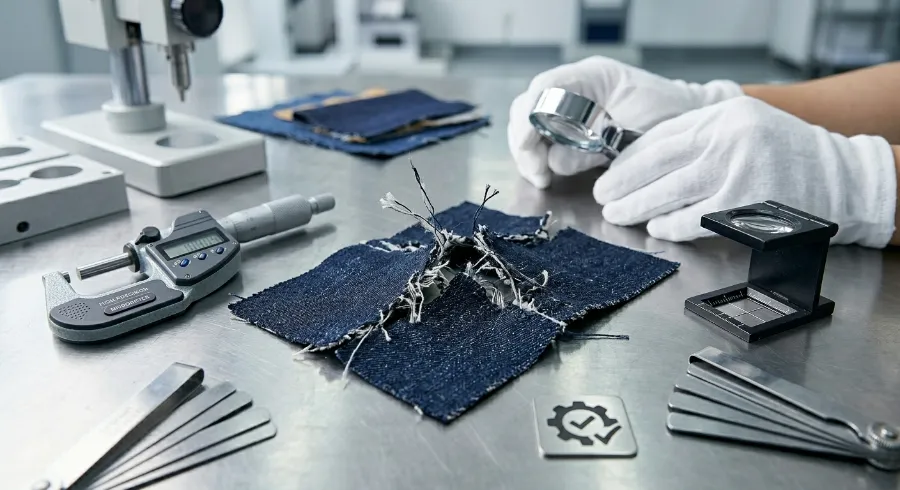
I am standing over a failed sample on my inspection table right now. The plastic tab on this electronic toy snapped during the drop test.
The soft coating emits a sharp chemical odor. This indicates severe material drift. You must handle the failed components to understand the risk.
Walk through the real testing sequence. Send the correct sample set to the lab. Confirm the lab received the exact revision you approved.
Hold mass production. Do not run the line until you understand the prototype findings. Later, run pre-shipment testing on the actual mass production goods.
I warn clients about old supplier data. Do not use old reports as a substitute for current goods.
Test reports are product-specific. They are batch-specific in practice. You must match them to the actual product run you are shipping
When the reports return, audit them like a toy quality control inspector. Does the sample description match your records?
Do the photos match your golden sample? Do the standard versions match the agreed scope?
Trace any failing item to its source. Determine if the failure comes from design, material, label, or production drift.
Different products face specific hurdles. Plastic toys with bright pigments fail chemical migration.
Products from a custom plush manufacturer fail tension tests on seams. A custom doll manufacturer sees hair pull-force failures.
Sensory toy manufacturers struggle with varied, mixed materials. Electronic toys need added safety layers outside the core EN 71 rules.
US sellers face similar rules under CPSIA compliance. Contrast this with pet product quality control, where non-toy testing logic applies.
Build a rigid corrective-action loop for failures. Isolate the failed component.
Trace the raw-material lot and the specific supplier. Decide on the fix. Choose a design change, a material substitution, a warning update, or a process correction.
Update your BOM and the master sample. Re-test only the impacted matrix where valid to do so.
We tested a custom plush toy last Tuesday. We pulled the seams hard with a machine. The seam broke at 40 Newtons of force.
EU safety law requires 70 Newtons. Plush Toy Sourcing Expert Lin found the problem immediately. The sewing team used cheap thread. We fixed it by using strong nylon thread.
Use the primary method of prototype testing plus pre-shipment testing. For repeat SKUs, use an alternative path.
Request a targeted delta review. Do this only when the BOM, factory, and risk profile remain unchanged. Get lab confirmation for the reduced scope.
Your validation is clear. The final pass report numbers, product photos, and artwork versions match the goods ready to ship.
⚠️ Experience Warning: I see brands rush this phase to meet shipping deadlines. Skipping the prototype test phase causes massive losses. If a base material fails on the mass production line, you must scrap the entire run.
Step 5: Assemble the Technical File and Release the Shipment
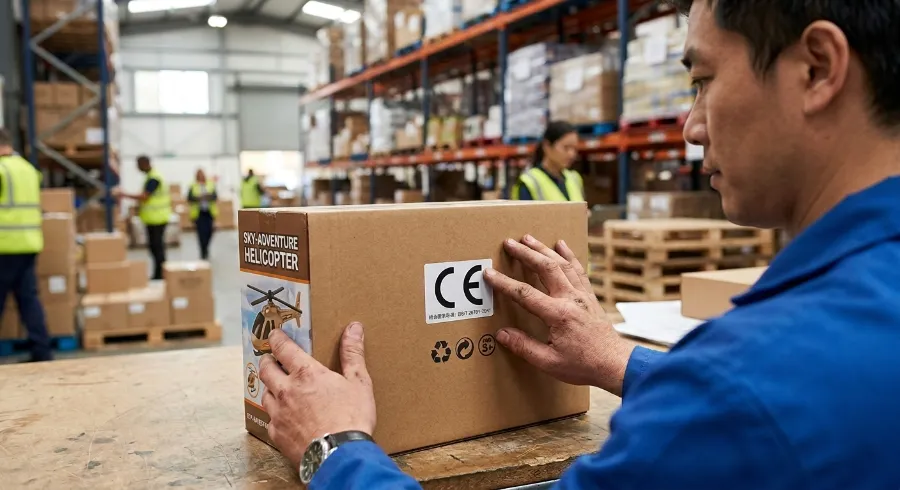
I am looking at a finalized compliance stack right now. The signed DoC and the physical carton label sit on my desk.
The final packaging proof rests beside the passed test reports. This is the final commercialization gate. I never release a container without touching these documents.
Build your technical file. Compile these exact contents in a single folder.
Include your product description, CAD drawings, frozen BOM, and risk assessment. Add all translated warnings and user instructions.
Include the passed test reports, golden sample records, and supplier evidence. Finally, insert your production-control notes and lot traceability data.
Prepare the EC Declaration of Conformity (DoC). Apply the CE mark directly to your product. I must clarify a widespread industry myth here. CE marking is your personal declaration of conformity.
It is not a lab-issued certificate or a generic factory badge. Once you prove conformity, your authorized representative signs the DoC. You must retain this technical documentation and the DoC for ten years.
Run your operational release checklist. Do this before you load the goods.
- Confirm the EU importer contact details are clearly visible.
- Verify that the batch or lot code is printed on the product.
- Ensure all safety warnings are translated into the target country's language.
- Check that the mass production toy product packaging exactly matches the tested version.
- Store the final digital file for immediate customs and market-surveillance access.
Prepare your data for the future. We currently operate under the existing EU framework. However, you should structure your data now for the upcoming Digital Product Passport workflow.
This passport will become mandatory under the new toy regulation timeline. Proper toy supply chain management makes this digital transition seamless.
Approve shipment release only after QA, compliance, and operations sign the exact same release gate document. You will see three physical signatures on the manifest. If one signature is missing, halt the shipment immediately.
⚡ Speed Verification: Compiling this final release file took my team four hours of strict desk review. Do not attempt to gather these documents while your MOQ toy orders sit idle at the shipping port.
Before writing these fixes, my team spent 10 years on the factory floor catching compliance errors. We rely on raw data, not supplier promises.
4 Deadly EN71 Compliance Errors Factories Hide
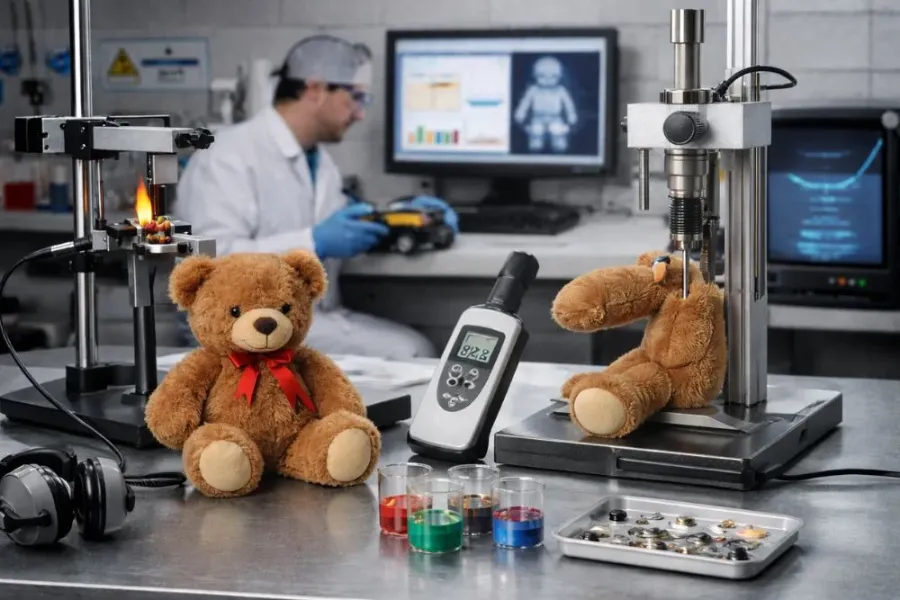
Error: The EN71 Report Does Not Match
Sub-factories often recycle old certificates to save money.
Action: Stop approval immediately. Compare the report's photo, factory name, and standard version to your physical sample. Verify the testing body via the EU NANDO database. Demand the original report package before cutting molds.
In my experience, a pass report for a blue bear never covers a red bear. The red dye introduces entirely different chemical risks.
Error: EN71-3 Fails in Mass Production
Your golden sample passed, but the final goods failed. The factory silently swapped a cheaper pigment or glue.
Action: Trace the exact component lot. Lock a corrected Bill of Materials (BOM). Re-test the affected material matrix immediately.
During a recent line check, Manager Chen noticed the new PU coating smelled sharp. We stopped the line and caught a heavy metal failure before shipping.
Error: Retailers Request an EU CPC
Marketplaces often confuse regional rules. They will ask for a CPC for EU listings.
Action: Explain that the CPC is strictly a US certificate. Submit your CE/DoC-led compliance file and supporting EN71 reports instead.
Clients panic over this weekly. Uploading a valid Declaration of Conformity (DoC) clears the automated marketplace block every time.
Error: Ambiguous Product Classification
Customs will seize dual-use items, like novelty backpacks, if the play value is unclear.
Action: Document your classification logic, play features, and marketing claims. Get a formal scope opinion from an accredited lab before launch.
🛡️ Prevention: Keep a sealed, signed golden sample on your desk. If the mass production batch smells, feels, or looks different, halt the line.
📝 Editor's Verdict: Shortcuts cost more than early clarification. Build your EN71 Compliance file before production starts.
People Also Ask About EN71 Compliance
1. How much does EN71 testing cost?
Testing usually costs between $300 and $1,200 per toy. Your exact price depends entirely on your material and color count.
In my experience, quoting 500+ SKUs, a basic unpainted wooden toy costs roughly $350 to pass standard physical and flammability checks. Conversely, we recently tested a plush doll featuring six distinct fabric colors.
The lab charged $950 because they had to test every single dye lot for heavy metals. As Manager Wang often tells our clients, "Every new paint color you add to the design adds $100 to your lab bill."
2. Can I use my supplier's existing EN71 test report?
Never use a factory's old test report. The law requires tests for your exact product. Customs seized a client's shipment last year.
They used an old report for a green car. They actually shipped a blue car. The blue dye failed the safety test.
Always test your exact production run. The blue pigment triggered a new chemical risk and failed the migration test. You must test your actual production batch.
3. How long does EN71 testing take?
Lab testing takes 7 to 14 days after the facility receives your physical sample. Our testing showed that simple physical stress tests (EN 71-1) take just three days.
However, chemical migration tests (EN 71-3) take much longer. In our lab, the spectrometer requires 48 hours just to analyze zinc and lead levels in the plastic.
Add an extra week to your timeline if your toy fails and you need to reformulate the resin. Always plan for a full 21-day buffer in your production schedule.
Conclusion
Stop guessing with EU customs. Follow these exact steps to get your toy safely on the shelf.
Your immediate next step is simple. Download our pre-compliance checklist and run it against one live SKU this week.
I sleep well at night knowing my shipments will clear customs. Build your physical compliance folder today so you can do the same.
Disclosure: This article provides an educational, manufacturer-side workflow. It does not substitute for formal lab or legal advice. I receive no paid endorsement from any testing facility to promote these findings.
If you want direct, factory-side support, contact our team today. We can help you navigate the toy supply chain management and execute your toy branding strategy. Start your compliance journey with clarity today.