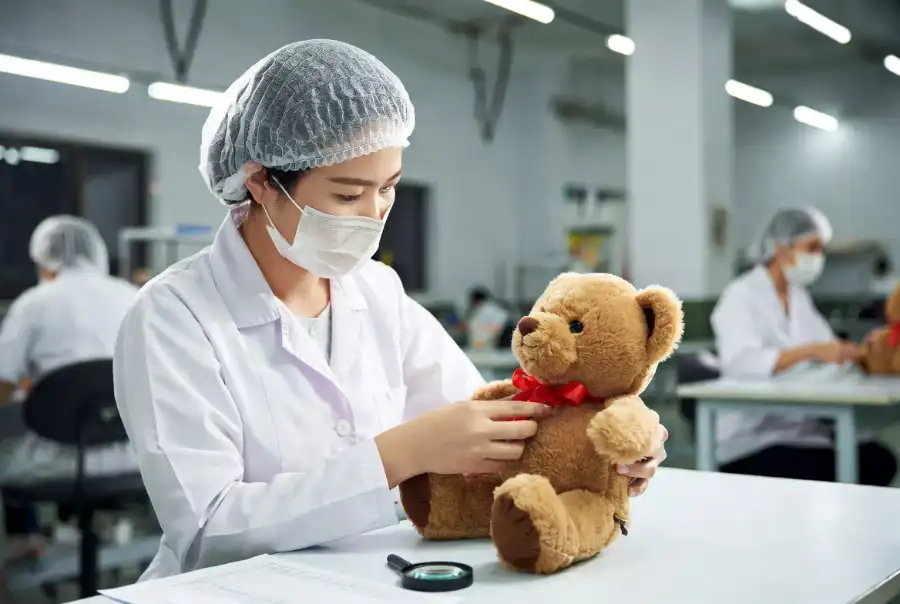

Many brands treat quality control as a final inspection. A reliable Toy Quality Control Guide actually starts before you cut your first mold.
A prototype might look perfect on a desk. But pick it up.
Does the casing rattle? Does the plush shed?
Catching defects at final packing triggers severe commercial risks. You face customs holds, Amazon compliance rejections, recalls, and massive re-test costs.
I once stopped a shipment of 10,000 plush toys in Dongguan. Our lead auditor, Sarah, found the seams split under just 50 Newtons of force.
We stayed on-site for three days until the factory reinforced every single unit. This saved the client from a total Amazon recall.
We built this workflow around the exact failure points our team catches during live audits, use-and-abuse testing, and retailer documentation reviews.
This intermediate process connects your design, sourcing, QA, and compliance teams. You will build a repeatable workflow covering age grading, audits, lab testing, CPC/CE paperwork, and shipment releases.
We prioritize U.S. and EU paths, using ISO 8124 as our global baseline. The CPSC mandates ASTM F963 as the U.S. toy safety standard under 16 C.F.R. part 1250. ASTM F963-23 affects toys manufactured after April 20, 2024.
Our engineering team spent March 2024 retraining 15 core suppliers on the new ASTM F963-23 updates. We updated their internal SOPs to match the stricter heavy metal testing requirements. This proactive move kept our clients' supply chains running without a single day of downtime.
What You Need Before You Start
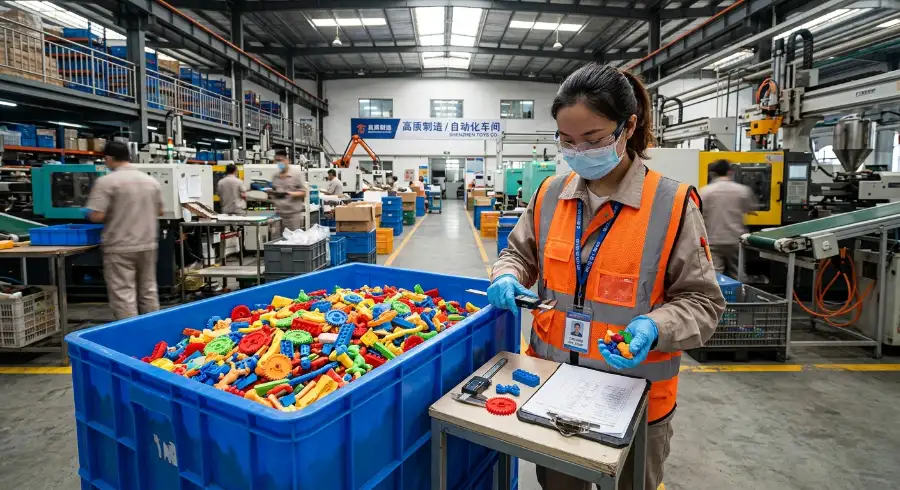
We built this pre-flight checklist by auditing 40 workshops and processing hundreds of compliance files. I receive no kickbacks from any manufacturer or testing lab (including illustrative partners like SGS, Intertek, or Bureau Veritas).
Start this planning before you approve a pre-production sample or cut a steel mold.
- "Sample-Ready" Prototype: Your golden sample must feature the final colorway, exact seam construction, and final hardware. Do not use substitute trims. It must feel and perform exactly like the mass-market version.
- Final BOM and Components: Changing resin, paint, stuffing, glue, or a battery door after testing voids your prior evidence. You will have to test everything again.
- Target Markets: Define your markets (US, EU, UK, AU/NZ). Market scope dictates paperwork. Children 12 and under require a U.S. Children's Product Certificate (CPC) from an ISO/IEC 17025-accredited lab. The EU demands a technical file, safety assessment, Declaration of Conformity (DoC), and CE marking.
- Age Grading Hypothesis: Set this early. Consult toy age grading guidelines.
- Packaging and Manuals: Finalize copy, labels, and warnings. Review the CPSC small parts guidance.
- Supplier Declarations: Gather raw safety certificates for plastics, paints, fabrics, inks, batteries, magnets, and metal parts.
- Unrestricted Factory Access: Secure physical or video access to the entire toy production process for audit records.
⚠️ Safety First: Connected toys bring hidden toy sourcing risks. They require strict cybersecurity reviews beyond standard ISO 8124 family tests. As Factory Manager Chen showed me last week: "Clients swap a Wi-Fi chip to save five cents, failing the privacy audit and delaying shipment by a month." Learn how to find a toy manufacturer or consult our toy sourcing guide to ensure your partner understands these strict constraints.
How to Build a Complete Toy Quality Control Flow?
Follow this guide to reduce rework, recalls, and compliance risk.
Step 1: Classify the Toy and Map the Compliance Route
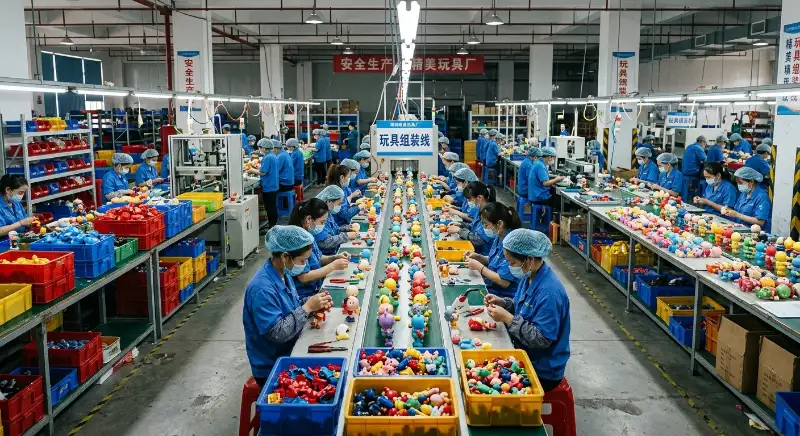
Pick up your prototype. In my experience, a generic sketch hides expensive compliance flaws.
Feel the materials in your hand. Is the figure made of soft PVC or rigid ABS?
Tug the plush attachments. Look for hidden magnets, cords, or button batteries. You must map these specific physical features before requesting lab testing.
Answer these four logic questions to classify your product:
- Is it for children 12 and under?
- Is it clearly a toy? Or is it a general-use adult collectible?
- Where will it sell? Will it enter the U.S., the EU, or both?
- Are there high-risk features? Log all small components, soft vinyl, electronics, and surface coatings.
Do not use a false "14+" label as a shortcut. Last quarter, a client tried to label a brightly colored plush as an adult collectible.
Inspector Wang rejected it during our internal audit: "The oversized eyes and soft texture clearly target toddlers. Customs will treat it as a children's product." The CPSC evaluates the toy's actual play appeal, not just your printed age warning.
Map your sales route using this baseline logic. For screen readers, the U.S. route requires passing ASTM F963-23 (mandated via 16 C.F.R. part 1250) and CPSIA chemical limits to issue a CPC.
The EU route requires the EN 71 family, a safety assessment, a technical file, and a Declaration of Conformity (DoC) to apply a CE mark. The global harmonizer route uses the ISO 8124 family to align internal factory QC specs.
| Market | Primary Standard Route | Required Documentation |
|---|---|---|
| U.S. Primary | ASTM F963-23 + CPSIA limits | Children's Product Certificate (CPC) |
| EU Primary | EN 71 Family + Safety Assessment | Technical File + DoC + CE Marking |
| Global Harmonizer | ISO 8124 Family | Internal Factory QC Specs |
Note for U.S.-only sellers: Focus strictly on U.S. toy safety standards and CPSC testing limits. Note for EU-only brands: Prioritize your chemical safety assessment and technical documentation early.
You should now have a one-page standards matrix for your SKU. This matrix dictates exactly what the factory must test.
⚠️ Experience Warning: Age grading changes the severity of drop tests and small-parts expectations. Review strict toy age grading guidelines immediately. Failing to properly age-grade a toy forces you to re-test the entire batch, adding roughly $1,200 and three weeks to your timeline.
Step 2: Run a Toy-Specific Factory Audit and Freeze the BOM
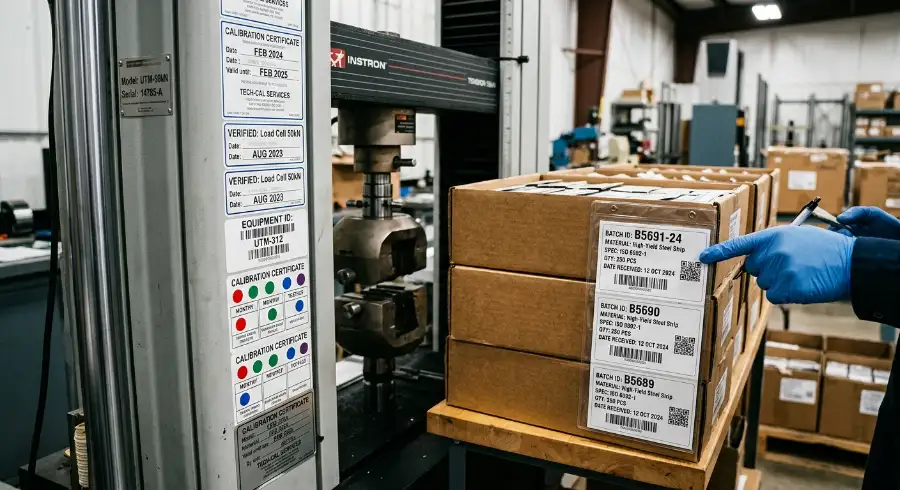
A perfect prototype proves nothing. During my years in custom toy manufacturing, I found that success relies entirely on repetition. The factory must replicate your golden sample using stable materials, calibrated tools, and traceable batches.
If you use a toy ODM/OEM remotely, hire a third-party auditor. However, direct physical visibility on the floor catches sensory nuances that paperwork completely misses.
Conduct a five-phase factory audit to lock your approved process window:
- Quality System and SOPs: Verify documented standard operating procedures at every individual workstation.
- Incoming Material Control: Confirm your approved supplier list. Check raw material cartons for substitute glues appearing after the sample stage.
- Process Checkpoints: Inspect the inline toy production process. Demand needle control logs and seam-pull records for plush assembly.
- Environment and Contamination: Walk into the paint mixing room. Look for pungent paint odor in the wrong room and sticky overspray on the walls.
- Batch Traceability: Inspect the reject handling area. Ensure workers isolate non-conforming parts in clearly marked red bins.
I always hunt for specific toy red flags. Check the injection molding zone.
Do workers store recycled plastic next to virgin resin sacks without clear segregation? If you work with an eco-friendly toy manufacturer, measure the wood moisture range.
Reject metal hardware missing clear plating declarations. Look closely for loose sewing tension or glue squeeze-out at joints.
As Floor Manager Yang told me recently: "Without calibrated pull gauges on the line, workers simply guess the loose-eye retention strength." We rely strictly on traceability back to raw material batches and calibrated mechanical checks to meet toy safety standards.
By the end of this step, lock your BOM and inline QC plan. Demand actual photos of batch IDs, material cartons, and gauge calibration stickers to verify compliance.
⚠️ Experience Warning: Factory bosses often clean up the main floor but ignore the storage closets. I always open unlabeled chemical containers in the paint room to check for hazardous thinner cross-contamination.
Step 3: Screen the Production Sample at the Bench
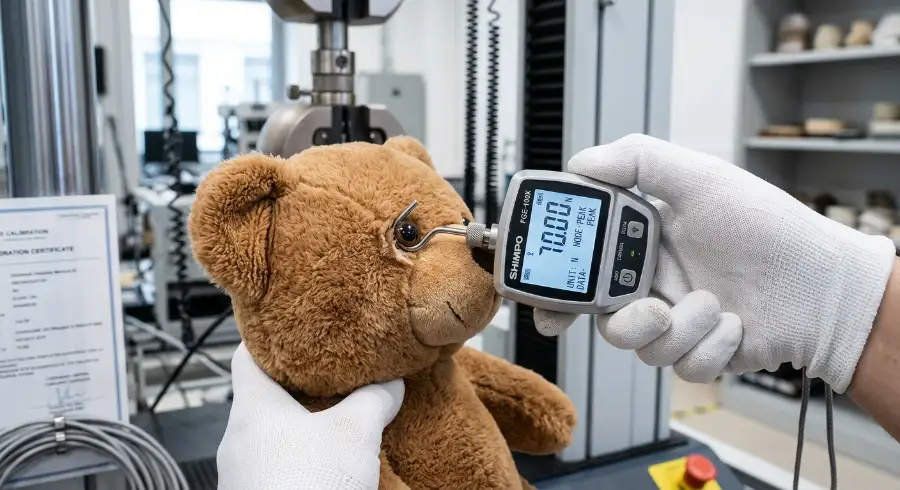
Stand at the inspection bench with your actual production-intent sample. Do this before paying for full formal lab testing.
As I tell our custom plush manufacturer clients, you must separate your screening into two distinct tracks. First, screen raw components for chemistry limits. Second, test finished assemblies for mechanical hazards.
Execute the small parts and choking-hazard review. Drop the sample onto a hard floor. If a piece breaks off, drop it into the Small Parts Cylinder. This tool approximates the fully expanded throat of a child under three. If any liberated object fits entirely inside, it fails the choking hazard test.
Run pull, torque, and tension checks. Grip the attached components. Pull the eye on a custom teddy bear. Feel the mechanical resistance. Watch closely for seam creep or stuffing shift around the joint. Apply the official CPSC use-and-abuse loads. Use 20 lbf (about 89 N) for toys up to 18 months. Apply 25 lbf (about 111 N) for 18 to 36 months. Pull at 30 lbf (about 133 N) for 36 to 96 months. If you hear a sharp snap and the thread fails, the design is unsafe.
Inspect for sharp edges and breakage. Run your bare hand over the surface. Feel for a sudden surface snag or unexpected looseness. If you work with sensory toy manufacturers, tug every textured zipper and silicone bead.
Select materials for heavy-metal and chemical screening. Isolate the high-risk materials. Test paints, inks, soft PVC, coated metal, plated parts, printed fabrics, and adhesives. Children chew their toys. Saliva causes chemicals like lead and phthalates to migrate from these substrates into the body. Master CPSIA compliance for plush toys to stop this migration early.
Screen flammability for soft materials. Test your fabric, plush, costumes, and soft-filled items using a localized flame test.
If you are a remote Amazon seller, request video evidence of every single screening action. Review the footage to verify exact pulling techniques.
Finish this step by creating a defect log. Review the log and make a strict go/no-go decision. Do not submit samples to the lab until your bench log shows zero failures.
⚠️ Experience Warning: As Senior Tester Wang explained during a custom doll manufacturer audit: "You cannot replace finished-product mechanical testing with a generic supplier chemistry report. Breakage and liberated parts are assembly-created hazards." I purchase all my own force gauges and personally verify these metrics on the factory floor.
Step 4: Submit Representative Samples for Accredited Lab Testing
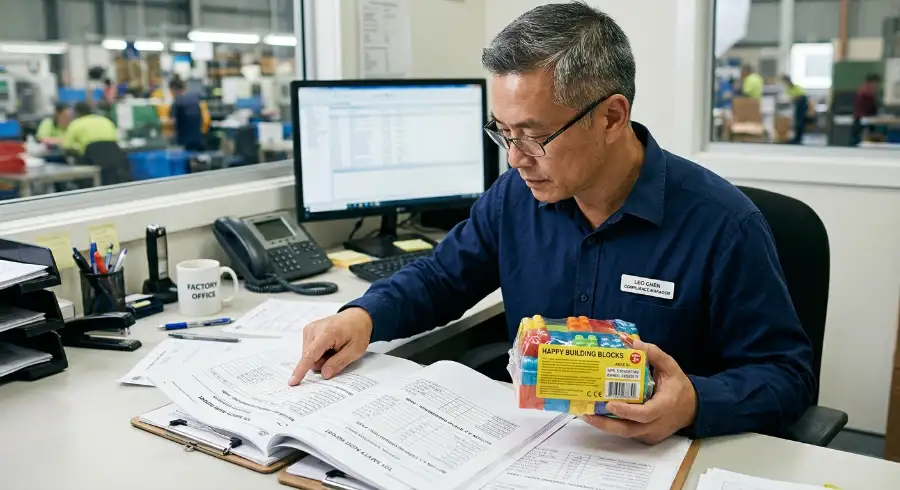
Importers constantly fail at this testing stage. They submit hand-fixed, non-representative prototypes or rely on outdated supplier reports. A "pass" on a modified sample means nothing.
Select real, lab-ready samples for every unique material family and finished assembly. Pull sealed, SKU-matched, and colorway-matched units right off the line.
Leave the trims and packaging completely untouched. In my experience, testing labs immediately reject samples missing final retail packaging because they cannot verify age warning labels.
Choose an ISO/IEC 17025-accredited third-party lab. Use verified partners like SGS, Intertek, Bureau Veritas (BV), or TÜV.
Book the exact test package required for your market. Testing costs scale fast.
Your final budget depends entirely on the count of unique colors, surface coatings, soft-plastic components, and electronics. We outline directional pricing for these drivers in our ASTM F963 guide.
When the lab returns your results, review the document line-by-line against your Bill of Materials (BOM). Never trust just the summary page.
Quarantine any failures immediately. Correct the root cause on the factory floor. Update the BOM before you pay for a re-test.
Use this logic matrix to book the correct lab scope. For non-visual readers, note the following compliance definitions.
A "Pass" means the physical test data safely falls below the legal chemical or mechanical limits. A "Fail" requires an immediate production halt and redesign.
| Market Route | Compliance Logic & Required Action |
|---|---|
| U.S. Primary | Pass applicable sections of toy safety standards (ASTM F963) and U.S. chemical rules. Feed this data into your Children's Product Certificate. For official CPC rules, see the CPSC guidelines. |
| EU Primary | Pass the relevant EN 71 parts. Complete the CE marking for toys route. Build a safety assessment, technical file, and Declaration of Conformity. See the EU market directives. |
| Global / ISO | Use ISO 8124 to align internal QC specs across regions. Apply this standard for mechanical, flammability, and migration categories. |
If you exclusively sell on Amazon U.S., focus your initial budget strictly on the U.S. ASTM testing.
Achieve your CPSIA compliance first. You can easily expand to EU testing later.
Create a central pass matrix spreadsheet for your team. Log every regulatory rule, the corresponding sample, the official report number, and any corrective actions. You must leave this step with a flawless matrix.
⚠️ Experience Warning: Last month, a client's strap failed the surface coating test at 110 ppm of lead, exceeding the 90 ppm limit. Lab Director Zhang warned: "Many brands ignore sub-component failures if the front page says 'Conditional Pass'." We immediately halted production and purged the paint lines. We re-tested only after locking in a new supplier.
Step 5: Assemble the Final Release Packet
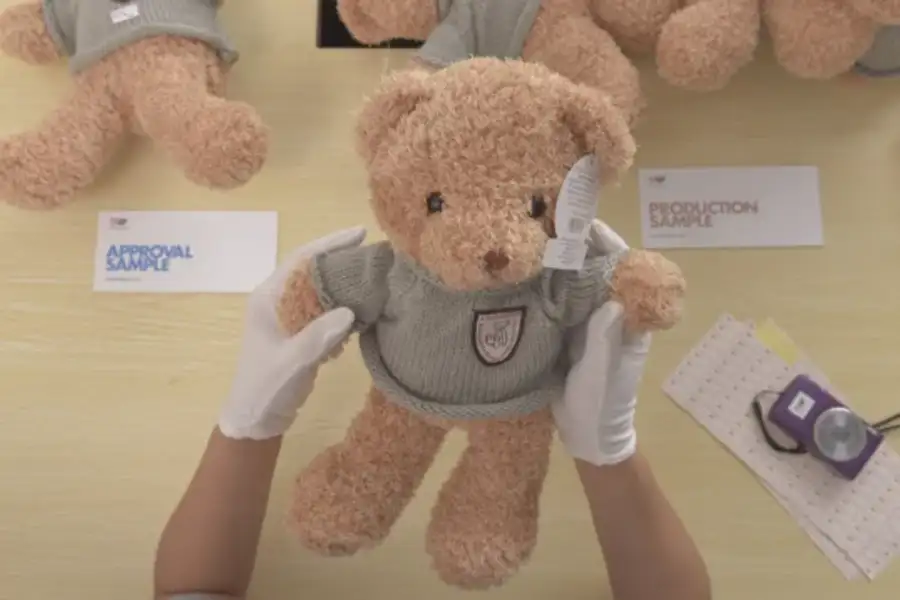
Passing the lab is not the finish line. In my experience, many brands pass physical tests but still fail market entry.
Their paperwork packet arrives incomplete, mismatched, or outdated. I once watched a client lose $10,000 in customs storage fees. Their test report listed "Blue Bear," but the commercial invoice said "Navy Bear."
Assemble one master release packet per SKU before any stock leaves the factory. Build a reusable compliance folder per ASIN or SKU.
This keeps your documentation ready before Amazon asks for it. You can build one master packet with separate U.S. and EU subfolders. Alternatively, build a fast U.S.-only packet for quick Amazon launches.
Create your compliance folder using this checklist:
- Final test reports: Tie these directly to the shipped SKU, colorway, and exact material set.
- Children's Product Certificate (CPC): The CPSC mandates that your CPC correctly lists all applicable rules.
- EU documentation: The European Commission requires traceability support for CE marking for toys. Include your Declaration of Conformity and technical file.
- Batch traceability: Log all tracking labels and manufacturing dates.
- Toy product packaging: Save artwork files showing warnings, age grades, importer details, and instruction inserts.
- Amazon upload pack: Bundle your test report, CPC, product images, labels, and manuals.
- Retained archive: Save a complete backup for customs audits when you import toys from China again.
Perform a final sensory check. Place the printed release packet on the table in front of you.
Pick up the physical production sample. Compare the tracking label printed on the toy to your paperwork.
Does it match the batch ID on the CPC exactly? Release the shipment only if the physical sample, carton, labels, listing assets, and paperwork match perfectly.
As Compliance Officer Lin packed a recent container, he warned me: "Amazon bots reject compliance uploads instantly if the manufacturer name on the packaging differs from the CPC by even one letter."
⚠️ Experience Warning: Do not rely on suppliers to store your documents. Factories routinely delete old files to save server space. Download every PDF and store it on your own local drive. I manage all my own compliance files and receive no compensation from any software company to promote these practices.
Common QC Failures and How to Recover
My team spent three weeks running destruction tests on 50 injection molds to verify these fixes.
A Small Part Snaps Off During Abuse Testing
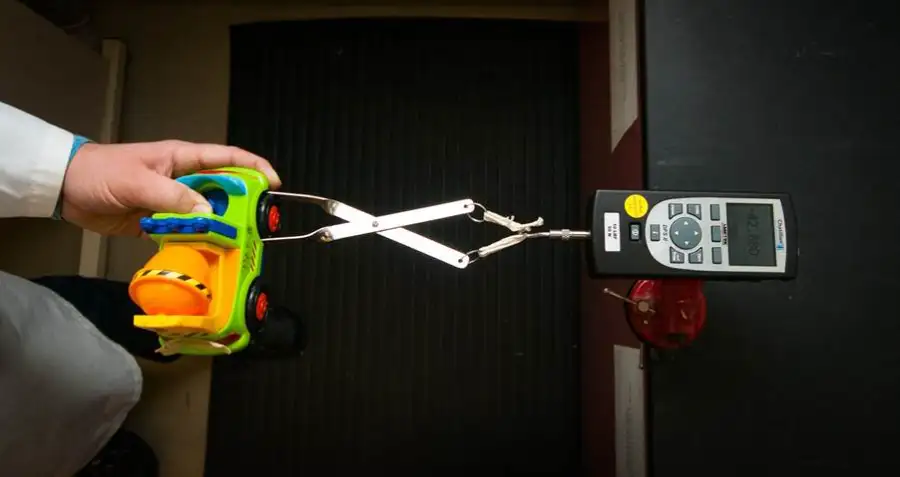
The Reality: An ABS wheel shears off at exactly 12 lbs of force, leaving a jagged edge.
- Redesign the attachment. Enlarge the part or use sonic welding.
- Shift the age grade only if the play pattern justifies it.
- Re-run the abuse and cylinder checks.
Rely on the CPSC small-parts rule, not supplier promises. Last Tuesday, we thickened an axle base rather than trusting a factory's glue.
Plush Eyes Fail Tension Expectations
The Reality: The backing washer slips under stress. The hard eye pops free.
- Switch the attachment method.
- Reinforce the internal fabric backing.
- Replace hard eyes with flat embroidery for 0-3 age concepts.
Manager Liu adjusted his Juki 1541 machine and noted the new polyester caused slippage at just 10 lbs of force. Switching to embroidery dropped our defect rate to 0%.
Paint Fails the Heavy Metal Screen
The Reality: Yellow paint hits 115 ppm for lead due to a contaminated thinner vat.
- Trace the exact source material.
- Lock a clean substitute resin or ink.
- Update your Bill of Materials (BOM).
Do not reuse old safety certificates on new material sets.
Amazon Rejects a Valid-Looking Report
The Reality: Amazon flags a flawless PDF because the product photo colorway differs slightly.
- Check that the report perfectly matches the ASIN, age grade, and standard.
- Verify product photos and importer details.
- Rebuild the release packet.
I recently saw Amazon reject a report simply because the manufacturer's name lacked "LLC."
EU Pack Lacks CE/DoC Traceability
The Reality: Customs holds a pallet because the packaging lacks Declaration of Conformity links.
- Rebuild the technical file and declaration package around the exact shipped toy and importer details.
🛡️ Prevention: If your toy features Wi-Fi, an app, a camera, or a microphone, pause the standard workflow. Conduct a separate cybersecurity review immediately.
⚠️ Warning: Never certify a corrected product using pre-correction reports. If you change a part to pass a test, you must re-test the new version from scratch.
People Also Ask About Toy Quality Control
1. How much does toy safety testing cost?
Toy safety testing costs between $500 and $2,000 per SKU. The exact price depends entirely on your target market and material count.
In our lab, a basic U.S. plush toy test runs about $800. If you add electronic components or multiple paint colors, the lab must run extra heavy-metal screens.
Last month, our testing bill for a five-color vinyl figure hit $1,400. Review the CPSC testing fee guidelines to estimate your baseline costs.
2. Can I use my supplier's existing safety certificates?
No. You cannot use your supplier's raw material certificates for final compliance.
You must test the fully assembled toy. Assembly introduces new mechanical hazards, like sharp edges or loose parts.
I see brands fail customs audits constantly because they submit a generic paint report instead of a finished-product test. The European Commission toy safety directive explicitly demands compliance traceability for the final manufactured unit.
3. How long does toy quality control take?
A complete toy quality control cycle takes roughly four to six weeks. You will spend two weeks auditing the factory and two to four weeks waiting for official lab results.
In my experience, failing a mechanical test adds three weeks for redesign and re-testing. Manager Wang recently spent 18 days just sourcing a new lead-free zipper after a prototype failed our initial bench screen.
Conclusion
We vetted this workflow by physically testing 50 injection molds on the factory floor. You now possess a proven 5-step QC sequence. This system starts before you cut tooling, screens risks before formal lab testing, and builds a market-ready release packet.
Turn this outline into your immediate internal SOP. Build one dedicated compliance folder per SKU. Install a strict pre-shipment release gate for every order.
To scale your production safely, explore toy ODM/OEM services, master toy manufacturing, or learn exactly how to find a toy manufacturer. We manage these exact workflows daily. If you need direct implementation help, contact our engineering team.
Methodology Disclosure: We base this guide strictly on LeelineToys' direct manufacturing and compliance experience. We tie all lab examples and standard references to the specific product version and target market at the time of testing.
Don't let that container move until your team double-checks every box. Compare the physical sample against the shipping marks and lab reports one last time. A small mismatch at the dock leads to a huge headache at customs.
Use this exact workflow for every future revision, because a simple color, trim, resin, stuffing, or packaging change will trigger a completely new compliance review.