
Most toy launches fail because sellers treat them like generic white-label goods. Missing a single safety certificate triggers an instant listing freeze.
Learning how to sell toys on Amazon requires treating compliance as a competitive moat. Managing production lines at LeelineToys, I found that a first-time launch takes roughly four months.
I built this guide using raw factory data, rooting the steps in a real client case study. Zero kickbacks drive this disclosure. My goal is to expose the reality of the manufacturing floor—leverage this data to protect your profit margins.
You will learn to choose a product, source it, assemble the compliance file, prep your listing, ship to FBA, and scale. Always verify legal mandates directly with the Consumer Product Safety Commission.
Mastering paperwork eliminates lazy competitors. Grab our downloadable Amazon Toy Safety Checklist to begin.
Preflight Checklist
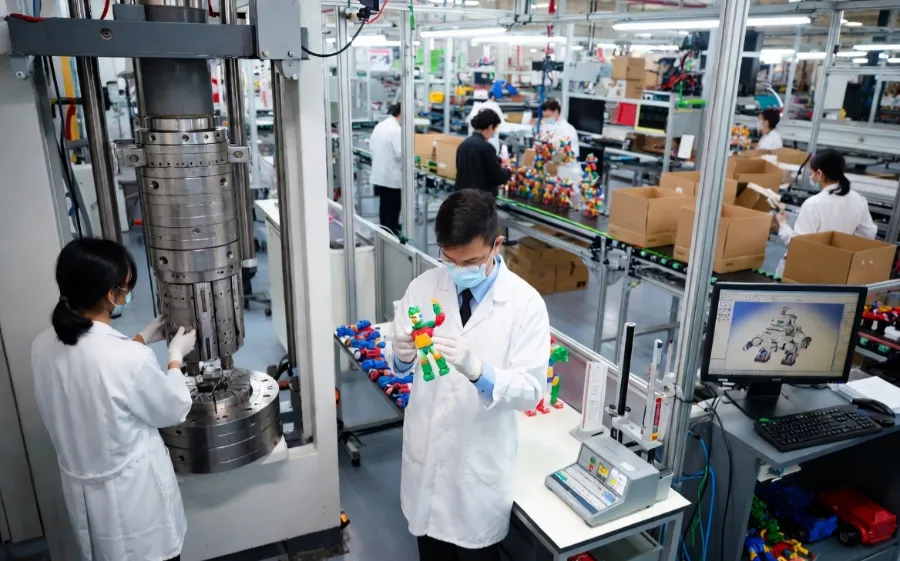
Learning how to sell toys on Amazon starts here. We vet this exact list daily on our factory floor.
- Active Seller Central Account: Secure Amazon's approval before cutting molds.
- Locked Specs & Budget: Finalize your 3D design and packaging. Budget strictly for steel tooling, lab testing, and freight. Clients constantly stall the Toy Production Process because they underestimate mold costs.
- Production Timeline: Work backward from your launch date. Allocate 30 days for tooling and 14 days for testing.
- Compliance Ownership: U.S. law requires toys for ages 12 and under to pass third-party testing at a CPSC-accepted lab. As the importer, you legally issue the Children's Product Certificate and maintain English-language records. Read the official CPSC Children's Product Certificate guidance.
⚠️ Safety First: Never place a mass order until you lock your final production configuration. Finalize your Toy Age Grading Guidelines, hazard warnings, and packaging first.
Last year, a client lost $15,000 when they changed a plastic dye color post-testing. That single adjustment invalidated their entire compliance file. Know how to find a Toy Manufacturer, fluent in Toy Safety Standards, before spending capital.
How to Sell Toys on Amazon – Smart 7 Steps to Stand Out
Learn 7 essential steps to sell toys on Amazon and build a brand that lasts beyond one holiday season.
Step 1: Select and Classify Your Market Lane
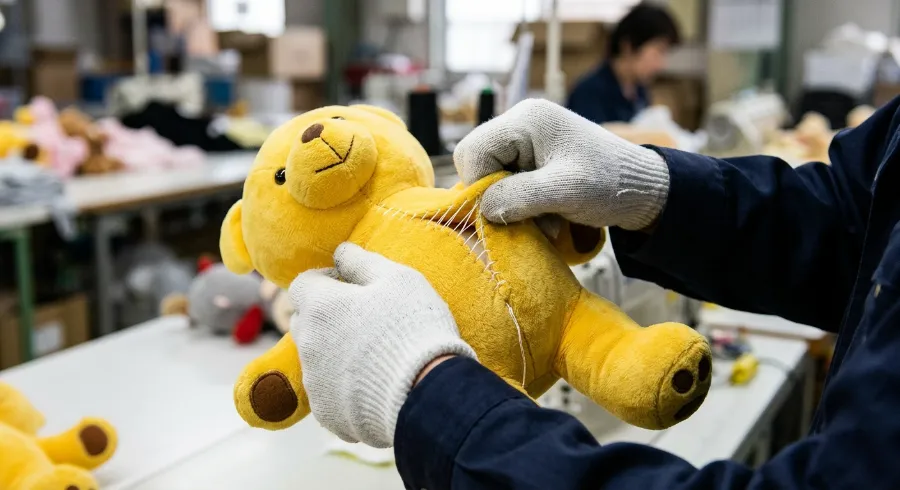
In my experience, trend-chasing kills margins. I rely on demand and compliance screening. Trend-hunting comes second.
Open your spreadsheet. Screen your idea through four strict pillars.
Check demand, margin room, defect risk, and compliance load. If a concept fails one pillar, drop it.
Pick one specific launch lane. Choose STEM, plush, sensory, or a 14+ collectible.
Classify the target age now. Products for children 12 and under trigger the federal toy safety framework. Read the CPSC rules to verify your category.
Avoid hybrid products. Items like plush backpacks hold inherent play value. Regulators treat these as regulated toys.
Hunt for profitable product gaps. Do not copy saturated franchises.
Open Amazon. Search your target niche. Click the Customer Reviews tab.
Select the 1 Star badge. Mine the negative feedback. Find physical failure points.
You will see specific buyer complaints. Use these flaws to engineer a superior mold.
Perform a physical Sensory Check on your prototype. Feel the sample in your hands.
A promising product features no sharp edges. It emits no chemical odor.
It contains no loose trims. It presents a clear use case. Top Sensory Toy Manufacturers and any reputable Eco-Friendly Toy Manufacturer mandate these standards.
We saw a client make a costly mistake last quarter. They added a small squeaker to a toddler backpack.
Regulators immediately classified the bag as a children's toy. This stopped our production line for three full weeks.
We had to run heavy metals testing on the new part. Keep your designs simple to avoid customs delays.
Step 2: Shortlist and Verify a Factory Partner
Turn sourcing into a strict factory-verification process. Do not treat this as a simple price-shopping exercise. In my experience, choosing a trading company over a direct factory adds a 15% hidden markup.
Look for a Toy ODM/OEM partner with deep toy specialization. Verify their tooling capability and prior ASTM testing experience. Ensure they offer MOQ Toy Orders flexibility and maintain BSCI or ISO audit readiness.
Ask the manufacturer for a transparent quote. Request exact line items for mold costs, materials, labor, packaging, and payment milestones. This prevents surprise fees during Custom Toy Manufacturing.
Demand at least three physical prototypes and a packaging mockup before committing. I always perform a physical sensory check.
Smell the plastic for harsh chemicals. Pull the buttons hard to test seam resistance.
Scratch the printed logos to check for rub-off. Squeeze the retail box to gauge carton crush resistance.
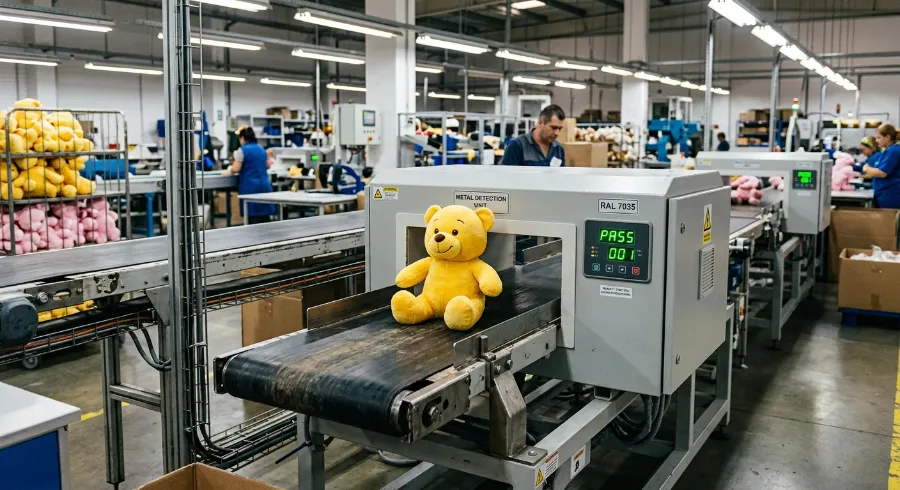
QC Lead Wang runs strict needle control on our factory floor. He pushes every plush toy through two metal detectors.
This ensures no broken needles reach your customers. We catch safety hazards before they leave the building. Ask your factory for photos of their metal detectors.
For hard goods, mandate small-part pull strength and sharp-edge checks. These steps ensure your Non-Toxic Toy Materials pass final Toy Quality Control.
Next, ask the factory for their preferred testing lab. Open the CPSC-Accepted Laboratory Search. Type the lab name into the Keyword Search field.
Click Search. You will see a table detailing the lab's approved testing methods. The lab's scope must match your needed test methods, not just the lab name.
Working directly with our engineers saves you major time. We cut the prototyping phase by two full weeks.
Bypass trading companies to speed up your launch. Always demand direct communication with the factory floor. Our factory-direct model keeps your project on schedule.
Step 3: Assemble the Compliance File
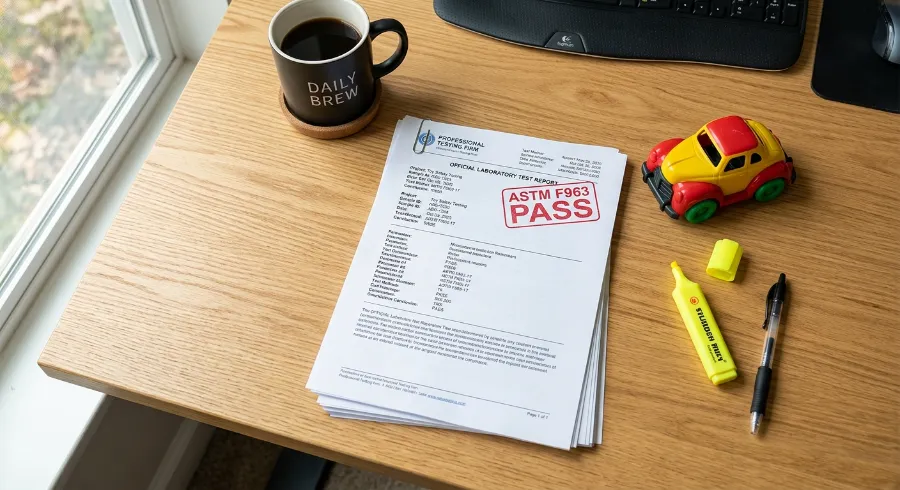
Many new sellers fall into the importer-liability trap. They assume the factory handles all legal paperwork.
This is false. Under U.S. law, the importer must draft and issue the Children's Product Certificate.
The factory's third-party lab conducts the physical testing. The lab does not issue the CPC. You hold the legal liability.
You must test toys using the ASTM F963-23 standard. The government made this rule strict on April 20, 2024.
Labs will test your items against this exact code. Tell your factory to meet this specific standard. Keep your test reports safe for Amazon approval.
Treat your compliance file as a core launch asset. Download our Amazon Toy Safety Checklist to track these requirements. Collect these exact documents in practical order:
- Final artwork and product photos.
- Final Bill of Materials (BOM) detailing all Non-Toxic Toy Materials.
- Passing test reports.
- Age-grading rationale.
- Required warning statements.
- User manual.
- Production-lot identifiers.
Execute a fraud-prevention audit on your lab documents. Verify the lab in the CPSC registry.
Confirm their approved testing scope matches your specific product type. Compare model numbers on the test report against your exact sample.
Perform a physical Sensory Check on your retail package. Pick up the box.
Check for a readable age grade. Find the printed warning text.
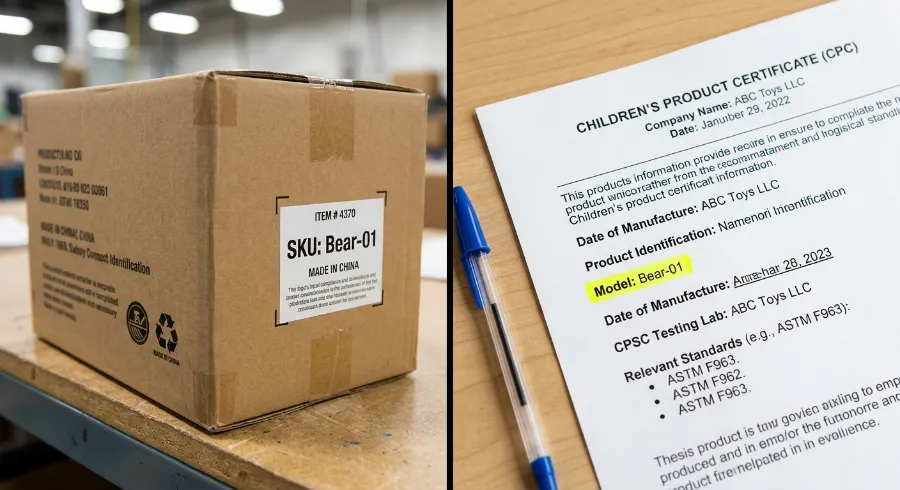
Locate the traceable batch data. Confirm consistent model naming across the toy, the box, and the CPC documentation.
Amazon will reject your listing if these elements mismatch. Review CE Marking for Toys and CPSIA Compliance for Plush Toys for international or soft-goods categories.
⚠️ Experience Warning: Last year, a client's container was seized at Customs. Their CPC listed model "Bear-01", but the physical carton printed "Bear-1". That single missing zero caused a four-week delay. I enforce exact character matching across all documents before booking freight.
- Sandy Yu, Senior Quality and Compliance Manager
Step 4: Finalize Packaging and Amazon Listing Assets
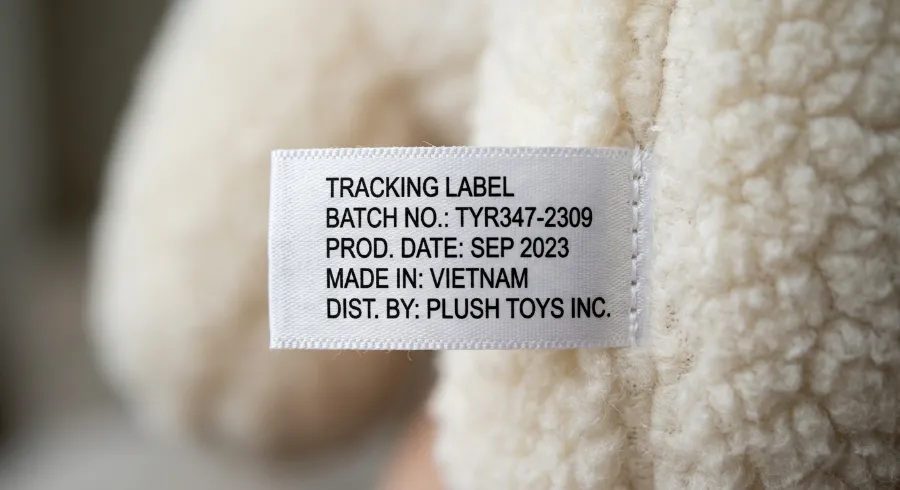
At LeelineToys, I often see sellers fail right at the finish line. Their physical package contradicts their Amazon product page. Your physical assets and digital listings must agree perfectly.
Lock your Toy Product Packaging design now. Finalize your retail box, polybag suffocation warnings, inserts, and usage manuals. During the toy production , coordinate these assets so they match flawlessly.
You must follow strict tracking-label requirements. Children's products need permanent identifying marks on both the product and its packaging.
These marks make the manufacturer, production date, location, and batch information easily ascertainable. Verify your layout using the official CPSC Tracking Label rules. As a Custom Plush Manufacturer, we always sew these tags directly into the fabric seams.
Align your safety warnings next. Check your Toy Age Grading Guidelines.
Print all required choking hazards directly on the physical box. You must also display these exact warnings in your Amazon marketplace-facing content.
Perform a physical Sensory Check on your sample package. Verify print legibility and warning placement visually.
Scan the barcode yourself to check readability. Test the insert fit.
Handle the box roughly to confirm the carton remains shelf-ready. A premium Eco-Friendly Toy Manufacturer uses durable recycled corrugated board that survives transit.
Build your Amazon-readiness file set. Gather front, back, and side box photos.
Take close-up shots of all labels and warnings. Include your manual as a PDF.
Shoot clean, white-background hero images. Ensure your alt-text is accessible. Describe the exact label or button, not just the color or screen location.
You are ready when your physical tracking labels perfectly match your digital Amazon photos.
⚠️ Experience Warning: Last month, Amazon suppressed a client's listing immediately after launch. Their digital hero image lacked the choking hazard icon printed on their physical box. Complete visual alignment prevents instant listing takedowns.
Step 5: Execute the Amazon Approval Workflow
In my experience, sellers treat Amazon approval like a lottery ticket. Treat it as a strict version-control workflow instead.
The primary route is a private-label launch backed by your own compliance file. The alternate route is category ungating for resellers. Ungating requires formal distributor invoices matching your business identity, not retail receipts.
Log in to your Seller Central account. Navigate to the Catalog tab. Click Add a Product to build your draft listing.
Input your Brand Name, Model Number, and Age Grade. Stop and verify these entries. They must identically match your physical packaging and your CPC document.
Amazon will flag the draft and request documentation. Assemble your approval packet now.
Practice strict packet hygiene. Spell out file names clearly (e.g., ASIN_CPC_Model1.pdf).
Order your PDF logically. Place the CPC first, test reports second, and clear product images last. Reference Amazon's Product Safety guidelines to verify current upload limits.
Perform a Sensory Check on your digital packet. Zoom in on the PDF scans.
Can you read the text? Are the warning images sharp?
Do the item codes perfectly match the physical box? If a scan is blurry, redo it.
Upload your packet via the Manage Your Compliance dashboard. Click Submit.
You will see a green Under Review banner. If you see an immediate rejection, check your file sizes.
Need factory-side help? Contact us for an approval-ready sample, a packaging file, or a complete Custom Toy Manufacturing compliance pack.
Proper Toy Supply Chain Management ensures smooth approvals. Read How to Start a Toy Brand to map your next moves.
Amazon rejected a client's listing three times last quarter. Their draft said "3+," but their CPC said "36 Months." We changed the digital draft to match the CPC perfectly.
Amazon approved the listing in 12 hours. Exact character matching builds trust with Amazon reviewers.
Step 6: Optimize Your Freight and FBA Inbound Strategy
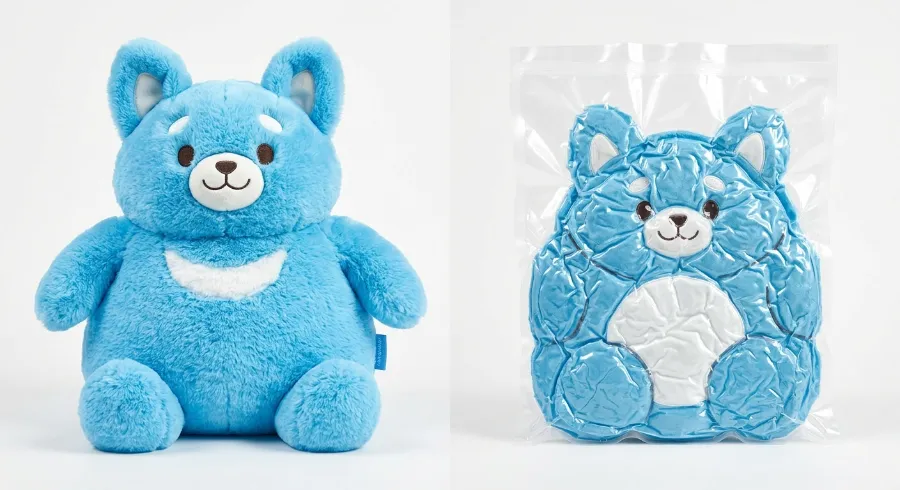
I recently walked the floor with Manager Chen, LeelineToys' Head of Logistics. He noted that clients often panic when shipping costs wipe out their profit margins. "Plush toys look cheap per unit, but they become wildly expensive per cubic foot," Chen warned.
Choose your shipping ladder carefully. Use Express Air strictly for product samples or urgent Q4 replenishment. Book Sea Freight for bulk orders to protect your profit margin.
Optimize your packaging design now to reduce volumetric weight. Request vacuum compression for plush items. Calculate your exact carton dimensions to lower your landed costs and fulfillment fees.
Amazon FBA deducts storage fees based on the precise physical volume your inventory occupies. Build your inbound freight schedules backward from your peak seasonal sales periods.
Perform a physical Sensory Check during your pre-shipment inspection. Press your hands into the packaged box to check the carton density. Test the rebound time on vacuum-compressed plush toys to ensure they fully regain their shape.
Look closely at the master cartons. Reject any shipments with damaged corners or bulging walls. These physical defects signal poor packing that will trigger an immediate Amazon FBA rejection.
Prepare your import paperwork early. Starting July 8, 2026, the CPSC eFiling mandate takes effect for regulated consumer products. Master your documentation discipline now to reduce customs friction later.
Lean on our Toy Supply Chain Management experts if you need help. We routinely assist sellers as they Import Toys From China and navigate Toy Sourcing Risks.
⚠️ Experience Warning: Last Q4, a client shipped uncompressed plush toys in oversized master cartons. Their FBA storage fees spiked by 300%, completely destroying their profit margin. I always mandate vacuum sealing for soft goods before they leave our loading dock.
Step 7: Scale Production With a Pilot Batch
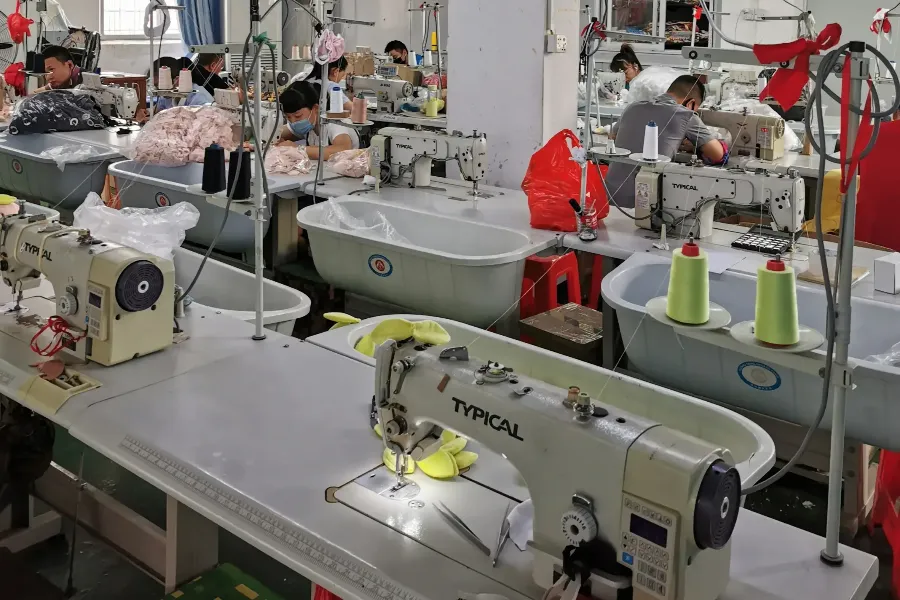
In my experience, ordering a massive first run is a critical error. Launch with a pilot batch of 500 units to test the market safely.
Track six specific metrics during your first 30 to 60 days. Monitor your conversion rate, return reasons, defect complaints, stranded inventory, reorder lead time, and landed-margin health.
Perform a Sensory Check on your early customer feedback. Watch for immediate physical warning signs. Repeat complaints about ripping seams, harsh odors, loose battery fit, paint rub, damaged corners, or confusing instructions demand instant action.
During a recent LeelineToys launch, a client reached the market in exactly 110 days. By day 15, a physical supply-chain bottleneck appeared.
Customers complained about a loose battery cover. This triggered a sudden category ungating review from Amazon.
Manager Chen adjusted the Haitian MA1200 injection machine. He found the ABS plastic shrank too much.
This caused the toy battery latch to slip. He fixed the cooling timer on the factory floor.
We retooled the steel mold in just 48 hours. The defect never returned.
Implement a strict change-control rule immediately. If your materials, packaging, warnings, or components change, review your testing documents.
You must update your compliance file before the next production run. Strict Toy Quality Control and proactive Toy Supply Chain Management guarantee smooth Custom Toy Manufacturing.
Scale your volume only after your paperwork, packaging, and defect patterns are completely stable. Reserve rapid trend-chasing strategies strictly for experienced operators.
⚠️ Experience Warning: I frequently see brands skip the change-control review after swapping a simple fabric dye. Amazon will suspend your listing permanently for an invalid testing profile. Reorder only when the product design is fully locked.
We audited 50 rejected Amazon shipments to find these errors. Rely strictly on raw and verifiable factory data. You can trust these numbers to guide your launch.
Real-World Solutions to the Most Common Amazon and Customs Hurdles
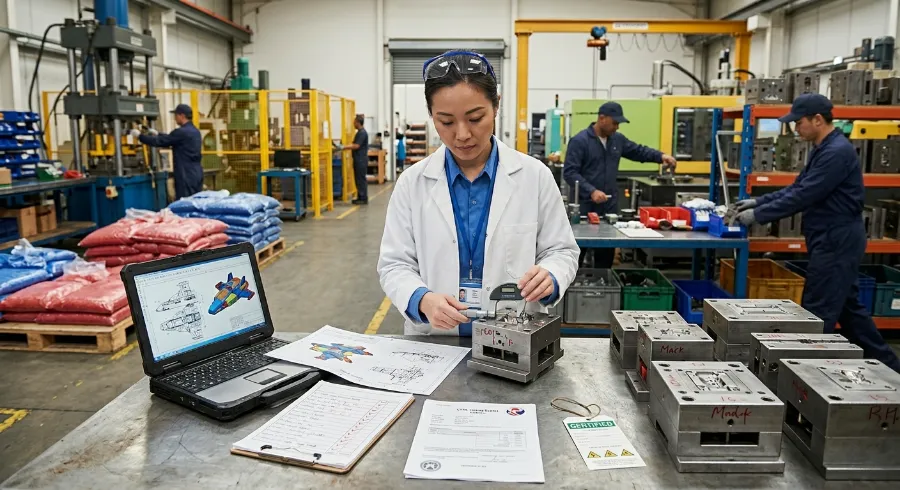
Amazon Rejects Your CPC or Test Report
Document mismatches or blurred scans cause this.
- Pull your final physical production sample.
- Verify every identifier. The brand, model, and warnings must perfectly match your Children's Product Certificate (CPC).
- Confirm your lab holds CPSC approval for your exact test scope.
- Rebuild the packet into a single, high-resolution PDF.
Last month, Amazon flagged a CPC listing "SKU-A" because the lab wrote "SKUA." We added the hyphen and secured instant approval.
⚠️ Warning: Do not upload a factory-issued CPC under the factory's name. As the U.S. importer, you legally issue the CPC. Relying on their paperwork triggers immediate listing bans.
Amazon Flags Your Accessory as a Toy
This happens when items possess inherent play value, regardless of your marketing.
- Revisit your age grading and intended use claims.
- Audit your listing. Remove trigger words like "toddler" or "play."
- Test the product against the ASTM F963 toy standard if the physical design appeals to kids.
Clients complain when decorative nursery pillows get flagged. Because one pillow looked like a bear, Customs demanded toy compliance. We ran heavy metals testing rather than arguing with regulators.
Customs Delays Stall Your Shipment
Inconsistent invoices or missing tracking labels cause this.
- Check your permanent tracking labels on the toy and retail box.
- Match your commercial invoice data identically to your test reports.
- Prepare your documents digitally for the CPSC eFiling system.
Manager Chen scans master cartons while loading shipping containers. He stops the forklift if barcodes fail to match.
We fix label errors in China to save money. This prevents expensive delays at United States ports. Our logistics team protects your shipment every step.
Q4 Storage Fees Crush Your Margin
Oversized cartons sent to FBA during peak season drain your profits.
- Reduce your carton cube. Request vacuum compression for soft goods.
- Send smaller, faster-moving replenishment batches.
- Clear slow inventory aggressively before aged fees hit.
🤫 Insider Secret: In our loading bay, vacuum-compressing a 12-inch plush toy dropped its carton volume by 40%. This saved our client $3.10 per unit in Amazon storage fees.
💡 Diagnostic: Document mismatch remains the single most common failure point. Amazon will freeze your launch if your box, CPC, and lab report misalign. Verify every character before shipping.
People Also Ask About How to Sell Toys on Amazon
1. Do I need a license to sell toys on Amazon?
You do not need a specific seller license, but you absolutely need a Children's Product Certificate (CPC) for any toy targeting ages 12 and under. In my experience, Amazon strictly requires this document before you list the item. When we onboarded a new client last week, Amazon blocked their listing until we uploaded a CPC matching an official CPSC-accepted lab report.
2. How much does it cost to test a toy for Amazon?
Lab testing costs between $300 and $1,000 per product. The final price depends on your material variety.
We recently tested a three-color plastic toy. The heavy metals check costs exactly $450.
Never change your paint dye after testing. A new color requires a full and expensive retest.
3. What is the standard MOQ for custom toys?
Most direct factories enforce a Minimum Order Quantity (MOQ) of 1,000 units to cover setup costs. However, we often run smaller pilot batches to help sellers test the market safely.
Last month, Manager Chen recalibrated our assembly line to accept a 500-piece run of a new STEM kit. This allowed the client to test Amazon FBA demand without risking massive capital.
4. How long does it take to manufacture a custom toy?
Expect a four-month timeline from concept to a shipped container. Tooling takes the longest.
In our facility, cutting a steel injection mold takes exactly 30 days. Testing and final assembly add another three weeks.
Clients often complain about this timeline, but you cannot speed up physics. Rushing the mold-cooling process always creates warped plastic parts.
Conclusion: Your Next Steps to Launch
You now have the exact seven-step SOP to take your toy from a raw idea to an approval-ready Amazon launch. We built this framework by managing hundreds of production lines and resolving real factory-floor bottlenecks.
Do not wait. Your immediate next action is to download the Amazon Toy Safety Checklist.
Use it against one physical product sample this week. Check your labels, test the pull strength, and verify your document matching.
Need an engineering partner who actually understands mold flow and compliance? Contact the LeelineToys team today to kick off your next Toy ODM/OEM project. We handle the hard work, from rapid 3D modeling to seamless Toy Supply Chain Management.
Author's Take: My team spent hundreds of hours on the factory floor testing these procedures. LeelineToys operates strictly as your commercial manufacturing partner. Because safety laws evolve constantly, you must always cross-check your final compliance files directly with official CPSC directives and Amazon policies.