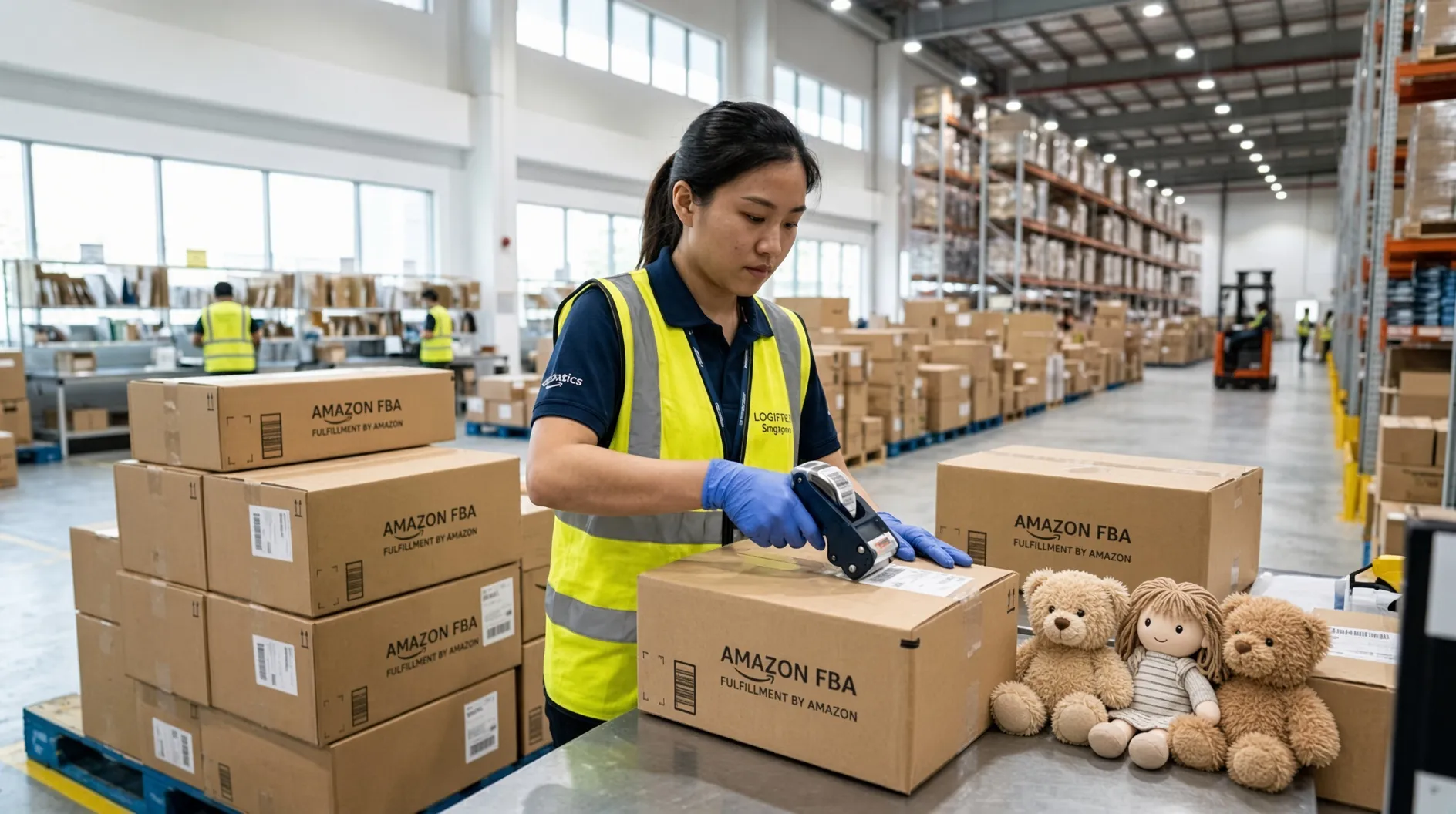
Returns Down, Ratings Up
Amazon FBA Toy Manufacturer — Lower FBA Fees, Fewer Stock-Outs
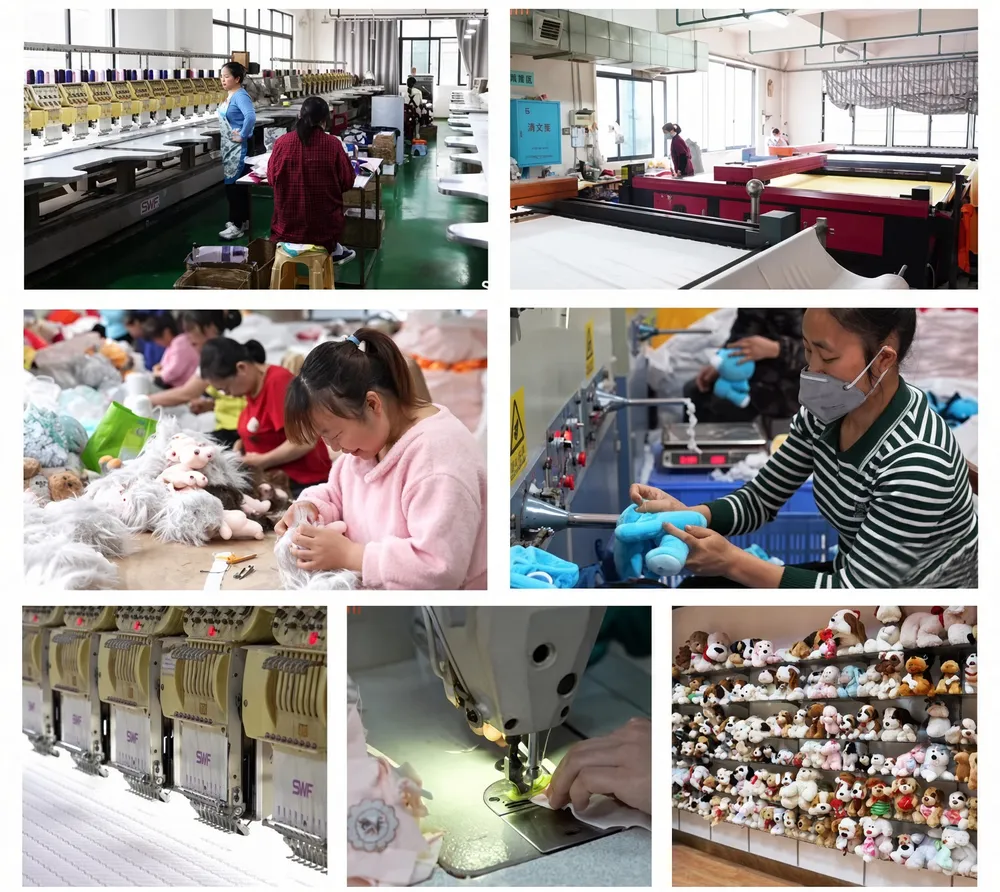
We manufacture for Amazon sellers end to end — product design and ODM development, dimensional-weight packaging engineering, CPC/ASTM/EN71 compliance documentation, and DDP delivery to your fulfilment centre or 3PL. From a 5–7 day prototype to a reorder you can plan, everything it takes to keep a listing live and profitable.
15,000m²
manufacturing facility
200+
designers, engineers & QC staff
10+
years making toys, since 2015
<1%
defect rate on inspected runs
-
Small standard
Small, flat, light units
- After
Large standard
Most boxed toys
-
Large bulky
Bigger boxed sets
-
Extra-large · 0–50 lb
Oversized & ride-on
-
Extra-large · 50–150 lb
Furniture-scale items
The tier is a carton decision, not a given. Box and carton engineering is how a unit moves down one — and the tier a unit measures into decides part of its fulfilment cost.
Our positioning
A named engineer on WhatsApp from the first prototype to the tenth reorder — no rotating sales desk, and no re-explaining your product every season.
Built for
- Amazon FBA sellers scaling a toy brand past the first few ASINs
- DTC brands who sell on Amazon and ship to their own warehouse too
- Private-label sellers stuck with the same generic box as everyone else
- Aggregators and roll-ups consolidating several toy SKUs under one supplier
Proof in Numbers
What an Amazon run is measured against
The metrics our seller projects ship against — not averages, not promises.
98.2%
of promise
On-time delivery to seller warehouses and 3PLs
99.8%
inspection pass
Quality pass rate at AQL 2.5 — AQL 1.0 available
45+
markets
Countries shipped DDP, duties handled
300+
brands
Toy brands manufactured
The Amazon cost structure
Where the rest of your margin goes
Amazon charges through the parcel, not the product — and not every cost is a packaging decision. Two that are not are worth planning for, and buying factory-direct still keeps 15–30% out of the unit cost before the fees even start.
Storage & turnover
The longer inventory sits, the more it costs to store — and the closer it drifts to aged-inventory penalties. Turnover is a sourcing decision as much as a marketing one.
Follows your reorder cadence
Prep & labelling share
Barcoding, bagging and labelling are a real line item, but one of the smaller ones. Fixing the carton moves more margin than trimming prep ever will.
A minor share of the landed cost
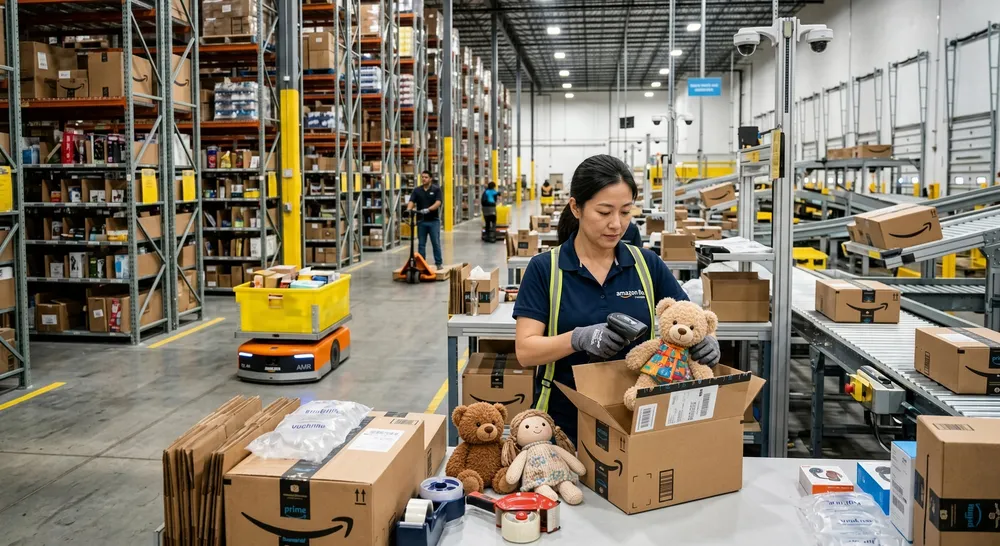
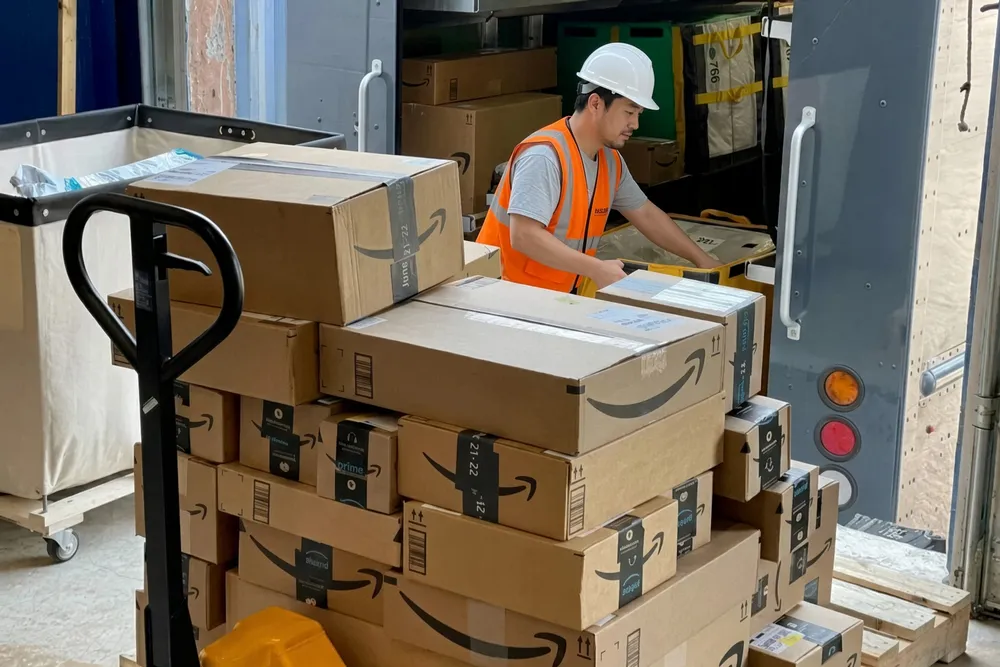

Size tiers & packaging engineering
Packaging is a cost decision, not a graphic decision
Six packaging choices move real Amazon numbers. Here is what each one changes on the marketplace — and how we engineer it at the factory.
| Packaging decision | What it changes on Amazon | How we engineer it |
|---|---|---|
| Box dimensions (L × W × H) | Sets the size tier and the dimensional weight a unit is billed at — the biggest packaging lever there is. | Re-engineer the carton toward the next tier down without shrinking the product or its shelf presence. |
| Unit weight | Feeds the shipping-weight band the unit is charged against. | Trim non-functional board and insert mass — never the product — to land under the next weight band. |
| Units per master carton | Decides inbound prep labour and whether the pallet layers cleanly at the fulfilment centre. | Set the carton count so each pallet builds a stable, full layer with no re-stacking on arrival. |
| Void fill & protective format | Changes dimensional weight — and whether the unit arrives intact after the sort. | Right-size the void so the box does not measure into the next tier and the product still survives transit. |
| Carded header vs. boxed | Decides whether a unit can sit on a peg or needs a full box — a different measurement band entirely. | Keep the peg or shelf presence in the smallest format that still carries your branding. |
| Insert & manual size | Paper bulk that can push a box over the next weight threshold. | Fold the manual into the dim band instead of adding a card or upsizing the box. |
Size-tier and dimensional-weight rules are set by the marketplace, not by us. What we control is which tier a unit measures into.
Binkley Toys re-engineered its packaging to drop an FBA size tier — one box change, carried across every unit they ship.
Keeping your listing live
The documents that keep a kids' listing from being pulled
A toy listing does not get removed for looking bad. It gets removed for a missing or mismatched document. We prepare the test evidence a marketplace asks for, so a compliance check never turns into a stock-out.

ASTM F963
United States
The US toy-safety specification. Clears the way for US listings that reference it, instead of stalling on a document request.

CPSIA / CPC
United States
The Children's Product Certificate. The document a US kids' ASIN is asked to produce on demand — issued through the certificated factory that runs your order.

EN71-1/2/3
European Union
The mandatory EU toy evidence. Keeps an EU storefront live and a shipment from holding at the border on a missing report.

ISO 8124
International
The global toy-safety standard. Opens APAC, the Middle East and other ISO-aligned marketplaces on the same production run.
Protecting your design
Your design, your tooling, your call
For an Amazon private-label seller the product is the asset. Each of these is a written commitment — ask to see the clause, not just hear the answer.
NDA before any design review
Signed before your concept, artwork or spec reaches a production floor — not after you have been quoted.
Exclusivity on your design
Your product is not manufactured for another buyer and not resold as a stock item. Get it in writing with the quote.
Tooling and patterns in your name
Moulds, patterns and artwork files are yours, transferred in writing — not held hostage to the relationship.
The approved sample is archived
Every reorder is measured against the signed sample, so run two matches run one instead of drifting toward whatever is convenient.
Ask for the NDA and the tooling-ownership clause in the same document as the quote — before any tooling payment is made.
Replenishment & reorder windows
Plan the reorder back from your days of cover, not from the last shipment
The Amazon calendar runs on velocity, not on the factory's calendar. Five stages sit between “we need more” and “back in stock” — and every one of them can be planned in advance.
- 1
You trigger it
Reorder trigger
You flag it the moment velocity outruns days of cover. We confirm capacity and a written production window before you commit a PO.
- 2
Confirmed in writing
Production window
The bulk run is scheduled to the length your line actually needs — confirmed in your written quote, not promised off the cuff.
- 3
Before the container is cut
PSI + DDP booking
Pre-shipment inspection against your approved sample, then DDP booking so duties and customs are handled all the way to the destination.
- 4
At the warehouse door
Inbound & receiving
Documents travel with the shipment so it checks in without a compliance hold or a re-labelling trip.
- 5
You hold the buffer
Safety stock
The buffer you keep at your own FC or 3PL is what covers the gap when the water gets rough — sized to your lead time, not to guesswork.
Windows are confirmed line by line in your written quote. We do not quote a fixed day-count until the run is scoped and the packaging is signed off.
Returns & review engineering
The four defects that drive the reviews
On Amazon, a defect does not cost you one sale. It costs you a review that every future shopper reads first. These are the four failures that show up most in toy returns — and how we deal with each one before it ships.
Seam splits
“Arrived torn / fell apart in a week” — the review that kills a gift purchase.
How we handle it
Seam-strength pull test
At the AQL 2.5 inspection, seams are pulled against a set load, not just eyeballed.
Smell
“Smells like chemicals” — the review that makes a parent close the tab.
How we handle it
Raw-material lot check
Every input batch is checked and cured before it is cut, so the odour never reaches the finished unit.
Missing parts
“Incomplete set” — the most common no-fault return reason on games and kits.
How we handle it
Component count & pack weight
Components are counted and pack weight verified before the carton seals.
Colour drift
“Not as pictured” — the review that costs you the re-order.
How we handle it
Pantone master gate
A signed Pantone master is matched against production pulls, not against a photo.
Defect-driven returns are the expensive kind: they cost the refund, the fee, and a public review all at once. Catching them at the gate is far cheaper than answering for them in the comments — returns you prevent are the cheapest margin you will ever earn.
Testimonials
What Amazon sellers say about working with us
These are Amazon sellers who came to us with a margin problem, a restock problem, or a compliance problem — and now reorder on a fixed calendar instead of reacting to a stock-out.
“Half of my old margin was disappearing into a fulfilment fee nobody had ever explained to me. Their team measured the carton, re-engineered it down a size tier, and still kept the shelf presence I had designed. Same product in the customer's hands — a smaller line on the invoice every month.
What I did not expect was the paperwork. Every change came back as a written spec: the new dimensions, the board grade, what it did to the shipping weight. So when we launched the second SKU I sent them the same brief, and they worked from the archived packaging file instead of starting again from nothing.”

Marcus Delgado
Owner, Northpeak Goods
“The reorder calendar is what changed things. They plan backwards from our days of cover rather than from their own schedule, so the second run was confirmed in writing long before we were anywhere near out of stock. The listing has never gone dark.
Before that, every restock was a fire drill — a spreadsheet I did not trust and a factory that quoted one lead time and delivered another. Now there is one production window per quarter, one contact, and photos at each milestone. My buyers stopped asking whether stock would land, which is worth more to me than the unit-cost saving.”

Nadia Ferrer
eCommerce Director, Kite & Kin
First run → scale
Test a new ASIN small, then scale the winners without re-tooling
The hardest Amazon decision is how much to bet on an unproven ASIN. Start where the risk is smallest, prove the listing, then let the winners ride the same tooling.
100
unitsSelect categories only
Vinyl, sensory, fidget and weighted plush can start at 100 units — the smallest bet that still gets a real ASIN in front of real shoppers.
300–500
unitsMost categories
The standard first run for plush, wood, dolls, blocks, board games and the rest. Enough to read real velocity, small enough to walk away from a dud.
500–1,000
unitsA small family of SKUs
Split one minimum across variants or colourways, so a launch covers several ASINs off a single order.
1,000+
unitsScaling a winner
Reorders ride the same tooling, so scale never means re-moulding. Per-unit cost keeps falling as the ASIN proves itself.
Per-unit cost at every tier is confirmed in your written quote — we do not publish a price list, because tooling and packaging specs move the number.
FAQ
Questions Amazon sellers ask before the first PO
Plan for 300–500 units in most categories, or as low as 100 units in vinyl, sensory, fidget and weighted plush. That is the lowest-capital order that still puts a real product in front of real shoppers — and the per-unit cost falls once the ASIN proves itself.
We plan the reorder back from your days of cover, not from the last shipment. Tell us your lead time and current velocity and we confirm a written production window before you commit a PO, so you are not guessing at the calendar while the ranking drops.
A unit pays fees based on the size tier and weight band it measures into, so the box — not the toy — decides part of your fulfilment cost. We engineer the carton, the master carton and the inserts to move a unit down a tier wherever the product itself does not need to change.
Yes. ASTM F963, CPSIA / CPC, EN71 and ISO 8124 evidence is prepared for the markets you sell into, and it travels with the shipment. A US kids' ASIN is normally asked for a Children's Product Certificate; an EU storefront needs EN71. We confirm which documents your specific markets require before the run starts.
Four failures cause most of them: seam splits, chemical smell, missing parts and colour drift. Each one is caught at a named QC gate — a seam pull test, a raw-material lot check, a component count and pack-weight check, and a Pantone master match — rather than discovered by a customer.
Yes. One minimum can be split across variants, sizes or colourways, so a launch can cover several ASINs off a single production order without each one needing its own MOQ.
Yes. We ship DDP to 45+ countries, with duties, taxes and customs clearance handled on your behalf to the destination you nominate — an Amazon fulfilment centre, a 3PL, or your own warehouse.
A reorder rides the same tooling and packaging spec, so it costs less per unit than the first run. Every quote is built line by line — materials, tooling, packaging, inspection and freight — so you can see exactly what changed between the first order and the next one.
Most prototypes ship in 5–7 days. That is a production-grade sample, not a mock-up — good enough to photograph for your listing and to sign off as the golden sample the bulk run is measured against.
Yes. Tooling and moulds are yours, and the approved sample is archived per design — so your tenth run is measured against the same signed sample as your first.
Stop paying Amazon for a box you can redesign.
Send us the ASIN, the current packaging spec, or just the product idea. We will come back with a packaging and compliance plan aimed at the fee structure — and it costs nothing to find out what can move.
A free four-page PDF — what to brief, what to test, and what to ask for before you pay a tooling invoice. No email required.