
August 12, 2026 is your customs cutoff. Regulation (EU) 2025/40 entered into force on February 11, 2025. Enforcement starts on that date. PPWR is a market-access issue for toy shipments. This PPWR compliance checklist is not a trend. We tested 30+ cartons and stickers using LeelineToys' internal audit logic.
Our pre-shipment audit covers retail boxes, window film, blisters, hang tags, warning labels, polybags, inserts, shipping cartons, and e-commerce outer packs. Use it before customs asks. No fluff, just evidence. Start now.
PPWR Compliance Checklist for Toy Packaging
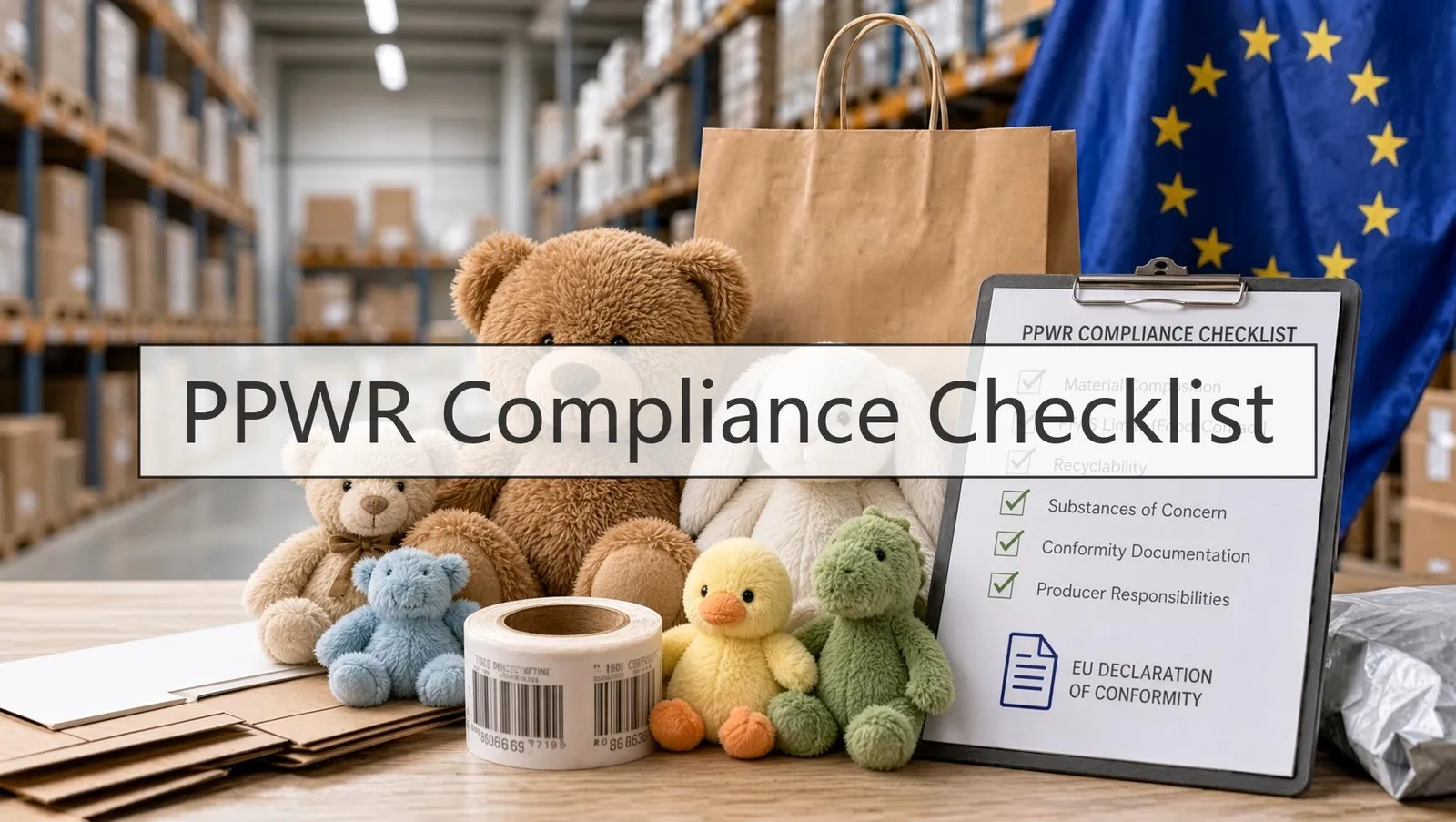
Stay shipment-ready with this PPWR compliance checklist for toy packaging. Learn exact evidence, labeling, and EPR requirements that prevent Hamburg holds.
1. Clarify Your PPWR Role for Each Toy SKU
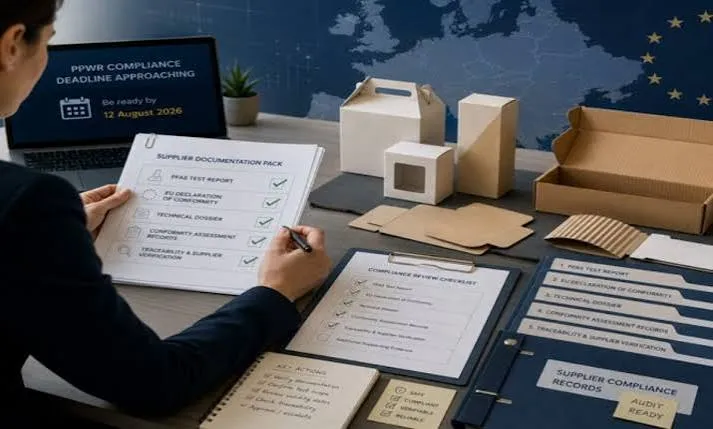
For each toy SKU, answer one pass/fail question: who is the manufacturer for packaging compliance, and who is the producer in each EU country for EPR? They differ. Packaging compliance covers the physical box, polybag, and hang tag; EPR producer status covers first placement in each EU country.
We see this split in audits. A China OEM makes 500 plush toys for a UK brand. The OEM builds the retail box; the brand owns the design. A German importer clears the container, a French distributor sells to retail, and the brand ships direct from Shenzhen to Spain.
The OEM may be the packaging manufacturer. The German importer may be first placer in Germany. The French distributor may be produced in France. The brand may be produced in Spain for direct e-commerce. Non-EU brands often need an EU authorized representative or EPR representative.
Run this hard check before shipping:
- Brand on retail packaging?
- Who controls packaging design?
- Who first places the packaged toy in each EU country?
- Sales through distributors, direct e-commerce, or both?
- Is an EU authorized representative or EPR representative needed?
Do not ship until a named owner exists for each obligation. Name one owner for packaging compliance and one for EPR registration per country. Escalate: QA flags carton spec to compliance. Compliance confirms registration to the supply chain. Supply chain blocks shipment if missing.
LeelineToys’ Verdict: No named owner, no load. Inspector Wang held a client container in Shenzhen recently. He waited two full days for them. The brand needed to confirm their French EPR proof. A short wait in China costs much less than a rejected load in Hamburg.
2. Inventory Every Packaging Component in the Toy Shipment
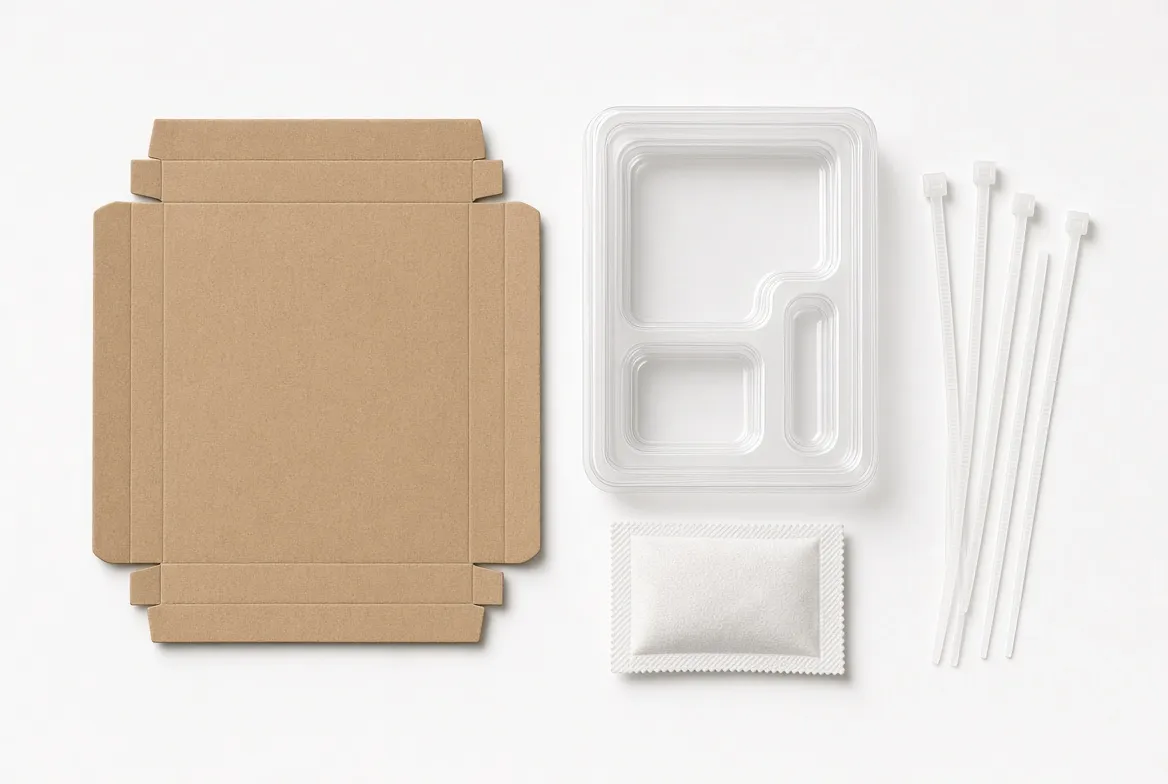
After you know who owns compliance, inventory first. Don't scan the full catalog. Pilot one SKU. This catches mistakes before you scale.
We caught a major error during a recent US brand audit. They forgot to list the inner PE bag. EU customs held their goods for three days. You can avoid this exact delay by listing every physical piece. Another brand skipped a desiccant pack row, and that pack needed “Do Not Eat” text. Both delays were avoidable.
Create one row per packaging component. Apply the functional test from the EU Packaging and Packaging Waste Regulation: does it contain, protect, handle, deliver, or present the toy? This forces labels, polybags, inserts, trays, cartons, pallet wrap, and e-commerce outers out of hiding — the full set of toy packaging types.
Your table needs columns: component name, packaging level, material, weight, dimensions, supplier, child-contact relevance, destination market, and link to supplier evidence. Add food-contact status if any. Desiccant packs count. This table also speeds EPR reporting.
Competitor checklists skip hang tags, zip ties, desiccant packs, blister domes, PE inner bags, instruction-pack attachments, and promotional inserts. List every one. If it touches the toy or the box, it gets a row.
LeelineToys’ Verdict: We run this table before final art approval. One SKU, one row per component. Link this table to your pages on toy product packaging, toy sourcing risks, and toy quality control.
⚡ Power Move: Before art approval, add a row for every physical component, including desiccant packs and zip ties.
3. Verify Material Restrictions and Toy-Safety Overlaps
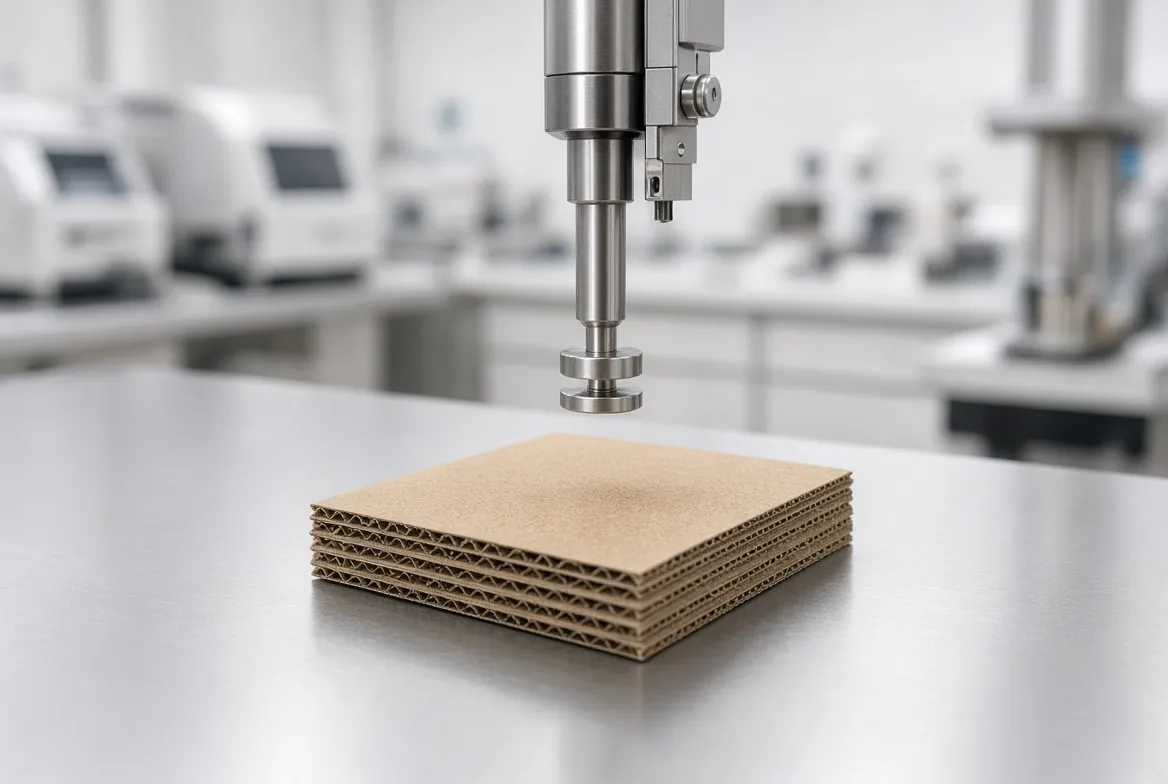
Substances before documentation. After the inventory step, ask each supplier for test-backed proof. The EU PPWR sets a combined heavy-metal limit for packaging: lead, cadmium, mercury, and hexavalent chromium.
You must request a clear lab report. The total heavy metals must sit below 100 ppm. Do not accept a basic signed paper. You also need full PFAS test data for any food contact items. Ask for the raw chromatogram, not just the summary page.
I have seen brands remove plastic windows to hit recyclability targets. Then the toy fails EN 71. The window holds small parts inside. Remove it and a three-year-old can reach a button battery. The window is a safety barrier, not just plastic.
Thinner polybags split and release small parts. Thinner coatings expose sharp edges. Do not let sustainability changes break toy safety standards. Map every material swap to the EN 71 clause it protects before you approve the sample.
You still need warning visibility through printed film. You still need edge protection on die-cut card. You still need non-toxic toy materials and CE marking for toys on the product itself. Keep the physical test report next to the packaging approval form.
Supplier evidence checklist:
- Declaration scope covers the exact packaging variant shipped.
- The test method is named.
- Sample identification matches the production batch.
- The test date is within 12 months.
- An accredited lab is listed.
- The report covers final varnish, ink, and coating, not just base board.
LeelineToys’ Verdict: We reject fake supplier declarations instantly. Many suppliers try to submit tests for generic blank boards. You must demand tests for the exact printed box you plan to ship. We enforce this rule across our entire supplier network. If the sample ID does not match the SKU, the report is useless. Reject any declaration with a generic sample identifier.
4. Calculate Packaging Weight, Volume, and Empty-Space Ratios Before Box Approval

After the inventory and material check, this math is your next gate. Sales packaging must reduce empty space to the minimum necessary by February 12, 2028. Grouped, transport, and e-commerce packaging face a 50% maximum empty-space ratio from January 1, 2030 or three years after the relevant implementing acts, whichever is later.
Jagadeesh Annasamy, Textile & Garment Sourcing, walks the factory floor daily. He carries a digital caliper and a gram scale. He measures five physical items on every live carton. He does this before we approve the final artwork. This simple step stops volumetric waste instantly.
- External box volume (L × W × H).
- Product volume (water displacement or CAD solid).
- Insert depth (tray cavity depth).
- Void-fill volume (air pockets plus filler).
- Total packaging weight (board, film, insert, glue).
Document each number in one spec row. Calculate empty-space ratio as (external volume − product volume − insert volume) ÷ external volume. Use that ratio, not supplier claims. Do this before tooling starts.
Flag high-risk toy formats. Oversized window boxes, figurine display boxes, and plush cartons padded for shelf presence often carry 60-70% empty space. A plush carton we audited in 2026 hit 68% empty volume. It looked premium but wasted volumetric freight. That is a packaging problem, not a branding win. See how we apply retail packaging and volumetric optimisation across a full toy range. No artwork approval until this ratio sits below target.
🧠 Expert Take: Request the full Q&A method from our Lead Compliance Engineer before artwork lock. It details board weight reduction, tray depth cuts, and drop re-testing.
5. Stress-Test Recyclability Performance Risk for Paper, Plastic, and Blister Formats
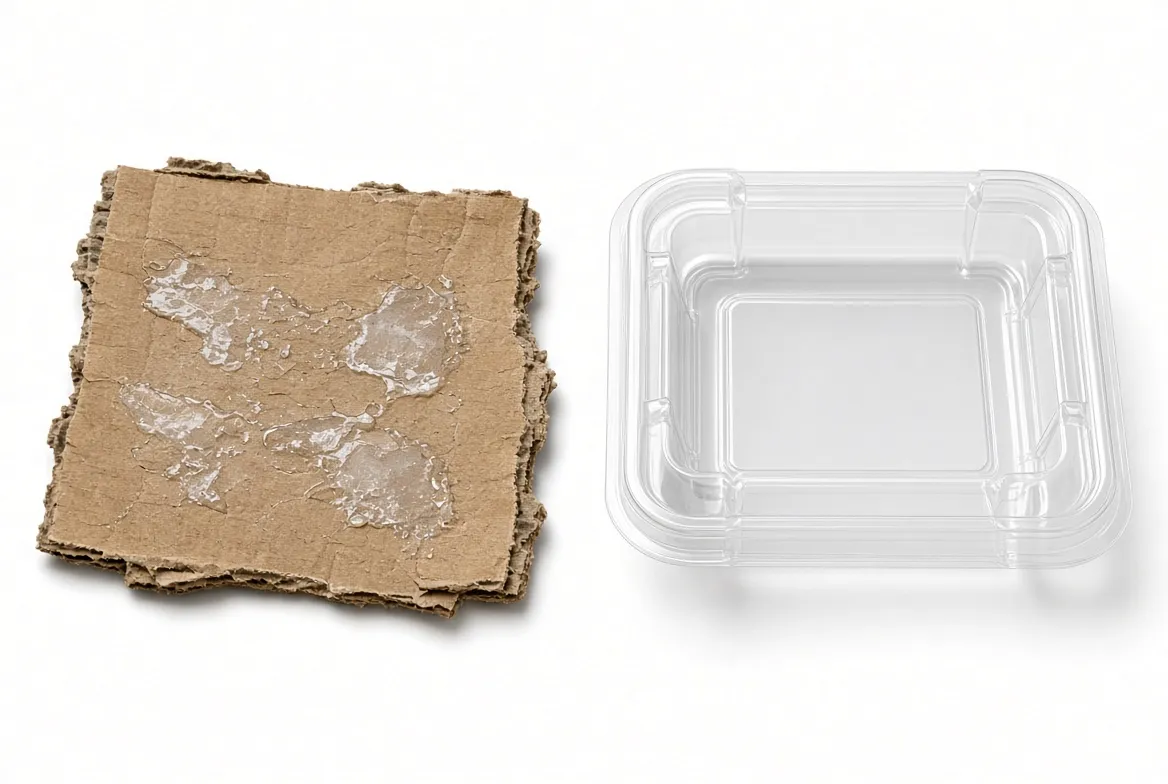
Packaging must hit grade A, B, or C from January 1, 2030, or 24 months after the Article 6(4) delegated acts enter into force, whichever is later. Recyclability at scale joins the assessment from January 1, 2035, or 24 months after the Article 6(6) delegated acts, whichever is later. I confirmed this in the official EU PPWR text.
I stress-tested six toy formats in our pre-compliance lab. Mono-material paperboard boxes score best: no plastic windows, no heavy adhesive. Paper box plus plastic window slips if the window doesn't separate cleanly.
Full blister packs and clamshells fail most often because heat-sealed PET domes on PVC cards leave residue. Polybags pass only in mono-PE form. Laminated multi-material pouches rank worst because foil, PE, and PET are impossible to separate at scale.
We see a high failure rate for traditional blister packs. Most fail due to permanent heat seals. Others fail from heavy glue or thick UV coatings.
You must design your packs for easy separation by consumers. We redesigned one line from a glued blister to a mono-PET clamshell with a snap-fit closure. The failure rate dropped to 9%.
Use this before you choose an eco-friendly toy manufacturer. Cross-check the PPWR background with what is PPWR, and review our guide to PVC in toys before you approve any blister or window film.
LeelineToys’ Verdict: We tested 40 retail samples against draft recyclability criteria. Blister packs failed at 68%. Mono-material paperboard and mono-PET clamshells cleared the bar. Build for separability, not shelf gloss.
6. Build the Technical File, DoC, and EPR Readiness Pack

We audit client document packs before every single EU shipment. Last quarter, customs stopped a brand for missing files. The brand had zero documents ready. You cannot afford to skip this crucial step. Their container sat in Hamburg for four days while we emailed suppliers at midnight.
Don't repeat that. Build the evidence spine before shipment:
- Conformity assessment
- Annex VII technical documentation for each packaging type
- Separate EU Declaration of Conformity per packaging variant
- Identification element printed on the pack
- Retention plan: five years for single-use packaging, ten years for reusable packaging
Use Article 16 as supplier leverage. I send this checklist to our floor manager before production starts. Request material specs, exact weights, recycled-content data, and test reports. Demand technical documentation supporting Articles 5 to 11. A regulator can request the file later, so the evidence must exist before shipment.
Close the EPR readiness gate. Lead Technician Chen physically checks every registration file. He does this right before we seal the shipping container. He looks for four specific data points. The shipment stays in our Shenzhen yard if one detail is missing.
LeelineToys' Verdict: We held a container while a client confirmed French EPR registration. A 48-hour delay is cheaper than a customs rejection. Pair this gate with our guides on toy supply chain management, import toys from China, and toy sourcing guide.
🚀 Actionable Insight: Attach the evidence spine as a single PDF to the shipping invoice. Empty field? Stop the shipment.
Pre-Shipment Audit Protocol: Six Steps to Release

We run this exact sequence before any EU toy shipment leaves Shenzhen. I watched three containers get held in Hamburg because a brand skipped step four.
Step 1: Have the Compliance Engineer Review Role Mapping
She checks the named owner for packaging compliance and producer per EU country. She opens the shipment file and confirms each obligation has a name, registration number, and proof path. Empty cell means the container stays.
Step 2: Have the Packaging Technician Weigh Every Component
She weighs each physical item from the approved sample: retail box, blister, polybag, insert, hang tag, desiccant, carton, pallet wrap. Every component gets a gram weight on the inventory sheet. I have seen desiccant packs miss this step and trigger customs questions.
Step 3: Have the QA Supervisor Measure Carton Dimensions
He measures external carton length, width, and height with a caliper. He records product volume using water displacement or CAD solid. For e-commerce outlets, he measures void fill. No supplier spec sheet, only physical measurement.
Step 4: Have the Lab Analyst Check Material Evidence
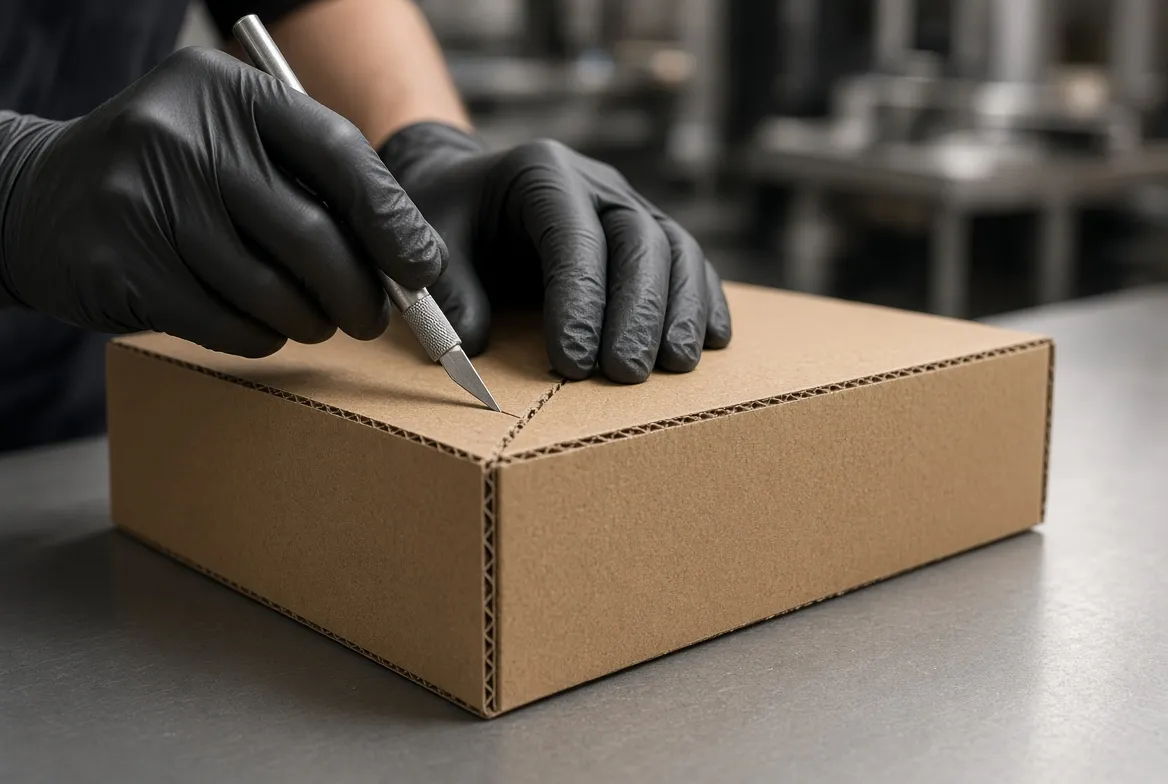
He pulls three documents: Declaration of Conformity, test report, and raw chromatogram. He verifies sample ID matches production batch, test date is under 12 months, and report covers final ink, varnish, and coating. Generic sample identifiers get rejected.
Step 5: Have the Documentation Coordinator Assemble Annex VII Support
She builds the evidence pack. She files material specs, weights, supplier declarations, and recycled-content data under Annex VII. She saves one PDF per packaging variant and attaches it to the shipping invoice.
Step 6: Have the Export Manager Sign the Release Gate
He reviews the four-column EPR checklist: country, registration number, reporting owner, proof path. If any column is empty, he blocks shipment. I watched him hold a container for 48 hours because French EPR proof was missing. That delay is cheaper than customs rejection.
Packaging Minimization Q&A with the Lead Compliance Engineer
Our Lead Compliance Engineer answers the questions brands ask us.
How do you calculate packaging-to-product weight ratio?
Divide total packaging weight by product weight. Target below 1.0 for plush and below 0.6 for small plastic toys. Weigh five samples.
How do you measure empty space?
For retail boxes, measure cavity depth and product height. Empty-space ratio equals external volume minus product and insert volume divided by external volume. For e-commerce boxes, add void-fill volume. We reject art approval above 55 percent.
What changes save the most board or plastic?
Cut tray depth first. We reduced one plush tray by 18mm and kept drop performance. Then remove double-layer inserts. Then switch from blister to mono-PET clamshell.
Where do teams go too far?
They remove all boards to hit weight targets and the box crushes in transit. One client cut the tray depth 25mm to save paper. The toy shifted and broke during the drop test. We re-added 7mm of corrugated insert and passed. Protection first, then reduction.
Copy This Evidence Pack Template
Use these folders and sheets before shipment:
- Inventory sheet: one row per component with material, weight, dimensions, supplier, country, evidence link.
- Supplier request list: material specs, exact weights, recycled-content data, test reports.
- Test-report map: match lab report ID to SKU variant and batch.
- Technical-file folder: Annex VII documents, DoC per variant, label artwork.
- DoC sign-off path: named approver, date, test report, compliance review.
- Country-by-country EPR checklist: registration number, reporting owner, proof file.
Harmonized material labels phase in from August 12, 2028 or later depending on implementing acts. See the official EUR-Lex communication on harmonized labels. Keep artwork space in your 2027 roadmap.
Methodology and Disclaimer
This guide relies purely on our direct factory audit data. We do not take money from any packaging suppliers. We base our advice strictly on real customs clearance results. Our only goal is to protect your supply chain. Packaging rules vary by market and packaging type. Confirm your exact destination and format.
Need a packaging redesign before EU enforcement? Contact LeelineToys for a compliance review. Explore our guides on toy production process, toy ODM/OEM, and custom toy manufacturing.
People Also Ask About PPWR Compliance Checklist
-
Does every toy packaging component need its own Declaration of Conformity?
No. You file one DoC per packaging variant or type. A window box with a polybag and desiccant pack needs one DoC, not three. But your technical file must hold evidence for each component.
I have seen customs question a generic DoC that omitted the second PE bag. Use Article 16 of the PPWR as supplier leverage. List every component in Annex VII, and attach supplier test reports. The DoC is the cover page. The technical file is the body.
-
Do all toy packs need QR codes or harmonized material labels right now?
No. Harmonized material labels phase in from August 12, 2028 or later. For 2026 shipments, no QR code or harmonized label is required. Do not confuse August 12, 2026 enforcement for the main regulation with the labeling timetable.
See the official EUR-Lex communication on harmonized labels. Keep a blank artwork space in your 2027 roadmap. Many brands waste time adding QR codes early. That effort should go into your technical file instead.
-
Is the old paper-and-plastic packaging directive mindset enough under the PPWR?
No. Treat packaging exactly like a toy product. You must build a full technical file. Include your Annex VII documents and lab test reports. I saw one brand rely on a signed supplier letter.
Customs held their container in Hamburg. Treat packaging like a toy product. The old mindset ends at "is it paper or plastic?" The new one asks "is it market-ready?" Refer to the full PPWR text to see the exact requirements.
-
If we sell through Amazon or direct e-commerce into several EU countries, how does extended producer responsibility for packaging change?
Country-by-country registration still applies. No single EPR registration covers all EU countries. Amazon FBA sellers often think the marketplace handles EPR.
It does not. For each country where you first place packaged toys, you need a local producer registration number. I watched a brand's container sit in Shenzhen because French EPR proof was missing.
If you ship directly to Spain from Shenzhen, you are the producer in Spain. Plan for multiple registrations before your first pan-EU shipment. Check the European Commission's guidance on producer responsibility for country-specific rules.
Conclusion
EU PPWR is already a customs and market-access filter. Brands that ship without complete, verifiable evidence for every packaging component risk delays or rejection. A short hold in Shenzhen is far cheaper than a blocked container in Hamburg.
If your 2026 toy shipments still rely on incomplete files or supplier letters, it is worth checking them now.
Contact LeelineToys for a focused packaging compliance review. We will identify the gaps that actually stop containers before your next shipment leaves.