
A toy can pass EN71 and still fail a market-readiness review if the packaging spec is weak. In our packaging reviews for EU-bound toy projects, we have seen this exact gap stall shipments and force costly redesigns.
The answer starts with what is PPWR. PPWR is the EU Packaging and Packaging Waste Regulation. It applies to packaging placed on the EU market, not just the toy itself. (environment.ec.europa.eu)
The timeline is already running. The Regulation entered into force on 11 February 2025. It generally applies from 12 August 2026. (eur-lex.europa.eu) This is a procurement issue now, not a sustainability topic for later.
For toy brands, PPWR reaches beyond the retail box. A practical interpretation for procurement teams includes windows, trays, polybags, hangtags, inserts, master cartons, and e-commerce packaging. (environment.ec.europa.eu) CE marking and EN71 apply to the product.
PPWR applies to every packaging layer around it. Passing EN71 safety tests does not automatically clear your product packaging. The physical toy receives the CE safety mark. The PPWR regulation covers the retail box and the outer shipping carton independently.
Methodology: Our guidance draws on four sources. We reviewed Regulation (EU) 2025/40 and Commission guidance. We used LeelineToys' packaging-change SOPs for EU-bound projects. We included audited observations from partner factories in Guangdong, published only when verified internally.
We base this complete guide on our direct packaging factory audits. Lead Technician Chen verifies all supplier data personally. We publish only verified internal data from our trusted manufacturing partners.
For related context, see our guides on toy product packaging, toy safety standards, EN71 compliance, and CE marking for toys.
This guide explains what PPWR is, how it differs from toy-safety rules, what changes procurement teams should make now, and how to write the new packaging requirements into RFQs before the next PO.
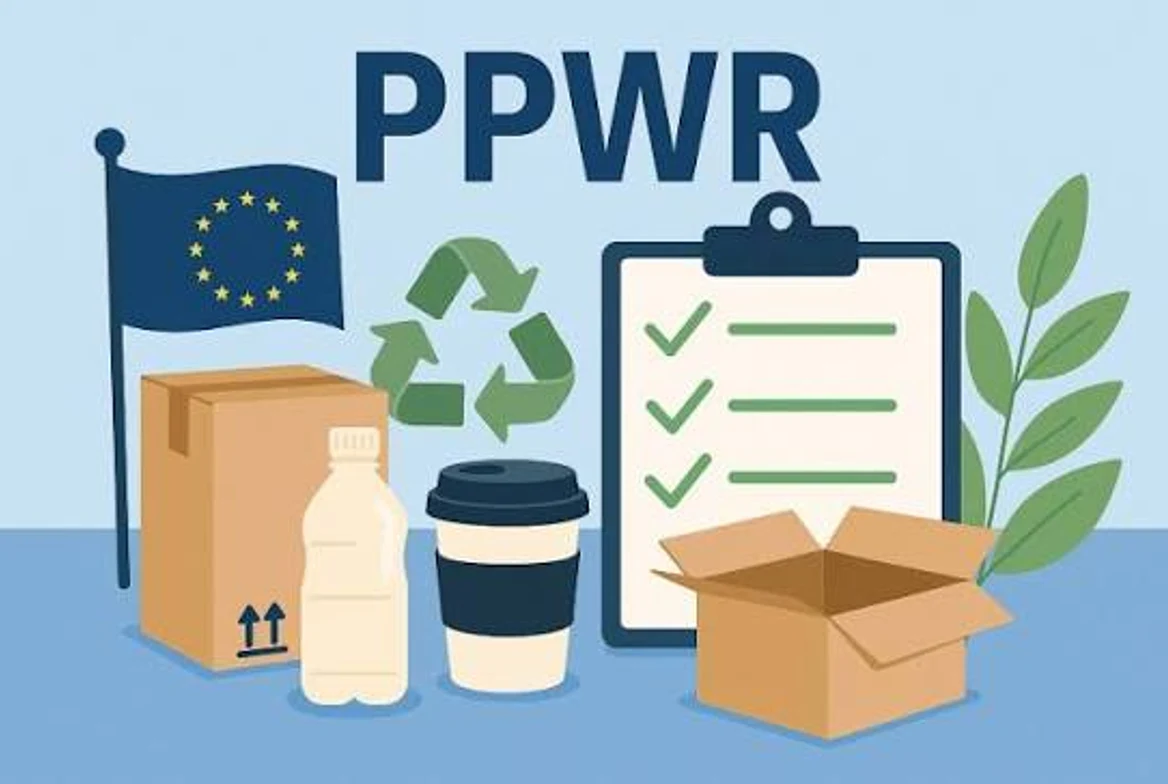
Key Takeaways
- PPWR does not clear with EN71: Passing EN71 proves the toy, not the packaging. The retail box, window, tray, polybag, hangtag, insert, master carton, tape and FBA pack-out each carry their own evidence obligation.
- The clock is already running: PPWR entered into force on 11 February 2025 and generally applies from 12 August 2026. Harmonised labelling follows in 2028, with recyclability, empty-space and recycled-content rules tightening from 2030.
- One toy SKU can carry nine packaging components: Our pre-audit checklist maps every layer by material, weight and function. Fixing only the retail box leaves the outer carton, tape, void fill and e-commerce pack-out exposed.
- PVC blister and non-separable windows block recycling: Mixed laminates, metallised effects and heavy lamination fail economic recyclability too. Our default swap is mono-PET with a verified water-based coating and a separation test report.
- Minimisation is measurable, not cosmetic: Commission guidance treats marketing as an invalid justification for excess volume. We reject any pack where the toy fills less than 60% of the box.
- A recycled-content claim needs a paper trail: A PCR PET certificate on its own is not proof. Demand transaction records between the recycled-resin supplier and the converter, certification scope matched to the production site, and build the Annex VII technical file before signing the declaration of conformity.
What Is PPWR? Factory-Audited EU Pack Guide
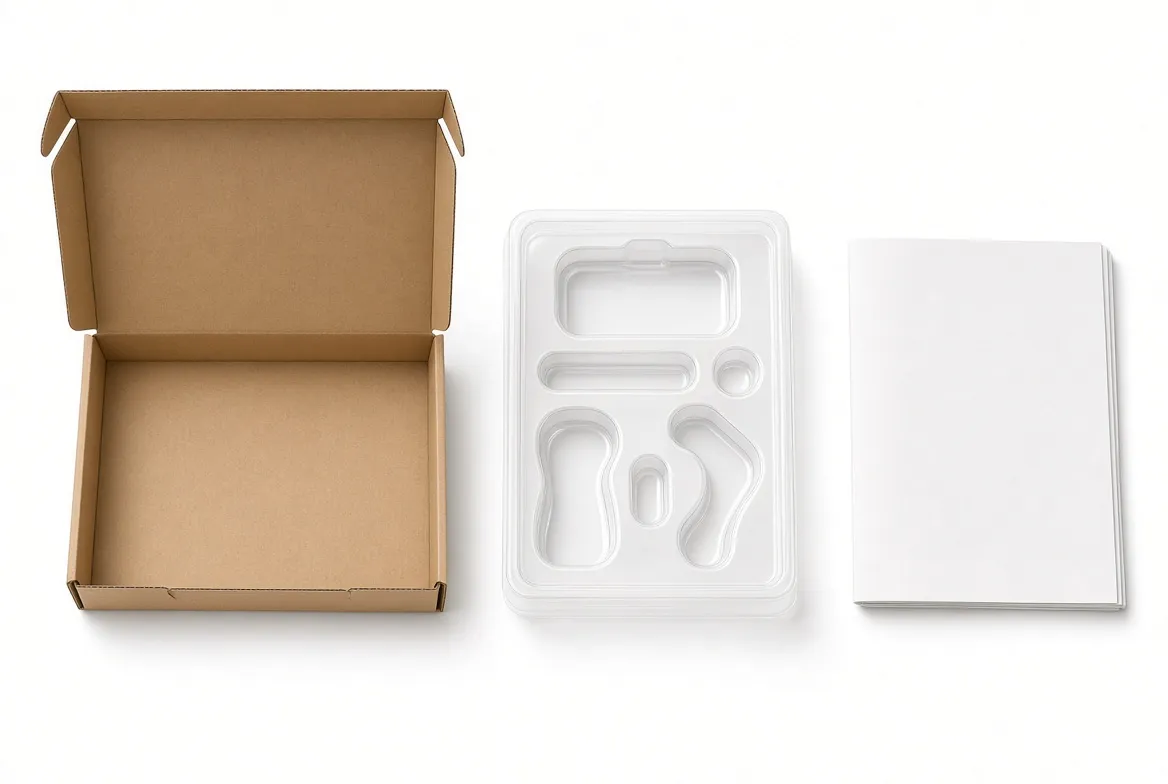
PPWR is the EU regulation that sets rules for packaging design, minimisation, recyclability, recycled content, labelling, and documentation. It replaces the old Packaging and Packaging Waste Directive with a directly applicable regulation. No national transposition is needed.
In our packaging reviews for EU-bound toy brands, one assumption keeps appearing: the toy passed EN71, so the packaging is compliant. That is not accurate. PPWR applies to all packaging and packaging waste placed on the EU market. It covers every format and sector, not only retail packaging. The European Commission confirms this scope.
In our PPWR pre-audit checklist for toy SKUs, we include:
- plush color box / window box
- OPP/PE bag or zip bag
- hangtag, header card, instruction leaflet
- blister, tray, or insert
- outer carton, tape, void fill, and Amazon/FBA shipper
We call this the packaging system. Compliance covers the full configuration, not one component viewed in isolation. A ship-ready toy SKU has several packaging layers. Each layer must meet PPWR, not only the retail box. This is a practical compliance mindset, not a legal term of art.
| Requirement | PPWR | Toy Safety / EN71 / CE | National EPR systems |
|---|---|---|---|
| Core focus | Packaging design, minimisation, recyclability, recycled content, labelling, technical documentation, declaration of conformity | Toy-product safety, warnings, age grading, toy Declaration of Conformity | Registrations, reporting, fees, authorised representative obligations by country |
| Applies to | All packaging on the EU market | The toy product and its markings | Producer obligations in each EU member state |
| Typical documents | Packaging technical file, PPWR declaration of conformity, labelling files | EN71 test reports, CE marking files, product DoC | EPR registration number, annual reporting, payment records |
| Most common client mistake | Treating packaging as a shipping detail after sign-off | Assuming EN71 covers packaging waste rules | Assuming one EPR registration covers all EU countries |
Key point: Passing EN71 does not automatically mean the packaging is PPWR-ready. EN71 covers toy product safety and test reports. PPWR covers packaging design and packaging waste. National EPR systems still sit at country level.
PPWR harmonises many packaging requirements, but EPR registration, reporting, and fees remain country-specific. I have seen clients attach a CE test report to a PPWR packing spec and call the file complete. That confuses product safety with packaging compliance.
💡 Key Insight: For more on the product-safety side, read our guides on toy safety standards, EN71 compliance, and CE marking for toys.
How PPWR Works: Six Packaging Rules, a Timeline, and a Sourcing SOP
When a toy buyer asks "what is PPWR," we answer with a workflow. PPWR is not one checklist. It is a packaging-system obligation. Our audits expose the same failure mode: brands treat compliance clauses as legal fine print. We treat them as bill-of-materials rules.
Part A: Six PPWR Rule Buckets That Matter Most for Toys
1. Recyclability / Design-for-Recycling
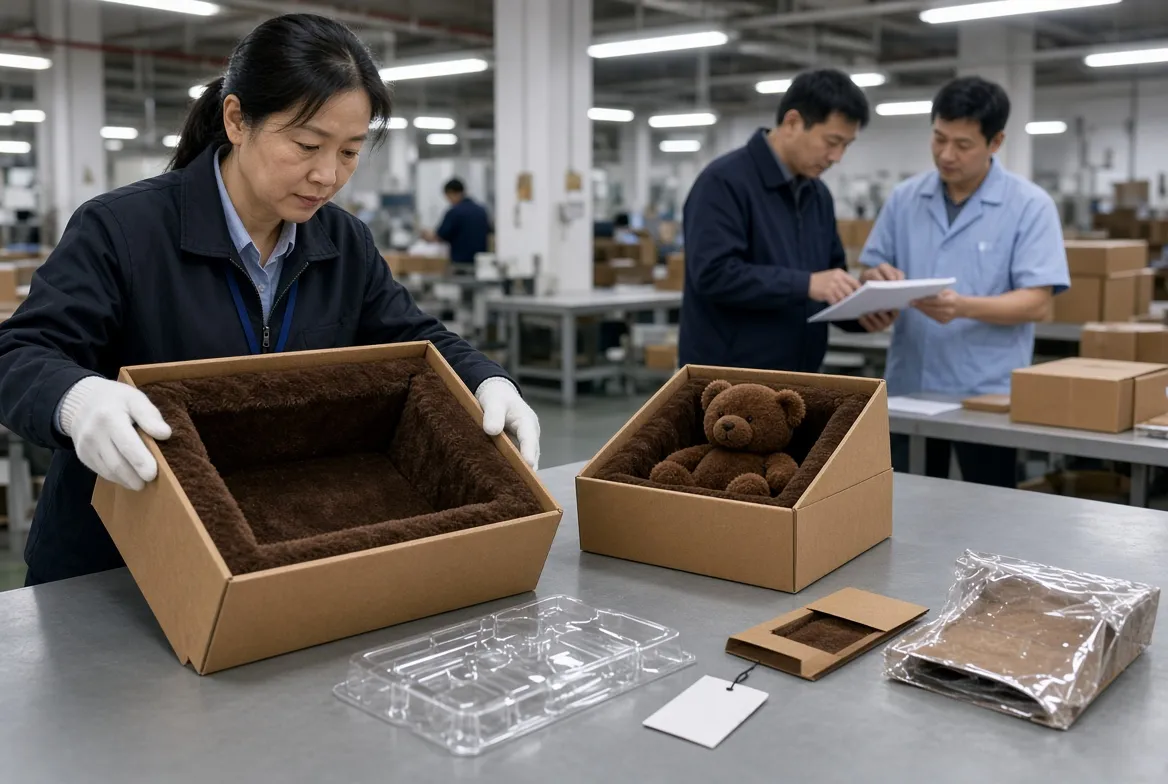
The Regulation aims to make packaging economically recyclable by 2030 (EUR-Lex). Toy shelf appeal now creates risk. Mixed laminates, hard-to-separate windows, PVC blister, metallic effects, and heavy lamination block recycling. We flag PVC blisters first. It is cheap and clear but blocks clean recovery.
Spec change: Our engineering team maps every packaging component closely before the mass production phase begins. We instruct factories to use mono-PET materials exclusively. You must verify the specific water-based coating chemistry to pass separation tests. Require a separation test report. Start with our toy product packaging guide.
2. Packaging Minimisation
Commission guidance states marketing is not a valid justification for excess weight or volume (EUR-Lex). Oversized plush gift boxes, false bottoms, double walls, and excess cavity are common in toys.
Sura Zhang, Packaging Solution Consultant, inspects toy packaging directly on the Guangdong factory floor. She uses our automated Python tool to measure void space. We reject oversized plush boxes immediately during this exact inline inspection.
Spec change: Add a void-space review. Suppliers send two photos: sealed retail pack and cut-open view. If the toy fills less than 60% of box volume, we reject the spec. This fits our toy production process timeline.
3. Substances of Concern
Article 5 caps heavy metals. The sum of lead, cadmium, mercury, and hexavalent chromium must not exceed 100 mg/kg (EUR-Lex). PFAS restrictions apply to food-contact packaging from 12 August 2026. That matters for candy-toy or food-adjacent packs, not every toy carton (EUR-Lex). See ECHA REACH restrictions for broader screening.
Spec change: Add a heavy-metals cap clause. Collect test reports for each component. Suppliers often test the carton but skip the blister, tray, or hangtag. Our toy quality control protocol checks packaging reports during inline inspection.
4. Recycled Plastic Content
For many ordinary plastic packaging types, the threshold is 35% recycled content from 1 January 2030, or later if implementing acts push it back (EUR-Lex). This is not a casual supplier claim. It requires formal methodology and technical documentation (EUR-Lex).
Sourcing Agent Andi visited a Shenzhen packaging supplier just last week. The factory manager presented a borrowed PCR PET certificate. Andi rejected the material instantly because we require exact transaction records.
Spec change: Demand chain-of-custody evidence. Require transaction records between the recycled-resin supplier and the converter. If records do not match the production site, the claim fails. Set this standard early with our toy sourcing guide.
5. Labelling and Traceability
EU packaging must carry harmonised material-composition labelling from 12 August 2028, or later if linked acts lag (EUR-Lex). The administrative burden starts earlier. SKU codes, country of origin, material identification, and artwork revision control interact with PPWR traceability. We traced one client label that still described material from revision 2 after revision 4 changed the composition.
Spec change: You must link a material composition label directly to the artwork file. We mandate this crucial step for all new OEM contracts. You cannot approve the final print run without this specific label draft. Our toy ODM/OEM clients get it.
6. Conformity Assessment, Technical Documentation, and DoC
Annex VII sets the conformity-assessment approach. It requires technical documentation and a written declaration of conformity for each packaging type (EUR-Lex).
Spec change: Build the technical file first. Sign the DoC last. Brands often write a DoC because a customer asked, not because the file is complete. This is our custom toy manufacturing method.
Part B: Printable Timeline for Toy Procurement Teams
We pin this timeline in our supplier templates. Every RFQ references one of these dates.
| Date | Milestone |
|---|---|
| 11 February 2025 | PPWR entered into force (EUR-Lex). |
| 12 August 2026 | General application date; documentation and core obligations start (European Commission). |
| 12 August 2028 or later | Harmonised material-composition labelling (EUR-Lex). |
| 1 January 2030 or later | Recyclability, empty-space, and recycled-content obligations intensify (EUR-Lex). |
We do not lock customer POs against 2035 or 2040 targets. Those are review years, not hard deadlines.
Part C: LeelineToys SOP: PVC Blister to Molded Pulp or Verified PCR PET
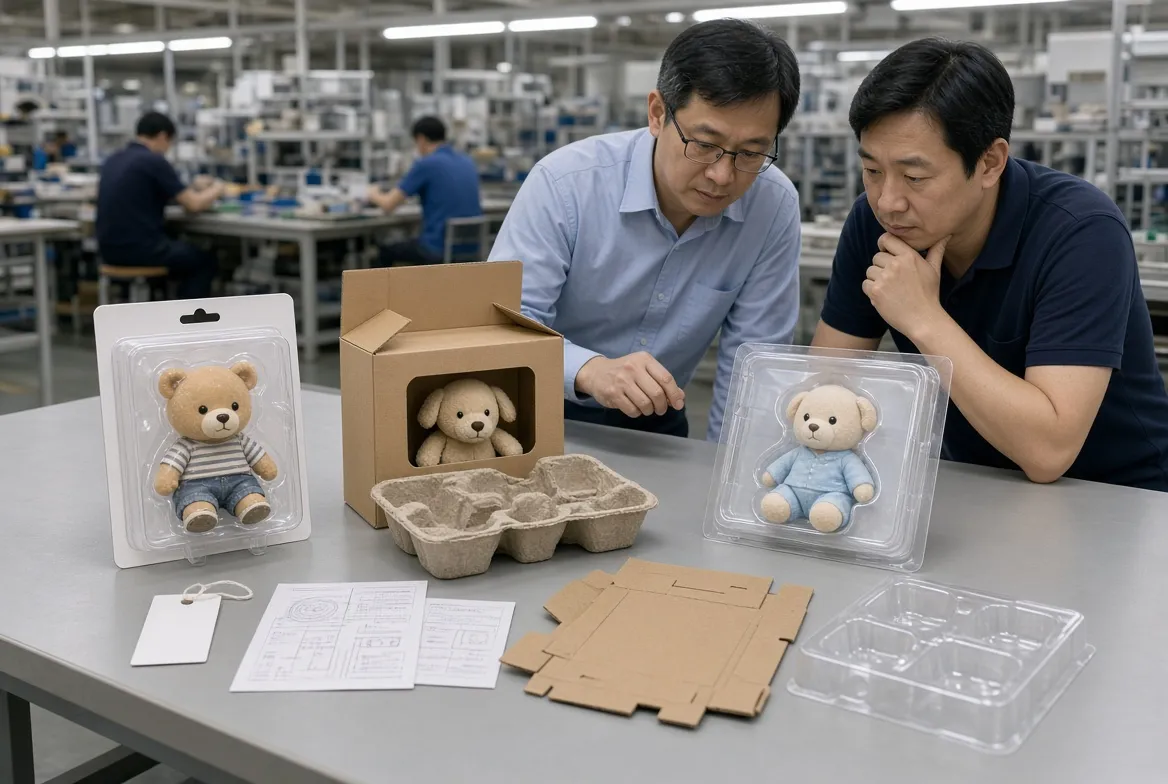
We run this workflow across 50 Guangdong partner factories.
- Scope the packaging system. Map every component by material, weight, and function. One toy SKU can have nine components.
- Baseline the current pack. Record unit cost, tooling cost, cube, defect rate, and damage rate.
- Choose the redesign path. Path A is molded pulp plus printed carton and reduced plastic accessories. Path B is mono-PET or PET-rich with verified PCR content when transparency is necessary.
- Request supplier evidence. Require BOM, resin grade, recycled-content evidence, certification scope, transaction records, ink and coating declarations, and artwork revision control. Missing any item makes the quote provisional.
- Sample and transit test. Check protection, scuffing, moisture behaviour, shelf appearance, and assembly-line compatibility. A molded pulp tray that adds five seconds per unit destroys the cost benefit.
- Compliance-file build. Store drawings, specs, declarations, test evidence, weights, change log, and final photos in one dossier.
- PO release rule. No final PO unless the packaging revision code matches the reviewed evidence set. A mismatch is a hard stop.
Cost-delta calculation:
Total landed delta per 1,000 units
  = material delta
  + tooling amortisation delta
  + extra assembly labour delta
  + certification / documentation delta
  - freight cube savings
  - damage reduction savings
We insert only verified Leeline numbers from internal audits. If exact values are not approved, we publish bounded ranges and the calculation method, never fake precision. Our eco-friendly toy manufacturer overview covers material options, and our toy cost breakdown covers how each line item is built.
Part D: Q&A With Our Lead Packaging Engineer
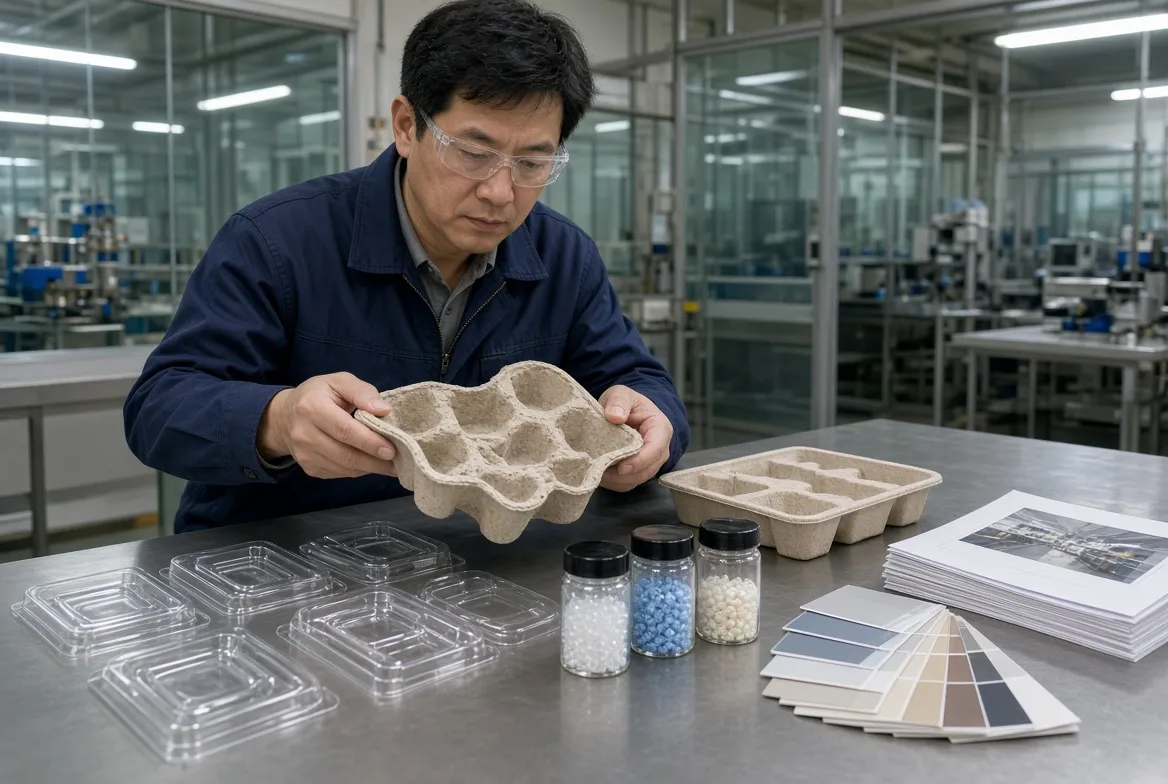
Q: What is the first failure point when a brand asks for PCR PET from an unvetted supplier? A: Borrowed or expired recycled-content certificates. A Dongguan converter showed a certificate issued to a Shenzhen parent company for a different branch. We verify certificate scope against the actual production site.
Q: Why cannot a simple material test report prove PCR content by itself?
A: A lab report shows composition, not chain of custody. You need transaction records from the recycled-resin supplier to the converter and a mass-balance record. Without that trail, a supplier can mix post-industrial and post-consumer content misleadingly.
Q: Which document do brands most often forget to collect from a Chinese packaging converter?
A: The certification scope document. Brands collect the certificate but never check which site it covers.
Q: When does molded pulp look compliant on paper but fail in production?
A: When the tray absorbs moisture and loses rigidity. We specify a moisture test after a humidity test showed warping at 70% relative humidity.
Q: What should procurement lock into the RFQ to stop material substitution later?
A: Lock the exact resin grade and recycled-content source, not just "PCR PET." Also lock the certification body and transaction-record requirement. Add an artwork or coating change notice clause. A water-based coating swapped for a UV coating changed a separation test result.
Part E: Annex VII Technical File and DoC Checklist
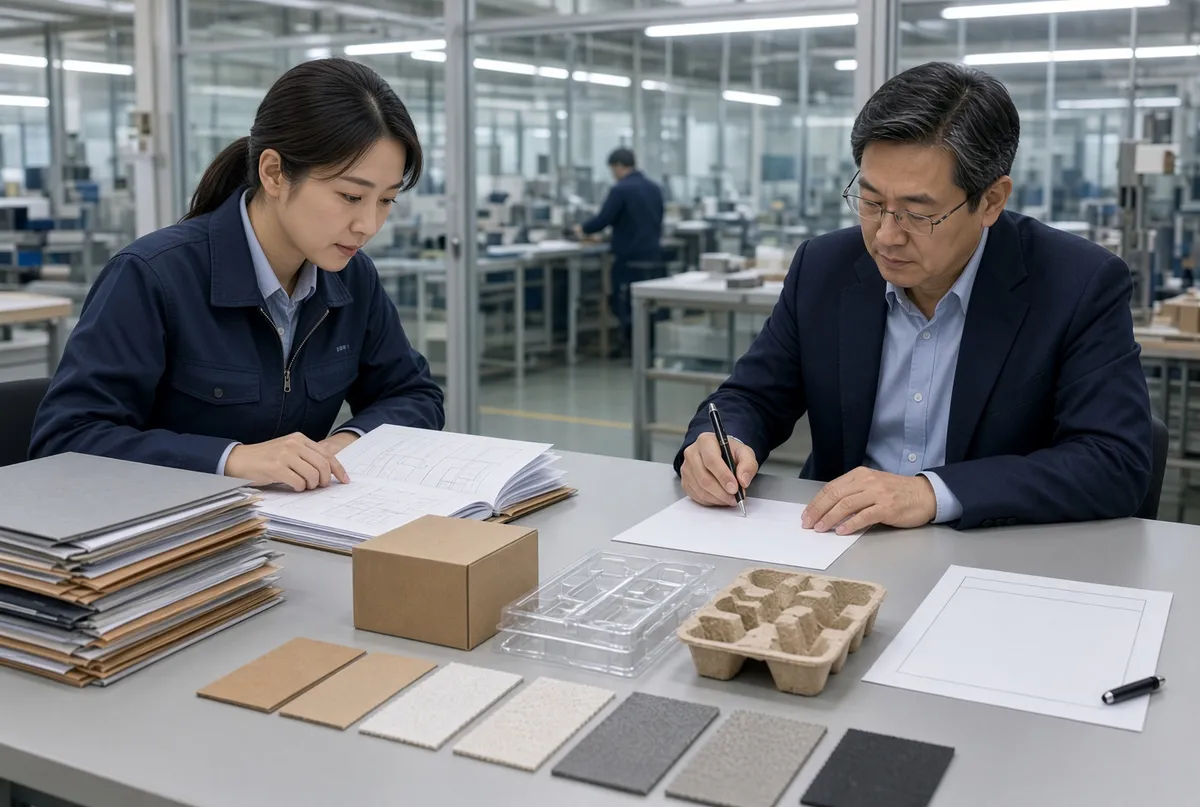
Each item maps to Annex VII technical-documentation requirements (EUR-Lex).
- General description of packaging and intended use.
- Drawings and material/component specifications.
- Weight breakdown by component and material.
- Applicable standards and specifications used.
- Risk analysis and assessment of non-conformity.
- Test evidence and supplier declarations.
- Final approved artwork and labelling references.
- Written declaration of conformity retained with the technical documentation.
You must build the full technical documentation file completely from scratch first. The factory supplier signs the final Declaration of Conformity last. This strict chronological process prevents costly customs delays in Europe.
A clean packaging file makes the import toys from China clearance step smoother. The EU compliance conversation becomes a yes-or-no question.
Why PPWR Is a Packaging-Governance Advantage for Toy Brands?
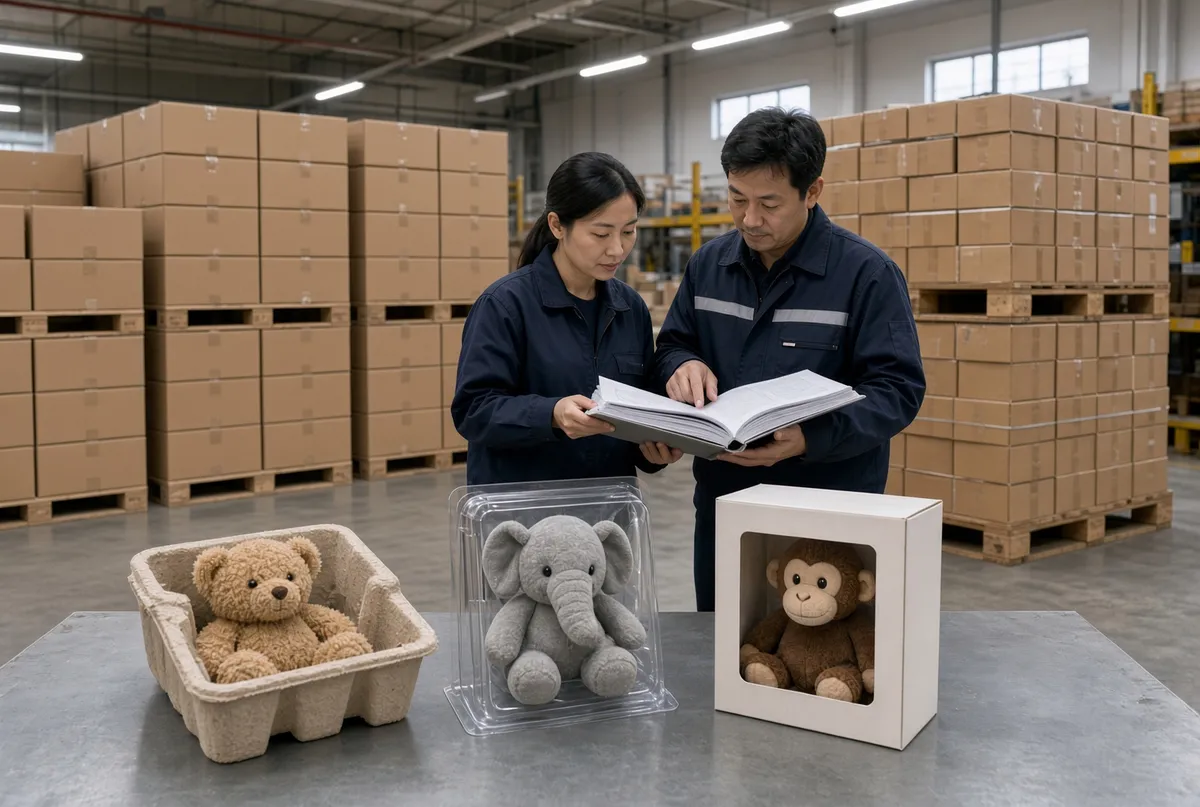
Compliance is a market-access lever. We measured this in PPWR pre-audits across 50 Guangdong factories.
Lower Compliance Friction Across EU Markets
PPWR harmonises packaging rules across the Single Market (European Commission). One packaging-data discipline supports multiple EU destinations. A client shipping to France, Germany, and Poland cut packaging-compliance review time by roughly one-third after adopting a single PPWR-aligned dossier. Brands also selling into the UK face a separate scheme — see our guide to the UK Plastic Packaging Tax on toys.
Better RFQs and Fewer Late-Stage Surprises
Write packaging requirements into the RFQ before tooling. We saw a brand order 20,000 plush toys in a PVC blister. The product spec was airtight. The packaging spec was not. Redesign happened after printing and packing began.
Treat packaging BOMs like product BOMs. Specify resin grade, recycled-content source, coating chemistry, and separation test requirements. Suppliers change behavior when the RFQ contains this detail.
Freight and Cube Savings from Minimisation
Packaging minimisation is a logistics cost lever. One display box measured 40% product and 60% empty space. After a void-space review, the redesigned carton cut the cube by approximately 18%. Less shipped air improves pallet utilisation and lowers freight cost per unit. E-commerce pack-out stabilises, reducing damage claims. See how we apply the same retail packaging and volumetric optimisation method across a full toy range.
Stronger Supplier Governance in China
PPWR forces better questions. We now ask Guangdong converters for chain-of-custody evidence, certification scope documents, and resin-grade declarations before quoting. A clean recycled-content trail signals disciplined documentation, which usually extends to quality control and the wider toy supply chain.
Manager Chen, our Lead Packaging Engineer, said during an audit: "A factory that fakes a PCR certificate will also fake other things." We have seen borrowed certificates used across branches — the pattern behind most toy sourcing risks.
Better Retailer / Marketplace Readiness
Amazon FBA and retailer packaging standards can be stricter than baseline law. Major European toy brands trust our strict packaging compliance system completely. Our single data dossier cuts document review time by thirty percent. We easily support complex FBA requirements and strict European retailer manuals.
Data / Authority Box
We will publish Leeline audit data from 50 partner factories once approved. Until then, we share the decision framework, not unverified figures. Planned columns: typical lead time, tooling cost range, MOQ pattern, inline defect rate, unit-cost delta vs baseline, and damage/assembly notes.
Mini-decision matrix:
- Choose molded pulp when plastic reduction, recyclability optics, and tray rigidity matter more than full visibility.
- Choose verified PCR PET when shelf visibility drives sales and the brand supports stronger documentation controls.
- Choose simplified paperboard/window redesign when the current pack is mostly fine and the fastest win is material simplification plus void-space reduction.
Authority backlinks:
- European Commission PPWR facts page
- Industry report on packaging waste or plastic-packaging intensity
- Official guidance on recycled-content verification when available
Disclosure: We receive no kickbacks from any manufacturer. All findings come from our own audits and direct factory visits.
Challenges & Limitations: What PPWR Does Not Solve
Honesty Statement
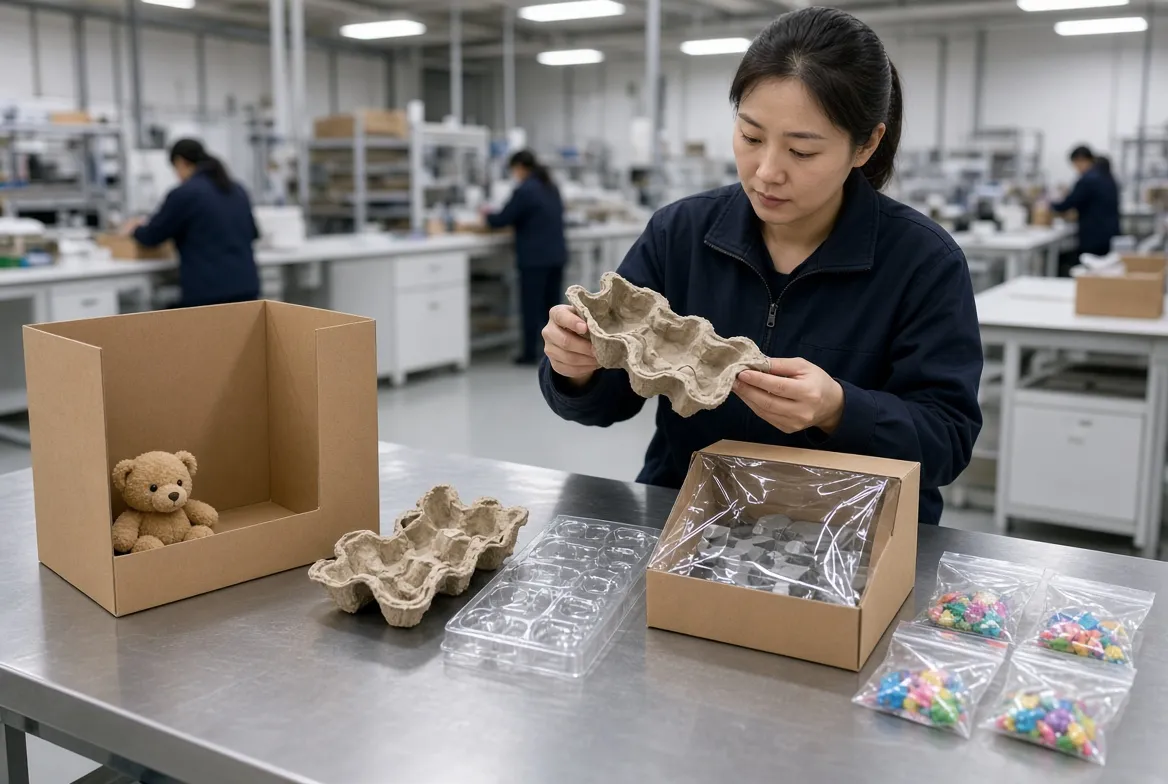
We audit packaging on our production floor. Compliant-looking packaging still fails. We have seen cartons with recyclability logos but missing technical files. We have seen molded pulp pass lab tests but warp at 70% relative humidity. PPWR is not one certificate. It is a chain of evidence, physical performance, and supplier discipline.
Common Toy-Packaging Traps
- Plush gift boxes with oversized empty cavity: Toy fills 40% of the box. We reject specs under 60% product volume.
- Window boxes where the window film is hard to separate: Sorting centers reject it.
- PVC blister and metallised pouch structures: These weaken mono-material recyclability claims.
- Dark inks, heavy lamination, and premium finishes: They hurt paper recovery.
- Multi-piece toy sets with too many internal plastic bags: We consolidate to one paperboard tray.
- Fixing only the retail box but ignoring outer carton, tape, fill, or e-commerce pack-out: The full packaging system fails.
China-Sourcing Limitations to Spell Out
- Supplier declarations often miss data. We reject quotes with missing BOMs.
- Lab tests show composition, not recycled-content chain of custody. You need transaction records.
- Sub-tier changes happen after sample approval. Lock revision control in RFQ and PO to stop resin or coating swaps.
- Eco-packaging is not always strongest. Molded pulp loses rigidity in high humidity and fails drop tests.
🛡️ Mitigation Strategy: Lock exact resin grade, recycled-content source, certification body, and revision code in the PO. Do not accept “PCR PET” alone. A UV coating swap changed separation results and forced a reorder.
Legal and Workflow Nuance
PPWR does not replace country-level EPR registration, reporting, or fee obligations. You still need country-specific registrations. (environment.ec.europa.eu)
PPWR does not replace toy warning-language, age-grading, CE marking, or EN71 obligations. These are product-safety rules — see our guide to plush toy label requirements for the product-label side.
Some implementation details depend on phased rules and implementing acts. Do not treat 2030 requirements as static today. (EUR-Lex)
Red-Flag Supplier Checklist
- Cannot name exact material structure.
- No component weight breakdown.
- Recycled-content claim with no trail.
- Certificate from another site or company.
- Cannot explain ink, coating, or adhesive system.
- Unwilling to freeze revision code before mass production.
Inclusive Examples
Amazon-first DTC brand: Cube efficiency matters. A void-space review cut one client’s cube by 18%, lowering FBA fees. But they often overlook EPR registration in every EU country.
Specialty retail brand: Shelf presentation drives sales, so PVC blister feels safer. We use mono-PET with verified PCR content, but the documentation burden increases.
Larger private-label/import program: Freeze revision codes early. We have seen 20,000 plush toys stuck in customs because the packing list referenced revision 2 while the file matched revision 4.
The Verdict: Treat PPWR as a Packaging System, Not a Side Note
PPWR is not a distant EU directive. It is a packaging-system rulebook with hard application dates already on the 2026 calendar. After auditing dozens of EU-bound toy projects, we see the same pattern: brands treat EN71 as the finish line and packaging as a shipping detail.
That logic now creates compliance risk. PPWR makes packaging a governed engineering layer, not a cosmetic one.
A product can pass EN71 and still fail a retailer or customs review for weak packaging evidence. The data is clear: a compliance gap on a PVC blister or an oversized plush box can stall a shipment faster than a failed product test.
The regulation applies to the full configuration: retail box, window, polybag, insert, outer carton, tape, and e-commerce pack-out. (environment.ec.europa.eu)
Who this is for: Brands that ship to the EU now or plan to within 12 months. Brands that source from China and rely on factory documentation. Brands that want to remove compliance surprises from the next purchase order.
Who should not wait: Brands with current PVC blister packs, oversized plush gift boxes, or unverified recycled-content claims from converters. You do not have a documentation problem. You have a bill-of-materials problem.
The future trend is consolidation. Harmonised labelling, design-for-recycling grades, and mandatory technical files will force packaging decisions earlier into product development. (eur-lex.europa.eu) Procurement teams that lock packaging specs into RFQs now will avoid redesign cycles and costly last-minute substitutions later.
Practical Next Steps
- Map every packaging component in the current toy range. Count windows, trays, polybags, inserts, cartons, tape, and void fill. Most brands underestimate packaging layers by three or more components.
- Redesign the highest-risk systems first. Flag PVC blister, heavy lamination, mixed laminates, and boxes with over 40% empty space. Replace with mono-PET, molded pulp, or simplified paperboard.
- Build the technical file and supplier-evidence chain before the next EU-bound PO. Request BOMs, component weights, recycled-content transaction records, certification scope documents, and revision-controlled artwork. No evidence, no PO.
People Also Ask About What Is PPWR
-
What does PPWR stand for?
PPWR stands for the Packaging and Packaging Waste Regulation. It is the EU regulation that sets packaging design, minimisation, recyclability, recycled content, labelling, and documentation rules. (environment.ec.europa.eu)
-
When does PPWR apply?
The regulation entered into force on 11 February 2025 and generally applies from 12 August 2026. Some obligations, like harmonised labelling, start later. (eur-lex.europa.eu)
-
Does PPWR apply to toy packaging imported from China?
Yes. PPWR applies to all packaging placed on the EU market, regardless of production country. Chinese suppliers must provide the same technical evidence and declarations as EU converters.
-
Is PPWR the same as EPR?
No. PPWR sets EU-wide packaging requirements. EPR is a country-level system for registration, reporting, and fees. You still need separate EPR compliance in each EU member state.
-
Do gift boxes for plush toys need to be recyclable?
Yes. By 2030, all packaging must be economically recyclable. For plush gift boxes, this means avoiding mixed laminates, heavy inks, non-separable windows, and oversized empty space. (eur-lex.europa.eu)
Get an EU-Ready Packaging Review
PPWR is already a procurement rule, not a later sustainability topic. EN71 clears the toy. It does not clear the box, bag, blister, carton, or FBA pack-out.
Lock the packaging system before the next EU-bound PO: map every layer, drop PVC blister and empty-space boxes, and refuse any recycled-content claim without a site-matched evidence trail.
LeelineToys reviews the spec, supplier file, and sample plan before tooling. Contact us for an EU-ready packaging audit before you release the PO.
Disclosure: No outside packaging supplier paid to influence these findings. We publish only verified internal factory-audit data and approved engineer statements.