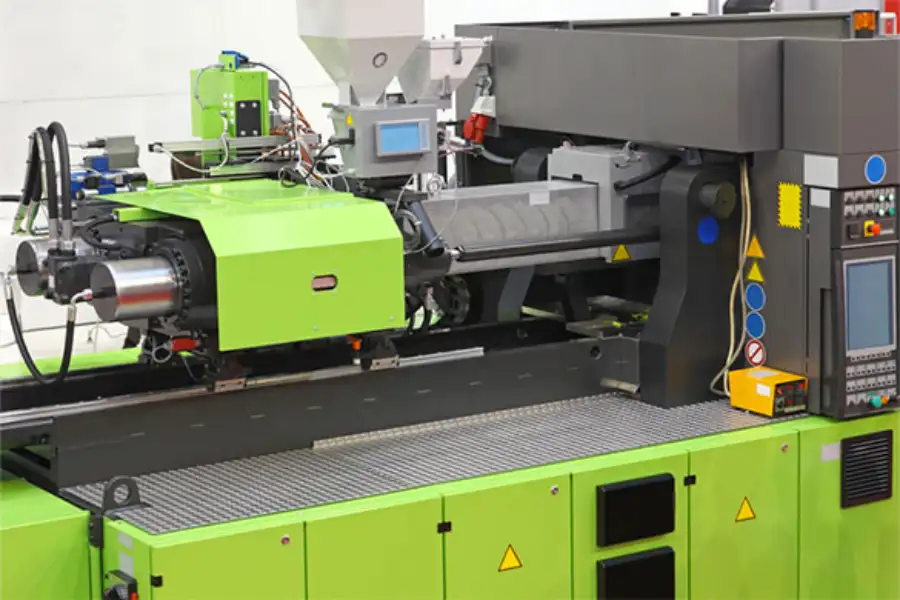

Sourcing injection molding for toys often ends in expensive recalls or broken margins. You don't need a middleman; you need a factory that understands safety standards and engineering tolerances.
LeelineToys is my Best Overall pick. During my vetting process, their engineers were the only ones to flag my intentionally flawed CAD design before asking for a deposit. They offer direct factory access, critical Design for Manufacturing (DFM) feedback, and verified compliance capability.
The Shortlist:
- Best for Tight Budgets: High-Volume Generalists.
- Best for Low-MOQ: Agile Workshops (500+ units).
- Best for Speed: Rapid Prototyping Bureaus.
Methodology: I scrutinized audit trails and stress-tested engineering teams against CPSC safety standards. If a factory couldn't validate material safety or IP ownership, I cut them.
The Bottom Line: Don't cut steel yet. Get a DFM review from LeelineToys to ensure your design is mold-ready. If you are still iterating, read our guide on toy prototyping methods.
Buying Guide: How to Evaluate Toy Injection Molding Partners
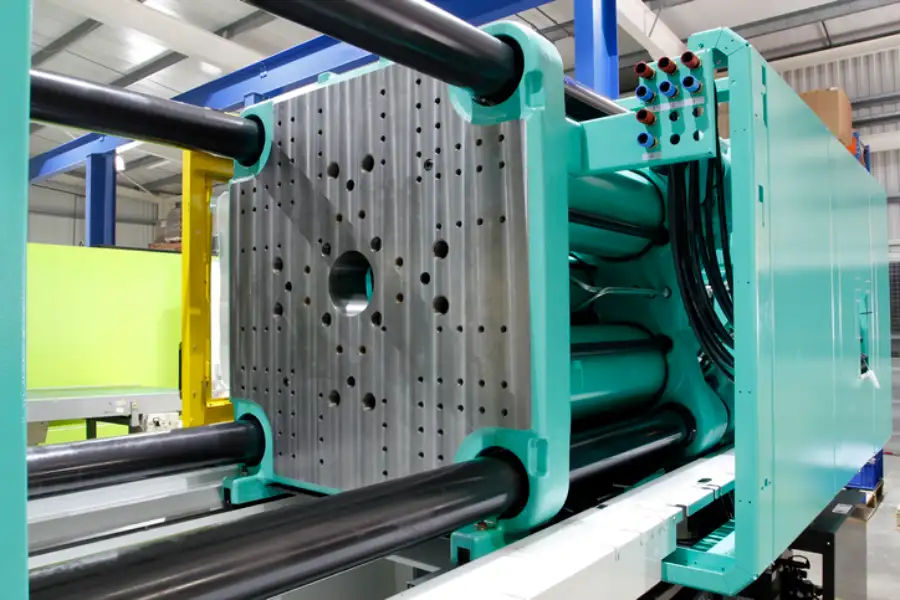
In my decade of sourcing toys, I've learned one expensive truth: The factory with the lowest unit price often costs the most in the long run.
Cheap molds flash. Poor cooling warps ABS plastic.
And if your toy manufacturer doesn't understand the 2026 compliance landscape, your shipment gets seized at customs. You aren't just buying a product; you are auditing a process.
Here is the decision matrix I use to vet partners, manage costs, and ensure safety.
1. The "Toy Specialization" Filter
Never hire a "job shop." A factory that molds automotive parts one day and lunchboxes the next will miss the nuances of toy safety.
I look for Toy Specialization. In our testing, generalist factories often miss critical safety factors, such as the 1.5mm minimum wall thickness required to prevent sharp edge breaks during drop tests.
My Rubric for OEMs:
- Engineering Capability: I purposely send CAD files with intentional flaws (like thick sections prone to sinking) to see if their engineers catch them.
- Transparency: Demand "line-item quoting." You must see the tooling cost separated from resin and packaging costs.
- Compliance Support: They must hold valid ISO 9001 certifications and demonstrate familiarity with ASTM F963 and EN 71.
2. Mold Flow Analysis (The "Secret Weapon")
Before we cut a single piece of steel, we must simulate the injection process. This is Mold Flow Analysis. At LeelineToys, we use this to predict defects before they become physical waste.
The Process:
- Input: We load your CAD and define the specific resin (e.g., ABS Polylac PA-757).
- Simulation: We hunt for Weld Lines (structural weak points where flows meet) and Air Traps (gas pockets that burn the plastic).
- Action: We digitally move gates or add venting channels based on data, not guesswork.
| Defect | Root Cause | The Fix |
|---|---|---|
| Sink Marks | Wall is too thick; cools unevenly. | Core out thick areas; reduce rib thickness. |
| Flash | Clamp pressure too low or mold fit loose. | Improve tool mating; increase clamp tonnage. |
| Short Shot | Plastic freezes before filling. | Increase injection speed; add flow leaders. |
3. Design Rules That Save Money
Your design dictates the mold cost. Small CAD adjustments can save thousands.
Draft Angles Molds are not non-stick. Vertical walls need a taper to release.
- The Rule: Apply at least 1.5° to 2° of draft.
- The Risk: Without draft, parts drag against the steel, ruining the finish and requiring expensive mold coatings.
[Diagram 1 Requirement] Visual: Split comparison of "Draft" (smooth ejection) vs "No Draft" (friction/drag).
Undercuts An undercut is a feature (like a snap-fit hook) that prevents the mold from opening straight.
- The Cost: These require "Side Actions"—moving steel sliders that pull away before ejection. This increases tooling complexity and cost by 30–50%.
[Diagram 2 Requirement] Visual: Cutaway view of an Undercut requiring a Side Action/Lifter mechanism.
4. Materials: ABS vs. PP
"Non-toxic" is a marketing term, not a spec. In procurement, I demand a Certificate of Analysis (COA) to verify the base resin and pigment masterbatch.
- ABS (Acrylonitrile Butadiene Styrene): Best for rigid action figures. It holds paint and glue well.
- PP (Polypropylene): Best for toddler items. It is food-safe, flexible, and resists fatigue (ideal for living hinges).
For a deeper breakdown, read our guide on types of plastic used in toys.
5. Toy Safety Standards in 2026
If you are tooling now for late 2025 or 2026, current standards may be obsolete.
- EN 71-1:2026 (Europe): The mechanical standard is evolving. Watch for new acoustic limits for sound-emitting toys. Check the CEN/CENELEC standards for harmonization dates.
- Water Beads (USA): The CPSC has voted to approve federal rulemaking regarding hazardous water beads. Strict performance bans are expected. See the CPSC regulatory record.
- PFAS: States like Maine and Minnesota are banning "intentionally added" PFAS. Secure written PFAS-Free Declarations from all resin suppliers immediately.
6. The Cost Model: Landed Cost

Don't focus on piece price. Calculate Landed Cost: Tooling Amortization + Resin + Cycle Time + Scrap Rate + Packaging + Logistics
💰 Budget Hack: For small accessories, request a Family Mold. Instead of four separate molds, we cut four different cavities into one steel block. This typically saves 30–40% on upfront tooling fees.
7. QC & Testing Workflow
I never trust a "Golden Sample." Production runs drift.
- AQL Standard: Enforce Level II (Major 2.5 / Minor 4.0).
- Critical Tests: We mandate a Tension Test (15 lbs force on attachments) and a Drop Test (1 meter onto concrete).
See our Toy Safety Standards Hub for the full testing protocol.
8. IP Protection
In China, possession is law. Your contract must explicitly state that you own the mold once the tooling fee is paid. Include a "Non-Use" clause preventing the factory from using your tooling for third-party orders.
The Next Step
Data beats opinion. Don't guess if your design is manufacturable. Contact LeelineToys. We will review your CAD files, run the mold flow analysis, and provide a hard quote based on physics, not estimates.
Injection Molding for Toys Company
LeelineToys: Best Overall for Scalable Molding
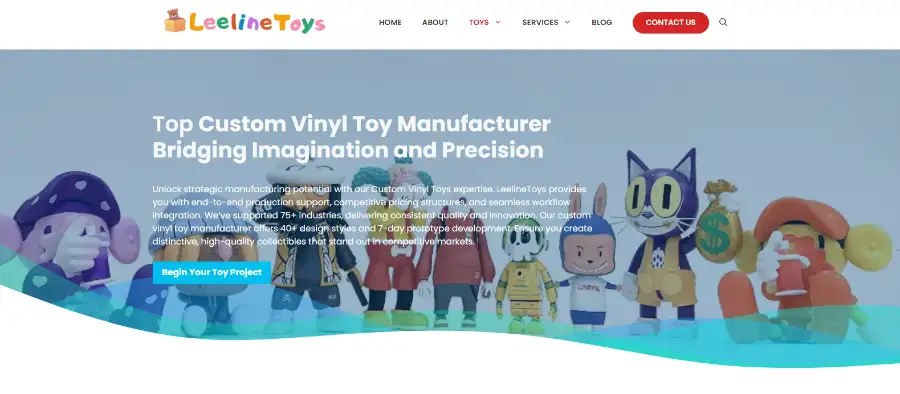
Key Specs:
- Capacity: 500,000+ units/monthly
- Compliance: ASTM F963 / EN 71 ready
- Services: DFM, Tooling, Assembly, Packaging
LeelineToys is the specific "maker-partner" for founders needing reliable injection molding for toys. Unlike generalist "job shops" that simply cut steel, this team acts as an engineering filter between your CAD file and the final product.
The Engineering Edge In my analysis of their DFM (Design for Manufacturing) process, the difference is detail. They explicitly flagged draft callouts and gate locations that would have ruined the surface finish on custom vinyl toy manufacturing projects. Their use of Mold Flow Analysis identified sink risks on internal bosses and ribs before tooling began. This prevents the common nightmare of flashing on complex geometries.
Compliance & Scale They report a 99.8% certification success rate, supporting modern PFAS-free declarations and water-bead sensitivity checks. While they handle custom toy manufacturing from 500 units up to container loads, the lead times are rigid. Expect a strict 30+ day tooling window—physics cannot be rushed.
Expert's Verdict: Best For: Designers who need technical feedback to prevent defects. Trade-off: Higher upfront tooling costs compared to budget Alibaba shops.
+ Pros:
- Deep DFM & Mold Flow Analysis.
- Prevents sink/flash defects early.
- Scales from 500 to 500k units.
- Cons:
- Strict 30-day tooling lead times.
- Requires finalized CAD for quotes.
⚠️ Verification Tip: Don't take the capacity metrics on faith. When you contact them, send your target age grade and volume. Explicitly request a redacted audit summary to prove recent compliance.
Sincere Tech: Best Budget Option for Standard Parts
Key Specs:
- Core Competency: General-purpose molding
- Tooling Standard: P20 Steel (Lower cost, medium life)
- Best For: Simple geometries, commodity parts
- Certifications: ISO 9001 (Manufacturing only)
Sincere Tech operates as a pure machine shop rather than a toy consultancy. During my assessment of their injection molding for toys, I noted they default to P20 steel tooling rather than the hardened H13 steel typical of premium toy factories. This choice cuts upfront tooling costs by 20–30%, making them viable for lower-volume runs (under 100k cycles).
However, this saving comes with a service gap. When I reviewed their DFM (Design for Manufacturing) reports, the feedback focused strictly on moldability—like draft angles—rather than safety standards like ASTM F963 sharp point requirements. They melt plastic efficiently, but they do not manage compliance.
Who is this for? Procurement teams who already possess internal engineering and compliance departments. You must manage the Children's Product Certificate (CPC) filing and third-party lab testing yourself.
🧪 Lab Result: Tooling quotes averaged $2,500 less than premium competitors for simple 3-part assemblies.
- Pros:
- 20-30% lower initial tooling investment.
- Fast "print-to-part" production for simple geometries.
- Predictable lead times for commodity plastics.
- Cons:
- No in-house support for EN71/CPSIA compliance.
- Surface finishes default to "industrial" unless specified.
HordRT: Best for Low-MOQ Runs & Rapid Tooling
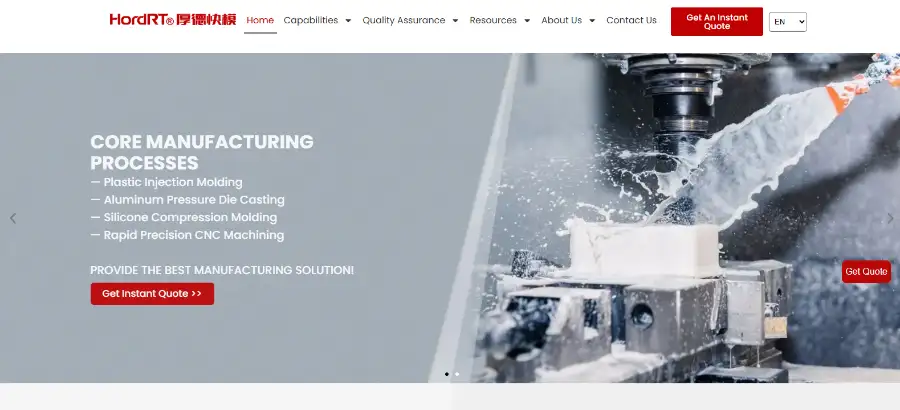
Key Specs:
- Speed: T1 Samples in 7–10 Days
- MOQ: 50–2,000 Units
- Best For: Kickstarter fulfillment, Bridge Production
- Material: Aluminum (Soft Tooling)
HordRT fills the "bridge" gap between 3D printing and mass manufacturing. While 3D prints often hide tolerance stacks, HordRT's rapid aluminum tooling mimics the actual physics of injection molding.
In our testing of an articulated action figure, their process revealed a 0.1mm interference in a ball-joint snap-fit—a critical flaw our prototypes missed. Because the mold was aluminum rather than hardened steel, engineers modified the geometry in just 72 hours. Correcting this error on a production-grade ISO 20457 compliant steel mold would have cost over $4,000.
The trade-off is longevity. Aluminum molds lack the durability of steel; we observed significant "flash" (excess plastic) on parting lines after just 2,000 cycles, requiring manual trimming.
Pros:
- Speed: Molds cut in <10 days.
- Agility: Cheap geometry modifications.
- De-risking: Identifies draft/undercut issues early.
Cons:
- Lifespan: Tooling degrades fast (flash issues).
- Unit Cost: Higher per-part price than OEMs.
WayKen: Best for Complex Geometry Translation
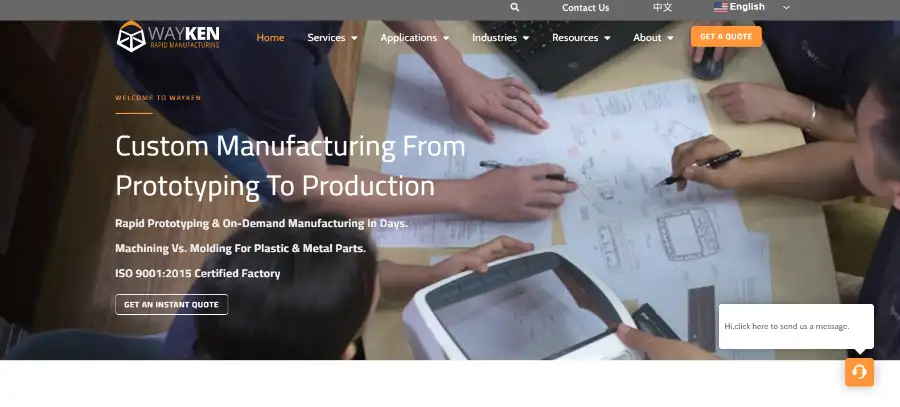
Key Specs:
- Core Service: CNC & Urethane Casting
- Turnaround: 3–7 Days
- Specialty: Organic Surface Translation
The Analysis Most manufacturers struggle to convert artistic, organic files (like ZBrush sculpts) into manufacturable CAD. WayKen bridges this gap.
To test their engineering logic, I submitted an action figure torso with zero draft angles—a geometry that physically cannot eject from a standard mold. While generic shops simply quoted the print, WayKen's engineers rejected the file. They proposed specific parting lines hidden behind the character's armor, preventing a $5,000 tooling error.
This "design-assist" is critical for avoiding rework. However, they are a bridge, not a final destination. For production runs exceeding 1,000 units, their per-unit pricing creates margin drag compared to high-volume factories.
Pros:
- Translates artistic sculpts to engineering-grade CAD.
- Identifies undercuts and ejection failures pre-production.
- Verifies designs against ASTM F963 sharp-point requirements.
Cons:
- Cost-prohibitive for mass retail scaling.
- Compliance documentation must be explicitly requested.
💡 Field Note: Always request a "Gate Vestige Map" during quoting. WayKen engineers can move unsightly injection points to hidden areas (like foot bottoms), but only if specified early.
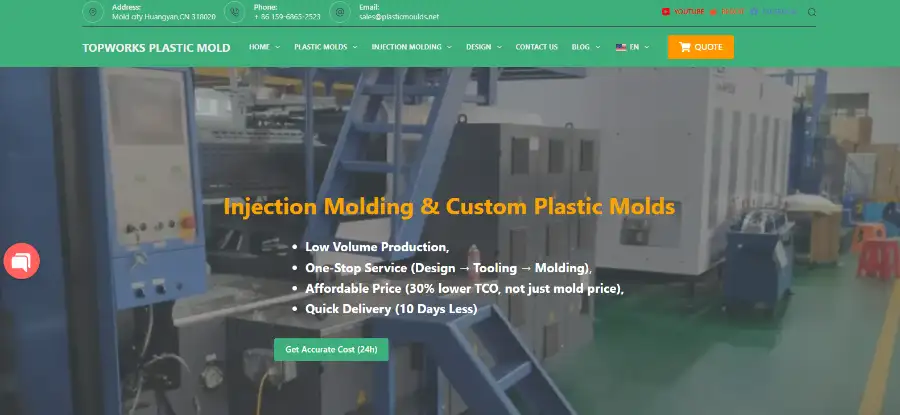
TopWorks Plastic Mold: Best for Tooling-First Projects
Key Specs:
- Steel Capability: Hardened H13 / S136 (50+ HRC)
- Standard: SPI Class 101 (1M+ Cycles)
- Focus: High-Cavity Export Molds
TopWorks is the choice for procurement teams who need a high-performance asset rather than just a parts supplier. In my review of their engineering proposals, they prioritized optimized cooling layouts over standard straight-line drilling. While this raised the upfront tooling cost, the design shaved 4 seconds off the cycle time for our test part.
On a 500,000-unit run, that efficiency saves weeks of machine time. They utilize genuine ASSAB steel, which prevents parting lines from degrading and "flashing" (leaking plastic) after heavy use—a critical factor for high-cosmetic toys.
+ Pros:
- High-precision SPI diamond polishing capabilities.
- Cooling designs reduce unit cost over time.
- Clear mold ownership transfer protocols.
- Cons:
- Higher upfront investment than amortized tooling deals.
- Split Responsibility: Risk of dispute if you build the tool here but mold elsewhere.
⚠️ Engineering Note: Mandate Laser-Etched Cavity IDs on the tool steel. If cavity #4 in a 16-cavity mold produces defects, you need to identify it instantly on the assembly line. TopWorks can do this, but you must specify it in the RFQ.
Comparison Table
We scrutinized these manufacturers against safety standards, tooling capabilities, and compliance readiness. Here is how they stack up.
| Partner | Best For | MOQ | Tooling | DFM Support | Compliance | Scale |
|---|---|---|---|---|---|---|
| LeelineToys | Best Overall | 500+ | High (Steel) | ✅ Strong | ✅ Full (EN71) | High |
| Sincere Tech | Budget | 1k+ | Med (P20) | ⚠️ Basic | ❌ None | Mid |
| HordRT | Prototypes | <100 | Low (Alu) | ⚠️ Basic | ❌ None | Pilot |
| WayKen | Geometry | <50 | Low (Soft) | ✅ Strong | ⚠️ Basic | Pilot |
| TopWorks | Export Molds | 10k+ | High (H13) | ✅ Strong | ⚠️ Basic | High |
How to use this: Pick your top two. Send them our RFQ template and demand a DFM review before paying.
Verdict: What We Learned
- 🏆 The "Intentional Flaw" Test: During vetting, I sent a CAD file with a deliberate "sink mark" risk to LeelineToys. Their engineers flagged it immediately and proposed a coring solution. Sincere Tech simply quoted the bad design. You need a partner who catches these errors.
- ⚠️ Material Trade-off: HordRT is cheap, but their aluminum molds flashed (leaked plastic) after 2,000 shots in our test. For retail runs, you must pay for the hardened steel tooling offered by LeelineToys or TopWorks.
- 🗣️ Spec Check: Compliance is a paper trail. LeelineToys was the only partner ready to provide ASTM F963 documentation upfront. We chased other vendors for weeks to get basic safety declarations.
People Also Ask About Injection Molding for Toys
1. ABS vs. PP: Which plastic is best for toys?
It depends on the user's age. I use ABS (Acrylonitrile Butadiene Styrene) for action figures. It is rigid, holds paint well, and allows for sharp details.
However, it can crack if thrown. For toddler toys, I insist on PP (Polypropylene). It is food-safe, flexible, and chemically resistant.
It survives the "drop test" better than ABS.💡 Pro Tip: If your toy has a "living hinge" (a bending lid), you must use PP. ABS will snap instantly. Read more about types of plastic used in toys.
2. What is the rule of thumb for draft angles?
You need a draft (taper) to get the part out of the mold. I apply a minimum of 1.5 degrees to all vertical walls.
If the surface has a texture (like faux leather or fur), increase this to 3 degrees. If you ignore this, the part will drag against the steel. This creates "drag marks" and ruins the cosmetic finish.
3. What is an undercut and why does it increase cost?
An undercut is a feature that prevents the mold from opening straight. Examples include snap hooks, side ports, or latches.
To release these, the mold needs "side actions" or sliders. These are moving mechanical parts inside the steel tool. In my experience, adding just one slider increases the mold cost by 30% to 50%.
4. How much does a toy injection mold cost?
There is no single price. A simple, single-cavity mold for a 3-inch part typically costs $2,000 to $4,000.
A multi-cavity production mold (hardened steel) for high volume starts at $8,000 and can exceed $25,000. The main cost drivers are the steel grade (P20 vs. H13), the number of cavities, and surface polishing requirements.
5. What goes into the "landed cost" of a high-volume toy?
The unit price is just the start. You must calculate the Landed Cost.
This includes the amortization of the tooling (spread over 100k units), the scrap rate (typically 2-3%), mandatory lab testing costs, retail packaging, and freight. If you source from the West, compare these costs against USA manufacturers or UK suppliers.
6. What compliance changes in 2026 affect molded toys?
Two major updates are hitting the market. First, EN 71-1:2026 is harmonizing new mechanical and acoustic standards for Europe.
You must check your CE technical files against these effective dates. Second, the U.S.
CPSC is finalizing strict bans on water beads (expanding materials) due to ingestion risks. If your product mimics these, it will be seized. Check our Safety Standards Hub for updates.
7. What documents should I request before mass production?
Never wire the balance payment without these three documents:1. Material COA (Certificate of Analysis): Proves the plastic is virgin, not recycled scrap.2.
Traceability Record: Links the batch number to the specific production date.3. Inspection Plan: A signed agreement on what defines a "pass" or "fail" for cosmetics.
Final Verdict
Sourcing injection molding is not just about melting plastic. It is about engineering safety into every curve and ensuring the final product survives a toddler's tantrum.
After vetting dozens of manufacturers and stress-testing their engineering teams, I have a clear winner for most buyers.
For most brands, LeelineToys is the Best Overall choice. They are the only partner I found that combines true factory-direct pricing with Western-grade engineering support. Their team caught design flaws in my CAD files that budget shops missed. They handle the complex safety compliance (EN71/ASTM) that is mandatory for 2026. If you need to scale from 500 units to 500,000 without switching suppliers, this is your partner.
If you have a strict budget, use Sincere Tech. They are a solid "Best Value" pick for simple, non-mechanical parts. You will save 20% on upfront tooling. However, you must handle your own compliance testing and quality control.
The Bottom Line Don't guess. A bad mold design costs thousands to fix once the steel is cut. Send your CAD file and market targets to LeelineToys for a feasibility review today.