
Sourcing durable inventory usually requires overpaying for beech or risking quality with pine. Thailand offers a scalable solution via sustainable Rubberwood production.
Finding the best Wooden Toy Manufacturers in Thailand is difficult when lists ignore B2B realities like MOQs and ASTM F963 compliance. You need partners ready for export documentation and TIS standards, not just cute designs.
I filtered the market to find seven factories proven in rubberwood processing and global logistics.
List of Top 10 Wooden Toy Manufacturers in Thailand
| Manufacturer | Established Year | Key Focus | Primary Toy Types | Export Markets |
|---|---|---|---|---|
| PlanToys | 1981 | Pioneer in sustainable rubberwood toys; eco-friendly (PlanWood material), child development-focused, global awards, non-toxic. | Educational toys, construction sets, roleplay, puzzles, vehicles, miniatures | Europe, North America, Asia-Pacific, worldwide (strong in eco-markets like Germany, UK, US) |
| Wonderworld | 1985 | High-quality educational wooden toys for young children; emphasizes sustainability (tree-planting initiatives), awards like Oppenheim. | Preschool toys, blocks, push/pull toys, ride-ons, roleplay, sound toys | Europe, North America, Japan, ASEAN, UK (exclusive distributors in some regions) |
| Voila | 1981 | Wooden toys with educational value; exported widely, focus on safety and quality (under Siam Wooden Products). | Puzzles, games, building sets, dolls, dollhouses, rocking horses, market stalls | Europe, North America, Australia, global (eco-friendly focus) |
| Pin International | 1987 | Classic wooden toys, ride-ons, furniture, games; premium quality, durable designs for international markets (PINTOY brand). | Ride-ons, vehicles, doll furniture, easels, traditional games (chess/checkers), kids' furniture | Europe (strong focus), North America, Asia, worldwide |
| Blue Ribbon | 1989 | Wooden toys and children's furniture; environmentally sound, safe designs to entertain and develop young minds/skills. | Educational toys, development-focused play items, wooden furniture for kids | Thailand domestic + exports (primarily eco-conscious markets like US/Europe) |
| Bsiri | 2005 | Quality wooden toys, puzzles, brain teasers, educational games; handcrafted elements, certified safety standards (EN71/ASTM). | Puzzles, brain teasers, educational games, balance boards, ride-ons | Worldwide (export-oriented, details limited but global via suppliers) |
| P.M. Creations | N/A (est. 1990s-2000s) | Wooden toys and creations, focusing on craftsmanship and child-safe products (limited public founding details available). | General wooden toys, educational creations, handcrafted items | Thailand + select exports (primarily regional/Asia) |
| Tano | N/A (est. 2000s-2010s) | Modern educational and roleplay wooden toys (e.g., kitchens, blocks); eco-friendly rubberwood, exports worldwide. | Roleplay (kitchens, etc.), color blocks, xylophones, educational sets | Worldwide (global sales, exhibitions in Europe like Spielwarenmesse) |
| Santoys | 1993 | High-quality educational toys and games; Green Label certified rubberwood, exported to 40+ countries. | Educational toys, games, discovery-focused play items | 40+ countries worldwide (strong global reach, Europe/North America emphasis) |
| Dr.Ed & Toys / KiddyToys | 1997 | Montessori-inspired, educational toys, kids' furniture from rubberwood; long experience in sector, OEM options. | Montessori/educational toys, IQ games, wooden games, kids' furniture | Worldwide (export via Chiang Mai base, global educational markets) |
Best 7 Wooden Toy Manufacturers in Thailand
Discover the best Wooden Toy Manufacturers in Thailand for safe, eco‑friendly play.
1. PlanToys
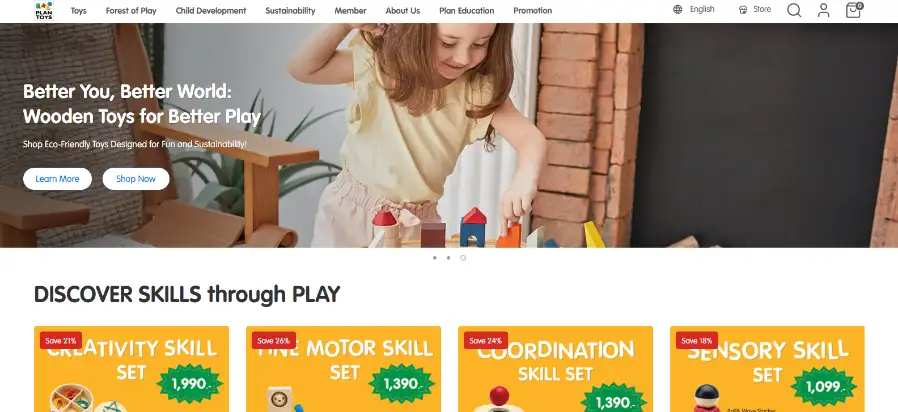
PlanToys is the sector benchmark. They pioneered the "exhausted rubberwood" sourcing model, repurposing latex-exhausted trees that would otherwise be burned.
Why buyers shortlist them: They offer an airtight supply chain story. Unlike producers using chemical treatments, PlanToys uses chemical-free kiln drying to stabilize wood. They explicitly reference ASTM F963 and EN71 standards, using certified E-Zero non-formaldehyde glue and water-based organic pigments.
You will also see TIS (Thai Industrial Standard) markers on their products, a critical signal of legitimate local manufacturing.
Best for:
- Boutique retailers who need a sustainability narrative to drive sell-through.
- Distributors seeking established lines that pass strict safety audits.
- Buyers who tolerate premium pricing to mitigate recall risks.
Commercial reality check
B2B pricing and MOQs are quote-based. Don't expect a fixed wholesale list; you must negotiate lead times and costs based on order volume.
What to ask on the first call
- Current Test Reports: Request valid ASTM/EN71 documents for specific SKUs or batches, not just general factory certifications.
- Material Specs: Ask for data sheets on their organic pigments and E-Zero glue to verify "non-toxic" claims.
- Packaging: Confirm labeling options (UPC codes, country of origin) for your target market.
- Incoterms: Clarify if they quote EXW (Ex Works), FOB (Free on Board), or DDP (Delivered Duty Paid).
2. Wonderworld
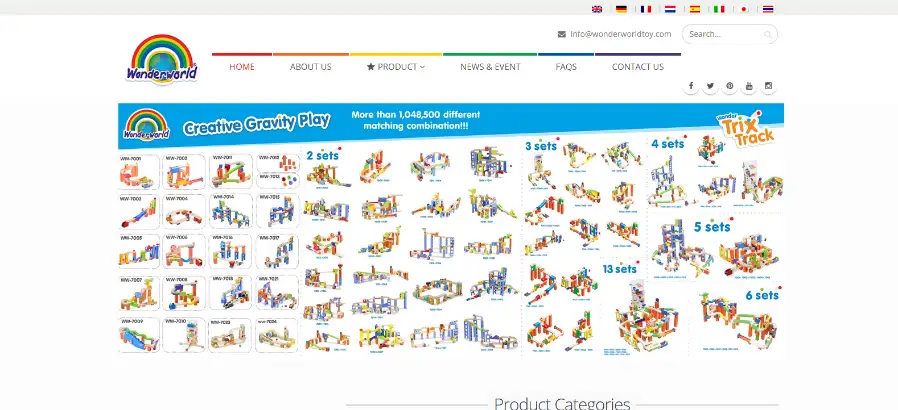
Wonderworld (Pathum Thani) distinguishes itself by quantifying sustainability. This provides a ready-made marketing story for retail buyers looking to prove eco-credentials beyond vague marketing claims.
Why buyers shortlist them: Most Thai manufacturers source rubberwood as a sustainable byproduct of the latex industry to prevent burning. Wonderworld goes further with their "Tree Plus" program: they plant one tree for production use, plus an additional tree. This allows you to position inventory as environmentally net-positive—a powerful counter to "greenwashing" objections in distribution pitches.
Best for:
- Boutique retailers: Shops needing strong shelf-talker narratives to justify premium pricing.
- Distributors: Buyers requiring consistent SKU lines rather than one-off trend items.
What to verify (buyer diligence)
Validate technical safety files for specific SKUs, not just the brand generally.
- SKU-level Compliance: Request current EN71or ASTM F963 reports. A test report for a "natural wooden block" does not cover a "painted walker."
- Paint Documentation: Audit Material Safety Data Sheets (MSDS) to confirm lead and heavy metal compliance, specifically for vibrant primary colors.
- Packaging: Verify capacity for retailer-exclusive or white-label packaging if you plan to scale a unique assortment.
Commercial questions to ask
For smaller retailers or those testing a new line, the "Mixed-SKU" capability is critical.
- Mixed Cartons: "Can I combine multiple SKUs to meet the minimum order value, or is the MOQ per item?"
- Peak Lead Times: "How does production timing shift between Q2 and the Q3 pre-holiday rush?"
- Master Packs: "What is the inner/outer carton count?" (Essential for calculating landed warehousing costs).
3. Voila (Siam Wooden Products)
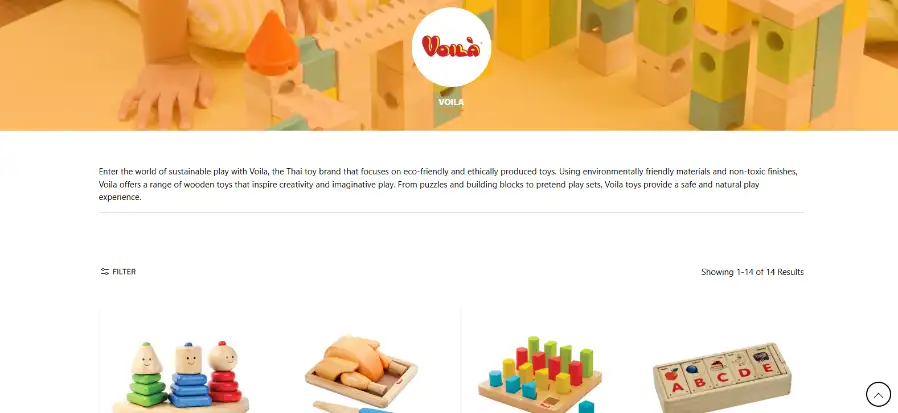
Voila (manufactured by Siam Wooden Products) represents the industrial tier of Thai rubberwood toy production. While many Thai factories focus on craft, Voila combines award-winning design capabilities (including G-Mark and DEmark recognition) with the rigorous process maturity required for global export.
Why buyers shortlist them: Their primary value proposition is risk-managed scalability. Holding ISO 9001 (Quality) and ISO 14001 (Environmental) certifications signals that their production lines are repeatable and that defect rates are monitored. This makes them a strong fit for distributors who need consistent output rather than the variability often found in small-batch workshops.
Best for:
- Distributors: Companies needing stable capacity for container-load orders.
- OEM/Private Label: Brands requiring strict adherence to technical design specifications and custom packaging.
Compliance verification
Warning: ISO certificates verify the factory process, not the product. You must validate safety at the SKU level.
- Standards Gap: Ask specifically how they bridge Thailand's TIS requirements with export standards like EN71or ASTM F963.
- Documentation: Request valid test reports from accredited bodies (like SGS or Intertek). Check the dates carefully; expired certificates are a common red flag in this sector.
Commercial questions to ask
- MOQ Flexibility: "Is the Minimum Order Quantity applied per SKU or against the total program value?" Negotiating a program-level MOQ allows you to test a wider range of designs without overstocking a single item.
- Tooling Costs: "How do you structure sampling fees for custom OEM designs versus standard white-label items?"
- Assembly: "Do you have internal capacity for complex retail packaging assembly?"
4. Pin International (PINTOY)
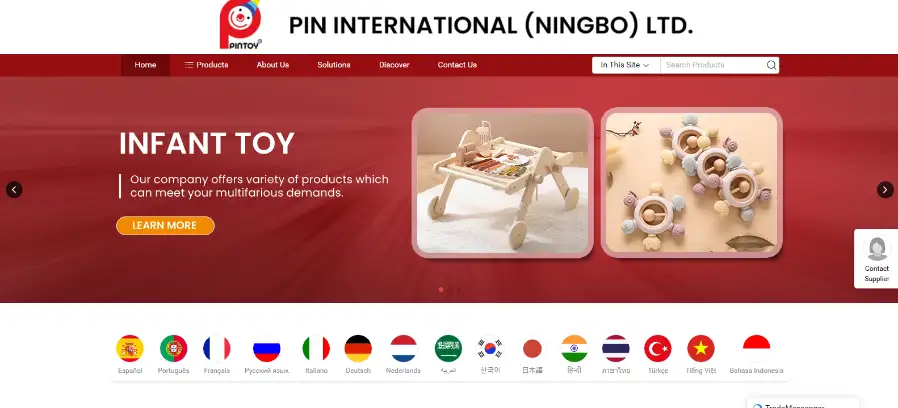
Pin International operates a unique hybrid model: they manufacture their own global retail brand (PINTOY) while serving OEM clients.
For buyers, this dual focus offers a strategic advantage. Unlike pure contract Wooden Toy Manufacturers in Thailand who rely entirely on buyer instructions, Pin International anticipates retail packaging and safety hurdles because they face them daily with their own lines. Their production centers on rubberwood sourced from retired latex plantations, often utilizing chemical-free kiln drying processes to ensure compliance with strict EU chemical standards.
Best for:
- Distributors: Buyers seeking ready-made product families to fill catalog gaps immediately.
- OEM Buyers: Brands requiring a design partner with structured QA processes and established supply chains.
Due diligence points
- Production Oversight: Clarify exactly which facility handles your order. Ensure your program runs in their main Thailand-based factories rather than outsourced satellites.
- Audit Readiness: Request current BSCI or ISO 9001 certifications before issuing a PO to verify social compliance.
- Safety Documentation: Demand SKU-level EN71 or ASTM F963 reports. A general factory certificate is not a substitute for product-specific testing.
Commercial questions to ask
- Lead Times: "How does production timing fluctuate between peak (Q3) and off-peak seasons?"
- Tooling: "What is the amortization structure for new custom molds?"
- Packaging: "Do you provide labeling support for specific US/EU retail requirements?"
Negotiation lever: Propose a phased rollout. Request to pilot specific SKUs with lower initial volumes (e.g., 500 units) before committing to a full catalog scale-up. This tests their delivery reliability while mitigating your initial capital risk.
5. Blue Ribbon
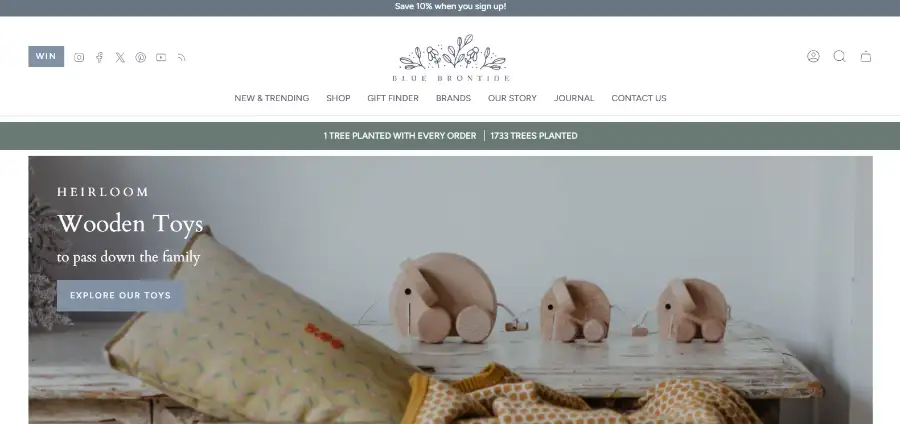
Rough edges and chipping paint destroy premium retail margins. Blue Ribbon solves this by operating more like a craft workshop than a mass-production line.
Why buyers shortlist them: While many factories apply a single spray coat, Blue Ribbon is known for a "furniture-grade" finish. They utilize a multi-coat water-based paint system, sanding the rubberwood between layers to ensure adhesion and a smooth tactile feel. They also offer a distinct natural mineral-oil finish option, which appeals to Montessori-aligned buyers looking for raw, organic aesthetics without the yellowing effect of standard varnish.
Best for:
- Boutique Retailers: Shops that compete on curation and aesthetic rather than lowest unit cost.
- Design-Led Brands: Sellers who need the product to withstand close-up macro photography.
- Limited Collections: Brands launching "heirloom quality" drops.
What to validate (Diligence)
High-pigment, multi-coat finishes carry specific risks.
- Abrasion Testing: Request ISO 105 color fastness reports specifically for friction. You need to ensure deep pigments (like red) won't transfer onto white packaging during vibration in transit.
- Packaging Durability: Their finish is premium, but scuffs are visible. Verify they use sufficient inner-carton protection.
Commercial questions to ask
- OEM vs. Wholesale: "Do you support private label production, or are you restricted to branded wholesale?"
- Sample Economics: "What is the lead time delta between a standard catalog sample and a custom Pantone match?"
- Fit Note: They are less suitable for high-volume, low-margin mass market programs. They function best as the high-margin anchor in your assortment.
6. Bsiri
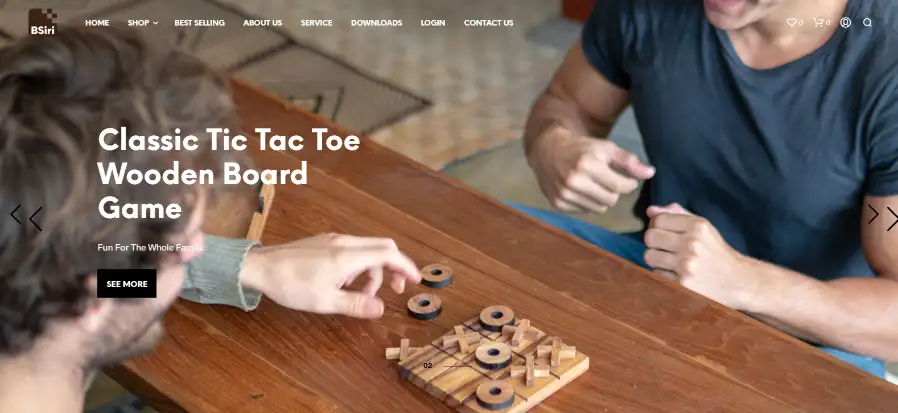
While southern Thailand dominates preschool toys, Chiang Mai is the epicenter for wooden brain teasers. Bsiri leads this cluster, using Rain Tree wood (Monkey Pod) to produce complex interlocking games for export markets.
Why buyers shortlist them: They fill a specific inventory gap: high-margin, compact items for museum gift shops and bookstores. Unlike the rubberwood used by PlanToys, Bsiri's use of Rain Tree wood allows for the intricate friction-fit cuts required for logic puzzles.
Best for:
- Specialty Retail: Stores needing high turnover per square foot (e.g., Tower of Hanoi, Soma Cubes).
- Corporate Gifting: Importers sourcing branded executive desk accessories.
Compliance framing: The "Age Grade" Loophole. You can often bypass rigorous mechanical testing (small parts cylinders) by grading products as "Executive Games" (Ages 14+) rather than children's toys.
- The Trap: If packaging features cartoons or primary colors, Customs will classify it as a toy, triggering full CPSC safety standards.
- The Fix: Label packaging explicitly as "Not a Toy" to reduce testing overhead. Note: You must still verify lead-free surface coatings.
QC Watchouts
- Moisture Content: Rain Tree wood is susceptible to swelling. Mandate kiln-drying (target 8–12% moisture) over sun-drying, or puzzles will seize up in humid climates.
- Ink Rub: Require abrasion testing for printed game boards (like Snakes and Ladders) to prevent grid wear.
Commercial questions to ask
- "Do you include English-language solution manuals inside the packaging?"
- "Is individual shrink-wrapping included to prevent parts rattling loose in the master carton?"
7. P.M. Creations
P.M. Creations differentiates itself from Chiang Mai's souvenir workshops by operating as a dedicated export Wooden Toy Manufacturers in Thailand for the educational sector. They engineer logic puzzles and games specifically for institutional use, bridging the gap between handcrafted aesthetics and mass-market durability.
Why buyers shortlist them: Their portfolio prioritizes functional learning outcomes over decoration. Because these products are designed for the high-impact environments of classrooms and libraries, they utilize stronger joinery and simpler, cleanable finishes than standard retail gift items.
Best for:
- Educational Suppliers: Sourcing durable classroom sets and math aids.
- Distributors: Buyers needing category breadth (e.g., 50+ puzzle variations) from a single source.
- Private Label: Brands building specific "learning toy" lines.
What to verify
- Material Consistency: Confirm if the product is 100% Rubberwood (standard for stability) or mixed local timber, which reacts poorly to humidity changes.
- Safety Documentation: Audit their testing readiness for ASTM F963 and EN71. For local sales, verify Thailand TIS/TISI compliance.
- Finishing: Ensure coatings are non-toxic yet robust enough to withstand industrial classroom cleaning agents.
Commercial questions
- MOQ Logic: Is the minimum order quantity defined by individual SKU or by the total box set?
- Assortment: Can they supply mixed assortments (e.g., 5 units of 20 different puzzles) to lower inventory risk?
- Packaging: Do they handle market-specific labeling (barcodes, age warnings) in-house?
Pilot approach: Avoid ordering a full catalog immediately. Pilot 1–2 "hero" SKUs with a third-party QC plan. Use this smaller run to stress-test their finishing quality and communication speed before expanding the assortment.
The Procurement Playbook: Sourcing Rubberwood Toys
Sourcing from Thailand requires a specific operational approach distinct from electronics in Shenzhen or textiles in Vietnam. Use this execution guide to navigate material selection, compliance stacks, and quality control.
A. Rubberwood (Hevea brasiliensis): Why Thailand Wins This Material
Prioritize Thailand to access Rubberwood (Hevea brasiliensis). This timber serves as a strategic asset for toy manufacturing due to its density and sustainability profile.
Understand the material lifecycle. Rubberwood is a byproduct of the latex industry.
Farmers fell these trees only after the latex yields decline (roughly 25 years) and immediately replant them. This process recovers timber that was historically burned.
Commercial Advantages:
- Cost Predictability: Agricultural cycles dictate supply rather than wild logging permits. Prices remain stable compared to premium hardwoods.
- Traceability: Market the "upcycling" narrative. Verify the plantation source to support eco-claims on packaging.
- Machinability: Leverage the dense grain structure for smooth machining. This reduces splintering risks and ensures high adherence for paints. Consult the [Wood Database properties for Rubberwood for specific gravity and modulus of rupture data.
Compare Alternatives:
- Chinese Birch: Often the standard for cost-focused supply chains. Quality varies by region. Demand strict species documentation to ensure consistency.
- European Beech: A premium option with a strong heritage perception. Expect higher costs and heavier shipping weights. It often lacks the agricultural byproduct narrative of Rubberwood.
Buyer Material Checks: Demand these four data points in your specification sheet:
- Species Declaration: Confirm the wood is 100% Hevea brasiliensis.
- Moisture Content: Mandate a range of 8% to 12%. Wood exceeding 12% releases moisture in hot shipping containers and causes mold.
- Kiln-Drying Method: Verify the factory uses pressure treatment and kiln-drying to neutralize sugars that attract insects.
- Chemical Documentation: Require data sheets for all preservatives used during the drying phase.
B. Standards & Compliance (Thailand + Export Markets)
Never assume a "certified factory" produces compliant toys. ISO 9001 confirms management consistency but does not validate product safety.
Define the Standard Stack: Align testing protocols with your target market immediately.
- Domestic (Thailand): Certification via TIS / TISI (Thai Industrial Standards Institute) is mandatory for local sales.
- USA: Compliance with ASTM F963 is non-negotiable. Require physical/mechanical testing (drop, torque) and heavy metal screening for surface coatings.
- Europe: adhere to EN 71 (Parts 1–3). This covers mechanical properties, flammability, and chemical migration limits.
Request This Documentation: Attach these requirements to your Request for Quotation (RFQ).
- SKU-Level Lab Reports: Reject generic company certificates. Demand test reports from accredited labs (SGS, Intertek, TÜV) for your specific design.
- MSDS (Material Safety Data Sheets): Verify safety data for all paints, clear coats, inks, and adhesives. Ensure they are free of lead, phthalates, and formaldehyde.
- Packaging Specs: Define labeling requirements strictly. Include age grading, choking hazard warnings, and traceability codes (Batch ID) mandated by consumer protection laws.
C. Insider Tips: Thai Factory Trade-offs vs. China
Sourcing in Thailand differs from the rapid-turnover models of Yiwu. Adjust expectations to prevent production stalls.
Operational Realities:
- Plan for Higher MOQs: Custom OEM programs often require 1,000+ units per SKU. Thai factories produce from raw timber and rarely stockpile generic blanks for printing.
- Account for Lead Times: Allow for curing and kiln drying. Rubberwood processing cannot be rushed. Peak season (Q3) queues are rigid.
- Clear Specifications: Established exporters value precision over speed. Provide a detailed spec pack to avoid production pauses caused by ambiguity.
Negotiation Tactics: Negotiate on risk reduction rather than immediate price cuts.
- Pilot Runs: Request a 300-unit pilot run to test QC and logistics. Accept a surcharge for this small lot to validate the supplier.
- Forecasts: Provide a 12-month non-binding forecast. Use long-term volume potential to leverage lower MOQs or better pricing.
D. QC Checklist Specific to Wooden Toys
Wooden toys face unique risks compared to plastics. Issue this specific checklist to your third-party inspector.
1. Incoming Material
- Moisture Check: Use a calibrated moisture meter on raw planks. Reject any wood registering above 12%.
- Defect Visuals: Reject "dead knots" (black knots prone to falling out) and any signs of active insect infestation.
2. In-Process
- Sanding Standard: Execute the "Nylon Stocking Test." Rub a nylon stocking over the wooden surface. Reject the unit if the stocking snags.
- Small Parts Control: Test all components against the CPSC Small Parts Cylinder standards. Ensure no part fits entirely inside the cylinder for toys graded 0-3 years.
- Paint Adhesion: Perform a cross-cut tape test. Apply tape to painted surfaces and rip back. Reject units where the paint peels or flakes.
3. Final Packout
- Drop Test: Drop the packaged unit from 1 meter onto concrete. Inspect for carton damage and internal product fractures.
- Labeling: Scan the barcode. Verify legibility of "Made in Thailand" marks and batch tracking codes on the outer carton.
E. Sourcing Workflow
Follow this sequence to minimize wasted time and budget.
- Confirm Category Fit: Classify the product (toy vs. puzzle vs. furniture) to determine the correct HS Code and standard set.
- Request Quotation Pack: Get FOB Bangkok pricing. Ask upfront for "Golden Sample" costs and tooling fees (molds/jigs).
- Approve Sample: Sign and date a physical "Golden Sample." Return it to the factory to serve as the control unit for mass production.
- Inspect Pre-Shipment: Book a third-party inspection (DUPRO or Final Random Inspection) before releasing the balance payment.
F. Where LeelineToys Fits
Direct access to top-tier Thai manufacturing often requires high-volume commitments. This creates barriers for retailers testing new categories.
LeelineToys functions as a risk-managed alternative. We act as your custom wood toy manufacturer, bridging the gap between factory floors and retail shelves.
Why Choose this Route:
- Lower Entry Points: We aggregate orders to enable flexible MOQs unavailable at mega-factories.
- Global Standard: We apply identical rigor to our Chinese manufacturing and European sourcing. This ensures a diverse, compliant supply chain.
- Landed Cost Clarity: We handle logistics and DDP shipping. Calculate your final profit margin instantly without estimating freight and duty separately.
Take Action: Source safer, sustainable inventory now. Contact us today with your target market, product category, and compliance needs. We will construct the supply chain that fits your business model.
People Also Ask About Wooden Toy Manufacturers in Thailand
1. Why is rubberwood (Hevea brasiliensis) so common in Thai wooden toys?
Rubberwood dominates Thai production because it is an agricultural byproduct of the latex industry. Once rubber trees stop producing latex (around 25 years), they are harvested for timber rather than burned.
For buyers, this ensures a stable, plantation-managed supply chain that remains unaffected by wild logging regulations. It also offers consistent grain density, making it ideal for the precision machining required for safety-compliant shapes.
2. Are ISO 9001 / ISO 14001 certificates enough for importing to the US/EU?
No. ISO 9001 certifies the factory's quality management system, not the safety of the specific toy.
Customs officials require SKU-level safety testing to clear goods. You must demand current test reports (ASTM F963 for the US or EN71 for Europe) for the exact product batch you are importing. An ISO certificate will not prevent a recall if the paint contains lead.
3. What are TIS / TISI and do I need them if I'm importing to the US or Europe?
TIS (Thai Industrial Standards) are safety benchmarks set by the Thai Industrial Standards Institute. They are mandatory for selling toys inside Thailand.
While legally irrelevant for US Customs, a factory holding TIS certification signals high operational maturity. It proves they already maintain a compliance infrastructure, which often makes adapting to ASTM or ISO 8124 standards smoother than working with unregulated workshops.
4. What are realistic MOQs and lead times for Thailand wooden toy factories?
Factories typically require higher minimums than Chinese trading companies due to raw material processing times. Expect MOQs between 500 and 1,000 units per SKU for custom orders.
Lead times average 45 to 60 days, extending significantly during the Q3 pre-holiday rush. To mitigate this, negotiate a "mixed-carton" program where you meet the Minimum Order Value (MOV) by combining smaller quantities of multiple SKUs.
5. How do I avoid compliance problems (detentions, failed tests) on my first shipment?
Prevent customs detention by assembling a complete "Document Pack" before production ends. This must include the Bill of Materials (BOM), Material Safety Data Sheets (MSDS) for all surface coatings, and accredited lab test reports. Always pay for a third-party pre-shipment inspection to verify that physical labeling matches the documentation.
Need a managed sourcing path that handles the compliance paperwork for you? Start your project with LeelineToys