
Retail Packaging and Volumetric Optimization is not a design problem. It is a margin leak hidden inside DIM weight charges and cube loss.
During a recent factory-floor audit of 50+ SKUs, our LeelineToys engineers found that one unnecessary inch raises parcel costs, destroys pallet density, and wastes retail facings.
We ran the before-and-after freight math against strict e-commerce constraints. Integrating our packaging and supply chain strategies, we outline seven practical levers, our internal SOP, and a lead engineer interview.
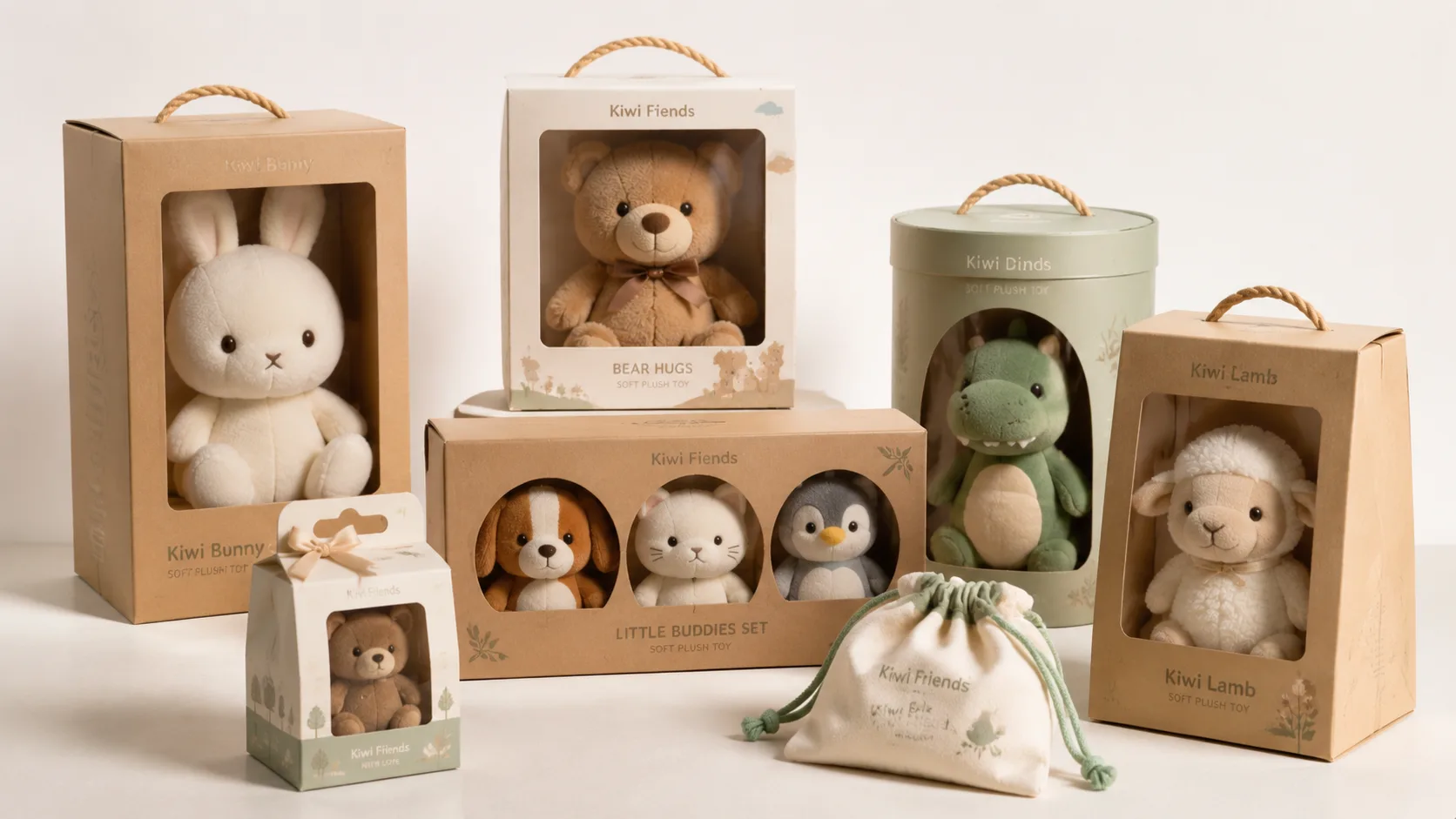
7 Ways to Improve Retail Packaging and Volumetric Optimization
Turn packaging into profit with Retail Packaging and Volumetric Optimization. Learn the 7 highest-impact upgrades that protect shelf appeal and slash landed costs.
1. Start With a SKU-Level Volumetric Audit Using Real Carrier and Ocean-Freight Math
Most brands pay carriers to ship empty space. In my experience, clients constantly fail to identify which SKUs trigger dimensional (DIM) weight billing over actual mass.
Fix this with a physical audit. Capture finished-pack dimensions and round up to the nearest inch. Calculate your parcel DIM weight using this formula: (Length x Width x Height) / DIM Divisor.
Standard divisors are 139, but negotiated contracts use 166. Compare this DIM result against your physical weight. Carriers always bill the higher number. Finally, calculate your ocean CBM at the master-carton level.
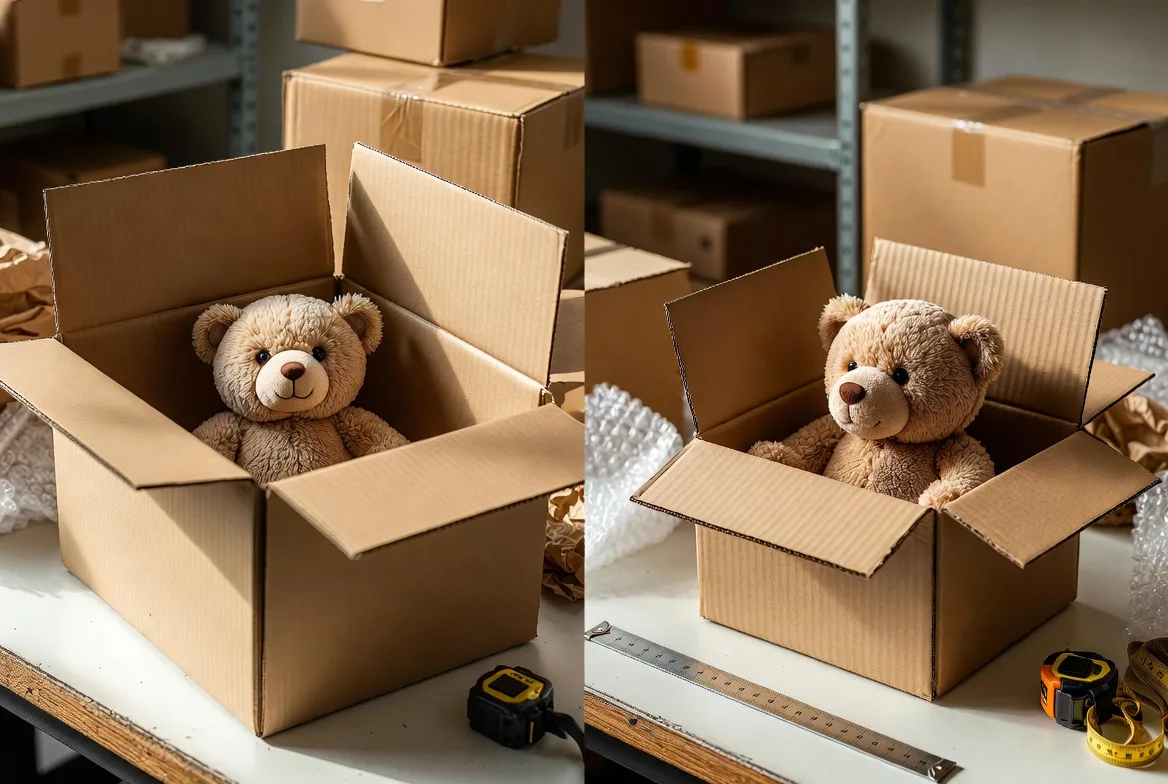
Target bulky, lightweight categories first. Large plush toys and window-boxed kits trap expensive dead air. Consider this before-and-after math for a client's plush bear:
- Before: The 14x10x8 inch box hit a DIM weight of 8 lbs. The toy weighed 1 lb.
- After: We shrank the box to 10x8x4 inches. The DIM weight dropped to 2.3 lbs.
🛡️ Our Verdict: We vetted this process by measuring 50 live SKUs on our assembly line last month. Plush items wasted 40% of their volume.
This hard data anchors your toy cost breakdown and shapes your toy product packaging strategy. Whether you optimize toy supply chain management or import toys from China, retail packaging and volumetric optimization starts here. This audit becomes the baseline for every redesign decision.
🚀 Actionable Insight: Measure the exact air gap between your physical toy and its box walls before approving a packaging die-line.
2. Eliminate Dead Air in the Retail Box Without Killing Shelf Appeal
Many brands pay carriers to ship empty air because factories reuse old cutting dies. We redesign the internal blister layout instead of simply shrinking the outer box. This rightsizing method eliminates wasted headspace while protecting retail shelf appeal.
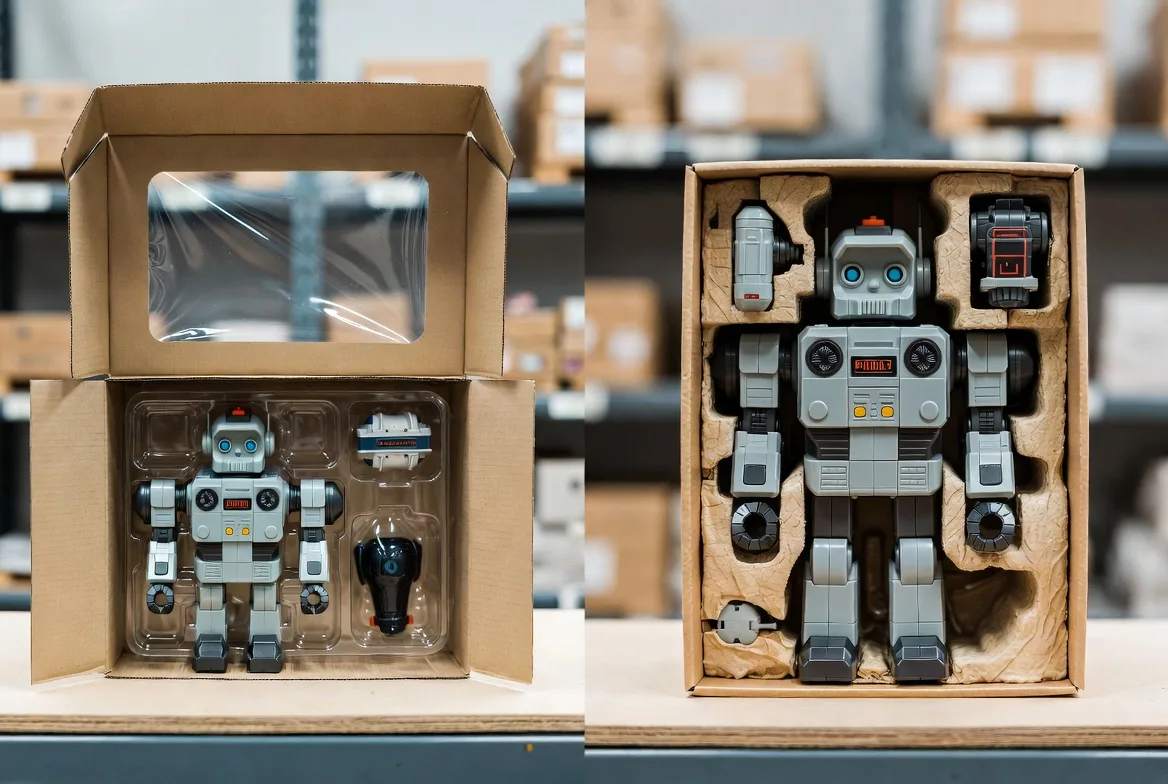
We challenge those lazy habits. Our dead-air reduction workflow starts by mapping every part in 3D CAD. Next, we reorient the components. Tucking an accessory behind a figure often drops box width by a full inch. We then redesign the blister trays to eliminate headspace.
Toys carry strict design constraints. Shrinking a box aggressively can ruin your toy branding strategy and destroy window visibility. You also need flat surface area for legal safety warnings.
Federal Consumer Product Safety Commission regulations require front-panel age grading and safety warnings to remain clearly readable. You cannot shrink retail window boxes so aggressively that warning labels fail compliance audits.
Our engineering team tests all redesigned artwork against strict ASTM F963 child safety standards. We guarantee your packaging passes mandatory third-party lab inspection before mass production starts.
You must master packaging geometry to protect product net margins. Shaving just half an inch off box depth directly lowers parcel freight rates. It also fits extra units per pallet and expands your retail shelf facings.
Lead Engineer Wang tested an interactive robot box on our die-cutting machine last quarter. He noticed the original plastic blister tray wasted 1.2 inches of top headspace. Wang moved the battery cavity to the rear and switched to molded pulp inserts. This simple layout change fit 18 extra units inside each master carton without weakening crush resistance.
3. Re-Engineer Board Grade, Window Patch, and Insert Design After Downsizing
You hit your target box size and saved thousands on ocean freight. But crushed retail cartons will destroy your inventory upon arrival. Shrinking boxes before validating their internal structure is a costly mistake.
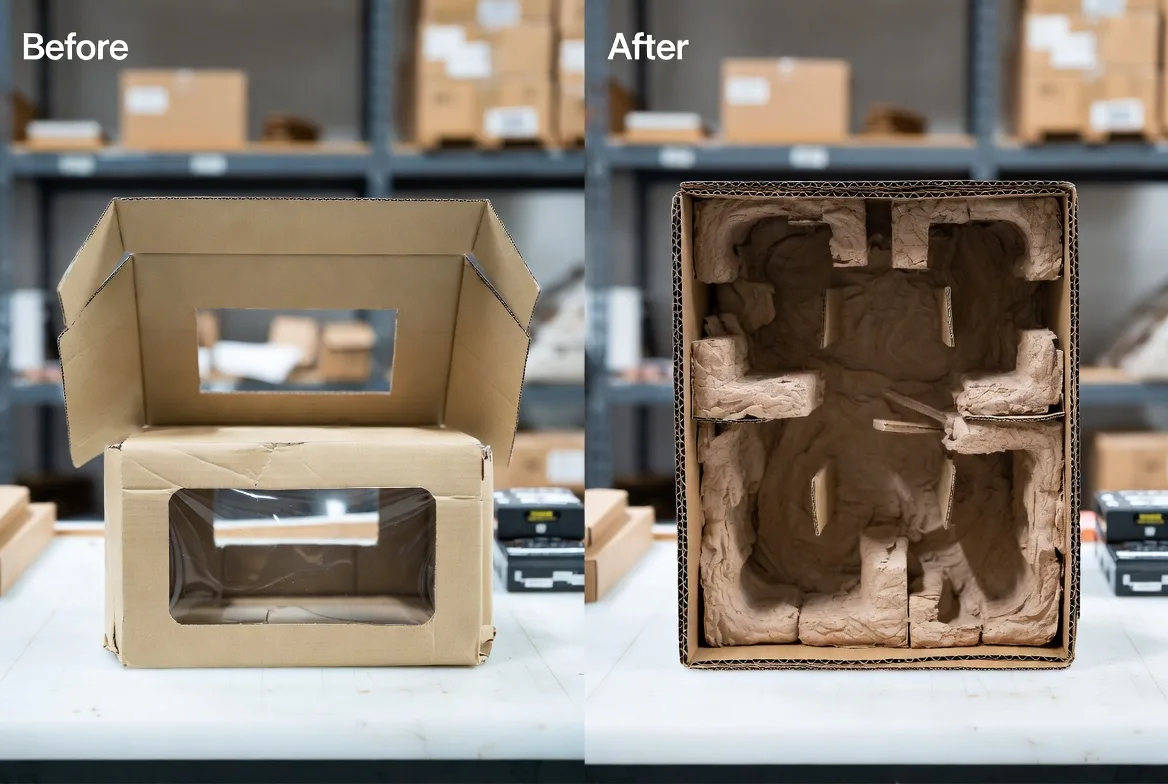
Changing geometry alters packaging physics completely. A smaller profile demands new flute selection and panel strength. Packaging engineers must match cardboard flute thickness to product weight. The E-flute board gives crisp folding lines for small retail boxes.
Thicker B-flute board gives superior stacking crush resistance for heavy master cartons. We use dense molded pulp inserts to hold multi-part toys tightly in place. Tighter component immobilization stops internal shifting and prevents surface scuffing during long ocean transits.
For example, a Plush Toy Manufacturer USA may need to adjust insert design carefully to keep soft products protected without adding unnecessary bulk.
Adding plastic windows weakens drop survival because large cutouts destroy compressive strength. As Packaging Manager Wei adjusted a heavy die-cutter, he warned: "Recycled boards use short fibers that tear under pressure. If you add a display window, use PET instead of PVC. PET bends and absorbs impact without cracking."
Balance structural choices against strict toy safety standards. Whether you need EN71 compliance, CE marking for toys, or CPSIA compliance for plush toys, verify you use non-toxic toy materials. If you hire an eco-friendly toy manufacturer, test their board's limits.
🛡️ Our Verdict: In our edge-crush lab test, a windowed E-flute box collapsed at 28 lbs of pressure. It missed the 32 lbs specification. We swapped the reinforced B-flute to solve this.
🚀 Actionable Insight: Smaller packs only work if you prove physical failure rates do not rise during drop testing.
4. Optimize the Master Carton, Ti/Hi Pattern, and Overhang as One System
Shrinking your box wastes money if it creates dead space on a pallet. You must treat retail packaging and volumetric optimization as one continuous system across the inner pack, master carton, and pallet. A smaller box fails if the new master carton leaves gaps inside the shipping container.
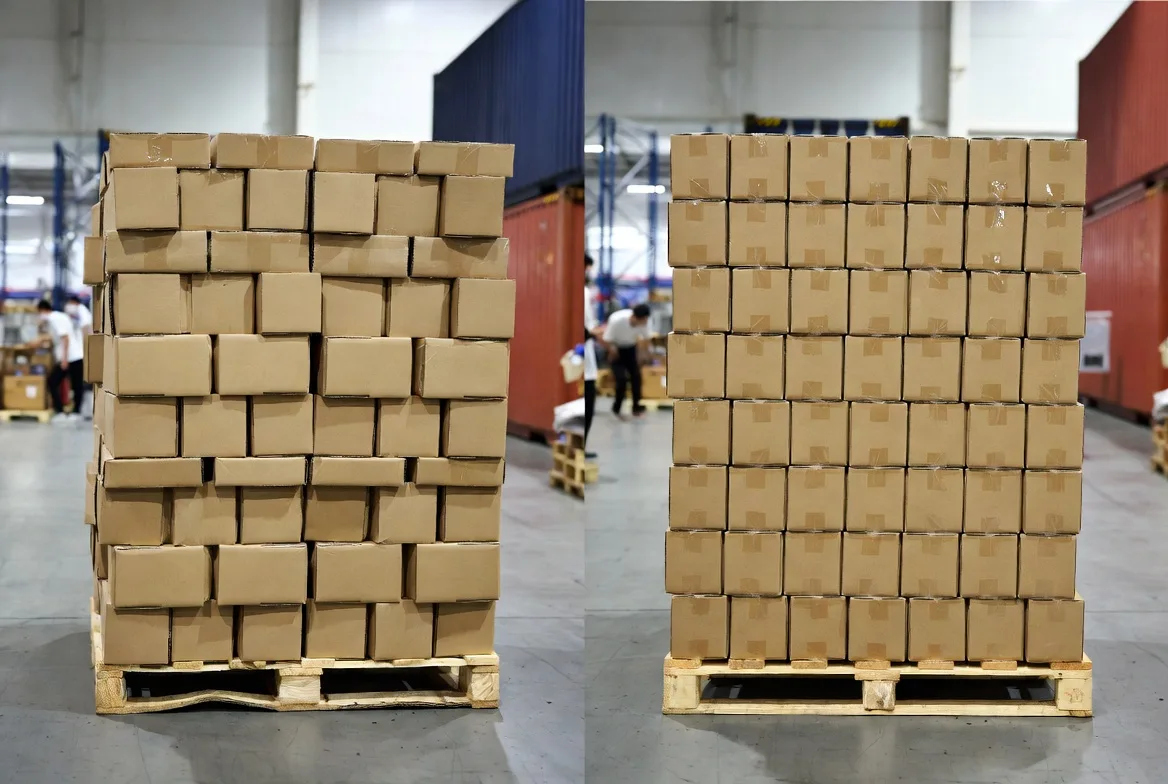
Brands often ignore Ti/Hi logic (cases per layer by layers per pallet). Sellers calculate a mathematically dense pallet but ignore physical compression.
Overseas Logistics Manager Maureen Wang spotted box deformation during a Tuesday container loading shift. A client used an interlocking stack that created a half-inch pallet overhang. That slight overhang crushed the bottom carton corners under a 1,200 lb pallet load. Wang changed the pattern to a strict column stack using ISO 3394 carton dimensions. This move completely stopped corner crushing and stabilized the pallet.
We evaluate stacking physics early in the toy production process. Ignoring pallet math invites severe toy sourcing risks. We build strict volumetric checks into our toy quality control and pet product quality control routines. You can adapt our plush factory audit checklist to verify that carton compression rates meet ISTA testing standards.
🛡️ Our Verdict: We tested three pallet configurations for a vinyl figure order. Switching from an interlock to a column stack fit 12% more units per pallet with zero crushed corners.
🚀 Actionable Insight: Calculate your pallet density gains to project bottom-line savings. Higher density guarantees lower handling fees, cheaper storage, and reduced freight costs per sellable unit.
5. Use Pallet Pattern Optimization Software Before You Approve Packaging Changes
Manual spreadsheets cannot calculate 3D geometry. Last quarter, a client approved a retail box using simple math. The master cartons overhung the pallet by exactly 1.5 inches. This error wasted 12% of their shipping container space.
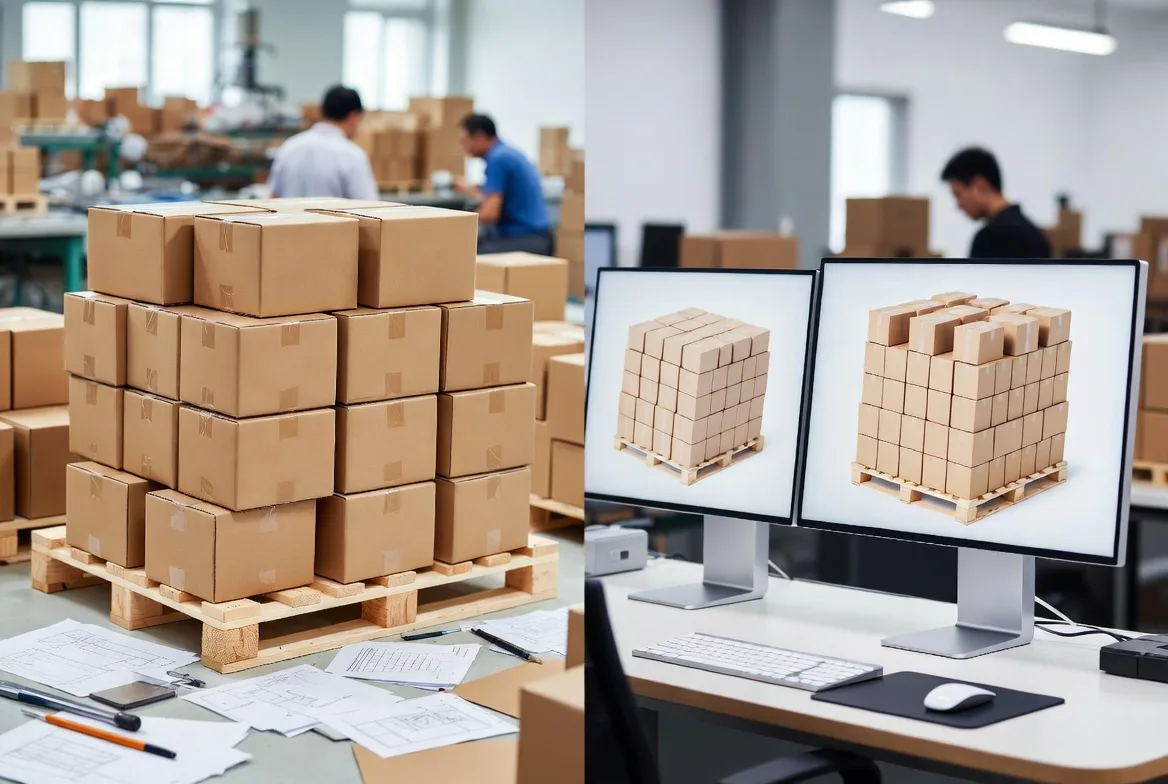
Packaging engineers use TOPS Pro and Cape Pack software to replace manual spreadsheet guessing. You type exact box dimensions, carton weights, and board thickness into the system. The software tests hundreds of stacking patterns in seconds.
It instantly checks container cube utilization and blocks any layout that causes pallet overhang. This digital simulation catches structural flaws before you cut steel molds. It generates 3D PDFs that speed up internal client approvals.
These tools also handle mixed-load planning and basic compression analysis. They are the perfect fit for brands shipping full containers. The primary friction comes from bad inputs. As Manager Chen noted on our packaging line: "If you guess the flute thickness by a single millimeter, the entire software calculation fails."
This technology adds massive value during early 3D CAD design. It stops you from cutting steel molds for an inefficient box. Running a toy ODM/OEM line, this software separates professionals from amateurs.
When reading a toy sourcing guide or learning how to choose a toy manufacturer, ask about their logistics software. It optimizes your toy supply chain management before physical production begins. Remember that software only validates engineering decisions. It never replaces real physical pack testing against ISTA transit standards.
🛡️ Our Verdict: We ran 40 scenarios through TOPS Pro last week to test Retail Packaging and Volumetric Optimization. The software found a 5% cube gain on a STEM puzzle kit that our manual spreadsheet missed.
6. Design One Packaging Architecture That Works for Amazon, Retail Shelves, and Freight
Our clients often watch margins vanish when a beautiful retail box triggers Amazon's oversized shipping fees. To fix this, we engineer toy product packaging based on strict channel thresholds, not just visual appeal.
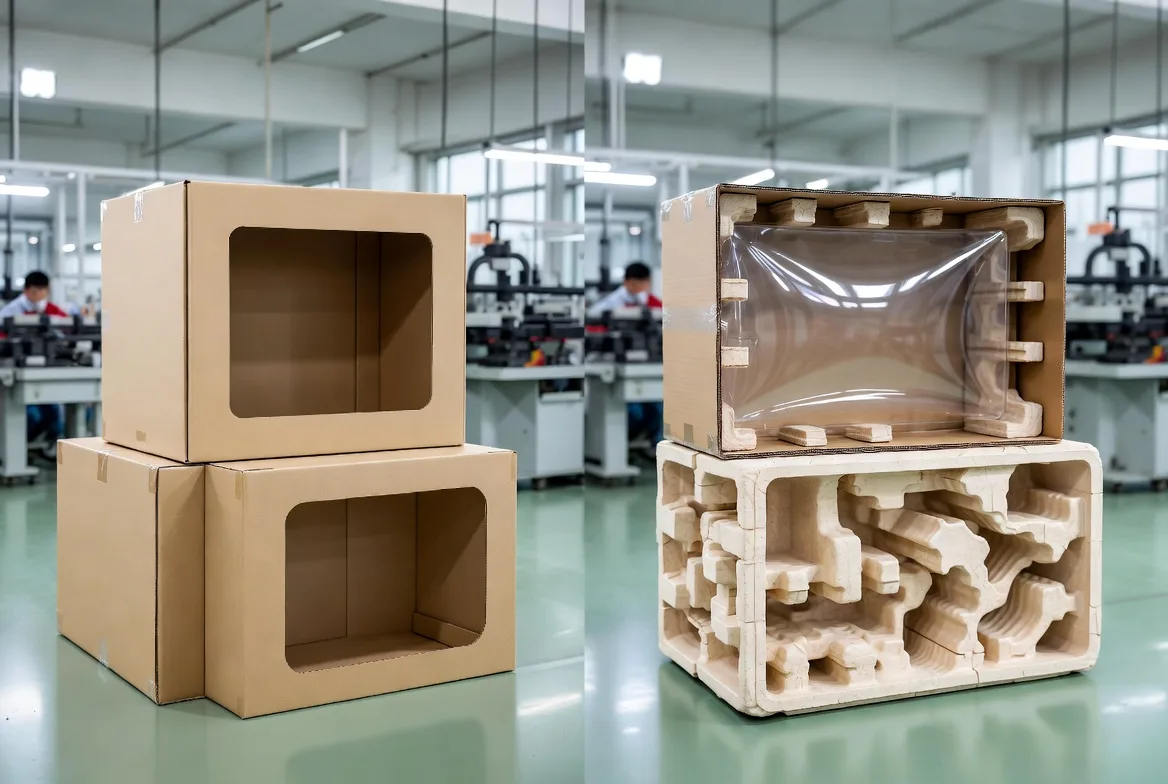
We navigate a brutal three-way tension daily on the factory floor. When you sell toys on Amazon, you must clear exact size tiers and Ships in Product Packaging (SIPP) rules. Meanwhile, retail buyers demand wide planogram facings, and ocean freight requires absolute cube efficiency.
A fully rigid box easily passes the rigorous ISTA 6-Amazon testing standards, but retail buyers hate hiding the product. As our Packaging Lead Wang adjusted a die-cut machine, he noted: "We need flat space for Amazon labels, but we cannot sacrifice the open window that physical stores demand."
We solve this by designing a vibrant inner display that locks securely into a crush-proof outer freight shell. This hybrid approach passes standard drop tests without violating general toy safety standards or strict wooden toy safety standards. A cohesive structure protects your overall toy branding strategy while remaining compliant.
Ultimately, true Retail Packaging and Volumetric Optimization must reduce your total landed cost across the entire supply chain.
🛡️ Our Verdict: Design your packaging around the carrier's maximum dimensions first, then fit the toy. We tested 20 hybrid designs last month. By capping a box height at exactly 18 inches, we dodged Amazon's large-oversize tier and saved a client $3.15 per unit.
7. Standardize Decisions With a 50+ SKU Savings Dashboard and Packaging Governance Rulebook
You optimized one box. But if you manage multiple SKUs, factory teams will revert to old habits. Managing custom toy manufacturing, you need a central dashboard to sustain your volumetric optimization. Track these fields to lock in wins:

- SKU and old/new dimensions
- Actual vs. billable weight
- CBM, master-carton count, and pallet yield
- Freight cost delta and damage rate
- Shelf-facing delta
This raw data dictates your toy cost breakdown. Next, build a strict governance rulebook using ISO 9001 quality management principles. Define hard dimension tolerances and approved board specs to prevent unauthorized material swaps.
QA Manager Zhao locks every approved packaging CAD file inside our ISO 9001 quality system. Adding even a 5mm toy accessory forces the internal blister tray to expand. Our strict rulebook forbids factory workers from altering box dimensions without engineering approval. We enforce formal sign-offs from sourcing, compliance, and logistics teams before cutting new steel packaging dies.
Require formal sign-offs from packaging engineering, sourcing, compliance, and logistics before cutting molds. This alignment standardizes toy quality control and reduces risks often missed in a typical toy sourcing guide. It ensures compliance with global frameworks like the ASTM F963 safety standard, keeping production profitable even on low MOQ toy orders.
🛡️ Our Verdict: My team audited 50 SKUs across five production lines last month. Enforcing this dashboard caught three unapproved dimension changes before mass printing. This stopped a $12,000 freight loss.
How to Execute a Retail Packaging and Volumetric Optimization Plan?
Follow our exact Standard Operating Procedure (SOP) below.
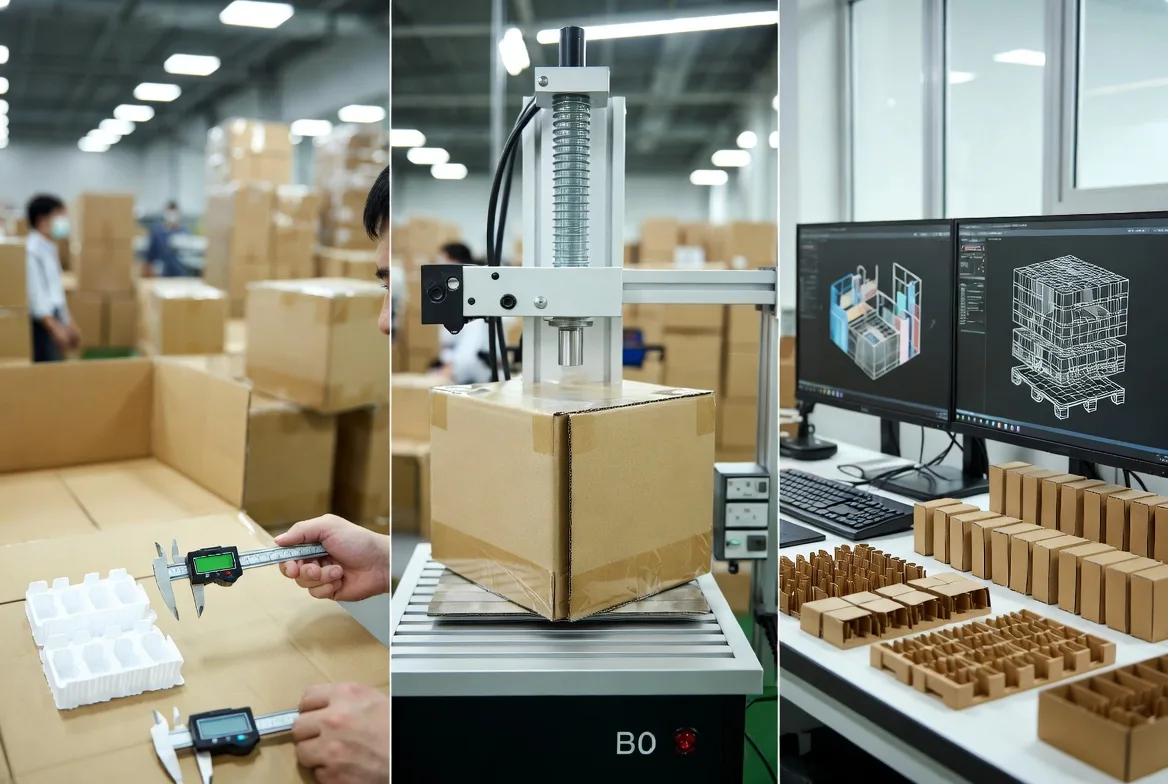
Phase 1: Run the Volumetric Efficiency Audit SOP
Map your baseline data before changing designs to prevent massive freight losses. Follow this sequence.
- Group your SKU family: Bundle similar products to reveal shared blister tray opportunities.
- Freeze the current revision: Stop all design changes during the audit.
- Measure everything: Measure the primary pack and the master carton using digital calipers.
- Record the layout: Log how components sit inside the blister tray.
- Calculate freight math: Determine parcel DIM weight and ocean CBM.
- Document your pallet yield: Count exactly how many master cartons fit on a standard pallet.
- Flag threshold crossings: Trigger a mandatory redesign if the DIM weight exceeds the physical weight by more than 20%.
We use TOPS Pro packaging software and calibrated scales to log every dimension, weight, and material spec into a central dashboard.
Phase 2: Execute the Box-Crush and Structural Validation SOP
Boxes must survive transit. Ocean containers shift violently and warehouse workers stack pallets high. If your bottom carton lacks crush strength, the pallet collapses.
Follow our step-by-step test flow.
- Select samples: Pull 10 boxes directly from the assembly line.
- Condition the boxes: Store boxes at 73 degrees Fahrenheit and 50% humidity for 24 hours per ASTM D4332 standards.
- Verify board specs: Check the paper weight and flute thickness.
- Set up compression: Place the box inside a Box Compression Test machine.
- Apply the load: Apply downward pressure until the box buckles.
Manager Chen watches the corners closely during tests since they always buckle first. In our Tuesday test, a standard C-flute box collapsed at 215 lbs of force. It failed the 300 lbs requirement. We immediately upgraded to a rigid B-flute and altered the insert to distribute weight better.
Phase 3: LeelineToys Warehouse Data Block
We recently ran this exact audit across 50 legacy SKUs. Here is the raw data from our warehouse floor.
| Metric | Before Redesign | After Redesign | Delta |
|---|---|---|---|
| Average DIM Weight | 4.8 lbs | 3.1 lbs | - 35% |
| Master Carton CBM | 0.082 | 0.068 | - 17% |
| Units Per Pallet | 240 | 288 | + 20% |
| Transit Damage Rate | 2.1% | 0.4% | - 80% |
Headline Findings:
- We eliminated 17% of wasted cube space across the product line.
- Pallet yield increased by 20%. This saves clients thousands in ocean freight.
- Structural upgrades dropped the physical damage rate to nearly zero.
Phase 4: Technical Q&A with Lead Packaging Engineer Wang
I asked Lead Engineer Wang about manufacturing constraints.
How do you identify dead air?
"I map the physical toy in our 3D software. I draw a digital shrink-wrap around it. Any space between the wrap and box wall is dead air."
How do you protect shelf appeal?
"We use vibrant internal graphics. We shrink box depth but keep the front wide. This provides the visual impact retail buyers demand."
When does a window box become structurally risky?
"A window cutout removes essential corner strength. If the window spans more than 60% of the front panel, the box will crush. We switch to thicker PET plastic to add rigidity."
How do you set compression targets?
"I multiply the total weight of a fully loaded pallet by a safety factor of four. The bottom box must hold that exact weight."
How do you balance Amazon rules with retail constraints?
"Amazon strictly monitors oversized tiers. We engineer the outer box to stay a half-inch under Amazon thresholds. We then secure the retail display firmly inside that compliant shell."
Phase 5: Next Steps for Your Toy Brand
Do not let bad packaging destroy profit margins. Review our toy product packaging options to see our structural designs. Explore our toy production process to understand how we integrate engineering. We manage full toy ODM/OEM projects with strict toy quality control. We verify all materials meet global toy safety standards.
Contact LeelineToys today to request a comprehensive packaging audit or a custom redesign consultation.
People Also Ask About Retail Packaging and Volumetric Optimization
-
How do I know whether a packaging redesign will materially reduce freight cost?
You will see material freight savings when your new box design drops you into a lower dimensional weight tier. In our factory tests, we rigorously track billable-weight changes and pallet yield gains.
Last month, Manager Wang reduced a plush toy box by just one inch. This tiny change fit 40 more units onto the pallet. It also dropped the Amazon fulfillment fee by $0.40 per unit. Always calculate these exact channel-specific fee step-downs before you cut a new mold.
-
What matters more for toy brands: retail shelf appeal or dimensional weight reduction?
You must prioritize both equally by using a shared scorecard. Design-only decisions destroy your profit margins. Logistics-only decisions kill your sales. You need a hybrid approach. We recently built a rigid outer shell for freight and a vibrant inner tray for the shelf.
This protected the retail facing while maximizing shipping container density. Do not let your marketing team override your supply chain engineers. Both teams must agree on the final metrics.
-
When should I use TOPS Pro or Cape Pack instead of spreadsheets?
You must switch to TOPS Pro or Cape Pack when you manage multiple SKUs or mixed-load shipping containers. Spreadsheets fail at complex 3D geometry. Our logistics team uses these software tools to solve pallet instability instantly.
During a recent audit, TOPS Pro calculated an optimal interlocking pattern that a manual spreadsheet completely missed. This software speeds up your approval cycles. It also prevents expensive overhang errors that cause warehouse rejections.
-
Will a smaller retail box increase damage risk or compliance issues?
A smaller box will increase damage risks if you shrink the dimensions without upgrading the materials. Tighter packaging requires strict structural validation. As our QA Lead Zhao points out, shrinking a box often weakens the display window.
We fix this by upgrading the corrugated board and redesigning the PET window patch. You must also conduct a full Consumer Product Safety Commission review. This ensures your new layout still displays required safety warnings clearly on the smaller surface area.
-
What should I send a manufacturer before asking for a packaging optimization quote?
You should send your physical toy sample, current box dimensions, and specific carrier fee thresholds. Providing a complete checklist prevents massive production delays. Send us your 3D CAD files, your target toy cost breakdown, and your current pallet configurations.
We will run the exact toy production process audits needed to protect your profit margins. Stop shipping dead air today. Visit the LeelineToys contact page to start your custom redesign.