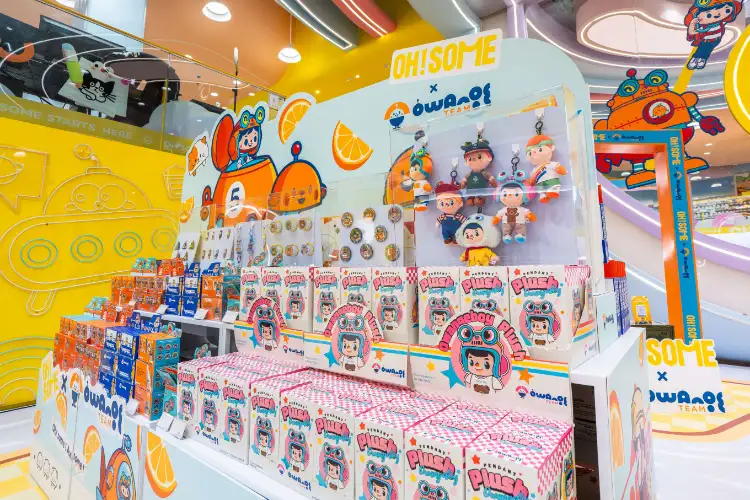

Yes, the blind box toy market remains highly viable in 2026. However, industry data often artificially inflates by mixing pure toys with generic lifestyle accessories. Commodity sellers fail fast. On our assembly lines, we watch IP-driven brands thrive while cheap, agent-sourced ABS plastics shatter during our EN71 drop tests. Winning requires proprietary IP, strict operational discipline, and direct factory compliance to navigate new regulations.
Key Takeaways
- Beware inflated market sizes: Broad industry reports pump up growth numbers by including generic lifestyle goods. From our side of the manufacturing table, we advise clients to use strict, toy-only estimates. This prevents false expectations when forecasting your first production run.
- China produces, America monetizes: The Asia‑Pacific region drives global manufacturing and massive local demand, forming the production backbone of today's Blind Box Toy Market Overview. However, our North American clients still see the highest retail margins. You manufacture here in China to maximize your retail profits there.
- Original IP drives sales: Character quality dictates your success. When we engineer 3D molds, we look at industry heavyweights like Labubu, Molly, Skullpanda, Dimoo, and Sonny Angel. Your custom designs must match this level of detail to win over modern collectors.
- Adults buy the boxes: You are not just molding cheap plastic for children. Gen Z, millennial "kidults," and hardcore collectors drive the bulk of our mass production runs. They expect premium paint finishes and display-ready quality.
- Prepare for strict compliance: Governments now demand clear odds transparency and reduced packaging waste. On the factory floor, we constantly battle counterfeits and guide clients through strict global safety laws like EN71 and ASTM F963.
- Manufacturing reality eats margins: Blind box profit margins look amazing on a spreadsheet. In reality, your final profitability depends entirely on custom steel tooling costs, anti-tamper foil packaging, material grade, and rigorous quality control.
The Mechanics of the Blind Box Economy: Demand, Production, and Compliance
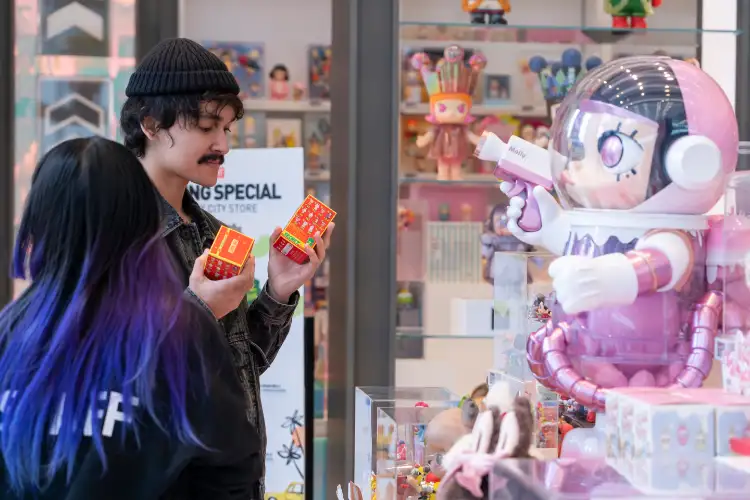
In our daily operations as a custom toy manufacturing partner, we see exactly how this market functions. A successful blind box launch requires more than a cute design.
It requires a deep understanding of manufacturing economics, strict compliance, and precision packaging. We help brands navigate these exact hurdles on the factory floor.
Reconciling Market Size and Forecast Data
Industry reports show massive discrepancies in market size. One source claims the market is worth a few hundred million dollars. Another source cites a multi-billion-dollar valuation.
This occurs because analysts look through two different lenses. The first lens counts blind box toys: physical, collectible figures in randomized packaging.
The second lens looks at the broader blind-box retail economy. This broader definition includes digital mystery boxes, randomized apparel, and generic lifestyle accessories.
Investors and brand owners must compare like-for-like definitions before trusting Compound Annual Growth Rate (CAGR) figures. If you plan to launch a physical toy line, base your financial models on physical toy data. Do not inflate your revenue projections with digital gaming statistics.
🧠 Author's Take: I constantly see new brands over-order their first production run because they read a bloated market report. Stick to toy-only data. It keeps your initial order volumes realistic and protects your cash flow.
The Engine of Demand: Why Consumers Keep Buying
The blind box model operates differently than a traditional toy sell-through model. Traditional toys rely on a single purchase. Blind boxes rely on a recurring collectible model.
Specific mechanics drive this repeat-buying behavior:
- Surprise Mechanics: The dopamine hit of unboxing creates an immediate emotional response.
- Collection Completion: Buyers want the entire set.
- Social Unboxing: Fans share unboxing videos on social media, generating free viral marketing.
- Scarcity Economics: "Secret" or "chaser" figures drive massive secondary market value.
This demand relies on premium Intellectual Property (IP). Concrete examples include Labubu, Molly, Skullpanda, Dimoo, Hirono, and Sonny Angel.
Consumers do not buy generic plastic. They buy characters they love. Original IP and licensed designs fuel the entire industry engine.
Pop Mart: The Market Bellwether
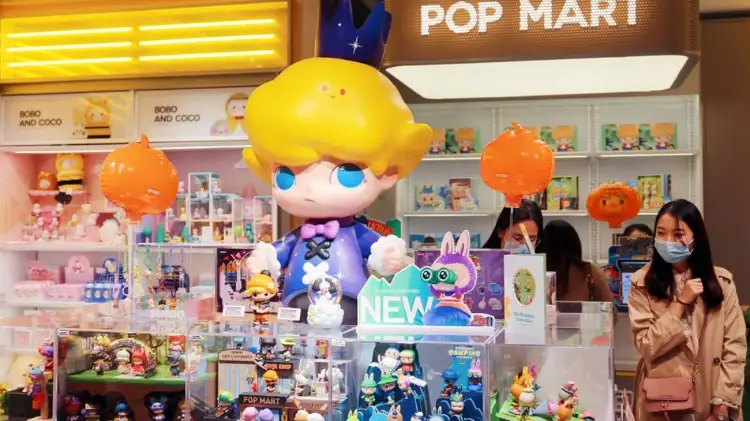
When we evaluate the viability of a new project, we look at Pop Mart as the ultimate benchmark. Their 2024-2025 scale, aggressive overseas expansion, and strong margin profile show what a category leader looks like.
Calculating true market share is difficult in this fragmented global category. Thousands of independent creators launch small batches every month.
However, Pop Mart still dictates global sentiment and valuation. They prove the strategic importance of owned artist IP.
When you own the IP, you avoid hefty licensing fees. This keeps your profit margins intact and gives you total creative control.
According to recent financial disclosures, category leaders maintain gross margins above 50%.
The "Kidult" Demographic Shift
We are no longer making toys just for children. The industry has experienced a massive shift toward kidult collectibles. Adults with disposable income now dominate the buyer demographic.
We segment this demand into four distinct groups:
- Hardcore Collectors: They buy full display cases to guarantee they get every figure.
- Casual Impulse Buyers: They grab a single box at the checkout counter.
- Gifting Buyers: They buy boxes as trendy presents for friends.
- Fandom Buyers: They only purchase boxes tied to a specific anime or gaming IP.
This adult positioning changes everything. It changes how you merchandise the product. More importantly, it changes your baseline compliance assumptions.
Regional Economics and Global Strategy
Different regions play different roles in the blind box ecosystem.
Asia-Pacific remains the core for both manufacturing and demand. The supply chain lives here. Factories in China produce the vast majority of the world's designer toys.
North America serves as a massive commercialization region. Brands leverage e-commerce, specialty retail, and comic conventions to drive high-margin sales. Our American clients often see the highest net profits per unit.
Europe represents a smaller, highly regulated market. European buyers care deeply about sustainability. To sell successfully in the EU, brands must navigate strict packaging laws and environmental scrutiny.
Factory-Level Insights: How We Actually Build Them
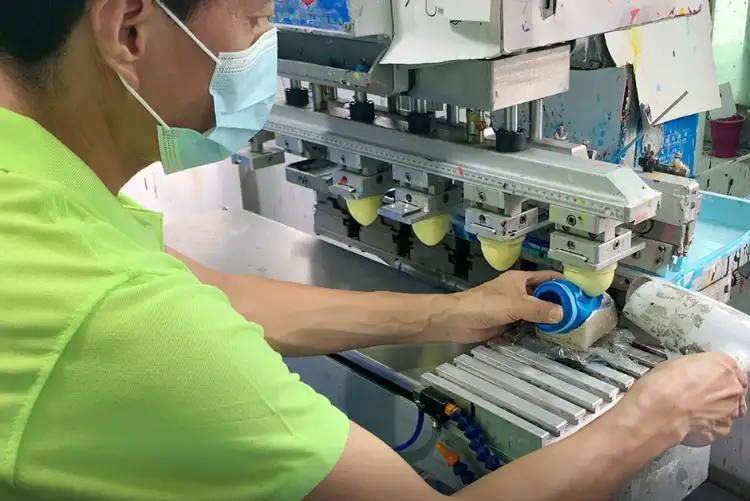
This is the reality most competitors miss. A successful blind box relies on flawless factory execution. As a premier toy ODM/OEM, we manage a very strict production chain.
The toy production process flows through nine distinct stages:
- Concept Art: You provide 2D character turnarounds.
- 3D Sculpting: Our engineers build printable 3D models.
- Prototyping: We 3D print and hand-paint a physical sample.
- Steel Mold Tooling: We cut the heavy steel injection molds.
- Color Sampling: We match Pantone colors and test paint masks.
- Mass Production: Injection molding machines press out thousands of parts.
- Foil-Bag Insertion: Workers seal the figures to prevent peeking.
- Randomized Packing: We mathematically distribute the "chaser" figures.
- Outer Carton QC: We weigh and inspect the final master cartons.
Understanding materials is critical. We primarily use Polyvinyl Chloride (PVC) and Acrylonitrile Butadiene Styrene (ABS) plastics.
PVC feels soft, captures intricate details well, and resists shattering. ABS feels rigid, holds sharp geometric edges, and provides strong mechanical joints.
PVC takes paint well, but ABS is highly cost-sensitive and molds faster. Most high-end figures use a combination of both.
Buyers must understand lead-time logic. Prototyping takes a few weeks.
Tooling takes 30 to 45 days. You cannot speed up physics.
Cutting steel takes time. We advise clients to separate these phases in their project timelines.
If you are a new creator, small Minimum Order Quantity (MOQ) test runs via custom vinyl toy manufacturing allow you to test the market without buying 10,000 units. Full retail programs require massive scale to lower the per-unit cost.
You cannot ignore toy product packaging. We engineer packaging to protect your profits.
We use tamper-evident seals and opaque inner foil bags so store employees cannot peek inside. We insert thick collector cards to prevent buyers from feeling the figure's shape. We even use weight-balancing techniques.
If one figure is lighter than the rest, we add an iron weight to its base. This stops clever buyers from bringing digital scales into retail stores to find the rare figures. We also apply anti-counterfeit holographic stickers to protect your brand identity.
🔬 The Science: During the blind box toy production process, we use precise "mold flow analysis" software. This ensures the melted PVC fills every tiny crevice of the steel mold. If the flow is wrong, the toy will have ugly sink marks or missing fingers.
Compliance, Safety, and the Regulatory Landscape
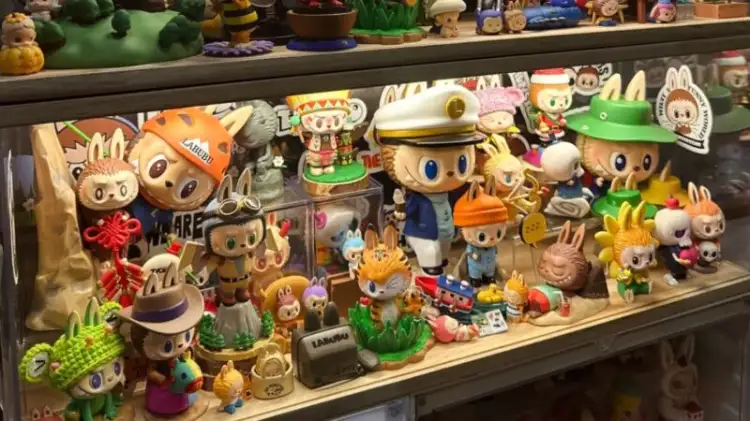
Blind boxes sit in a gray zone. They blur the lines between collectibles, children's toys, and gambling-adjacent mechanics. Regulators are paying attention.
Looking ahead to 2026, regulators in both China and the EU are discussing strict odds transparency laws. You will need to print the exact pull-rate (e.g., 1/144 chance for a secret figure) directly on the box. Minor-protection rules are also tightening to prevent children from spending excessively on randomized goods.
You must clearly distinguish adult collectible positioning from children's toy compliance obligations. If your packaging appeals to kids under 14, you must follow strict toy laws. You will need a Children's Product Certificate (CPC) in the USA.
Physical product safety matters regardless of your target age. The toy age grading guidelines dictate your testing requirements.
We test all action-figure materials and manufacturing batches. We test for small-parts choking hazards.
We run chemical tests for banned phthalates and heavy metals. Your products must pass toy safety standards like ASTM F963 for the US market and EN71 for Europe. We also implement batch traceability so you can recall a specific production run if an issue occurs.
| Compliance Standard | Primary Region | Key Testing Focus |
|---|---|---|
| ASTM F963 | North America | Mechanical hazards, heavy metals, flammability. |
| EN71 | European Union | Chemical safety, acoustic limits, physical durability. |
| GB 6675 | China | Phthalate limits, sharp edges, labeling requirements. |
(Note for screen readers: The table above outlines three major compliance standards, their primary regions, and their key testing focuses. ASTM F963 covers North America focusing on mechanical hazards and heavy metals. EN71 covers the European Union focusing on chemical safety and durability. GB 6675 covers China focusing on phthalate limits and sharp edges.)
Sustainability and Margin Tension
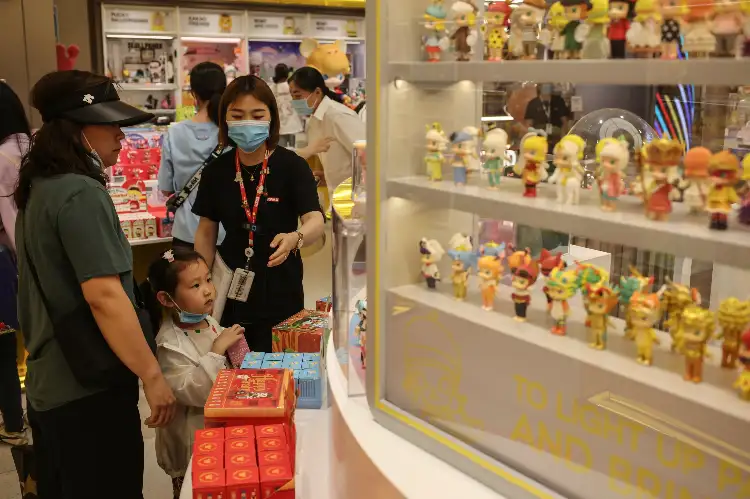
Multi-layer packaging creates immense Environmental, Social, and Governance (ESG) pressure. A single blind box contains an outer cardboard box, an inner foil bag, a plastic blister insert, and the plastic toy itself. This creates significant waste.
Retailers demand eco-friendly toy manufacturing practices. Using sustainable packaging and recycled materials improves retailer acceptance. The European Union provides clear mandates on packaging waste.
However, sustainability complicates your Cost of Goods Sold (COGS). Biodegradable bags cost more than standard foil.
Paper-pulp inserts look less premium than clear plastic blisters. You must balance your environmental goals with your unboxing aesthetics and your profit margins.
Ready to bring your blind box concept to life? Stop dealing with middlemen and talk directly to the engineers who will cut your steel molds. Contact LeelineToys today for a transparent factory evaluation, rapid 3D prototyping, and full-scale blind box manufacturing support.
Playbooks for Different Audiences
For Institutional Investors: Valuing the Market

Market Analysts: Do not mix digital gaming revenue with physical toy data.
When we review production forecasts, we see institutional buyers make false comparisons daily. They look at a $10 billion blind box toy market overview.
However, that number frequently lumps in digital video game loot boxes, randomized apparel, and generic lifestyle goods. It massively overstates the true physical toy demand.
A physical toy requires 90 days of supply chain management. Digital goods scale instantly.
I reviewed a $2 million pitch deck last month. The founder projected 40% year-over-year growth based entirely on bloated digital figures. They almost funded a doomed 50,000-unit factory run.
If you fund a physical brand, isolate the data. Track growth strictly through physical sell-through rates, community member loyalty, and direct IP monetization.
Evaluate overseas expansion purely for physical toys. Do not let digital gaming statistics inflate your physical manufacturing budget.
For Retailers: The "Kidult" Loophole Myth
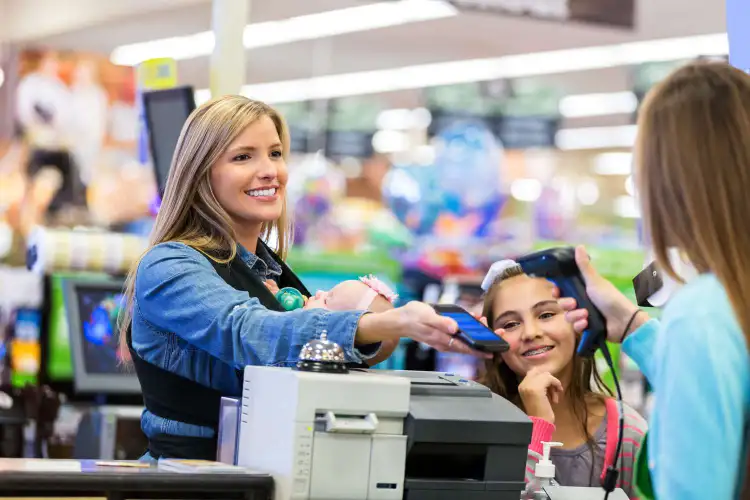
Brands Targeting Adults: You can raise your pricing, but you cannot bypass safety testing.
Our factory floor produces thousands of figures for the adult collector market. Adult buyers support higher profit margins.
They appreciate complex IP storytelling and intricate paint applications. They also demand flawless execution. If a collector buys a $200 display case, they tolerate zero duplication errors in their pull rates.
However, positioning a product for adults does not erase strict marketplace compliance. I constantly watch new B2B buyers stamp "Ages 15+" on a box and skip lab testing to save money.
This is a fatal mistake. Port authorities scan shipments for ASTM F963 compliance in the US and EN71 in Europe. If they find missing paperwork, they destroy the inventory.
⚠️ Compliance Warning: An adult-targeted design does not legally exempt a product from child safety standards. If a product looks appealing to a child, regulators classify it as a child's toy.
If you target adults, upgrade the PVC quality. But you must still run strict toy safety standards checks.
Follow the official age grading rules. You still need a valid CPC (Children's Product Certificate) to clear US customs.
For DTC Startups: Surviving the 500-Unit Test Run
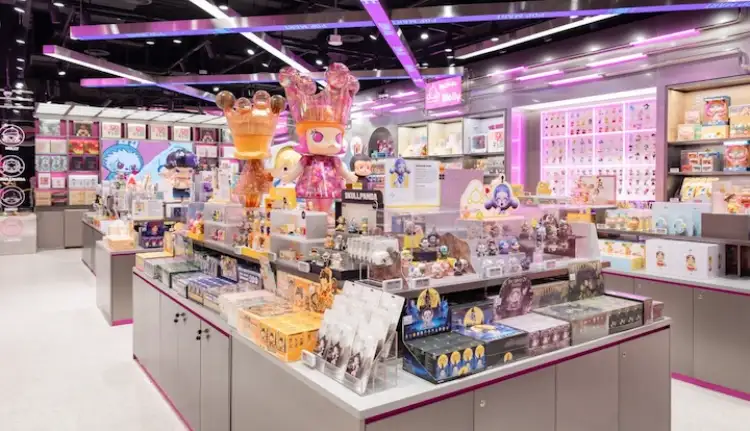
First-Time Creators: Avoid multi-character ABS/PVC injection molding on your first run.
I constantly talk direct-to-consumer startups out of designing a six-character series for a 500-unit test. We cut custom steel molds for a living.
We use CNC machines to mill these molds. This process takes 30 days and costs thousands of dollars per character. If you spread that heavy tooling cost over just 500 units, your per-toy cost becomes completely unsellable.
⚖️ Factory Verdict: We quoted a DTC startup last month. A six-character PVC series at 500 units cost them $45 per toy.
We shifted them to a single-character mold with six different paint applications. That single adjustment dropped their manufacturing cost to $9 per unit.
If you want a low minimum order quantity, simplify your concept. Use fewer character variants.
Design simpler packaging. Consider starting with plush or wood-adjacent materials instead of complex plastics.
Review our action figure materials and manufacturing specifications first. This is exactly where learning how to find a toy manufacturer who offers true OEM/ODM partnership saves your launch. A good factory engineer tells you "no" before you waste your budget.
For Global Brands: Navigating Cross-Border Rules
International Sellers: Stop using a single global packaging file.
We manufacture for cross-border e-commerce every day. Our team sees exactly where shipments fail at the border. You cannot use US-compliant boxes in the EU or China without major friction.
Regulators now demand intense consumer protection. China strictly enforces odds transparency.
You must print exact pull rates (for example, "1/144 chance") on the box to protect minors from predatory gambling mechanics. Meanwhile, the EU attacks packaging waste.
They demand sustainable materials, strict eco-labeling, and minimal plastic use. The US Consumer Product Safety Commission demands heavy metal testing and highly specific choking hazard labels.
We recently watched a brand lose $50,000 in inventory at a German port. They ignored EU packaging waste laws and used cheap, unapproved blister plastics.
If you sell globally, design for the strictest regulatory zone first. Compare US vs China toy manufacturing regulations early in your 3D design phase.
Partner with an eco-friendly toy manufacturer to meet EU sustainability demands. Standardize your blind box toy production process so your product clears the highest legal bar globally.
Stop Guessing at Factory Reality
Do you need to navigate these exact manufacturing hurdles? Do not risk your budget on middlemen or sourcing agents who guess at compliance laws. Contact the LeelineToys factory team today. We will help you plan your MOQ, select the right materials, engineer your packaging, and guarantee your compliance testing passes the first time.
People Also Ask About Blind Box Toy Market Overview
1. How big is the blind box toy market in 2026?
Around $10 billion globally for physical toys. We regularly see pitch decks claiming $30 billion, but they falsely include digital video game loot boxes. In my experience quoting mass production, the physical designer toy sector alone drives that core $10 billion.
2. Why do market reports on blind boxes disagree so much?
Because they mix digital and physical data. As I mentioned in the market data section above, analysts lump digital purchases in with physical figures. Our factory only tracks physical sell-through, which provides a grounded metric for your business plan.
2. What is Pop Mart's market share and why is it hard to calculate?
Roughly 10% to 15% of the physical market. It is hard to track because thousands of independent workshops launch unrecorded batches. To compete safely, we help clients engineer completely original body silhouettes to achieve that designer-toy aesthetic without infringing on protected IPs.
3. Are blind boxes regulated like gambling or toys?
Both, depending on your region. You must pass standard physical toy safety tests.
However, regulators now treat the surprise mechanics like gambling. We regularly print exact pull rates on client packaging to comply with strict Chinese and EU transparency laws.
4. What materials are best for a custom blind box figure: PVC, ABS, plush, or wood?
A mix of PVC and ABS is standard. We mold PVC for detailed bodies and ABS for rigid joints.
However, retailers increasingly expect sustainability. We frequently help clients transition to FSC-certified wood or plush to meet strict eco-friendly packaging and material demands.
5. What is the minimum viable MOQ for a new blind box brand?
500 units, but only with a single mold. Many factories demand 3,000.
In my experience, we accept 500-unit test launches if you use one character sculpt and just change the paint colors. Cutting multiple steel molds for a small run will destroy your margins.
Ready to skip the middlemen? Stop guessing at factory costs. Reach out to LeelineToys for direct factory consultation, rapid 3D prototyping, and retail-ready packaging development.