
Toy compliance is often treated as an afterthought, yet it triggers more business failures than poor marketing. A single missing document results in container seizures at customs or immediate delisting by Amazon's automated bots. Safety is the goal, but rigorous documentation is the gatekeeper.
This 2026 field guide gets astm f963 explained not as abstract theory, but as a mandatory operational framework for founders and procurement managers.
We distinguish the technical standard (ASTM F963) from the federal enforcement law (CPSIA). Confusing the two leads to "orphan" test reports that legally fail to support your product. We also detail the specific shifts in ASTM F963-23, mandatory as of April 20, 2024, which introduced stricter protocols for heavy metals and acoustics.
At LeelineToys, we engineer compliance into the mold design itself. We have guided hundreds of SKUs through this gauntlet.
Our engineers often fix prototype hazards, such as small parts or accessible batteries, before tooling begins. This proactive approach saves thousands in rework costs.
By the end of this post, you will understand which mechanical and chemical hazards apply to your specific product class. We provide a Children's Product Certificate (CPC) checklist aligned with 16 CFR Part 1250, factory-side design failure examples, and a vetting workflow for supplier test reports.
Here is the blueprint to ensure your documentation is as durable as your product.
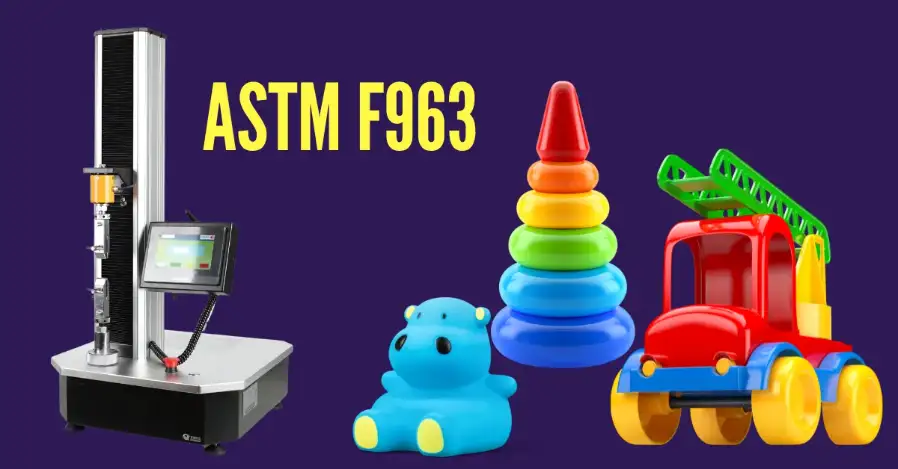
What is ASTM F963?
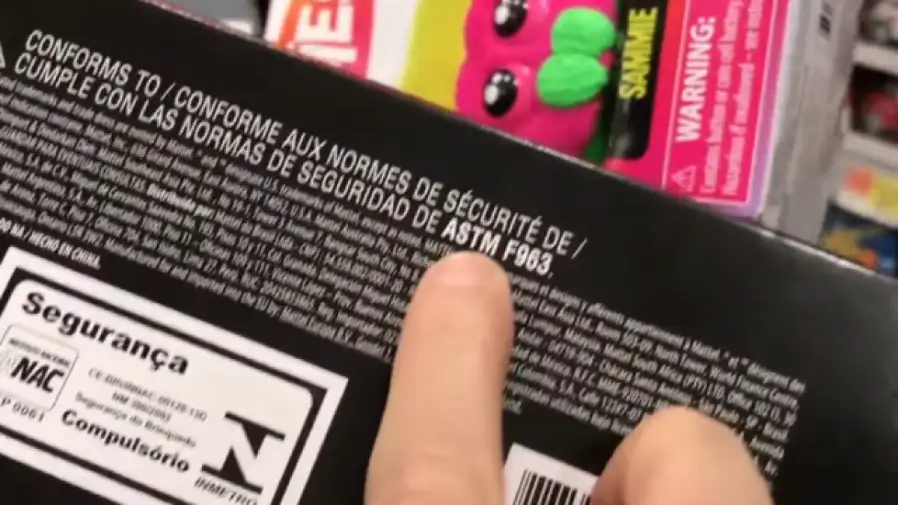
ASTM F963 explained: It is the Standard Consumer Safety Specification for Toy Safety. If a product is designed, manufactured, or marketed for play by children under 14 years of age, it must meet these technical requirements to legally enter the US market.
Think of ASTM F963 like a building code for toys. You can design a house (or action figure) however you want, but it must have a safe foundation, non-toxic paint, and secure wiring to be habitable. If a toy fails these "codes," it cannot be sold.
How it Becomes Mandatory (The Chain)
Many new importers assume "ASTM" implies voluntary compliance. That is a dangerous misconception. While ASTM International is a private organization, federal law has adopted this standard as mandatory.
Here is the compliance stack we follow for every production run:
- The Standard: ASTM publishes the safety rules (currently ASTM F963-17 or -23).
- The Law: The CPSC incorporates this edition by reference into federal regulation under 16 CFR Part 1250.
- The Proof: Under the CPSIA, you must prove your toy meets these rules by testing it at a CPSC-accepted lab.
Key Terms for Buyers
- CPSC (Consumer Product Safety Commission): The federal agency that polices the market and issues recalls.
- CPSIA: The law that mandates third-party testing for children's products.
- CPC (Children's Product Certificate): A legal document acting as your product's "passport." It declares that your Children's Product Certificate is backed by passing test results.
- Use-and-Abuse Testing: We don't just look at the toy; we simulate rough play. We drop it, twist it, and pull it to ensure it doesn't break into dangerous shards.
What ASTM F963 Covers
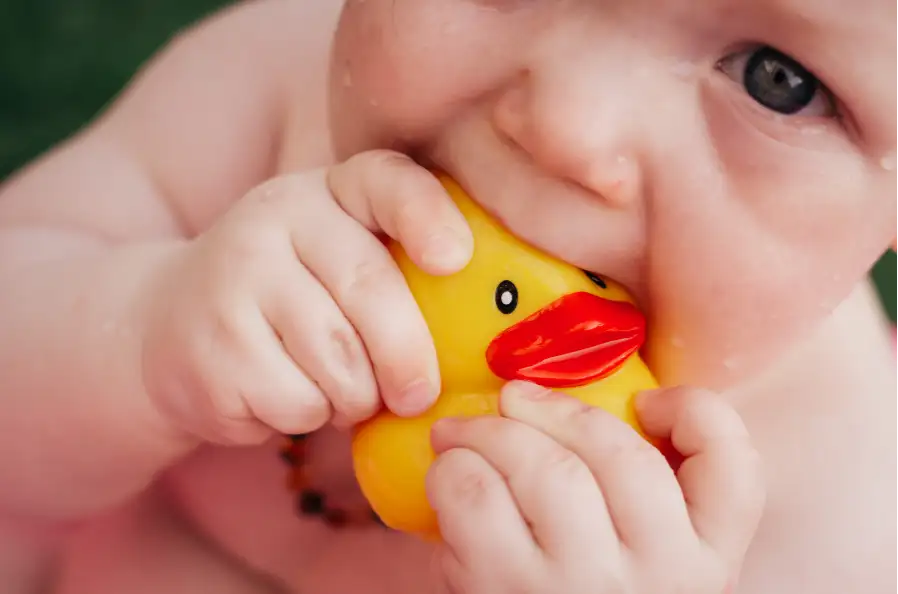
The standard is massive, but for 90% of the toys we manufacture, the focus lands on four pillars:
- Mechanical Hazards: Sharp edges, points, and small parts that pose choking risks.
- Chemical Hazards: Heavy elements (like lead) in surface coatings and substrates.
- Flammability: Testing how quickly a material burns if ignited.
- Battery Safety: Locking mechanisms to prevent battery ingestion.
Note: Correct classification is vital. Bicycles and art materials, for example, have different standards. Proper toy age grading is the first step to knowing which rules apply to you.
🌍 Real-World Context: Passing ASTM F963 isn't just about the finished unit. We often have to test the raw plastic pellets before molding begins to ensure the chemical composition is compliant from the start.
1. The Most Important Change: ASTM F963-23 Updates
As of April 20, 2024, ASTM F963-23 became the mandatory incorporated toy standard in the United States. While the general safety framework remains consistent with the 2017 version, the update enforces stricter protocols for acoustics, heavy elements, and—most aggressively—battery accessibility.
Battery Compartments: The "Common Household Tool" Requirement
The 2023 update draws a hard line on battery safety to prevent children from accessing coin or button cells, which cause severe internal burns if swallowed.
In practical engineering terms, "accessible" means a child can open the compartment using their hands or improvised objects. The new standard mandates that battery doors must require a common household tool (like a screwdriver or coin) to open.
⚙️ Technical Design Constraints:
- The Mechanism: Battery doors must not open via snap-fits, plastic tabs, or fingernail pressure.
- The Design Fix: We now advise all clients to utilize captive fasteners. These are screws engineered to remain attached to the battery door even when fully unscrewed from the housing.
- Why It Matters: If a screw falls out during a battery change, parents often lose it and tape the door shut (unsafe) or leave it open. Captive screws eliminate this human error.
2. Mechanical and Physical Properties Testing
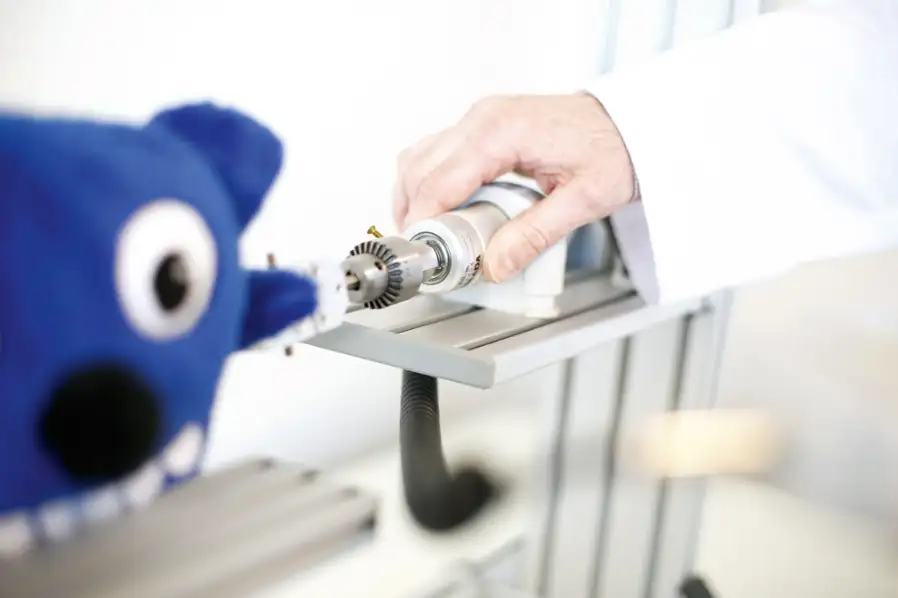
This is where the majority of prototypes fail. Labs categorize hazards not by what the toy is, but by what it does under stress. We don't just inspect the toy; we abuse it.
Small Parts (The Choking Hazard Cylinder)
We use a standardized small parts cylinder—a physical tube with a 1.25-inch diameter. If any component of a toy age-graded for under 3 years fits entirely inside this cylinder, it is a banned hazardous part.
Common triggers we see during toy production include:
- Removable wheels on model cars.
- Loose battery doors.
- Decorative noses on custom plush toys.
- "Break-away" parts that detach during impact testing.
Sharp Points and Sharp Edges
A toy might feel smooth fresh out of the mold, but ASTM requires it to stay smooth after impact. We simulate drops onto concrete. If a hard plastic casing fractures to reveal a jagged edge or a sharp internal wire, it fails.
Manufacturing Translation: We avoid brittle materials like thin-walled polystyrene. Instead, we use ABS or Polypropylene with strategic internal ribbing to absorb shock without shattering.
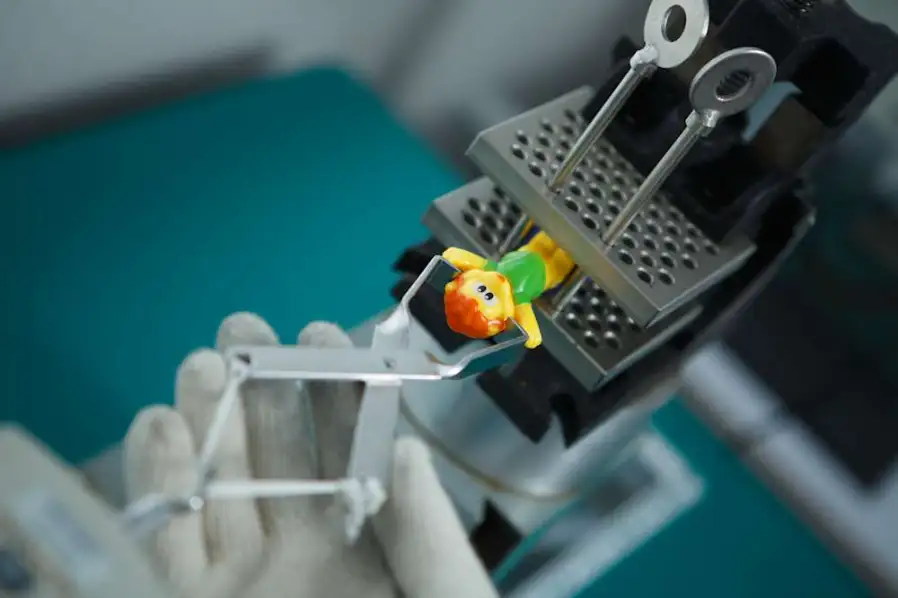
Tension and Torque Tests (The "Pull" Test)
On the LeelineToys floor, the most frequent prototype-stage failure is a decorative component pulling off during tension testing.
The lab clamps the toy's body and attaches a force gauge to any protruding part (eyes, buttons, limbs). They apply torque (twisting) and tension (pulling) up to 15 lbs depending on the age grade.
Real-World Scenario: A stitched felt badge on a plush toy rips off, fitting into the small parts cylinder. The Engineering Fix:
- Stitch Density: Switch from a simple running stitch to a reinforced lock-stitch pattern.
- Mechanical Retention: For plastic eyes, use backing washers that are larger than the fabric opening (undercut).
- Adhesion Geometry: Increase the glue surface area and add a "key" feature that physically interlocks the parts.
🧠 Expert Insight: Before opening a mold, review your Bill of Materials (BOM). If any sub-component is smaller than the small parts cylinder, it must be permanently fused or mechanically locked to pass the tension test.
3. Chemical Hazards: Heavy Elements and Soluble Migration

ASTM F963 chemistry testing is distinct from standard lead testing because it focuses on solubility.
Soluble Migration
The lab scrapes surface coatings (paints, inks) and substrates (plastic, metal). They submerge these samples in a hydrochloric acid solution that mimics human stomach acid. The goal is to measure how much arsenic, barium, cadmium, or lead would actually dissolve into the child's system if a piece were swallowed.
Lead and Phthalates (CPSIA Alignment)
While ASTM F963 covers the "solubility" of heavy metals, the CPSIA mandates strict limits on total lead content (100 ppm for substrates, 90 ppm for paints) and phthalates in plasticized parts.
Practical Mapping for Importers:
- Hard Plastics: Usually safe from phthalates, but must be tested for lead.
- Soft Plastics/Vinyl: High risk. PVC, doll heads, and electrical cable coatings often contain plasticizers that trigger phthalate failures.
Authority Source: CPSC Guidance on Phthalates (16 CFR Part 1307)
4. Flammability Standards

This test measures the rate of flame spread. Toys are not expected to be fireproof, but they must not burn rapidly (flash burn) if exposed to an ignition source.
High-Risk Categories:
- Plush/Fabrics: Fuzzy surfaces have high oxygen availability, allowing flames to race across the surface.
- Costumes: Long, trailing fabrics act as wicks.
⚠️ Critical Warning: A fabric pass in EN71 (Europe) does not automatically equal a pass in ASTM F963. The test setups differ. Never assume cross-compliance for flammability.
5. Toy Battery Safety (Beyond the Door)
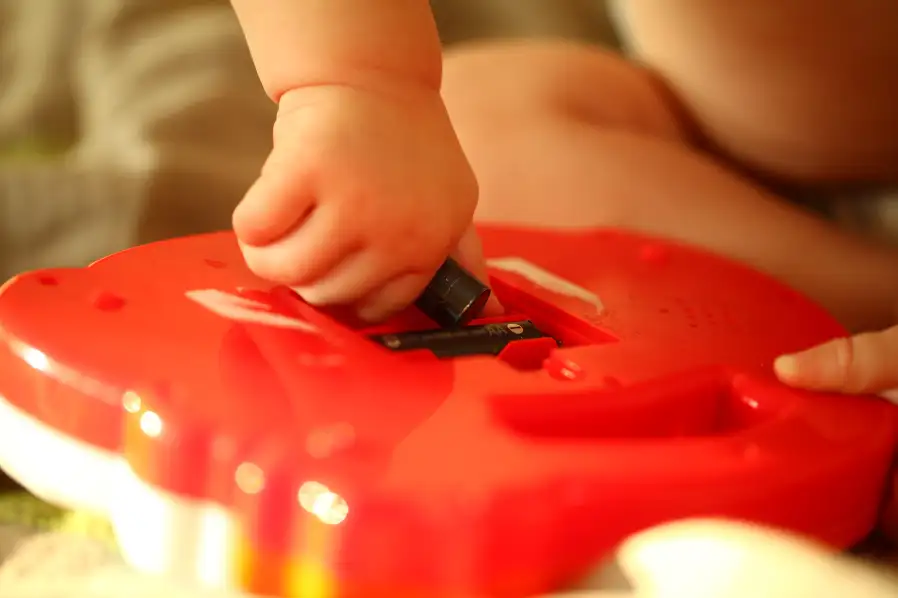
Beyond the locking door mechanism, the standard requires testing for thermal runaway. We short-circuit the battery terminals and lock the motor (stall test) to ensure the toy does not overheat or catch fire under abuse.
Design Constraints:
- Markings: The battery compartment must be clearly marked with polarity (+/-) and voltage.
- Heat Limits: Surface temperatures cannot exceed specific thresholds during the stall test.
6. Component vs. Finished Product Testing
This is your primary lever for controlling testing costs without sacrificing safety.
- Component Testing: Best for materials used across multiple SKUs. If we use the same red ABS plastic pellets for a fire truck, a race car, and a robot, we test the pellets once for chemicals.
- Finished Product Testing: Mandatory for mechanical hazards. You cannot test a "component" for sharp edges or small parts because those hazards are created during assembly (screwing, gluing, injection molding).
QA Decision Tree:
- Chemicals: Test raw materials (Component level).
- Flammability: Test finished fabrics (Material level).
- Mechanical/Physical: Must test the final assembled unit (Finished Product level).
7. Vetting "Pre-Existing" Factory Test Reports
Suppliers often send PDF test reports to prove their quality. Many are outdated or irrelevant. Use this workflow to validate a report in under five minutes:
- Check the Lab ID: Go to the CPSC website and confirm the lab is accredited.
- Verify the Scope: Does the accreditation specifically cover ASTM F963-23? Many labs are only accredited for older versions.
- Match the Sample: Does the photo in the report match your SKU exactly? Factories often reuse a "pass" report for a different but similar-looking toy.
- Check the Date: If the report predates April 2024, it likely does not cover the new battery or acoustics requirements.
Need a partner who understands these protocols? Read our guide on how to find a toy manufacturer that engineers for compliance, not just cost.
Key Benefits: Why Compliance is Your Most Profitable Asset
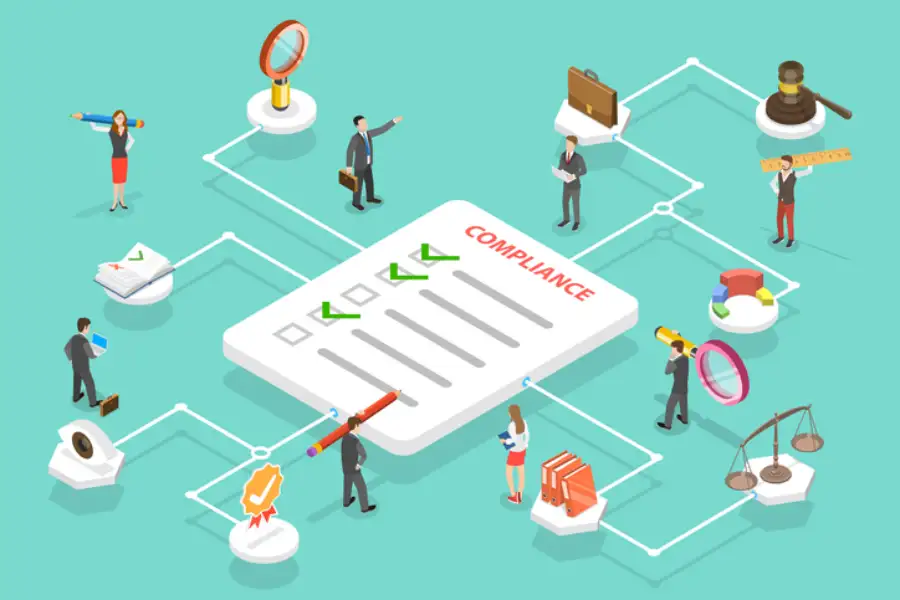
We treat ASTM F963 compliance as a revenue driver, not just a legal hurdle. In our experience manufacturing millions of units, compliant designs scale faster, reduce production waste, and protect margins from costly recalls.
Guarantees Retail Access (Amazon & Big Box)
Retailers like Target and Amazon use automated compliance bots. If your Children's Product Certificate (CPC) fails validation, your ASIN is suppressed instantly.
- The Impact: We have seen Amazon reinstate suspended listings in under 24 hours once valid test data is uploaded. Proper documentation prevents revenue pauses during peak holiday seasons.
Lowers Total Cost of Quality
Testing a finished product is the most expensive way to find a failure. We implement a "Design-to-Pass" protocol, assessing 3D-printed prototypes against small parts and sharp edge standards before cutting steel molds.
- The ROI: Catching a choking hazard on a digital prototype costs $0. Fixing it after molding 5,000 units costs over $50,000 in scrap and re-tooling fees.
Enforces Supplier Accountability
Writing "Must Pass ASTM F963-23" into your purchase order binds the factory to specific material standards. This prevents "material fade," where suppliers swap certified plastics for cheaper, non-compliant alternatives mid-production.
- The Result: You lock in material integrity. Any testing failure shifts financial liability back to the supplier, protecting your capital.
Optimizes Testing Budgets
Smart brands do not test every SKU from scratch. We utilize component certification under 16 CFR Part 1250. If five different toys use the same raw plastic, we test the base material once for heavy metals.
- The Savings: This approach reduces lab fees by 30–50% by eliminating redundant chemical testing across product families.
Benchmarking Your Budget
Use these ranges to vet quotes from third-party labs (e.g., SGS, Intertek, BV).
| Toy Category | Sample Size | Turnaround | Cost Range (USD) |
|---|---|---|---|
| Simple Plush | 3-6 Units | 5-7 Days | $250 - $450 |
| Plastic Figure | 6-12 Units | 7-10 Days | $500 - $800 |
| Electronic | 12+ Units | 10-14 Days | $900 - $1,500+ |
If you want a factory-side review of your design risks before spending money on labs, contact LeelineToys.
Challenge 1: Confusing Paperwork ≠ Compliance

A supplier saying "passed" does not mean you are compliant. We often see brands assume a raw lab report acts as a legal Children's Product Certificate (CPC).
It does not. The CPC is your sworn attestation that the finished product matches the tested sample. Customs brokers reject raw data without this specific certificate summary.
Challenge 2: Edition Risk (ASTM F963-23)
Safety standards evolve. We audited a client whose listing was suspended for citing the obsolete ASTM F963-17.
Enforcement now strictly requires ASTM F963-23. Reports must reference the exact edition currently enforced by the CPSC. You must verify the lab quote references the correct standard version before authorizing tests.
Challenge 3: Amazon Documentation Failures
Amazon's automated systems trigger rejections for minor text mismatches, putting Account Health at risk. We frequently troubleshoot three specific errors:
- Scope Gaps: The lab is ISO 17025 accredited but lacks CPSC acceptance for specific battery testing.
- Identity Mismatch: The SKU on the report (e.g., "Red-Robot-01") does not match the Amazon listing title exactly.
- Missing Clauses: Reports fail to explicitly cite battery accessibility compliance.
Challenge 4: Chemistry Re-testing Triggers

A passing test today does not guarantee compliance tomorrow. If a factory changes a paint vendor to save costs, the chemical profile shifts.
We mandate re-testing whenever a "material change" occurs. This includes new resin batches, different plasticizers, or recycled material variations.
Challenge 5: Battery Compartment Design
Battery doors are a high-risk failure point. To meet the "common household tool" requirement, screws must be captive (remain attached to the door when loosened).
Standard screws often fall out during impact testing. This causes an immediate safety failure during audit.
🛡️ The LeelineToys CPC Checklist
Use this checklist to audit your Children's Product Certificate and prevent customs seizures.
- Product ID: Full name, SKU, and photo reference (must match test report).
- Regulations: List ASTM F963-23 and 16 CFR Part 1250.
- Importer: Legal name, US address, and phone number.
- Records Contact: Person maintaining test records.
- Manufacturing: Month/Year and specific factory location (City/Country).
- Testing: Month/Year and location of testing.
- Lab Identity: Name, address, and CPSC Lab ID number.
- Traceability: Link to specific Test Report Number.
Final Verdict: Engineering Safety into the Supply Chain
Ultimately, ASTM F963 compliance is not a certificate you buy at the end of production; it is a manufacturing discipline you enforce from day one. Our experience confirms that brands who treat safety as an afterthought face the highest rates of Customs seizures and Amazon delistings.
The winning mental model is circular:
- Design: Eliminate predictable mechanical hazards (sharp points, small parts) and ensure battery compartments require a "common household tool" to open, per the strict ASTM F963-23 baseline.
- Test: Validate raw materials and finished units at a CPSC-accepted lab.
- Document: Maintain a live Children's Product Certificate (CPC) that matches the reality of your production lot.
If you are a dropshipper looking to bypass regulations, the US market is now closed to you. However, if you are a brand builder, rigorous compliance is your moat against competitors who cut corners.
Your Recommended Compliance Path:
- Step 1: Define your audience to know the rules: Toy Age Grading Guidelines.
- Step 2: Select safe materials, such as FSC-Certified Wood or Eco-Friendly Plastics.
- Step 3: Partner with a manufacturer who understands the Toy Production Process and OEM/ODM workflows.
Final Take: Do not guess if your prototype is safe. Contact LeelineToys today for a factory-side design review and compliance planning call. Let's build a product that is as safe as it is profitable.