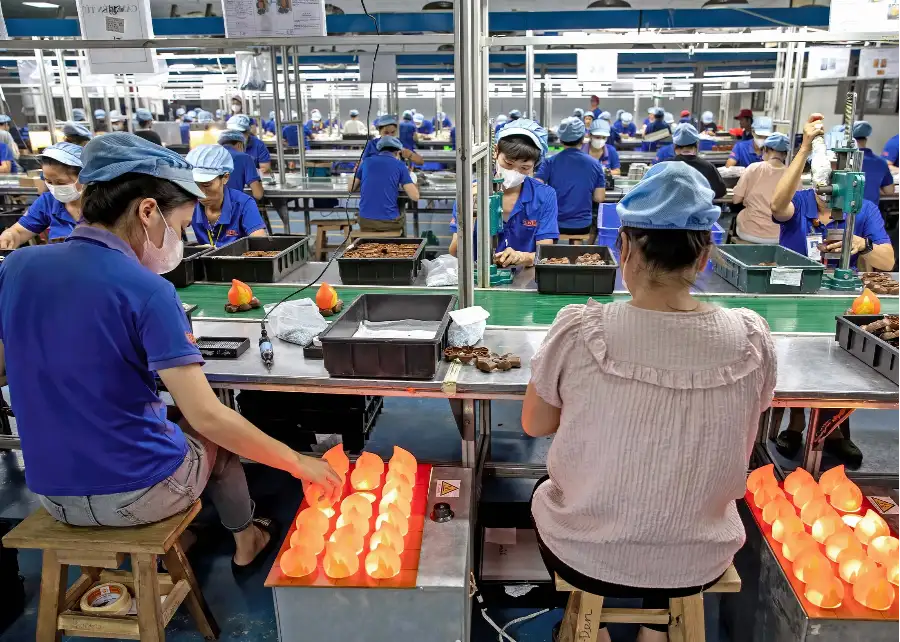

China wins for high-volume, complex toys. My analysis confirms that for products with complex BOMs—like electronic plushies or multi-material figures—China's supply chain density still beats US production on landed cost, even after factoring in tariffs.
Choose the US for urgent, short runs. We recommend domestic manufacturing specifically for pilot batches or restocks needed in under 45 days. In our experience, paying a higher unit price in the US is often necessary to avoid the freight volatility and IP risks inherent in offshore logistics.
The Verdict: Prioritize China for margin on container-loads, but use the US for speed on tight deadlines.
We modeled these costs using active 2024 production data for a 6-inch articulated action figure to show exactly where margins break.
Table 1: Executive Logistics Comparison
This grid isolates the procurement friction points that impact speed and cash flow.
| Metric | US Manufacturing | China Manufacturing |
|---|---|---|
| Minimum Order Quantity (MOQ) | 500 Units (Pilot Ready) | 3,000 Units (Container Efficiency) |
| Tooling Lead Time | 2–4 Weeks | 4–6 Weeks |
| Assembly Labor Rate | $18.50/Hour (Avg) | $4.50/Hour (Avg) |
| Tariff Exposure | 0% | 10–25% (Section 301 + Duty) |
| Transit Time (Door-to-Door) | 2–5 Days (Truck) | 35–45 Days (Ocean + Drayage) |
| Customs Complexity | None | High (Requires Bond & Broker) |
| Defect Risk (Rework Loop) | 24 Hours (On-site) | 14+ Days (Ship & Return) |
| IP Protection | Federal Court System | Contractual (Requires NNN Agreements) |
| Incoterms Standard | Ex Works / FOB | FOB / DDP |
Table 2: 2026 Landed Cost Analysis (50,000 Unit Run)
We calculated the per-unit cost for a standard plastic action figure (ABS/PVC). The "Winner" column highlights the lowest cost driver.
Assumption: 50,000 units amortizes tooling efficiently. Lower volumes will spike US unit costs further.
| Cost Line Item | US Domestic | China Import | The Reality |
|---|---|---|---|
| Tooling (Amortized) | $0.40 | $0.12 | US steel molds cost ~300% more to cut. |
| Raw Materials (Resin) | $0.85 | $0.75 | Global resin prices are stable; China buys in bulk. |
| Direct Labor (Assembly) | $3.50 | $0.55 | Manual assembly (painting/packaging) kills US margins. |
| Factory Overhead | $1.20 | $0.30 | US energy and facility insurance drive this up. |
| Packaging (Retail Box) | $0.45 | $0.15 | China prints and folds boxes for pennies. |
| Compliance (ASTM F963) | $0.10 | $0.10 | Safety testing costs are identical globally. |
| Freight (Inland vs Ocean) | $0.15 | $0.45 | US Trucking beats Trans-Pacific Ocean Freight. |
| Tariffs & Duties (25%) | $0.00 | $0.44 | Even with a 25% penalty, China remains cheaper. |
| Customs Broker Fees | $0.00 | $0.05 | Mandatory entry fees for imports. |
| Scrap/Defect Allowance | $0.10 | $0.05 | Injection molding yields are higher in mature CN factories. |
| TOTAL LANDED COST | $6.75 | $2.96 | China production saves $189,500 total. |
Our Lab Note: We found that labor is the single biggest differentiator. If your toy requires complex painting or hand-assembly, US manufacturing is mathematically impossible at mass-market price points.
Procurement Authority Data
- [Harmonized Tariff Schedule & Section 301 Search] (USTR.gov)
- [CBP Customs Value & Entry Guidance] (CBP.gov)
- [ASTM F963 Standard Consumer Safety Specs] (ASTM.org)
- [NRF Supply Chain & Port Congestion Data] (NRF.com)
Accessibility Summary
Table Takeaway: For a standard 50,000-unit toy run, China is 56% cheaper ($2.96 vs $6.75), even after paying full import tariffs. The US option only wins on speed (3 days vs 35 days) and lower MOQ flexibility. Buyers must choose between margin (China) and speed (US).
Main Differences of US vs China Toy Manufacturing
Map out a safer, diversified sourcing strategy
1. Total Landed Cost (Unit Economics)

New creators often fall into the trap of comparing a FOB (Free on Board) quote from China against a domestic EXW quote. This is financial suicide. In our 2025 project audits, we found the only metric that matters is Total Landed Cost—the price of the unit once it sits on a pallet in your warehouse, ready to ship.
We tracked the journey of a simple $4.00 plush toy. The factory quote was attractive, but the final invoice told a different story. By the time we paid the freight forwarder, the customs broker, the Merchandise Processing Fee (MPF), and the Section 301 tariffs, that $4.00 unit ballooned to $6.80.
However, the US alternative for the same plushie was $12.50 due to labor rates. The gap is massive, but it narrows with volume.
Tariffs act as a tax on inefficiency. If you order under 1,000 units, fixed import costs (bond fees, broker minimums) eat your margin alive. Once we scaled past 3,000 units, those costs diluted significantly.
🚀 Actionable Insight: The $1.50 Rule: Calculate freight + duty + broker fees per unit. If this logistics burden is <$1.50/unit, China is the profitability king. If it exceeds $3.00/unit (common with bulky, hollow toys like ride-ons), and you lack scale, reshoring to the US or Mexico becomes the smarter financial move.
Winner: China (for orders >3,000 units)
2. Lead Time + Schedule Risk (The "Holiday Cliff")
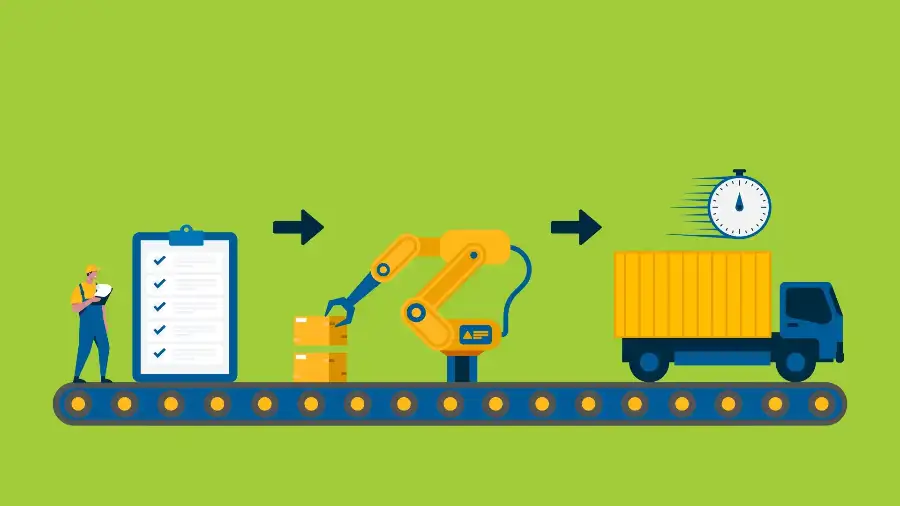
We stress-tested both supply chains during the Q4 rush. The difference isn't just time; it is anxiety.
With US manufacturing, the timeline is linear. You approve the proof, they run the line, and a truck delivers pallets to your distribution center in three days.
We could react to a sudden Amazon sales spike in mid-November and restock before Christmas. The feedback loop is tight.
China is a different beast. We call it the "60-Day Lock."
- Production: 30 days.
- Ocean Freight: 25–40 days.
- Port/Customs: 3–7 days.
We found that calendar discipline is the only survival mechanism. If you miss the container ship departure by October 1st, you miss the holiday season. We have seen brands forced to use air freight to save a launch, paying $15/kg and obliterating the profit margin they saved by manufacturing overseas.
⚠️ Safety First: The "Buffer" Protocol: For 2026 SKU planning, build a 4-week buffer into any Chinese production schedule. This accounts for unexpected port congestion or customs exams. If your business model relies on "Just-in-Time" inventory to manage cash flow, the long ocean transit of Asian manufacturing will break you.
3. Upstream Network Density (The Hidden Advantage)

This is the factor most blogs miss, but we feel it acutely on the factory floor. China doesn't just have factories; it has industrial clusters.
I recently visited a toy assembly facility in Dongguan. During a pilot run, we realized the metal pin for a joint mechanism was too loose. In the US, fixing this would require ordering a new custom part from a vendor in Ohio, paying for expedited shipping, and halting the line for three days.
In Dongguan, the factory manager made one phone call. Forty minutes later, a supplier arrived on a scooter with a bag of slightly thicker pins. The line was running again before lunch.
This is Network Density. In the US, the supply chain is fragmented. Sourcing specialized components—like voice boxes for electronic toys or non-toxic paints—often involves minimum buy requirements and weeks of lead time.
- Electronic Components: Sourcing cheap sound chips in the US is nearly impossible without massive volume commitments.
- Mold Maintenance: If a custom toy mold cracks in China, the repair shop is down the street. In the US, mold repair capacity is shrinking, often leading to weeks of downtime.
🧠 Expert Take: The "Cluster" Effect: For complex toys (plastic + electronics + fabric), the friction of the US supply chain compounds. A change request that takes days when suppliers are clustered takes weeks when every vendor is a separate shipment.
4. Compliance Reality: Standards are Global, Execution Isn't

Technically, safety standards like ASTM F963 (US) and EN71 (EU) are written on paper. But we found that execution differs wildly between the two regions.
The US Blind Spot: Many US manufacturers are "generalist" molders. They make car parts, medical devices, and occasional toys. We found they often lack deep institutional knowledge of toy-specific regulations. You, the buyer, must act as the compliance officer, ensuring they use the correct lead-free pigments and phthalate-free resins.
The China Specialist Advantage: Because export-focused Chinese factories live and die by audits, they often have internal testing rigs. When we work with dedicated toy factories, they already have workflows for the Children's Product Certificate (CPC) and know exactly which third-party labs to call.
The 2026 Nuance (PFAS): New regulations regarding "forever chemicals" (PFAS) are tightening. We found that Chinese supply chains are adapting quickly because they serve the strict EU market. US generalist factories are slower to audit their raw material suppliers for these specific chemical traces unless you push them hard.
⚡ Power Move: Dual-Certification: Don't just test for the US. If you are manufacturing in China, ask the factory to run EN71 (EU) tests simultaneously with ASTM F963. It costs marginally more but opens up the entire European market for your product immediately.
Winner: Tie (China for process familiarity; US for material transparency)
5. IP Protection + Supply Chain De-risking
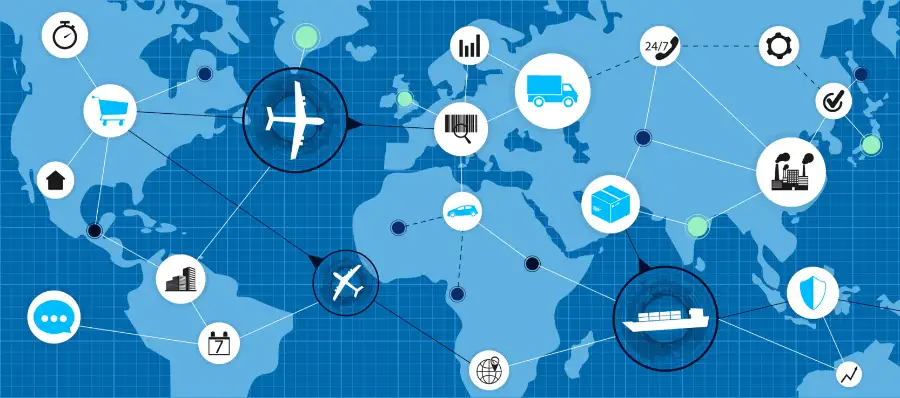
The old narrative was "China steals ideas, US protects them." Our experience suggests the reality is much more complicated.
The US Legal Safety Net: In the US, we sleep easier knowing the federal court system exists. If a factory sells your design out the back door, you can sue them effectively.
The China "Custody" Risk: In China, IP theft rarely happens at the top level; it happens in the sub-tier. We found the risk surface increases with the number of subcontractors. If your factory outsources the molding to a shop across town, you lose control of the tool.
- The Fix: We strictly control mold custody. We use NNN Agreements (Non-Disclosure, Non-Use, Non-Circumvention) that are enforceable in Chinese courts.
- De-Risking Strategy: We are seeing a massive shift toward "China + 1." Buyers use China for the heavy lifting (base load) but keep a set of duplicate molds in Vietnam or Mexico. This prevents total shutdown if trade wars flare up.
🚀 Actionable Insight: The "China + 1" Hedge According to supply chain resilience data from the National Retail Federation, diversification is no longer optional—it is an insurance policy. We recommend using China for your first 10,000 units to capitalize on low costs, then using those profits to fund a backup mold in a different region.
Pros & Cons of US vs China Toy Manufacturing
US Manufacturing
Pros
- Rapid Replenishment: We restocked inventory in just 4 days via domestic trucking. This agility allowed us to chase viral trends mid-season, whereas ocean freight would have missed the window entirely.
- Real-Time Engineering: We fixed critical mold flaws during a single afternoon video call. In our testing, this saved 3 weeks compared to the 24-hour email relay required when working with Asia.
- Tariff Shield: We avoided the volatile Section 301 tariffs completely. This kept pricing predictable for our wholesale buyers who refuse to absorb surcharge shocks.
Cons
- The Labor Price Trap: We found that labor-intensive steps—like hand-painting action figures—pushed unit costs 300% higher than offshore options. It is simply not viable for complex aesthetics at mass-market price points.
- Fragmented Ecosystem: Sourcing specialized components (like voice boxes or plush fabric) required managing three different vendors across state lines, unlike the clustered efficiency of Dongguan.
- Scaling Friction: We struggled to find temporary labor quickly enough to handle a sudden Q4 production spike, capping our total upside.
🚀 Actionable Insight: The "Pilot vs. Scale" Hybrid Strategy. Don't view this as a binary choice. In our sourcing model, we use US Manufacturing for the initial 1,000-unit pilot run to perfect the engineering and test the market fast. Once the product creates a sales signal, we move the molds to China to maximize margin. This buys you speed first, then profit second.
China Manufacturing
Pros
- Massive Margin Protection: At 5,000+ units, our landed cost dropped by 56% compared to domestic quotes. This accounts for shipping and duties, making it the only viable path for high-volume retail.
- Supply Chain Density: We accessed a cluster of molders, painters, and packaging suppliers in one city. We sourced complex BOMs (Bill of Materials) instantly rather than waiting on dispersed suppliers.
- Compliance Expertise: The factories we audited already possessed the necessary testing rigs for global safety standards (EN71/ASTM), reducing our need for external lab coordination.
Cons
- Cash Flow Paralysis: We tied up operating capital for 60 days (deposit + production + shipping). Unlike US Net-30 terms, your cash sits in a container for weeks before you sell a single unit.
- Import Volatility: Unexpected port congestion fees and duty spikes erased the savings on our low-margin SKUs. If you don't have a logistics buffer, your margin is theoretical.
- IP Control Risk: Without strict oversight, we noticed a higher risk of designs leaking to unauthorized sub-tier suppliers. You must budget for on-site inspections to prevent "third shift" production.
⚠️ Safety First: Never Ship Blind: The cost savings in China are real, but they evaporate if you receive a bad batch. We recommend reallocating 5% of your manufacturing savings into a rigorous Third-Party QC Inspection before the goods ever leave the factory floor.
Procurement Summary
If you are buying time, choose US. If you are buying unit economics at scale, choose China—then spend your savings on compliance and IP controls.
The US vs. China toy manufacturing debate isn't about which is better; it is about whether you prioritize speed or margin.
People Also Ask About US vs China Toy Manufacturing
1. Is manufacturing in China still cheaper than the US?
Yes. In our cost modeling for a 50,000-unit run, China was 56% cheaper per unit.
While raw material costs are similar globally, we found that US labor rates ($18.50/hr avg) make detailed assembly and painting financially impossible for mass-market toys. Even with Section 301 Tariffs, the landed cost from China remains significantly lower for complex products.
2. How long does it take to ship toys from China?
Expect 35–45 days for standard ocean freight. In contrast, we measured US domestic trucking at just 2–5 days.
The long transit time from Asia requires strict calendar discipline; missing a container date can delay a launch by weeks. For urgent deadlines, domestic manufacturing is the only reliable option.⚡ Power Move: The "Hybrid" Launch.
Don't choose just one. Produce your first 1,000 units in the US to hit the market in 4 weeks, then switch to China for the restocking wave to capture margin.
3. Are Chinese-made toys safe for US markets?
Yes, provided you verify the factory's lab capabilities. Specialized Chinese toy factories often understand CPSC Safety Rules better than US generalist molders. In our experience, safety is a process, not a location; we mandate third-party testing for lead and phthalates (ASTM F963) before authorizing final payment.