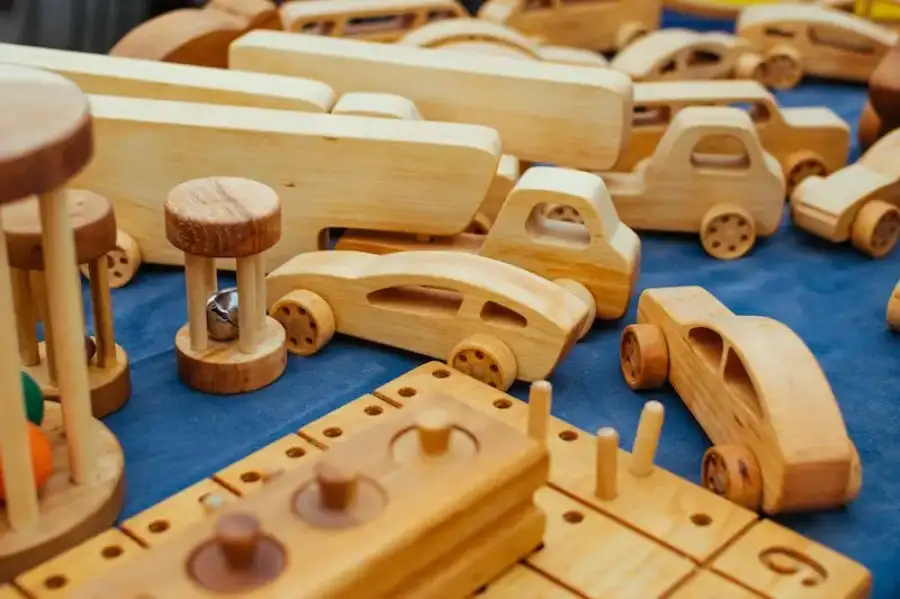

Two wooden stackers sit on a shelf. They appear identical, yet only one can legally carry the Forest Stewardship Council logo. FSC certified wooden toys are products tracked through a verified Chain of Custody to ensure the timber comes from responsibly managed forests rather than illegal logging operations.
For parents, this certification offers a verifiable promise of eco-friendly play. For manufacturers, it demands rigorous transparency.
You cannot simply purchase "sustainable" wood and apply the logo. The documentation must prove the wood traveled through a certified supply chain without contamination.
We explain this process using FSC International's Chain of Custody standards and our own macro photography of beechwood grain. It is vital to note that environmental sourcing does not replace mechanical safety testing.
If you are building an FSC-ready toy line, you must align your materials and documentation early. Here is how to navigate the certification mechanics, verification methods, and safety realities.
What are FSC Certified Wooden Toys?
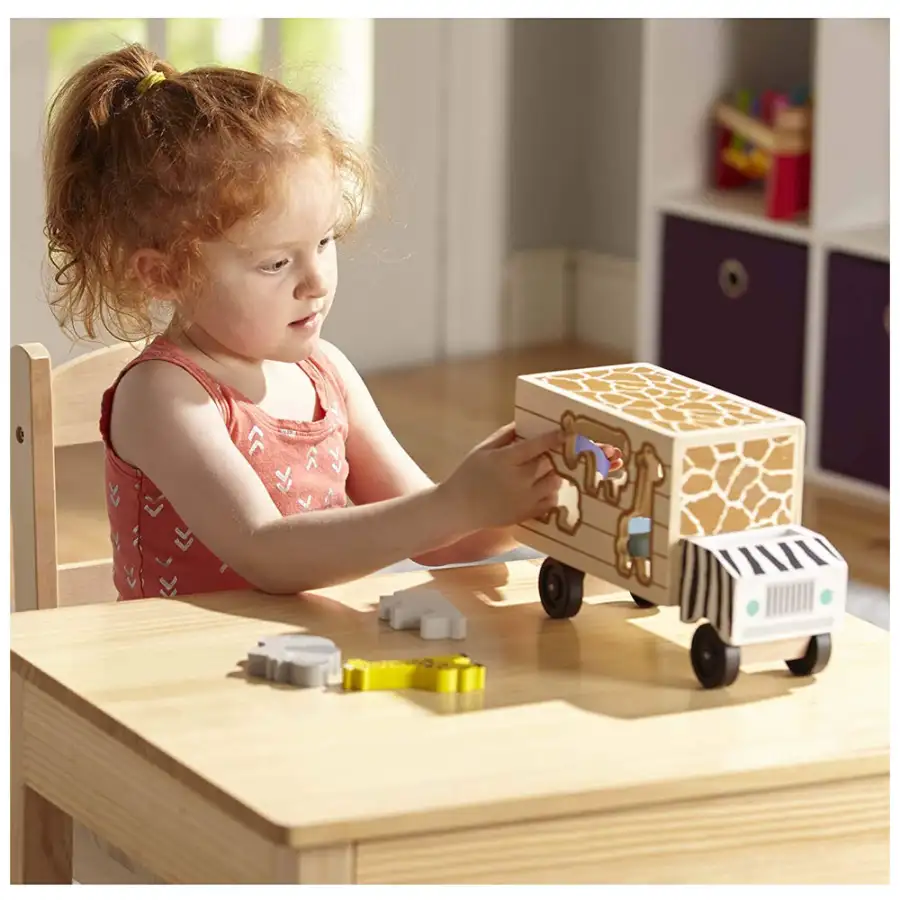
FSC certified wooden toys are playthings verified by the Forest Stewardship Council to originate from responsibly managed forests. Unlike generic timber products, these toys undergo a rigorous "Chain of Custody" audit, ensuring that the material is tracked from the specific logging site to the final retail box to prevent illegal deforestation.
However, buyers must distinguish environmental sourcing from product safety. FSC certification confirms the wood represents sustainable wooden toys, but it is not a "non-toxic" or "organic" certification. Chemical safety is verified through separate lab tests (like ASTM F963), though ethical toy brands usually mandate both to ensure total compliance.
Decoding the Label
To verify a claim, look for the "tick tree" logo and the specific license code (e.g., FSC® C######) on the packaging. This code links the product directly to the manufacturer's audit records. The label itself will fall into one of three categories defined by FSC International:
- FSC 100%: All timber comes strictly from FSC-certified forests.
- FSC Recycled: Made entirely from reclaimed materials.
- FSC Mix: A combination of certified wood, recycled content, and controlled wood.
Why Retailers Prioritize It
Beyond the environmental impact, this certification acts as a proxy for manufacturing quality. Sustainable forestry toys typically utilize solid hardwoods like beech or maple rather than cheap composite plywood. This results in plastic-free toys that are physically durable and highly marketable to parents seeking eco-friendly playthings.
Validating these certificates is the first step in how to find a toy manufacturer capable of genuine supply chain transparency.
💡 Key Insight: An FSC label proves the wood's origin, but always request a separate heavy metal and phthalate report to ensure the paint and finish are safe for children.
Core Concepts: How FSC Certification Actually Works
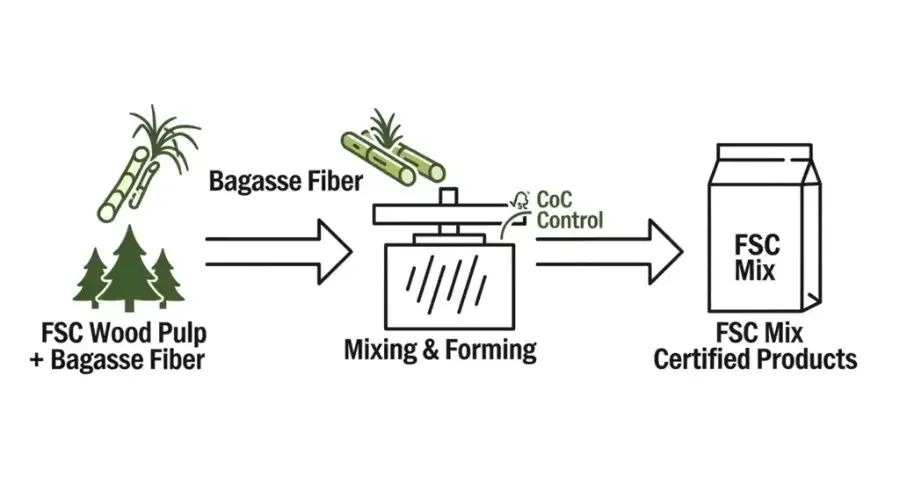
To understand FSC certification, view it not as a mere eco-label, but as a strict Ledger System. The value resides less in the wood's chemical composition and more in the Chain of Custody (CoC) that tracks the material's movement.
Think of the system as a digital passport for timber. Every time ownership changes (Forest \rightarrow Sawmill \rightarrow Factory \rightarrow Brand), the transaction is logged. If one link in this supply chain lacks certification, the passport becomes void.
1. The Three FSC Claims
The FSC standard (FSC-STD-40-004) categorizes wood outputs into three distinct claims. Understanding the input mechanism for each is vital for balancing premium positioning against supply constraints.
- FSC 100% (The Virgin Standard)
- The Mechanism: 100% of the wood fiber originates from FSC-certified forests. No mixing occurs.
- Toy Application: Best suited for premium "hero SKUs" like unpainted maple teethers. It signals zero compromise.
- FSC Mix (The Scalable Standard)
- The Mechanism: Manufacturers blend FSC-certified wood with Controlled Wood (material verified to avoid illegal logging) or recycled inputs.
- Toy Application: The industry standard for mass-market items like painted blocks, where sourcing 100% certified volume is logistically difficult.
- FSC Recycled (The Circular Standard)
- The Mechanism: The product utilizes 100% reclaimed material (post-consumer or pre-consumer).
- Toy Application: Frequently used for game boards or packaging to lower the carbon footprint.
2. The Mechanism: Chain of Custody (CoC)
The most critical failure point in sourcing occurs here. Chain of Custody is the traceability protocol that keeps certified material identifiable through every change of legal ownership.
The Broken Chain Rule: A brand cannot simply buy FSC-certified lumber and hand it to a non-certified factory.
- The Logic: If the factory cutting the toy does not hold a valid CoC certificate, the chain breaks.
- The Consequence: You cannot print the FSC logo on the box, even if the raw wood was certified.
Operational Scenarios:
- Broken Link: Brand buys certified wood $\rightarrow$ Non-certified factory processes it $\rightarrow$ No Logo Permitted.
- Valid Chain: Brand hires an Eco-friendly Toy Manufacturer with valid CoC $\rightarrow$ Factory sources/processes certified wood $\rightarrow$ Logo Permitted.
- Process Failure: Certified factory processes a run using non-certified wood (due to lack of specification) $\rightarrow$ No Logo Permitted.
🧠 Expert Insight: Mixed production lines require strict segregation. Factories must physically separate certified bundles from non-certified lumber to prevent cross-contamination of the SKU.
3. Documentation: The Paper Trail
To ensure your investment is legally recognized, the documentation must be audit-ready. The physical product is secondary to the data accompanying it.
The Buyer's Checklist:
- Valid FSC License Code: Look for the format FSC-C######.
- Product Group Scope: The certificate must explicitly list "Toys" or "Wood Products." A factory certified only for paper packaging cannot certify wooden puzzles.
- Invoice Claims: The commercial invoice acts as the final gatekeeper. If the line item does not read "FSC 100%" or "FSC Mix," the goods are legally non-certified.
4. Verification: The Public Database
Trust is insufficient; database verification is required. The FSC maintains a public registry to validate supplier claims in real-time.
The Verification Process:
- Identify the License Code on the supplier's certificate.
- Input the code into the FSC Public Search Database.
- Verify the Certificate Status. It must read "Valid." If it reads "Suspended" or "Terminated," any products from that factory are non-compliant.
5. Safety vs. Sustainability (Parallel Logic)
It is a dangerous error to conflate "Sustainable" with "Non-Toxic." These are parallel compliance tracks that do not intersect.
- FSC Certification: Verifies the wood is not from an endangered rainforest.
- Safety Standards (ASTM/EN71): Verify the wood/paint does not contain lead, heavy metals, or small parts.
A wooden toy can be FSC 100% (sustainable) yet fail safety tests due to toxic varnish or choking hazards. Sourcing requires a dual-track approach: maintaining CoC for environmental claims while simultaneously submitting samples for CPSC Children's Product Certification or EU EN 71 Safety Standards.
Sourcing Resources for Product Lines:
- Wooden Toy Manufacturers in China
- Wooden Toy Manufacturers in USA
- Wooden Toy Manufacturers in Europe
- Wooden Toy Manufacturers in UK
- German Wooden Toy Manufacturers
The Strategic Value of Sourcing FSC Certified Wooden Toys
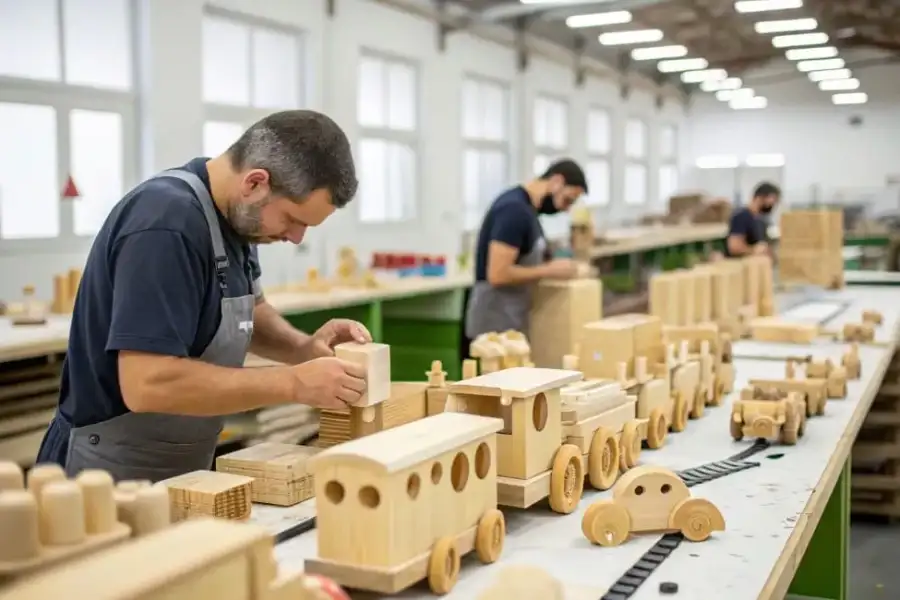
For brands, sourcing fsc certified wooden toys transforms sustainability from a marketing buzzword into a verifiable competitive asset. It provides immediate proof of compliance and operational maturity.
Validates Brand Integrity Instantly
"Sustainably sourced" is a vague claim that invites scrutiny. FSC certification provides a verifiable audit trail from forest to factory, mitigating legal risks under strict import regulations (like the EUDR). This transparency converts high-intent buyers: 80% of global consumers trust third-party certification over brand promises alone.
Anchors a Verified Plastic-Free Narrative
Certification creates the foundation for a credible plastic-free portfolio. Beyond the timber, the FSC Chain of Custody (CoC) standard pushes manufacturers to validate that associated materials meet safety standards. This documentation is critical for securing shelf space with major retailers who require "clean" supply chain evidence for their "Eco-Friendly" categories.
Enforces Supply Chain Discipline
Implementing FSC standards forces upstream efficiency. To maintain a valid CoC, a factory must possess robust tracking systems and segmented inventory.
This eliminates "job shop" disorganization. Suppliers who pass annual FSC audits demonstrate operational maturity, significantly reducing the risk of production delays or quality fade.
🌍 Global Impact: Deforestation accounts for nearly 11% of carbon emissions. Sourcing responsible timber is the only hedge against depleting raw material stocks.
- Resource Data: FAO State of the World's Forests
- Standards Overview: FSC Impact Reporting
🚀 Strategic Insight: Certification affects your BOM (Bill of Materials) costs and lead times. Align your sourcing strategy before tooling begins. Contact our engineering team to validate your material specs early.
Challenges & Limitations: The Compliance Reality
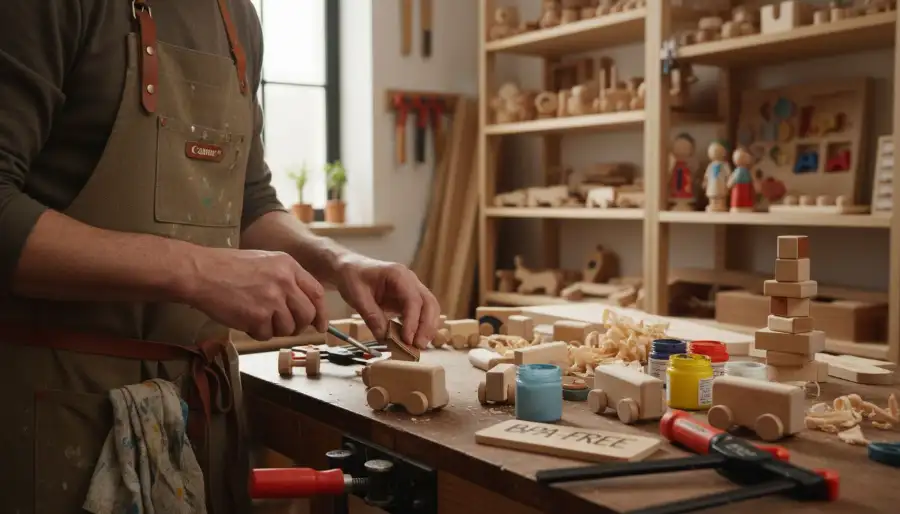
Sourcing fsc certified wooden toys requires balancing sustainability goals against strict compliance architectures and cost realities. Certification validates the forest origin, but it does not absolve the buyer of safety testing or legal due diligence.
FSC is a forestry standard, not a safety certification
A frequent procurement error is assuming the FSC logo implies chemical safety or suitability for toddlers. FSC audits forest management, not product toxicity. A certified toy can still fail heavy metal testing or possess physical hazards.
- Chemical Safety: "Non-toxic" claims must be validated through Toy Safety Standards (such as EN71-3 or ASTM F963).
- Design Compliance: Physical safety relies on adherence to Toy Age Grading Guidelines, not wood sourcing.
- Documentation: US markets require a Children's Product Certificate regardless of the wood's ecological status.
Chain of Custody (CoC) gaps create legal liability
The FSC Chain of Custody is fragile. If a factory's certificate is suspended, expired, or lacks the specific scope for wooden toys, applying the FSC logo constitutes trademark infringement. Common failures occur when documentation does not match the specific SKU or material batch.
🛡️ Mitigation: Verify your supplier's status in the public FSC database before production. Include a contract clause requiring valid certification maintenance throughout the manufacturing run.
Cost premiums and lead time variability
Certified timber introduces supply chain friction. Buyers should anticipate a 15–20% increase in raw material costs compared to non-certified wood. Additionally, availability fluctuates based on species (e.g., beech vs. rubberwood) and seasonality, potentially extending lead times by 2–4 weeks.
⚖️ The Trade-off: Request quote variants for FSC 100%, FSC Mix, and non-certified equivalents to calculate the precise margin impact before finalizing the order.
Regulatory risks of "Greenwashing" copy
Marketing terms like "Organic Wood" are technically inaccurate and may flag regulatory bodies like the FTC. Wood is not certified "organic" under agricultural standards. Accurate product copy must specify "FSC-certified sourcing" rather than using unregulated eco-buzzwords.
⚠️ Cross-Category Note: Certification does not cover mixed materials. If your product includes fabric elements, refer to Plush Toy Manufacturers in China for textile compliance standards.
Conclusion: Securing Trust Through Transparency
Ultimately, FSC certification represents a verifiable chain of trust. It validates responsible sourcing and traceability, ensuring your wooden toys support forests rather than deplete them. However, brands must remember the critical distinction: the logo certifies the forest management, not automatic chemical safety.
To leverage this asset effectively, you must navigate the specific claims—FSC 100%, Mix, or Recycled—and enforce a strict Chain of Custody. If your manufacturing partner lacks a valid certificate, the chain is broken, and the logo cannot legally appear on your toy packaging.
Final Buyer Action Steps
To move from concept to compliant production:
- Verify the Certificate: validation in the FSC global database is non-negotiable before paying deposits.
- Align Documentation: Request forestry audits alongside your standard toy safety reports (EN71/ASTM) to ensure total compliance.
- Prioritize Durability: Select verified hardwoods like beech or maple to match the material's longevity with its sustainability promise.
Ready to secure your supply chain? Contact our engineering team to validate your materials and begin production with full transparency.