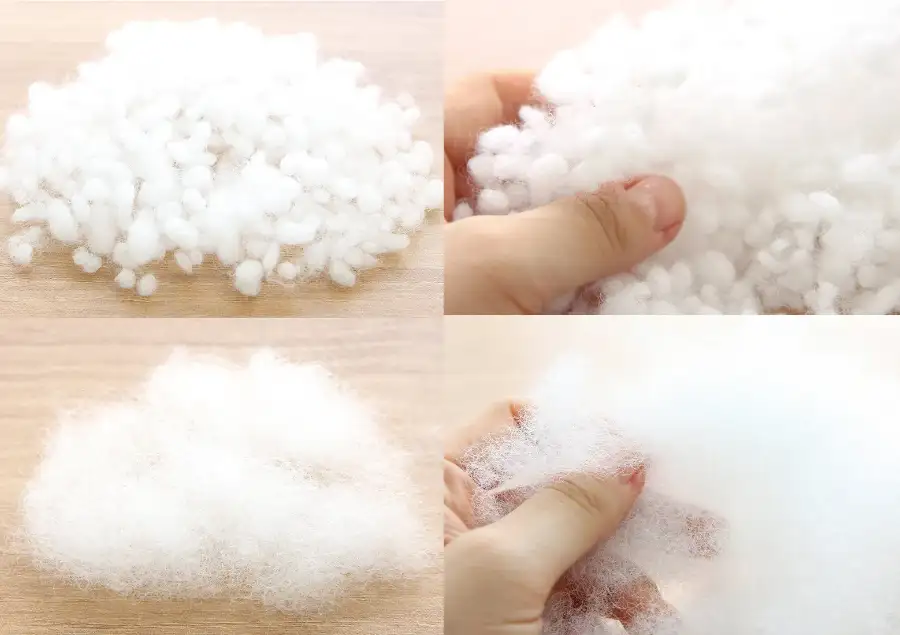

Meeting toy safety standards starts inside your product. On the factory floor, I often see brands blindly request generic "PP cotton." They inevitably face crushed freight shipments and failed ASTM F963 compliance audits.
Choosing specific types of toy stuffing is a strict commercial decision. Softness is not enough.
You also need rapid recovery, certification readiness, and hazard control. We tested the core materials to prevent costly bottlenecks. We score each on feel, shape retention, safety fit, and our baseline Squish Test.
6 Types of Toy Stuffing
Use this guide to choose with confidence.
1. Polyester Fiberfill: The Best Overall Stuffing for Scalable Plush Production
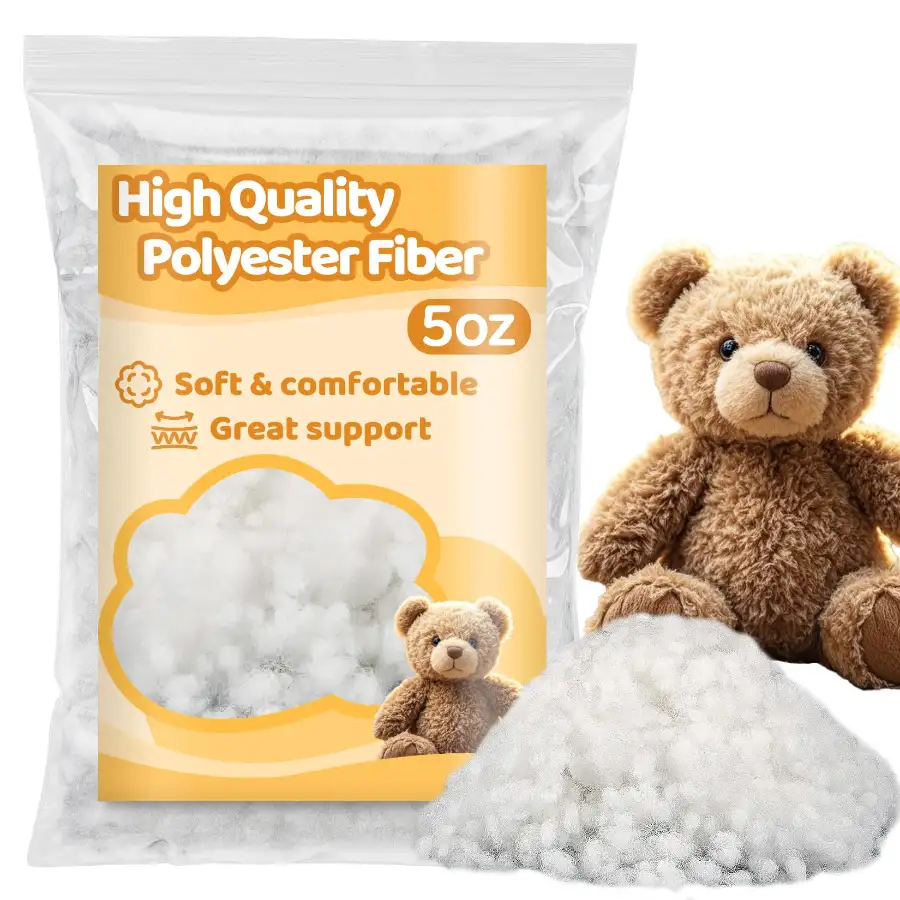
Ask a supplier for "standard polyfill," and expect lumpy prototypes. To manufacture premium toys, speak the factory's language. The material family includes basic polyfill, cluster fiberfill, and industrial hollow conjugated siliconized polyester.
When reviewing client specs, I instantly check denier and cut length. For a squishy handfeel, request 7D fibers.
For rigid support in shaped character toys, specify firmer 15D fibers. Always demand a siliconized finish so the fibers glide smoothly without clumping.
I once watched a production line halt because a buyer chose the wrong cut length. The mismatched fibers instantly jammed the blow-filling machines. Properly spec'd polyester dominates high-volume OEM lines because it keeps the cost to make custom plushies highly competitive.
To legally sell these toys, verify their safe washability. Request chemical safety and flammability test reports to prove compliance with ASTM F963 safety standards.
| Pros | Cons |
|---|---|
| Excellent shape retention | High clumping risk if washed poorly |
| Fast blow-filling compatibility | Wrong cut lengths jam machines |
| Naturally hypoallergenic | Requires strict flammability docs |
🛡️ Our Verdict: We use hollow conjugated siliconized polyester for 90% of our high-volume runs. It bounces back instantly after vacuum-sealed shipping.
⚡ Power Move: Specify a 32mm cut length for standard blow-filling machines to prevent nozzle clogs during mass production.
2. Recycled PET Fiberfill: The Best Eco Positioning Without Leaving Polyester Performance
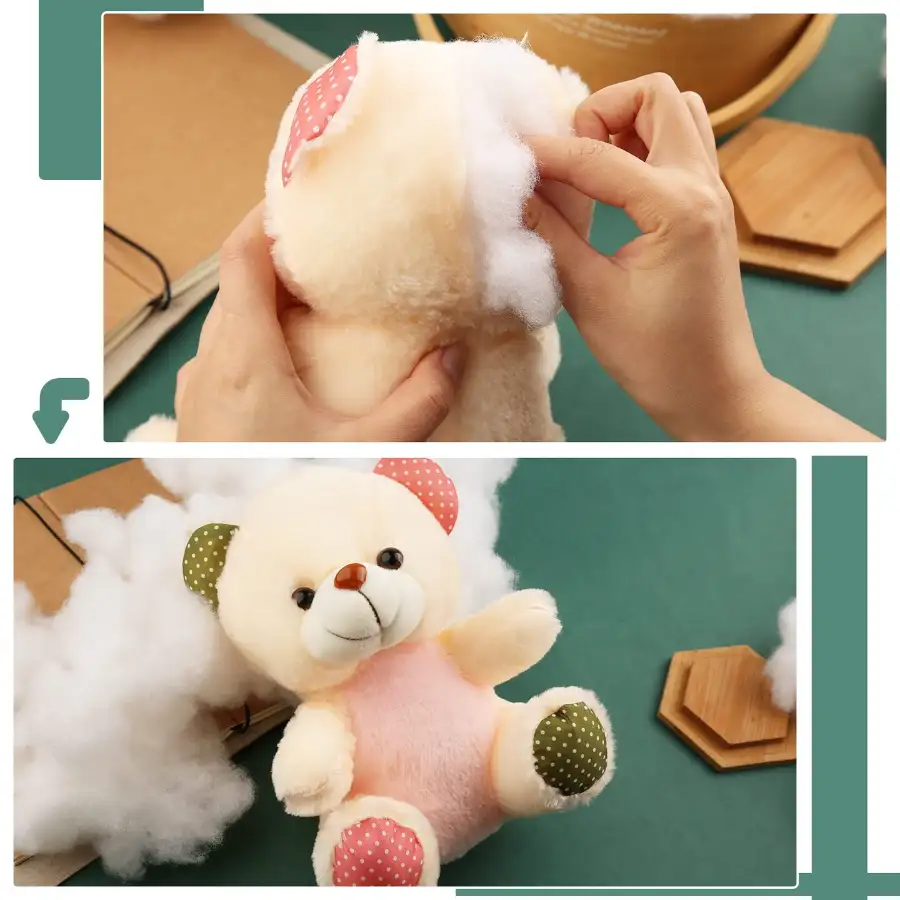
Eco-conscious buyers want sustainability, but they still expect a cloud-like squish. Recycled PET bottle fiberfill solves this problem.
In our factory tests, this material behaves exactly like virgin polyester. It gives DTC brands the mainstream plush softness their customers demand.
Last year, we helped a retail client switch their entire production line to recycled PET. It gave them a powerful sustainability story without hurting their profit margins.
You still face real production trade-offs. I often see slight texture variations between different material lots.
You must also account for freight efficiency. These recycled fibers handle vacuum compression well during sea freight. Yet, they take a full 24 hours longer to rebound after unboxing compared to standard polyfill.
Never build your green claims on factory marketing copy. You need hard proof.
| Pros | Cons |
|---|---|
| Powerful sustainability storytelling | Slight texture variations across lots |
| Matches virgin polyester softness | Slower rebound after vacuum compression |
| Highly scalable for mass retail | Requires strict verification paperwork |
🛡️ Our Verdict: Recycled PET is the most practical bridge between green branding and scalable production. Always request a recycled-content chain-of-custody document like the Global Recycled Standard. You also need verifiable textile chemical safety certificates to confirm your non-toxic positioning and avoid greenwashing.
3. Organic Cotton Stuffing: The Best Choice for Natural, Baby-Focused, and Sensitive-Skin Plush Lines
Brands often specify organic cotton just to sound premium. This is a costly mistake.
Reserve organic cotton toy stuffing strictly for infant lines, boutique teddy bears, and natural product catalogs. It provides the ultimate hypoallergenic plush stuffing, but it completely changes your production math.
Compared to polyester, cotton offers a superior natural handfeel. But it lacks dramatic bounce-back and has variable loft.
Because organic cotton is denser, you need more material to fill the exact same volume. I once watched a client's shipping costs double. The heavier cotton fill weight completely ruined their freight efficiency for a large plush line.
| Pros | Cons |
|---|---|
| Premium natural branding | Much heavier fill weight |
| Perfect for infant skin | Poor bounce-back after shipping |
| Highly breathable material | Drastically increases landed costs |
You must separate raw material claims from finished-toy compliance. Sourcing certified organic fiber is just step one.
You still need strict documentation for chemical safety and infant textile safety classes. Under ASTM F963 and EN71 standards, natural cotton requires specific flammability screening before you can legally sell baby SKUs.
🛡️ Our Verdict: Organic cotton excels for premium baby items, but always prototype first. Vacuum compression severely crushes these dense fibers. Buyers will need to manually reshape the plush after unboxing.
4. Natural Wool Batting for Dolls: The Premium Heirloom Option
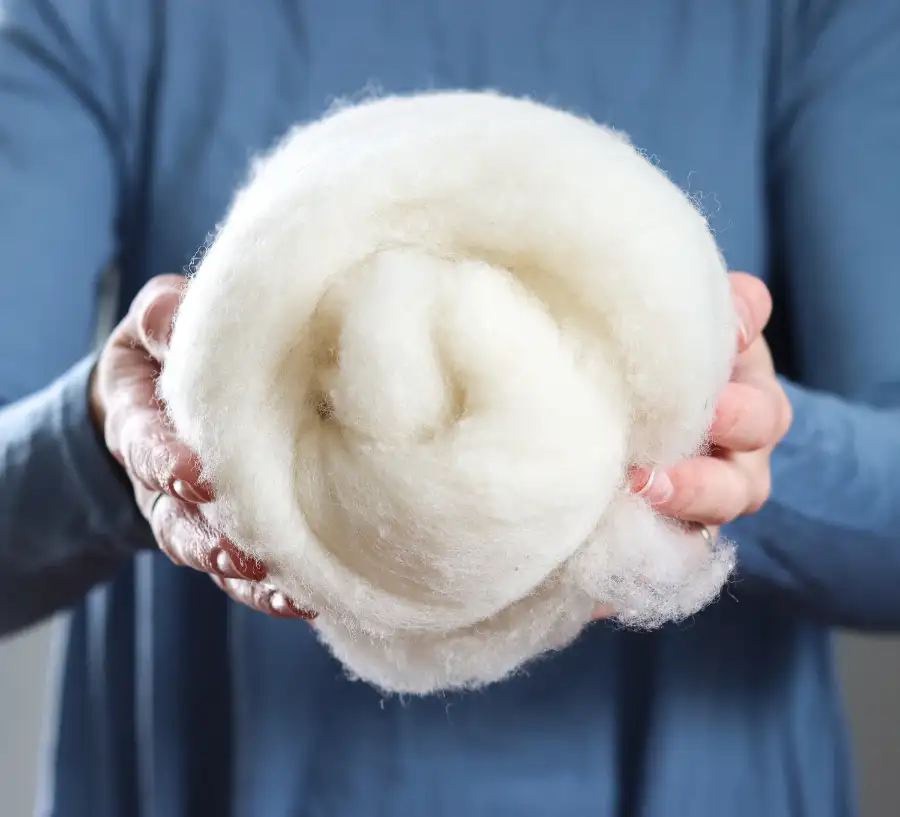
Standard polyfill ruins the structured feel of premium soft sculptures like Waldorf-style dolls and artisanal plush. For these products, you need natural wool batting for dolls.
Wool provides a firmer body and superior resilience compared to synthetic loose fill. It gives heirloom toys a signature weighted, warm feel.
During a recent limited-run collector doll project, our team tested both materials. The wool core held the intricate facial stitching perfectly. The synthetic prototype sagged after just two weeks.
That premium feel comes with strict commercial tradeoffs. Wool costs significantly more than polyester and fails standard wash tests.
If a customer machine-washes a wool-stuffed doll without following official wool care guidelines, the fibers felt and shrink. Animal-based wool also disqualifies your product from certified vegan markets and introduces potential allergen risks.
| Pros | Cons |
|---|---|
| Holds firm shape for intricate sculpting | Felts and shrinks during machine washing |
| Powerful storytelling for eco-luxury brands | High material costs hurt mass retail margins |
| Naturally resilient and warm to the touch | Carries allergen risks and alienates vegan buyers |
🛡️ Our Verdict: Wool batting makes zero commercial sense for mainstream retail plush. Reserve it strictly for high-margin collector dolls and eco-luxury SKUs. Always print strict spot-clean-only warnings on your packaging to prevent costly customer returns.
5. Memory Foam Toy Filler
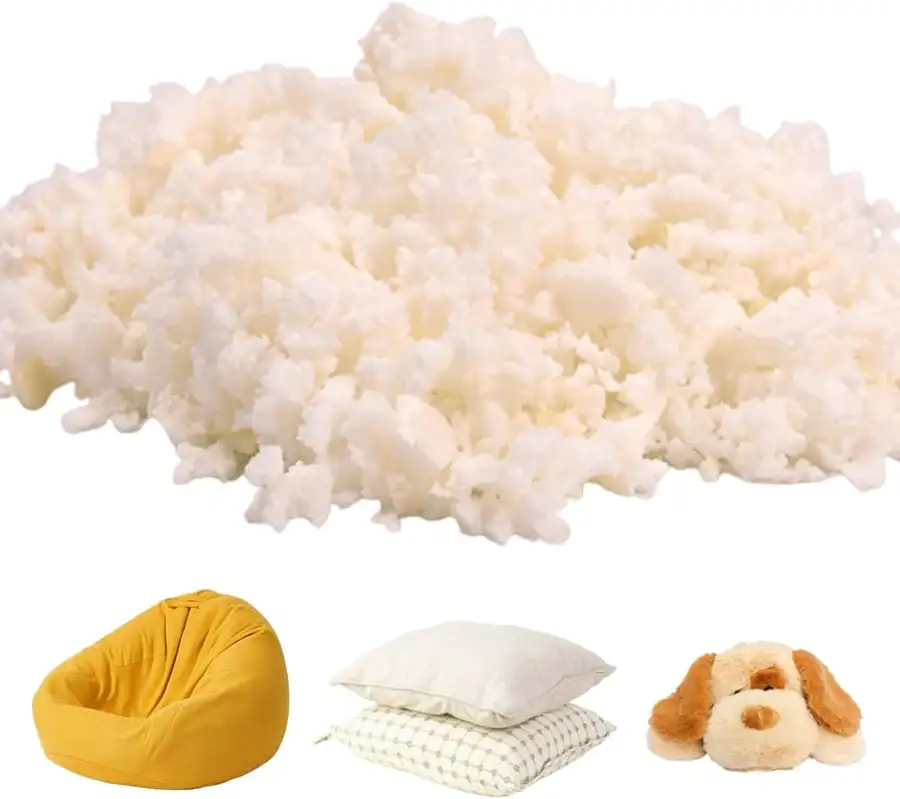
Standard polyester bounces back instantly. For a viral, slow-rising squish, you need memory foam toy filler.
Shredded foam delivers a heavy, dense tactile identity that buyers love. It completely changes the rebound profile of your product.
Sourcing this material requires strict oversight. I recently halted a client's assembly line because a supplier shipped uneven foam scraps.
Inconsistent chunk sizes create lumpy, unsellable plushies. Worse, cheap recycled foam often lacks clear material declarations.
Without a traceable paper trail, your shipment will fail standard EN71 safety tests or CPSIA toxicity audits. You must demand pristine, uniform source materials.
Memory foam also acts like a sponge. It traps water and breeds mold during consumer machine-washing.
Keep this specific filler entirely out of infant products. Instead, target adult-leaning comfort items and premium novelty plush toys. These demographics accept spot-cleaning requirements.
| Pros | Cons |
|---|---|
| Slow-rebound squish profile | Traps water and fails machine-wash tests |
| High perceived retail value | Uneven chunks cause lumpy distribution |
| Ideal for adult comfort items | Dirty scraps risk failed compliance audits |
🛡️ Our Verdict: Memory foam offers exceptional differentiation for feel-led products, but it brings terrible economics for mass manufacturing. To survive safety testing, lock down your sourcing control. Demand valid ISO 9001 material certificates from the factory before approving a single sample.
6. Heavy Weight Stuffing Beads and Pellets
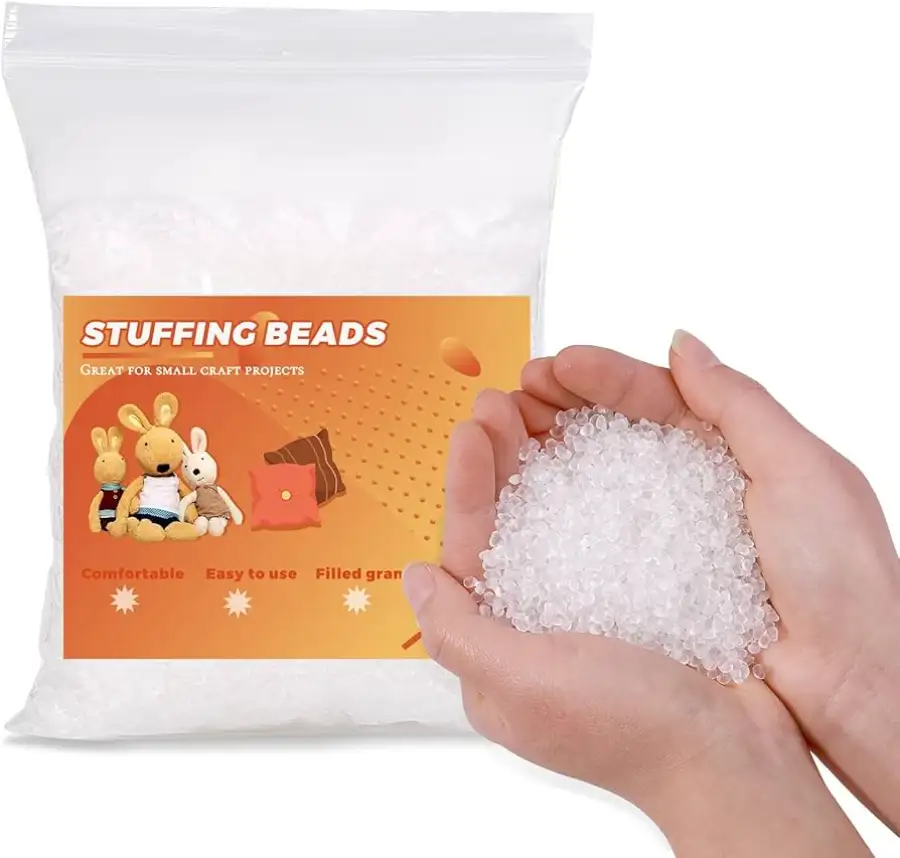
I see brands fail drop tests constantly because their factory leaves heavy weight stuffing beads loose inside the plush. We use these pellets to stabilize seated teddy bears, apply selective limb weighting, or manufacture heavy custom weighted stuffed animals.
There is a major engineering difference between a small balancing insert and a full sensory lap pad. Both designs require strict hazard control.
In our factory, the golden rule never changes. Workers must enclose all pellets inside a separate, double-sewn inner pouch.
We test these inner pouches on our machines to ensure they withstand intense tension limits. Loose beads create an immediate choking hazard under CPSC standards if an outer seam bursts.
If you need safe fillings for pet toys, pick a completely different material. Dogs easily pierce inner pouches and swallow the plastic.
| Pros | Cons |
|---|---|
| Stabilizes seated character designs | Severe choking risk if containment fails |
| Creates a premium sensory experience | Triggers stricter age-grading standards |
| Adds realistic flop to limbs | Requires expensive inner pouches and QC |
🛡️ Our Verdict: Weighted pellets trigger extreme scrutiny during safety audits. We enforce a strict double-bagging protocol on our production lines. If your audience is under three years old, avoid beads entirely to bypass complex compliance hurdles.
We run an in-house durability simulation called the Squish Test before manufacturing toys. We compress each filling sample 1,000 times using a pneumatic press.
Materials fail if they show slow loft recovery, severe lumping, internal fiber migration, or visible deformation. We also grade the final overall handfeel. Demand this baseline data from your factory before you approve mass production.
Choosing Safe, Compliant Toy Stuffing for Modern Plush Brands
Step 1: Align Fillings with Your Buyer Priorities
Select different types of toy stuffing based on your commercial goals.
- Softest handfeel: Specify 7D silicone-coated polyester.
- Best shape retention: Upgrade to firmer 15D polyester.
- Best premium natural story: Source organic cotton.
- Best sustainability story: Request recycled PET fiber.
- Best for weighted plush: Insert double-bagged plastic pellets.
- Riskiest for pet toys: Reject plastic pellets. Dogs swallow them and choke.
Step 2: Apply Hidden B2B Production Filters
Filter your choices against actual factory floor realities to avoid common friction points.
- Verify machine limits: Check if your polyester works for fast blow-filling. Dense materials require slow hand stuffing.
- Check safety gates: Your custom plush manufacturer must run all finished units through metal-detection checkpoints after stuffing.
- Test shipping recovery: Vacuum pack your samples. Standard polyfill recovers its shape. Heavy cotton stays crushed.
- Calculate freight impact: Remember that organic fill traps moisture and adds weight. This increases your freight and storage costs.
Step 3: Clear the Global Compliance Checklist
Do not ship goods without strict compliance paperwork. Even the best teddy bear manufacturers in China need your strict oversight. Collect these exact documents.
- Pass flammability screening: Verify burn rates to meet finished-toy requirements like the ASTM F963 flammability standard.
- Prove chemical safety: Demand official STANDARD 100 by OEKO-TEX documentation for all raw textiles.
- Audit finished goods: Ensure every custom teddy bear passes retail safety laws before loading the shipping container.
Our Experience: You cannot build a compliant toy using cheap filler. In our tests, low-grade polyfill clumps after just three washes. Finalize your material specs today to avoid costly production delays. When you feel ready to prototype, contact our expert to build it right.
People Also Ask About Types of Toy Stuffing
1. What is the safest stuffing for baby plush?
In our factory tests, 7D siliconized polyester is the safest option. It contains no loose parts.
You must completely avoid heavy weighted beads. If a seam breaks, beads violate strict small parts regulations. We always run baby toys through a metal detector before shipping.
Polyester is best for infant lines because it washes easily and dries quickly. Remember that finished-toy testing matters much more than raw filler marketing claims. We enforce these exact safety standards whether you use our main facility or work with plush toy manufacturers in South Africa.
2. Which stuffing holds shape best after shipping and repeated squeezing?
Hollow conjugated siliconized polyester holds its shape the best. When we vacuum seal plushies for ocean freight, this material bounces back in seconds after unboxing.
Organic cotton stays flat and requires manual fluffing. In our pneumatic squish tests, 15D polyester fibers resist clumping completely.
This durable material is best for a premium cuddle feel. We use specific nozzle sizes to inject this fiber rapidly without jamming the machines. Always request compression testing before you approve a mass production run.
3. Is recycled plastic stuffing safe enough for retail brands?
Yes, but you must verify the source. Cheap recycled foam often contains dirty scraps and fails toxicity audits.
Clean recycled PET fiberfill is entirely safe and performs exactly like virgin polyester. It is best for eco positioning. You cannot rely on green marketing copy alone.
You need hard proof to protect your brand. We force suppliers to provide valid chemical safety certificates before we load the blow-filling machines. We use this strict material vetting process across all our global partners, including any plush toys manufacturer in the Philippines.
4. What filling should I avoid for pet toys or aggressive chewers?
You must avoid plastic pellets and memory foam completely. Dogs easily pierce outer seams with their teeth.
Plastic beads leak out instantly and cause severe digestive blockages. Memory foam acts like a dense sponge. It traps dog saliva and breeds dangerous mold rapidly inside the toy.
These materials are best avoided when bead leakage or mold and moisture risk is a concern. Stick to minimal amounts of dense polyester fiberfill. It passes safely if swallowed and dries quickly.
Your Next Production Step
Before you place a bulk order, you need physical proof of quality. Ask your factory to send sample packs of different fiber fillings.
Request video evidence of vacuum compression testing. Finally, demand all safety compliance paperwork upfront to protect your investment. Start refining specs now.