
Shifting supply chains away from China often trades security for inconsistent quality control. You need partners verified for export readiness, not just a directory.
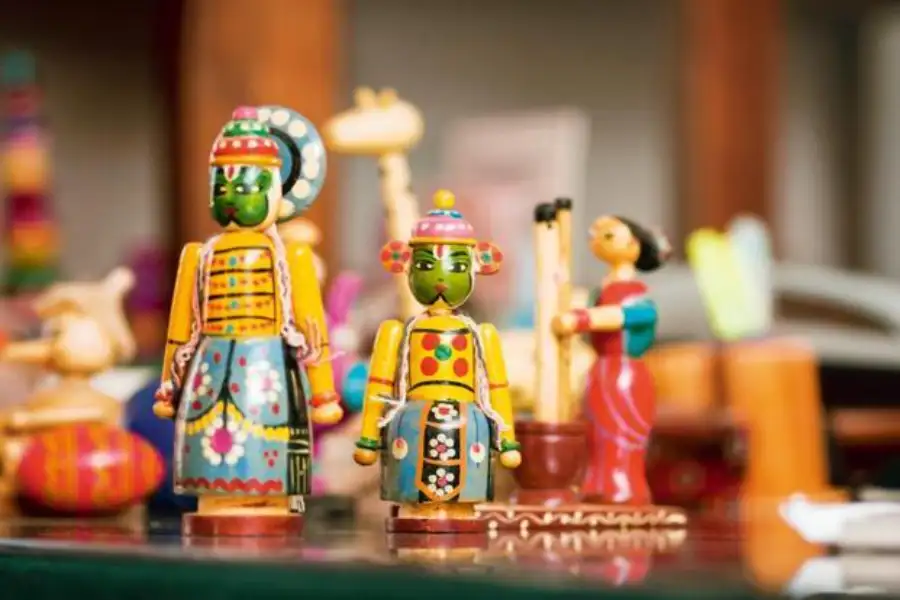
This guide curates the Best Wooden Toys Manufacturers in India, prioritizing wholesale-ready hubs recognized by the Export Promotion Council for Handicrafts. We list 10 credible clusters and provide a checklist to validate compliance and logistics before you order.
If you need immediate manufacturing support, contact our team.
List of Top 12 Wooden Toys Manufacturers in India
| Manufacturer | Location | Key Highlights | Notable Features |
|---|---|---|---|
| Skola Toys | Bengaluru, Karnataka | Montessori-inspired educational wooden toys | 25+ years experience, child development focus, safe & sustainable |
| Funskool India | Chennai (with facilities across India) | Leading toy manufacturer (includes wooden lines) | Backed by MRF Group, exports widely, award-winning |
| Channapatna Toy Clusters | Channapatna, Karnataka | Traditional lacquer-coated handmade wooden toys (GI-tagged) | Artisanal craft, eco-friendly natural dyes, cultural heritage |
| Shumee | Bengaluru, Karnataka | Eco-friendly, non-toxic wooden toys for early childhood | Play-based learning, 100% child-safe, award-winning brand |
| Kondapalli Toy Clusters | Kondapalli, Andhra Pradesh | Handcrafted miniature wooden figures & toys | Traditional craftsmanship, vibrant colors, cultural icons |
| Skillofun | Bengaluru, Karnataka | Educational & skill-building wooden toys | Focus on dexterity, cognition & learning through play |
| Saharanpur Wood Carving Cluster | Saharanpur, Uttar Pradesh | Intricate hand-carved wooden toys & crafts | Traditional wood carving expertise, detailed designs |
| Brainsmith | India (primarily South) | Development-focused wooden educational toys | Promotes creativity, problem-solving & fine motor skills |
| Ariro | Chennai, Tamil Nadu | Premium Montessori wooden toys & developmental aids | AMI-certified experts, sustainable, Shark Tank featured |
| Maya Organic (Fairkraft Creations) | Bengaluru, Karnataka | Sustainable, fair-trade wooden toys | Eco-conscious, non-toxic, supports artisans |
| Bombay Toy Company | Mumbai / pan-India | Artisanal Montessori & Waldorf-inspired wooden toys | High-quality, sustainable, creativity-focused |
| Universal Wooden Toys | India (wholesaler & manufacturer) | Educational wooden toys, bulk supply | PAN India shipping, focus on quality & variety |
Best 10 Wooden Toys Manufacturers in India
Explore India's top Wooden Toys Manufacturers in India!
1. Skola Toys
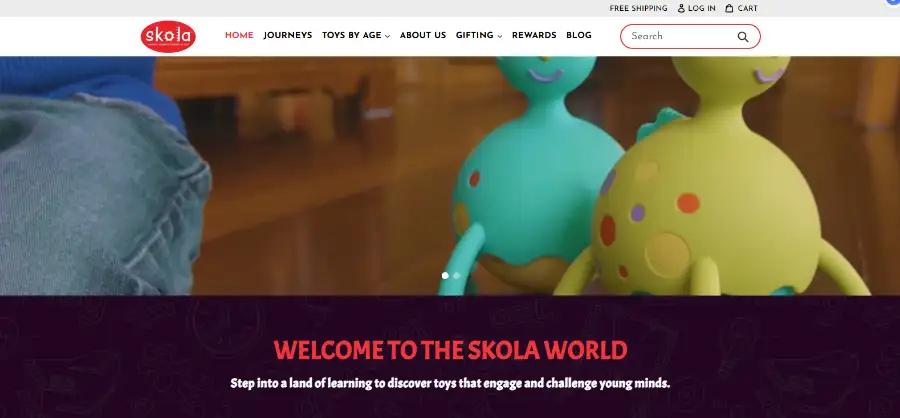
Most importers avoid Indian wooden toys because they fear "handcrafted" actually means "inconsistent dimensions." Skola solves this by manufacturing with industrial precision suited for structured learning. Unlike generic workshops, their production line is built around "learning journeys"—sequential toy sets for motor skills, language association, and conceptual math.
Best for: Amazon FBA sellers and importers building Montessori or early-learning bundles who need repeatable SKU consistency rather than artisan variability.
Sourcing Intelligence:
- MOQ Strategy: Negotiate Minimum Order Quantity per SKU, not just total invoice volume, to maintain catalog depth.
- Packaging: Verify private-label capabilities. They should manufacture custom retail boxes and instructional inserts in-house to reduce handling costs.
- Documentation: Confirm they can support direct exporter documentation to bypass trading agent commissions.
Buyer Verification Checklist:
- Can you provide recent ASTM F963 or EN71-3 ab reports for comparable painted wood products?
- What is your specific paint/coating spec and heavy-metal migration test coverage?
- What is the binding production lead time for 500, 1,000, and 5,000 units?
🚀 Actionable Insight: Always test "interlocking" SKUs (like puzzles) for tolerance drift; request a pre-production sample to ensure the wood hasn't warped during the curing process.
2. Funskool India
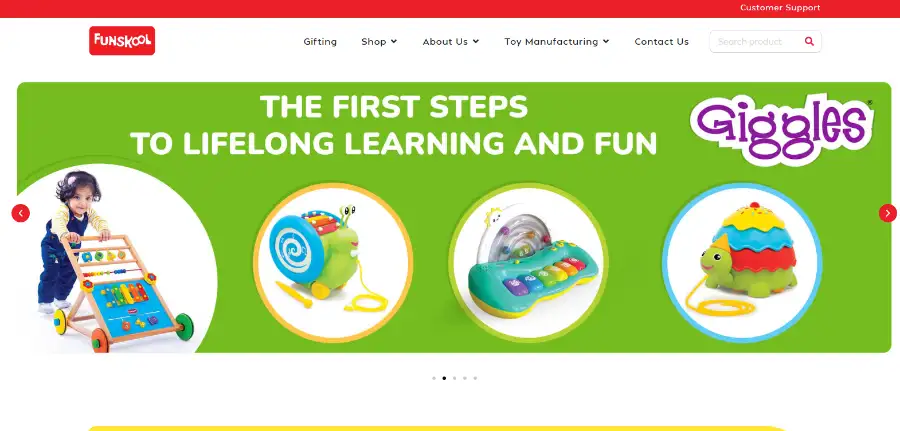
Small artisan workshops often crumble under the pressure of high-volume retail orders. Funskool offers the opposite reality: industrial stability backed by the massive MRF Group. While famous for molded plastics, they maintain a robust portfolio of wooden puzzles and educational games integrated into their broader manufacturing lines.
This is not a garage operation. It is a mature manufacturing partner that operates under strict Bureau of Indian Standards (BIS) protocols, making them a safe harbor for international buyers worried about compliance documentation.
Best for: Retail buyers and brand owners prioritizing operational stability. This is the logical choice if you need 5,000+ units and cannot risk a "mom-and-pop" supply chain failure regarding delivery timelines.
Sourcing notes:
- Production Origin: Wooden components are often subcontracted even by large factories. Confirm if their wood shop is in-house to ensure moisture control consistency.
- Audit Readiness: Don't just ask for certificates; request their latest SA8000 or BSCI audit reports to verify ethical labor practices before negotiations start.
Buyer checklist:
- QC Checkpoints: Do you use moisture meters on incoming timber to prevent warping during transit?
- Inspections: Will you accept a purchase order where payment is contingent on passing a Third-Party Inspection (AQL 2.5)?
- Logistics: Can you ship FOB from Chennai and provide all IS 9873 test reports for export clearance?
🧠 Expert Take: Big manufacturers like Funskool prioritize their own IP. To avoid being deprioritized in the queue, pitch your inquiry as a long-term "Private Label" partnership rather than a one-off spot buy.
3. Channapatna Toy Clusters
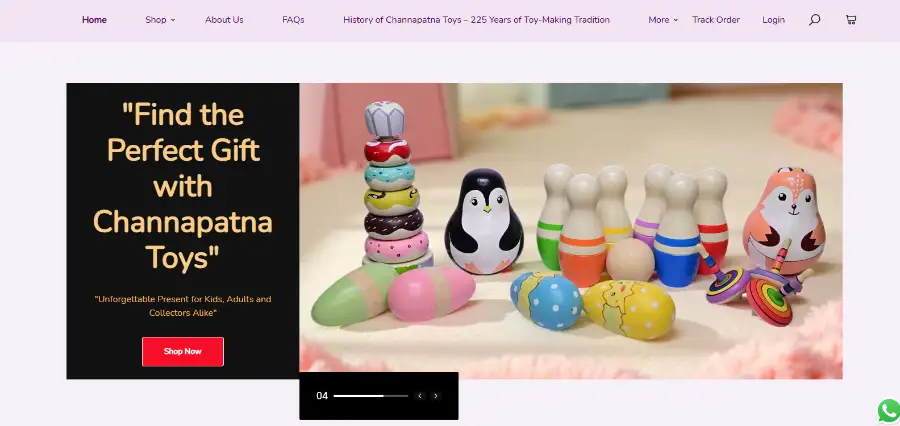
Channapatna offers the ultimate visual differentiator from Chinese injection molding: traditional turned toys crafted from Wrightia tinctoria (Ivory Wood) and polished with non-toxic lac resin.
Because this wood is soft and the lacquer is organic, these toys are chemically safe for teething infants. This makes them perfect for boutique importers and premium gifting brands where you win on safety storytelling rather than price wars.
The Sourcing Reality: You are not buying from a single factory. Channapatna is a decentralized cluster of micro-workshops. "Handcrafted" often translates to "inconsistent specifications." To scale, you must select 1–2 core vendors who can standardize wood seasoning and dye formulations across multiple artisan units.
Your Quality Control Checklist:
- Verify Pigments: "Natural" doesn't automatically mean compliant. Demand EN71-3 migration reports for every dye batch to rule out heavy metals like lead.
- Control Variance: Vegetable dyes fluctuate. Establish a "limit board" showing the exact range of acceptable color shades before production starts.
- Secure Packaging: High-gloss lacquer scuffs easily during transit. Require individual tissue wrapping rather than bulk polybagging.
🚀 Actionable Insight: Authentic Channapatna toys carry a Geographical Indication (GI) tag. Ask your supplier for their GI registration number to verify they aren't selling generic wooden knock-offs produced outside the cluster.
4. Shumee
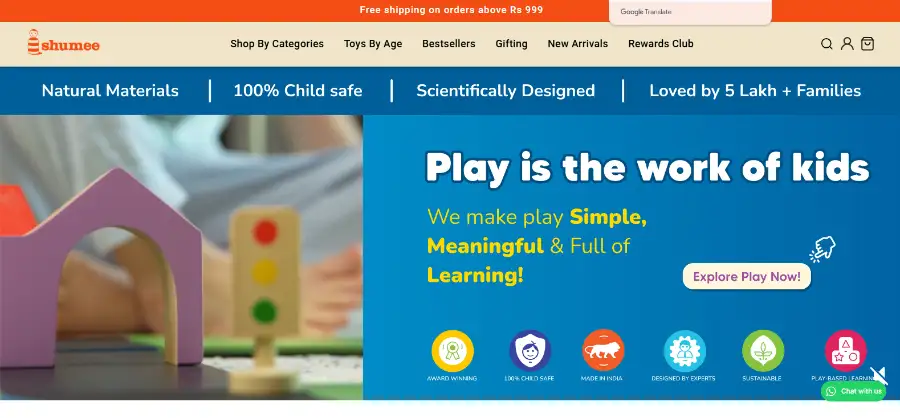
Single-product sourcing creates logistical drag. Shumee solves this with a massive catalog of open-ended educational wooden toys, ranging from alphabet cutouts and shape sorters to complex DIY activity blocks. For importers, this breadth allows you to populate an entire Amazon storefront or retail category using a single relationship, eliminating the overhead of managing multiple vendor contracts.
Best for: Wholesalers and Amazon FBA sellers requiring high SKU density to rapidly test market demand across learning formats.
Sourcing Notes:
- Volume Economics: Avoid flat rates. Request a tiered pricing matrix based on master carton quantities to identify exactly where price breaks occur.
- Logistics Efficiency: Confirm factory-level FBA support. Verify they can apply FNSKU barcodes and BIS-compliant labels during packaging to bypass third-party prep centers.
Buyer Checklist (3 Questions):
- MOQ Structure: Is the Minimum Order Quantity applied per specific SKU, or can I mix multiple SKUs to meet a total invoice value?
- Data Specs: Can you provide a spec sheet including exact package dimensions, weights, and ASTM F963 compliance data for Amazon listings?
- Seasonality: What are current production lead times, and how many weeks are added during the pre-Diwali or Q3 export rush?
🚀 Actionable Insight: Negotiate a "mixed carton" pilot order to test 5–10 SKUs without committing to full production runs for each.
5. Kondapalli Toy Clusters
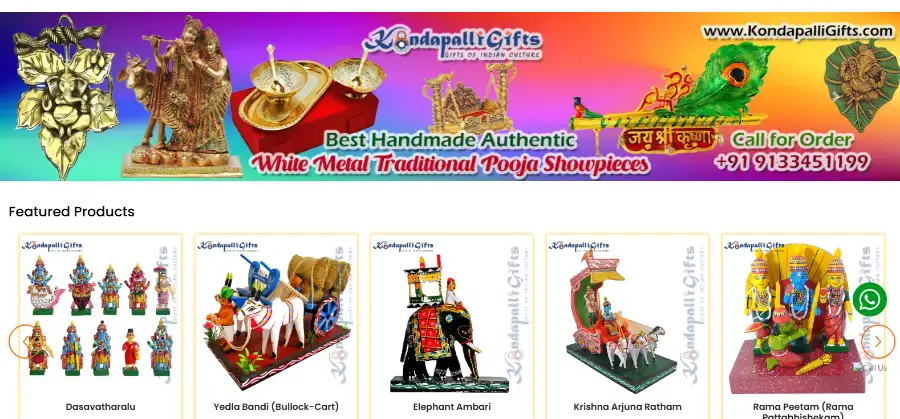
For product lines built on narrative or heritage themes, Kondapalli is the premier source. Crafted from soft Tella Poniki wood—a distinct material protected by Geographical Indication (GI) status—artisans carve intricate, hand-painted figures depicting rural life and mythology. Unlike the symmetric precision of turned toys, these carved figures offer high perceived value for boutique collections but introduce significant unit variability.
Best for: Gift retailers and brands building culturally themed lines where "handcrafted" is a selling point.
Sourcing notes:
- Define tolerances: Hand-painted details are never identical. Establish a "Golden Sample" range to define acceptable deviations in facial features and paint application.
- Buffer lead times: Production relies on manual carving, making timelines less elastic than automated factories. You must treat lead times as estimates rather than guarantees.
Buyer checklist:
- Calibration: Can you provide a signed golden sample to control paint adhesion and color accuracy against BIS safety standards?
- Defect Policy: What is the written threshold for cosmetic defects (chips, hairline cracks) versus structural rework?
- Logistics: Do you provide export-safe packaging (molded inserts) capable of passing ISTA drop tests?
🧠 Expert Take: Tella Poniki is soft and prone to pressure marks. Never accept bulk packaging. Require individual reinforced boxing for every unit to prevent impact damage during freight.
6. Skillofun
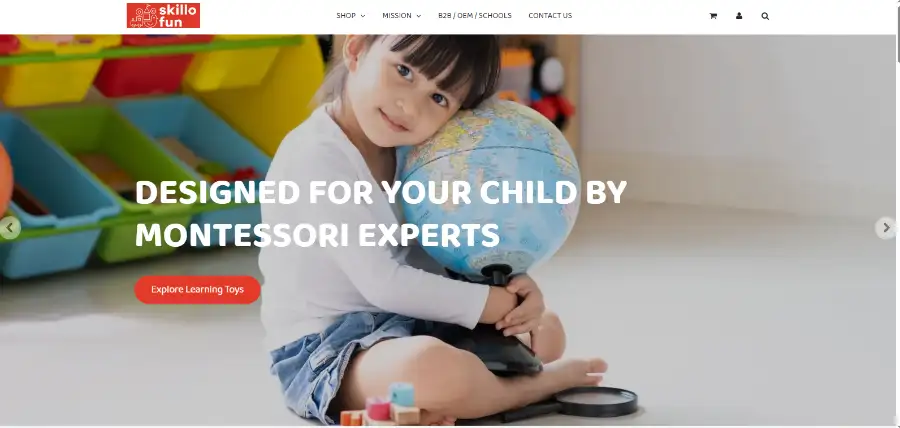
Skillofun avoids the rough edges of commodity manufacturing, focusing on high-finish educational aids that align with the "Modern Montessori" aesthetic. Their value proposition relies heavily on refined Indian craftsmanship and strict adherence to non-toxic safety standards. This makes them a strong candidate for markets where "eco-friendly" is a rigorous compliance requirement rather than just a marketing buzzword.
Best for: Brands targeting the premium gift category ($30–$50+ MSRP) specifically for wooden puzzles, bead mazes, and classroom-grade educational aids.
Sourcing notes: This manufacturer maintains a strong D2C identity. You must verify their willingness to execute true white-label production versus simple wholesale distribution. Clarify if they allow custom tooling for unique shapes or restrict private label buyers to their existing catalog molds.
Buyer checklist (3 questions):
- Eco-Verification: Can you validate sustainability claims with FSC Chain-of-Custody certification and current heavy metal test reports (ASTM F963/EN 71-3) for all surface paints?
- Retail Readiness: Do you support premium unboxing experiences, including custom inserts and multilingual CE marking requirements for European exports?
- Differentiation: What is your policy on SKU exclusivity? (Confirm they will not resell your custom colorways or modified designs to competing private labels).
⚡ Power Move: Premium wood finishes are prone to transit damage. Before placing a bulk order, require a "drop test" video of your proposed retail packaging to ensure the product arrives pristine without needing repacking at a 3PL.
7. Saharanpur Wood Carving Cluster
Saharanpur operates as a massive, decentralized manufacturing hub rather than a single factory. Famous for working with "Sheesham" (Indian Rosewood) and Mango wood, this cluster is your primary option for large-format items like play kitchens, dollhouses, and Montessori climbing sets.
Best for: Institutional buyers (schools) and retailers sourcing high-ticket, furniture-grade wooden products.
Sourcing Notes Volume brings specific risks. Large wooden panels are highly susceptible to warping and cracking inside hot shipping containers if the wood moisture content (MC) is not chemically stabilized. You must enforce strict kiln-drying protocols to maintain levels between 8–12%.
Furthermore, heavy items destroy standard cardboard. Do not accept "standard 3-ply" boxes. You need 5-ply or 7-ply corrugated cartons with reinforced hard-board corner guards to prevent the wood from puncturing the box during handling.
Buyer Checklist
- Moisture Control: Do you have on-site kiln drying to guarantee sub-12% moisture levels before loading?
- Packaging Integrity: What are your specs for corner protection and abrasion resistance?
- Defect Prevention: Can you run a pre-shipment inspection that includes photo evidence of moisture meter readings?
📦 Logistics Power Move: Mandate the ISTA 1A drop test in your QC contract. If the packaged toy cannot survive a 10-point drop sequence (including on its weakest corner) without internal damage, reject the shipment immediately.
8. Brainsmith
Brainsmith treats wooden toys as components of a broader curriculum rather than isolated playthings. Their catalog integrates wood products with "Quantum Cards" and storybooks, targeting the education-first demographic often sought by premium retailers.
Best for: Buyers building high-value "learning bundles" (e.g., wooden animals paired with flashcards) to increase Average Order Value (AOV). This model allows you to consolidate paper and wood sourcing under one vendor.
Sourcing notes: Since their catalog spans materials, confirm which SKUs are solid wood versus composite to calculate accurate duty rates. You must also align age grading across the bundle to meet ASTM F963 or EN 71 standards. If flashcards are rated 0+, the accompanying wooden toy cannot contain small parts that restrict the total package to 3+.
Buyer checklist:
- Can you provide materials declarations and coating test reports separate from printed goods?
- Do you support export-friendly labeling (English/EU) and factory-level barcode placement?
- What is the binding re-order lead time for proven SKUs to prevent FBA stockouts?
🧠 Expert Take: Bundle safety is not the sum of its parts. Even if wood and cards pass testing individually, the combined retail pack requires a unique technical file to ensure the packaging itself doesn't introduce new compliance risks.
9. Ariro
Ariro targets the gap between traditional Indian craftsmanship and the muted "Scandi" aesthetic modern Western parents demand. Unlike the high-gloss lacquer of Channapatna, they use natural oils and matte finishes that immediately signal "non-toxic" and align with open-ended, Montessori philosophies.
Best for: DTC brand owners and Amazon sellers targeting the high-margin "nursery aesthetic" niche without investing in custom molds.
Sourcing notes: Newer brands often struggle with volume surges. You must audit their production capacity to ensure they can scale. Critically, matte finishes expose wood defects that lacquer conceals. Ask specifically how they manage batch consistency for wood grain and coating uniformity to ensure "natural variation" does not drive customer returns.
Buyer checklist:
- Compliance scope: Can you provide third-party test reports and confirm the lab's accreditation scope? Ensure they meet CPSC safety requirements for chemical and mechanical testing.
- Traceability: What is your batch tracking system? Do you apply date codes and lot numbers to individual units for recall compliance?
- Customization: Do you support custom Pantone colors, laser engraving, and private-label packaging at realistic MOQs?
🚀 Actionable Insight: Newer factories often lack robust date-coding systems. Mandate a format that links the production week to the specific wood batch in your purchase order to localize any future compliance issues.
10. Maya Organic
Maya Organic often serves as the benchmark for importers bridging the gap between artisan craftsmanship and industrial export readiness. Unlike smaller Channapatna workshops, their infrastructure is explicitly built for the wholesale market, specializing in Montessori-style educational aids where non-toxic consistency is non-negotiable.
Best for: Importers sourcing curriculum-aligned SKUs—such as geometric puzzles, rattles, and stacking blocks—that require precise dimensions.
Sourcing Notes: While their public guidance mentions flexible MOQs, treat this as a starting point. You must verify if their manual production speed scales linearly with volume. Instead of a standard quote, request a written MOQ schedule that defines lead times for 500 versus 5,000 units.
The Buyer Verification Checklist:
- Safety Correlation: Do not accept generic certificates. Request recent ASTM F963 or EN 71 reports and confirm they apply to the exact materials and lacquer batches used in your specific SKU.
- Cost Transparency: Ask for a tiered breakdown isolating cost drivers like wood type (typically Wrightia tinctoria) and packaging. This reveals where your volume discounts actually sit.
- Logistics Lock: Confirm the Incoterms rules offered (FOB vs. DDP) and the binding production timeline from deposit to sailing date.
⚡ Power Move: Even for "compliant" wooden toys, always send a 'Golden Sample' from the pre-production batch to a third-party lab to verify lead and phthalate levels before authorizing the final balance payment.
Execution Schedule: How to Vet and Source Wooden Toys
Strategic sourcing requires a rigorous audit of raw materials, chemical safety, and export documentation. Use this execution plan to move from product discovery to a signed purchase order while mitigating compliance risks.
1. Audit Wood Species and Material Suitability
Do not accept quotes for generic "hardwood." Physical properties dictate safety and longevity. Specify the exact botanical name in your contract to prevent substitution with inferior timber.
| Application | Required Species | Audit Requirement |
|---|---|---|
| Lathe-Turning (Channapatna) | Wrightia tinctoria (Aale mara) | Verify kiln drying protocols. This soft wood requires low moisture levels to prevent fungal growth during transit. |
| Educational / Block Sets | Rubberwood, Beech | Test for density. Softwoods will fail durability testing for impact and stacking. |
| Carved Figurines | Softwoods (Pine, Givotia) | Monitor moisture content (8–12%). Porous woods warp and crack paint in dry retail climates. |
2. Verify Regulatory Compliance
Distinguish between domestic Indian requirements and international export standards. A factory may hold a Bureau of Indian Standards (BIS) certification yet fail US or EU safety limits.
Execute this compliance protocol:
- Reject generic certificates. Disregard "ISO 9001" or "Export House" statuses for safety verification.
- Mandate SKU-specific testing. Require test reports from ILAC-accredited labs (SGS, Intertek, TUV).
- Validate US Standards. Request ASTM F963 reports for physical properties and CPSC documentation for lead and phthalates.
- Validate EU Standards. Request EN 71-1 (mechanical), EN 71-2 (flammability), and EN 71-3 (chemical migration) compliance.
3. Implement a Minimum QC Workflow
Define specific inspection criteria in your purchase order.
- Incoming Material: Measure moisture content with a digital meter. Reject batches exceeding 14% to prevent mold growth inside shipping containers.
- Surface Finish: Drag a nylon stocking over the toy surface. Reject units that snag, as this indicates insufficient sanding and splinter risks.
- Mechanical Safety: Verify that removable parts for ages 0–3 do not fit inside a Small Parts Test Cylinder.
- Coating Durability: Perform a cross-cut tape test. Apply pressure-sensitive tape over painted areas and remove sharply. Rejection occurs if paint flakes or detaches.
4. Vet Supplier Legitimacy
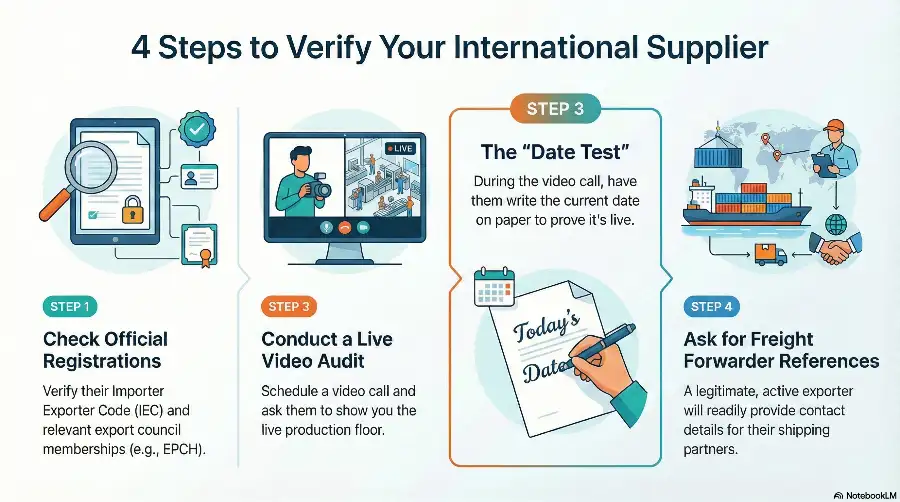
Validate the supplier's legal standing before transferring funds.
- Verify IEC Status: Check the Importer Exporter Code (IEC) via the Directorate General of Foreign Trade to confirm they are authorized to export.
- Confirm EPCH Membership: Validate handicraft exporters through the Export Promotion Council for Handicrafts (EPCH) directory.
- Conduct a Live Audit: Schedule a video call. Direct the contact to write the current date on paper and walk the production floor immediately.
- Check References: Request contact details for their current freight forwarder. Legitimate exporters ship regularly; dubious workshops will stall.
5. Standardize Export and FBA Logistics
Prevent rejection at fulfillment centers by standardizing packaging early.
- Select FOB Incoterms: Choose Free On Board (FOB) to retain control over the freight forwarder and avoid hidden costs common with CIF terms.
- Define FBA Labeling: Require the factory to print FNSKU labels. Ensure polybags include suffocation warnings in the destination market's local language.
- Limit Carton Weight: Cap master cartons at 50 lbs (22.5 kg) to comply with Amazon FBA safety standards.
6. Sourcing Strategy: India vs. LeelineToys
Select your manufacturing partner based on product complexity and scalability requirements.
Source from India for:
- Heritage narratives (Channapatna, Kondapalli).
- Eco-friendly aesthetics using natural vegetable dyes.
- Small-batch production where high variance is acceptable.
Source from LeelineToys (China) for:
- Repeatable Mass Production: Ensure zero variance between units for large retail orders.
- Engineering Support: Integrate electronics, moving mechanical parts, or complex assembly.
- Compliance Certainty: Utilize a partner prioritizing custom wood toy manufacturing with full ASTM and EN71 documentation.
LeelineToys functions as your technical engineering arm. We centralize the supply chain, whether you require wooden toy manufacturers in Thailand, German wooden toy manufacturers, or partners in the UK and the USA.
We also facilitate sourcing from European wooden toy manufacturers and maintain verified networks of wooden toy manufacturers in China for high-volume execution.
Request a sourcing plan + compliance checklist + quotation framework.
Ready to start production? Share your target market, MOQ, and target price with our engineering team today. We assess feasibility and provide a factory-direct quote within 48 hours. Get Your Quote Now
People Also Ask About Wooden Toys Manufacturers in India
1. Are Indian wooden toys EN71/ASTM compliant for US/EU imports?
Compliance is not automatic; it depends entirely on the specific supply chain used. While established exporters design products to meet safety standards, you must verify this by auditing their documentation.
Request current test reports from accredited third-party laboratories (like SGS or Intertek) rather than accepting generic factory declarations. Crucially, match the test report data to your specific Bill of Materials (BOM) to ensure the tested lacquer and wood species match your production run.
2. What MOQ and lead time should I expect for bulk wooden toy orders?
Minimum Order Quantities (MOQs) typically range from 500 to 1,000 units per SKU for industrial manufacturers, while smaller artisan workshops may accept batches as low as 50–100 units. Lead times are less predictable than injection molding: budget 10–14 days for sampling and 45–60 days for mass production to account for wood seasoning and curing. Always request a tiered pricing schedule that explicitly defines price breaks at higher volumes to plan your scaling strategy.
3. Should I buy FOB or DDP when importing from India?
The decision depends on your logistics capability. FOB (Free on Board) is the professional standard; it gives you control over freight costs and lets you choose your own forwarder, ensuring visibility into the shipment's status. DDP (Delivered Duty Paid) is convenient for beginners as the supplier handles everything, but it often includes hidden markups on shipping and removes your ability to audit the customs clearance process.
4. How do I verify "eco-friendly" claims (FSC wood, non-toxic paints)?
Marketing terms like "natural" are legally meaningless without a paper trail. To verify wood sources, demand the supplier's FSC Chain-of-Custody certificate number and check its validity in the public registry.
For "non-toxic" paints, require the Material Safety Data Sheet (MSDS) and Certificate of Analysis (COA) from the paint vendor. Cross-reference these with EN71-3 heavy metal migration test results to confirm lead and phthalate levels are within safe limits
5. How can I verify if an Indian toy exporter is legitimate?
Validating an exporter requires more than a website. Ask for their Importer Exporter Code (IEC) and GST registration documents.
Request a live video walk-through of the factory floor, recent third-party test reports, and proof of membership with trade bodies like the Export Promotion Council for Handicrafts (EPCH). Mitigate risk by starting with a paid sample and a small pilot order subject to pre-shipment inspection.
Need help validating a supplier? Our engineering team can audit factories and manage your compliance testing directly on the ground. Contact LeelineToys.