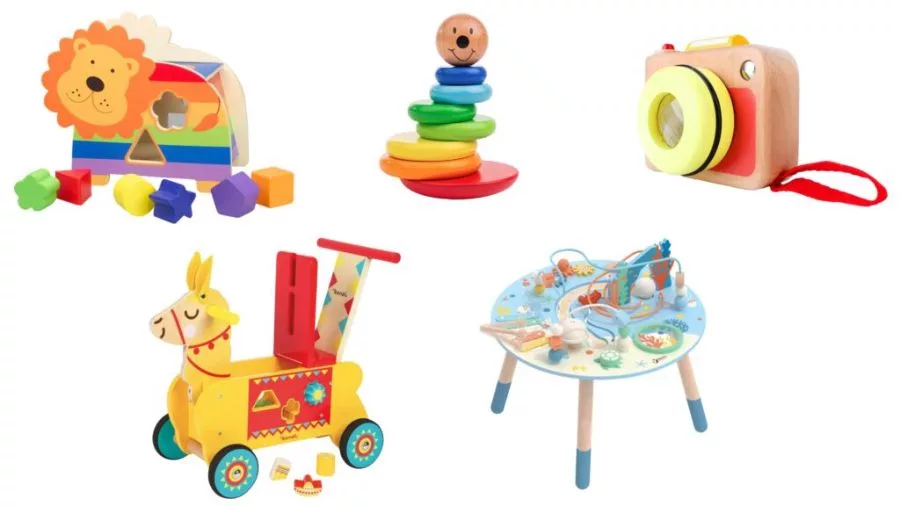

Retail buyers often waste capital on aesthetic designs that become dead inventory. On the factory floor, I regularly watch beautiful concepts fail strict EN71 safety standards during prototyping.
Only a few wooden toy types actually combine repeat demand, safe materials, and workable wholesale margins. We chose these 10 categories for their commercial breadth, compliance fit, and private-label potential. Use this shortlist to guide your assortment planning with any custom wood toy manufacturer, educational toys manufacturer, or eco-friendly toy manufacturer.
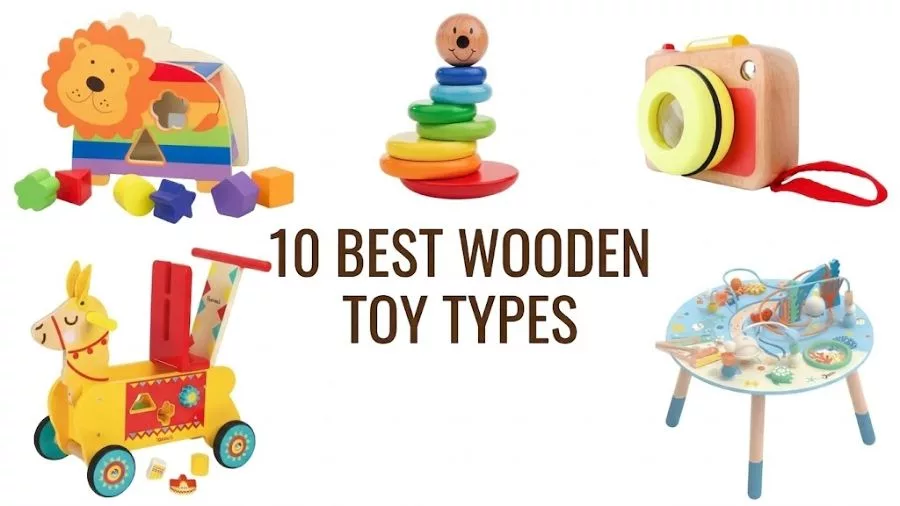
10 Best Wooden Toy Types
Step into a world of timeless wonder and tangible joy as we explore the heartwarming craftsmanship of the following ten essential types of wooden toys:
1. Wooden Building Block Sets
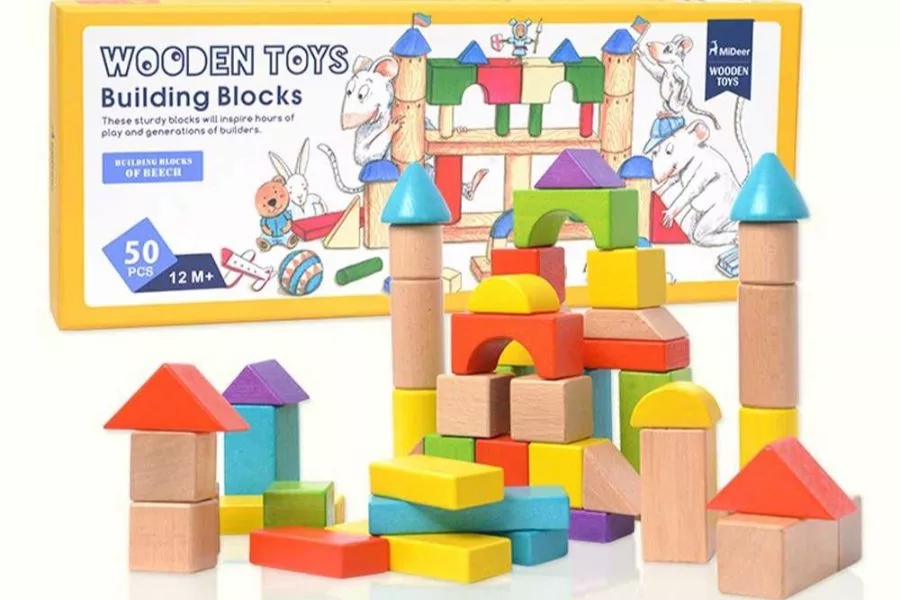
If you only source one category, start with wooden building blocks. They form the foundation SKU for toddler, preschool, and Montessori-adjacent lines.
Parents buy them for their open-ended play value. You can easily merchandise these across classic, alphabet, number, or architectural sets.
Material choice dictates your profit margin. We recommend Maple for maximum durability and edge retention.
Beech is a reliable mid-tier option that resists splinters. For fully painted blocks, use cheaper Rubberwood. Always specify a safe corner radius and ASTM F963-compliant water-based finishes.
Manufacturer Insight: Stackable blocks require strict CNC machining tolerances. I frequently see competitor blocks wobble because generalist factories allow a 1mm size variance. We hold our cutting lines to a 0.2mm tolerance so tall towers stay stable.
🚀 Actionable Insight: Optimize your final piece counts to fit standard shipping cartons and eliminate wasted freight space.
2. Wooden Puzzles And Peg Boards
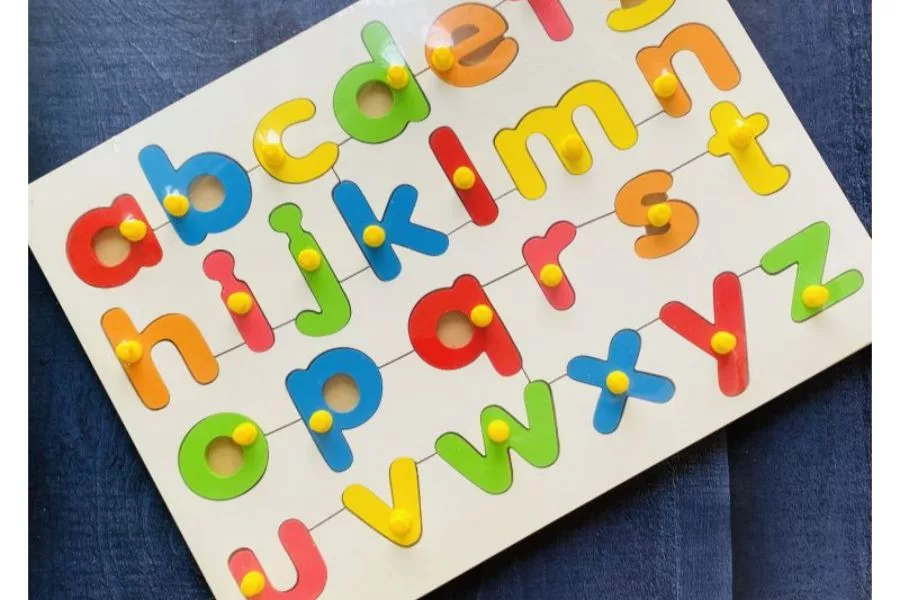
Puzzles are a low-friction category that sells itself to preschool parents. Their obvious developmental value makes them highly merchandisable.
Top retail subtypes include knob, layer, animal, shape, and theme-based peg puzzles. You can easily localize these by translating the language or swapping curriculum themes.
I always specify Maple or Beech for these wooden toy types. Soft woods splinter during machining.
Hardwoods allow precise peg fitting and cleaner cuts. In our tests, cheap heat transfers peel within weeks.
Demand silk-screen printing for better adhesion. Verify smooth edges and strictly age-grade items with small removable parts. Use coatings that comply with EN71-3 chemical safety standards.
🛡️ Our Verdict: Countless prototypes fail safety audits because the pegs snap off. We tension-test every glued peg. This prevents them from snapping into dangerous choking hazards during aggressive toddler play.
3. Montessori Wooden Toys
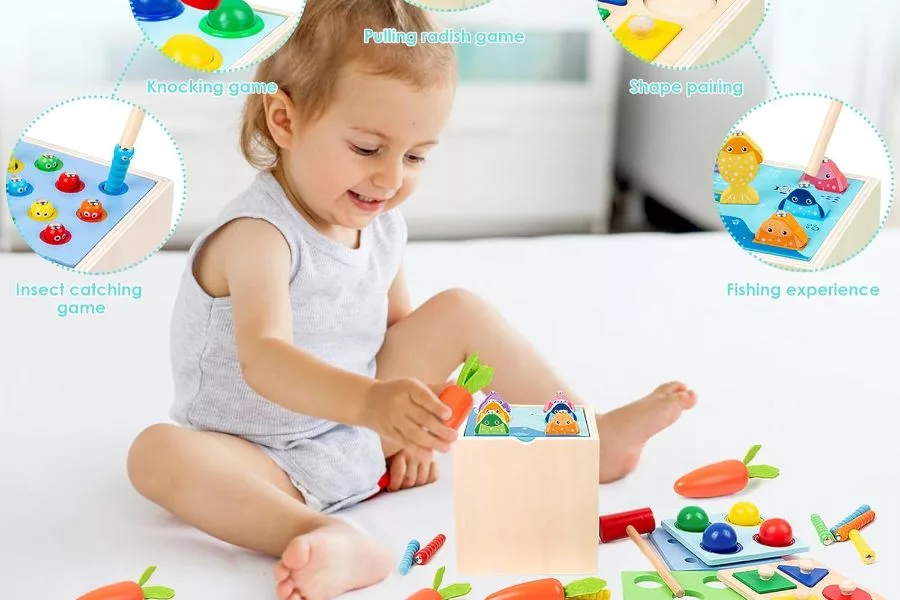
Many retailers slap "Montessori" on cluttered toys and wonder why premium buyers ignore them. True Montessori is a strict merchandising lane. It demands screen-free play and skill-building simplicity to justify high prices.
Your catalog must feature specific developmental wooden toy types. Top sellers include object permanence boxes, coin boxes, posting toys, practical-life boards, and simple sorting trays.
These products require uncluttered geometry and natural finishes. We advise clients to use FSC-certified wood to support eco-conscious branding.
Toddlers handle these shapes constantly. This means every edge demands high splinter-resistance to pass ASTM F963 safety standards.
🚀 Actionable Insight: Test prototype slot tolerances with physical coins before approving a mass production run.
4. Shape Sorters, Stackers, And Balance Toys
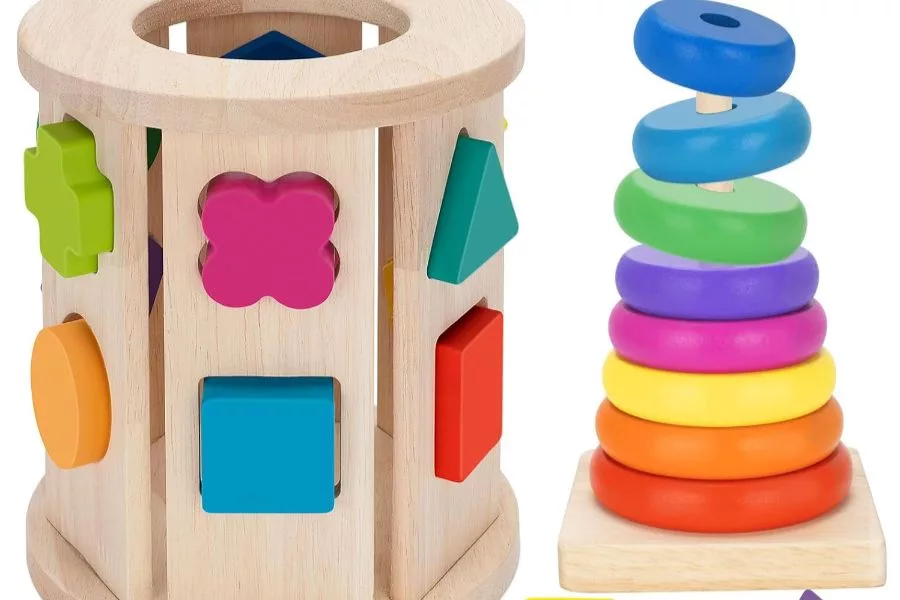
When sourcing core wooden toy types, grouping shape sorters, stackers, and balance toys saves shelf space. This single bundle covers shape recognition, hand-eye coordination, sequencing, and early balance skills. Buyers fill the toddler-development segment without scattering budget across overlapping SKUs.
Toddlers drop these toys constantly, making wood choice critical for survival rates. In our factory, I always specify Beech for high-impact components like stacking rings.
Rubberwood works well for painted bodies if you strictly control the finishing quality. You must also verify paint wear resistance, stable bases, and safe peg lengths.
🛡️ Our Verdict: Stacker dowels become major safety hazards if engineered poorly. Trading companies often sell stackers with rigid pegs that pose impact risks. We mandate an elastic-base design for center dowels over four inches tall to guarantee CPSIA safety compliance.
5. Alphabet, Counting, And Learning Boards
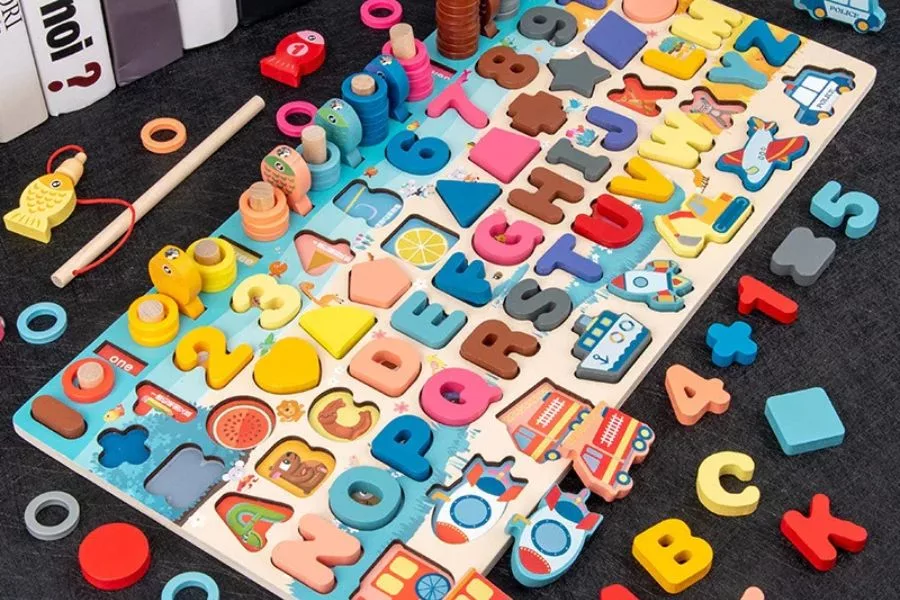
Retailers often struggle to scale toy designs across borders. Learning boards solve this problem instantly. They are the most adaptable educational wooden toys for toddlers available.
Build your core line with alphabet boards, number boards, abacuses, calendar boards, and early word panels. These items write their own curriculum-driven retail copy based on age and skill.
In our facility, reprogramming a CNC router from English to Spanish takes minutes. You can launch multilingual private-label lines without buying new molds.
🛡️ Power Move: Demand complete compliance paperwork upfront before paying your final manufacturing balance.
6. Classic Wooden Pull-Along And Push Toys
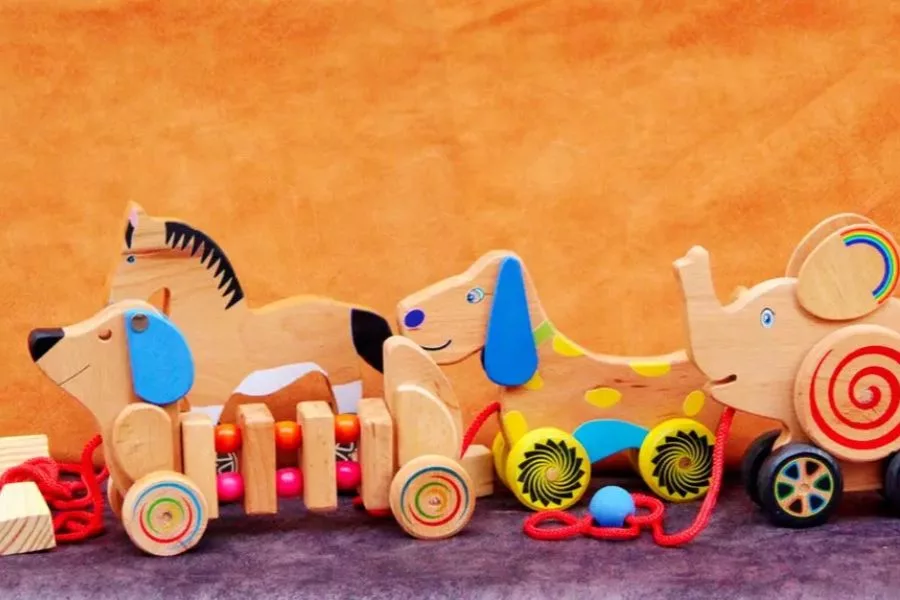
I recommend classic pull-along and push toys as hero pieces for toddler collections. These specific wooden toy types balance nostalgia with real utility.
Parents buy these distinct gifts because they actively support gross motor development. Animal forms, wooden cars, and walker-style push toys consistently drive strong sales.
Always verify technical safety before ordering. The toy needs a stable center of gravity to stay upright.
You must ensure pull cords strictly meet ASTM F963 safety limits. Finally, demand a smooth water-based finish that resists chipping on hard floors.
⚡ Power Move: Never approve a sample without a drop test to check paint durability.
7. Wooden Vehicles And Train Sets
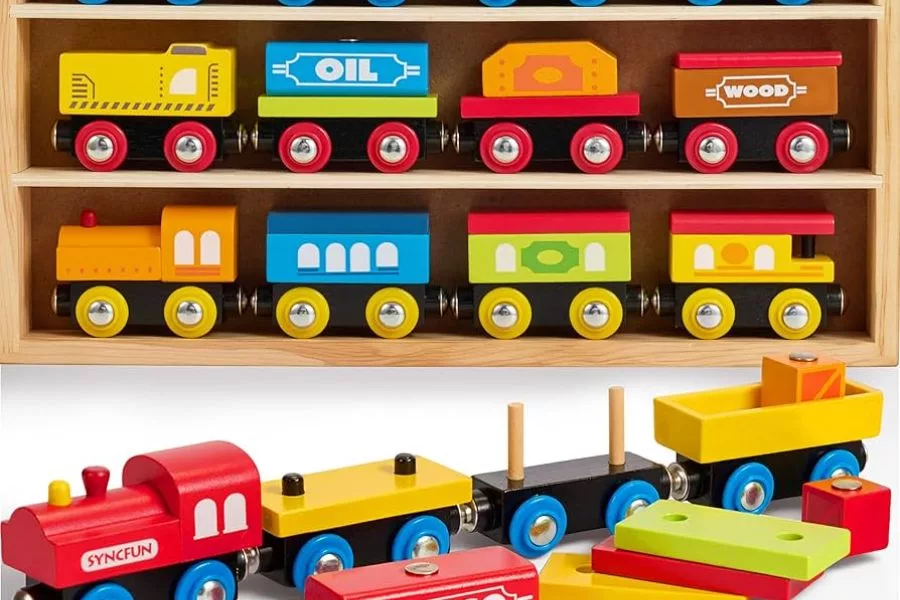
Stop treating wooden vehicles as one-off items. Among all wooden toy types, vehicles function as powerful repeat-purchase ecosystems.
Base train sets, cars, garages, and track add-ons create built-in bundling opportunities. You can easily release themed vehicle packs to build seasonally expandable assortments that multiply customer lifetime value.
In our factory, this category demands technical precision. We enforce strict universal track compatibility and test for high paint abrasion resistance.
Multi-piece sets require tight packaging discipline and clear carton mapping. Even one missing component triggers retail complaints immediately.
8. Wooden Musical Instrument Sets
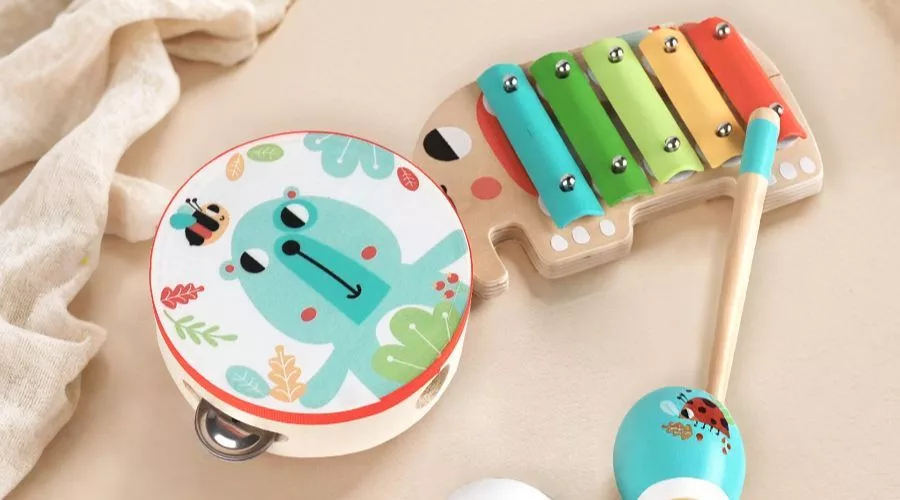
Among all wooden toy types, musical sets dominate the preschool gifting market. They photograph beautifully and command premium retail prices. Build a strong assortment with xylophones, rhythm sets, and mixed percussion kits.
Many brands fail because they ignore acoustic engineering. Specify durable hardwoods like beech for sticks, bars, and handles.
Soft woods dent instantly and ruin the sound. We rigorously verify water-based finishes and securely fixed metal keys to meet toy safety standards.
🛡️ Expert Take: Drop-test packaged samples from three feet before mass production to ensure they survive rough shipping.
9. Wooden Pretend Play Sets: Kitchens, Tools, And Market Toys
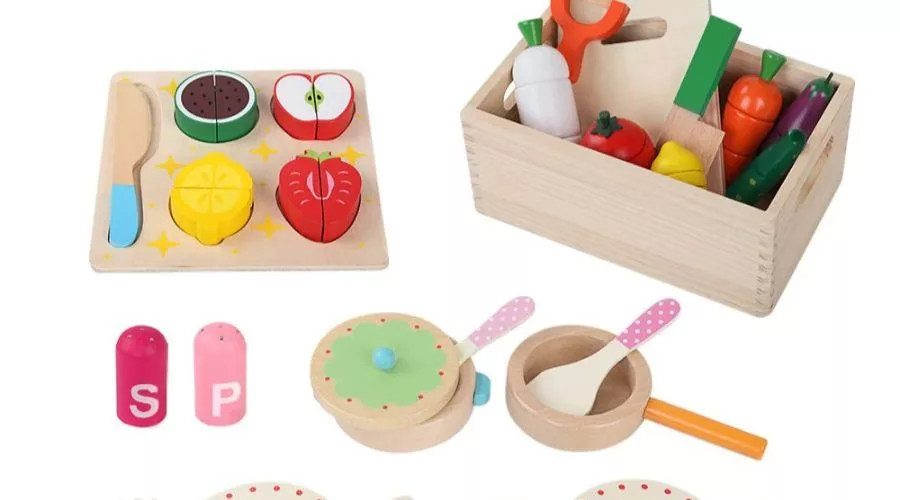
Our clients often struggle to raise average order values with small tabletop items. Expanding into larger wooden toy types solves this.
Play kitchens, tool benches, and market stalls act as premium room features. They command higher prices and bundle perfectly with accessory kits to multiply margins.
Shipping oversized items destroys profits without strict flat-pack engineering. To optimize dimensional weight pricing, we build large structural bodies from engineered wood panels.
We reserve solid wood strictly for high-touch handles. You must also include heavy-duty hardware to prevent assembly failures.
💡 Bright Idea: Sell add-on play-food sets as upsells on your kitchen product pages.
10. Wooden Dollhouses And Room Accessories
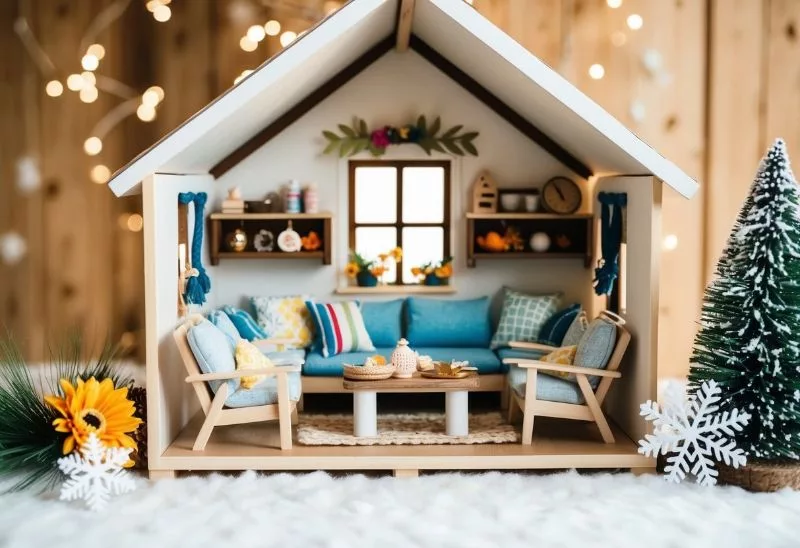
Retailers often struggle to drive repeat purchases. Wooden dollhouses solve this instantly.
A large dollhouse creates a premium hero SKU for imaginative play. It also unlocks a long-term accessory ecosystem.
You can sell room-by-room packs, miniature furniture, and expansion levels for years. Treat this as premium assortment planning, not impulse merchandising.
When we engineer these items, we monitor size tiers and carton volume. Large-item freight logic dictates your profit margins.
You must optimize box dimensions to control shipping costs. Always verify painted-detail durability and ensure finishes comply with CPSC toy safety standards.
How to Execute Your Custom Toy Manufacturing Plan?
Step 1: Map Your Material Selection
I evaluate different wooden toy types based on part requirements. Assign materials carefully to prevent failures.
Choose Beech for dense, durable, splinter-resistant blocks. Pick Maple for clean machining on precision components. Select Rubberwood for painted mid-market lines.
Only use engineered boards for large furniture-style items. Partner with an eco-friendly toy manufacturer to source FSC-certified wooden toys. Instruct your custom wood toy manufacturer to follow this matrix.
Step 2: Complete Your Compliance Checklist
Never ship goods without passing lab tests. Failing customs destroys margins.
Verify your children's product certificate early. You must meet all toy safety standards. Check prototypes against official CPSIA guidelines, ASTM F963, EN71-1, EN71-2, and EN71-3.
Next, apply strict toy age grading guidelines. Demand strict factory moisture control. Require heavy-duty toy product packaging to survive sea freight and Amazon FBA handling.
Step 3: Run the Factory Workflow
Author's Verdict: Inside LeelineToys I recently audited the toy production process at LeelineToys. First, they use 3D prototyping for form and assembly review. Next, they execute precise CNC carving. Finally, they manage sanding, finishing, and quality control. For reliable custom toy manufacturing, leverage their toy ODM/OEM expertise. They catch engineering flaws before cutting expensive molds. Contact them here to start your build.
People Also Ask About Wooden Toy Types
1. What standards do wooden toys need for the U.S. and EU?
You must meet ASTM F963 for the U.S. and EN71 for Europe. In my experience, wooden toys fail most often on heavy metal paint tests and drop-test splintering.
We always apply strict toy age grading guidelines first. This step dictates the exact toy safety standards your product must pass. Make sure your engineering team understands exactly how ASTM F963 explained applies to small parts.
2. Do I need a CPC even if the factory says the toy passed testing?
Yes. Factory test reports are not enough.
You legally need a Children's Product Certificate (CPC) to clear U.S. Customs.
I see Amazon listings suspended daily because sellers rely on outdated factory paperwork. You must have your exact production batch tested by a CPSC-accepted lab (Source: CPSC Official).
3. Should I choose OEM or ODM for a new wooden line?
Choose ODM if you want to sell proven designs quickly. Choose OEM if you have custom CAD files and need exclusive IP protection.
When figuring out how to find a toy manufacturer, ask about their internal R&D capabilities. In our facility, we often guide new brands through ODM first. This lets them test the market before investing thousands in OEM molds.
4. What MOQ should I expect for test runs?
Most direct factories demand 1,000 units minimum per SKU. However, I often negotiate 500 units for pilot runs if you place your order during the slow season between January and March. Anything lower usually requires a sourcing agent who will secretly mark up your unit cost.
5. How do I compare China with USA for wooden toy sourcing?
China dominates in raw material access and mature supply chains. When comparing U.S. vs China toy manufacturing, China wins heavily on tooling costs and rapid prototyping. You can confidently source wooden toy manufacturers in China.
6. Can one factory support a wider toy line beyond wood?
Yes, but you must verify their internal assembly lines first. A true manufacturing partner can handle complex multi-material projects.
We regularly integrate plastic and fabric into wooden bases on our own assembly floor.If your brand plans to expand, review plush toy construction methods and strict plush toy label requirements. You might also need a reliable custom vinyl toy manufacturer to scale up.
Author's Verdict: Cut out the middlemen. Stop paying hidden agent commissions. If you want direct factory access, transparent pricing, and expert engineering, contact LeelineToys today to start your custom production run.