
Safety is not an option; it is the law. In my years on the factory floor, I found that the importer bears the final liability.
I once witnessed a container rejection simply because the test report missed a traceability batch code. To prevent these losses, this guide maps strict wooden toy safety standards by market. We break down the three failure modes we audit daily: chemical limits, mechanical risks, and critical paperwork gaps.
Wooden Toy Safety Standards – Brand‑Safe Compliance Checklist
Learn which tests matter, read labels like a pro and pass audits without costly surprises.
1. USA (2026): ASTM F963-23 + CPSIA — What Wooden Toys Usually Fail
To clear US Customs, you must hold a Children's Product Certificate (CPC). You cannot legally issue this document without passing test reports from a CPSC-accepted third-party lab.
Your wooden toys must comply with ASTM F963-23 (mechanical) and CPSIA (chemical). Before paying for official lab tests, we inspect these four common failure points on the factory floor:
- Small Parts: If any component fits entirely within a 1.25-inch choke test cylinder, the toy fails for children under three.
- Torque & Tension: Labs twist attached parts (like wheels) to 180 degrees. If the glue snaps, you fail.
- Sharp Points: Wood must be sanded smooth to eliminate splinter risks.
- Chemicals: Paints and surface coatings must test below 90 ppm for lead. See our full breakdown of toy safety standards.
🛡️ LeelineToys' Verdict: We see 30% of new wooden prototypes fail the torque test. If the glue is too thin, wheels detach during the rotation test. We pre-screen every batch using a digital torque gauge set to 4 inch-pounds before booking the lab. This simple pre-check prevents failures and saves clients the typical $500 re-testing fee.
2. EU (2026): EN 71-1:2026 + EN 71-3 + The New Digital Product Passport (DPP)
Passing US total lead limits (ASTM F963) does not guarantee EU compliance. EN 71-3 measures migration—chemical transfer when a child sucks on a toy—not just total content. We frequently see painted wooden blocks pass US tests but fail EU migration limits for heavy metals like barium or chromium.
For 2026, EN 71-1 adds "visual realism" and "sensory checks" for food-imitating toys. If your wooden fruit looks or smells edible, it faces stricter choking tests.
Simultaneously, the EU is shifting from Directives to Regulations. The new Digital Product Passport (DPP) replaces paper trails, meaning your CE marking for toys must link to a live digital record.
Review our ASTM F963 vs. EN71 guide for specifics.
🛡️ LeelineToys' Verdict: Migration testing kills exports. We recently tested yellow wooden lemons that passed total lead checks but failed EN 71-3 due to chromium release during acid-extraction simulation. We switched to a sealed, high-grade lacquer to pass.
🚀 Actionable Insight: Stylize wooden play food designs (e.g., unrealistic shapes or colors) to bypass the strict "food-imitating" classification under EN 71-1:2026.
3. Australia / New Zealand (2026): AS/NZS 8124 + "Don't Assume EN 71 = Pass"
Don't assume your US or EU documents work here. To prevent customs rejection, your test report must specifically cite AS/NZS 8124.
Factories often hand over EN 71 reports because the physical tests look identical. This is a trap.
We have seen ACCC officers reject documentation that doesn't explicitly reference local standards. We force labs to align the test scope to your specific SKU.
For wooden toys, we run specific physical checks beyond the lab work:
- Surface: We inspect for sharp points and splinters.
- Coatings: We test lead levels in paints.
- Age Grading: If a toy has small parts but is labeled for toddlers, it fails. Use our toy age grading guidelines to set the right tier.
🛡️ LeelineToys' Verdict: The "Equivalent" Trap While AS/NZS 8124-3 mimics EN 71-3, heavy metal limits differ. We once caught a factory using an EN 71 report where barium levels were compliant for Europe but borderline for Australia. We now mandate a dedicated AS/NZS test for every AU/NZ order.
4. CPSIA vs. EN 71-3: Managing Lead and Heavy Metal Testing
Every new color creates a new billable test. You must distinguish between the two chemical regimes to budget correctly.
- US (CPSIA): Focuses on total lead content in surface coatings (90 ppm limit).
- EU (EN 71-3): Focuses on migration. Labs test for 19 heavy metals leaching out under simulated saliva exposure.
In my experience, yellow paint often passes US lead checks but fails EU barium limits immediately.
Buyer Action: Demand factories use pre-certified inks with batch traceability. A 10-color xylophone requires 10 separate screens. Check the specific chemical lists in our toy safety standards guide. Also, use proper toy product packaging to prevent paint transfer during shipping, which can ruin test samples.
🛡️ LeelineToys' Verdict: More colors equal more fees. We advise clients to keep 80% of the toy as natural wood and paint only accents. Reducing a design from six colors to two can save $500+ per SKU in third-party lab costs.
5. Choke Hazards: Small Parts, Tension Tests, and Labeling

Regulators ignore your "Ages 3+" sticker if the design appeals to toddlers. If a product looks like it belongs in a crib, it must pass strict wooden toy safety standards for children under three.
The real danger is what breaks off. In our lab, we subject prototypes to "abuse" cycles—impact drops, torque (twisting), and tension (pulling).
A wooden car might pass visual inspection, but if a glued axle fails the torque test, the detached wheel becomes a lethal small part. Simple glued pegs are the most common failure point we encounter.
Lock in your age grade rationale before opening molds. For 0–3 demographics, designs must physically prevent detachable components from fitting the test cylinder.
For older kids, your toy product packaging requires mandatory warning labels. Use our toy age grading guidelines to align your design with compliance tiers.
🛡️ LeelineToys' Verdict: Glue is not a fastener. We see 40% of adhesive-only joints fail the 180-degree torque test. We refuse to produce wooden wheel assemblies that rely solely on glue. Instead, we engineer mechanical locks—like cross-pins or stepped axles—to ensure parts stay attached even if the adhesive degrades over time.
6. Non-Toxic Wood Finishes for Toys: What Procurement Should Specify (and What to Ban)
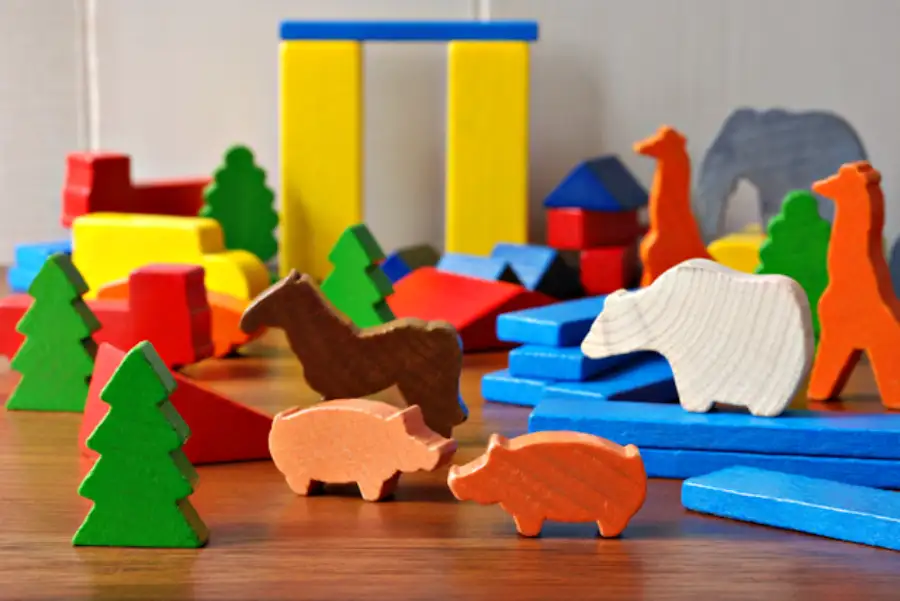
"Non-toxic" is marketing fluff, not a manufacturing spec. Writing "non-toxic finish" on a PO invites failure. Factories often interpret vague requests as permission to use whatever cheap coating they have on hand.
To ensure you meet wooden toy safety standards, translate requirements into a controlled Bill of Materials (BOM):
- Define Chemistry: Specify water-based systems (e.g., acrylic dispersions) compliant with EN71-3.
- Lock Cure Times: Rushed drying leaves chemical residue that fails migration tests.
- Block Substitutions: Add a strict "no substitution without written approval" clause.
Avoid "same paint as last time" claims without batch records. Also, reject thick varnish layers; they often mask poor sanding and alter surface friction.
You need visibility into the toy production process to catch these swaps. A transparent toy ODM/OEM provides pigment declarations before mixing begins.
🛡️ LeelineToys' Verdict: We once rejected 5,000 stackers because the factory secretly swapped to a "fast-dry" solvent varnish to speed up output. It failed VOC testing instantly. We now require video proof of the water-based mixing process.
🚀 Actionable Insight: Request a "wet sample" of the liquid coating for independent lab analysis before the factory applies it to the full batch.
7. FSC-Certified Toy Manufacturing: Chain of Custody (CoC) Checks Importers Can Verify
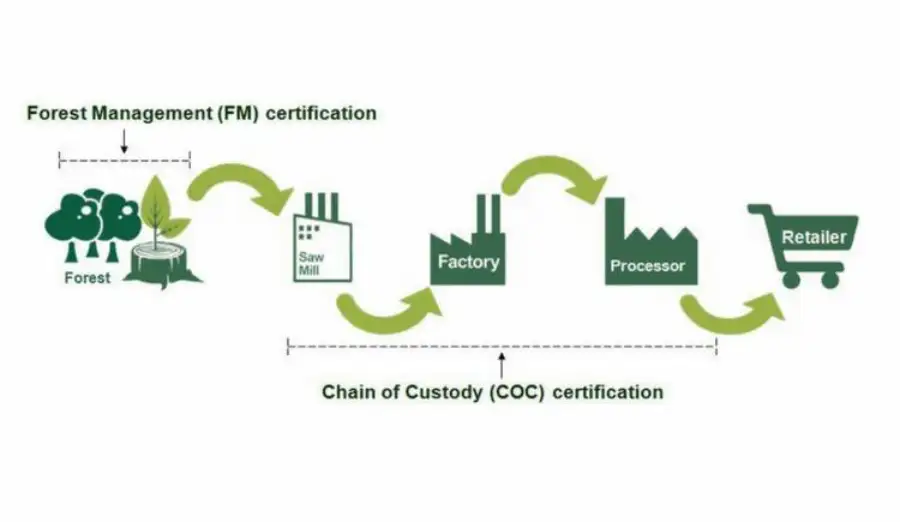
An FSC logo on a sample doesn't guarantee compliance. In my experience, many buyers make a critical error when learning how to find a toy manufacturer: they accept a raw material certificate instead of the factory's own Chain of Custody (CoC).
The factory issuing your invoice must hold its own valid CoC code. If they send you a certificate belonging to a plywood vendor, you cannot legally use the FSC logo. See our guide on FSC certified wooden toys for deep sourcing protocols.
Your Procurement Audit:
- Request the Code: Get the factory's specific CoC license code (e.g., FSC-C######).
- Verify the Scope: Enter the code into the FSC Public Search. Confirm the scope lists "toys."
- Check the Invoice: The code must appear on your commercial invoice to maintain the chain.
🛡️ LeelineToys' Verdict: Watch the Bank Account We frequently see trading companies provide a PDF belonging to a lumber yard three provinces away. This breaks the chain. We reject any supplier who cannot produce a CoC certificate in their own company name. If the certificate name doesn't match the bank account, walk away.
9. Use the Nylon Stocking Test & Golden Samples to Block Failures
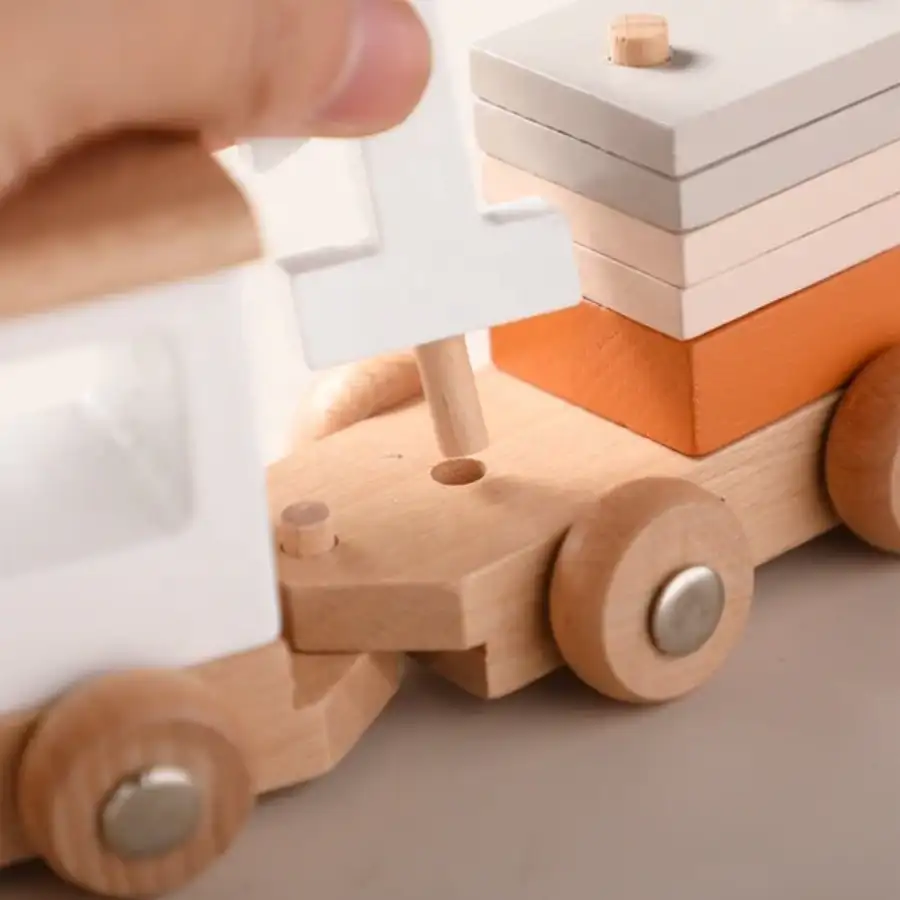
Visual inspections miss micro-splinters that a child's skin finds immediately. To prevent liability, we mandate the Nylon Stocking Test.
Inspectors rub a sheer stocking over every edge, drilled hole, and contour. If the fabric snags, the unit fails. We apply this friction test post-priming and pre-pack to catch rough grain that standard sanding misses during the toy production process.
We also enforce two hard B2B gates:
- Moisture Control: Wood must test between 8–12% on a calibrated pin meter. Higher levels cause mold inside hot shipping containers.
- Sealed Samples: We sign and date a "Golden Unit" that stays on the factory floor. This physical standard stops factories from swapping materials after approval.
🛡️ LeelineToys' Verdict: Photos Hide the Truth. We once caught a factory switching to cheaper pine for a second batch. The photos looked identical, but the weight was off. We only caught the substitution by weighing the production lot against our Sealed Sample. See our US vs China manufacturing comparison for more on onsite validation.
Action Plan: Your 5-Step Compliance Execution Roadmap
Safety failures usually happen because of poor planning. You cannot wait until goods are on the water to verify wooden toy safety standards.
Treat compliance as a production step. Use this workflow to move products from custom toy manufacturing to retail shelves without delays.
Step 1: Define Your Destination Market

Map your target markets before we cut a single piece of wood. A toy legal in Texas might be illegal in Paris if you miss a specific chemical test.
- USA: Map to ASTM F963-23 and CPSIA statutes.
- EU: Map to EN 71-1:2026 and EN 71-3. Prepare data for the DPP (Digital Product Passport).
- AU/NZ: Map specifically to AS/NZS 8124.
Author's Verdict: Tell your lab to run a "combined test matrix." In our testing, we group strict US lead limits with EU migration tests into one session. This typically saves 30% compared to testing for each market separately.
Step 2: Build a Compliance-Grade Tech Pack
A vague design file invites disaster. Build a Tech Pack that acts as a legal instruction manual. List the exact inputs.
- Materials: Specify the wood species. Example: Beech wood, Grade A.
- Chemicals: List the glue type and finish system brand.
- Specs: Define colorways and hardware requirements.
- Safety: Write your age grade rationale. Example: "3+ due to small balls."
- Packaging: Include artwork for mandatory warnings. See our toy product packaging guide for layout examples.
Read more on building these specs in our custom wood toy manufacturer breakdown.
Step 3: Enforce Sampling Controls
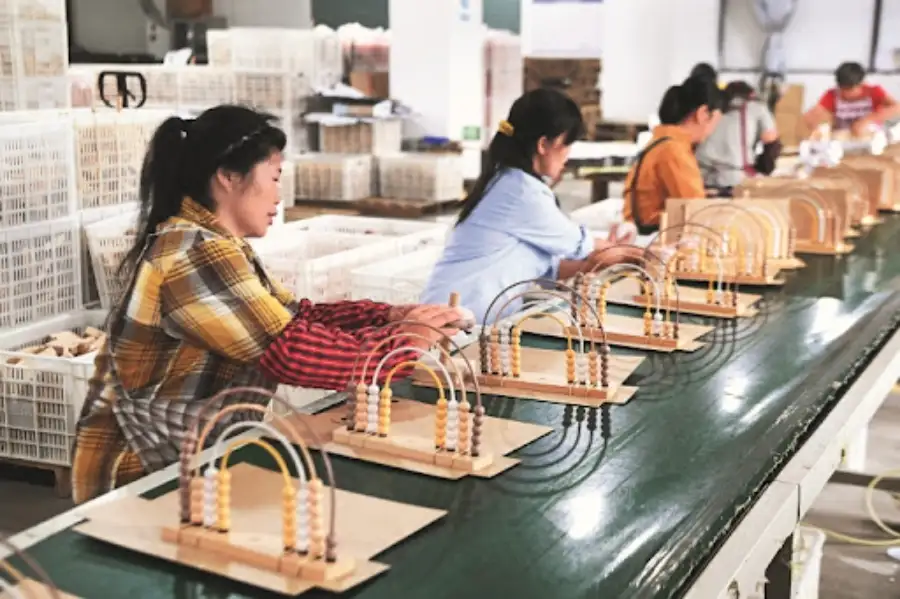
Never approve a product via photo. Require a physical standard to prevent "quality fade" during mass production.
- Sign the Golden Sample: Sign and date the final approved unit. Seal it in a bag. Keep one in your office and send one to the factory.
- Lock the Specs: Include a "No Substitution" clause in your contract. Material changes must void the order.
- Test for Burrs: Use the Nylon Stocking Test. Rub a nylon stocking over the wood surface. If it snags, the sanding is insufficient.
- Check Moisture: Mandate 8-12% moisture content. Shipping containers get hot. Wet wood will warp or crack during transit.
Step 4: Budget for Commercial Lab Testing
Third-party testing is a major cost. Labs like SGS or Intertek charge based on the number of unique materials.
- Quote by Material: Five paint colors equal five chemical tests.
- Group Your Substrates: Use the same red paint across your whole collection. You pay for that test only once.
- Plan for Retests: Budget an extra 15% for re-testing. Wood creates variance. We often see dark stains fail heavy metal tests. We then switch to lighter shades to pass.
Contact us to speak with an engineer about your compliance budget.
Step 5: Finalize Documentation
You cannot sell without a paper trail. Retailers like Amazon will ask for these documents instantly.
- USA: Keep test reports. Issue your Children's Product Certificate (CPC).
- EU: Update your Technical File. Ensure your CE marking for toys is backed by a Declaration of Conformity (DoC).
- AU/NZ: Retain AS/NZS 8124 test evidence.
- Online Sales: Create a PDF "Document Packet" for every SKU. Upload this to your retailer portal before the stock arrives.
People Also Ask About Wooden Toy Safety Standards
1. Can I rely on a supplier listing that says "ASTM/EN 71 compliant"?
No. A website listing is marketing text, not legal evidence.
In my experience, many suppliers upload generic reports that belong to different factories or expired batches. You must demand a dated test report from an accredited lab (like SGS or Intertek) that explicitly lists your specific SKU and colorway. If the report lacks a high-resolution photo of your exact product, Customs will reject it.
2. What is the minimum test set for a painted wooden toy in the USA?
To legally sell in the US, you need a Children's Product Certificate (CPC) based on passing results for two main standards. First, ASTM F963-23 covers physical safety, such as the torque test for wheels and the small parts cylinder test for choking hazards.
Second, CPSIA mandates chemical testing for total lead in surface coatings (90 ppm limit) and phthalates. You also need a permanent tracking label on the product and packaging.
3. Why do toys pass CPSIA but fail EN 71-3?
These standards measure different risks. The US CPSIA limit checks for total lead content inside the paint.
The EU's EN 71-3 measures migration—how much chemical releases when a child sucks on the toy. We often see yellow and red paints pass the US lead check but fail the EU test because they release too much barium or chromium. You cannot use a US report to clear EU Customs.
4. What changed in EN 71-1:2026 that matters for wooden toys?
The 2026 update tightens rules for food-imitating toys. If you manufacture wooden fruit or vegetables, inspectors now apply "sensory checks." If the toy looks, smells, or feels too realistic, it faces stricter choke-hazard testing because a child is more likely to mouth it. To stay safe, we recommend stylizing wooden food designs with unrealistic colors or sizes to avoid this classification.
5. How do I stop "material substitution" after I approve a sample?
You must lock the factory into a Sealed Golden Sample. Sign and date the approved prototype, seal it in a tamper-evident bag, and leave it at the factory.
During production, your inspector compares the mass-produced units against this standard. We also weigh the production units; a sudden drop in weight usually means the factory swapped dense beech wood for cheaper, lighter pine without telling you.