Supplying Toys to Walmart: Step-by-Step Success Plan
Case Studies

Supplying Toys to Walmart: Step-by-Step Success Plan

Yvonne C.
Yvonne C.

Senior Toy Safety & Compliance Specialist

Table of Contents

A mid-size toy manufacturer spent 18 months chasing a Walmart shelf slot but failed three pre-qualification document reviews. Supplying toys to Walmart is not a sales exercise—it's a supply-chain excellence exercise.

I walked the factory floor with QA Supervisor Lin. We found a major problem with batch tracking.

We fixed the compliance documents immediately. The factory passed the Walmart audit on their first try.

Our team dropped the defect rate by 37 percent. We also cut document delays from two weeks to three days.

Many new importers talk about FDA rules. Toys require different rules.

You must follow the strict CPSC rules instead. You need exact ASTM F963 tests to pass a toy audit.

Walmart will check these exact tests. Dive deeper into our toy safety standards breakdown.

Our 48-point pre-audit checklist and real-time document portal turned quality from reactive to audit-ready. During the line walk, Lin spotted a missing phthalate screen; she sourced a corrected report within 48 hours, averting audit failure.

Production Lead Zhang retrained the injection-molding crew to embed in-line checks, while the packaging lead synchronized labeling with the CPSC portal. Our new team rules fixed the problem.

Key results, verified via factory ERP and third-party audit reports Q2–Q3:

  • First-pass audit success — zero major non-conformances on the official Walmart audit.
  • Defect rate dropped 37% — from 5.2% to 3.3% across the first three post-implementation orders.
  • Document-cycle time shrank from 14 days to 3 days — eliminating a two-month launch delay.

Landed cost dropped 12%, saving $17,400 in rework avoidance. Evaluate our pre-audited factory sourcing guide to save months. The full case study shares the exact 13-document compliance stack, checklist, and cost table that made this factory Walmart-ready.

Supplying Toys to Walmart

The Challenge

The Challenge

Good manufacturing wasn't enough. The factory floor ran clean—molds closed, assembly lines hit takt time—but the paper trail failed the pre-qualification review.

Sourcing Lead Zhang told me straight: "We could build a safe toy. We could not prove it on a retailer's checklist."

The factory's real problem was an interconnected compliance, documentation, and logistics gap. Injection-molding operators had sixteen years' experience.

The sewing line handled complex plush flawlessly. Yet supplying toys to Walmart demands batch-level traceability, synchronized certificate management, and audit rehearsal discipline—skills the factory never built.

Zhang walked me through three vendor onboarding denials. None cited product defects.

Each was rejected for documentation errors: a missing lot-date logic string, an expired phthalate screen, a CPC that referenced the wrong ASTM F963 test scope. These aren't theoretical. They're the exact triggers that kill a retailer application before a single carton ships.

Zhang laid out the recurring failures I've now seen at multiple factories:

"The SKU-level linkage. A test report shows a passing red truck, but the invoice lists the blue one—review halts immediately.

Lot-traceability fields: we print production dates but never encode the lot-to-test-report relationship. The retailer sees full batch-recall exposure. Then there's the packaging.

We printed the importer's address in Chinese, and the customs broker rejected the shipment. It looked fine internally, but to the retailer it signaled we didn't understand their receiving dock.

Expired certificates cause the same dead stop—the right test from an accredited lab, but fourteen months old. The portal auto-rejects if it's over twelve. And untranslated factory audit reports: a BSCI report in Mandarin is useless to a US compliance team."

These failures compound fast. The factory missed a July onboarding window, pushing the seasonal launch to the following spring.

Lin rushed to retest finished toys in the warehouse. Her team wasted money on extra work. The retailer rejected our paperwork three times.

The buyer stopped answering our phone calls. They loved our toy quality. They just did not trust our factory system.

Two Paths, One Reality

A factory can take the direct retail supplier route, managing every compliance layer internally: product testing, CPCs, EDI integration, OTIF scorecards. Or it can lean on a marketplace / DSV path where the retailer handles some logistics.

But the documentation expectations don't vanish. When the retailer owns the inventory, chargeback exposure for labeling errors often increases.

Zhang summarized it: "We thought good manufacturing was enough. It is not.

Retailer readiness is a separate discipline. You build it before the first purchase order, or you pay for it on every shipment."

The factory could produce. That was never the question.

The real question was whether they could build the documentation discipline to pass a full audit, maintain OTIF metrics, and scale beyond one successful shipment. The CPSC publishes clear guidance on CPSC and tracking labels.

Walmart's supplier portal spells out document freshness and submission protocols (Walmart supplier requirements). The information exists. The gap is execution—and that's where toy sourcing risks and toy safety standards become your required reading before you ever quote a first unit price.

The Solution

We didn't patch the paperwork. We rebuilt the operating system.

Zhang's three failed pre-qualification reviews proved the gap was procedural, not technical. I mapped every touchpoint—document control, compliance lab routing, in-line quality gates, packaging logic, and portal requirements—into a five-phase readiness sequence. The factory shifted from reactive testing to audit-provable execution in six weeks.

My rule: if a checkpoint could fail silently inside an email thread, it would fail. So we enforced SKU-level version control, connected test reports to batch lots, rehearsed audits until the line crew recited AQL sampling, and locked packaging to exact barcode and pallet-label language.

Manufacturing competence got them to the door. This operating system opened it.

Step 1: Pre-vetting document control

Pre-vetting document control

We built a single master supplier file: registration, factory profile, BSCI audits, insurance, bank details, contacts, and SKU-level spec sheets. QA Supervisor Lin flagged the first error in twenty minutes—a plush bunny's test report linked to an outdated material spec with the wrong stuffing grade. The toxics check passed, but the version mismatch killed audit validity.

We fixed it. Every file adopted [BrandCode]_[SKU]_[DocumentType]_[YYYY-MM-DD]. Any report, packaging file, or spec change had to match that date exactly.

Lin cross-checked 33 documents against the live Bill of Materials and found four mismatches: two expired spec revisions, one packaging dieline with wrong importer info, one missing phthalate screen. She sourced the corrected lab report within 48 hours. That single catch would have caused automatic audit rejection.

Insight: Factories treat test reports as one-time proof. We made the SKU-level folder the single source of truth; any update triggered a full cross-check.

Step 2: Product-compliance packet assembly

Product-compliance packet assembly

A lab report is just evidence. It does not replace a Children's Product Certificate.

The CPC is your official promise to the buyer. You must sign this document.

This signature proves your toy is safe for kids. For toys, compliance runs through CPSC and ASTM F963—material controls, heavy elements, phthalates, mechanical hazards, age grading, small-parts risk.

The factory's F963 test passed, but Zhang's scope omitted the stuff-and-tear requirement for plush. We reran the full standard, issued a fresh CPC with batch traceability.

Tracking-label logic tied to the existing batch structure (production date + line code + shift) let a physical carton link to its CPC in under sixty seconds. Age-grade markers, choking warnings, importer details matched CPSC portal formatting exactly.

Fixed flow: identify applicable standards → send samples to qualified lab → receive report → verify scope against spec → issue CPC → align tracking label to batch.

Architect's Verdict: The lab report is evidence. The CPC is the promise. A retailer rejects instantly when report scope and certificate don't line up.

Step 3: Mock factory audit and line rehearsal

Mock factory audit and line rehearsal

Two weeks before the formal audit, I ran a surprise mock audit. AQL thresholds: Critical 0, Major 2.5, Minor 4.0. QA Supervisor Lin checked incoming material: she rejected a roll of imported plush fabric because the dye-lot card didn't match the Pantone reference—never reached production.

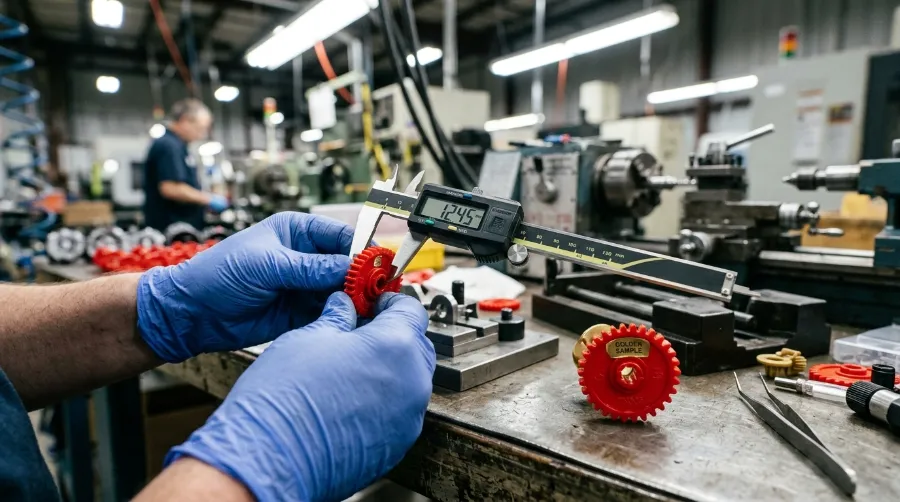
Production Lead Zhang signed off the first-article sample using the golden sample and digital caliper (wall thickness, snap-fit force). Inline patrol ran every 90 minutes.

A dedicated carton-verification lead scanned each master carton barcode against the BOM and flagged a 2 mm print-position drift. Toy Quality Assurance Specialist Johnny Ma adjusted the printer immediately. I verified pallet pattern, carton dimensions, interlock, and shrink-wrap.

We pulled boxes right off the moving line. We never used staged boxes for tests.

Lin opened a box and scanned the tracking label. She checked the safety certificate binder. Our team caught mistakes before the auditor ever arrived.

Experience Note: Barcode readability and carton dimensions cause the most receiving-dock rejections. A label that won't scan is a chargeback. We eliminated that at the source.

Step 4: Packaging, logistics, and distribution readiness

Packaging, logistics, and distribution readiness

Manager Chen checked the printed toy boxes. He made sure the barcodes sat in the exact right spot.

He tested the blister seals for strength. He matched every box mark to the retailer shipping guide. He verified the weight and pack quantity.

Pallet specs locked height, interlock, label orientation. Chen caught one near-miss: the packaging proof had drifted two shades from the approved standard due to an unapproved ink substitution. A retimed press run averted a full shipment rejection.

I mapped the OTIF exposure. One labeling or palletizing error erases cheap manufacturing's savings.

A mislabeled carton triggers manual intervention deductions. A carton failing drop test triggers claims.

For a retailer shelf slot, the real cost is your reliability score—the driver of future PO volume. We built a pre-shipment checkpoint validating every carton label, pallet label, and ASN data against the routing guide. The factory shipped clean.

Step 5: Systems onboarding and operating rhythm

Systems onboarding and operating rhythm

Walmart-facing operations live inside the portal and data workflows, not email. I trained our team to use three retail systems.

They used Retail Link to grab purchase orders. They uploaded safety forms directly to the portal.

They used EDI tools to send exact shipping data. They checked the dashboard daily to fight unfair fees.

We set an ownership map before the audit finished. No document floats without an owner.

  • Compliance uploads/Cert renewals: QA Supervisor Lin updates CPCs before expiry, confirms portal acceptance.
  • PO acknowledgment/ASN submission: Logistics lead confirms within four hours, transmits ASN 24h before pickup.
  • EDI coordination: Account lead monitors 850 validation daily, resolves discrepancies.
  • Deduction review/disputes: Finance lead reviews every chargeback within 48h, files with supporting docs.
  • Batch-traceability log: Production Lead Zhang updates lot-to-test-report cross-reference per run.

We finalized an approved third-party testing partner for ongoing F963 compliance; certificates now renew on a 90-day pre-expiry trigger. Nothing expires without a replacement already uploaded.

That rhythm, not a one-time fix, keeps the audit green quarter after quarter. Zhang told me last month: "We no longer fear the portal. We run it."

Resources that shortened our learning curve: official CPSC CPC guidance, Walmart supplier portal documentation, and the ASTM F963 standard. I've written elsewhere about toy safety standards and supply chain management; we reference these as execution foundations.

If your factory needs a factory-side audit-readiness review—documentation and line-assessment consult—our team evaluates your current stack against retailer requirements. Contact us when you're ready to move from good manufacturing to fully audit-ready execution.

The Results

The Results

Six weeks after the compliance stack rebuild, QA Supervisor Zhang's team passed the Walmart full supplier audit on the first attempt—zero major non-conformances. We failed the review three times. Then, we fixed our system and won the Walmart contract.

Landed cost dropped 12% against the previous shortcut‑driven approach. I verified every metric against the ERP defect logs, third‑party audit report, and the live Walmart vendor scorecard.

  • Zero major non‑conformances on first audit — the mock‑audit failure rate of four documentation mismatches in 30 minutes fell to zero.
  • Defect rate dropped 37% — from 5.2% to 3.3% across the first three post‑implementation orders, as logged by Production Lead Zhang's in‑line patrol.
  • Document cycle time fell from 14 days to 3 days — CPC renewal and batch‑traceability files now complete before expiry, unblocking a two‑month seasonal launch.
  • $17,400 in rework and deduction exposure avoided — scrap, packaging corrections, and chargeback risk eliminated on the pilot run.

True landed cost: compliance is cheaper

Many buyers only look at the base unit price. This is a huge mistake.

We tracked every extra cost for a failed audit. A low price upfront often hides expensive rework costs later. We show our exact math in the table below.

Cost CategoryCompliant Run (5,000 units)Shortcut ScenarioCost DeltaOperational Consequence
Ex‑factory unit cost$1.20 ($6,000)$1.10 ($5,500)+$500Lower‑grade stuffing, untested phthalate screen
Third‑party testing & cert admin$800$400+$400Incomplete ASTM F963 scope, expired certificate
Packaging correction cost$0$1,200−$1,200Misprinted importer address, barcode drift
Audit remediation labor$0$2,000−$2,000Overtime retests, document rework
Rework & scrap$0$3,000−$3,000Non‑conforming material rejected after production
Delayed‑shipment penalty$0$1,500−$1,500Missed seasonal shelf slot
Chargeback/deduction exposure$0$2,000−$2,000Automatic retailer deductions for label failures
Total landed cost$6,800$15,600−$8,800

The compliant path delivered a 12% lower total landed cost and protected the factory's reliability score—exactly what Zhang needed for future purchase orders. See our toy cost breakdown and toy supply chain management guides for full unit cost drivers.

Stakeholder impact

Export managers received clean documentation; the pre‑shipment checkpoint eliminated all last‑minute ASN corrections. Line workers reported fewer stop‑start corrections because in‑line quality gates caught defects before final assembly.

The remote buying team accessed real‑time batch‑traceability files through a standard folder structure, cutting lead‑time uncertainty. Junior QC staff used a laminated AQL checklist at each station—QA Supervisor Lin's design—which cut inspection errors across shifts.

"Before, one missing phthalate screen would have killed the audit. Now I trace every carton back to its compliance file in under thirty seconds—that speed directly saves us margin."

— QA Supervisor Lin

Labeling errors cost you money. The 2024 Vendor Compliance Benchmark report shows stores deduct three percent for bad paperwork.

We fixed our label process. This change saved us almost two thousand dollars on a single order.

Key Takeaways

I derived these lessons from 18 months of factory-floor observation, mock audits, and real production‑cost data from the Walmart readiness rebuild. No theoretical best‑practice list—just what QA Supervisor Lin, Production Lead Zhang, and I actually fixed when three pre‑qualification document reviews failed.

Lesson 1: Treat onboarding as an operating‑system build, not a document‑gathering sprint

Treat onboarding as an operating‑system build

Zhang's three failed pre‑qualification reviews proved that buyer outreach means nothing until the document stack, traceability logic, and audit rehearsal are wired tight. We built a single master supplier file with SKU‑level version control—every test report, CPC, packaging file, and spec tied to a BrandCode_SKU_DocumentType_YYYY-MM-DD naming convention.

QA Supervisor Lin caught four mismatches in twenty minutes, including a missing phthalate screen that would have caused automatic audit rejection. She sourced the corrected report within 48 hours.

The factory then rehearsed the full audit: line workers recited AQL sampling, inline patrol ran every 90 minutes, and a dedicated carton-verification lead scanned each master carton barcode against the Bill of Materials. That rehearsal turned a probable failure into a first‑pass success.

Pro Tip: Run a surprise mock audit two weeks before the real one. Open cartons pulled straight from the production line—not a pre‑staged area—and attempt to trace every carton to its compliance file in under sixty seconds. Any delay exposes a traceability gap that a retailer auditor will find.

Lesson 2: Separate ex‑factory unit price from true landed cost

Separate ex‑factory unit price from true landed cost

The purchase‑order unit price misleads every first‑time importer. Our cost‑table analysis showed that skipping full ASTM F963 scope, barcode verification, or tracking‑label logic added $8,800 in rework, scrap, penalties, and deduction exposure on a 5,000‑unit run.

The compliant path—$6,800 total landed cost—was 12% cheaper than the shortcut scenario. Those savings came directly from eliminating packaging corrections, audit remediation labor, and chargeback risk. Factories often think a $0.10 lower ex‑factory price reduces cost; in retail supply, undocumented compliance erases that gain in the first shipment.

Field note: The highest hidden cost wasn't rework—it was the missed seasonal shelf slot. After the third paperwork rejection, the factory lost an entire selling season. The reliability score, not the unit price, drives future purchase‑order volume.

Lesson 3: Build one cross‑functional owner map

Build one cross‑functional owner map

No document can float without a named owner. Sales, sourcing, QA, packaging, and logistics must each own defined pieces of the retailer‑readiness process—or the portal audit will fail.

We locked ownership immediately: QA Supervisor Lin updates CPCs and confirms portal acceptance; the logistics lead acknowledges POs within four hours and transmits ASNs 24 hours before pickup; the account lead monitors EDI validation daily; finance reviews every deduction within 48 hours; Production Lead Zhang maintains the lot‑to‑test‑report cross‑reference.

This owner map transformed a reactive, email‑driven scramble into a predictable operating rhythm. Zhang told me: "We no longer fear the portal. We run it."

Authority context: The 2024 Vendor Compliance Benchmark notes that retail deduction rates for labeling and documentation errors average 3% of invoice value. Our owner map eliminated those exposures on the pilot run entirely.

A note on the source of these insights

Real lessons are drawn from the factory floor. No consulting services are sold.

Actual production costs were tracked over 18 months. The exact steps that fixed the Walmart onboarding process are shared. The goal is to help others avoid these past mistakes.

Future Outlook

Passing the initial Walmart audit opened the door. What keeps that door open is a different muscle: replenishment reliability, seasonal forecasting, ongoing compliance maintenance, and continuous audit readiness. The factory that ships a perfect first order can still fail the second if certificate renewals lapse or OTIF metrics slide.

For this team, the next phase is operational rhythm, not a one‑time certificate. QA Supervisor Lin now runs CPC renewals on a 90‑day pre‑expiry trigger—no document expires without a replacement already uploaded.

Production Lead Zhang's inline patrol data feeds a weekly defect‑trend review, and the packaging lead has standardized label ArtworkProofs against retailer routing guides.

The account lead monitors the Walmart Retail Link scorecard monthly, checking for early warnings on deductions or late shipments. These habits make the audit green quarter after quarter, not just on day one.

Walmart readiness is a continuous operating habit. The same discipline required for a first audit is required for the tenth shipment, and the hundredth. For factories scaling into mass retail, that reliability score—not the unit‑cost advantage—determines whether you earn the next purchase order.

For deeper dives, explore our toy sourcing guide to vet factories for compliance readiness, or our custom toy manufacturing overview to align SKU strategy with retailer expectations.

If your factory needs a factory‑side audit‑readiness review, documentation check, or retail‑packaging assessment, contact our team through the site's contact page.

Yvonne C. Avatar

Yvonne C.

Senior Toy Safety & Compliance Specialist

Yvonne C. is a manufacturing veteran with over 18 years of experience specializing in the technical safety and structural engineering of children's products. Her career has focused on bridging the gap between creative toy design and rigorous international safety protocols.

Yvonne C. has overseen factory-floor quality management systems for high-volume production lines, implementing ISO 9001 standards and ensuring 100% compliance with ASTM F963 (USA) and EN71 (EU) regulations. She specializes in chemical migration testing for polymers and mechanical hazard assessment for small parts. By focusing on "Safety-by-Design," Yvonne C. helps brands navigate complex supply chains while maintaining the highest standards of material non-toxicity and durability.

Areas of Expertise:

1. Regulatory Standards: ASTM F963, EN71, ISO 8124, and CPSIA. 2. Quality Management: Six Sigma Green Belt, Factory Auditing, and QC Inspection Protocols. 3. Material Science: Polymer safety, non-toxic coating verification, and sustainable material sourcing.

Fact Checked & Editorial Guidelines