
Velboa wins for most mass-market, detail-heavy, cost-controlled OEM plush runs. Minky wins for premium, cuddle-first SKUs where hand-feel is the selling point.
The trade-off is pile height and pile density. They decide how much artwork survives, how visible the seams are, how soft the toy feels and what the fabric costs per unit.
Short pile keeps print and embroidery sharp and keeps the fabric from moving under the needle. Long pile hides seams and feels plusher, then charges you in fabric cost, slower sewing and extra freight volume.
Both fabrics are usually polyester plush, and both are sold under trade names that hide a wide range of specs. A 180 GSM roll and a 280 GSM roll of the same name can feel like different products and land at different unit costs. Pile height, GSM, knit structure and certification belong on the mill's spec sheet and on the lot tag, not on the name alone.
We build both fabrics for different clients. This comparison comes from our sample-room work with each, checked against mill spec sheets and the textile test methods a mill or lab can run.
Key Takeaways
- Velboa wins most OEM runs; minky wins cuddle-first SKUs. Velboa suits detail-heavy, cost-controlled mass production; minky suits premium plush where hand-feel is the reason the customer buys.
- Short pile holds detail, long pile hides seams. Velboa's 1–2 mm pile keeps print lines and embroidery sharp; minky's 1.5–5 mm nap softens fine lines but covers seam puckers on curved faces.
- Show-through is a GSM decision, not a fabric-name decision. A 180 GSM velboa can shadow the fill on a dark toy sooner than a 280 GSM minky, so set a minimum GSM before you approve the face.
- Minky costs more in three places at once. Higher fabric price, slower sewing because the fabric creeps under the needle, and more carton cube at container scale.
- The hybrid plan covers both needs. A velboa face on a minky body keeps a crisp character face and a soft body, at the cost of one extra sewing step and one extra fabric in the BOM.
- A fabric certificate does not clear the finished toy. OEKO-TEX Standard 100 Class I covers the textile only; CPSIA or EN71-1/2/3 still applies to the finished plush, including fill, trims and eyes.
Minky vs Velboa: Spec Comparison
| Spec | Minky | Velboa | What It Changes |
|---|---|---|---|
| Pile height | 1.5–5 mm; toy grade 2–3 mm | Short pile, often 1–2 mm | Detail vs softness. |
| Weight (GSM) | Often 180–300 | Often 150–250 | Density and cost. |
| Fiber content | Usually 100% polyester | Usually 100% polyester | Confirm on spec sheet. |
| Knit structure | Often warp-knit | Often weft-knit | Stretch and recovery. |
| Stretch | Higher across the roll | Lower, more stable | Registration. |
| Embroidery | Softens fine edges | Holds sharp edges | Logo crispness. |
| Softens fine lines | Holds fine lines | Artwork limits. | |
| Seam masking | Hides puckers | Exposes puckers | Curved faces. |
| Sewing control | Creeps, needs pins | Holds registration | Defect risk. |
| Stuffing show-through | Medium | Low above 220 GSM | Dark colours. |
| Abrasion and pilling | Moderate | Lower | Wash wear. |
| Shedding | Moderate | Lower | Print contamination. |
| Compression recovery | High | Medium | Bounce-back. |
| Relative cost | Higher | Lower | Mass market. |
| Typical use | Premium cuddle | Detailed OEM print | Match to price. |
All figures are common industry ranges, not a mill certificate. Pile height, GSM and backing vary by mill and by lot, so confirm them on the mill's own spec sheet and on the lot tag before you approve fabric.
Pile Height, Pile Density, and Pile Direction
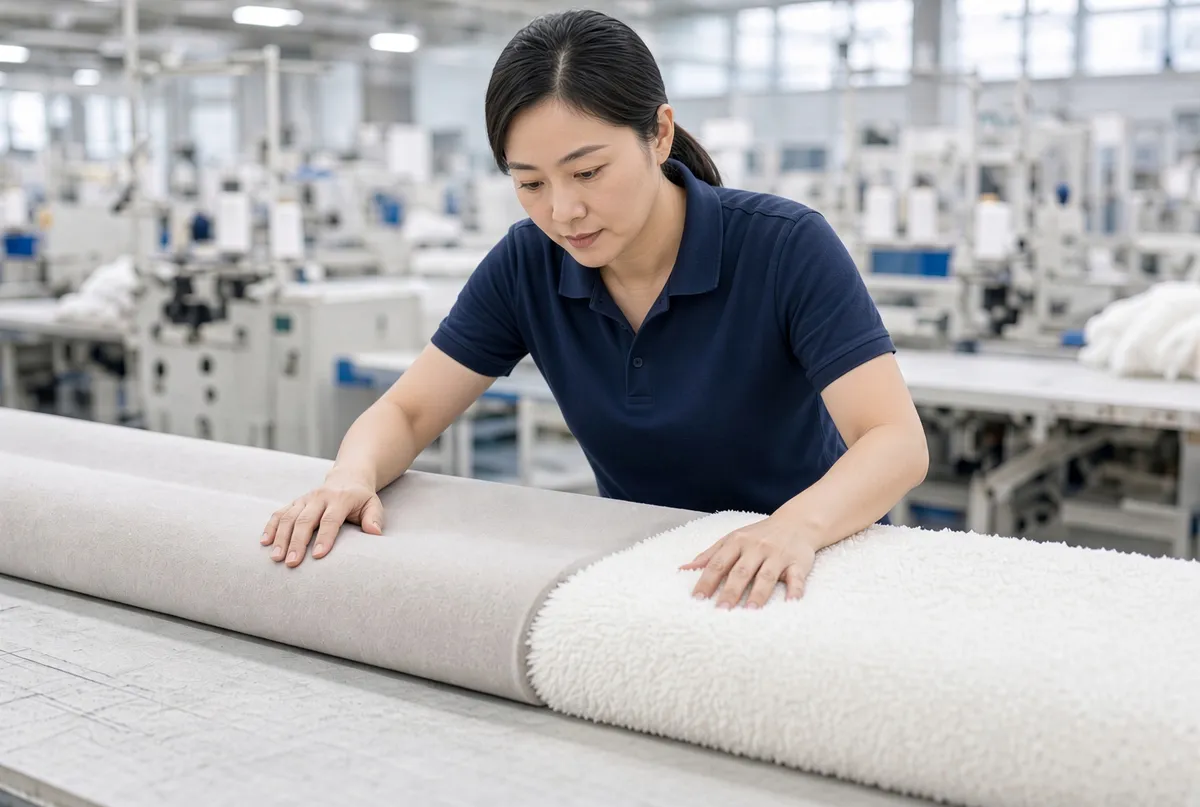
Pile height is the fibre length above the backing. Pile density is how tightly those fibres pack. Pile direction is the nap flow. All three decide how the finished toy reads on a shelf and how the fabric behaves on the cutting table.
A shorter, denser pile holds dimensional stability, so face panels stay consistent from panel to panel. A longer pile feels warmer and thicker at the same panel size, and its nap shifts shade when you turn the toy under light, which buyers read as a richer fabric. Our what is minky fabric guide covers how GSM and pile retention are checked on a roll.
Knit structure is where a lot of RFQs go wrong. Minky is typically produced on a warp-knit base and velboa on a weft-knit base, which is why minky usually stretches more across the roll. That is a general pattern, not a guarantee.
Mills run both structures, and backing weight changes the behaviour, so ask for the backing type and the stretch direction in writing instead of assuming from the trade name.
Stuffing show-through is a GSM question, not a fabric-name question. A low-density velboa at 180 GSM can shadow the fill on a dark toy sooner than a 280 GSM minky. If show-through matters, set a minimum GSM and approve a dark-colour test panel before you sign off the face.
Buyer Action: Put fabric name, pile height in mm, GSM with tolerance, pile direction rule, knit structure and the dark-colour test panel into every fabric RFQ.
Winner: Velboa for pile consistency and registration at equal GSM; Minky for hand-feel.
Embroidery and Print Clarity
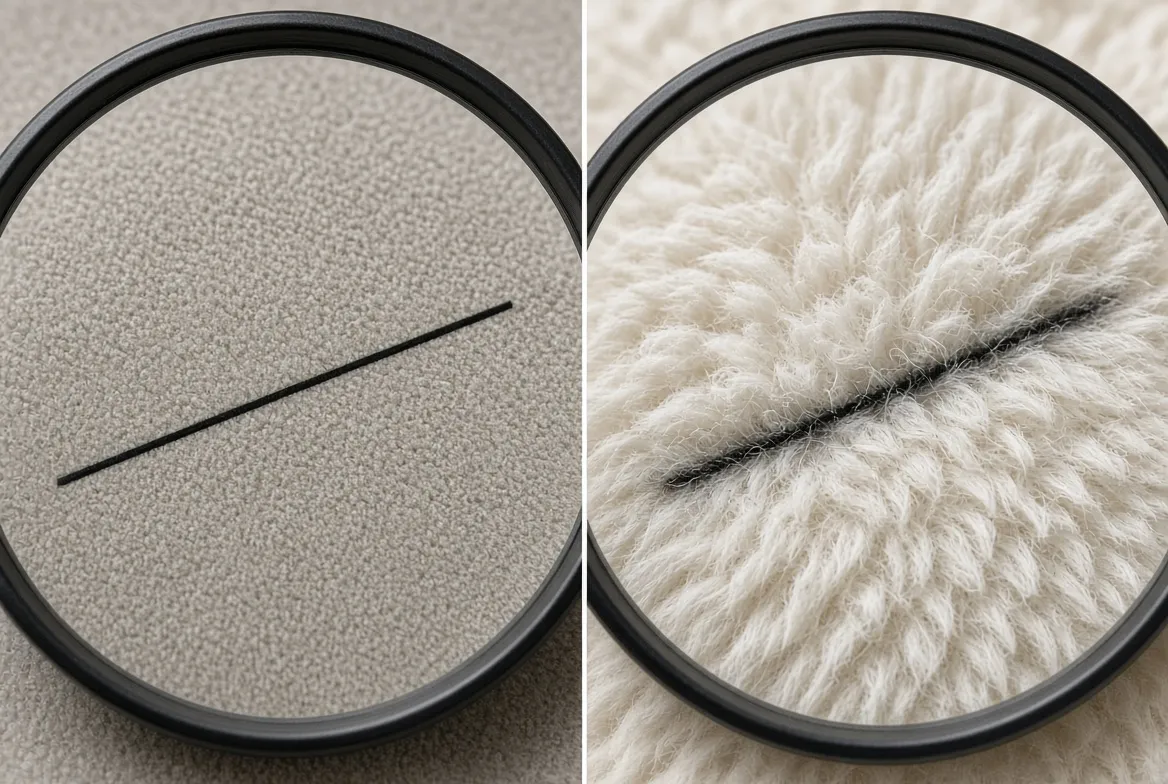
Short pile keeps stitches and ink close to the surface, so the needle path stays visible and the printed edge stays clean. Long pile lifts the artwork off the surface and softens it: fine lines spread, small lettering closes up and thin outlines lose contrast.
That matters most on faces. Eyes, eyelids, eyebrows, mouths and licensed marks are approved at a few millimetres, and a fabric that blurs them turns a clean character into a soft one. The same blur shows up in listing photography, where the camera flattens the nap and hides even more.
A hybrid panel plan solves most of it: velboa for the face and muzzle, minky for the body, limbs and back. It adds one sewing step and one more fabric to the BOM. In exchange the character keeps a clean face and a soft body. See how we handle embroidery on plush toys and the full custom plush manufacturer process.
Factory Note: Always approve a stitched or printed panel on the actual fabric, in the actual colour, before bulk. A digital mock-up cannot show how the nap swallows detail.
Elara Jiang, Plush Toy Development Manager
Winner: Velboa for embroidery and print clarity.
Sewing Behavior, Seam Masking, and Stuffing Show-Through
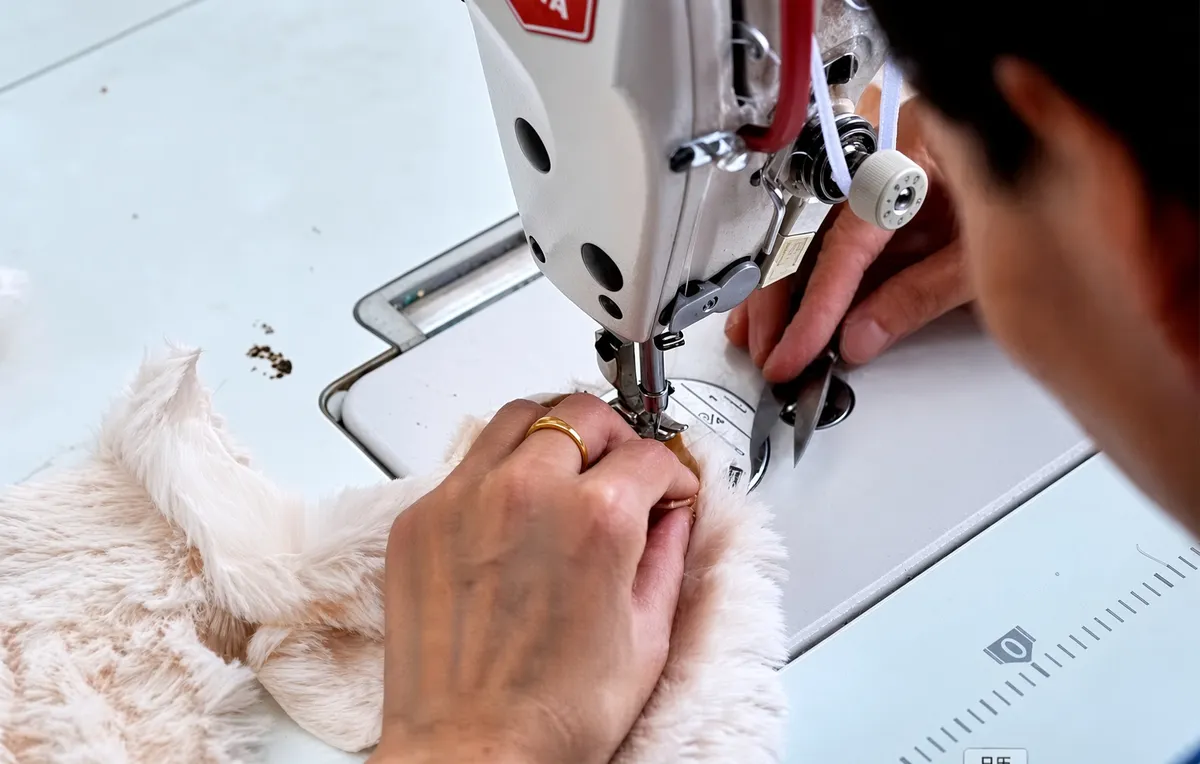
Minky's nap covers seam puckers, so curved faces look cleaner after assembly. The same stretch that makes it soft also lets it creep while sewing, so panels shift, seams wander and complex curves need more pins and a slower feed.
Velboa holds registration, which keeps the line moving, but its short pile leaves seam ridges visible if the seam is not trimmed and pressed properly.
Panel alignment is the hidden cost in plush. A shift of a millimetre or two on a face panel can put an eye off centre, and the whole panel becomes scrap. At volume, that risk matters more than the fabric's hand-feel.
The fix is a sewing spec, not a fabric swap: bonding or interlining on minky panels, a needle size matched to the pile, a slower feed rate and a pre-shrink panel test before cutting. Our plush toy construction methods guide covers the panel and needle choices, and the toy quality control page shows how seam checks are run on the line.
Buyer Action: Ask your factory to run a seam-slippage check on your actual fabric. The standard methods are ASTM D434 and ISO 13936. Ask for the result in writing next to the lot number.
Winner: Velboa for sewing control and lower defect risk.
Softness, Weight, Compression, and Freight
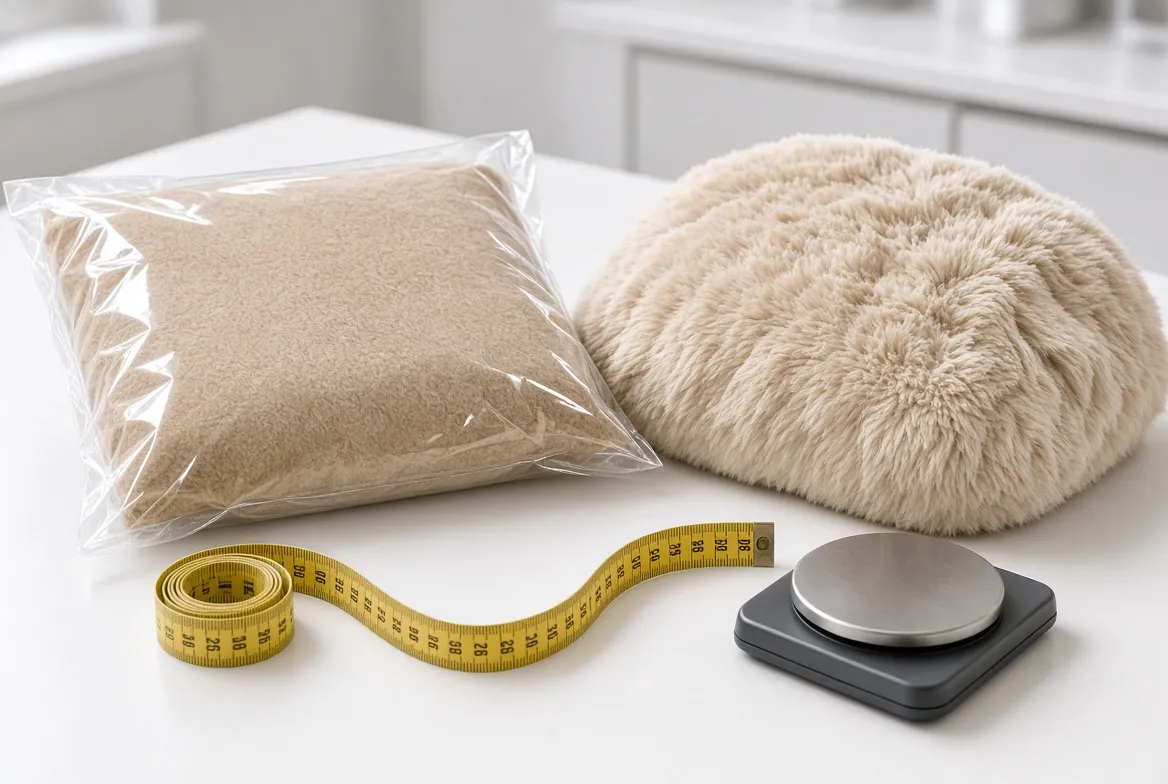
Higher pile and higher GSM raise the tactile value and the shelf perception, and they raise the volumetric weight with it. Minky recovers better after compression because the longer pile springs back. Velboa is flatter, denser and more dimensionally stable, which makes it easier to pack tight and easier to keep flat in retail packaging.
The freight effect is real but easy to overstate. Thick fabric takes more cube, so a carton or container holds fewer units, and carriers bill the greater of actual or volumetric weight.
Before you accept a landed-cost estimate, ask for a volumetric quote based on your packed carton dimensions rather than fabric weight alone. Our plush material cost analysis shows how the fabric line moves unit cost, and retail packaging and volumetric optimization covers the packaging side.
Freight and duty sit outside the fabric quote, so model the landed cost before you commit to the heavier fabric. Our importing toys from China guide lists the cost lines that arrive after the factory invoice.
Trade-off: Minky buys hand-feel with cube and fabric spend. Velboa buys freight efficiency and a lower unit cost.
Winner: Minky for softness and compression recovery; Velboa for freight efficiency.
Durability, Shedding, and Compliance
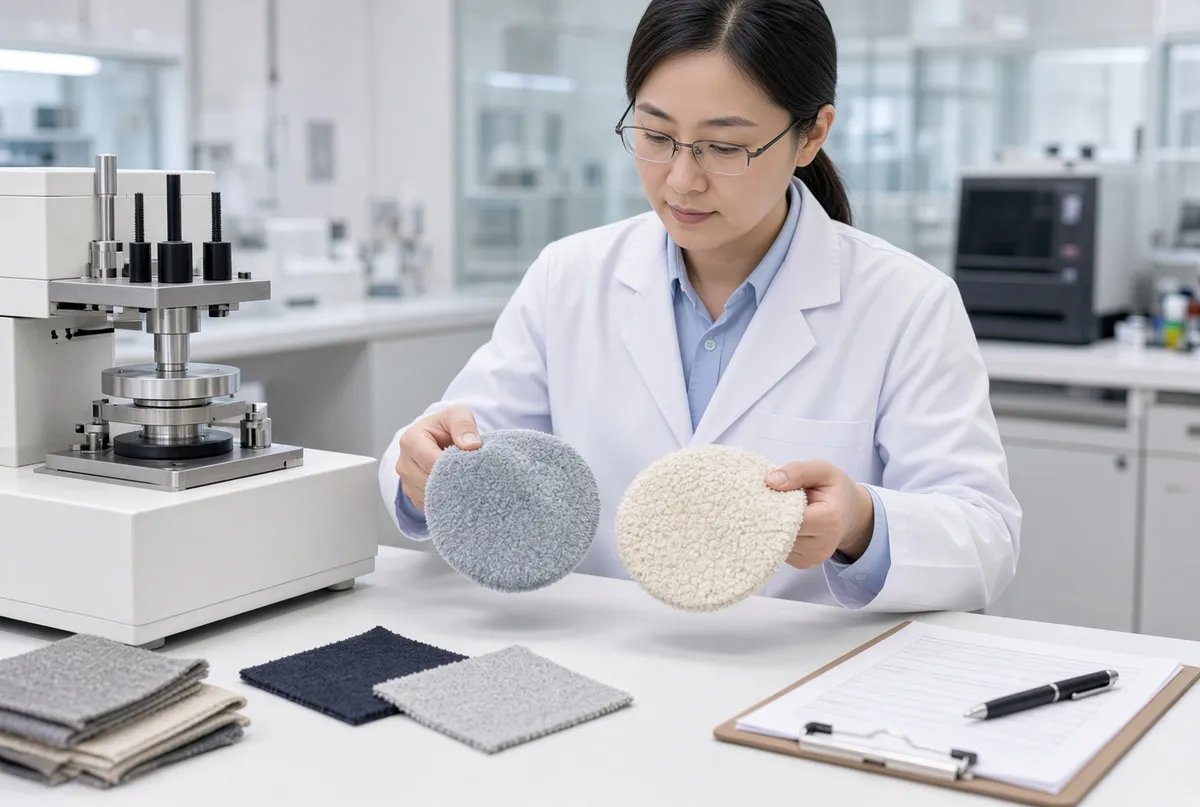
Velboa usually resists abrasion and pilling better, and it sheds less fibre, which lowers the risk of stray fibres contaminating a printed panel. Minky is softer, but its pile flattens sooner on high-touch areas such as paws, ears and faces, and it can shed during cutting if the backing is loose.
Compliance is a testing question, not a fabric-name question. OEKO-TEX Standard 100 Class I is the relevant fabric certification for infant-contact textiles. You can verify any certificate number yourself in the OEKO-TEX Label Check.
For the finished toy, US buyers need CPSIA with a Children's Product Certificate. EU buyers need EN71-1 for mechanical and physical properties, EN71-2 for flammability and EN71-3 for element migration under the EU toy safety rules.
See our guides to CPSIA compliance for plush toys and EN71 compliance for the documents each market expects.
A fabric certificate does not clear the finished plush. Filling, trims, eyes, seams and packaging each carry their own risk, so the SKU still needs a finished-product test report. If the toy touches skin, also ask for AZO dyes, formaldehyde and pH on the fabric. Our non-toxic toy materials guide lists the documents to request.
Buyer Action: Check three things on every mill certificate. The certificate number must be verifiable, the scope must match the exact fabric and colour, and the test date must cover your production window. OEKO-TEX certificates run for one year and do not carry over automatically.
Winner: Velboa on durability and shedding. On compliance, the winner is whichever lot carries a valid, in-scope report.
Pros & Cons of Minky vs Velboa for Plush Toys
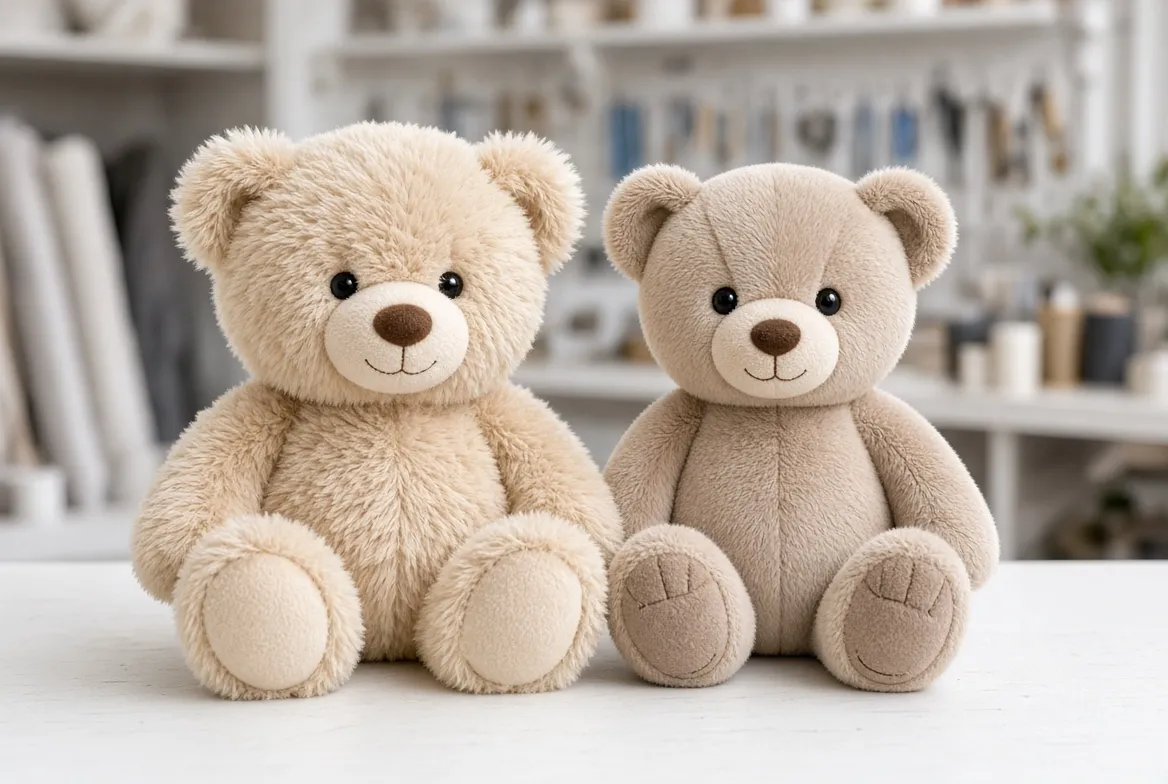
We build matched panels in both fabrics for client approvals. These are the points that decide the outcome:
Minky
Pros
- Softer hand: longer pile traps more air, so the toy feels warmer and plusher at the same panel size.
- Better seam masking: the nap covers puckers and seam ridges on curved face panels.
- Premium shelf read: the nap shifts shade under light, which buyers read as a richer fabric.
Cons
- Higher fabric cost: longer pile and higher GSM lift the material line.
- Less crisp detail: fine print lines and small embroidery soften on the nap.
- More handling sensitivity: the fabric creeps during sewing, so the line runs slower and needs more pins.
- More packing bulk: thicker fabric takes more cube per carton.
Buyer Action: Specify pile direction and run a pre-shrink panel test before cutting. That controls creep and seam puckers.
Velboa
Pros
- Cleaner detail: short pile holds fine print lines and sharp embroidery edges.
- Lower relative cost: tighter, lower-GSM pile reduces material spend.
- Stable cutting and sewing: the fabric holds registration, so faces stay aligned across a long run.
- Better repeatability: easier to hold consistent lot to lot when the GSM is locked.
Cons
- Weaker premium feel: the flatter hand-feel can weaken a premium shelf position.
- Less seam concealment: short pile exposes puckers, so face panels need careful sewing and pressing.
- Show-through risk at low GSM: a cheap 180 GSM velboa can shadow the fill on dark toys.
Factory Note: Velboa wins repeatability, not romance. Use it where crisp detail and cost control beat hand-feel, and set a minimum GSM before you count on it.
Common mistakes: approving by fabric name only, skipping the pile direction rule, trying ultra-fine print on the wrong pile, and ignoring colour-lot variation. Vet mills with our plush toy supplier red flags and plush factory audit checklist guides.
Which Fabric Is Right for Your Project?
Promotional plush, event giveaways, value retail → Velboa. Low cost, sharp print and stable sewing suit high-volume, tight-deadline runs.
Premium retail plush, cuddle-first gifts, baby comfort → Minky, if the spec and certification fit. The longer pile delivers the softness that supports a higher shelf price, but confirm GSM, pile height and OEKO-TEX Class I before you commit.
Licensed characters with expressive faces or logos → Velboa face, or a velboa face on a minky body. Short pile holds fine lines and crisp embroidery, and the hybrid keeps the body soft.
Teams testing a new SKU under budget pressure → Start with velboa swatches. Move selected panels to minky only when the tactile lift justifies the cost increase in your retail price.
Infant and toddler categories → Choose by pile stability and test evidence, not by trade name. Ask for lot-matched OEKO-TEX Class I reports and confirm EN71-3 or CPSIA on the finished toy.
RFQ checklist for either fabric: swatches, exact pile height in mm, GSM with tolerance, Pantone matching method, embroidery or print method, OEKO-TEX certificate number if claimed, REACH, EN71 or CPSIA evidence as needed, pre-production sample and golden-sample approval.
People Also Ask About Minky vs Velboa
1. Is crystal velboa the same as minky?
No. Crystal velboa is a short-pile velboa grade with a very soft hand. Minky is a longer-pile fabric with a silky nap, and the two are usually built on different knit structures. They can look similar in a photo and feel similar in the hand, so approve by spec sheet rather than by trade name: fibre content, pile height in millimetres, GSM and backing.
2. Which is softer, minky or velboa?
Minky feels softer and warmer at the same panel size because its longer pile traps more air. Velboa feels flatter and cooler at the same GSM. That gap is why minky supports a premium price on cuddle-first SKUs, and why velboa stays the normal choice on detail-heavy, cost-controlled runs.
3. Can you embroider on minky?
Yes, but fine linework softens. The nap sits over the stitches and blurs edges, so tight logos, small eyes and thin outlines read better on short-pile velboa. A common compromise is a velboa face on a minky body. Ask for a stitched test panel on the actual fabric before bulk approval.
4. Is velboa safe for baby toys?
Safety comes from testing, not from the fabric name. For infant-contact plush, ask for OEKO-TEX Standard 100 Class I on the exact fabric and colour, then confirm the finished toy passes CPSIA in the US or EN71-1/2/3 in the EU. A fabric certificate on its own does not clear the finished product, because filling, trims and eyes carry separate risks.
5. Which fabric should I use for a first sample?
Start with velboa if your budget and artwork are fixed. It costs less, holds registration and prints or embroiders sharply. Move the cuddle panels to minky only when the softer hand justifies the extra fabric cost and the slower sewing time.
6. Does a certified fabric make my toy compliant?
No. Fabric certification covers the textile only. CPSIA, EN71 and ASTM F963 apply to the finished toy, including filling, trims, eyes, seams and packaging. Keep both documents: the mill's certificate for the roll and a finished-product test report for the SKU.
Next Steps
Fabric choice is one decision inside a longer sourcing project. If you are still shortlisting suppliers, start with how to find a toy manufacturer. Once the fabric and fill are set, the toy cost breakdown shows where the rest of the unit price sits.
Ready to decide? Request minky and velboa swatches, sampling support and fabric-selection guidance through our contact page. Our custom plush manufacturing service can take you from fabric spec to golden-seal sample.
Trust note: This comparison covers manufacturing fit and factory-floor evaluation criteria. We receive no paid placement or kickbacks from fabric mills.