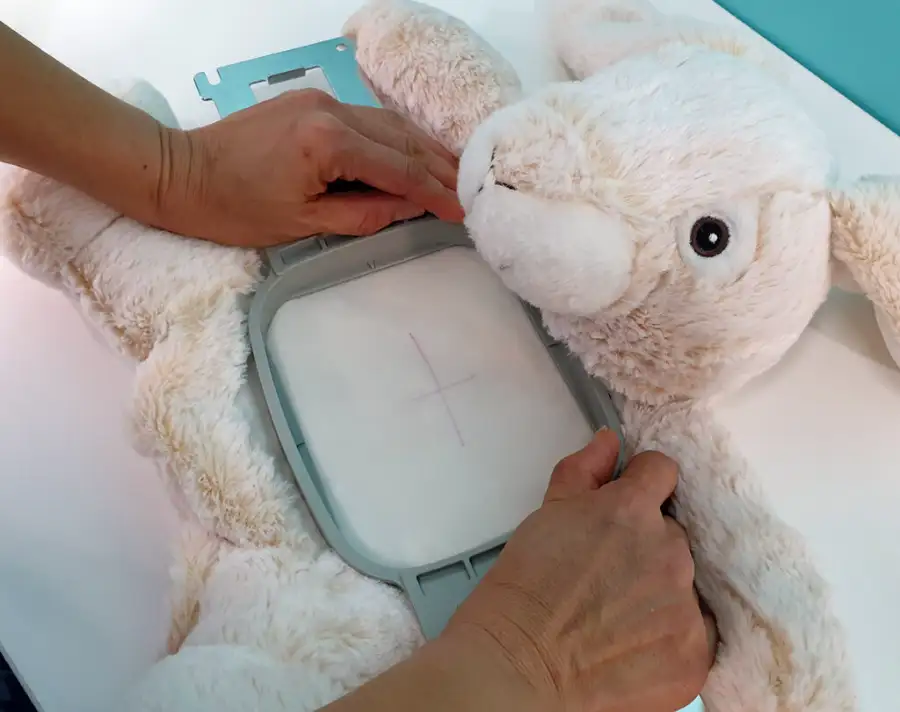
Embroidery on plush toys is the winner for high-quality, kid-safe plush toys. Unlike surface inks that inevitably crack or peel over time, stitched thread becomes structurally integral to the fabric pile, offering superior durability. This makes embroidery non-negotiable for facial features, where peeling ink creates safety risks and lowers perceived value.
However, printing remains the only option for photorealistic gradients or complex patterns. The most effective commercial strategy often utilizes a hybrid approach: embroidered faces for safety and printed body panels for color. To balance durability with design compliance, consult LeelineToys Custom Plush Manufacturer engineers before finalizing your prototype. Contact LeelineToys to start production.
Here is the direct manufacturing spec comparison for plush customization methods.
| Feature | Embroidery | Printing |
|---|---|---|
| Primary Advantage | Durability & Hand Feel | Complex Art & Gradients |
| Resolution Limit | Low (Thread Thickness / Stitch Density) | High (300+ DPI) |
| Best Fabric Match | High-Pile (Minky, Sherpa) | Short-Pile (Velboa, Brushed Poly) |
| Durability | Permanent (Mechanical Integration) | Finite (Surface Bond/Adhesion) |
| Safety Compliance | Physical (Pull Test / ASTM F963) | Chemical (Heavy Metals / EN71-3) |
| Cost Driver | Stitch Count (Machine Run Time) | Color Count (Screens/Film Layers) |
| Setup Economics | Low (One-time Digitizing) | High (Per-Color Screen Fees) |
| MOQ Sensitivity | Low Impact (Efficient for Samples) | High Impact (Volume Required to Amortize Setup) |
| Failure Mode | Snagging (Rare) | Cracking, Peeling, Fading |
| Facial Features | Industry Standard (Eyes/Mouth) | Not Recommended (Choking/Toxic Risk) |
Accessibility & Buyer Verdict: If the plush is intended for children under 3, choose embroidery. It passes mechanical safety tests (see CPSC CPSIA children's product requirements) and withstands abrasion.
Choose printing only for display items requiring photo-realistic gradients or tiny text on smooth fabrics. Always verify ink safety against chemical limits (EU REACH restriction overview and ASTM F963 or EN71 overview). For strictly compliant facial detailing, refer to our guides on Toy Safety Standards and Safety Eyes for Toys.
Main Differences of Printing vs. Embroidery on Plush Toys
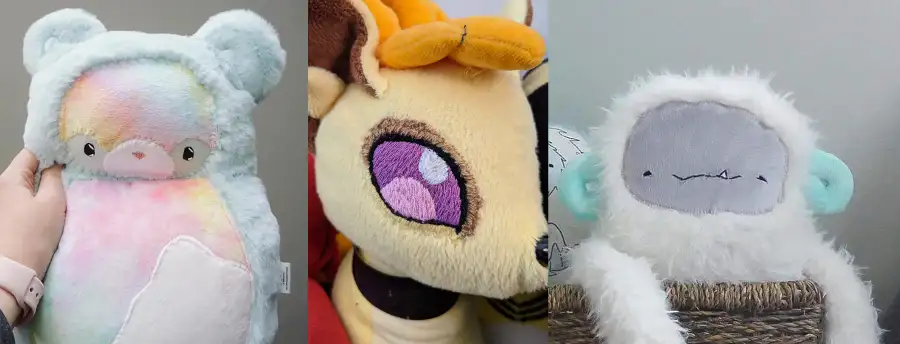
1. Durability Under "Real Plush" Handling
Plush toys face a unique trifecta of stress: constant squeezing, friction against skin/bedding, and machine washing. In professional Custom Toy Manufacturing, the decoration method you choose largely dictates whether the toy survives the first six months or becomes a ragged return.
Embroidery is structural. The thread mechanically interlocks with the backing fabric. In our abrasion testing, embroidery withstands thousands of rub cycles without degradation, making it the only viable choice for high-friction zones like faces and paws. The main failure risk is mechanical: if density is too low, threads snag; if too high, the fabric puckers and distorts the toy's shape.
Printing is topical. Ink sits on the surface of the pile. Under the same stress tests, screen prints often micro-crack as the soft filling flexes beneath the hardened ink layer. Heat transfers are notorious for edge-lift—peeling away after 3–5 machine wash cycles as the adhesive degrades in hot water.
🚀 Actionable Insight: When validating a Custom Weighted Stuffed Animal, do not settle for a visual check. Demand a "wet rub test" (AATCC 8) on your Pre-Production Sample (PPS). If the print transfers color to a white cloth when wet, reject the lot immediately.
2. Safety & Compliance: Mechanical vs. Chemical Risks
For plush manufacturers exporting to the US (CPSIA) or EU (EN71), your choice of decoration fundamentally shifts your compliance liability.
Embroidery presents a mechanical safety risk. The primary concern is "loop security"—ensuring threads cannot be pulled out to wrap around a finger. However, embroidery is the industry-standard replacement for hard plastic "safety eyes," effectively eliminating small-parts choking hazards for 0+ age-graded toys.
Printing presents a chemical safety risk. You are introducing chemical agents—plastisol inks, solvent adhesives, or sublimation dyes—onto a surface a child may chew. To pass CPSC CPSIA lead and phthalate limits or EU REACH restrictions, you must verify the chemical composition of every ink color and adhesive layer used.
⚠️ Safety First: Do not rely on a factory's generic "eco-friendly" claim. Require a Bill of Materials (BOM) that explicitly lists the ink manufacturer and valid, dated test reports for EN 71-3 (Migration of Certain Elements).
Winner: Embroidery (Reduces chemical testing burden and eliminates choking hazards).
3. Detail Limits: Stitch Count vs. Pixel Density
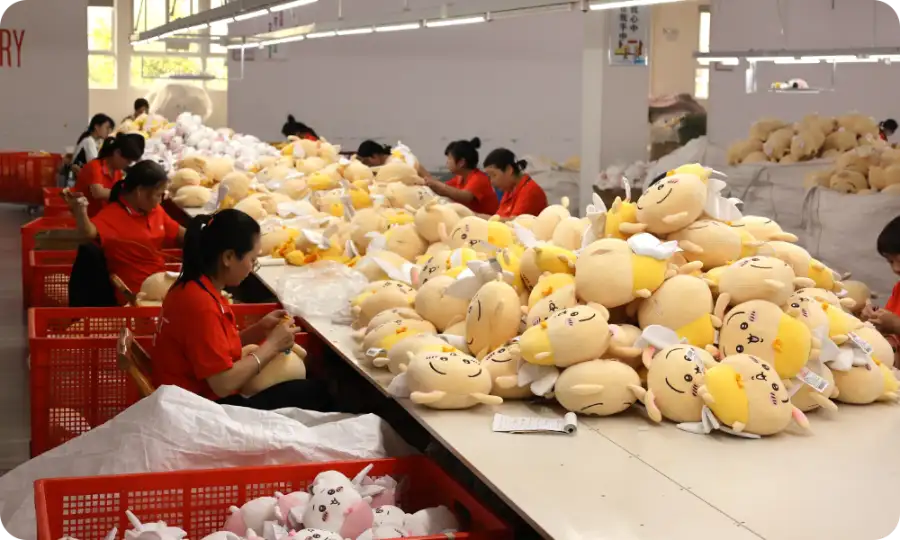
This is a battle between texture and resolution. Embroidery is limited by the physical width of the thread. It cannot reproduce gradients or text smaller than 4mm; letters like "e" and "a" will simply close up into unrecognizable blobs. On high-pile fabrics, fine lines disappear into the fluff unless a heavy "knockdown" stitch is used to flatten the nap.
Printing offers infinite resolution (300+ DPI). Techniques like sublimation or Types of Plush Toys panel printing can replicate photographic art, complex shading, and tiny legal text that embroidery physically cannot achieve. However, this clarity comes at the cost of texture—printed areas on plush often feel flat or "crusty" compared to the premium tactile feel of raised thread.
🧠 Expert Take: If your character design relies on subtle blush gradients on the cheeks, use airbrushing or sublimation. If you try to embroider a "blush" effect, it will look like a solid geometric patch and ruin the character's softness.
Winner: Printing (For complex art/gradients); Embroidery (For bold logos/text).
4. Fabric Interaction: The "Minky" Problem
The "hand feel" is your product's primary selling point. Decoration changes how the fabric behaves, particularly with high-pile materials like Minky Fabric, Sherpa, or Faux Fur.
Embroidery compresses the pile. To keep the design visible on fluffy fabric, we use a water-soluble topping and a "knockdown stitch" to mat down the fur. While this ensures visibility, it creates a stiff, hardened "bulletproof" patch on the toy that is not pleasant to hug.
Printing on high-pile is technically volatile. Sublimation only dyes the tips of the fibers. When a child brushes the fur backward, the white base fabric shows through—a defect known as "grinning." This breaks the immersion of the character completely.
⚡ Power Move (QC Checklist): When reviewing samples, perform these specific checks:
- The "Grin" Test: Brush printed fur against the grain. If you see white roots, the print penetration is insufficient.
- The "Stiffness" Check: Squeeze the embroidered area. If it feels like a piece of cardboard inside the plush, the stitch density is too high for the fabric weight.
5. Cost Logic: Machine Minutes vs. Color Screens
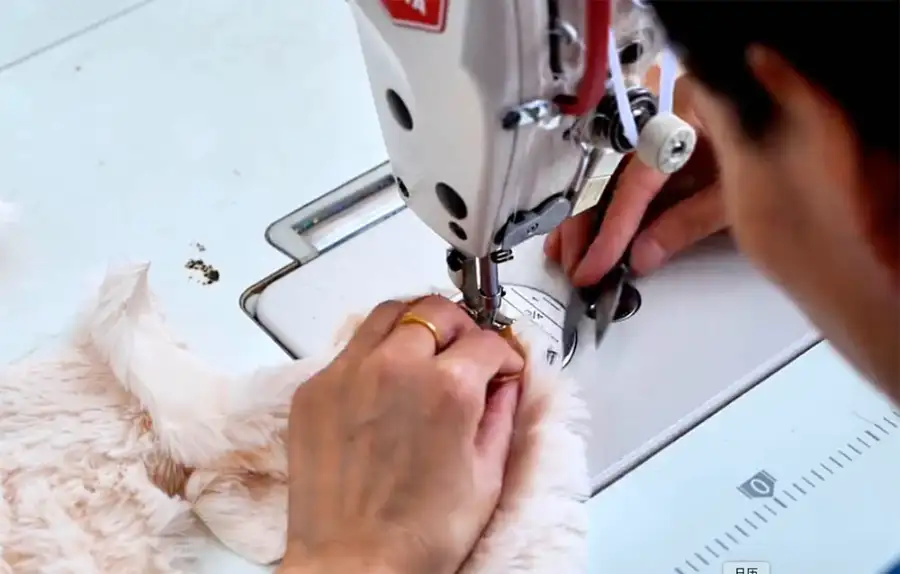
"Printing is cheaper" is a dangerous generalization. The cost drivers are completely distinct.
- Embroidery costs are time-based. A small 2-inch logo is cheap, regardless of how many colors you use. A large 10-inch chest emblem is expensive because it occupies a machine head for 20+ minutes.
- Printing costs are setup-based. Screen printing requires a separate film and screen for every color. A 1-color massive chest print is cheap; a tiny 6-color logo is expensive due to high setup fees.
Strategic Verdict: For a Custom Teddy Bear with a small logo on the footpad, embroidery is cost-competitive and adds massive perceived value. For a full-body patterned character (like a dinosaur with scales), sublimation printing on the fabric roll before cutting is the only economically viable option.
Winner: Tie (Embroidery for small, multi-color logos; Printing for large surface areas).
6. Bonus: The "Hybrid" Manufacturing Standard
The highest-converting plush toys rarely stick to one method. The industry standard for premium Custom Toy Manufacturing utilizes a hybrid approach to maximize durability and detail while controlling costs:
- Face: 100% Embroidery (Eyes, Mouth) for safety and expression.
- Body/Costume: Sublimation or Screen Printing for complex patterns.
- Care Labels: Printed Satin (Sewn-in) to handle tiny legal text without the cost of embroidery.
Contact LeelineToys to have our engineers review your artwork and recommend the precise "Hybrid Strategy" for your next production run.
Embroidery on Plush Toys
Embroidery on plush toys is the industry standard for high-end retail, prioritizing longevity and safety over graphical complexity.
Pros
- Unmatched Durability: Unlike surface decals, threads mechanically interlock with the fabric backing. In our squeeze testing, embroidered features withstood repeated compression and machine washing without peeling.
- Safety Compliance: Eliminates the choking hazards associated with hard plastic Safety Eyes for Toys, making it the requisite method for 0+ age-graded products.
- Premium Texture: The raised, tactile finish signals "craftsmanship," allowing for a higher perceived value and retail price point than flat prints.
Cons
- Panel Stiffening: High stitch density creates rigid "hard spots," which can ruin the huggability of small plushies or cause fabric puckering.
- Resolution Limits: Cannot handle gradients or photorealism. We found that text smaller than 4mm often closes up and becomes illegible.
- Cost at Scale: Pricing is driven by machine time. Filling large solid areas with stitches significantly raises unit costs compared to printing.
⚠️ Safety First: While the stitch is mechanically safe, low-quality backing stabilizers (paper) can fail flammability tests. Ensure your factory uses materials compliant with Toy Safety Standards (ASTM F963/EN71).
Printing on Plush Toys
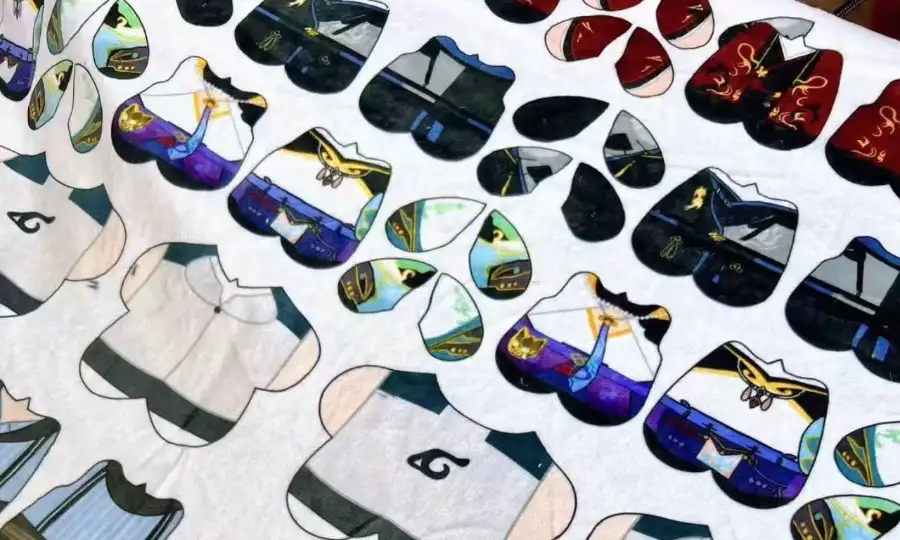
Printing (Sublimation or Screen) is essential for complex artwork but introduces chemical variables and texture trade-offs.
Pros
- Infinite Detail: The only viable option for photorealistic art, complex gradients, or intricate color transitions (e.g., patterned dinosaur scales).
- Large Area Economy: More cost-effective for full-body patterns. Cost is usually determined by screen setup rather than stitch count or density.
Cons
- The "Grinning" Effect: Ink struggles to penetrate deep-pile fabrics like Sherpa. When we brushed printed fur against the grain, the unprinted white base became visible.
- Durability Risk: Surface inks are prone to abrasion. Friction tests show screen prints often crack or fade after extended handling.
- Chemical Burden: Using inks triggers strict testing requirements (EN71-3, REACH) to ensure no heavy metals or toxic solvents are present.
The Bottom Line: Use Embroidery for faces and logos to ensure safety; use Printing for complex body patterns. (Need a factory capable of both? See our guide to Plush Toy Manufacturers USA / Canada / Australia / UK/ China).
Final Verdict: Embroidery on Plush Toys vs. Printing
Embroidery is the default for plush durability and perceived value; printing is the specialist choice for complex, full-color artwork on smooth panels.
Choose Embroidery if you are...
- A Baby/Children's Brand: Prioritizing long-term handling and simpler "no-peel" decoration to meet ASTM F963 safety standards.
- A Premium Retailer: Needing a higher-end tactile logo that signals quality on the shelf.
- Designing Facial Features: Eyes, noses, and mouths must be stitched to ensure structural integrity and prevent choking hazards.
Choose Printing (screen/transfer/sublimation) if you are...
- A Licensed Character Brand: Needing exact gradients, shading, and artwork fidelity that thread cannot replicate.
- A Promotional Buyer: Prioritizing big, colorful graphics and a lower cost-per-unit for high-volume event giveaways.
Choose a Hybrid if you want the best of both
🚀 Actionable Insight: For the highest ROI, specify embroidered faces (for safety/value) and printed body panels (for design flair).
Contact LeelineToys for a decoration recommendation based on your fabric, age grading, and target MOQ. Whether you need a specialist Custom Plush Manufacturer or a high-volume Custom Stuffed Animals run, our engineers ensure your design is production-ready.