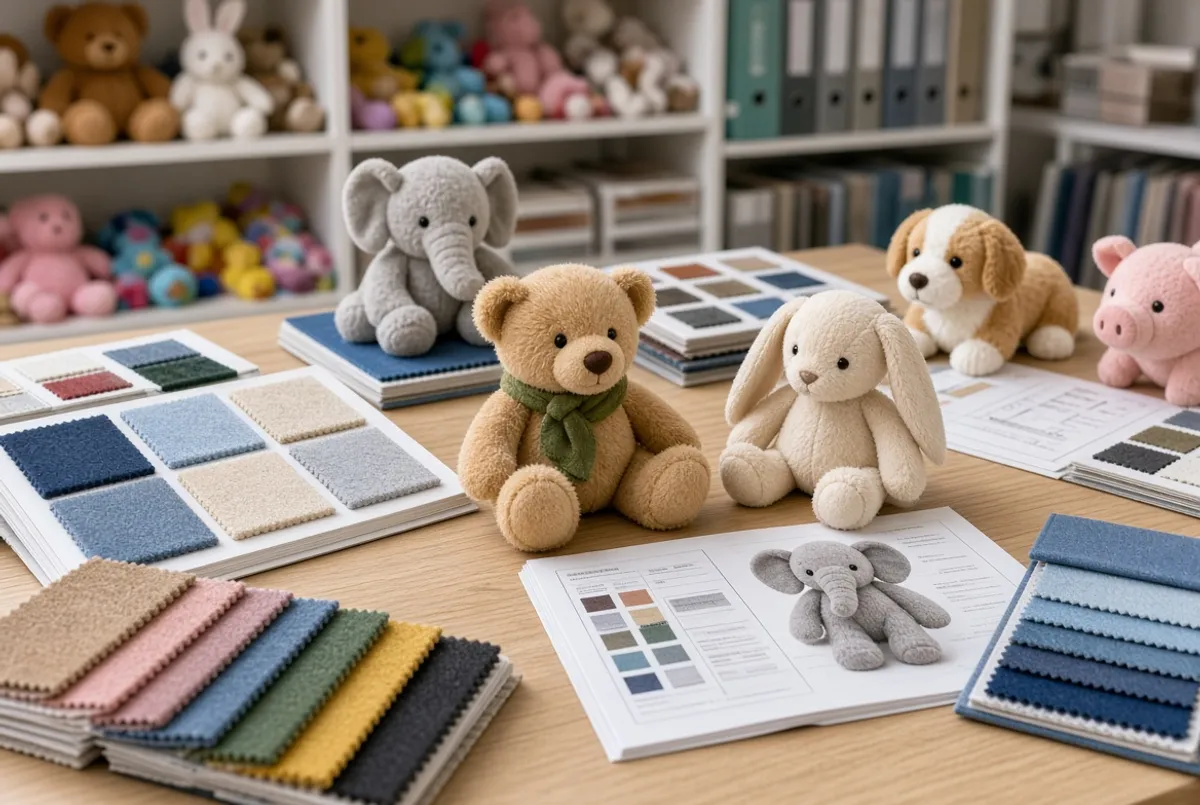

Most factory quotes hide real plush material cost analysis behind one blended ex-factory number. Fabric, fill, trims, and color move independently, so buyers who cannot see each line cannot negotiate.
This guide covers material line items only. Labor, tooling, testing, freight, and duties are outside it — our cost to make custom plushies and toy cost breakdown cover those.
The ranges here come from our sample-room BOM records, China purchasing checks, and factory-manager input. Prices verified November 2026, quoted in USD, ex-factory. Treat every figure as a working range, not a quote.
Key Takeaways
- Material is 29%-33% of a plush's ex-factory cost. Our 30cm bear BOM comes to $1.83-$2.12 against a $6.35 unit. Strip custom color and the eco lines and it drops to $1.65-$1.87.
- Fabric is the biggest material line, at roughly 40% of the subtotal. A 200 GSM velboa at $1.55-$1.65 per meter and 0.50m consumption gives $0.78-$0.83 per piece before anything else is added.
- Yield beats fabric price. A clean marker lay wastes about 10%, a real plush carries 18%, and directional nap can push scrap from 19% to 27%. Ask for the marker lay with every quote.
- Fill weight is a feel decision more than a cost one. Moving a 30cm plush from 150g to 220g adds about $0.18 per piece; under-filling at 100g is what makes it feel cheap.
- Faces cost more per unit than fabric. Stock safety eyes run $0.02-$0.08 per pair; a 6,000-stitch embroidered face runs $0.30-$0.60 and removes the small-parts risk that under-3 toys carry.
- Custom color has its own floor. A Pantone lab dip costs $100-$150 and a dye lot starts at 300-500 meters per color, so a custom shade can outgrow a 100-unit order.
- An eco claim costs paperwork, not just fiber. GRS fill adds about $0.10 per unit at 150g plus a one-time $240 certificate handling, and only a transaction certificate matching your PO date and weight proves the claim.
Plush Material Cost Analysis: 7 Line Items That Set Your Unit Price
Compare plush supplier quotes with confidence – a clear BOM template, waste formulas and cost-cut tradeoffs.
1. Outer Fabric: The Biggest Line on Most Plush BOMs
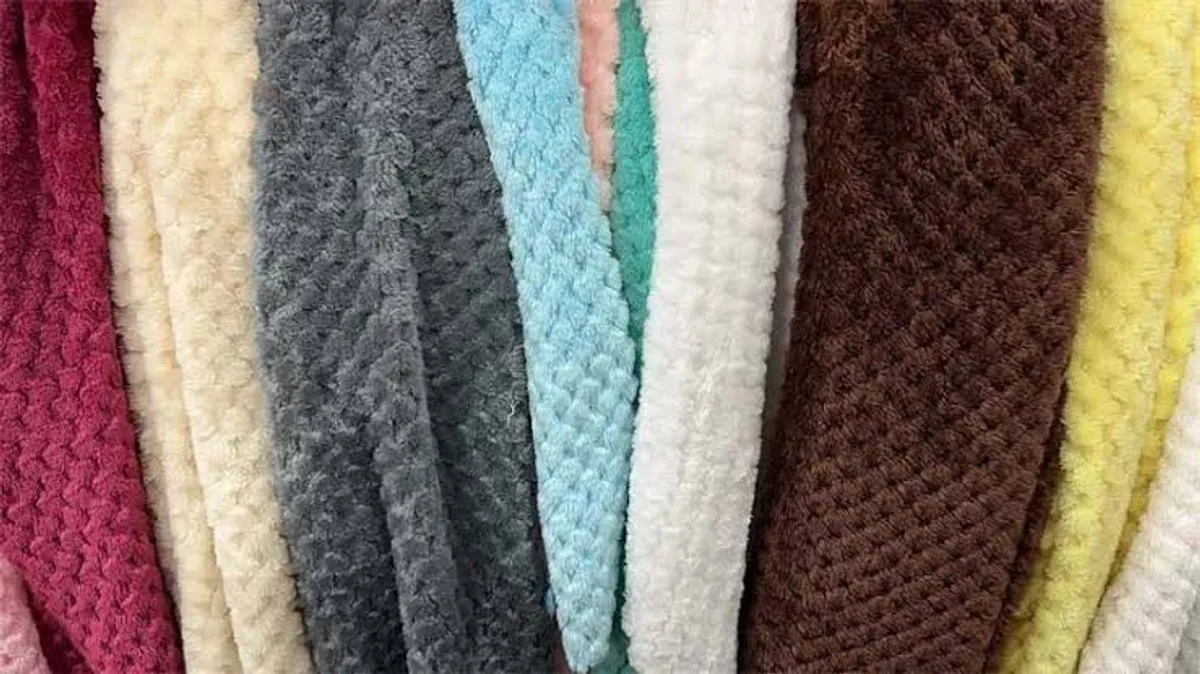
Two factories both quote "velboa." One lands 20% higher. Neither is cheating, because they are quoting different fabric under one word.
Velboa is a knitted pile fabric, and pile means a raised surface brushed up from the yarn. Price moves on GSM, pile height, usable width, color, finish, and nap direction. In our sample room, a 260 GSM roll and a 180 GSM roll of the same name feel like different products in the hand. That thickness difference alone is worth roughly 20% of your final unit cost.
| Fabric | Spec that moves price | USD/m | Best fit |
|---|---|---|---|
| A-grade super soft velboa (220-280 GSM) | GSM, pile height, dye lot | 2.10-3.00 | Premium retail |
| Standard velboa (180-219 GSM) | Usable width, backing weight | 1.20-1.80 | Promo, mid-tier |
| Short plush (2-4mm) | Pile length, anti-shed finish | 1.40-2.20 | Keychains, clips |
| Minky (3-5mm) | Dot definition, backing | 2.00-3.20 | Baby, blankets |
| Long pile (10mm+) | Pile uniformity, shedding | 2.60-4.20 | Jumbo display |
Fabric prices in China move quarterly. Polyester yarn tracks oil. Dyehouses raise rates after environmental inspections. Q3-Q4 peak season pushes knitting lines out two to three weeks. Any quote older than 30 days is unreliable.
Factory Note: We re-quoted one 260 GSM velboa three times in a quarter. It moved 4-7% each round.
Buyer Action: Lock GSM, pile length, usable width, Pantone color, finish, and a quote-validity window before you compare factories. Then read our toy supply chain breakdown.
2. Cutting Yield and Fabric Waste: The Hidden Meter Multiplier
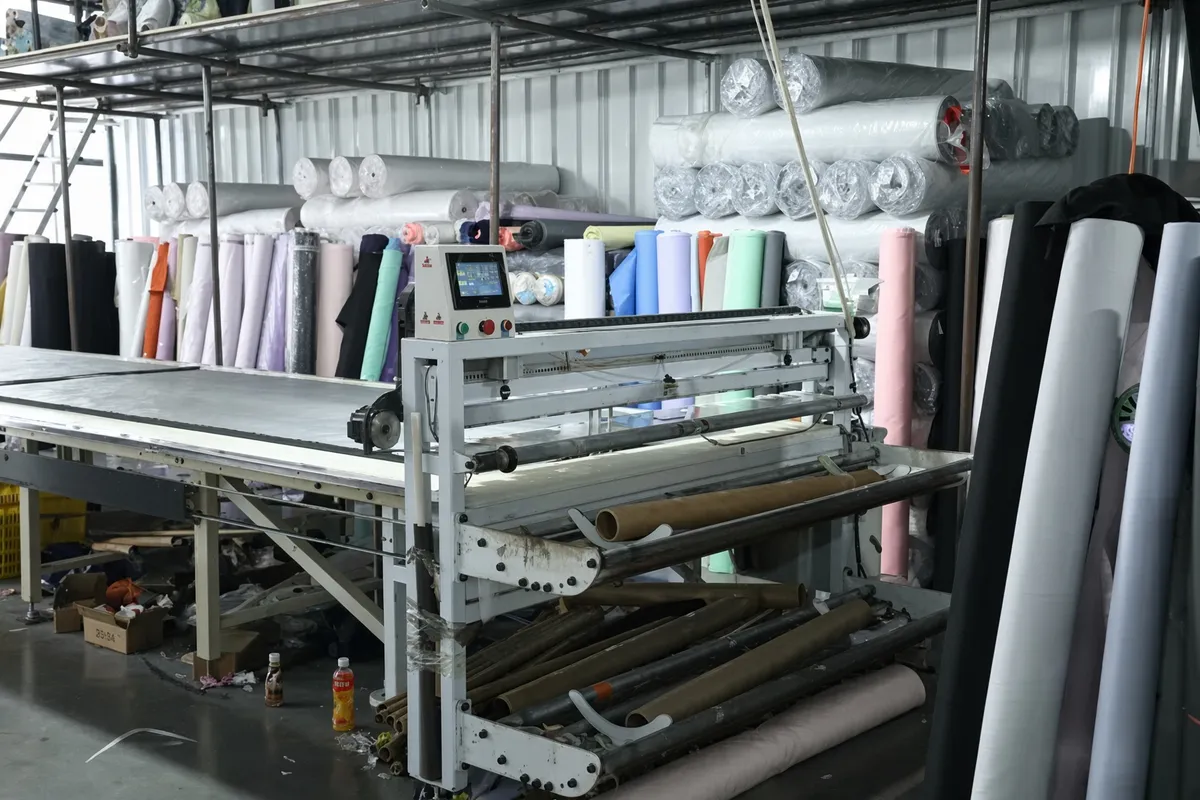
Two plushies can use the same velboa at the same GSM (tested to ASTM D3776) and still land at different unit costs. The gap is yield. You pay by the meter. You sell by the piece. Every square centimeter between those two numbers is money.
We check yield against the cutting room's actual marker lay — the nested layout of pattern pieces drawn across the fabric — not against a supplier's estimate. The formula is:
Unit fabric cost = (total panel area ÷ nesting yield) ÷ usable width × price per meter
Divide by usable width and the square meters convert back into the meters you are actually invoiced for.
Waste needs a word of context, because three numbers appear in this post. A clean flat marker lay wastes about 10% of the roll; that is the ideal. A real plush has curves, small parts and a nap constraint, so the worked BOM below carries 18%. Anything above 20% deserves a question before you approve it.
Directional nap is the usual culprit. Pile fabric runs one way, so pattern pieces cannot be turned 180°. That locks small parts out of the gaps between large panels. On one 200-piece run, switching to a striped fur pushed scrap from 19% to 27%.
Factory Note: We cut a six-piece belly panel down to three on a dinosaur build. The silhouette held. Scrap dropped 9%.
Three moves cut waste on the floor: fewer panels, one nap direction, and nesting small parts inside larger cutouts. Our toy production process shows where that starts.
Buyer Action: Ask for the marker lay with your quote. A 5% yield gain often beats a 5% fabric discount.
3. Stuffing Cost: PP Cotton Density, Fill Weight, and Fiber Type
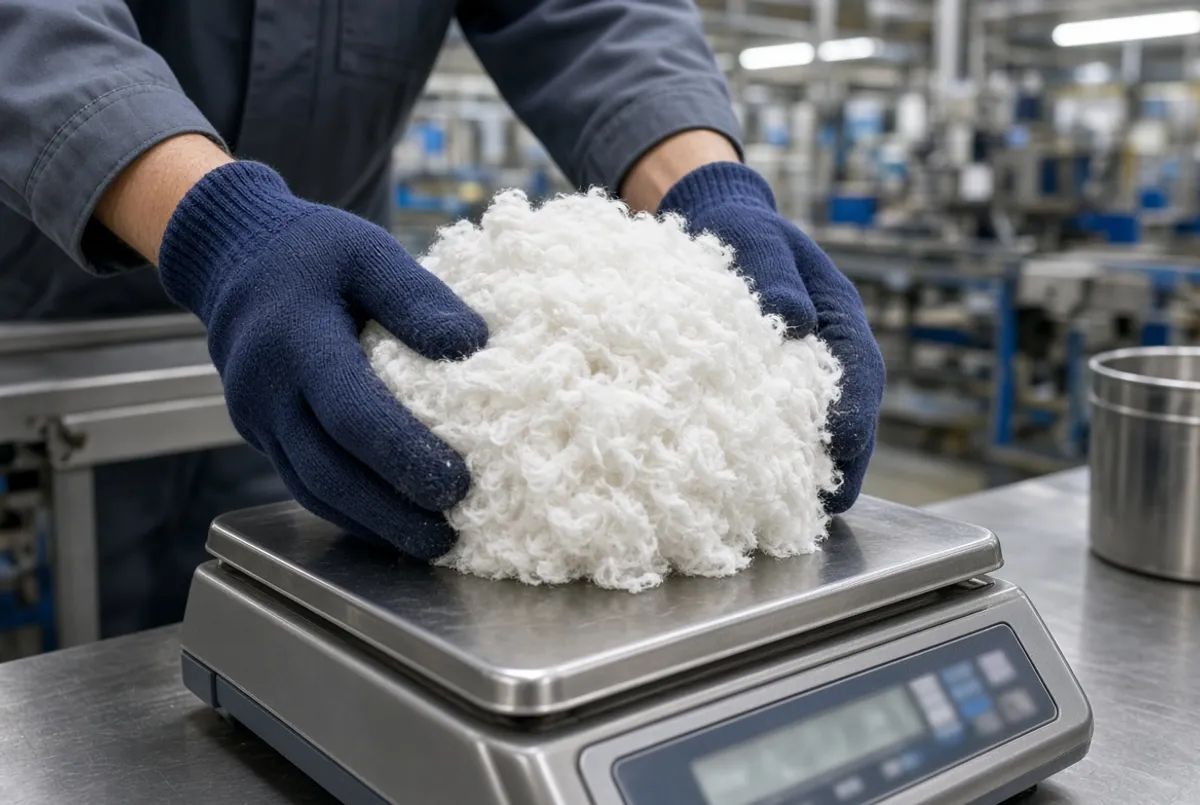
Fabric is lever one; stuffing is lever two. Factories often quote "PP cotton" without stating virgin or recycled, loft grade, density target, or grams per unit. Your BOM should list fiber type and fill weight instead.
PP cotton is polyester fiberfill, and the standard grade is 7-denier hollow fiber — "7D" means each strand is 7 denier thick, and "hollow" means the core is empty so it traps more air per gram. Virgin hollow fill costs about $2.40-$2.60 per kilogram. Adding 100g of standard fill adds roughly $0.25 to a unit.
Fill weight by size:
- 15cm keychain: 40-80g
- 30cm plush: 120-200g
- 60cm plush: 400-700g
A 30cm plush under-filled at 100g feels flat. Standard 150g meets retail baseline. Premium 220g improves hand-feel and adds about $0.18 per piece at today's fill prices.
Recycled fiber can cut the fill cost 20-30%, but it is a different material and a different texture. Ask for 72-hour compression loft-retention data, not just a Recycled Claim Standard certificate — the fiber may be cheap, while the certification behind an eco claim is not (section 7 covers that premium).
Weighted inserts with polyester pellets or glass beads are a separate line item; see our weighted stuffed animal guide.
Factory Note: We watched a 40cm sample approved at 220g, then the bulk BOM fill weight dropped to 180g. The buyer saved $0.10 per unit and lost the sample's feel.
Buyer Action: Match the approved sample's fill weight and fiber spec to the bulk BOM. If the factory will not sign that line, expect post-sample cost creep. Confirm non-toxic toy materials before you approve fill.
Yejia Deng, Professional Plush toys manufacturer
4. Eyes, Embroidery, and Facial Features: Cost by Method
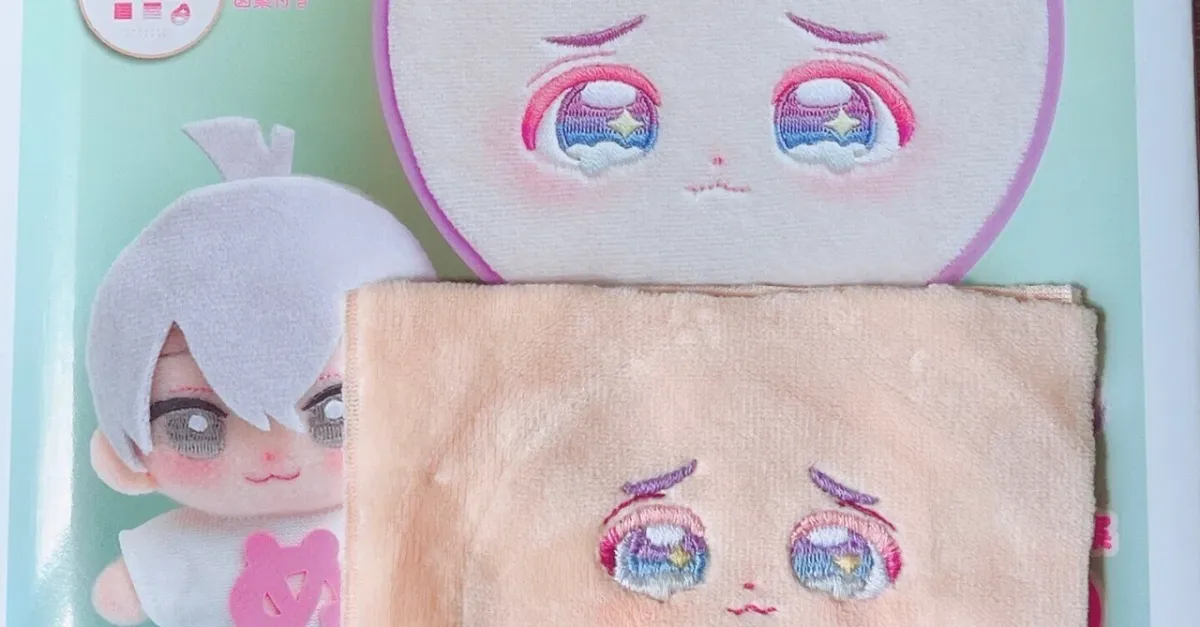
A buyer asked us to "just swap the eyes" on a 30cm bear. That request touched four cost centers, two compliance rules, and a tooling bill larger than the entire trim budget.
Facial features are a production decision tree: appearance, age-grade compliance, tooling exposure, stitch overhead, and print practicality.
| Method | Cost driver | Typical range or limit |
|---|---|---|
| Stock safety eyes | Per-pair trim + washer labor | $0.02-$0.08/pair |
| Custom molded eyes | One-time mold (tooling, outside the material BOM) | $800-$3,000 |
| Embroidery | Stitch count + machine time | $0.15-$0.30 per 3,000 stitches |
| Pile compatibility | Detail loss above 10mm pile |
Factory Note: A rejected bear sample once came back because a small eye-artwork change forced a second tool. That mold fee landed outside the trim budget the buyer had approved, and it wiped out the margin on the run.
High stitch density slows output. Every head sits on the machine longer. A 12,000-stitch face can take roughly 3-4× the embroidery time of a 3,000-stitch face, because thread changes and trims add machine stops on top of the extra stitches.
Printing struggles on long-pile fabric. The pile swallows fine detail. Flat velboa or minky prints cleaner than 10mm fur.
Buyer Action: For under-3 programs, embroidered faces usually reduce risk because there is no small part to detach. For retail character accuracy, get the stitch count and any tooling quoted as its own line. Confirm toy safety standards and work through our plush safety certifications guide before you lock features.
5. Labels, Hangtags, and Compliance Trims: Small Parts That Add Up
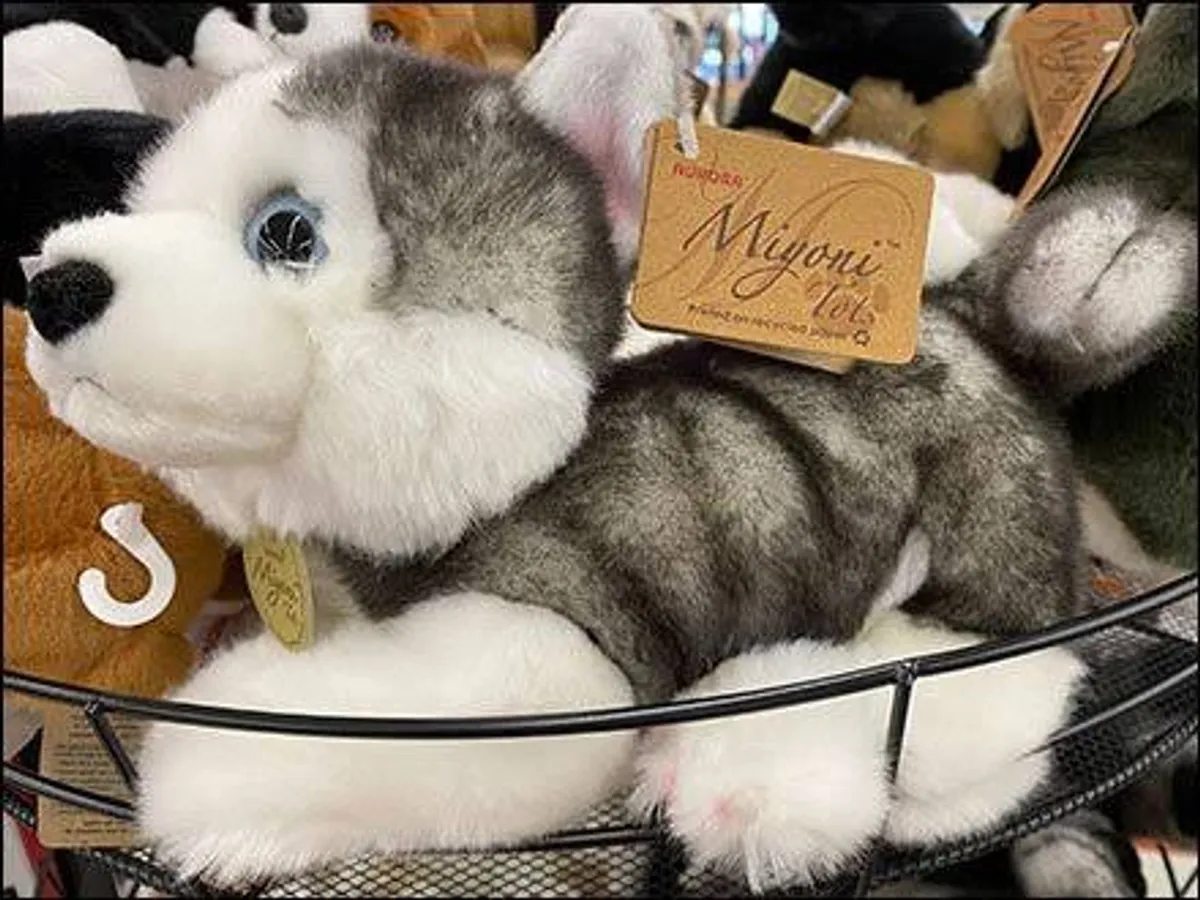
A missing tracking label stalls a container faster than a fabric price spike. Labels rarely break the quote. They break approval, packing, and customs.
For a custom plush, build the full trim stack into the RFQ: sewn-in care label, tracking label where required, hangtag, barcode sticker, polybag or insert card, and branded woven labels. In the US, the CPSC tracking-label rules apply to children's products, so the label is a compliance item, not decoration.
Treat care labels, tracking labels, barcodes, and polybags as recurring BOM items. Treat hangtag artwork, woven-label logos, and print plates as one-time setup tasks.
Freeze exact wording, languages, and destination-market rules before sampling. A US care label is not an EU care label. Retailer barcode placement can change packing line speed.
Factory Note: One large order was stopped because the tags missed the French language block. We reprinted twelve thousand tags and opened four hundred cartons to re-sort them by hand.
Buyer Action: Put material, size, print colors, attachment method, and compliance text on one trim sheet, and approve it with the sample. Attach our CPSIA plush compliance and CE marking references to the RFQ; a Canada toy labeling check belongs in the same pack if you sell there. A $0.02 tag can trigger a $0.20 per unit rework bill.
6. Color Matching, Dye Lots, and Custom Pantone Work
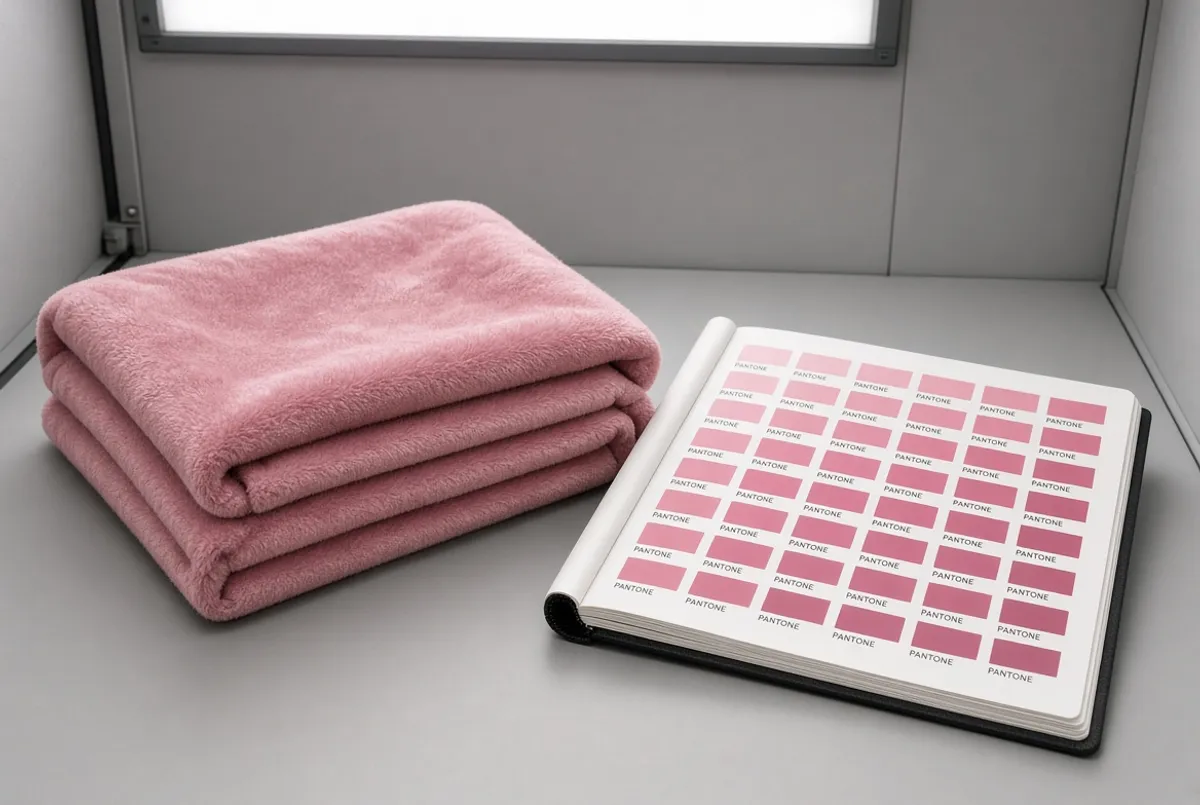
A buyer sends us two quotes: a stock-color bear and a custom Pantone bear. Same plush, a 19% gap. He assumes markup. He is wrong. Color is a purchasing variable, so the two sit on different cost structures.
Stock shades come out of already-dyed inventory. Greige — undyed fabric straight off the knitting machine — only enters the picture when a color is dyed to order. Lab dips are custom development: $100-$150 per shade, 5-7 days. Full Pantone runs trigger dye-lot minimums of 300-500 meters per color.
Dye-lot minimums deserve their own warning, because they collide with low-MOQ thinking. A 300-500 meter dye run makes far more fabric than 100 small plush need. If you want a custom shade on a small order, expect the color to drive the fabric commitment, not your unit count.
Dyeing and finishing costs move with upstream textile conditions. Our dyehouse in China raised rates twice last quarter as energy and chemical costs rose. We put quote-validity dates in writing: 15 days custom, 30 days stock.
Protect shade consistency by over-ordering. We add 8-12% extra fabric on multi-panel plush so replacement panels match. Multi-color splicing adds labor, and matching one Pantone across velboa, minky, and thread carries a risk premium.
Approve a physical lab dip under a standard light source — we check under D65. We require a color tolerance of ΔE CMC (2:1) ≤ 1.5. Sign the exact dye lot before you issue the purchase order, and put the shade check on your toy quality control inspection sheet.
Buyer Action: On a 15,000-piece order, skipping the 10% extra fabric saved about $1,000. Re-dyeing 400 mismatched panels cost $2,100. Sign the dye lot and tolerance in writing before the PO.
7. Eco and Certified Materials Premium: When Sustainability Changes the BOM
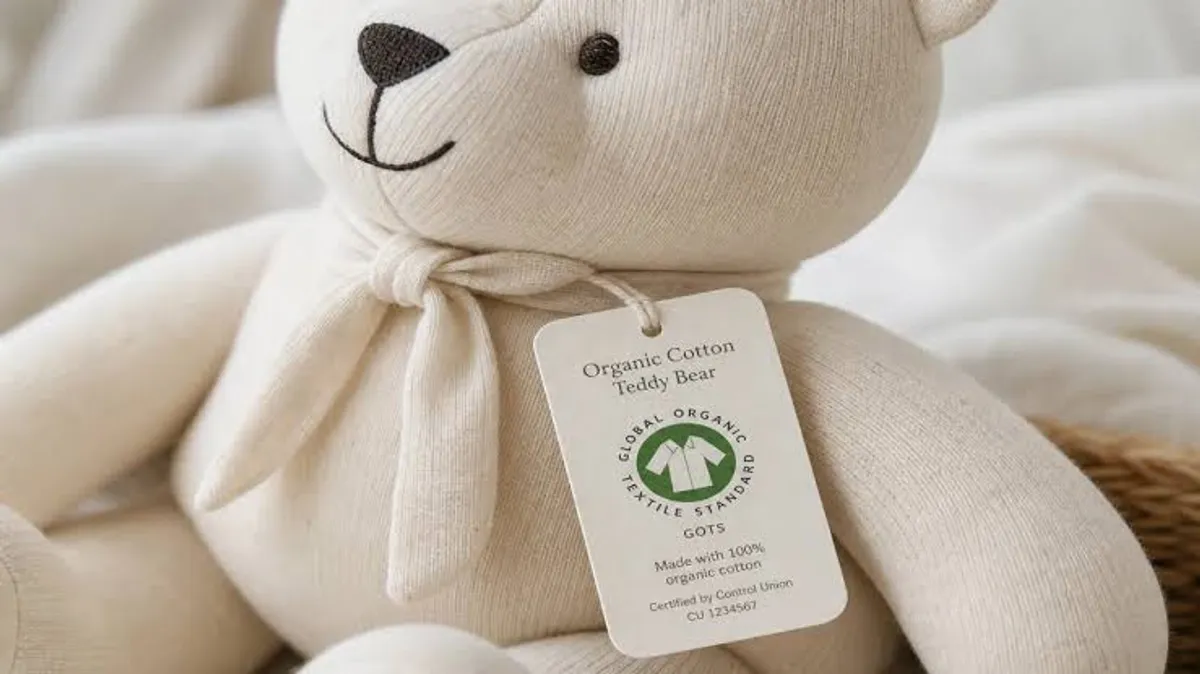
Ask five suppliers for "GRS recycled plush" and you get five BOMs. Same phrase, different cost. We split eco lines into input premium, chain-of-custody handling, a narrower supplier pool, and sampling or document time.
Recycled plush fabric carries a modest input premium, and the split matters. Recycled fiber itself can be cheaper than virgin. What raises the unit cost is the paperwork: GRS-certified fill needs a transaction certificate at every transfer along the chain.
Organic cotton jumps hardest, because you pay for the fiber, GOTS surveillance, and fewer mills. OEKO-TEX® is testing, not a fiber, so its premium depends on test scope and material count.
Certified inputs compound with custom Pantone and low MOQ. One 500-piece run we priced added about $0.10 per unit for GRS fill at 150g, plus a one-time $240 certificate-handling fee for the run. The same order in organic cotton added $0.55 per unit and two weeks.
Factory Note: We approved a "recycled" plush line only after the mill produced a GRS transaction certificate matching our PO date and weight. A logo on a spec sheet is not proof, and a certificate that does not match your order covers somebody else's fiber.
Buyer Action: Approve the premium only when one certificate matches your PO weight and date. If it does not, drop the eco claim. If you are choosing a supplier on this basis, read our eco-friendly manufacturer guide alongside the find a toy manufacturer checklist.
How to Build a Plush BOM and Compare Material Quotes?
You can use this template to check your own factory quotes. Every rate below is a November 2026 range from real orders, in USD ex-factory — realistic factory pricing, not a guaranteed quote for your project.
Step 1: Build the BOM Template
| Line item | Spec | Per unit | Unit rate | Subtotal | Notes (waste included) |
|---|---|---|---|---|---|
| Outer fabric, +18% waste | Velboa 200 GSM, 3mm pile, 58 in usable | 0.50 m | $1.55-$1.65 | $0.78-$0.83 | Base 0.42m; use marker lay |
| Stuffing | Virgin 7D hollow PP, 150g | 0.15 kg | $2.40-$2.60 | $0.37-$0.40 | 3% waste; match sample feel |
| Facial features | Embroidery, 6,000 stitches | 1 pc | $0.40-$0.50 | $0.40-$0.50 | Stock eyes cut cost |
| Labels / tags | Care, tracking, hangtag, barcode | 1 set | $0.10-$0.14 | $0.10-$0.14 | 2% waste; check market language |
| Color dev. | Custom Pantone lab dip | 1 / 1,000 pcs | $100-$150 | $0.10-$0.15 | Optional; stock color is $0 |
| Eco premium | GRS fill certificate | 0.15 kg | $0.55-$0.65 | $0.08-$0.10 | Optional; valid claim only |
| Subtotal, base lines 1-4 | Standard colors, no eco claim | 1 pc | $1.65-$1.87 | 26%-29% of $6.35 ex-factory | |
| Subtotal, optional lines 5-6 | Custom Pantone + GRS fill | 1 pc | $1.83-$2.12 | 29%-33% of $6.35 ex-factory |
Download: Plush BOM template (.xlsx) — the same six lines with live formulas and three blank rows for your own. Type your rates; the subtotals and the material share of your unit price update by themselves.
Step 2: Run the Material Math
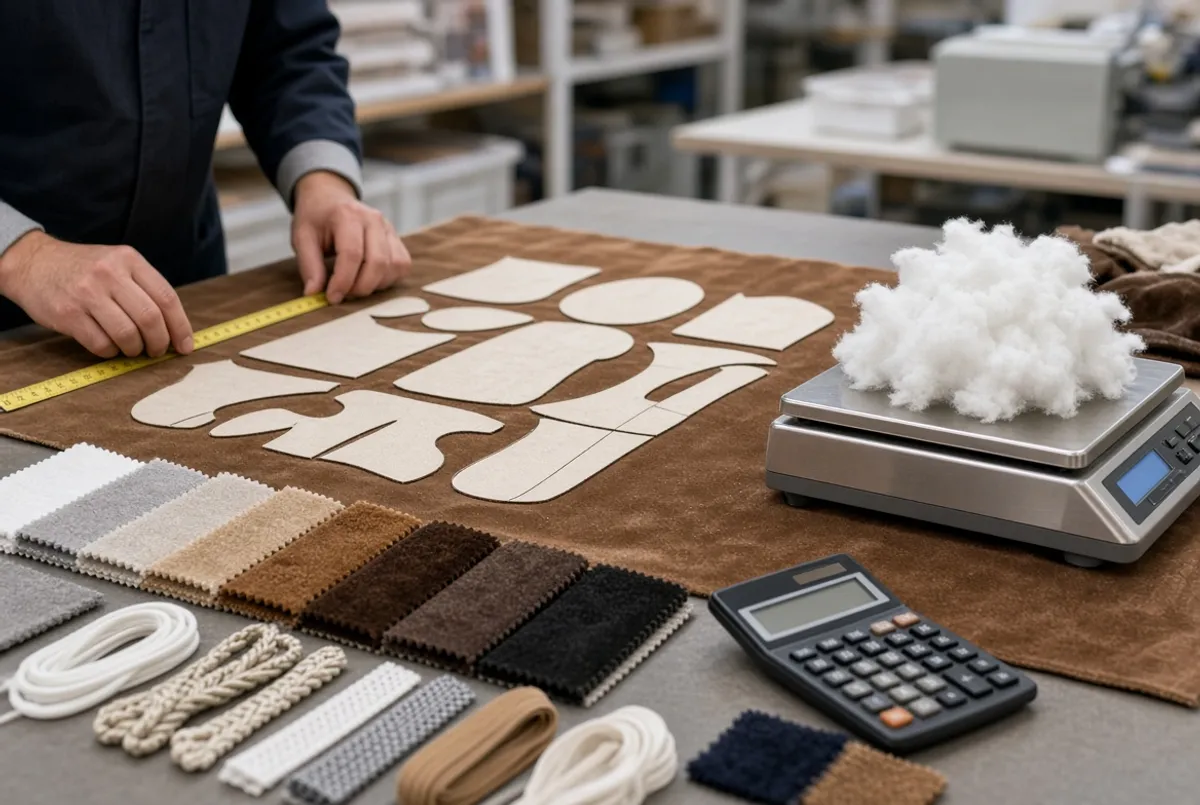
Start with shell cost. Multiply 0.42m base fabric by $1.60 to get $0.67. Add 18% waste. The waste-adjusted fabric line becomes $0.79 at 0.50m. Stuffing: 0.15kg at $2.50 is $0.38. Add 3% waste for $0.39.
Add trim subtotals of $0.45, $0.12, $0.12, and $0.09. The full material subtotal is about $1.96, or 31% of a $6.35 ex-factory unit. Strip the optional lines and you are at $1.65-$1.87. Material is one cost bucket of several.
Watch waste above 20%. We have seen suppliers quote 0.55m consumption when 0.48m is achievable. Always ask for a marker layout. In our experience, embroidery density is the biggest cost driver after fabric, and cartons add their own line on top; see our toy packaging page.
Step 3: Cut Cost Without Hiding the Tradeoff
- Use stock colors. Saves lab dips and dye-lot minimums. Tradeoff: fewer shades, weaker shelf differentiation.
- Reduce panel count. Cuts nesting waste and sewing time. Tradeoff: simpler silhouette, less character detail.
- Simplify embroidery density. Cuts machine time. Tradeoff: less facial detail, lower premium look.
- Right-size fill grams. Cuts fill cost. Tradeoff: flatter hand-feel, lower perceived quality.
- Match fabric grade to channel. Standard velboa suits promo; premium suits retail. Tradeoff: lower GSM shows less loft, may fail premium touch tests.
Step 4: Send a Comparable RFQ
Include fabric type, GSM, pile length, nap direction, usable width, fill type, target grams, facial-feature method, stitch count if embroidery, trim requirements, estimated waste rate, destination-market compliance needs, and quote-validity window.
Send your artwork or existing sample through our contact page for a BOM review. Use the custom plush manufacturer page as your process reference.
People Also Ask About Plush Material Cost Analysis
1. What percentage of a plush toy's cost is material?
Material usually runs 29% to 33% of ex-factory cost. In our BOM audits, a 30cm bear with standard velboa, 150g fill, embroidery, and basic trims came to $1.65 to $1.87 against a $6.35 unit price. Add custom Pantone development and GRS fill and the material line moves to $1.83 to $2.12.
Size and complexity change that share. Get a written BOM and a current quote. These are material-side figures only; labor, testing, freight, and duties sit outside.
2. Which plush fabric is the most cost-effective?
Standard velboa at 180 to 219 GSM is the cheapest sensible choice for promo and mid-tier. It runs $1.20 to $1.80 per meter. But yield decides real unit cost. A cheap roll with 30% waste can lose to a higher-priced roll with 15% waste. Ask for the marker lay before comparing prices.
3. How much stuffing does a 30cm plush typically need?
A 30cm plush usually needs 120g to 200g of PP cotton. Standard retail fill is about 150g. Premium hand-feel takes 200g to 220g and adds roughly $0.18 per piece. Under-filling at 100g feels flat. Over-filling adds cost and can strain seams. Match the approved sample's fill weight in the bulk BOM.
4. Is embroidery cheaper than safety eyes?
No. Stock safety eyes cost $0.02 to $0.08 per pair. Embroidery costs $0.15 to $0.30 per 3,000 stitches, so a 6,000-stitch face runs $0.30 to $0.60. What embroidery does buy is compliance: it reduces small-parts risk on under-3 toys. That saving can justify the higher trim cost. Confirm age grade before you choose.
5. Do eco-friendly materials raise plush costs much?
Recycled fiber itself can cost less than virgin. The premium comes from chain of custody. In one 500-piece quote, GRS fill added about $0.10 per unit at 150g, plus a one-time $240 certificate-handling fee.
Organic cotton jumped $0.55 per unit and added two weeks. Premium depends on fiber, certification, and order size. Approve the eco line only when a transaction certificate matches your PO date and weight.