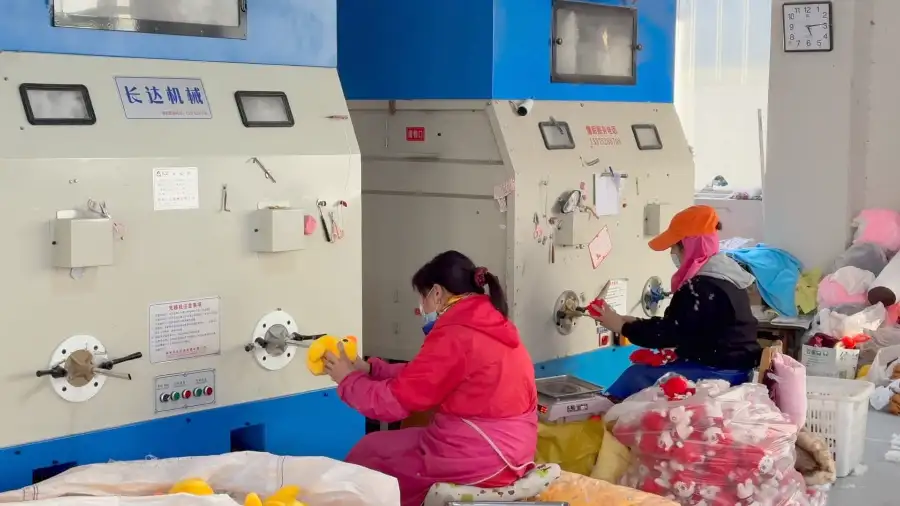

Cut-and-sew is the core construction method for any true soft toy. On our production lines, we restrict injection molding to rigid components like safety eyes, internal sound housings, or vinyl faces. Molding the body creates a hard action figure, not a plush. The most successful SKUs are hybrids: we stitch a multi-panel fabric body for squeezability, then attach molded parts for high-resolution detail.
Get a factory feasibility check for your design here.
Key Takeaways
- Pure plush represents manual labor: Unlike molding, our unit costs climb with every extra fabric panel and minute of sewing time on the floor.
- Injection molding lowers variance: We use it for rigid parts (like vinyl faces) to guarantee identical details, though it requires upfront tooling investment.
- Hybrid designs add QC risks: Attaching hard parts to soft bodies triggers strict pull-tests during our production process to prevent choking hazards.
- Spec the sewing like an engineer: Define your needle sizes (e.g., 12 for thin, 16 for thick) and thread type to prevent fabric perforation.
- Laser cutting beats die cutting: For complex, multi-layer patterns, we prefer laser cutting to reduce edge distortion and improve repeatability.
- Compliance is mandatory: We run metal detection on every batch and verify safety standards (ASTM F963/EN71) before shipping.
- Ultrasonic welding is a specialist tool: We use this for sealed inner pouches, but it lacks the peel strength needed for main outer seams.
Plush Toy Construction Methods - Quickstart Guide
Bring your plush brand to life with confidence.
1. Defining the Product Architecture
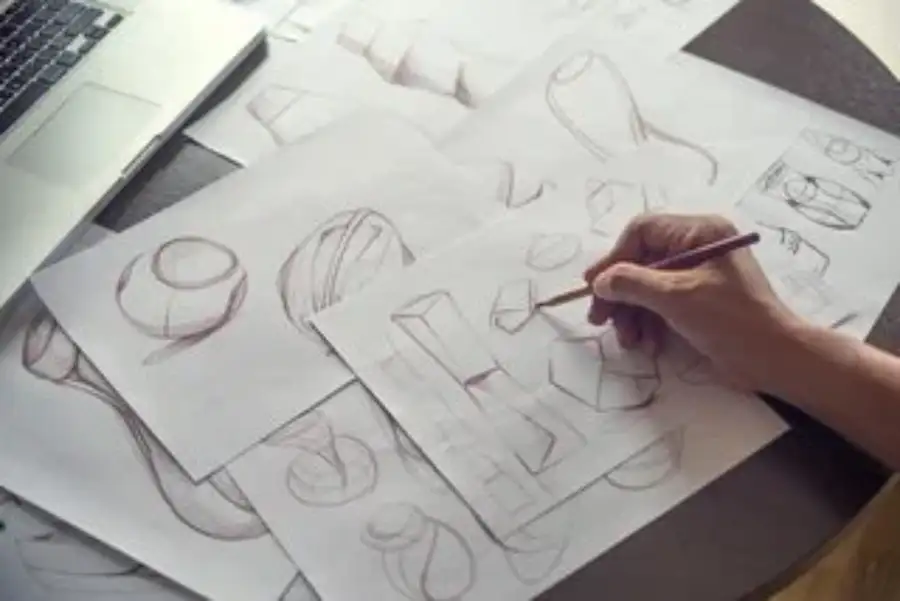
Buyers often compare quotes for "stuffed toys" without realizing they are pricing three different manufacturing disciplines. We separate projects into these categories to prevent engineering mismatches:
- Pure Plush (Soft Toy): 100% fabric outer and stuffing. No hard parts exist to fail impact testing.
- Hybrid Plush: A soft body with rigid components. Examples include a bear with plastic safety eyes, a doll with a vinyl face, or a plushie containing an electronic sound box. This requires two distinct production lines: molding and sewing.
- Hard Toy with Plush Elements: Primarily a plastic action figure that wears a sewn vest or hood. Here, plastic tooling drives 80% of the cost.
2. Cut-and-Sew Construction (The Manual Reality)
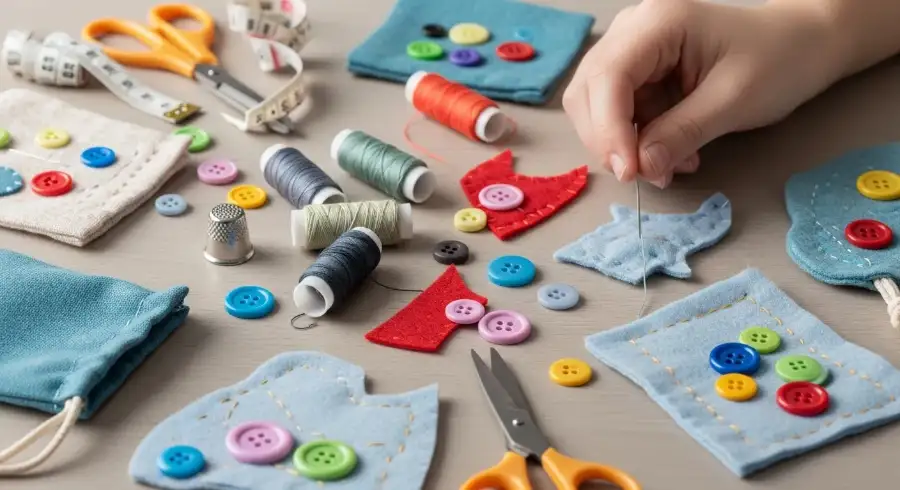
Unlike plastic toys, which machines pop out every few seconds, plush toys are handmade. Every seam represents a human operator feeding fabric through a machine. This manual labor is why "minutes per unit" dictates your cost.
The Production Flow
- Material Prep: We bond interlinings to the outer fabric (minky, velboa) to prevent stretching.
- Patterning: Engineers grade 2D patterns and mark "notches" for alignment.
- Cutting: We cut fabric stacks using steel dies, CNC knives, or lasers.
- Decoration: Flat panels undergo embroidery or screen printing before assembly.
- Sub-Assembly: Small teams sew ears, tails, and limbs.
- Main Assembly: We stitch the body shell and attach sub-assemblies.
- Turning & Stuffing: We reverse the skin (turn it right-side out) and fill it.
- Closing: The final seam (usually on the back) is closed by hand (ladder stitch) or machine.
- Grooming: Operators brush the pile and trim loose threads.
Factory Insight: Why We Prefer Laser Cutting: For complex patterns, we favor laser cutting over traditional die cutting. Die cutters compress the fabric stack, which distorts the shape of thick pile fabrics by the time the blade hits the bottom layer. Lasers cauterize the fabric edge as they cut, preventing fraying and ensuring the 50th layer is identical to the first. This accuracy is critical for anime plushies with tight embroidery alignment.
Sewing Technicals: The Specs That Prevent Returns If you do not specify sewing standards, factories default to the cheapest option. We enforce specific rules to ensure durability:
- Needle Selection: We use size 12 or 14 needles for standard minky. If a factory uses a size 16 or 18 (meant for denim) on delicate velboa, it leaves permanent holes that eventually leak stuffing.
- Thread Specs: For high-stress zones like the neck joint or hang-loops, we switch to Bonded Nylon. It resists snapping under tension. For general seams, high-tenacity polyester provides standard wash resistance.
- Reinforcement: We require a "backstitch" (sewing in reverse) at the start and stop of every seam. Stress points, like where an arm joins the body, receive a bar-tack to prevent ripping during rough play.
The Cost Equation: In cut-and-sew, complexity equals cost. A character with 25 fabric panels takes three times longer to sew than a bear with 8 panels. When buyers ask for cost reductions, we first look at reducing panel count or simplifying embroidery stitch counts.
3. Injection Molding (For Rigid Components)
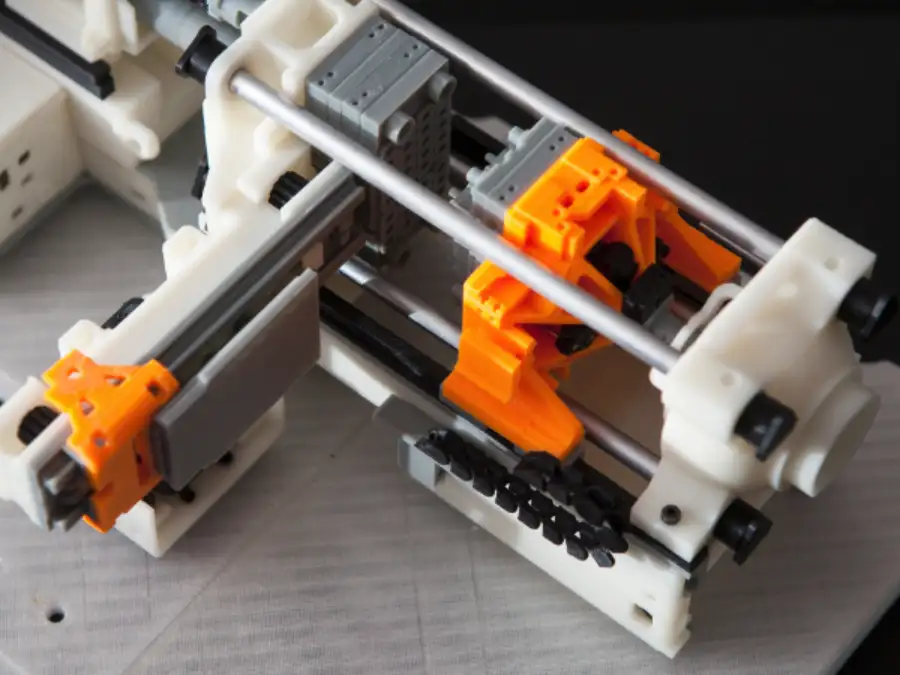
Injection molding for toys allows us to create parts that fabric cannot replicate, such as realistic eyes, articulated joints, or battery housings.
- The Process: We melt plastic pellets and inject them into a steel mold under high pressure.
- Typical Use Cases: Safety eyes/noses, internal housings for voice boxes, and vinyl faces for "hybrid" dolls.
- The Tradeoff: The per-unit cost is pennies, but the upfront tooling (the mold) costs thousands of dollars. Once the tool is cut, however, we can produce thousands of identical parts daily with zero variance.
4. Ultrasonic Welding (The Specialist Tool)
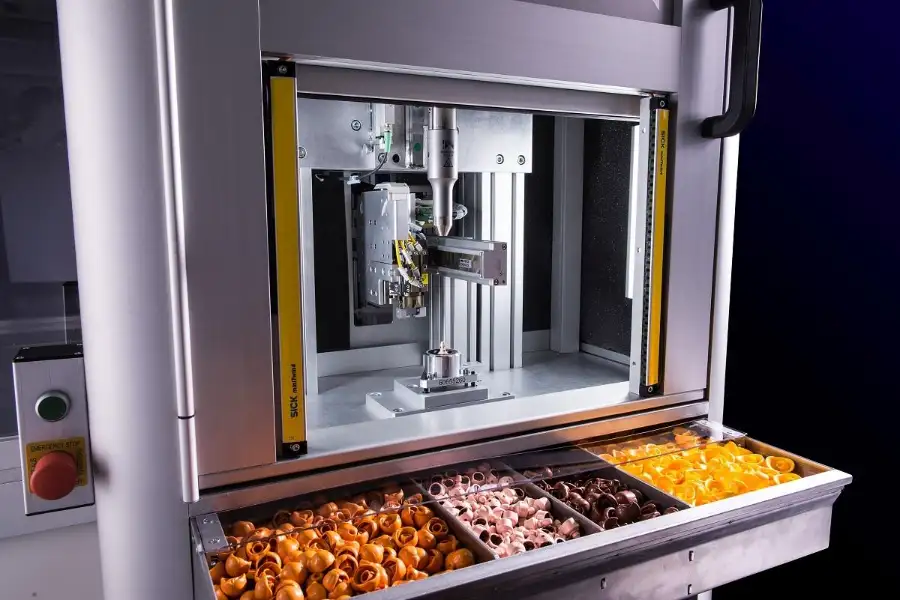
Many competitors ignore this method, but it is vital for modern plush manufacturing. Ultrasonic welding uses high-frequency vibrations to melt and fuse thermoplastic materials without needles or glue.
- Where We Use It:
- Sealed Pouches: If a toy contains weighted pellets or a sound module, we weld the inner pouch shut. Sewing holes would allow pellets to leak out.
- Waterproofing: For bath toys, welding seals the seams completely against water entry.
- Limitations: It only works on synthetic materials (like polyester or PVC). We cannot weld natural cotton. Also, it lacks the peel strength of a sewn seam, so we rarely use it for the main outer shell of a plush toy.
5. Materials and Stuffing Specifications
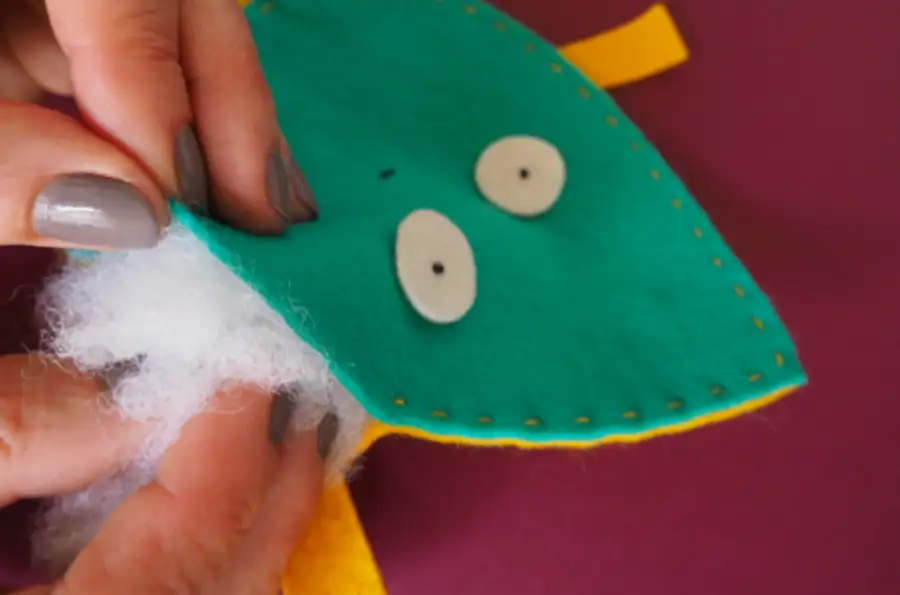
The "feel" of a soft toy comes down to the spec sheet. We guide buyers toward specific material pairings.
- Outer Fabrics:
- Crystal Velboa: Short pile, extremely soft, holds embroidery detail well.
- Minky/Plush: Longer pile (1.5mm–5mm), hides seams well, but harder to print detailed graphics on.
- Production Note: Velvet fabrics have a "nap" (direction). If we cut panels in inconsistent directions, the toy will look like it has two different colors due to light reflection (shading).
- Stuffing:
- PP Cotton (Polyester Fiberfill): The industry standard. We use 7D or 15D fiber for optimal bounce.
- Structured Foam: Used for stiff ears or flat feet that need to hold a shape.
- Sustainability:
- We offer eco-friendly manufacturing using rPET (recycled plastic) fabrics and stuffing. Buyers must request a GRS (Global Recycled Standard) certificate to verify the material's origin.
6. Quality Control and Compliance
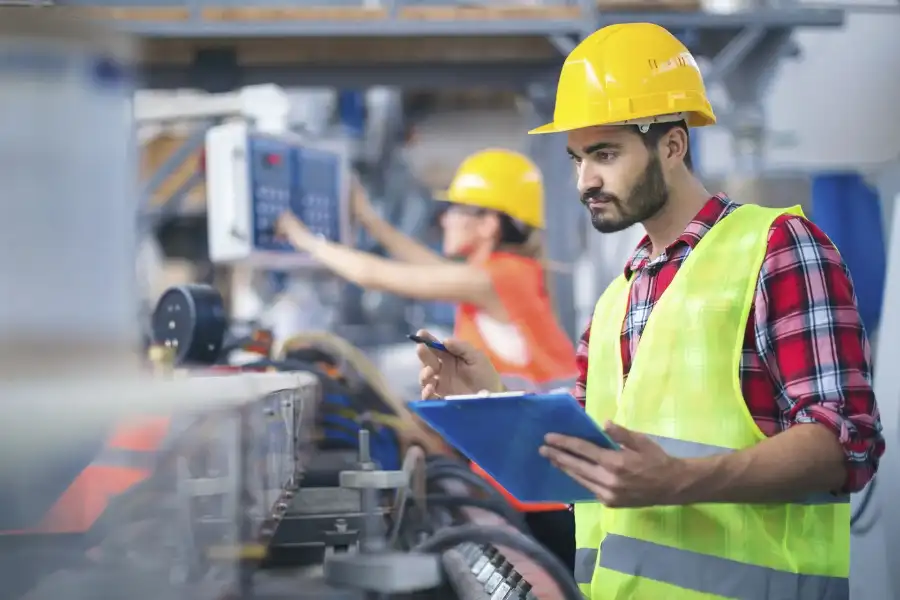
Experienced buyers judge a factory by its QC labs, not its showroom. We integrate testing directly into the assembly line.
- AQL (Acceptable Quality Limit): This defines the pass/fail ratio for a batch. We typically operate at AQL 2.5 for major defects (e.g., an open seam) and AQL 4.0 for minor issues. High-end retail brands often demand a stricter AQL 1.5.
- Needle Detection: This is non-negotiable. A broken needle tip left inside a toy is a safety hazard. Every single finished unit passes through a conveyor-belt metal detector. If the machine beeps, the toy is quarantined and destroyed.
- Pull Testing: We verify that safety eyes and sewn limbs cannot be ripped off. Standards like ASTM F963 (USA) and EN 71 (Europe) dictate the tension the toy must withstand—usually 15–20 lbs of force.
- Documentation: For US imports, we help generate the Children's Product Certificate (CPC) based on third-party lab results. We also manage age grading guidelines and ensure label requirements (tracking labels, batch IDs) are sewn in correctly.
7. Comparison Matrix: Which Method Fits You?
| Feature | Cut & Sew (Pure Plush) | Injection Molding (Hard Toy) | Hybrid (Plush + Vinyl/Parts) |
|---|---|---|---|
| Upfront Cost | Low (Sample fees only) | High (Steel molds: $2k–$10k+) | Medium (Molds for parts only) |
| Unit Cost Driver | Sewing Minutes & Complexity | Material Weight & Cycle Time | Assembly Labor |
| Best Aesthetics | Softness & Embroidery | High-Res Detail & Rigidity | Best of Both Worlds |
| Failure Mode | Open Seams (Repairable) | Broken Plastic (Sharp Edges) | Part Separation (Choking Risk) |
| Compliance Risk | Needle Contamination | Chemical/Heavy Metals | Small Parts Detachment |
| Best Volume | 500+ Units (Flexible) | 5,000+ Units (Efficient) | 1,000+ Units |
Accessibility Note: Cut-and-sew offers the lowest barrier to entry for custom shapes but higher per-unit labor costs. Injection molding requires high volume to amortize mold costs. Hybrid designs balance softness with detail but require strict safety testing for component detachment.
8. Buyer Action: The Perfect Tech Pack
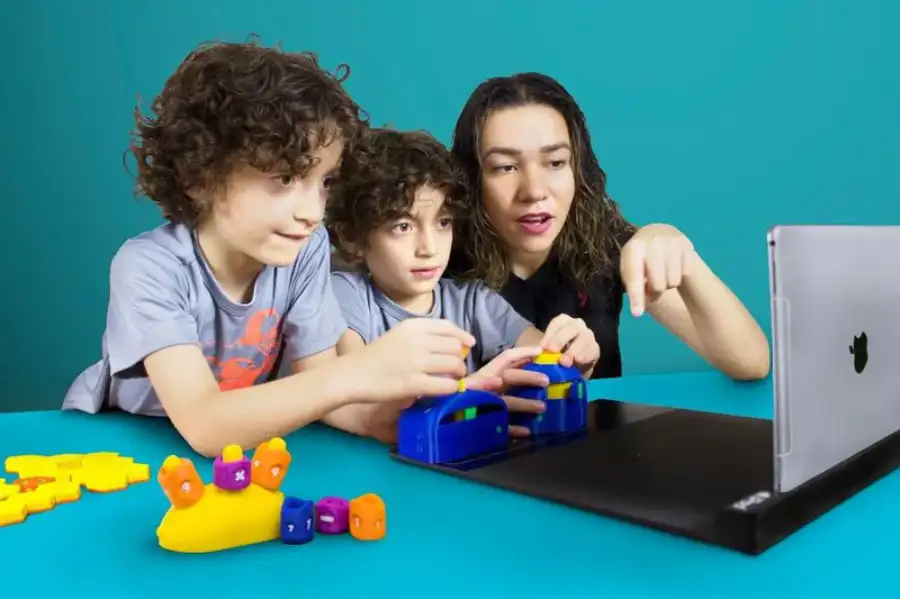
To get an accurate quote that allows for an apples-to-apples comparison, your RFQ must be precise. Vague requests lead to padded quotes.
What to Include:
- BOM (Bill of Materials): Specify "1.5mm Crystal Velboa" rather than just "soft fabric." State if eyes should be embroidered (cheaper/safer) or plastic safety eyes (requires molding/stock).
- Construction Callouts: Explicitly ask for "Bonded Nylon thread at neck and limb joints" and "double-stitching on closure seams."
- The Golden Sample: Never start mass production without a signed "Golden Sample." This physical prototype sets the tolerance for the entire run. If production drifts from this sample, you have grounds to reject the batch.
- QC Gates: State your requirement for "100% Metal Detection" and "Pull Tests per ASTM F963" directly in the contract.
For more on navigating these steps, read our guides on how to find a toy manufacturer, structuring ODM/OEM agreements, and the specifics of custom toy manufacturing.
The Science: Needle Heating In high-speed sewing, needles can get hot enough to melt synthetic plush fabric, creating weak spots. We use specialized needle coolants or reduce machine speeds on dense pile fabrics to prevent this invisible defect.
When Standard Rules Fail: 4 Production Scenarios
General manufacturing advice works for 90% of standard bears. However, in our experience, the remaining 10% contains the edge cases that cause product recalls or bankrupt startups. We handle these exceptions daily on the factory floor.
Here is how we adjust our engineering approach for four specific scenarios.
For Ages 0–3 (The "Baby Safe" Standard)
If your target audience includes infants or toddlers under 36 months, the safety profile changes from "aesthetic" to "survival."
⚠️ Warning: Avoid hard plastic eyes completely. In our tension labs, we have seen "safety eyes" crack or detach under torque tests. If a part fits in a choke tube, your product is illegal to sell.
- Choose: Embroidery or Sublimation. These methods integrate facial features directly into the fabric. There is nothing to detach.
- Specify: A "Zero Small Parts" policy in your Bill of Materials. We require reinforced, double-stitched seams (add 2mm allowance) on all limb attachments to prevent stuffing leakage.
- Test: We run every batch through a needle detector and perform the ASTM F963 / EN71 cylinder check. Document this for your Children's Product Certificate (CPC), or customs will seize the shipment.
For High-End Collectibles (The "Display" Standard)
If you are selling a $50+ collector's item where anime-accurate details matter more than durability.
- Choose: Laser Cutting over Die Cutting. Steel dies compress high-pile fabric before cutting it, which distorts the shape. Lasers cut without pressure, ensuring every panel matches your digital pattern exactly.
- Specify: Pile Direction. This is the most common error we fix. If the fur runs "up" on the left arm and "down" on the right, light reflects differently, and the limb looks like a different color.
- Test: Order a Dimensional Audit on the "First Article." Compare it strictly against your signed Golden Sample. For complex characters, see our guide on custom doll manufacturing.
For Hybrid Assemblies (Plush + Hard Parts)
If your design combines a soft body with a vinyl face, rigid limbs, or a heavy electronic module.
🛡️ Our Verdict: Never rely on glue alone. Shipping containers can reach 60°C (140°F) crossing the ocean. We have seen adhesives degrade in this heat, causing faces to peel off before they reach the shelf.
- Choose: Mechanical Flanges. The hard part (like a vinyl face) must have a "sewing flange"—a thin plastic lip that lets us stitch the part inside the fabric shell.
- Specify: Use a locking washer or an internal backing plate for any limb attachment. If using electronics, specify a Velcro pouch so the battery box is removable for washing.
- Test: We perform a 15–20 lb pull test on all rigid parts. If there are electronics, we add a drop test to ensure the soldering holds up after a fall.
Small Batches vs. Mass Retail (The Volume Logic)
If you are a startup running 500 units vs. a retail buyer ordering 20,000+.
- Choose:
- For Low MOQ (500–2,000): Avoid custom molds. Tooling for a custom vinyl face costs $2,000+. On a small run, this adds $4.00 to every unit's cost. Use stock safety eyes and off-the-shelf sound boxes.
- For High Volume (20,000+): Invest in tooling. At this scale, the mold cost amortizes to pennies. It allows you to own unique IP that competitors cannot copy.
- Specify: Fabric Roll Utilization. Fabric comes in specific widths. If your pattern nests poorly (leaving gaps on the roll), you pay for that waste. On large orders, we can dye custom roll widths to minimize scrap.
- Test: For startups, test the market with a custom plush manufacturer using stock parts first. Only open molds once sales data validates the investment.
Need an engineer to review your design for these risks? Contact our engineering team here.
People Also Ask About Plush Toy Construction Methods
1. Is cut-and-sew always cheaper than injection molding?
Not for high volumes. While injection molding demands upfront tooling fees ($2,000+), its per-unit cost drops to pennies.
Cut-and-sew has zero tooling costs but high labor fees that stay static. In our production process, complex plushies with 20+ panels often cost more per unit than rigid figures.
2. What thread and needle setup should I specify for durable plush seams?
Use size 12–14 ball-point needles. Sharp denim needles cut fabric yarn, eventually causing stuffing leaks.
For thread, we specify Bonded Nylon (Tex 40) for high-stress neck joints to prevent snapping. Standard spun polyester is sufficient for low-tension body seams.
3. Are plastic safety eyes 'safe' for kids?
Only if they pass the 15lb pull test. For children under 3, I strongly recommend embroidery instead.
We have seen plastic "safety eyes" crack or detach during ASTM F963 torque testing, creating an instant choking hazard. Embroidery eliminates this risk entirely.
4. Can ultrasonic welding replace sewing for plush toys?
No, not for the outer shell. Ultrasonic welds lack the peel strength of a stitched seam and can burst when a child squeezes the toy. We only use welding for internal bean bag pouches or sealing waterproof coated fabrics on bath toys.
5. How do I stop production units from coming out smaller than the sample?
Lock your seam allowance. Factories often sew deeper to speed up production, unintentionally shrinking the toy. I enforce a strict Golden Sample policy: if the final unit deviates more than 5% from the signed prototype's dimensions, we reject the batch.
6. What QC should I require before shipment?
Mandate a metal detection scan. A broken needle tip left inside is a massive liability.
Beyond that, require AQL 2.5 for visual defects and pull tests on attachments. Ensure your toy product packaging also passes drop tests to protect the item in transit.
Still unsure if your design needs a mold or a needle? Get a free engineering feasibility review today.