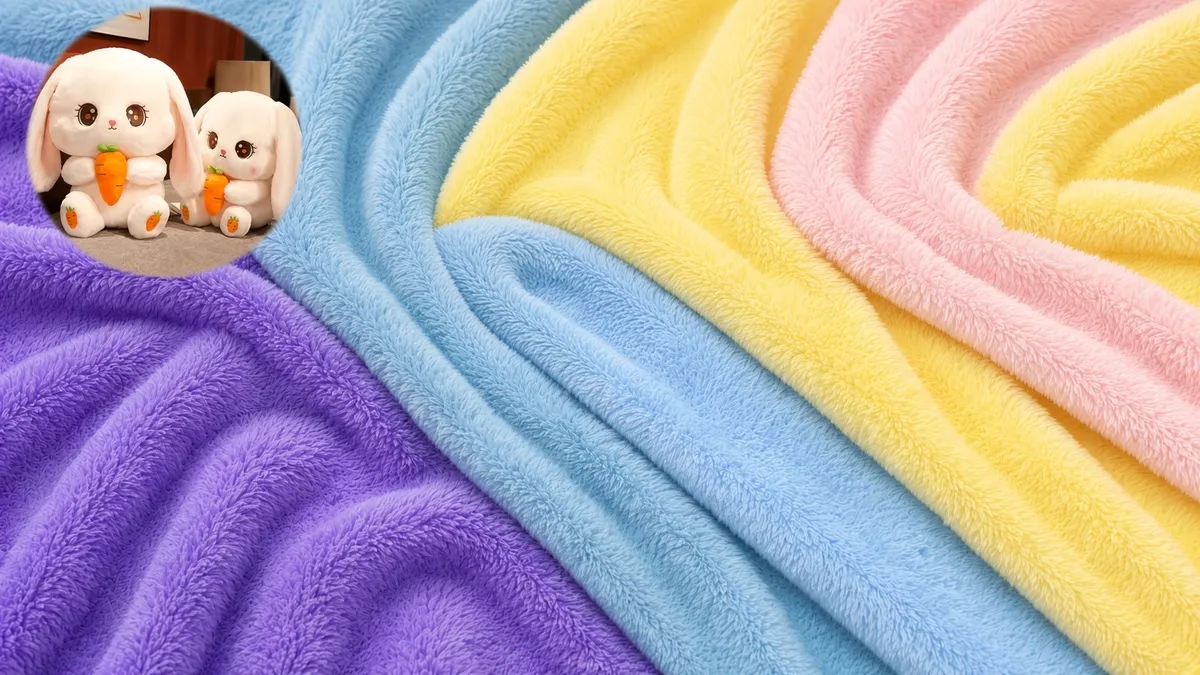

What is velboa fabric? Velboa is a 100% polyester knitted plush with a short, dense cut pile, typically sold for mass-market plush toys, character goods, and promotional soft toys. Its short pile holds embroidery and printed detail cleanly, it sews predictably, and it usually costs less than minky or long faux fur.
The trade-off is hand-feel: velboa feels denser and firmer than minky. Because suppliers use "velboa" loosely, buyers should specify GSM, pile length, backing stretch, and nap direction in numbers rather than relying on the fabric name.
This guide covers how velboa is made, which grades exist, how it compares with minky, velour, and long faux fur, its limits, safety checkpoints, and the exact fields to put in your RFQ.
Key Takeaways
- Velboa is a short-pile polyester plush built for detail. Its dense cut pile holds embroidery and printed faces, so character art stays sharp after stuffing where long faux fur would blur it.
- The name is not the spec. Suppliers use velboa, crystal super soft, short plush, and boa loosely; two rolls with the same label can differ in pile height, GSM, and backing stretch. Compare measured specs, not names.
- Specify four numbers before you quote. Pile length, GSM, backing stretch, and nap direction drive softness, print clarity, seam stability, and cost — put all four in the RFQ.
- Velboa is the cost-and-consistency default, not the softest. It usually costs less than minky or dense velour and runs stably in bulk; choose minky or velour when hand-feel sells the toy.
- Low-GSM and discount lots are the main risk. They can show backing when stretched and shed more, so run a stretch check and a shed test on the actual roll, and keep nap direction consistent across mirrored parts.
- Safety comes from the finished toy, not the fabric name. A velboa roll can carry OEKO-TEX, but the toy still needs ASTM F963/CPSIA (US) or EN 71 (EU) testing on the final product.
What Is Velboa Fabric? The Basics
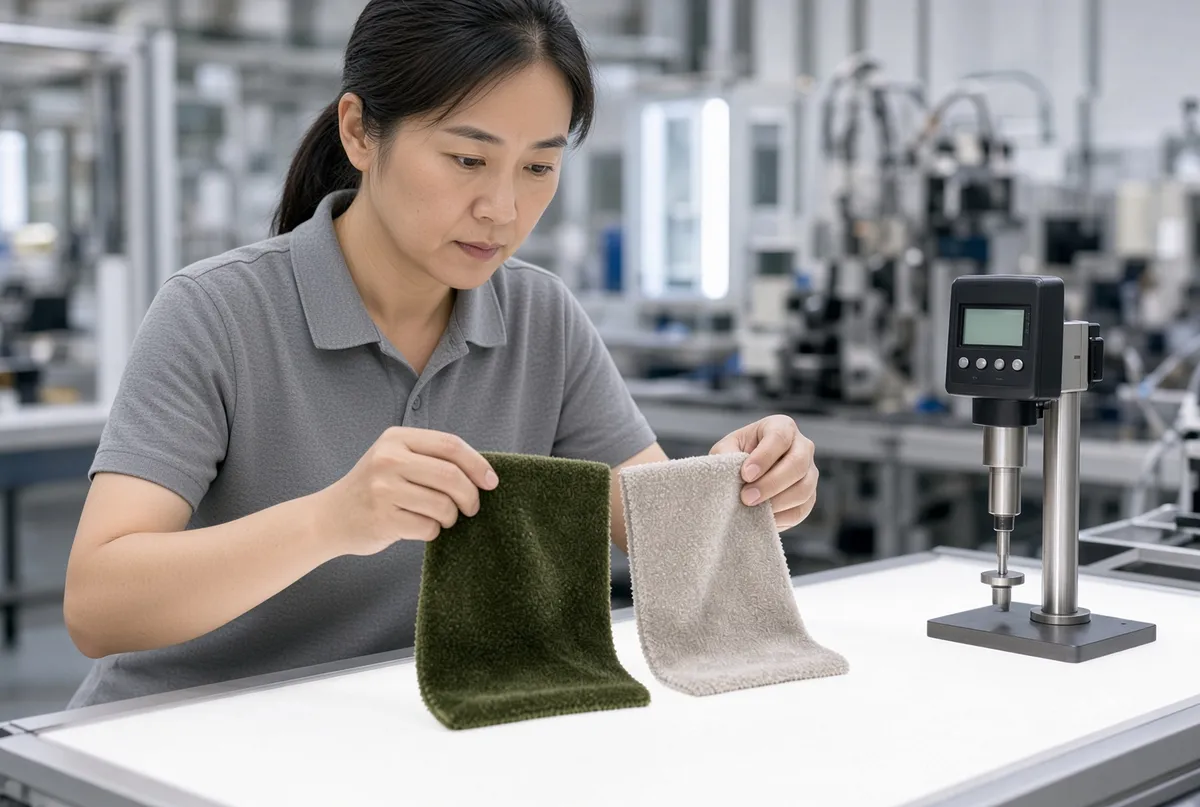
Velboa fabric is a 100% polyester knitted short-pile plush. The cut pile is short and dense, so it holds print detail and embroidery cleanly. For buyers, velboa is a toy-friendly short-pile faux fur or plush shell. It suits plush toys, dolls, mascots, cushions, and promotional soft goods because it prints sharply, sews predictably, and costs less than many longer-pile options.
Fabric weight is usually checked by cutting a fixed-area sample and weighing it; ASTM D3776 describes the method. Chemical documentation such as an OEKO-TEX Standard 100 certificate covers the textile only. It does not replace testing of the finished toy.
Suppliers use velboa, crystal super soft, short plush, short-pile plush, boa, short-pile minky, and velour as overlapping sales names. These names are not specifications. Two rolls sold under the same name can differ noticeably in pile height, GSM, and backing stretch, so compare measured specs, not labels.
Four variables drive performance:
- Pile length: affects softness and print or embroidery clarity.
- GSM / fabric weight: affects body, opacity, and durability.
- Backing structure and stretch: affects seam stability.
- Fiber denier / filament choice: affects hand-feel, recovery, and cost.
Nap direction matters too. Brush with the pile and velboa looks lighter. Brush against it and it looks darker. Cut panels in one direction when color consistency is critical.
Velboa became a mass-production favorite because it balances softness, neatness, and manufacturability better than many longer-pile plush options.
| Term | What it means in a buyer's quote |
|---|---|
| Velboa | Short-pile polyester plush. |
| Crystal super soft | Fine short plush sales term. |
| Boa | Often a longer or looser pile. |
| Short-pile minky | Retail soft plush label. |
| Velour | A related but different pile fabric — denser and smoother. |
How Velboa Fabric Is Made: 8 Stages
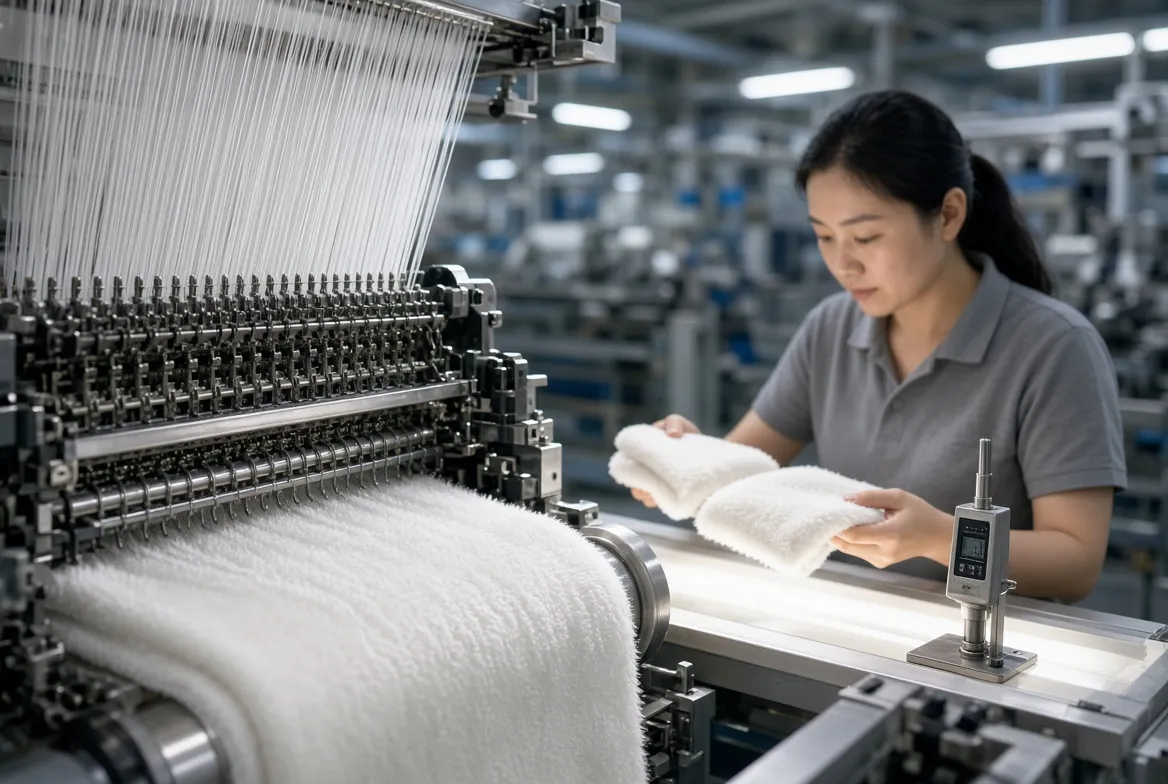
Velboa is produced at specialist knitting mills, not at the plush factory. Knowing where each spec is set helps buyers write tighter RFQs. Every spec a buyer argues about locks at a specific machine stage, so skip one stage and the defect lands eight weeks later in bulk.
Think of velboa like a cut lawn. Knitting grows the grass. Brushing lifts it. Shearing mows it to a level height. Dyeing and finishing decide whether that lawn looks even under retail lighting.
- Yarn prep and denier selection. Technicians load polyester filament onto creels. Lower denier gives a softer surface; higher denier gives body and seam support.
- Knitting the ground fabric. The backing carries every seam you will sew. Construction (warp- or weft-knit) varies by mill, so ask your supplier which one they use — it affects stretch and seam behavior, which is why plush toy construction methods matter as much as the face fabric.
- Pile formation. The machine knits extra loops, then cuts them into a standing pile.
- Brushing or raising. Brushes pull fiber tips upright and separate matted clumps.
- Shearing. Blades trim pile to a controlled height. This stage controls surface uniformity; a dull blade leaves visible tracks.
- Dyeing or printing. Color enters the fiber here, and nap direction now affects apparent shade.
- Finishing. Softeners, anti-shed treatment, and heat setting run next. Heat setting stabilizes the roll so it will not shrink or skew after cutting.
- Inspection and shade control. Mills measure GSM, pile height, and width per roll, then tag rolls by dye lot. GSM is usually checked with a fixed-area sample weight (ASTM D3776), and chemical safety against OEKO-TEX Standard 100 for toy programs.
⚙️ Technical Detail: Heat setting is the invisible spec. Roll width can shift if the mill skips it, so measure width on arrival rather than trusting the label.
Velboa Grades and Specs to Request
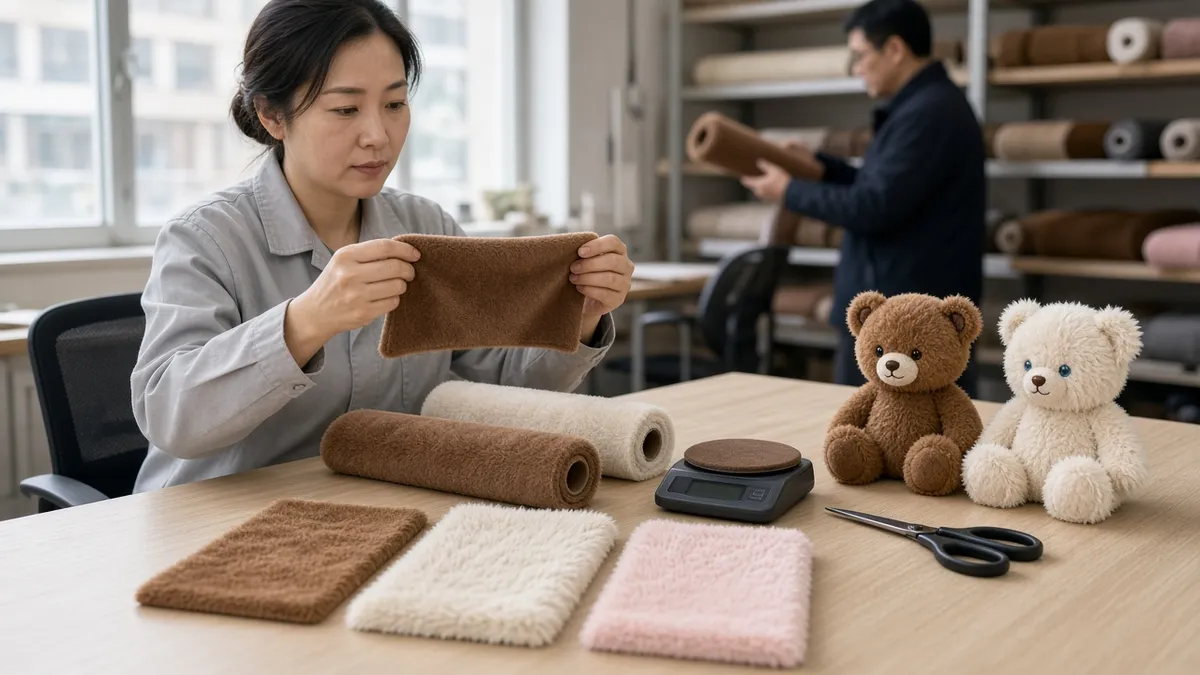
Most velboa defects start with a quote that names the fabric but not the numbers. Match the grade to the product, then ask the supplier for the data that proves the grade.
| Grade | Typical hand-feel | Best use | Embroidery | Ask supplier for | |
|---|---|---|---|---|---|
| Standard | Dense, firm | Character plush | Good | Good | GSM, pile mm, width |
| Heavy-weight | Fuller | Retail mascots, stress seams | Very good | Good | GSM, backing stretch |
| Crystal super soft | Smoother | Doll skin, baby-adjacent | Fair | Very good | Pile mm, shed test |
| Spandex | Stretchy | Keychains, cushions | Fair | Good | Stretch % both ways |
| Printed | Soft | Licensed art | Fair | Excellent | Print method, colorfastness |
| Embossed / jacquard | Textured | Feature panels | Good | Limited | Pattern repeat, MOQ |
| Longer-pile | Fluffy | Hair, trims | Poor | Poor | Pile mm, shedding |
| rPET | Similar to standard | Eco lines | Good | Good | GRS certificate, TC |
Values vary by mill and lot; request a spec sheet and swatch for every quote. Verified November 2026.
Reading the Specs Like a Toy Engineer
- Pile length: Shorter pile gives cleaner embroidery and crisper printed facial features. Long pile swallows stitch definition.
- GSM: Higher GSM buys coverage and seam support. It costs more per meter and stiffens small parts.
- Backing stretch: Too much stretch throws off stuffing symmetry. Operators chase seam control, and the plush leans.
- Colorfastness, shrinkage, crocking: QA must confirm all three on the final color lot, not the lab dip.
- Width and roll yield: Wider rolls nest patterns better and cut material waste.
- Short pile faux fur vs longer faux fur: Short pile faux fur suits facial features and small plush. Longer faux fur suits hair, tails, and trim.
🧠 Expert Insight: A baby-adjacent soft toy with stricter hand-feel and safety expectations should start at standard or crystal super soft, not spandex. Stretch creates seam gaps that stuffing escapes through. On weighted builds, fabric weight also changes the fill plan, so align the two before you sample.
Selina Yin — Toy Design & Manufacturing Expert
Velboa vs Minky vs Velour vs Long Faux Fur
The grade you pick matters most against the alternatives. This is where most buyers get pushed toward the wrong fabric.
| Fabric | Hand-feel | Pile | Embroidery clarity | Bulk consistency | Cost | Premium feel | Best applications |
|---|---|---|---|---|---|---|---|
| Velboa | Dense, firm | Short | Excellent | High | Low to moderate | Moderate | Character plush, mascots, keychains |
| Minky | Silky | Short to medium | Good | Medium | Moderate | High | Baby plush, cuddle toys |
| Velour | Smooth, dense | Short | Fair | Medium | Moderate to high | High | Doll skin, trims |
| Long faux fur | Fluffy | Long | Poor | Low to medium | High | Very high | Hair, tails, trims |
Velboa is the operational default, not the most premium hand-feel. Choose minky or velour when touch drives the sale, and long faux fur only for hair, tails, and trims. Velour sits in the same broader pile family as velvet — see what is velvet fabric if you are weighing the two. For a deeper head-to-head, read minky vs velboa for plush and our guide to what is minky fabric.
Why Plush Factories Default to Velboa
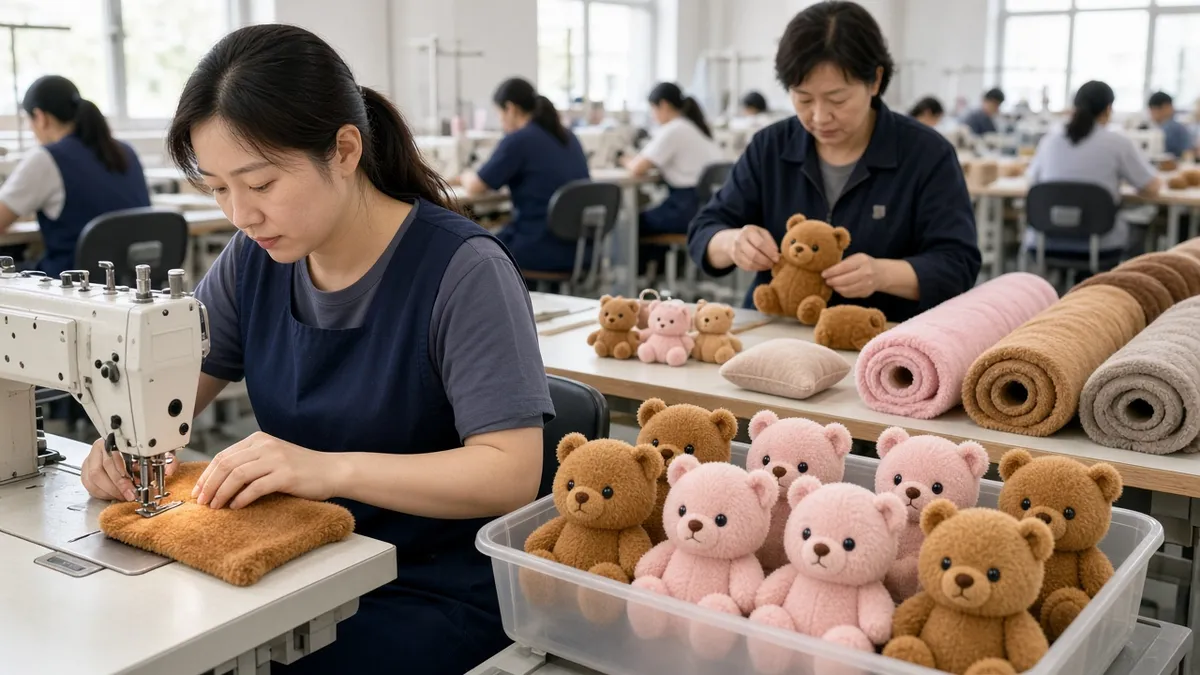
Test velboa against minky, velour, and long faux fur and it rarely wins the touch test. It wins the sourcing test: cost control, predictable sewing, and stable bulk runs.
Holds Embroidery and Print Detail
The short pile keeps a character's face crisp. Fine lettering and small facial features stay legible after stuffing where a long pile would blur the same art. For stitch and backing choices, see our guide to embroidery on plush toys.
Keeps Bulk Runs Stable
Heat-set backing resists skew, which keeps seam alignment consistent across a bulk run. Operators spend less time trimming seams than they do on long faux fur.
Lowers Fabric Cost
Velboa is usually priced below minky and dense velour per meter. Confirm against current quotes, then use the saving to fund packaging or a second colorway. Our plush material cost analysis shows where fabric sits in the overall unit cost.
Ships from Multiple Mills
Several mills stock standard velboa. Buyers can shift lots without redrawing the pattern, which protects lead time and MOQ in peak season.
Covers Most Programs
One fabric family handles retail animals, IP characters, keychains, mascots, gifts, and pillows. It also suits pouches and novelties where graphics need a clean surface.
Best for: daily retail plush, anime and IP characters, keychain plush, corporate mascots, promo gifts, pillows, and low-to-mid-complexity soft goods.
📈 ROI Check: Ask for GSM, pile height, backing stretch, and dye lot on every quote. One spec sheet cuts re-quotes and sample revisions.
Velboa Limitations and How to Control Them
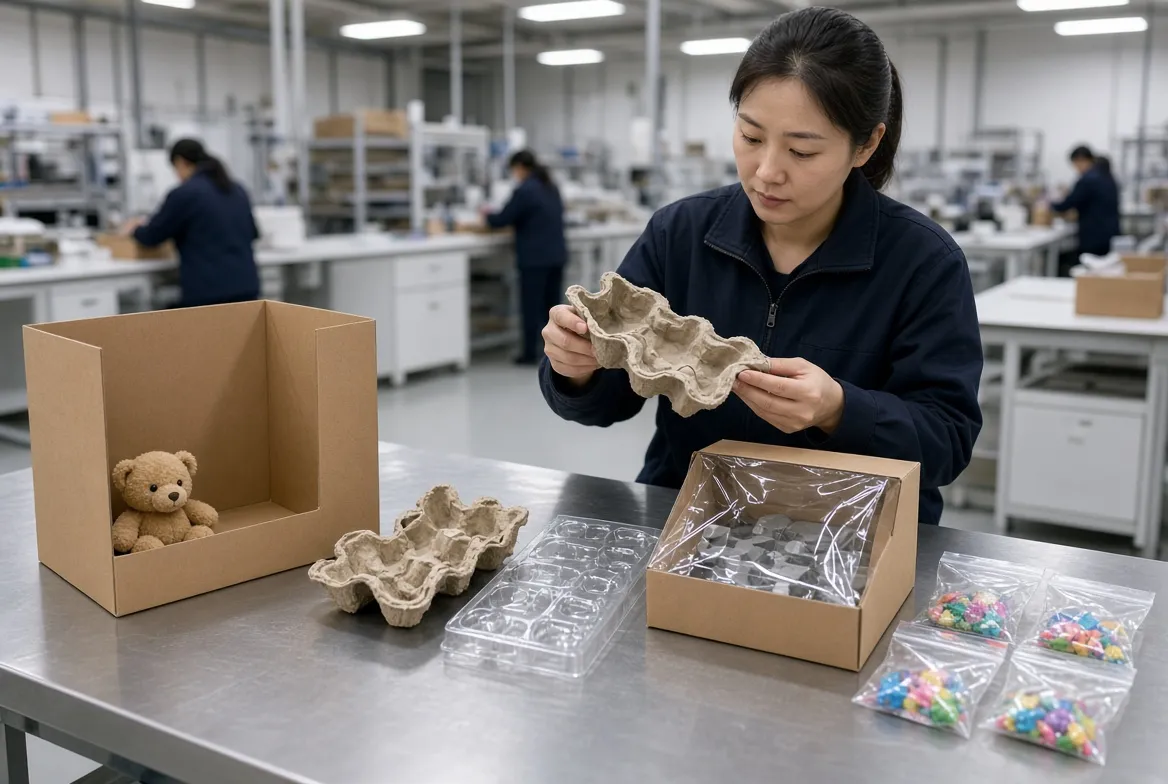
Velboa has real limits, and most of them trace back to a cheap or loosely specified roll.
Honest Limitations First
- Low-GSM velboa looks thin. Low-GSM rolls can show backing when stretched, so do a stretch check on the swatch before you approve it.
- Nap direction causes shading. Mirrored parts from one roll can look different, and one ear turns darker. Cut all panels with the pile running the same way.
- Cutting makes a fiber mess. Shearing releases short fibers. Without a vacuum table, they contaminate other fabrics and clog sewing machines.
- Cheap lots shed more. Discount lots often shed more fiber. Ask for an anti-shed finish and a shed test on the actual roll.
- Softness is not minky. Velboa feels dense and firm, so buyers expecting minky hand-feel reject samples. Warn the client before sampling.
- Backing stretch ruins assembly. Spandex velboa stretches far more than standard. Operators fight seam alignment and stuffing escapes gaps, so test stretch before bulk.
A common failure: a buyer sources cheap rolls through a trader, the pile height varies across the roll, and the embroidered faces look uneven. It forces a re-sample and delays the run. Build a toy quality control plan and check the plush toy supplier red flags before you accept a cut-price roll.
Factory Tips for Working with Velboa
- Keep nap direction consistent across mirrored parts.
- Test needle size and stitch density.
- Confirm embroidery backing support.
- Sample wash and shrinkage.
- Confirm Pantone plus a physical lab dip.
- Document custom dye MOQ.
- Inspect face panels under consistent lighting.
Is Velboa Safe for Kids' Toys?
Velboa itself is not "certified"; the finished toy is. Safety depends on the whole product: fabric, trims, stuffing, and construction. Verify these checkpoints:
- US: ASTM F963, enforced through CPSIA; children's products for ages 12 and under need a CPC. See the CPSC Toy Safety pages and our CPSIA guide for plush toys.
- EU: EN 71-1/-2/-3 under the Toy Safety Directive 2009/48/EC. EN 71-2 covers flammability. Our EN 71 compliance guide walks through the three parts.
- Fabric documentation: OEKO-TEX Standard 100 is supplementary evidence for the textile, not the finished product.
- Infant-adjacent products: add colourfastness and lint-shedding tests.
Document any flame-retardant or anti-shed finish; do not assume it is there. For the full finished-product test plan, see toy safety standards. Our ASTM F963 explainer breaks down the US tests.
How to Specify Velboa in Your RFQ
Put these fields in the tech pack and RFQ so the mill quotes against numbers, not names.
| Field | What to write | Example |
|---|---|---|
| Fabric type / grade | Name the grade plus the mill spec | Standard velboa, short pile |
| GSM (fabric weight) | Target plus tolerance | 260 GSM, target ±5% |
| Pile length | Millimetres, finished | 1.5 mm |
| Width | Centimetres, usable | 160 cm usable |
| Color standard | Pantone reference plus physical lab dip | Pantone 485 C, lab dip approved |
| Backing stretch tolerance | Max stretch at a set load | Low stretch, state max % |
| Pile direction | Note the cut direction | All panels cut with the pile |
| Required tests | Name the standards per market | ASTM F963, EN 71-1/-2/-3, CPSIA |
| Flammability / anti-shed finish | State if required | Anti-shed required |
| Transit packaging | Roll packing, moisture protection | Rolls bagged, desiccant |
| Approved sample reference | Signed-off swatch card ID | Sample card number plus date |
Worked examples are illustrative, not fixed standards — confirm each target on the mill's current spec sheet.
🛡️ Mitigation Strategy: Add "pile direction" and "backing stretch" to every RFQ. These two specs prevent most sample rejections.
People Also Ask About Velboa Fabric
1. Is velboa the same as minky?
No. Minky usually feels silkier and smoother, while velboa feels denser and firmer. They are sold under trade names that hide a wide spec range, so approve by GSM, pile height and backing stretch rather than by the name.
2. Is velboa the same as velour?
No. Velour is a related but different pile fabric, typically denser and smoother, and it is used more often for doll skin and trims. Ask for measured specs before you treat the two as interchangeable.
3. Is velboa soft?
Yes, but it feels dense rather than silky. Buyers who expect the silkier minky hand-feel often reject velboa samples, so confirm the hand-feel expectation before sampling.
4. Does velboa shed?
It can, especially low-GSM or discount lots. Specify an anti-shed finish and ask for a shed test on the exact roll you will cut, not on a generic sample.
5. Can velboa plush toys be washed?
Usually yes, after you validate construction, trims and shrinkage on a finished sample. Test the actual toy, not just the fabric, because stuffing and trims change how it behaves in the wash.
6. Is velboa good for embroidery?
Yes. The short pile holds stitch detail when backing support and stitch density are specified. Fine lettering stays legible where long-pile faux fur would blur it.
Final Thoughts: Is Velboa the Right Plush Fabric for Your Program?
Velboa is the practical default for character plush, mascots, and keychains: it holds detail, runs consistently in bulk, and keeps fabric cost in check. Choose minky or velour when touch drives the sale, and long faux fur only for hair and trims. Whatever you choose, put GSM, pile length, backing stretch, and nap direction in numbers on your RFQ.
Need help matching velboa to your plush design? Contact LeelineToys for a swatch card and a spec review before sampling, or see our custom plush manufacturer services.
Disclosure: This guide was written by LeelineToys, a plush toy manufacturer, based on our production and sourcing work. We are not vendor-neutral. Last verified: November 2026.