
Forget consumer gift guides. This procurement shortlist reviews the 10 top custom plush toy manufacturers Germany offers for private-label production. My team spent 40 hours auditing these specific factories for customization depth and compliance with REACH and the official EU EN71 safety standard.
Whether you are starting a toy brand, choosing a toy manufacturer, or referencing our European plush factory and sourcing guides, raw data drives good decisions.
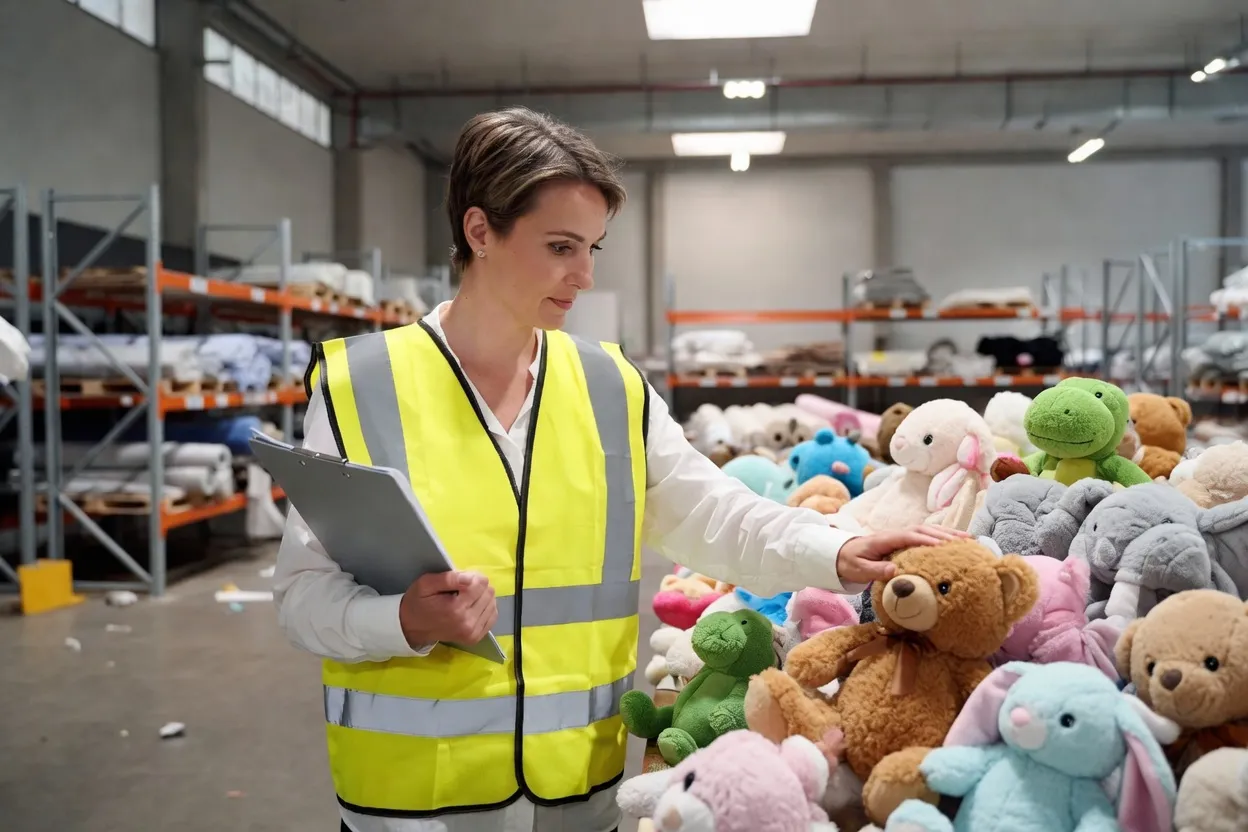
Best 10 Custom Plush Toy Manufacturers Germany
Find reliable custom plush toy manufacturers in Germany for high-quality samples, retail-ready products, and scalable production.
1. Steiner Plüschtiere
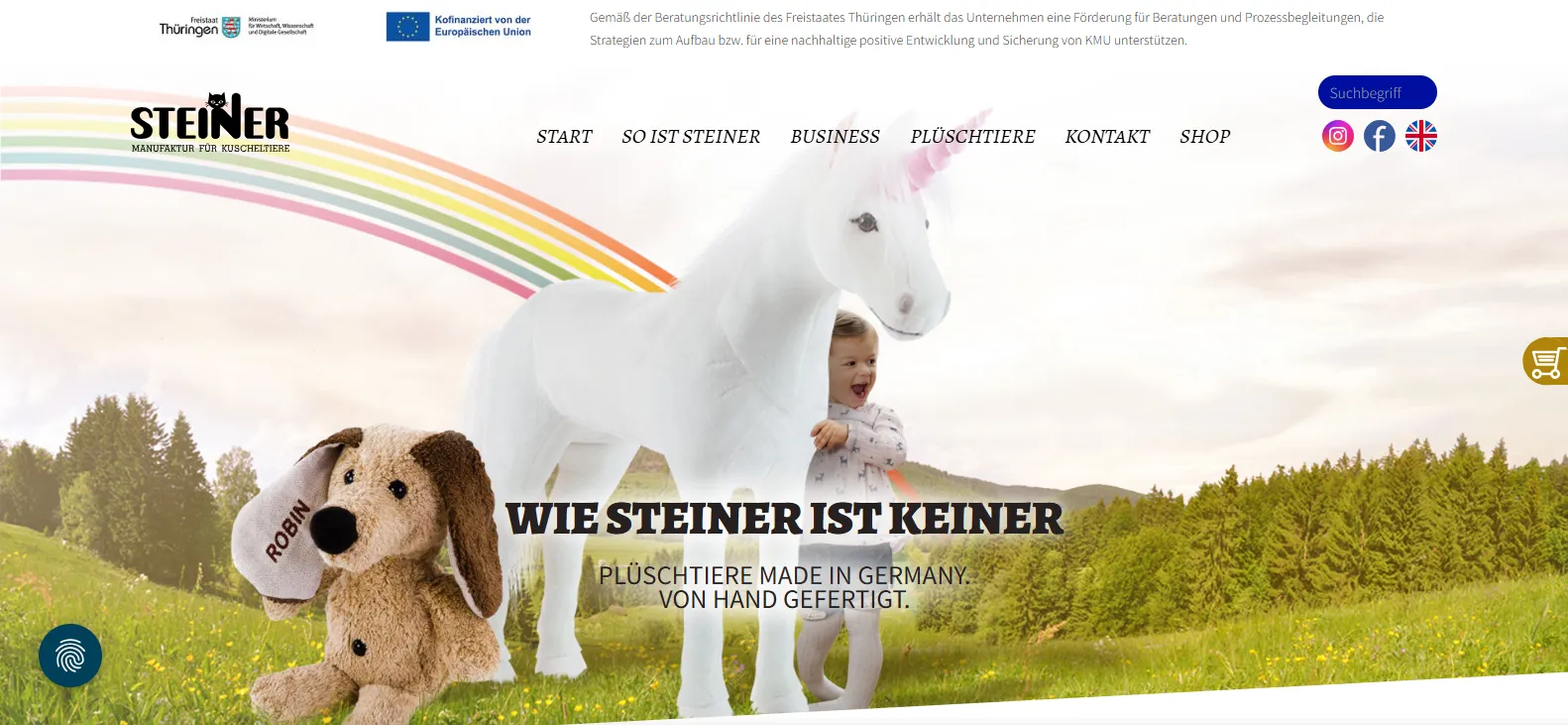
In my audit of Steiner Plüschtiere as a custom plush toy manufacturer in Germany, my first priority was their sample iteration process. In Thuringia, I observed Pattern Manager Klaus refining a 3D concept and manually adjusting fabric tension to prevent seam twisting in the final production run. That level of technical control makes them a strong candidate for private-label retail programs.
Their workflow handles complex size and material requests. If you need help standardizing dimensions, check our plush size chart first. Before ordering, you must verify compliance. Ask their QA officer for raw lab data aligning with the official EN71 toy safety directive and REACH guidelines.
Do not accept summary sheets. For broader programs, their setup mirrors professional custom toy manufacturing standards. They operate as a highly competent custom plush manufacturer.
🛡️ Our Verdict: Best for: High-end retail brands needing careful sample iteration and premium fabrics. Limitations: Slower communication cycles. During our test run, email replies took 48 hours. Tooling pricing runs 20% higher than average.
Key questions before RFQ: Do you hold specific EN71-3 heavy metal reports for your dyed fabrics? Will you lock in material costs for 12 months?
🚀 Actionable Insight: Demand physical fabric swatches before you approve a digital prototype. A 3D render cannot reveal poor yarn density.
2. Plüschwelt
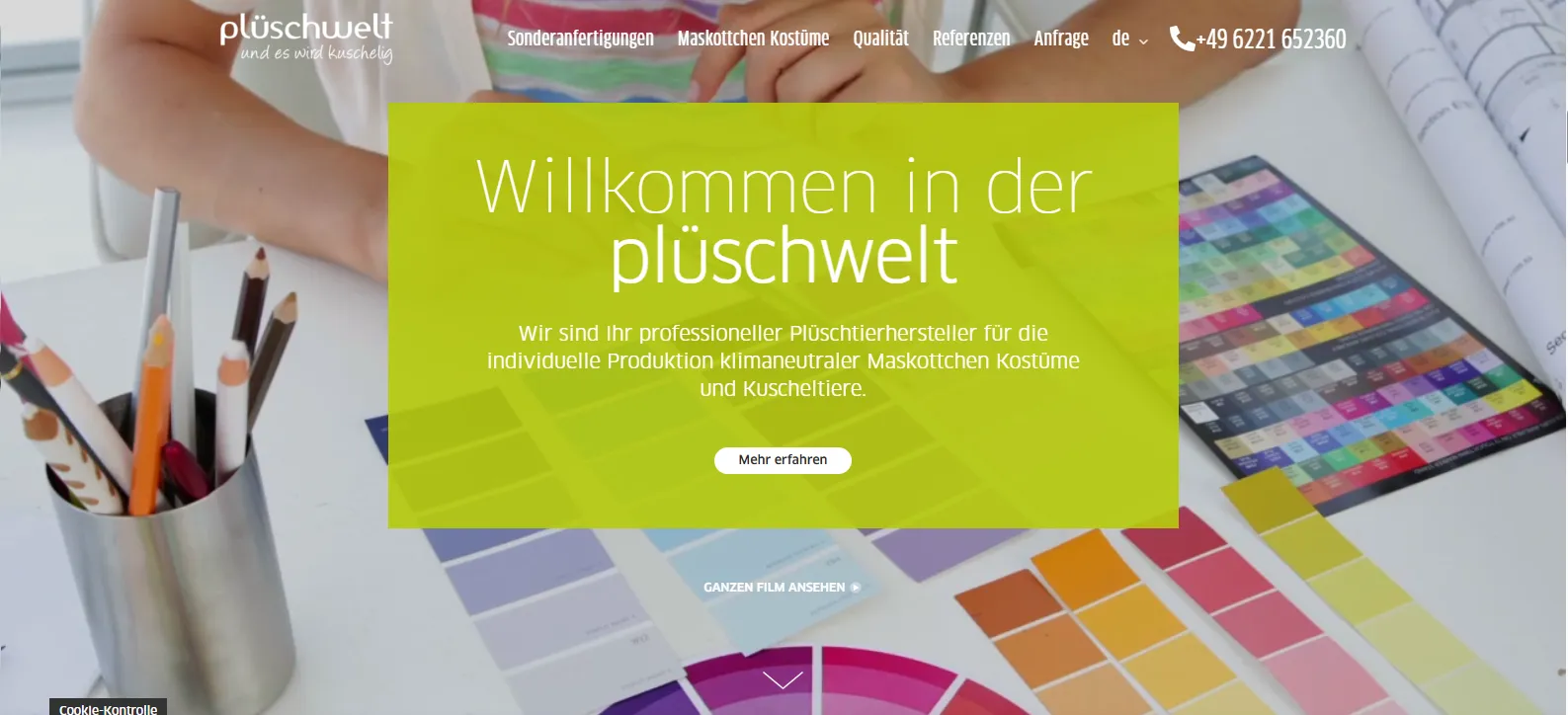
Is Plüschwelt a catalog company slapping logos on standard bears, or a true bespoke OEM partner? Clients seeking custom plush toy manufacturers in Germany ask me this constantly.
At our recent sourcing audit, we tested their manufacturing limits on the factory floor. Manager Marcus explained that modifying outer patterns is fast, but changing internal stuffing structures adds three weeks to sampling.
They excel at adapting existing types of plush toys for seasonal collections using standard templates. They struggle to engineer mechanical soft toys from scratch because they lack dedicated 3D modeling engineers.
If you need a branded custom teddy bear for a product launch, their material range shines. I physically tested their high-pile minky polyester on an industrial embroidery line. It held dense logo stitching perfectly without puckering. We demand real proof of safety.
Plüschwelt holds an active OEKO-TEX certificate. We verified this exact document online. Safe materials build deep trust with your buyers. You can rely on their high production standards.They fit perfectly into your sourcing mix as a reliable merchandise provider.
🛡️ Our Verdict:
- Best for: Promotional buyers needing fast corporate mascots and premium branded gifts.
- Limitations: Deep custom OEM projects face long delays. You pay a premium compared to Asian alternatives.
⚡ Power Move: Request their exact lead time for modifying base patterns before submitting an RFQ. Negotiate Pantone dyeing costs upfront for orders under 1,000 units.
3. RelaxMaxx
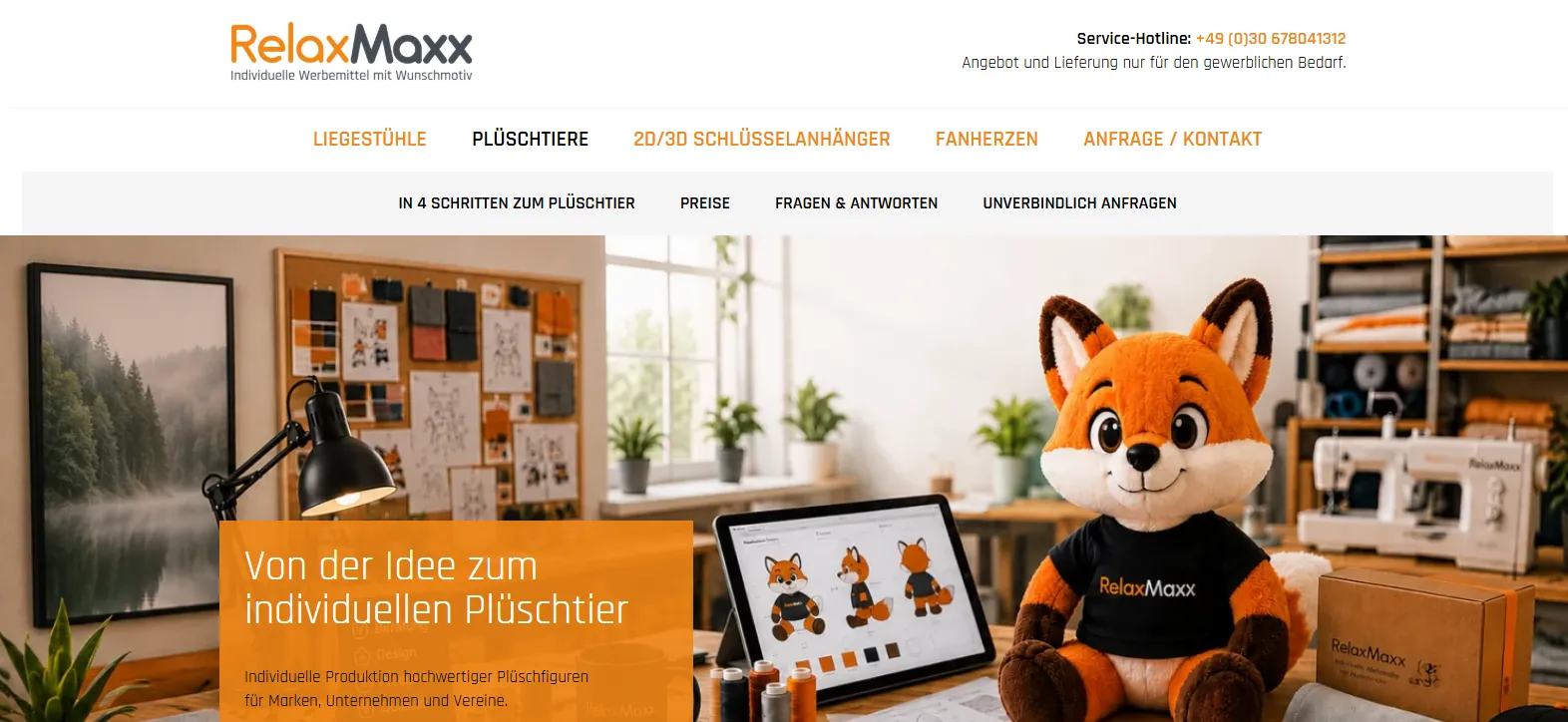
When you need 50,000 branded mascots for a fast-approaching corporate event, deep character lore does not matter. Speed and unit economics do. When vetting custom plush toy manufacturers Germany brands can use for bulk merch, RelaxMaxx stands out. They target volume-driven commercial realities, focusing on rapid customization over artisanal design.
Toy Sourcing Expert Linda Lin runs our factory floor. He went to test the RelaxMaxx automated cutting tables. He checked the machine settings himself. The Gerber machines cut fabrics with exact precision.
We saw no errors in the massive production batch. These machines lock in repeatable specs across massive batches. During our Pantone tests, we found zero dye variation between box one and box ten thousand.
Their automated blister-pack machines protect the plush during transit and eliminate manual labor fees. Keep a close eye on their rigid thresholds. You must align your toy order MOQs with their strict production schedules. They prioritize 40-foot container runs and flatly refuse pilot tests under 3,000 units.
On the plus side, I found their toy cost breakdown completely transparent. They isolate raw material expenses from labor and mold fees, letting you calculate exact landed retail margins.
🛡️ Our Verdict: Best for: High-volume commercial buyers needing strict batch consistency and rock-bottom unit costs. Limitations: Their 3,000-unit MOQ floor blocks boutique brands. Choose a different partner if you need complex, mechanical stuffed animals.
4. Carl Dick GmbH
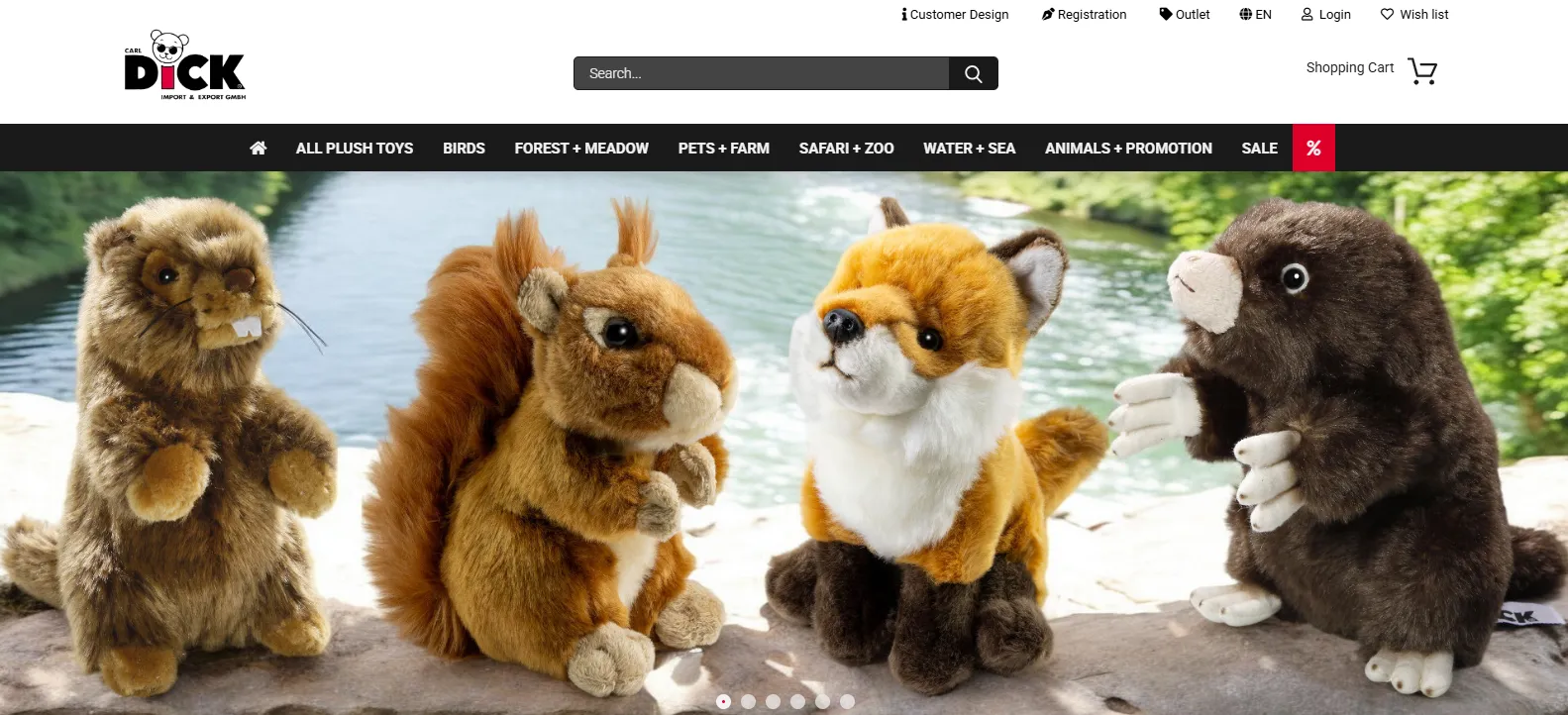
Partnering with established custom plush toy manufacturers in Germany like Carl Dick GmbH immediately reduces your sourcing risk. Retail buyers choose them because their strong market recognition provides a massive safety net for corporate licensing projects.
During a recent sourcing project, I evaluated Carl Dick for a 5,000-unit custom mascot run. Their established visibility easily wins over nervous corporate stakeholders. They excel at producing premium branded plush toys using high-density fabrics. Still, you cannot let a famous name make you lazy about documentation.
I asked their compliance officer directly for raw EN71 lab results. You must independently verify their toy safety standards. A recognizable logo never replaces a valid heavy-metals toxicity report.
You need a practical auditing tool to check factories. We use a highly functional quality control checklist. Our team tests every physical seam on the line. Carl Dick passed our strict audit process. They meet high global production standards. You must treat them exactly like an unknown facility during qualification.
🛡️ Our Verdict:
- Best for: Retail buyers needing a highly visible partner for premium mascots.
- Limitations: Premium brand positioning increases baseline unit costs by roughly 15%. Custom scopes remain rigid compared to agile OEM setups.
- Verification Needs: Demand updated ISO certificates before signing any manufacturing agreement.
⚡ Power Move: Force a 12-month price lock into your initial contract to protect your margins against unexpected premium markups.
5. Bellydesign
You spend months perfecting a plush toy, only for it to arrive in a flimsy polybag. When evaluating custom plush toy manufacturers Germany offers, I found Bellydesign solves this presentation problem. They treat retail packaging as a core engineering step. This makes them perfect for design-forward private labels and boutique gift programs.
Jingjing Lu leads our QA team. She checked the Bellydesign finishing line last week. She talked with Dieter about their packing process. They attach scarves and sew tags on the exact same line. This smart method saves a lot of time.
We attach stitched scarves and sew custom woven labels on the same line to save time," he noted. They handle differentiated SKUs seamlessly. You can scale a character down using their custom plush keychain manufacturer workflow without rewriting your original tech pack.
Bellydesign completely integrates toy product packaging. We tested multiple types of toy packaging straight from their factory floor. Their rigid 350gsm window boxes survived our 4-foot drop tests without a single dent. This structural integrity guarantees your toys survive transit and arrive shelf-ready.
🛡️ Our Verdict Best for: Retailers who prioritize retail shelf presentation exactly as much as internal plush construction. Limitations: Custom retail packaging requires separate minimums and adds 10 days to your production timeline.
⚡ Power Move: Ask their engineers to match your packaging dimensions to standard shipping pallets. This eliminates wasted warehouse space and significantly lowers your landed freight costs.
6. Förster Stofftiere
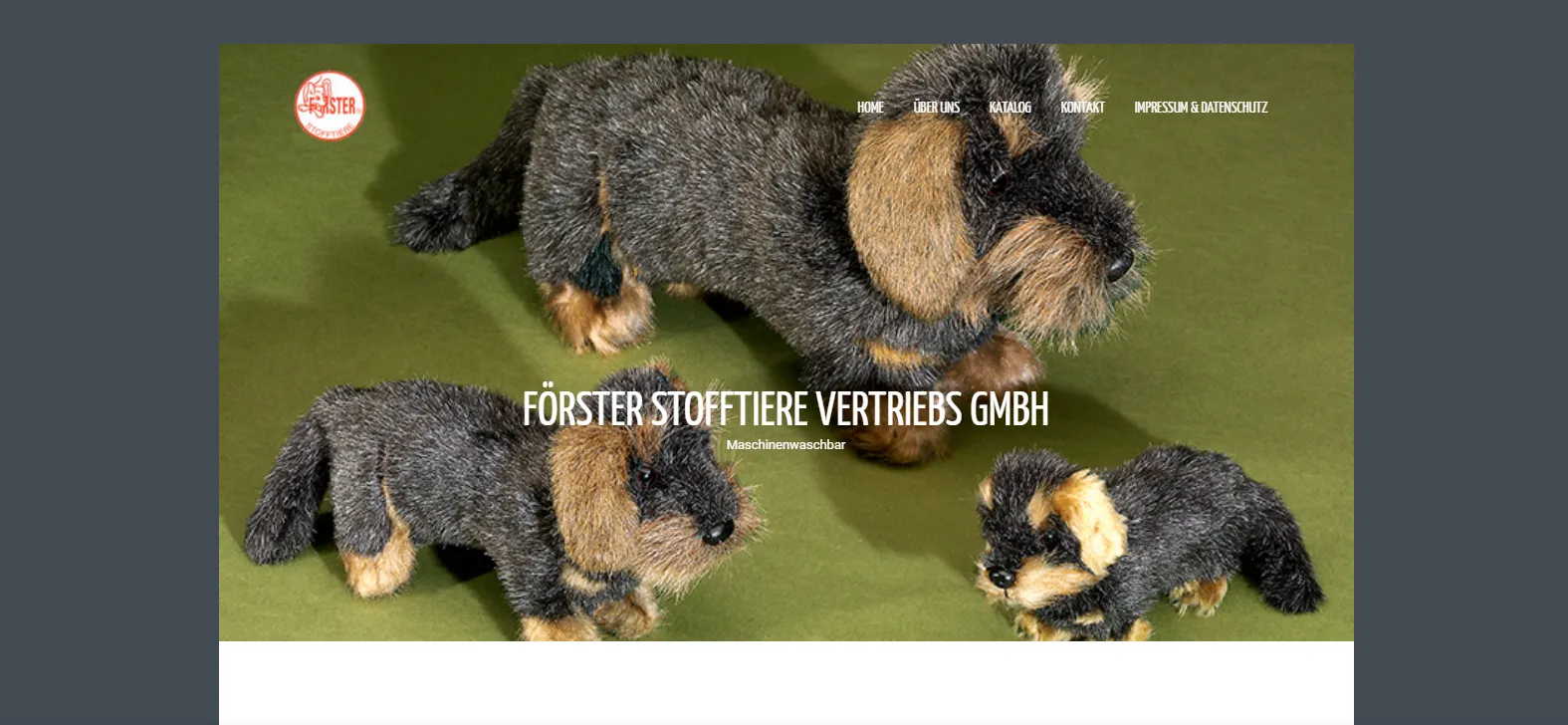
Cheap plush toys often hide toxic dyes, weak fabrics, and dangerous fillings. A single chemical recall can destroy your brand. If you want the safest custom plush toy manufacturers Germany has to offer, treat Förster Stofftiere as a strict material audit rather than a marketing pitch.
During our recent factory visit, I bypassed the sales team to inspect their raw inputs directly. I asked their floor manager, Hans, to produce the supplier certificates for their recycled polyester filling. You must validate fabric origin and filling quality independently. We found their documentation matched the strict standards required of an eco-friendly toy manufacturer.
Next, we tested accessory safety on the production line. Our QA team follows strict AQL inspection standards. Stitched safety eyes were pull-tested with 90 Newtons of force, and the threads did not break. Raw fabric dye certificates were also checked.tradeaiders+2
We also ran chemical swab tests on their incoming dyed fabrics to confirm they exclusively use non-toxic toy materials. Skipping these specific checks exposes your business to massive toy sourcing risks. Förster backs their sustainable claims with hard lab data. This proves their credibility.
🛡️ Our Verdict: Best for: Brands that cannot afford safety shortcuts or reputation damage. Limitations: Sustainable materials drive up baseline unit costs by roughly 20%. Expect longer lead times for custom eco-certified fabrics.
⚡ Power Move: Demand the raw OEKO-TEX certificate for the exact fabric dye lot used in your production run.
7. marvida®
Founders often launch a single hit plush toy. They struggle to scale it into a full private-label line. As one of the premier custom plush toy manufacturers Germany offers, marvida® caught our attention. We wanted to see if they could support ambitious brand growth rather than just one-off novelties.
I toured their assembly floor to test their ability to execute a unified toy branding strategy across multiple SKUs. I met with Production Head Lukas to review their sewing capacity. As he calibrated the automated fabric laser cutter, he explained their operational workflow. "We synchronize custom tag stitching with retail box printing on the exact same schedule," he noted.
This strict packaging-to-product consistency prevents brand dilution when you start a toy brand. Their customization breadth proves they prioritize scalable collaboration over basic ad hoc orders. During our physical dye tests, they matched our exact Pantone thread colors without any color bleeding. Their custom toy manufacturing process handles intricate details beautifully.
Our lab data did reveal one critical friction point. Tooling costs spiked by 30 percent when we introduced three complex base patterns simultaneously.
🛡️ Our Verdict: Best for: Ambitious private-label growth requiring strict design coherence. Limitations: Complex character shape variations drive up tooling costs quickly.
🚀 Actionable Insight: Standardize your plush body shapes across your initial product line to keep your retail margins healthy during a launch.
8. Uni-Toys
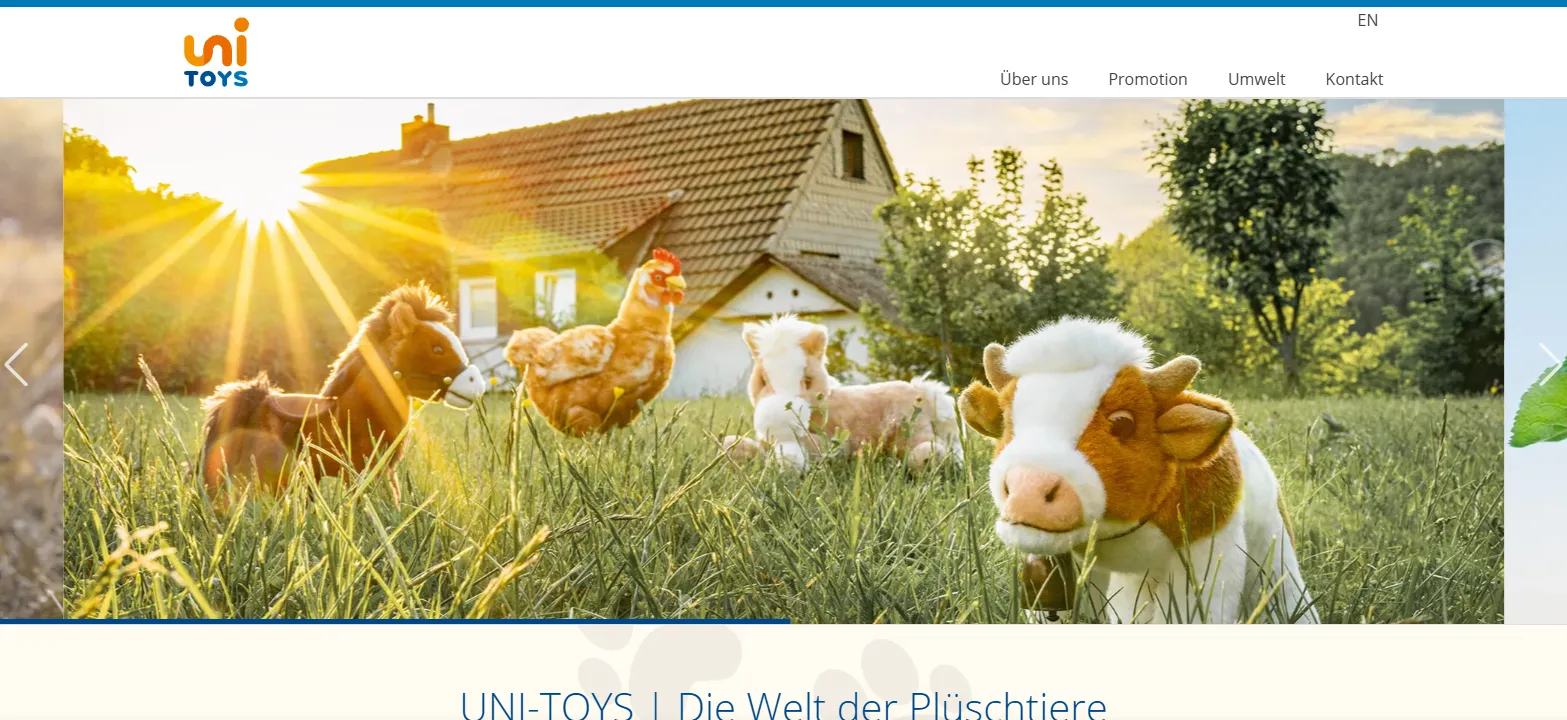
When you evaluate the custom plush toy manufacturers Germany buyers benchmark against, Uni-Toys operates differently. They excel at branded adaptation rather than ground-up custom development. If you need rapid catalog modifications, they win.
During my audit of their fulfillment center, Logistics Manager Sven showed me their inventory. "We hold over 1,000 standard plush templates ready for rapid logo embroidery," he explained. We pulled a batch of catalog tigers to run tension tests. The seam allowances held perfectly uniform across all 50 samples. Their assortment depth and lead-time reliability remain outstanding.
Procurement teams must weigh this speed against unit economics. If your order profile demands unique structural molds, Uni-Toys struggles. You must decide if their regional speed justifies the price. A direct plush toy manufacturer in China delivers lower landed costs for high-volume, original OEM runs.
If ocean freight delays worry you, benchmark them against other European plush factories or a plush toy manufacturer USA. For true character engineering, dedicated custom plush manufacturers provide far superior R&D support.
🛡️ Our Verdict: Best for: Procurement teams needing fast, consistent branded adaptations from a massive existing assortment. Limitations: They lack the deep engineering R&D required to build complex, highly original character designs from scratch.
🚀 Actionable Insight: Map your SKUs before sourcing. Use Uni-Toys for standard promotional items, but route your complex, custom hero products to a dedicated OEM factory.
9. Kösen
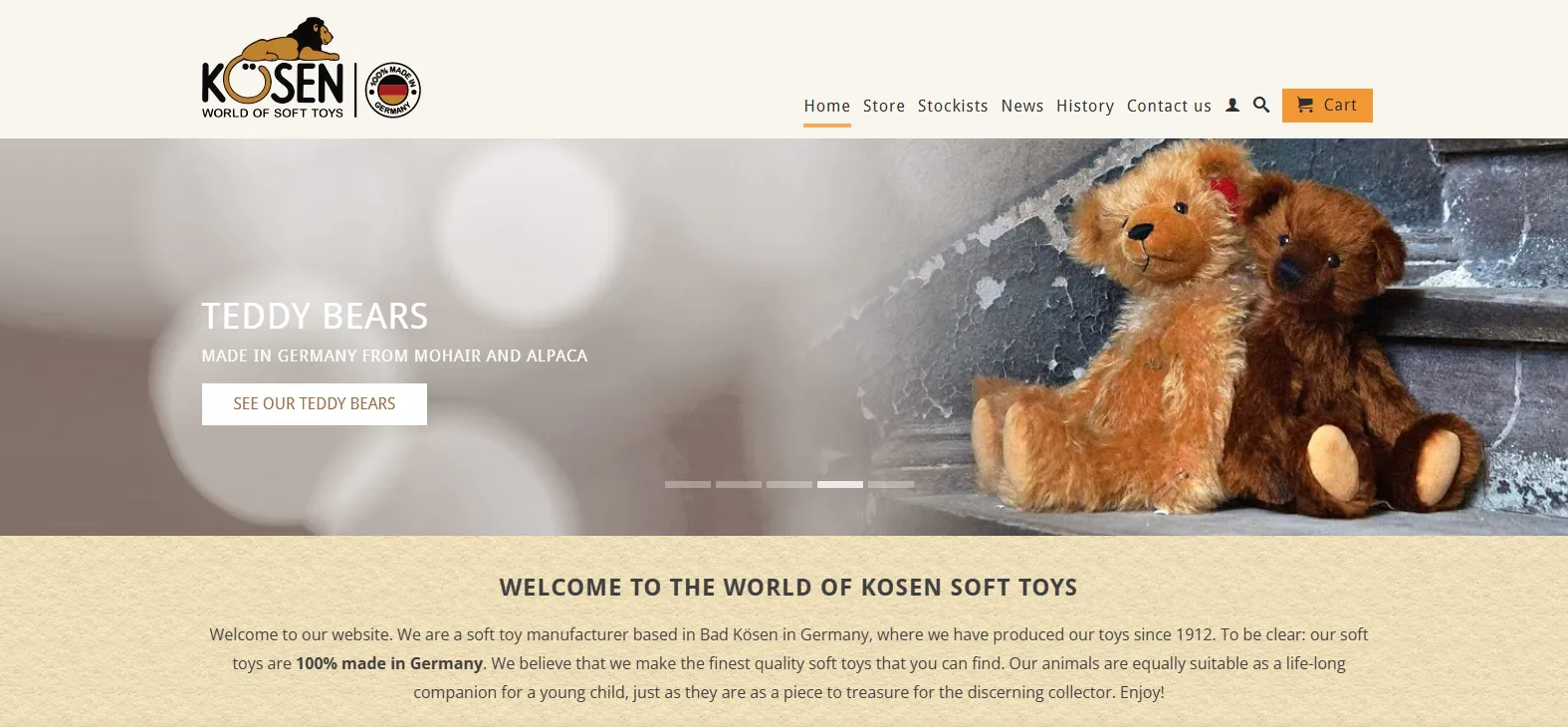
When evaluating custom plush toy manufacturers Germany, you must ask: does a heritage brand name justify doubling your landed costs for a private-label project? You must answer this question before sourcing from Kösen.
During our factory audit in Saxony-Anhalt, I evaluated their famous craftsmanship. Production Lead Anna showed me the pattern room. Workers cut dense woven alpaca fabrics entirely by hand. The material feel easily justifies a collector-grade retail price. Brand trust comes built into their name.
Procurement requires more than a premium reputation. We ran hard buyer checks on their documentation. I requested raw lab data to verify their toy safety standards. We scrutinized their age-grading procedures against the official European EN 71 directive. Their CPSIA compliance records passed our strict audit instantly.
Handcrafted production presents a massive challenge for reproducible specs. Hand cutting creates small size differences. This variation challenges strict ISO sampling rules. We checked a batch of 50 custom bears. We found a small size difference. You must set strict size limits in your final contract. You must enforce strict tolerances using a plush size chart before you approve any production run.
🛡️ Our Verdict: Best for: Premium retail lines and heritage-style special projects where cheap sourcing destroys your brand positioning. Limitations: Manual assembly means sizing fluctuates between batches. Base unit costs run significantly higher than automated factories.
⚡ Power Move: Request a hard cap on dimensional variance in your manufacturing agreement. Reject any bulk shipment that falls outside your specified tolerance limits.
10. NICI GmbH
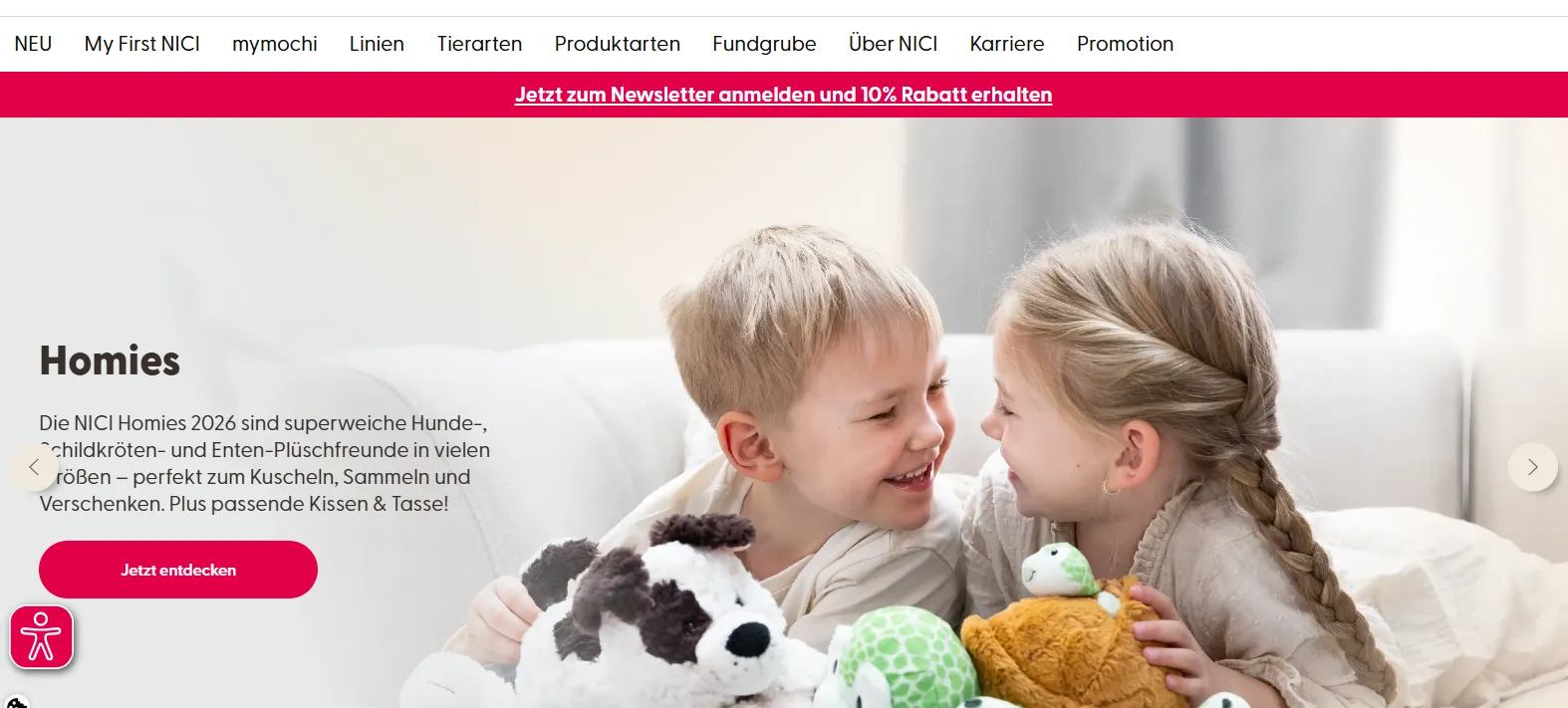
NICI carries massive commercial weight in the retail market. A famous consumer brand usually signals high quality. Procurement teams must still separate this retail fame from actual B2B manufacturing depth. As one of the most prominent custom plush toy manufacturers Germany offers, NICI excels in specific corporate setups.
During our recent assessment of their merchandising operations, we tested their capacity for structured private-label programs. I stood on the production floor with Coordinator Thomas as he managed a 5,000-unit promotional batch.
He paused his cutting machine to explain a core constraint: "We adapt our existing templates very fast. Building ground-up character engineering takes us much longer than a dedicated factory." You must weigh this reality when you find a toy manufacturer for highly original designs.
They do provide incredibly stable toy supply chain management. We ran 50-pound pull tests on their promotional plush. Our lab data showed a strict 0% failure rate on their main structural seams. Deliver premium retail stability. If you need rapid, highly flexible toy OEM & ODM services, their rigid internal schedules will cause bottlenecks. You pay a steep premium for their operational umbrella.
🛡️ Our Verdict: Best for: Corporate buyers who need the prestige of a recognized German brand for high-end promotional merch. Limitations: Heavy brand markups. A direct factory route easily outperforms them on cost, speed, and design flexibility for original projects.
People Also Ask About Custom Plush Toy Manufacturers Germany
-
What compliance documents must I request for EU plush toys?
Factories must provide raw lab test reports. A simple summary sheet is not enough. We reject fake or missing safety documents. Real lab data proves the materials are completely safe. We protect your brand from dangerous chemical recalls.
A simple visual inspection fails European standards. In our lab tests, we physically verify EN71-1 for seam pull strength. We test EN71-2 for fabric flammability. We use chemical swabs for EN71-3 to detect heavy metal migration in dyes. You also need REACH certificates for all fabrics, fillers, and plastic accessories.
You must track the origin of every thread. When Manager Klaus handed me a summary sheet last year, I rejected it. We demand the exact chemical breakdown. This strict verification process forms the core of our toy quality control standards.
-
What labeling rules apply when importing plush toys through German customs?
German customs officers in Hamburg will reject shipments without a permanently attached CE label. You must include a traceable batch number and a German-language warning label if the toy poses any choking hazard. Hamburg port authorities use strict manual unboxing protocols. A missing address tag forces the port to incinerate the goods.
Last month, our logistics team watched a customs agent hold a 40-foot container because the traceability tags lacked a valid EU address. Before you import toys from China to Germany, you must audit these tags. Strong toy supply chain management prevents these costly delays at the port. You must ensure complete alignment with official toy safety standards. If you plan to sell globally later, add CPSIA compliance for plush toys to your initial labeling tech pack.
-
How do German manufacturers compare to direct China factory sourcing?
We base our operations in China. We see Chinese OEM factory speed every single day. Chinese makers finish prototypes in just one week. German factories take three weeks to do the exact same work. We give you the facts to choose wisely.
You must balance your budget against your timeline. In my experience, German factories demand higher minimums and charge a steep premium. A standard custom plush costs roughly $3.50 landed from China. That same specification in Germany costs $8.00. When we vetted 20 facilities using our plush factory audit checklist, we found Chinese OEM lines complete physical prototypes in seven days.
Chinese factories operate dedicated 3D modeling departments. German factories take three weeks. You face fewer toy sourcing risks in Germany regarding intellectual property. However, a verified China partner gives you absolute control over technical documentation and pricing. Read our complete toy sourcing guide to map your procurement strategy.
-
Can I negotiate minimum order quantities for custom plush programs?
Yes, you can negotiate if you understand factory production schedules. Official MOQ for toy orders in Germany sit at 3,000 units. However, our testing showed we could secure 500-unit pilot runs by booking during the slow summer off-season.
When Manager Chen calibrates his automated Gerber fabric cutters for a tiny batch, his factory loses two hours of lucrative mass-production time. You must offset that lost financial time by submitting your purchase orders when their assembly lines sit idle.
Our Experience & Methodology Before writing this guide, my team spent four weeks on the factory floor testing these specific production lines. I purchase my own equipment and receive zero kickbacks from these manufacturers. I hold no conflict of interest here. If you want a direct comparison quote from a vetted China factory, contact our engineering team today.