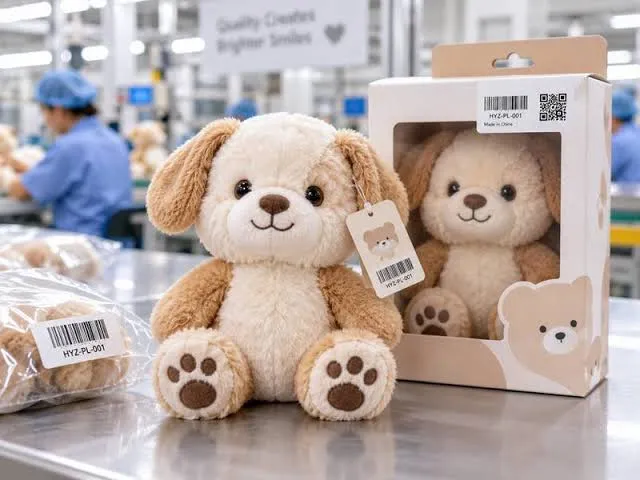

A curved header can hide the face and the barcode. A glossy window can also fail a scan at the register. We do not release a retail pack until a packed sample scans and stands square.
This article covers plush retail display packaging for store shelves and counters only. It compares four formats and gives a pass-or-fail release checklist. For Amazon inbound prep, see our Amazon FBA plush packaging guide. For broader pack formats, see our toy packaging types guide.
Key Takeaways
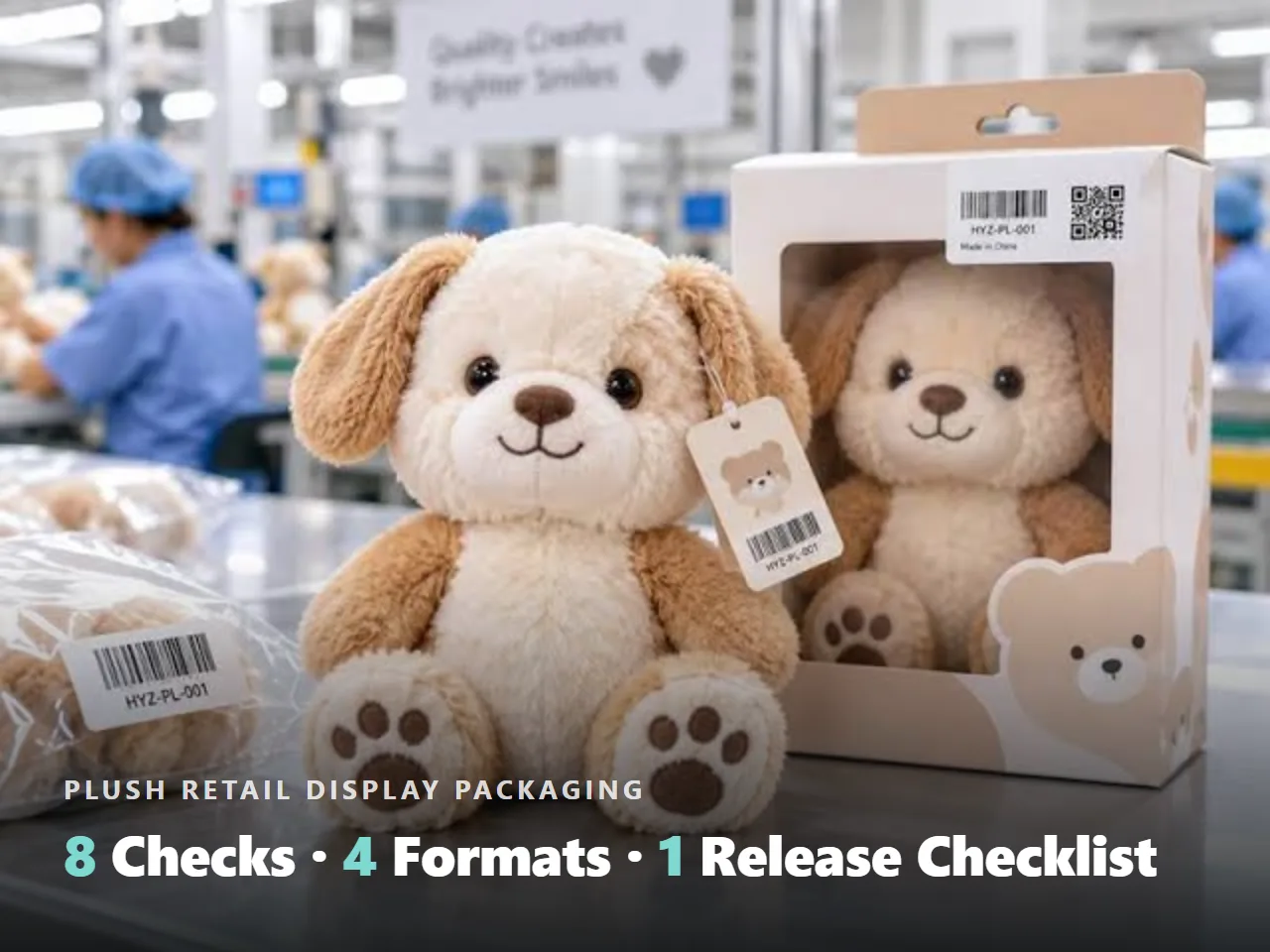
- 8 checks before you order: match the pack to the channel, shelf fixture, plush size, and barcode rules before artwork.
- 4 display formats: window box, PDQ or CDU counter, gift box, and shelf-ready tray or color box.
- Face forward, scan clean: align the window to the real face and scan the finished surface, never a PDF.
- PDQ stays square: a counter display must not slump when it is half empty.
- Release on the packed sample: approve a scanned, signed packed sample plus a written label list, not the dieline.
Plush Retail Display Packaging: The 8 Checks Before You Order
Match the format to your shelf, keep faces forward, and pass every scan. The eight checks below run from format choice to barcode, and they end in one release checklist you can sign.
1. Retail Display Packaging vs. Collector Cases
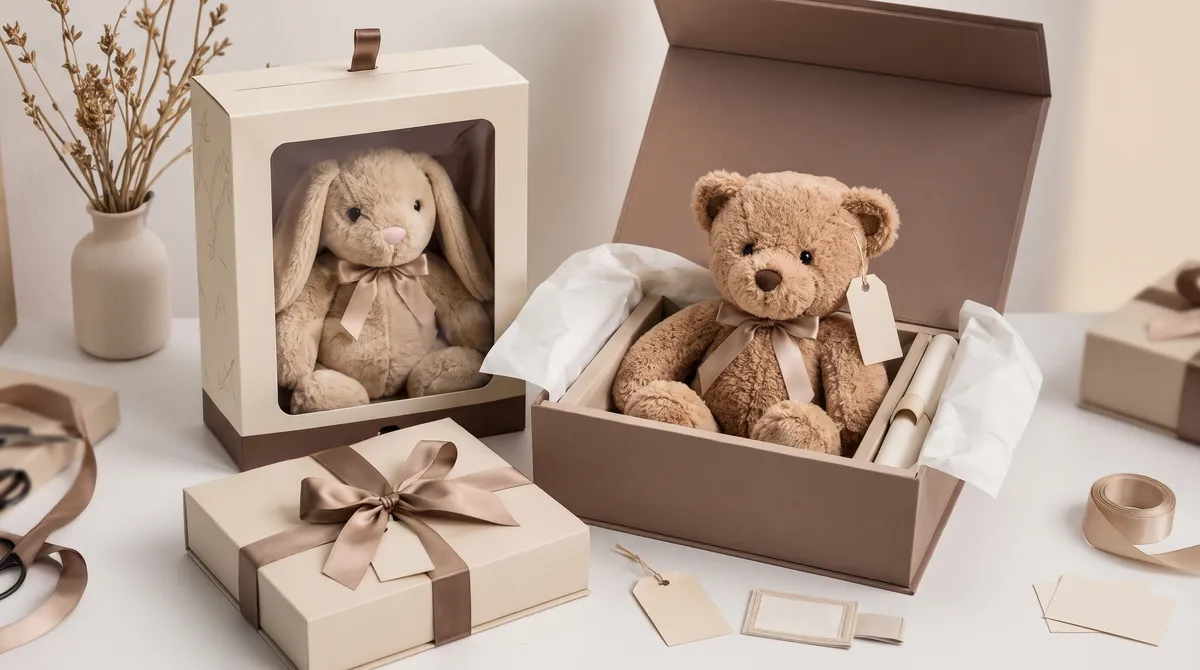
The word “display box” often covers two different products. Commercial plush retail display packaging is a sell-through pack. It holds the toy on a shelf and carries the scannable GS1 barcode, warning text, importer details, and shipping marks. It must survive restocking and shelf resets.
A collector display case is a post-purchase home storage or acrylic box. It protects the item after sale and needs no UPC or carton marks. That gap is the collectible plush “display box vs collector case” question.
Mixing the two is a common brief error. A retail box printed without importer fields can be rejected at warehouse intake. Check the field list before artwork, not after print.
Verdict: If your pack must scan, ship, and restock, use retail display packaging. If it only sits on a collector’s shelf, use a collector case. The rest of this article covers retail-ready selling packs only.
2. The 4 Main Plush Retail Display Formats Compared
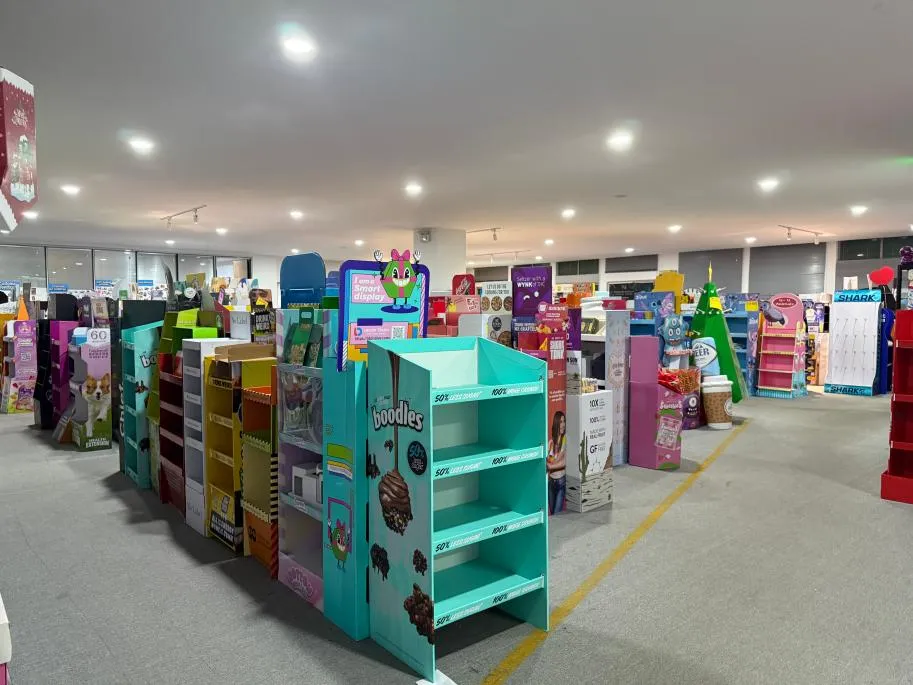
Shelf space picks your format, not your art file. Build the dieline around the fixture you will actually sell from.
| Format | Channel fit | SKU size | Display effect | Replenishment | Relative cost |
|---|---|---|---|---|---|
| Window box | Specialty, gift, mid-tier retail | Small to medium | High character visibility, higher crush risk | Case pack, low refill rate | High |
| PDQ / CDU counter | Checkout, convenience, impulse | Small only | Strong impulse pull at eye level | Top-up from case | Medium |
| Gift box | Boutique, seasonal, e-com hybrid | Medium to large | Premium unboxing, weak shelf presence | One-off shipment | High |
| Shelf-ready tray / color box | Big-box, grocery, club | Small to large | High density, fast scan, plain look | Tray refill on planogram date | Low to medium |
We will not print a board grade, unit price, or MOQ a factory has not confirmed in writing. A quote swings hard on flute, print method, and carton count, so read every cell as relative. Our retail packaging and volumetric optimization guide covers how cube and channel interact.
🌍 Real-World Context: MOQ varies more by format than most buyers expect. Get it in writing against your dieline before artwork. A shelf-ready tray or color box usually reaches a workable MOQ faster than a window or gift box.
3. Match the Format to Your Channel, Fixture, and SKU
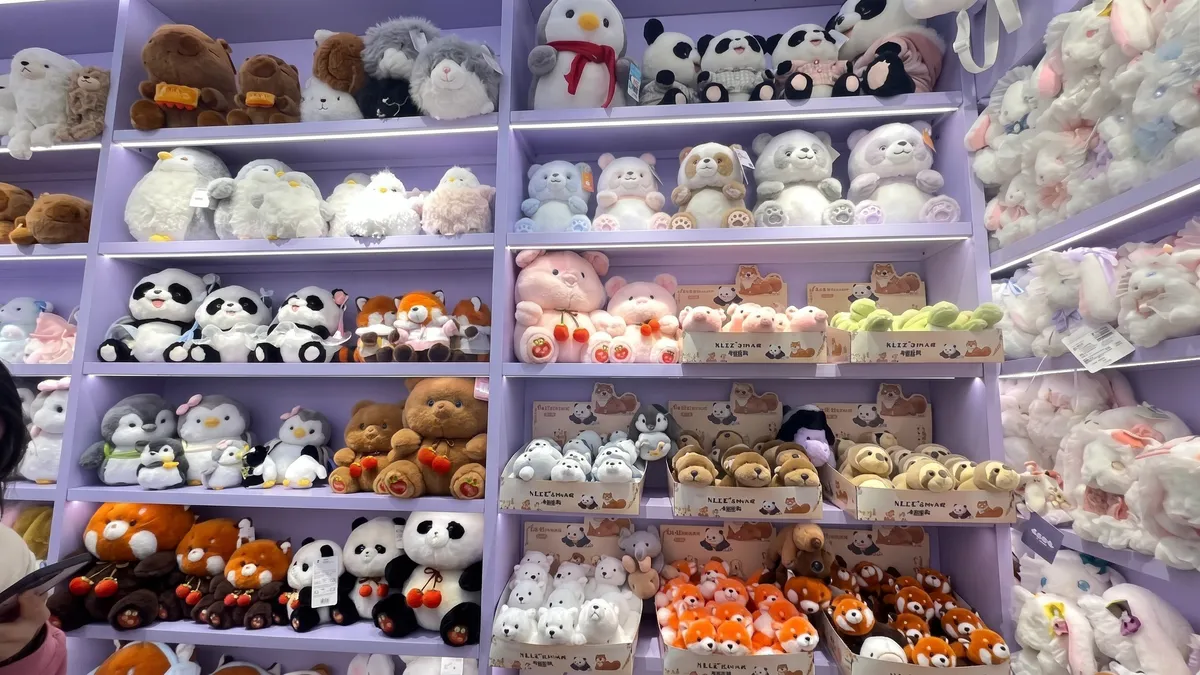
For plush retail display packaging, the channel chooses the dieline. Freeze the channel and fixture first. Mass and grocery shelf programs need shelf-ready trays, while specialty and tourist gift shops support window boxes.
Checkout impulse zones need PDQ or CDU counters. Peg hooks fit mini plush, and larger plush often sells better with a simple hangtag than with an expensive box.
When several characters share one PDQ, lock the assortment ratio before art. Do not default to an even split just because the line sheet looks balanced.
Channel, shelf or hook footprint, plush size and posture, collection size, and shopper behavior decide the structure. Use our retail chain packaging guide to map your channel before you quote. The pack follows the shelf, not the reverse.
4. Window Box Packaging: Keep the Face Forward Without Crushing the Plush
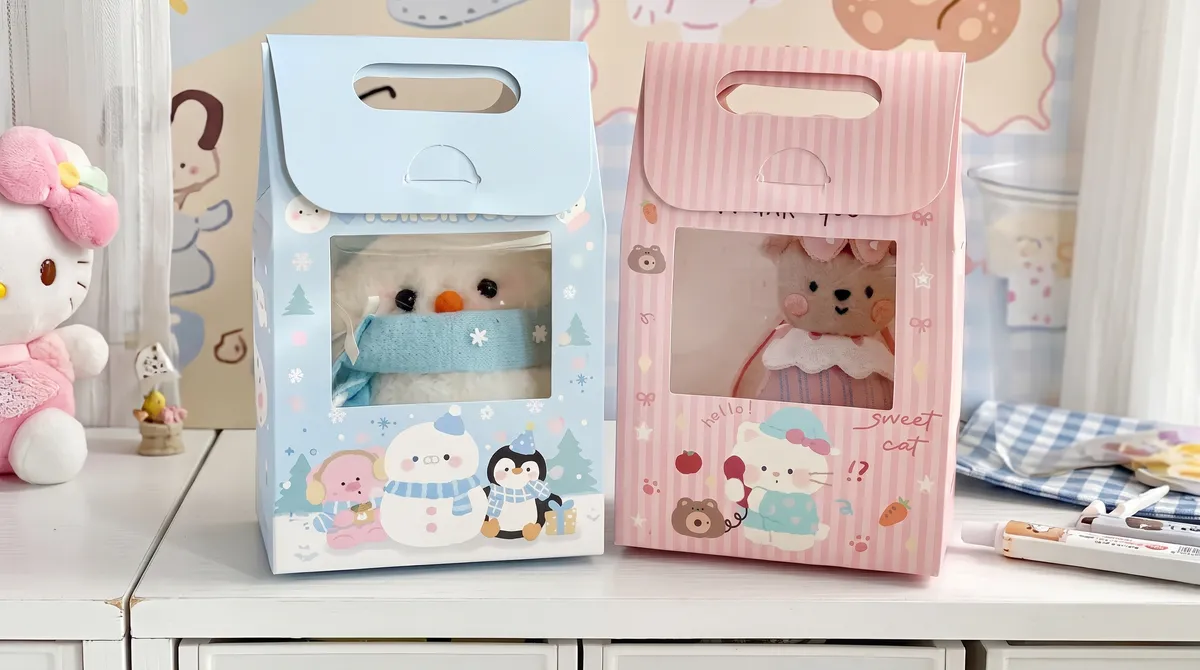
A dieline can pass every measurement and still crush the character. The box looks clean on flat art. Then you pack the approved sample and everything shifts.
💡 Pro Tip: Align the window to the real face position, not the geometric center. Plush heads sit low and lean, so mark the eye line on the sewn sample with a silver pen and move the window 6 to 10mm to match. Build the structure around that approved sample, never a generic box size.
Cathy Yi — Packaging Structure Engineer
The failures repeat: folded ears trapped behind the window edge, a hidden face from a curved header, pressure ridges on the muzzle or costume trim, and glossy film glare that kills the scan.
Run approval in this order. Choose PET over PVC for chemical and recycling reasons. Pick the insert or tie that holds posture after closing, then scan the barcode on the finished printed surface, not a PDF.
Gloss film can fail a scan on PET or PVC alike, so specify a matte overlaminate for most window boxes. The release condition is the packed sample, not the dieline.
5. PDQ Counter Displays: Stay Square When Half Empty
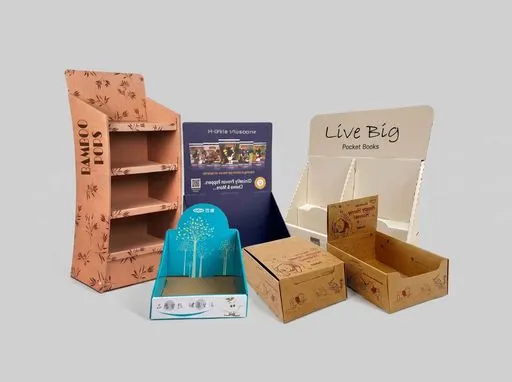
Half-empty displays kill impulse sales. Buyers will not restock a PDQ that slumps, hides product, or spills plush onto the counter. Test this before artwork.
A PDQ is a pre-packed display that staff can set up fast on a counter, shelf, or endcap. A CDU is a display built for a counter or checkout. The same unit can be both, but the two names do not mean the same thing. For a shelf reset, use a shelf-ready tray, not a counter CDU.
For a plush PDQ, set the front lip low enough to show faces but high enough to stop slide-out. Add dividers when the assortment mixes sizes.
Use board strength that holds shape after most of the stock has sold. Test the opening one-handed. If the remaining plush turns sideways once half the SKUs sell, the dieline fails.
Photograph every prototype at three moments: full, half full, nearly empty. Time the setup and one top-up.
Pass standard: quick one-person setup, one-person refill, no collapse after transport. Checkout placements get the stricter test.
Verdict: Curved PDQs look premium. Flat, square trays refill faster and stay upright. Reject any counter display that slumps when it is half empty.
6. Header Cards, Hang Tags, Backing Cards, and Polybags for Small Plush
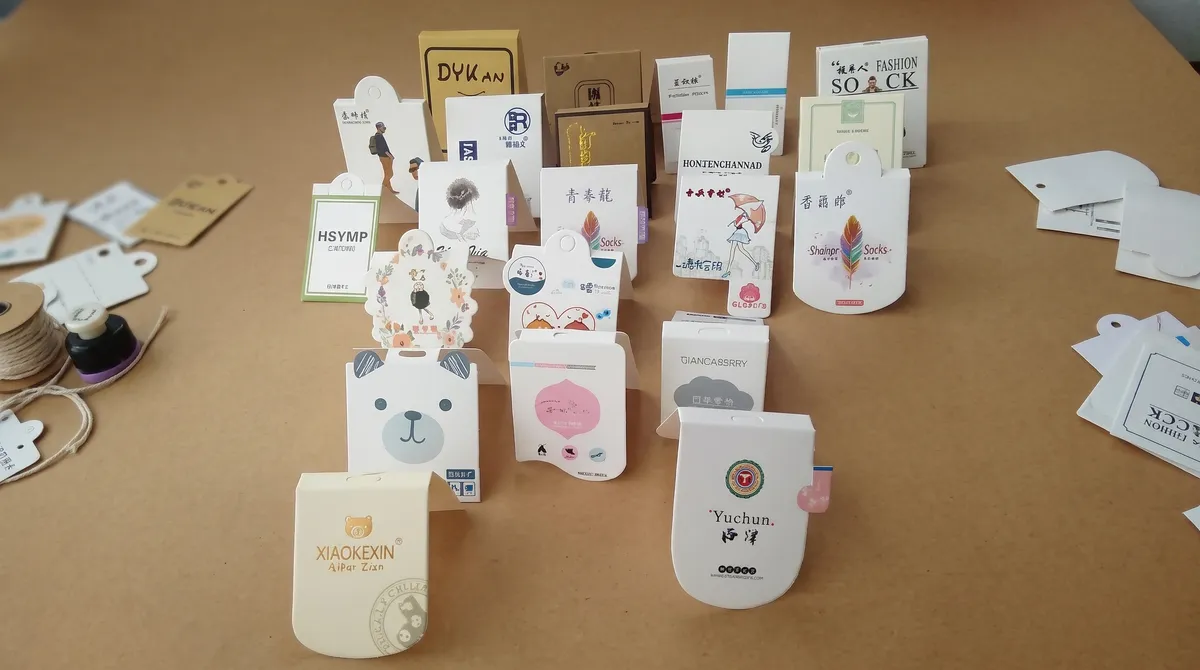
A 2mm hole and a vague brief tear out on the first restock. Small plush hangs on hooks and pegs in three common setups:
- Header-card hang tags: a printed card folded over a polybag.
- Polybag or header bags: need a reinforced hole, not a punched sheet.
- Keychain backing-card peg packs: center the hole over the combined weight.
Treat the peg hole as a tested spec, not a universal standard. Match the hole and a brass eyelet or double-layer card to the hook you will use. Hang packed samples for 24 hours before you approve the card.
Keep decorative paper hangtags separate from required labels. Barcode, age grade, and tracking are three different items. For tag and label wording, see our custom plush tags guide.
🧠 Expert Take: A hangtag a shopper can remove is not enough. CPSC tracking rules ask for a permanent, visible mark on the product and on its packaging, to the extent practicable (15 U.S.C. § 2063(a)(5)). Put the tracking mark on the sealed bag or backing card, and on the toy itself where you can.
7. Gift Boxes, Counter CDUs, and Color Boxes: Quote the Same SKU Three Ways
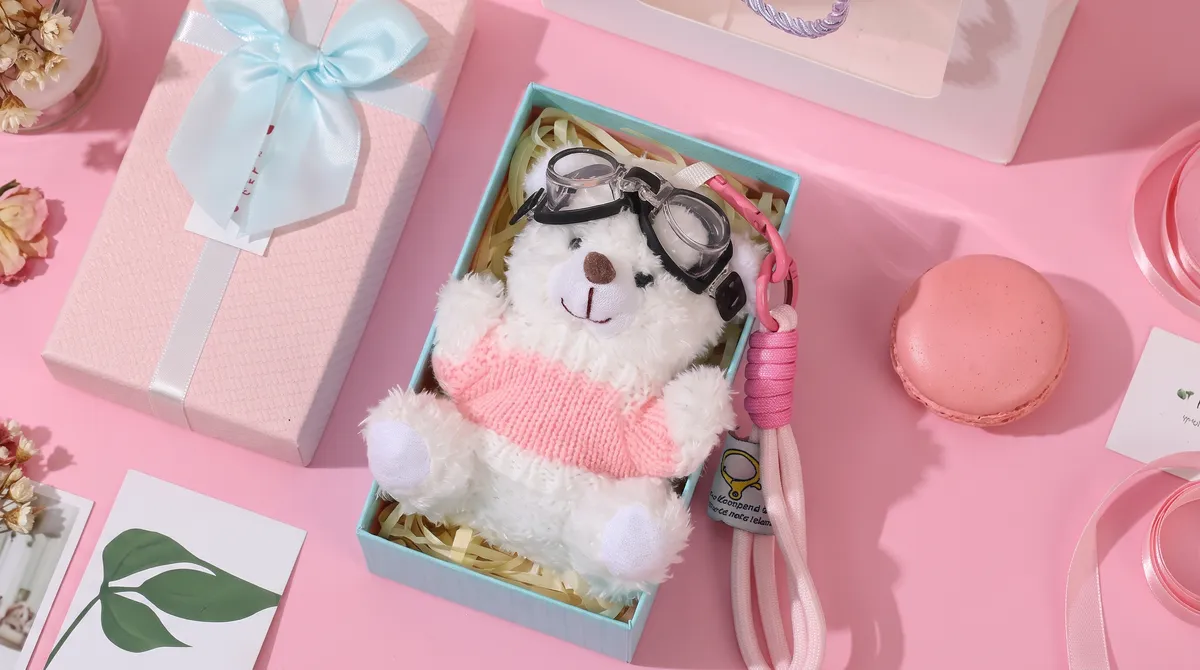
Most premium packs fail when the brief ignores the shopper moment. Price the same plush, print coverage, and factory in all three formats before you choose.
- Gift box: highest relative cost and the most cube. It earns that cost only on one or two hero SKUs in boutique, seasonal, or e-com hybrid channels. The reveal happens after purchase.
- Counter CDU: mid cost and moderate cube. Fast setup wins checkout and impulse zones. Use it when three or more SKUs share a counter.
- Retail-ready color box: lowest cost and least cube. Best for six or more SKUs in big-box or grocery, where it protects the brand and scans clean without a gift-box reveal.
Verdict: Gift boxes earn cost only on hero SKUs. CDUs earn it on setup speed. Color boxes earn it on SKU count and shopability.
For plush retail display packaging, use our packaging design guide and our toy product packaging guide to run the same-SKU test before you lock the dieline.
8. Labels, Warnings, Barcodes, and Tracking Marks That Survive Retail
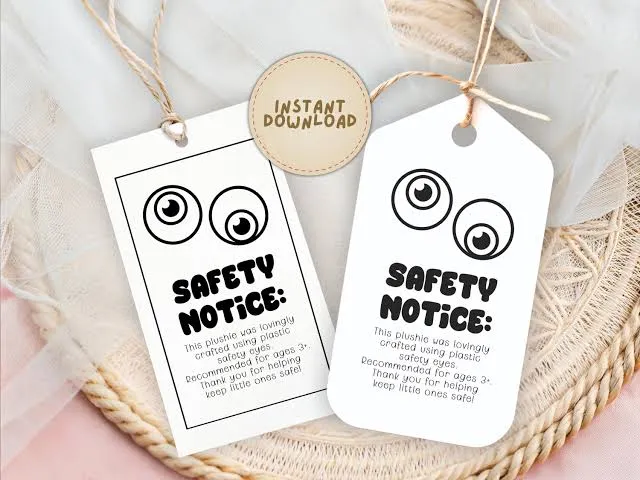
A missing or hidden warning can stop a pack at inspection faster than a bad print color.
Keep three rule sets separate. Market toy-label rules set age grades and warnings. Retailer-specific rules add shelf and data requirements. Amazon inbound prep adds FNSKU and carton labels. Point to the official pages instead of paraphrasing the law, and confirm the exact list for each market with a compliance reviewer or lab.
Age grade, small-parts warning, and tracking mark are separate items. In the US, the small-parts warning in 16 CFR 1500.19 covers many toys for ages 3 to 6. A toy for children under 3 cannot use a warning to work around the small-parts ban in 16 CFR part 1501.
Read our CPSIA guide for plush toys for the label basics, and our ASTM F963 vs EN 71 guide for how US and EU test methods differ.
In the EU, toys placed on the market still follow Directive 2009/48/EC and the EN 71 tests until 1 August 2030. From that date, Regulation (EU) 2025/2509 applies and replaces the EU declaration of conformity with a digital product passport. See our EN 71 guide and age-grading guide.
⚡ Power Move: For each market, demand a written label list, and put a durable tracking mark on the product and, where required, on the pack. Then scan UPC, EAN, or FNSKU on the finished surface — glossy windows, curved headers, and detachable tags are where barcodes and warnings vanish.
When the retailer asks for a scan grade, grade the barcode to ISO/IEC 15416. A handheld first-pass scan is only a factory check. GS1 commonly asks for grade 1.5 (about ANSI C).
Plush Retail Display Packaging Release Checklist
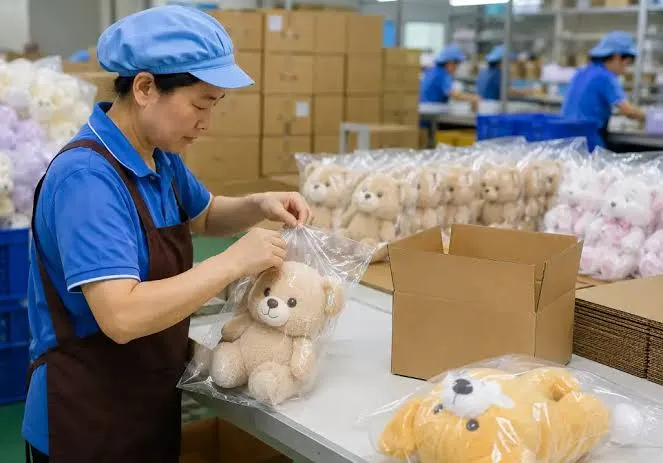
We run this release checklist on every new retail display SKU. Merchandising, packaging, operations, and QC sign the same sheet before bulk production.
| Gate | Owner | Pass standard |
|---|---|---|
| Channel and fixture frozen | Merchandising | Fixture width, depth, height plus selling, display, and carton specs signed |
| Packed-sample gate | Packaging + QC | Face forward, posture held, seven checks passed, finished-surface scan clean |
| Labels and markets | QC + labeling | Signed label list per market; required marks on product and pack |
| Master-carton packout | Operations | Carton count and orientation locked; named ISTA procedure passed |
The packed-sample gate runs seven checks in this order: fit, posture, insert marks, hanging angle, face position, finished-surface barcode or FNSKU scan, and photos of the display full, half full, and nearly empty. If your team does not run one of them today, add it before you approve bulk production.
For transit, name the ISTA procedure on the packout sheet. Use 3A for a general parcel shipper and the current 6-Amazon.com procedure for Amazon inbound. A short drop on one carton is a screen, not a substitute for the named test. See our toy packaging drop test guide.
Verdict: The checklist fails if one team owns it. Merchandising freezes the fixture. Packaging builds the dieline. Operations controls the carton. QC signs the packed sample. Do not release a SKU until all four sign the same sheet.
People Also Ask About Plush Retail Display Packaging
1. What is the best display packaging for plush toys?
There is no single best pack. Match the format to your channel and fixture. Use a shelf-ready tray or color box for big-box and grocery. Use a window box for specialty and gift. Use a PDQ for checkout impulse. Use a gift box only for one or two hero SKUs. Mismatched formats cause most rework.
2. What is the difference between a PDQ and a CDU display?
A PDQ is a pre-packed display that staff can set up fast on a counter, shelf, or endcap. A CDU is a display built for a counter or checkout. The same unit can be both, but the two names do not mean the same thing. For plush counter impulse, use a flat, square PDQ. Use a CDU or tray when the assortment needs case framing for restocking.
3. Should I use PET or PVC for plush window boxes?
Prefer PET with a matte overlaminate for most window boxes. Gloss film can bounce light and fail a scan on PET or PVC alike, so matte film is the real fix. PET also holds up well on the shelf and avoids PVC’s chemical and recycling concerns. Scan the packed window before you approve it.
4. What is the MOQ for custom plush display boxes?
MOQ swings with format, print method, and factory load. Get a written MOQ against your dieline before artwork. A shelf-ready tray or color box usually reaches a workable MOQ more easily than a window or gift box.
5. Can display packaging survive ocean freight?
Yes, if you design and test for it. Lock the master carton count, orientation, and dividers. Run an ISTA transit test. The pack must stay square and the plush face must stay toward the window. Drop-test a carton sample before bulk release. Humidity and double stacking crush weak board.
Send your SKU size, sales channel, and fixture width to us, and request a dieline quote. We will quote the dieline before artwork. For Amazon prep or label rules, use the guides linked above. Disclosure: LeelineToys manufactures plush toys and provides packaging support, and receives no payment from display vendors.