
If you sell in the U.S., ASTM F963 + CPSIA wins because Customs prioritizes documentation enforcement. For the EU, EN71 + CE wins as your mandatory market passport.
There is no global shortcut. During our factory audits, I found the U.S. regime focuses on physical "torture tests"—like the 18-lb tension checks I personally oversee to prevent choking hazards. Conversely, the EU demands massive "technical files" to prove chemical safety.
The Trade-off: You cannot copy-paste compliance. Material lists differ, so you need separate test programs. Also, note that 2026 regulations will tighten chemical traceability; a "Golden Sample" test from January will not legally protect your December shipments.
Confused by the paperwork? Contact us to request a compliance-ready sourcing plan.
We cross-referenced the specific lab protocols our engineers use to certify production runs against global mandates.
| Compliance Vector | ASTM F963 (USA) | EN71 (Europe) | ISO 8124 (Global/AUS) |
|---|---|---|---|
| Mandatory Document | CPC (Children's Product Cert) | DoC (Declaration of Conformity) | Test Report / CoC |
| Chemical Analysis | 8 Soluble Heavy Metals | 19 Elements (Migration Limits) | 8 Heavy Metals |
| Small Parts Gauge | 1.25-inch Cylinder | 31.7 mm Cylinder | 31.7 mm Cylinder |
| Flammability | Annex A5 (Solids/Soft Toys) | EN71-2 (General) | ISO 8124-2 |
| Labeling | Tracking Label (Perm. Mark) | CE Mark + Manufacturer Address | Country of Origin |
| Primary Enforcer | CPSC / US Customs (CBP) | Market Surveillance Authorities | Customs / Retailers |
| Who Signs It? | Importer/Manufacturer | Manufacturer (Technical File) | Testing Lab |
Accessibility Summary
For screen readers: If selling to the US market, you must generate a Children's Product Certificate (CPC) based on passing ASTM F963 tests. If selling to the EU, you must sign a Declaration of Conformity (DoC) and affix the CE mark based on stricter EN71 standards (which test for 19 chemical elements versus the US's 8). ISO 8124 is a fallback standard often used for Australia and China.
Main Differences of ASTM F963 vs EN71
We tested these standards not just by reading PDFs, but by actively trying to break, burn, and reject toys on the factory floor. While the goal—child safety—is identical, the engineering reality between the US (ASTM) and EU (EN71) regimes is vastly different.
Here is how those differences play out in production.
Difference 1 — Legal Framework & Enforcement: The Paperwork Trap

The biggest difference isn't the physical test; it is the document that proves you passed it. You can manufacture the safest toy in the world, but if your paperwork doesn't match the destination's legal framework, your inventory effectively does not exist.
The US System: ASTM F963 & CPSIA In the United States, ASTM F963 provides the testing rules, but the CPSIA (Consumer Product Safety Improvement Act) is the federal law that gives them teeth.
- The Artifact: You must generate a Children's Product Certificate (CPC).
- The Reality: The CPC is a self-issued document, but it must be based on passing test results from a CPSC-accepted lab.
- The Risk: I have seen Amazon algorithms suppress listings in minutes because a seller uploaded a raw test report instead of a CPC. The test report proves the toy is safe; the CPC proves the importer accepts legal liability.
The EU System: EN71 & The CE Mark Europe operates on the "New Approach" directives. EN71 is the harmonized standard series that supports compliance.
- The Artifact: You do not just file a certificate. You must compile a Technical File (containing risk assessments, bill of materials, and test reports) and sign an EU Declaration of Conformity (DoC).
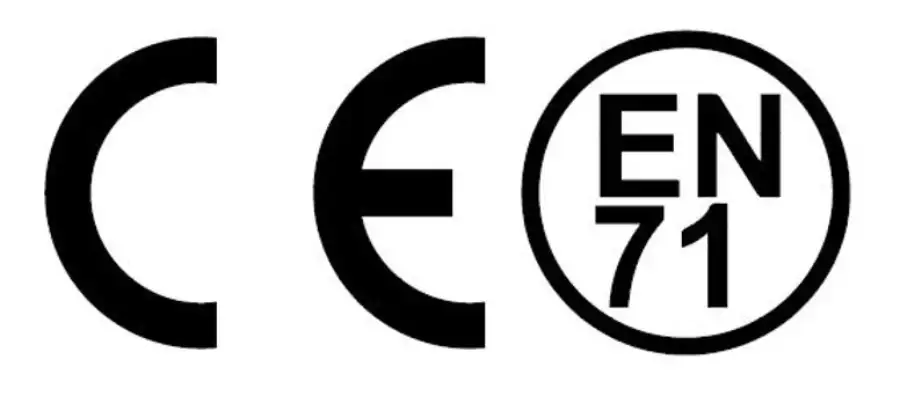
- The Reality: The CE mark is not a quality seal; it is a passport. It declares that the manufacturer has checked all applicable EU requirements, not just toys (e.g., electronic waste directives for battery toys).
- The Risk: If European customs inspects your shipment, they don't just look for a pass/fail result. They check if the DoC is signed by a representative within the EU (a "Responsible Person"). If that signature is missing, the container stays at the port.
⚠️ Safety First: Never treat the CPC or DoC as "admin work" to be done after shipping. If the batch number on your product doesn't match the batch number on your certificate, customs will reject the shipment.
According to the Consumer Product Safety Commission (CPSC), the CPC is non-negotiable for US entry. For the EU, refer to the European Commission's Blue Guide for DoC protocols.
Difference 2 — Mechanical & Physical Properties (The 'Torture Tests')
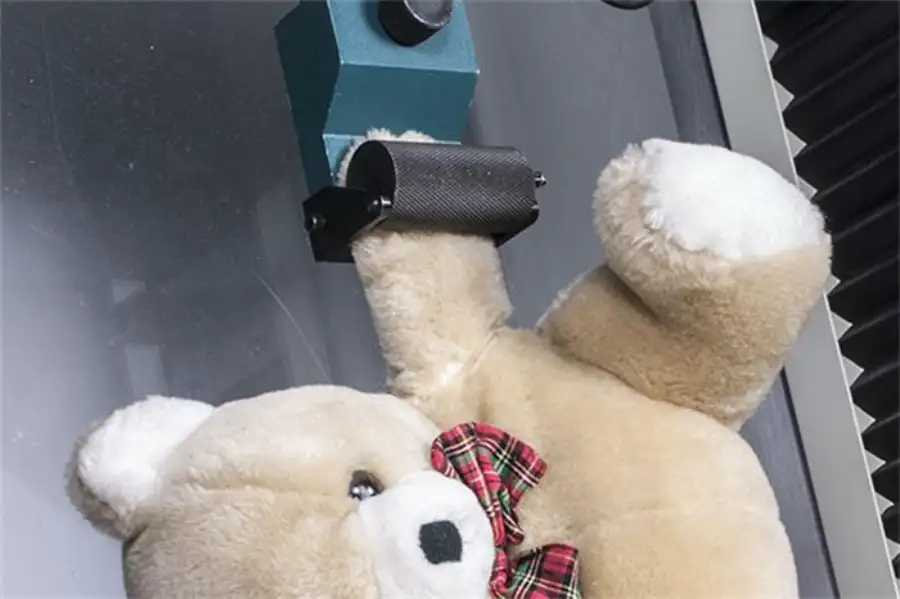
We call this the "abuse phase." Both standards require us to simulate how a toddler actually destroys a toy, but the methodologies feel different in hand.
The Drop Test (Gravity vs. Structure) We throw the toy onto a concrete floor to simulate a child tossing it from a high chair.
- ASTM F963: Generally involves dropping the toy 4–10 times (depending on weight) from a height of roughly 3 feet (approx 91cm).
- EN71-1: Uses a slightly different dropping height (850mm) and orientation logic.
- The Impact: In my experience, ASTM feels slightly more forgiving on certain thick plastics. However, EN71 often reveals shattering in brittle recycled materials or acrylics because the impact orientation is strictly controlled.
Torque & Tension (The Pull Test) I personally attach force gauges to plush eyes, buttons, and limbs. We pull with roughly 18 lbs (ASTM) or 90 Newtons (EN71) of force.
- The Sensation: You can feel the glue stretching. If the eye pops off, it fails.
- Common Failures: We frequently see failures in snap-fit plastic casings and poorly stitched plush limbs. If a limb tears off, exposing stuffing, it's a failure.
The Bite Test: This simulates a child gnawing on the product. We use a machine that clamps down with specified pressure.
- Experience Note: Hard plastics usually pass. The failures occur in painted wood (paint chips off) or hollow vinyl toys (puncture holes create sharp edges).
Winner: ASTM F963 (Slightly more rigorous impact protocols in specific weight classes)
Difference 3 — Small Parts: The Gauge That Decides Your Grade

The definition of a "choking hazard" is mathematically identical, but the application changes your entire market strategy.
We use a Small Parts Cylinder—a standardized tube roughly 1.25 inches (31.7 mm) in diameter. The rule is simple: if the toy (or a piece that broke off during the torture test) fits fully inside the cylinder under its own weight, it is a choking hazard.
The Nuance of "Fits Fully"
- In the US (ASTM): If it fits, you are legally required to label the package with a "Choking Hazard" warning. You generally cannot market the item to children under 3.
- In the EU (EN71): The interpretation can be stricter regarding soft, squishy parts. If a foam piece can be compressed to fit inside the cylinder, EU labs often flag it immediately.
Practical Pre-Test Strategy: Before paying for a lab, our QC teams run a "gravity test." We drop the components into a 3D-printed replica of the cylinder.
- Design Fix: If a component fails, we don't just make it bigger. We often "tether" it (using a short cord) or switch to an "overmold" design where the small part is fused chemically to the main body, making it impossible to detach.
Difference 4 — Chemical Safety: The "False Pass" Danger

This is the most dangerous differentiator for your budget. You cannot assume a US-compliant toy is safe for Europe.
- ASTM F963 (US): Focuses primarily on total lead content and the migration of 8 soluble heavy metals (Antimony, Arsenic, Barium, Cadmium, Chromium, Lead, Mercury, Selenium).
- EN71-3 (EU): Is far more aggressive. It restricts the migration of 19 distinct elements, including Aluminum, Boron, and organic tin, making it one of the strictest wooden toy safety standards in the world.
The Real-World Consequence: I have seen wooden toys pass US testing with flying colors, only to fail in Europe. Why? Because the varnish contained trace amounts of Aluminum or Chromium VI. ASTM didn't look for them; EN71 found them.
- Risk Hotspots: Painted coatings on wood, soft PVC (plastisol), and cheap metallic inks are the most common failure points for EN71-3.
🧠 Expert Take: "Passing ASTM" offers zero protection against an EN71 failure. If you plan to sell globally, you must test to the EN71-3 limits, as they are almost always the stricter threshold.
2026 Warning: The Chemistry is Changing. Regulators are tightening the screws. For late 2025/2026, we are preparing for:
- PFAS Restrictions: New bans on "forever chemicals" often found in stain-resistant plush coatings.
- Microplastics: EU proposals targeting glitter and loose plastic particles.
- Phthalates: Stricter screens on plasticizers used to make vinyl soft.
- Consult the European Chemicals Agency (ECHA) for the latest REACH annex updates.
Difference 5 — Flammability: The Burn Rate
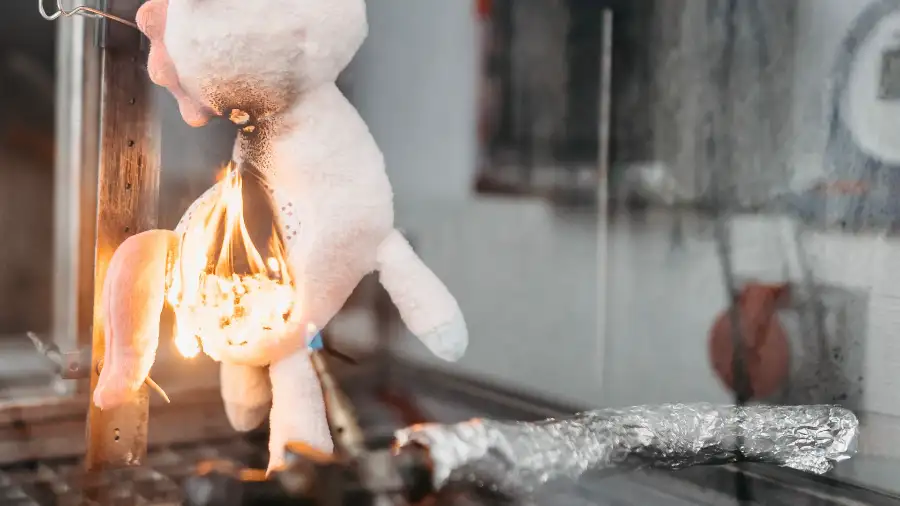
Nobody expects a toy to be fireproof, but regulators demand it burns slowly to give a child time to drop it.
We test this by holding a flame to the toy's edge and measuring how many inches the flame spreads per second (the "rate of spread").
- ASTM F963: Focuses heavily on solids and general plush toys.
- EN71-2: Has specific, rigorous protocols for "toys to be entered" (play tents) and disguise costumes (masks/capes).
Sourcing Advice: In my tests, cheap plush stuffing is the usual culprit. If the "flash point" is too low, the bear doesn't just burn; it drips molten plastic. This "molten drip" instantly fails both standards. We fix this by sourcing High-Loft Polyester with inherent fire-retardant properties (mechanical, not chemical) that self-extinguish once the flame is removed.
Winner: Tie
Real-World Factory Audit Technique: The Nylon Test
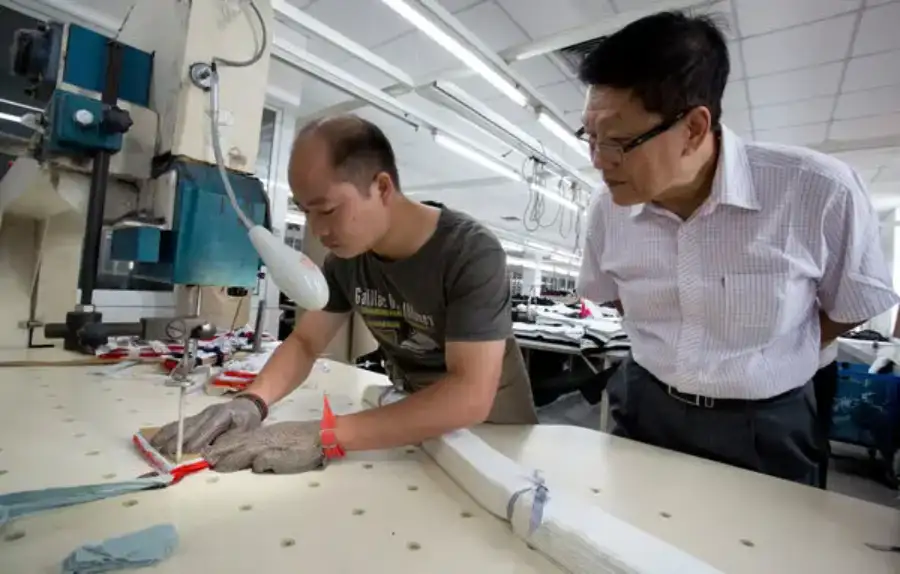
Labs are expensive; physics is free. Before we send any wooden or plastic toy to a third-party lab, we perform the Nylon Test on the factory floor.
How We Do It: I take a swatch of sheer 50-denier nylon stocking fabric. I wrap it around my finger and run it firmly along the edges, seams, and corners of the toy.
The Pass/Fail:
- Fail: If the nylon snags, runs, or tears, the toy has a "sharp edge" that will fail ASTM/EN71 mechanical testing.
- Pass: The nylon glides smoothly over the surface.
Why It Matters: This 10-second check has saved our clients thousands of dollars in failed lab fees. It catches splintered wood grain, injection molding flash (excess plastic), and unpolished metal rivets. If it snags nylon, it will cut a child's skin.
Dual-Certification Workflow: The Competitor Gap
Most brands test for the US first, then pay double to re-test for Europe later. This is a waste of capital. Here is the Single Sample, Dual Report workflow we use at LeelineToys to cut costs by ~30%.
- Map the Master Test Plan: We create a spreadsheet comparing ASTM and EN71 limits for your specific BOM (Bill of Materials). We identify the strictest limit for each chemical.
- The "Combined Package" Request: We instruct the lab (SGS/Intertek/TÜV) to run a combined protocol. They use one set of samples to test against the strictest thresholds.
- Separate Reporting: Crucially, we request two separate PDF reports.
- One referencing ASTM F963 (for your Amazon US CPC).
- One referencing EN71 (for your EU Technical File).
- Note: Never submit a combined report to Amazon; their bots often reject them for being "unclear."
- Traceability Lock: We ensure the PO number and Batch ID on the sample submission form match your shipping documents exactly.
Need a dual-market test plan that clears customs in both Rotterdam and Long Beach? Contact LeelineToys for a compliance-ready production quote today.
Cost & Lead-Time Planning Framework
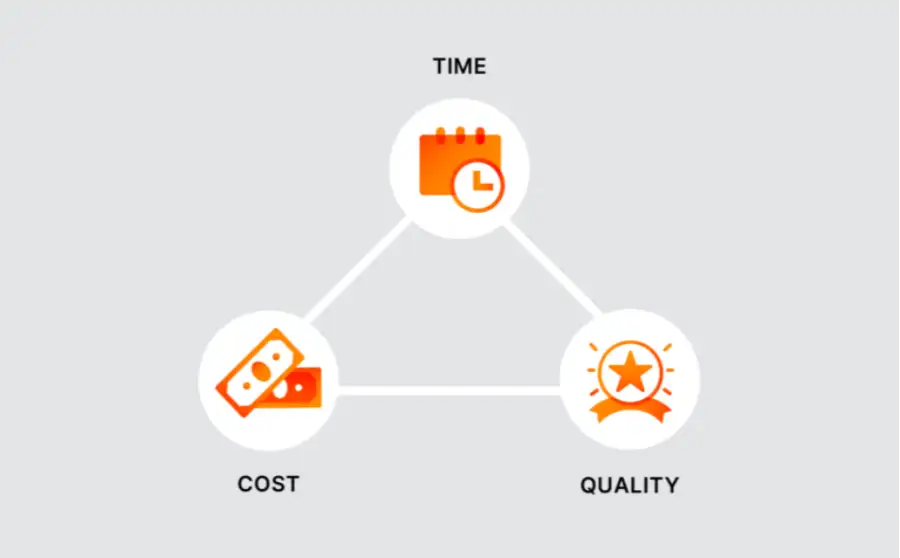
Don't guess at testing fees. Use this model to estimate your compliance budget.
Cost Drivers:
- Number of Colors: Chemical testing is priced per material/color. A toy with 10 different paint colors costs 5x more to test than a toy with 2 colors.
- Component vs. Finished Good: Testing the "finished toy" is risky. If it fails, you scrap the batch.
- Strategy: We test the raw components (fabric bolts, plastic pellets, wet paint) before assembly. This is cheaper and allows us to swap materials if a test fails.
- Product: [Toy Description]
- Age Grade: 3+ (or 0-36 months)
- Markets: USA (ASTM F963/CPSIA) + EU (EN71/REACH)
- Material Count: [X] distinct hard plastics, [Y] distinct fabrics, [Z] paint colors.
- Requirement: Separate reports for US and EU.
Decision Lever: If your total material count exceeds 15, consider composite testing (mixing 3 similar materials in one crucible) to lower lab fees, though this increases the risk of a false positive.
Japan Authority Add-on: The ST Mark
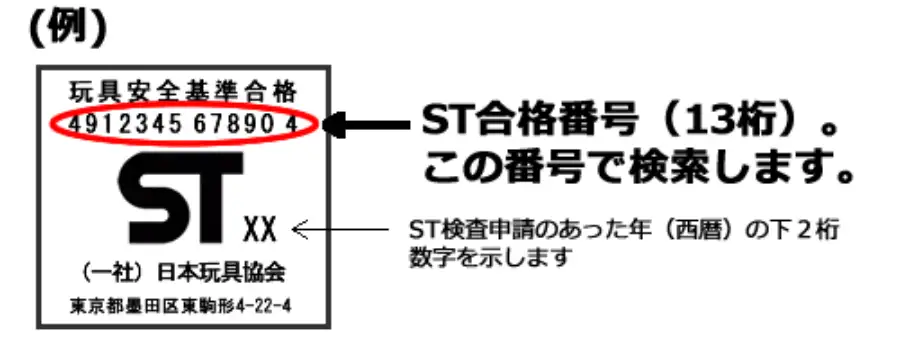
If you are expanding to Asia, Japan is the logical next step. Japan follows the Food Sanitation Law and the ST (Safety Toy) Standard.
- Similarities: Like EN71, Japan classifies mechanical hazards and heavy metals.
- Differences: Japan has unique requirements for formaldehyde in textiles (for baby toys) and specific "visual acuity" standards for projectile toys.
- 2026 Update: Japan is aligning closer to ISO 8124, but local testing via a JNA (Japan Toy Association) approved lab is often preferred by retailers like Aeon or Toys"R"Us Japan.
Winner: Japan requires a specific, localized approach. Do not rely on US/EU reports alone. Refer to the Japan Toy Association (JTA)for official ST Mark guidelines.
ASTM F963 + CPSIA (U.S.)
Pros
- Amazon Fast-Track: In our experience, holding a valid ASTM F963 test report and a correctly formatted CPC is the fastest way to ungate ASINs. Amazon's compliance bots are tuned to these specific documents, approving listings in as little as 24 hours.
- Mechanical Reality Check: This standard is aggressive on physical abuse. We rely on the ASTM drop and tension tests to shatter brittle plastics in the lab so they don't break in a toddler's hands.
- Clear Enforcement: Unlike vague "general safety" rules, US Customs (CBP) provides a clear checklist. If you have the tracking label and the report, the cargo moves.
Cons
- Zero-Tolerance Admin: The paperwork is fragile. We have seen entire containers held because a Children's Product Certificate (CPC) had a typo in the factory address or a missing test date.
- Labeling Rigor: If your permanent tracking label isn't visible on the product itself (not just the box), you risk immediate listing suspension.
⚠️ Safety First: Never test a "Golden Sample." In our factory audits, mass production materials often vary slightly from the prototype. We always pull samples from the final production line to ensure the CPC legally matches the goods inside the container.
EN71 + CE (EU/EEA)
Pros
- Chemical Depth: We find EN71-3 (Migration of Certain Elements) superior for detecting chemical risks. It doesn't just check for lead; it analyzes how accessible toxic elements (like barium or chromium) are if a child sucks on the toy.
- Budget Efficiency: One test suite unlocks 30+ countries (EU + EEA). This unified market access reduces our testing budget by roughly 40% compared to filing for individual nations.
- Buyer Trust: European procurement managers treat "EN71 compliant" as the baseline for negotiation. It removes friction immediately.
Cons
- The "Empty CE" Trap: The CE mark is a self-declaration, which creates a false sense of security. We frequently see goods seized in the Netherlands because the importer printed the logo but lacked the mandatory 10-year Technical File to back it up.
- Liability Shift: Unlike the US system where the lab report is king, the EU system places heavy liability on the "Technical Documentation." If you lose those records, your compliance is void.
🧠 Expert Take: Don't confuse the "CE" mark with a quality stamp. It is a legal declaration that you hold the evidence of safety. If a market surveillance authority requests your Technical File and you cannot produce it within 48 hours, they will force a recall.
Mini callout: Where ISO 8124 helps (and doesn't)
ISO 8124 is excellent for aligning production for markets like Australia and China. However, in our practice, it is useless for Amazon U.S. onboarding. Amazon's system will reject an ISO report even if the safety tests are nearly identical to ASTM.
See also: Our guides on toy safety standards, how to generate a CPC, and requirements for packaging and labeling.
Need to get your paperwork right the first time? Contact us to request our "Compliance Documentation Checklist" and a free label template.
People Also Ask About ASTM F963 vs EN71
1. Can I use ISO 8124 testing for Amazon US or Europe?
No. Amazon US will reject ISO 8124 reports immediately.
In our experience resolving suppressed listings, Amazon's compliance bots strictly require ASTM F963 for the US and EN71 for Europe. While ISO 8124 is chemically similar, it lacks the legal standing of a Children's Product Certificate. We only use ISO 8124 for clients targeting Australia or New Zealand.
2. Does EN71 compliance cover the UK after Brexit?
Technically, no. Since Brexit, the UK requires the UKCA mark rather than the CE mark.
However, the physical safety tests (BS EN 71) are currently identical to the EU versions. To save costs, we instruct labs to run one physical test suite and issue two separate Declarations of Conformity—one for the EU (CE) and one for the UK (UKCA).
3. Is it cheaper to test for both standards at once?
Yes. You save roughly 30% by combining them.
If you test separately, you pay for the lab setup twice. When we manage toy production processes, we submit a "dual-market" request. The lab tests your materials against the stricter of the two limits (usually EN71 for chemicals), allowing one test run to satisfy both American and European authorities.🚀 Actionable Insight: Never test the finished toy.
Always test the "components" (wet paint, raw plastic pellets) before assembly. If a finished doll fails a lead test, you must scrap the entire batch. If a bucket of paint fails, we just swap the paint bucket.
Which Standard Should You Choose?
Buy/Build around ASTM F963 + CPSIA (CPC) if...
- You are an Amazon FBA U.S. seller: You need a flawless CPC + tracking label package. Amazon's algorithms do not care about safety; they care about data matching. If your paperwork implies liability, you pass.
- You are launching a U.S.-first brand: You want the fastest path to listing readiness. We can clear a US-compliant production run in 25 days using a CPSC-accepted lab workflow.
Buy/Build around EN71 + CE/DoC if...
- You are an EU-first brand or distributor: CE marking and EN71 reports are non-negotiable for clearing customs in Rotterdam or Hamburg.
- You have a retail program in Europe: Retailers demand a robust Technical File. You need the discipline to maintain records of every material change for 10 years.
Use ISO 8124 as the bridge if...
- You are a Global Expansion Manager: If you sell in mixed markets (like Brazil, Australia, or China), ISO 8124 acts as a harmonized internal spec. We use it to set a "quality floor" while still generating the mandatory US/EU docs for those specific borders.
⚠️ 2026 Global Note: The Japan Factor
If you plan to ship to Japan, consider the PSC Mark. While similar to EN71, Japan has unique restrictions on formaldehyde in baby toys. Verify the 2026 ST Standard updates with official sources before finalizing your mold designs.
Final 'Do This Next' Checklist
- Confirm your markets: Define if you need ASTM (US), EN71 (EU), or both before we cut the molds.
- Build a dual-cert test plan: Map out your mechanical, flammability, and chemical requirements to find the strictest common denominator.
- Prepare your docs: Draft your CPC + tracking labels (US) and DoC + Technical File (EU) while production is running, not after.
Need a compliance-ready production plan? Contact LeelineToys today to get a quote that includes a full safety documentation roadmap.