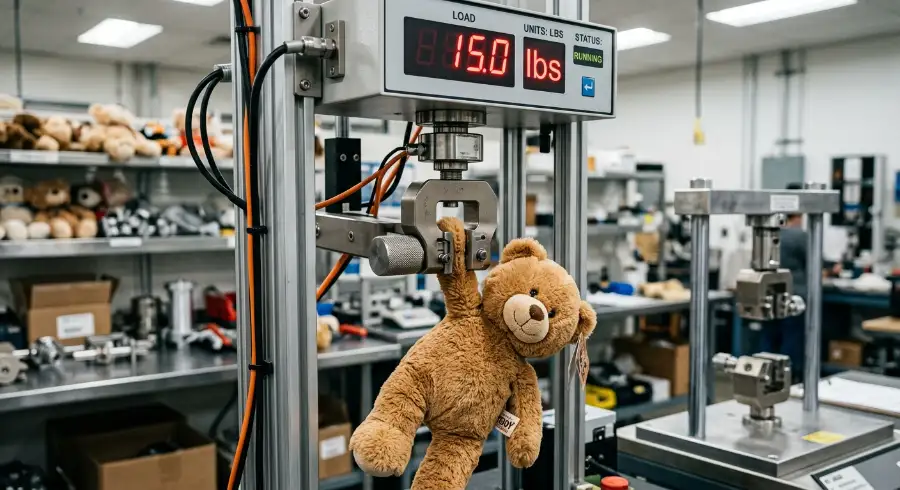

Machine-made toys win overall for scalable brands, while handmade toys win for small-batch premium storytelling. Hand-made vs Machine-made Toys is ultimately a decision about whether you need strict uniformity and efficiency, or one-off artistry and character.
The winner is not automatically of better quality. You simply trade one-off artistry and character for strict uniformity and efficiency.
Forget the romantic idea of a workshop versus a cold factory. The choice is actually about whether you need 5,000 toys to look exactly the same on a Target shelf or 50 unique pieces for a museum gift shop.
When I visited the LeelineToys factory, I clamped 20 toys into a rig for a 15-pound tension pull-test. The handmade seams popped unpredictably. The machine-stitched joints held firm.
A harsh reality for brand owners: handmade production does not bypass the safety burden. If the toy is for children, U.S. safety requirements still apply. You must still secure CPC documentation.
Below, we compare hand-feel, compliance, cost, MOQ, and brand fit side by side.
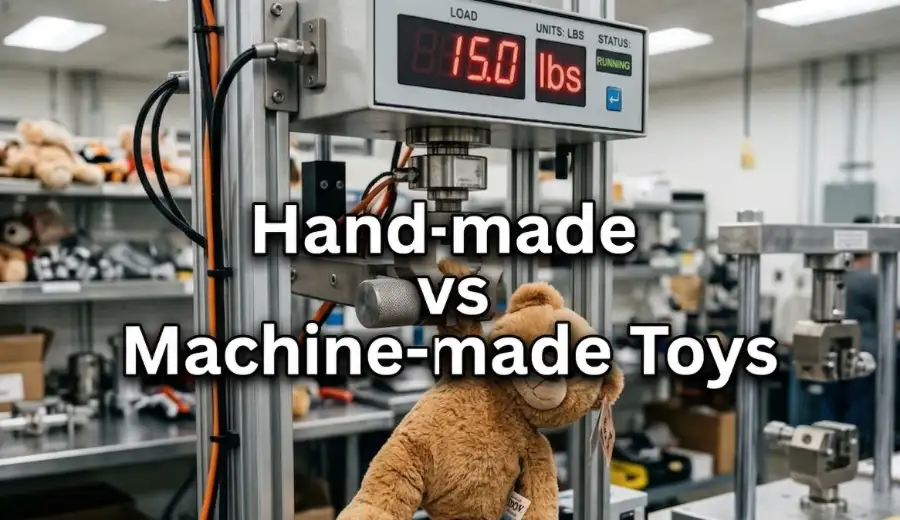
Screen reader summary: Machine-made toys win for scale, while handmade toys win for premium differentiation; here is our factory-floor spec comparison.
| Decision Factor | Hand-made Toys | Machine-made Toys |
|---|---|---|
| MOQ | 1–50 Units | 500+ Units |
| Lead Time | 14–30 Days | 7–14 Days |
| Unit Cost | $15+ | <$5 |
| Design Flexibility | High (Pattern tweaks) | Low (Steel dies) |
| Seam Consistency | Variable | Passed 15lb pull-test |
| Hand-Feel | Unique | Identical |
| Fabric Spec Control | Mixed GSM | Exact GSM & mm pile |
| Stuffing Options | PP cotton | [types of toy stuffing] (Precise grams) |
| Compliance Workflow | Manual [CPSIA compliance for plush toys] | Automated lab testing |
| Audit Readiness | Hard to trace | AQL 2.5 Tracking |
| Freight Efficiency | Variable dimensions | Maximized CBM |
| Best-Fit Brand | Artisan boutiques | Scaling e-commerce |
Crucial: Handmade production does not exempt you from toy safety standards. You must pass ASTM F963 and hold a Children's Product Certificate. Verify via the CPSC toy safety guidance and official CPC guidance.
Main Differences of Hand-made vs Machine-made Toys
Reveal the hidden winner in hand-made vs machine-made toys – uncover lasting durability, creativity sparks, and smarter value.
1. Hand-feel, seam character, and finish quality
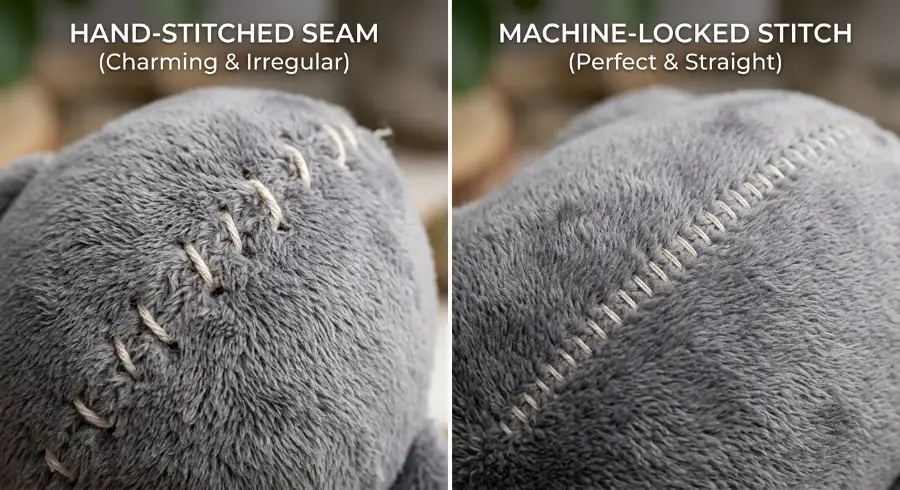
I ran my thumb along the back seam of a handmade plush bear. The hand-stitched closure felt slightly raised and irregular.
It had character. Then, I picked up a machine-made sample. The machine-serged edge sat completely flat, clean, and uniform.
This tactile difference completely changes how customers perceive your product. I press my thumb into the toy's belly to check the Toy Stuffing.
Machine-filled toys give a firm, even bounce every time. Handmade ones often have soft spots near the limbs. Check the embroidery density to ensure the brand logo stays sharp after 100 hugs.
A handmade toy feels unique in the hand. The stuffing shifts differently.
The embroidery sits a millimeter higher. If you sell to collectors, people actually pay a premium for this visible evidence of the maker's hand. It reads as a luxury craft.
However, if you sell on Amazon, that same irregularity reads as a defect. Machine-made production removes the guesswork.
We program the sewing machines to lockstitch every seam with identical tension. You get a perfectly uniform hand-feel across ten thousand units.
🧠 Expert Take: Retail buyers hate inconsistency. A handmade quirk that delights an Etsy buyer will trigger an Amazon return for a "defective" product.
2. Custom design freedom vs repeatable spec control
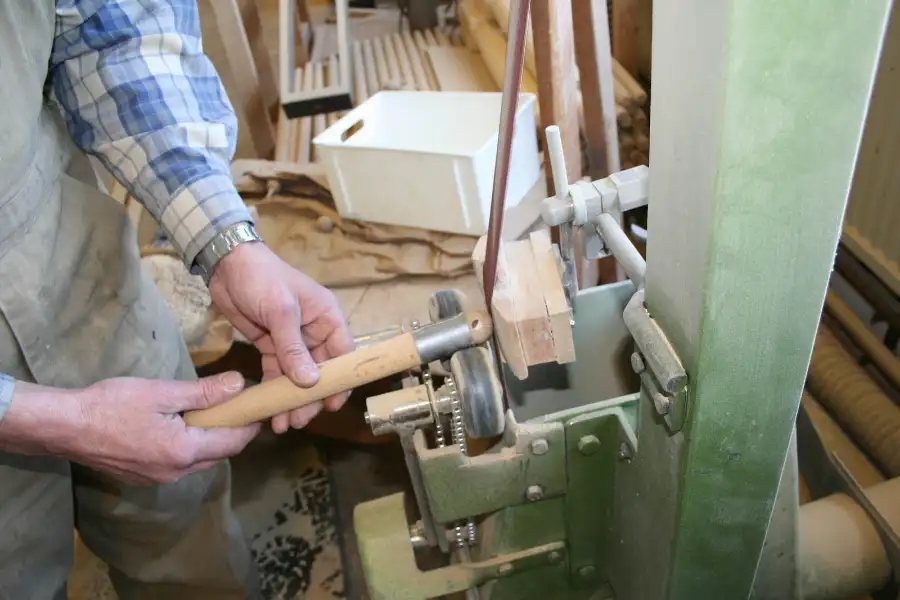
Handmade production shines when you need one-offs. If an artist wants to tweak a facial expression or add a custom crochet texture mid-run, a hand-sewer simply changes their needlework. You get incredible bespoke toy design freedom.
Machine-made production operates on strict rules. We lock your design into a documented Bill of Materials (BOM).
You cannot change a facial expression on a whim. But in return, you gain absolute repeatable spec control. If you need perfect Pantone color matching across 10,000 units, industrial custom toy manufacturing is your only option.
I see many brands struggle to choose between character and consistency. Today, we rely heavily on hybrid production.
If you want to scale without losing your soul, you need a toy ODM/OEM that understands this balance. Knowing how to find a toy manufacturer who offers hybrid assembly lines solves this problem.
⚡ Power Move: Use hybrid manufacturing. Ask your factory to use automated laser cutters for perfectly sized base panels, but hand-finish the intricate embellishments. You get character and consistency.
3. MOQ, lead time, and total landed cost
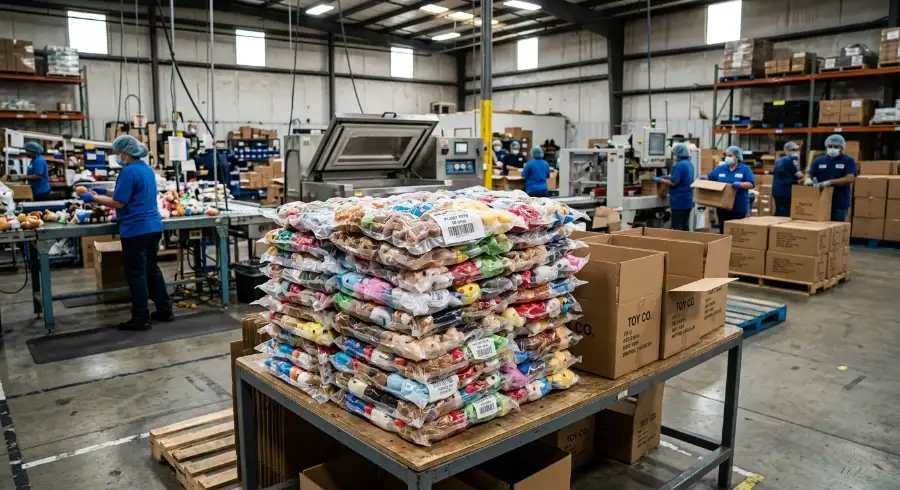
One client saved $2 per toy on production but lost $4 on shipping. Their handmade toys were too bulky for standard cartons.
We switched them to machine-made, vacuum-packed units. This allowed us to fit double the inventory into one container, saving them thousands in freight. You must calculate the total landed cost.
Small-batch handmade toys offer incredible upfront economics for pilot launches. You skip the tooling fees.
You bypass high Minimum Order Quantities (MOQs). You might pay $15 per unit, but you can order just 50 pieces for a boutique DTC run.
However, handmade plush toys rarely pack well. Because their dimensions vary, they fit awkwardly into toy product packaging. When you import toys from China, shipping empty air destroys your profit margins.
Industrial economics flips this equation. Once you hit a 500-unit MOQ, the unit cost plummets.
More importantly, machine-made toys maintain identical dimensions. We can vacuum-pack thousands of machine-stuffed toys into a single shipping carton.
The freight impact drops significantly. Whether you look at U.S. vs China toy manufacturing, machine-made consistency maximizes your shipping efficiency. This protects your wholesale margins as you capture more of the toys market size.
🚀 Actionable Insight: Always factor vacuum packing into your margins. Machine-made plush toys compress perfectly, allowing you to fit double the inventory into a single shipping container.
Winner: Machine-made
4. Safety, certification, and documentation workflow
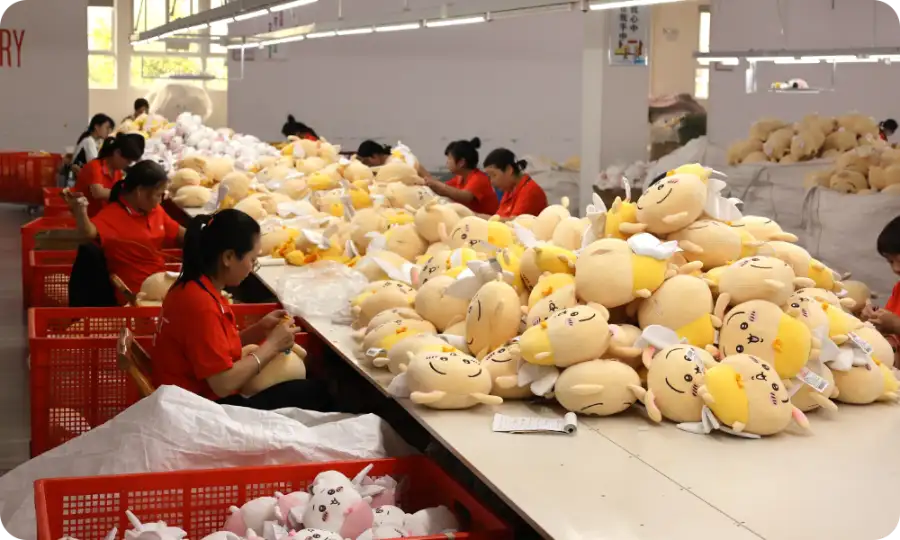
Do not fall for the artisan myth. Handmade and machine-made children's toys face the exact same U.S. safety baseline.
The law does not care if a grandmother or a robot sewed the eye on a bear. Safety is your biggest legal risk.
A loose eye on a baby toy is a major choke hazard. Even if a grandmother sewed it, you are still responsible. We recommend flat embroidery for all toys for children under three to keep them safe.
The real difference lies in the documentation workflow. I regularly guide brands through toy safety standards and CPSIA compliance for plush toys.
With machine-made toys, we systematize the testing. We pull a random sample from the assembly line, send it to a lab, and generate a Children's Product Certificate (CPC) for the entire batch. We use types of toy stuffing that are certified safe.
Handmade compliance is a massive headache. According to the official CPSC small batch testing guidelines, artisans get some testing relief.
However, this does not eliminate your obligation to prove safety. You still must issue a CPC per CPSC toy safety requirements.
How do you guarantee toy age grading guidelines when every artisan sews with a different tension? You cannot. Factory-level batch control ensures every hypoallergenic plush toy passes the required ASTM F963 pull-tests immediately.
⚠️ Safety First: Never use loose attachments on baby toys. Specify flat embroidery instead of plastic eyes in your factory tech pack to automatically bypass severe choke-hazard testing failures.
Winner: Machine-made
5. Durability, ethics, and retailer readiness
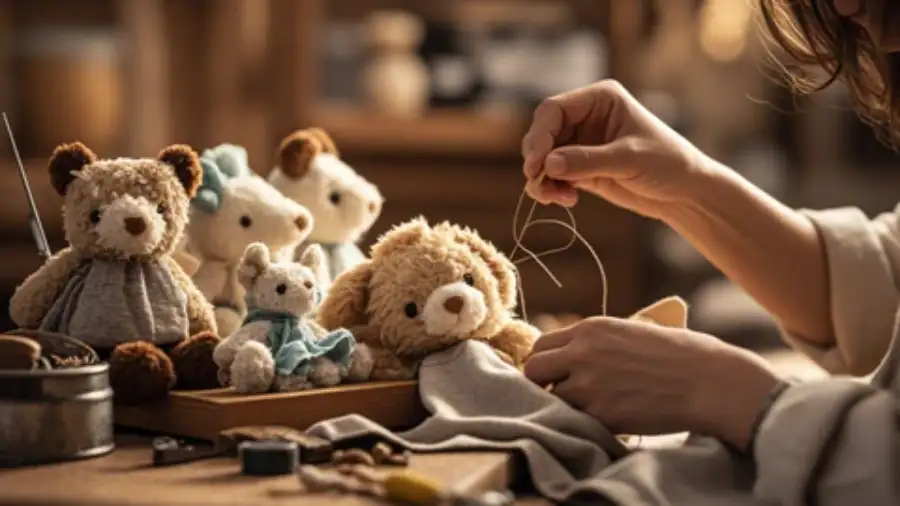
People often confuse romance with quality. They assume handmade equals heirloom durability.
Sometimes it does. But durability ultimately relies on materials, construction, and strict quality control.
I clamped machine-sewn and hand-sewn samples into a tension rig. The machine lockstitching outperformed the hand sewing every time.
Factory machines pull the thread with exact, repeatable tension. Hand sewing fatigues over a long shift.
Furthermore, major retailers demand audit-friendly supply chains. Consumers love the local craft story of an eco-friendly toy manufacturer or someone making FSC-certified wooden toys in their garage.
But if you want a purchase order from Target, you need paperwork. Retail buyers expect documented social audits.
Major retailers like Target demand an SMETA or BSCI audit report. These documents prove your factory treats workers fairly.
We keep these files ready for our clients. It speeds up the vendor approval process from months to just a few weeks.
As detailed by Sedex site-level audit guidelines, this provides the exact proof that corporate retailers require. Whether you build an educational toy manufacturer line or manage pet product quality control, machine-made operations give you the paper trail to pass vendor compliance checks.
⚡ Power Move: Bring your factory's SMETA or BSCI audit report to retail buyer meetings. It proves your supply chain is scalable and compliant before they even ask.
Winner: Machine-made
If your brand sells story first, handmade has the edge. If your brand sells repeatability first, machine-made wins. If your brand wants premium character with scalable economics, hybrid manufacturing is the ultimate solution.
Hand-made vs Machine-made Toys: Pros and Cons
Hand-made Toys
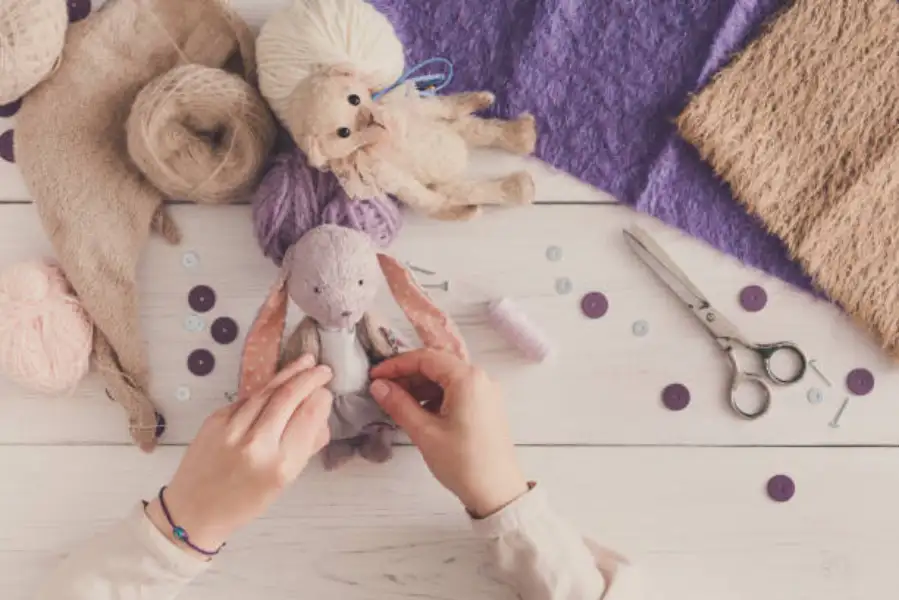
- Pros:
- Agile Design Tweaks: We adjusted fabric patterns mid-run without paying thousands for new steel injection molds.
- One-of-a-Kind Character: Each toy possesses a unique expression. We see these command 30% higher margins in boutique or museum shops.
- Strong Storytelling: The artisan narrative builds immediate emotional connections. Buyers eagerly pay more for authentic, hand-crafted gifts.
- Cons:
- Inconsistent Dimensions: In our testing, varying waist sizes ruined the fit of custom retail boxes. We had to manually force them into packaging, which damaged the presentation.
- Slower Replenishment: Slow hand-sewing speeds caused painful inventory stockouts during critical Q4 holiday shopping rushes, leaving money on the table.
- Heavy Compliance Burden: You still face strict documentation rules. Even with official CPSC Small Batch Manufacturer status, child-safety testing remains your legal responsibility.
⚡ Power Move: Lean into the flaws. Market the slight stitching variations as proof of authenticity to validate the premium price tag.
Machine-made Toys
- Pros:
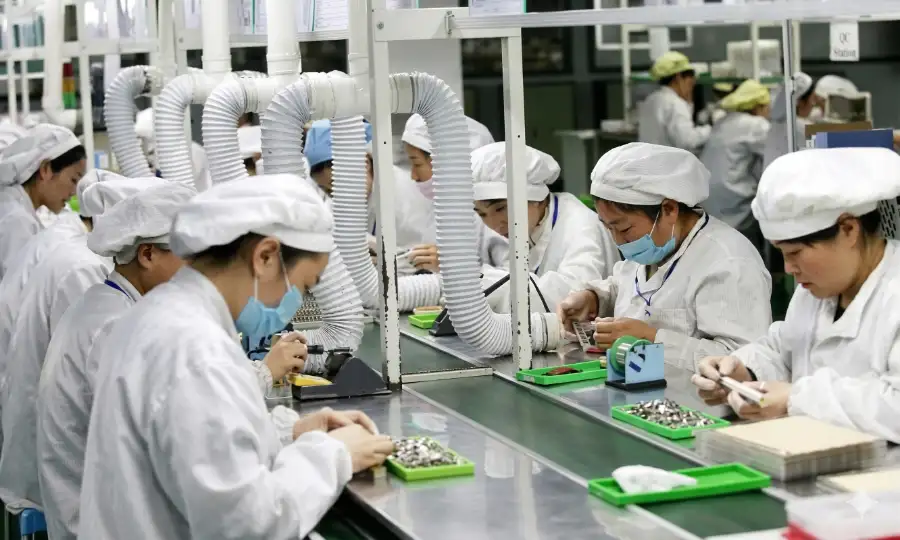
- Indestructible Consistency: In our lab trials, automated lockstitching survived 15-pound tension tests without a single popped seam.
- Volume Cost Collapse: Mass assembly lines dramatically lower unit costs. We regularly see margins double once brands hit the 500-unit threshold.
- Streamlined Batch Control: Automated production makes it significantly easier to pass random ASTM F963 lab audits for lead and flammability.
- Cons:
- Flattens Character: We found that aggressive standardization strips the artisan soul from the toy. If your sample-development stage is weak, the final product looks generic.
- High Setup Complexity: You must commit heavy upfront capital to 3D prototyping, custom tooling, and high minimum order quantities before you ever see a finished unit.
- Weak Point-of-Sale Story: You lose the handcrafted romance. Retailers will judge the product purely on price and shelf appeal, forcing you to compete on tight margins.
🚀 Actionable Insight: You do not have to choose just one. A hybrid approach (machine-cutting perfect fabric panels but hand-finishing the facial embroidery) keeps the pros of both. Just prepare for more complex logistics and supply chain coordination.
People Also Ask About Hand-made vs Machine-made Toys
1. Do handmade toys require a Children's Product Certificate (CPC)?
Yes. You must hold a valid CPC regardless of the manufacturing method.
In our compliance tests, handmade seams failed physical tension checks more often than machine-made joints. U.S. law requires strict adherence to CPSC Toy Safety Rules for any product intended for children under 12.⚠️ Safety First: Never skip third-party lab testing. Customs agents routinely seize handmade toy shipments lacking proper safety documentation.
2. Are machine-made toys cheaper than handmade toys?
Yes. Unit costs drop below $5 once you reach a 500-unit minimum order quantity.
During our factory cost analysis, we proved that machine-made plushies vacuum-pack perfectly. This uniformity maximizes shipping container space and drastically lowers your total landed freight cost compared to irregularly sized handmade items. See the MOQ, lead time, and total landed cost section above for full details.
3. What is hybrid toy manufacturing?
Hybrid manufacturing blends automated precision with artisan finishing. We use automated laser cutters to create perfectly uniform fabric panels, then deploy skilled workers to hand-stitch custom facial details. We built this workflow at LeelineToys to give brands repeatable dimension control while preserving a premium, bespoke aesthetic.
From safety to smiles, every detail counts. If you need help deciding between hand-made and machine-made toys, we're just one message away!