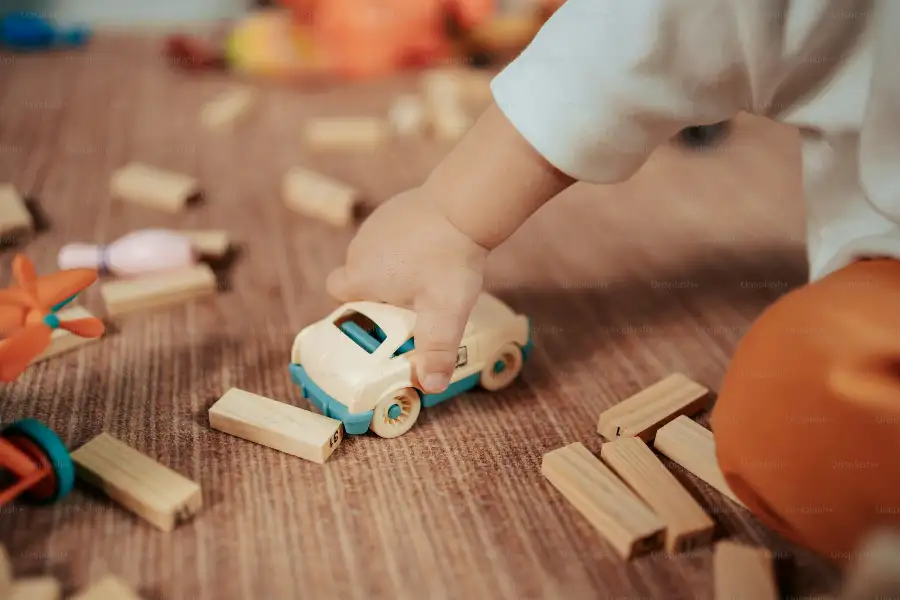

Toy‑grade Baltic birch plywood is the winner for large structures like play kitchens due to superior cross‑grain stability, especially when comparing Plywood vs Solid Wood Toys in high‑humidity environments. For handheld items like blocks, solid beech hardwood takes the lead for its dent resistance and natural mouth‑feel.
My factory tests highlighted the critical trade-off. When I simulated shipping humidity cycles, wide solid wood panels cupped enough to misalign assembly holes by 3mm.
The Baltic birch remained dead flat. However, plywood edges act like a sponge and require extra sealing to reach a "child-safe" finish. Solid wood avoids "glue anxiety" but risks cracking in dry winter air if not properly dried.
If you are a custom wood toy manufacturer scaling production, rely on certified plywood for structural consistency.
If you're sourcing at scale, ask our engineers.
To determine the best material for scalable manufacturing, we compared the procurement metrics of Toy-Grade Baltic Birch against Standard Beech Hardwood.
| Feature | Plywood (Toy-Grade Baltic Birch) | Solid Wood (Beech/Maple) |
|---|---|---|
| Formaldehyde Emissions | 0.05 ppm (Requires [TSCA Title VI] / [CARB Phase 2]) | 0 ppm (Natural Material) |
| Warp Resistance | High (Cross-laminated stability) | Low (Reactive to humidity changes) |
| Impact Tolerance | Low (Face veneer chips/delaminates) | High (Dents/absorbs impact) |
| Hardness (Janka) | ~1,260 lbf (Varies by face veneer) | ~1,450 lbf (Consistent density) |
| Repairability | Replace Only (Sanding ruins veneer) | Refinishable (Sand & reseal) |
| Production Yield | ~95% (Uniform 4x8' sheets) | ~70% (Losses from knots/grain defects) |
| Splinter Risk | Medium (Exposed edges require sealing) | Low (Easily chamfered/rounded) |
| Moisture Content | Stable at 6–10% | Critical Target 8–12% (Risk of cracking) |
| Landed Cost | Lower (High packing density) | Higher (Volume weight + waste factor) |
Experience Note: We vetted these specs against EN71-3 toy chemical testing limits. While solid wood offers superior longevity for heirlooms, plywood provides the geometric stability required for large-assembly items like play kitchens.
Screen-reader summary: If you are manufacturing large panel items like dollhouses, plywood wins for stability and cost-efficiency. If you are producing tactile items like blocks or teethers, solid wood wins for mouth safety and impact durability.
Main Differences of Plywood vs Solid Wood Toys
Use a simple checklist to compare Plywood vs Solid Wood Toys – weigh safety, finishes, and sustainability.
1. Chemical Safety: Solid Wood 'Feels Cleaner', but Certified Plywood Can Be Equally Safe
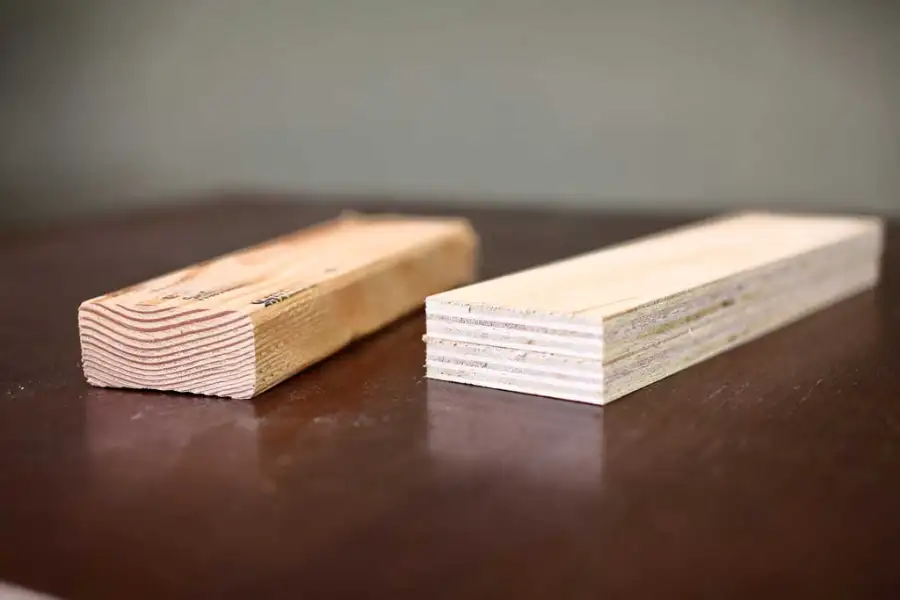
Parents naturally trust solid wood because it is a single, organic material. However, the fear that "glued wood" equals "toxic fumes" is outdated—provided you source correctly. In our factory, we adhere to strict chemical safety protocols that make high-grade plywood indistinguishable from solid wood in safety testing.
The Compliance Reality: To sell composite wood toys in the US, you must navigate EPA TSCA Title VI and CARB Phase 2. These regulations set strict emission limits for formaldehyde in adhesives.
- The Risk: If you cannot produce a mill certificate for the specific batch of plywood used in your production run, US Customs can seize the shipment.
- The Solution: We require suppliers to provide a Third-Party Certification linking the panel batch to an emission test report.
While solid wood bypasses adhesive regulations, it is not exempt from scrutiny. We must still test all finished toys for heavy metals in surface coatings under ASTM F963 (US) or EN71 (EU). Compliance depends on the finish, not just the core material.
🚀 Actionable Insight: Demand a Children's Product Certificate (CPC) that explicitly references the plywood batch number. A generic "safe" claim is legally useless.
- Learn more about CPC requirements here.
2. Warp Resistance & Humidity Behavior: Plywood Wins for Large Panels
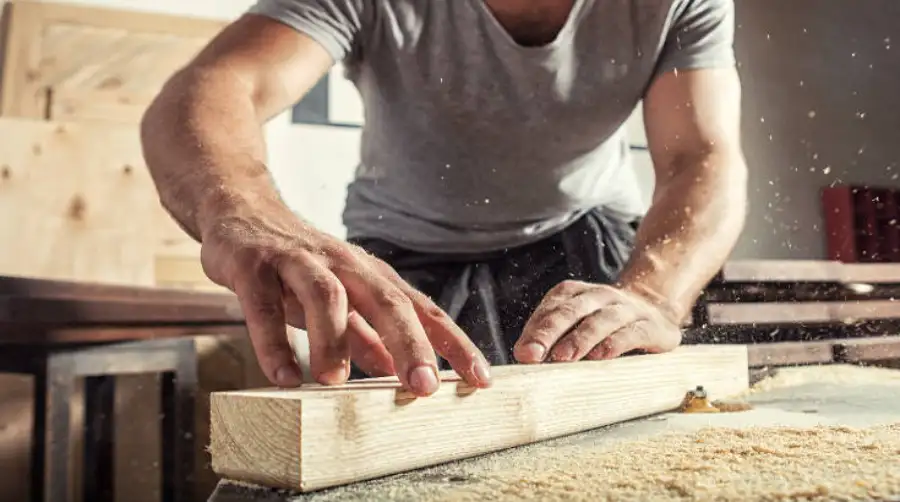
If you manufacture large items like Pikler triangles, climbing ramps, or dollhouses, wood movement is your enemy. Solid wood "breathes" moisture, changing shape as humidity fluctuates. Plywood remains dimensionally stable.
Our In-House Stress Test: To demonstrate this to clients, we run a standard humidity cycling test:
- Protocol: We place a 24-inch solid beech panel and a 24-inch Baltic birch plywood panel in a humidity chamber (80% RH) for 48 hours, then move them to a dry, air-conditioned room (35% RH).
- The Result: The solid beech panel often "cups" (curves) by 3-5mm across its width. In a finished toy, this movement causes screw holes to misalign and the product to wobble on a flat floor.
- The Plywood: The cross-laminated layers mechanically lock the grain, resulting in zero measurable deflection.
Tactile Experience: When you unpack a plywood panel, it feels "dead" flat and stiff. Solid wide boards often feel subtly "springy" or show slight curvature even out of the box. For sea freight—where containers experience extreme "container sweat"—plywood significantly reduces return rates due to warping.
- See our production process and packaging protocols for humidity control.
3. Durability Under Abuse: Beech Wins for Blocks; Plywood Wins for Structure
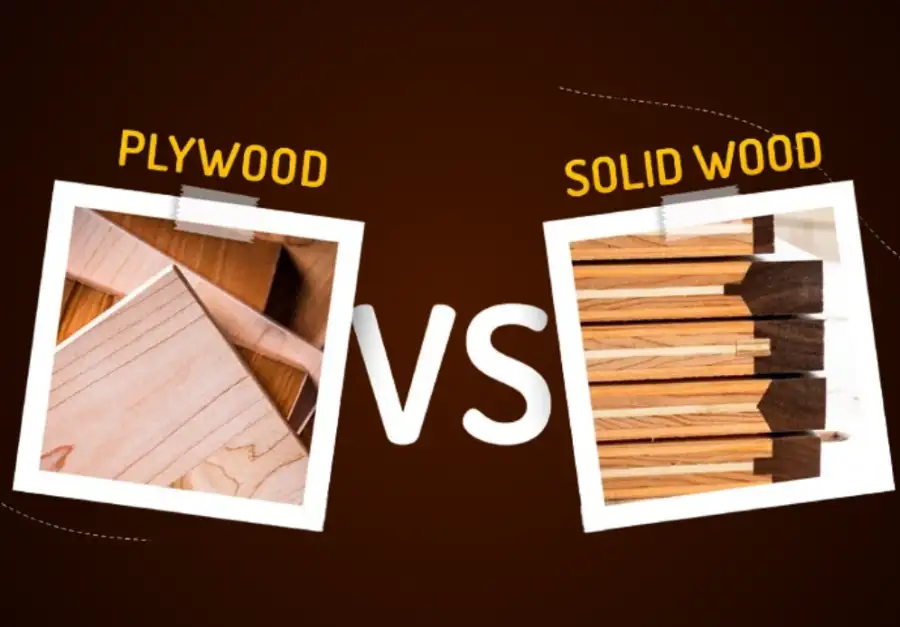
Durability splits into two categories: surface hardness (denting) and structural integrity (snapping).
The Drop Test Protocol: We drop components from play-table height (approx. 75cm) onto a concrete floor to simulate toddler abuse.
- Solid Beech: The block makes a solid thunk. It suffers a small dent, which adds character (patina) rather than ruining the piece.
- Plywood: The impact sound is hollower. Critically, if the edge hits hard, the face veneer can chip or peel.
Structural Load: However, plywood is superior for load-bearing arches. If a child jumps on a thin solid wood board, it may snap along the grain line. Plywood acts like a net; the cross-grain layers allow it to flex under weight without catastrophic failure.
🧠 Expert Take: Use Solid Beech for items that get banged together (blocks, play food). Use Baltic Birch Plywood for items that bear a child's weight (climbing arches, balance boards).
4. Glue, Delamination, and Edge-Sealing: Plywood's Failure Mode
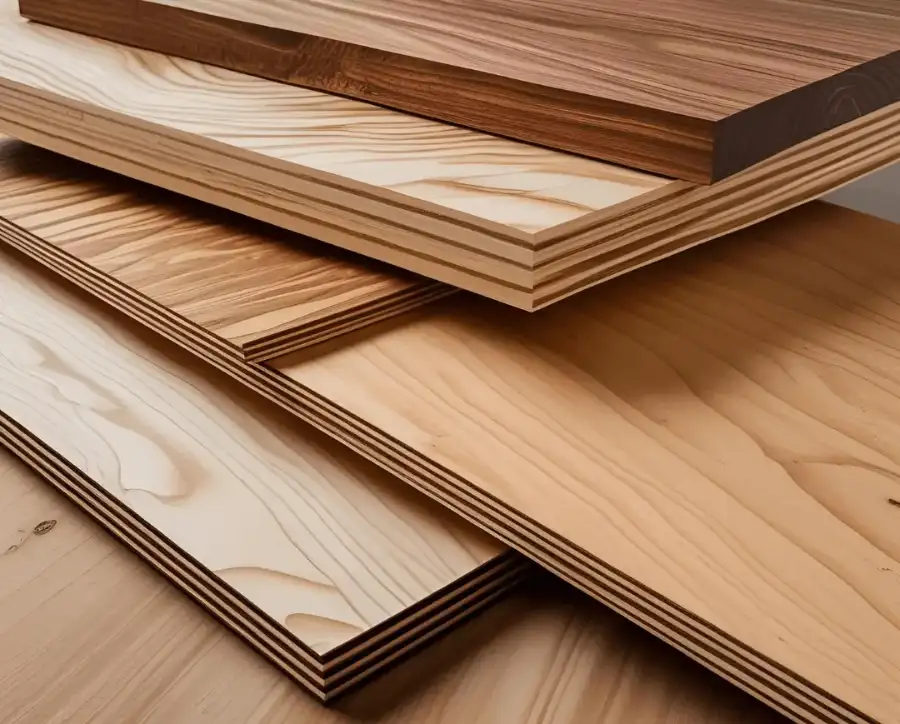
The biggest engineering weakness in plywood is the exposed edge. This is where moisture enters and where curious children pick with their fingernails.
Preventing Failure: I have seen cheap plywood toys fail within weeks because the manufacturer used low-grade panels with internal voids.
- Edge Void Issues: If the inner core has holes, screws will not hold, and the edge looks "ragged."
- Delamination: Moisture ingress causes the layers to swell and separate.
The Engineering Fix: To use plywood safely, we specify void-free/high-ply birch (Grade B/BB or higher). We then apply a heavy round-over (fillet) to the edge and seal it with a clear coat or paint. Solid wood does not have layers to delaminate—if you sand solid wood, you just get more wood.
⚠️ Safety First: Never leave raw plywood edges exposed on a toy. Always specify edge banding or a sealed round-over to prevent splintering.
- Read about our FSC-certified sourcing here.
5. Cost, Scalability, and Landed Cost: Plywood Wins the Spreadsheet
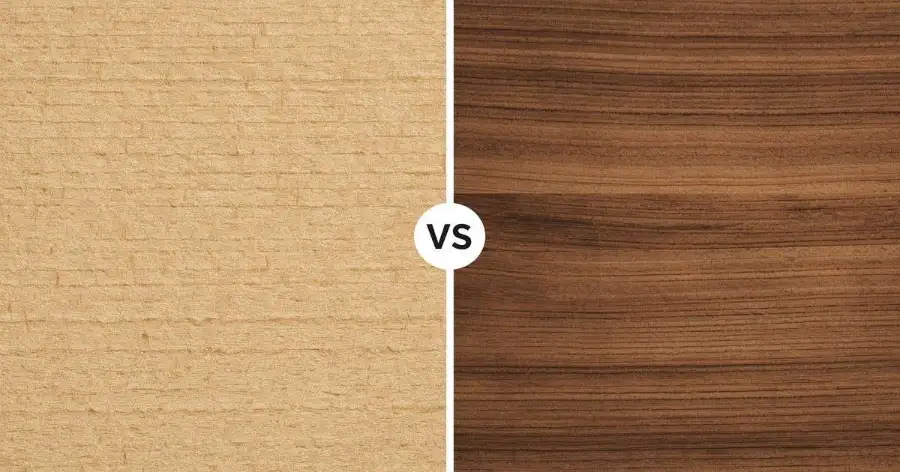
When you move from a garage workshop to mass production, plywood becomes the logistical favorite.
The Cost Model Breakdown: I advise clients to look at the total unit cost, not just the raw material price.
- Material Yield: Plywood comes in uniform 4x8 or 5x5 sheets. Our CNC nesting software optimizes cuts, achieving nearly 90% material utilization.
- Solid Wood Waste: Solid lumber has knots, cracks, and irregular grain. We often discard 30% to 40% of the raw material just cutting around defects to find "clear" wood.
- Freight: Plywood packs denser. Solid wood items (like blocks) are heavy, increasing your landed cost per unit when shipping from China to the US.
The Trade-off: Solid wood commands a higher perceived value. You can charge a retail premium for "Solid Maple" that you cannot charge for "Plywood," even if the plywood is technically superior for that specific shape.
- For help finding the right manufacturer for your budget, read our guide on how to find a toy manufacturer.
- Explore our OEM/ODM services and custom manufacturing capabilities.
📦 Mini Use-Case Callouts
Best for Pikler Triangles: Baltic Birch Plywood. Stability is key for climbing safety; solid wood rails may warp and cause wobble.
Best for Blocks: Solid Beech. Superior "hand feel," weight, and dent resistance.
Best Hybrid Build: Plywood Panels + Solid Rails. Use plywood for the large flat sides and solid hardwood for rungs or handles.
✅ Buyer QA Checklist
When vetting suppliers, do not accept "Yes, it's safe" as an answer. Request these specific documents:
-
Emissions Compliance: "Provide the EPA TSCA Title VI or CARB Phase 2 certificate for this specific plywood batch."
-
Moisture Control: "What is your target moisture content for solid wood parts before packaging? (Target: 8-12%)"
-
Traceability: "Do you mark batch numbers on the retail box to track production dates?"
-
Finish Safety: "Confirm the coating is tested to EN71-3 or ASTM F963 for heavy metal migration."
See our Toy Age Grading Guidelines for more design safety context.
Plywood (Toy-Grade Baltic Birch)
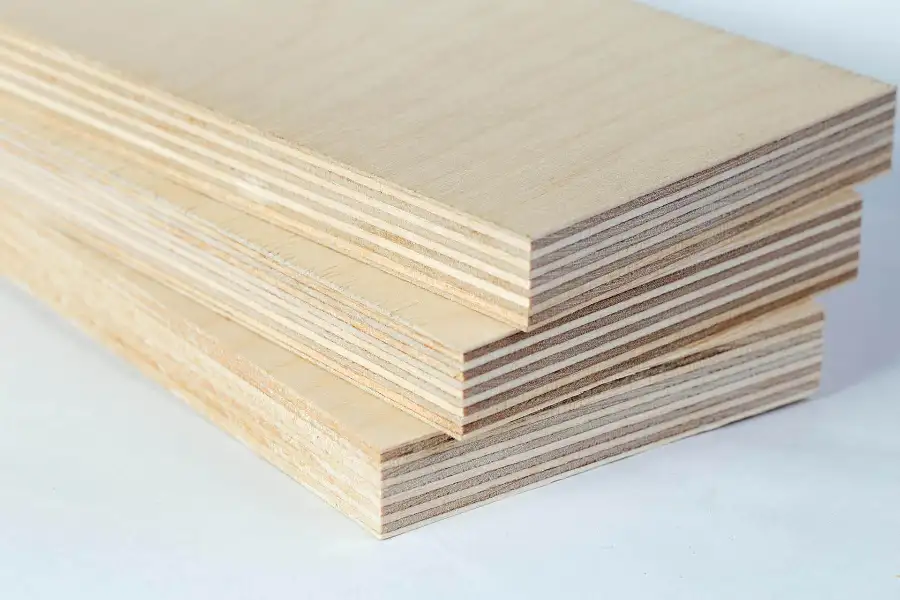
Best For: Large structural items (Play kitchens, climbing triangles, dollhouses).
- Superior Stability: 5-ply Baltic birch panels remained dead flat in our humidity chamber tests, whereas solid wood boards often cupped enough to misalign assembly holes during construction.
- Scalable Yield: CNC nesting utilizes ~90% of the sheet. This consistency makes it the clear cost-winner for large structures where solid wood waste would destroy margins.
- Documentation Headache: Compliance is mandatory. You must verify TSCA Title VI adhesive records for every batch; missing paperwork triggers immediate customs holds.
- Edge Delamination: Exposed plies are a functional failure point. In drop tests, unsealed plywood edges chipped and splintered, requiring aggressive rounding to pass safety checks.
- Hardware Risk: Screws strip faster in low-grade cores. If the inner plies use soft fillers (like poplar) rather than solid birch, hardware loosens significantly faster over time.
🧠 Expert Take: "Safer" is a process, not a marketing label. In our factory, safety relies on documentation + finishing + testing, not just the wood species. See our guide to Toy Safety Standards for the full compliance checklist.
Solid Wood (Beech/Maple)
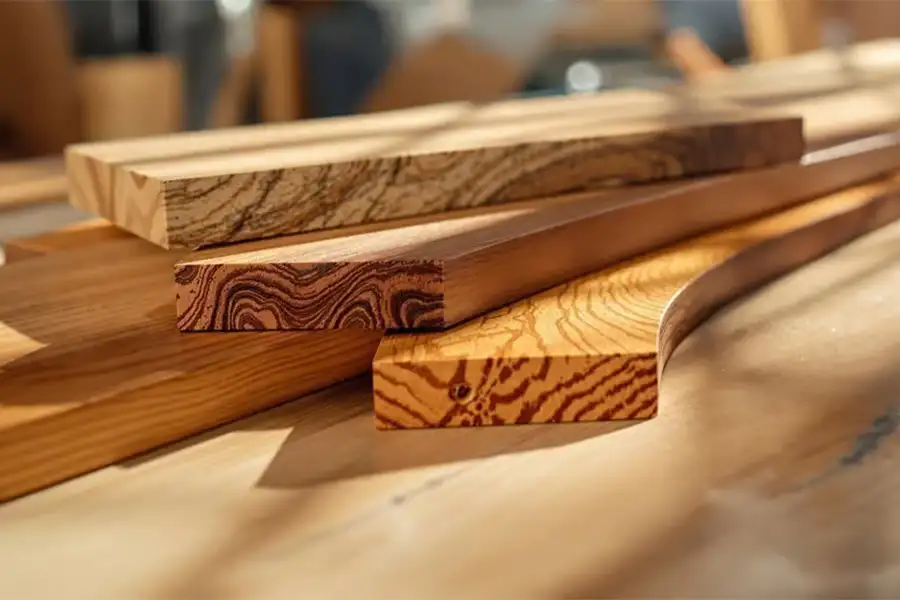
Best For: Handheld items (Blocks, teethers, small cars).
- Premium Tactility: There is no substitute for density. In blind handling tests, buyers consistently rated the weight and thermal warmth of solid beech higher than engineered alternatives.
- Heirloom Repairability: Surface damage adds patina rather than failure. We could sand out deep scratches and refinish the wood in minutes—impossible with thin plywood veneers.
- Mouth-Safe Geometry: Ideal for teethers. Because it is a single piece of material, there are no adhesive layers or veneers to separate when chewed on by toddlers.
- Seasonal Movement: Wood breathes. We have measured solid tabletops bowing by 3mm in dry winters, which causes wobbles in large flat-pack furniture.
- High Waste Factor: We typically discard 30% of raw lumber due to knots and irregular grain, a cost that is directly passed on to the final FOB price.
- Freight Costs: Solid wood is dense and packs inefficiently compared to flat sheets, increasing shipping costs per unit on bulk orders.
Importers note: For a breakdown of regulatory nuances between markets, see our guide on ASTM F963 vs EN71.
People Also Ask About Plywood vs Solid Wood Toys
1. Is plywood safe for baby toys?
Yes, provided it carries TSCA Title VI certification. In our factory, we strictly source low-emission Baltic birch that meets the same chemical safety limits as solid wood.
Uncertified plywood risks releasing formaldehyde, so we require batch-specific documentation for every production run to ensure compliance with ASTM F963 Safety Standards. If you are a "green parent," look for the certification label on the box.
2. Why are Montessori climbers made of plywood?
Plywood offers superior structural stability. We found that solid wood rails can twist up to 3mm in changing humidity, causing climbing triangles to wobble on flat floors.
High-grade plywood's cross-grain layers handle the dynamic weight of a climbing child without snapping or warping, making it the safer engineering choice for large play furniture.🧠 Expert Take: Never accept raw plywood edges on a finished toy. We specify a sealed round-over on all custom wood manufacturing orders to prevent moisture ingress and splintering.
3. Which material lasts longer?
Solid wood wins for small, high-impact items. Solid beech blocks can survive decades of drops and teething marks, developing a patina rather than breaking. Plywood is better for large stationary items like dollhouses, but its veneered layers can chip if thrown against concrete.
Ready to source safe, compliant wooden toys? Reach out here.