
Your choice of material dictates tooling costs, lead times, and perceived value. It is not just aesthetics; it is manufacturing reality.
This guide breaks down specific types of keychains by production process. You will find direct pros and cons alongside hands-on durability comparisons for PVC, zinc alloy, and acrylic. I also provide sourcing checklists for MOQs and CPSIA safety compliance to help you match technical specs to your budget.
12 Top Types of Keychains
Find your perfect match now!
1. Die-Cast Zinc Alloy Keychains (3D Metal) — Best Premium "Feels Expensive" Option
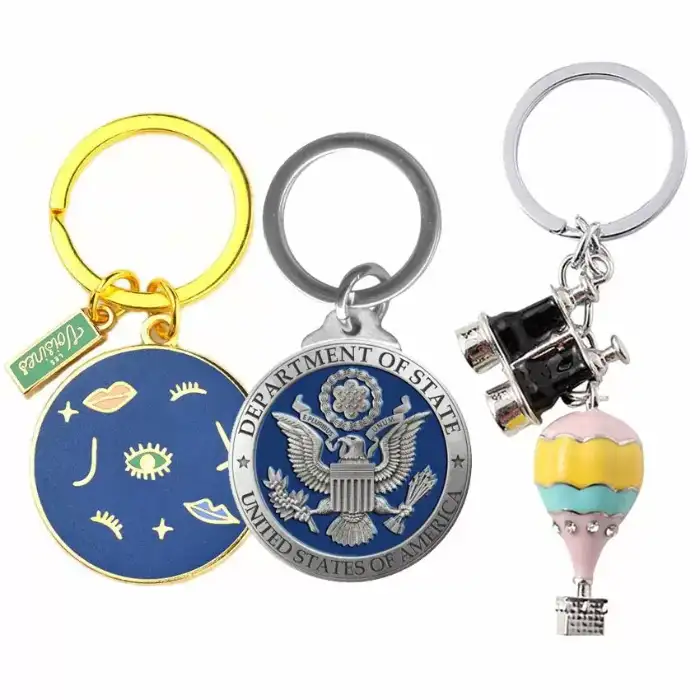
Zinc alloy is the benchmark for premium retail and automotive branding. Its natural density creates a heavy, high-value feel that lightweight plastics cannot match.
Production relies on hot-chamber die-casting. Injecting molten zinc into steel dies captures intricate 3D details and deep relief that stamped metal processes cannot achieve. Zinc resists impact better than acrylic and supports high-end electroplated finishes unlike PVC.
Critical QC Checkpoints:
- Plating: Verify consistency via salt spray testing.
- Finish: Ensure all flash (excess metal) is polished off.
- Assembly: Test attachment ring pull-strength.
| Pros (Zinc Alloy) | Cons (Zinc Alloy) |
|---|---|
| Captures complex 3D curves | Higher initial mold costs ($100+) |
| Heavy, premium hand-feel | Weight increases shipping costs |
| Versatile plating (Gold/Nickel) | Plating can scratch over time |
🚀 Actionable Insight: Specify Zamak 3 alloy in your contract. It offers the best balance of dimensional stability and plating adherence; cheaper alloys often result in surface pitting or bubbling.
2. Soft PVC (Rubber) Keychains — Best for Colorful Mascots
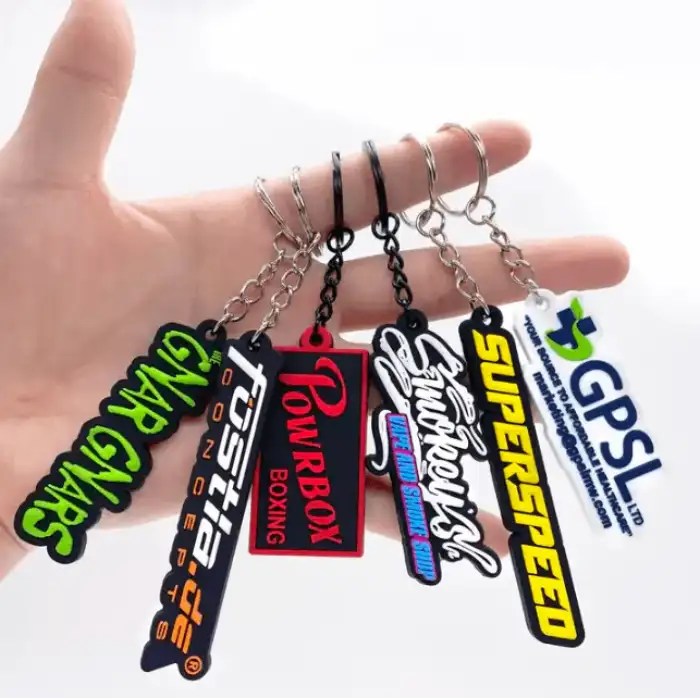
Soft PVC is the manufacturing workhorse for brand mascots, school merch, and giveaways. Unlike rigid acrylic keychains, flexible PVC won't crack in your pocket.
Manufacturing & Durability We dispense liquid PVC into engraved molds to create distinct, permanent color layers. Since the color is the material itself, it never fades or rubs off. While it lacks the heavy, premium weight of zinc alloy, PVC bends under pressure and survives drops that shatter harder plastics.
QC Criticals Reject units with sticky surfaces (improper curing), chemical odors, or flash (excess material) on edges. Test the attachment bond—the metal ring should not pull free from the rubber.
| Pros (Soft PVC) | Cons (Soft PVC) |
|---|---|
| Permanent, vibrant color | No gradients or shading |
| Shatterproof flexibility | Lower "perceived value" vs metal |
| Low mold costs for custom shapes | Phthalate compliance mandatory |
3. Acrylic Keychains (Laser-Cut + UV Printed)
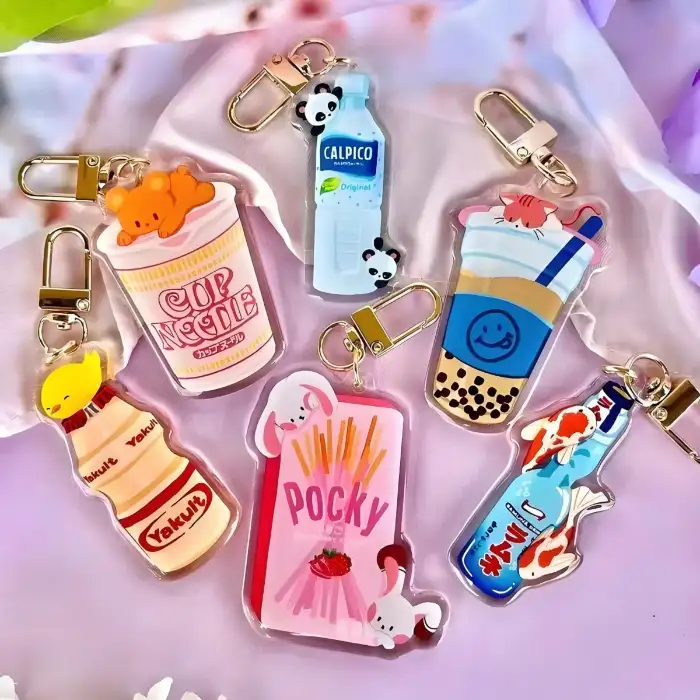
Need gradients, photos, or complex shading? PVC and zinc molds cannot handle these details. Acrylic offers high-fidelity color without expensive setup fees.
Manufacturing & Durability We laser-cut clear sheets and UV print designs directly. This eliminates tooling costs and enables 3–5 day sampling—ideal for fan merch and "Artist Alley" SKUs. While clearer than PVC, acrylic is brittle. Drops on concrete cause cracks, and surfaces scratch easily compared to zinc. We apply peel-off film to every unit to prevent transit damage.
QC Checkpoints
- Registration: Print must align perfectly with cut edges.
- Finish: Edges must be smooth and burr-free.
- Stress: No hairline cracks near the hanging hole.
| Pros | Cons |
|---|---|
| Handles photos & gradients | Surface scratches easily |
| Zero mold tooling costs | Brittle if dropped |
| Fast 3–5 day sampling | Needs protective packaging |
4. Stainless Steel / Aluminum Key Tags (Stamped or Laser-Cut)
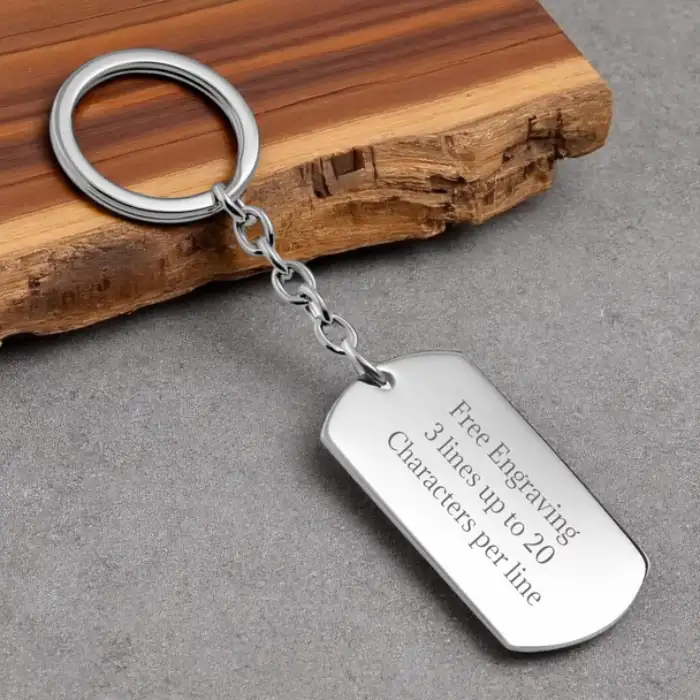
These flat, industrial tags provide maximum durability for minimalist retail and corporate IDs. They survive decades of use without the heavy bulk of zinc alloy.
Manufacturing Process We use progressive die stamping for high volumes (10,000+) to punch shapes instantly. For smaller batches, laser cutting eliminates mold costs entirely. We tumble-finish every batch to remove sharp mechanical burrs before anodizing.
Quality Checkpoints
- Material: Verify Grade 304 stainless steel to prevent rust in humid climates.
- Safety: Edges must be smooth to the touch.
- Marking: Laser depth must pass abrasion tests.
| Pros | Cons |
|---|---|
| Ultra-thin profile | Can scratch screens |
| Permanent legibility | No 3D relief |
| High durability | Industrial feel |
5. Hard Enamel vs. Soft Enamel Keychains
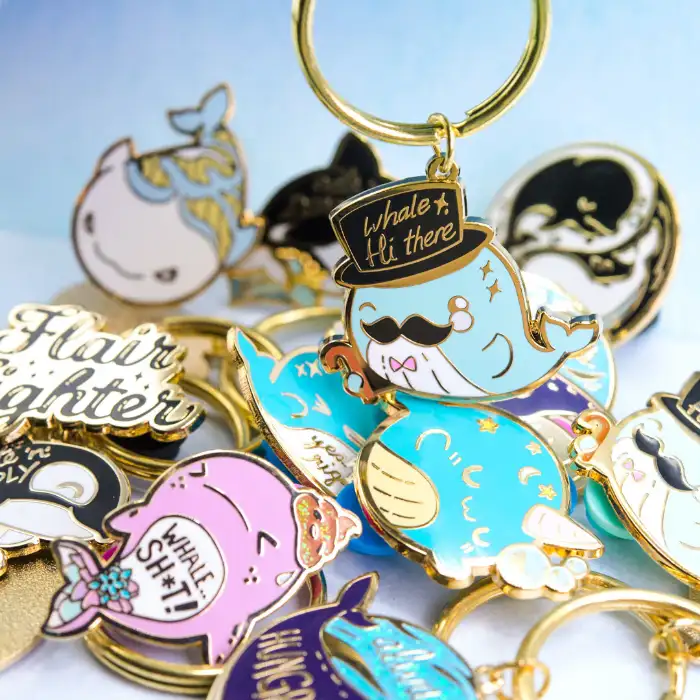
The choice between hard and soft enamel dictates both cost and perceived value. Hard enamel creates a smooth, flush finish ideal for premium collectibles. Soft enamel leaves metal ridges raised for a tactile, textured look suitable for promotional giveaways.
The difference lies in the polish. Hard enamel is overfilled and ground flat; soft enamel fills the recesses, sitting below the metal die lines.
QC Checkpoints:
- Fill Consistency: Reject units where paint dips unevenly.
- Surface: Inspect for air bubbles or plating oxidation.
- Color Match: Verify strictly against Pantone Solid Coated standards.
| Feature | Hard Enamel | Soft Enamel |
|---|---|---|
| Finish | Smooth, jewelry-quality | Textured, recessed |
| Durability | High scratch resistance | Medium wear |
| Cost/Lead | Higher cost (+20%), longer | Lower cost, faster |
6. Silicone Keychains
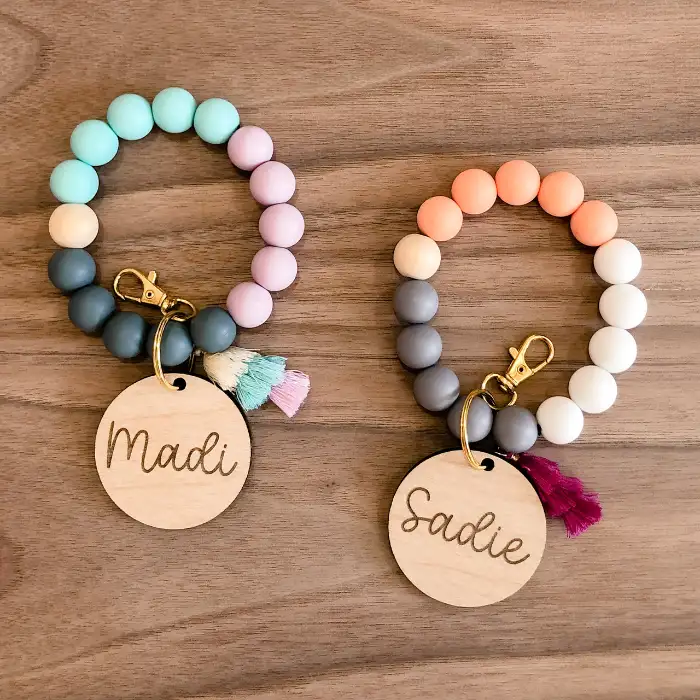
For youth brands and school programs, silicone is the cleaner, safer alternative to PVC. It passes strict safety standards (like CPSIA and EN71) because it uses no phthalate plasticizers.
Manufacturing & Durability We use compression molding. Solid silicone gum is pressed into heated steel molds. This creates a matte, "soft-touch" finish that withstands extreme temperatures.
QC Checkpoints
- Tear Strength: Pull the thinnest section. It must stretch, not snap.
- Print Adhesion: Apply scotch tape over printed areas and rip it off. The ink must stay put.
- Surface: Check for trapped dust.
| Pros | Cons |
|---|---|
| Hypoallergenic & safe | Attracts lint/dust |
| Heat resistant | Higher cost than PVC |
| Premium matte feel | Lower detail resolution |
🚀 Actionable Insight: Specify an "Anti-Static Oil Spray" finish. This invisible coating seals the surface to prevent the keychain from becoming a "lint magnet" after a week of use.
7. ABS / Hard Plastic Keychains
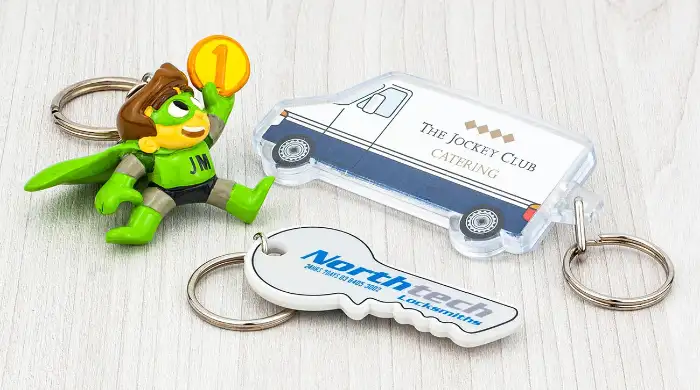
ABS (Acrylonitrile Butadiene Styrene) delivers the 3D detail of metal without the heavy shipping costs. This material is best for rigid brand icons and novelty shapes that require precise dimensions.
Manufacturing & Durability Molten plastic fills steel injection mold tooling to create the base form. Workers then trim flash and apply paint. Unlike soft PVC, ABS holds fine spray details and rigid structure. While lighter than zinc alloy, hard plastic lacks the impact resistance of metal and may crack if dropped.
QC Checkpoints
- Sink Marks: Reject surface depressions caused by uneven cooling.
- Gate Marks: Injection points must be trimmed flush.
- Adhesion: Paint must pass ASTM D3359 cross-hatch tape testing.
| Pros | Cons |
|---|---|
| True 3D rigidity | High mold costs |
| Low unit cost | Impact cracking risk |
| Lightweight shipping | Paint rub-off |
8. Leather Key Fobs (Genuine or PU)
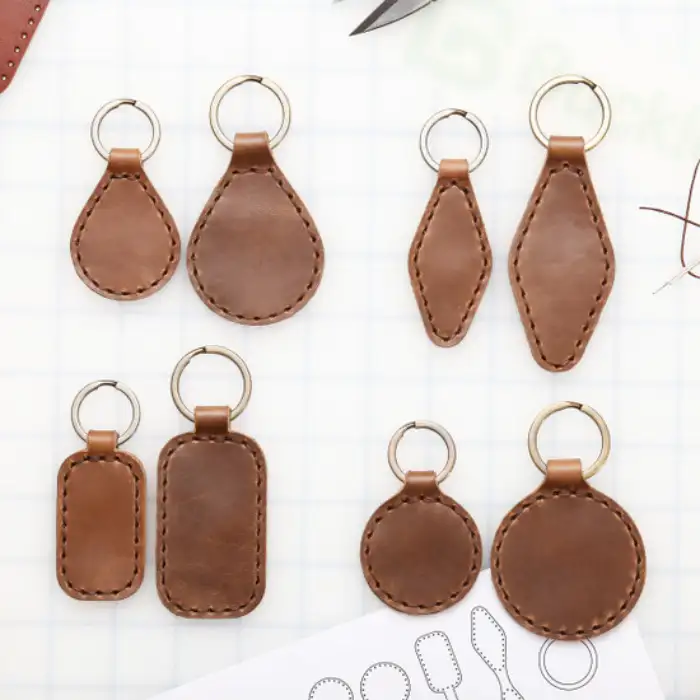
These are the standard for corporate gifting and automotive dealerships where perceived value justifies the cost.
Manufacturing Process We do not mold leather; we build it. Production starts with die-cutting hide or PU sheets, followed by gluing and stitching. The critical quality differentiator is edge finishing: applying multiple coats of paint to seal raw cuts against moisture. For branding, use hot stamping (debossing) to press your logo directly into the fiber. Unlike surface printing, this physical texture never rubs off.
QC Checkpoints
- Edge Flex: Bend the fob 90°. The edge paint must not crack.
- Stitch Tension: Threads must be tight with burnished ends to prevent unraveling.
- Hardware: Rivets must be rust-proof alloy to withstand humidity.
| Feature | Genuine Leather | PU (Faux) Leather |
|---|---|---|
| Feel | Warm, distinct smell | Smooth, uniform |
| Aging | Develops patina | Coating peels over time |
| Cost | High ($2.00+) | Low ($0.50+) |
🔥 Hot Take: Choose "Blind Deboss" over foil stamping. Foil looks premium out of the box but scratches off in a pocket full of keys. A deep, uncolored deboss lasts forever.
9. Embroidered / Woven Fabric Keychains
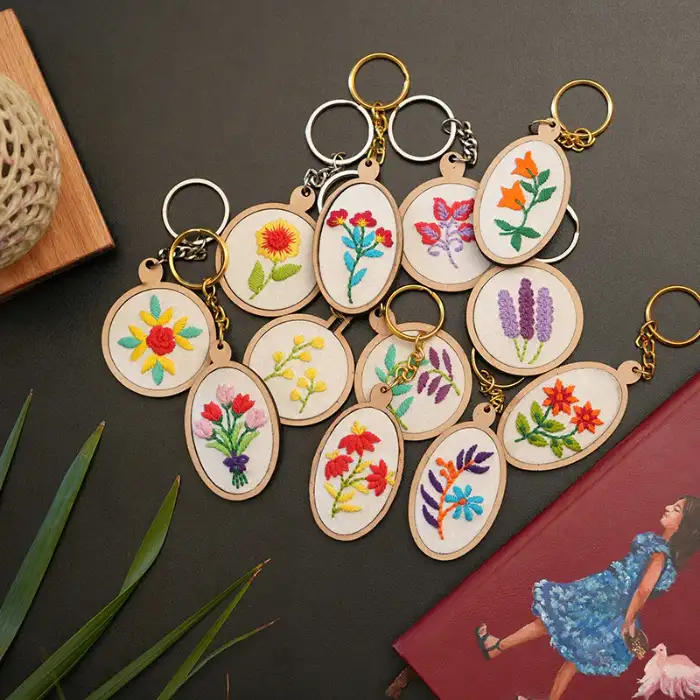
Fabric tags provide the highest logo visibility per dollar. They eliminate the scratching risks of metal, making them standard for aviation, motorsports, and streetwear.
You must choose between two production methods. Embroidery stitches designs on top of a base for 3D texture. Woven integrates threads into the fabric, allowing for sharper detail. Unlike surface printing, dyed threads offer superior colorfastness and longevity.
Edges are the main failure point. Require merrowing (overlock stitching) or hot-knife sealing.
Without this, the tag will unravel. During QC, reject units with loose thread tension or "bird nesting."
| Pros | Cons |
|---|---|
| Ultra-lightweight | Fray risk if poorly sealed |
| High detail (Woven) | Absorbs dirt |
| Maximum branding area | Low physical weight |
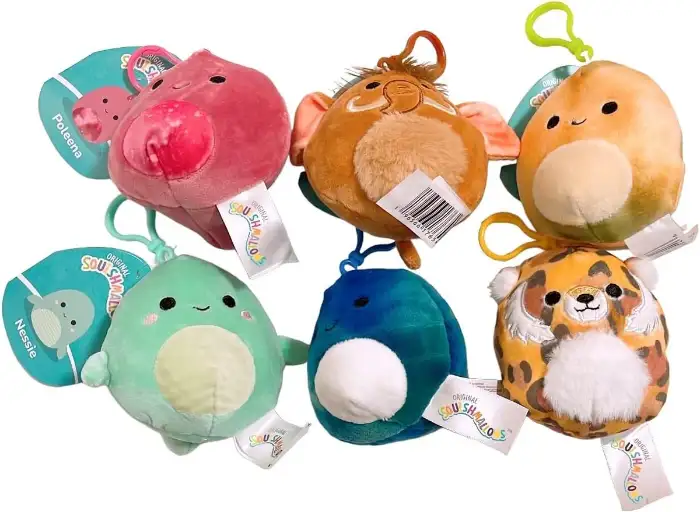
10. Plush Keychains (Mini Stuffed Toys)
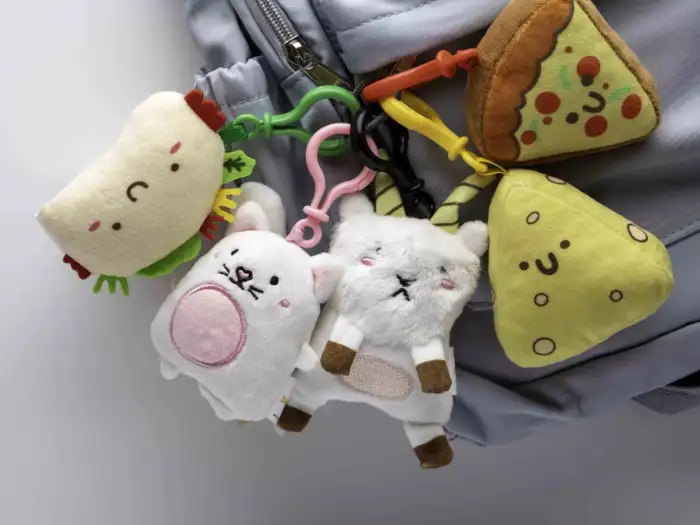
Plush keychains act as effective brand mascots, arcade rewards, and gift-with-purchase items. They offer higher emotional engagement than rigid plastic.
Manufacturing & Durability We cut patterns from velvet fabric, sew, turn, and hand-stuff. Durability depends on the anchor point. Surface loops rip. We sew the attachment deep into the body seam to distribute stress.
QC Checkpoints
- Pull Test: Keyrings must withstand 5kg of force.
- Seams: No bursting under pressure for custom plushies.
- Safety: Zero shedding or small parts.
| Pros | Cons |
|---|---|
| High brand recall | Higher labor costs (Hand-sewn) |
| Tactile & cute | Hard to clean |
| Infinite shapes | Strict compliance testing |
🚀 Actionable Insight: Specify embroidered eyes over plastic. Glued eyes detach and fail safety audits. Embroidered details are permanent, safe for children, and increase perceived quality.
11. Wood Keychains (Laser Engraved or CNC)
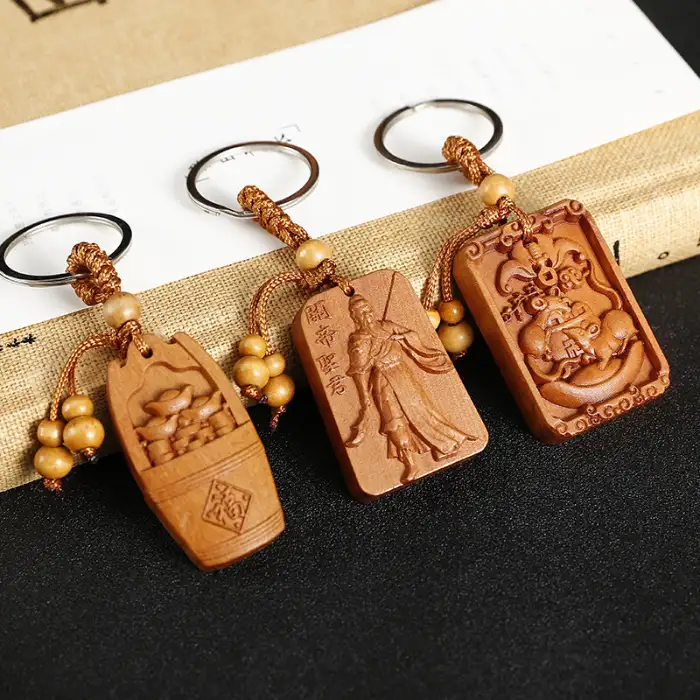
Wood provides a premium, organic feel that plastic cannot fake. This material suits museums, national parks, and brands prioritizing sustainability.
Manufacturing & Durability We select stable hardwoods like maple or bamboo to minimize movement. Designs are applied via laser engraving for dark contrast or CNC routing for 3D depth. Because raw wood acts like a sponge, we seal every unit with a clear matte varnish. Without this barrier, changes in humidity will cause the wood to swell, warp, and crack.
QC Criticals
- Texture: Reject units with splinters or rough sanding.
- Clarity: Ensure natural grain does not obscure the logo.
- Seal: Verify the coating covers all edges to prevent water ingress.
| Pros | Cons |
|---|---|
| Strong eco-friendly story | Vulnerable to humidity |
| Warm, natural hand-feel | Grain color varies |
| High-contrast details | Can crack on impact |
12. Functional Keychains (Bottle Opener, LED, USB, Multi-Tool)
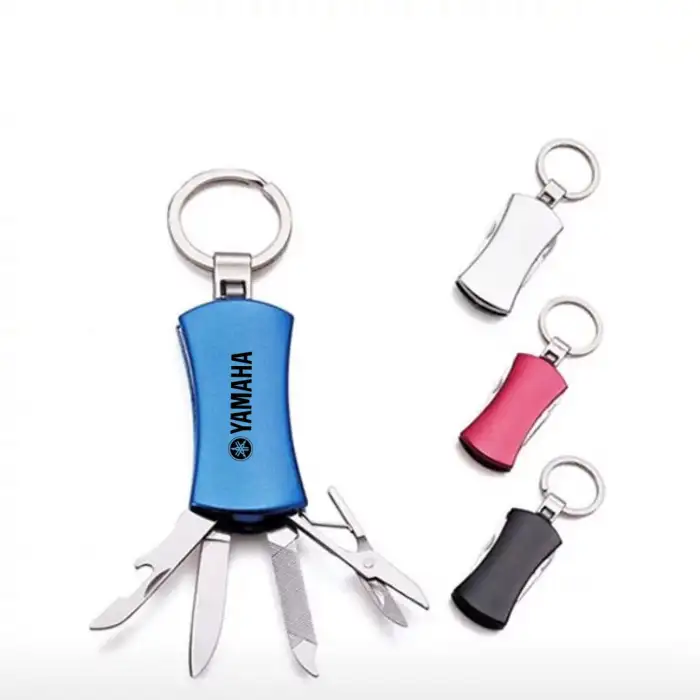
Functional keychains offer high retention because they solve daily problems. They are the strategic choice for bars, outdoor brands, and tech campaigns.
Manufacturing: These are complex assemblies. We mount components—LED modules, flash memory, or blades—into custom zinc or ABS bodies.
Buyer Caution: Utility creates friction. Multi-tools with blades are often restricted at venues. LEDs contain lithium batteries, which trigger strict IATA Dangerous Goods regulations regarding labeling and air freight.
QC Checkpoints:
- Power: Battery pull-tabs are mandatory.
- Mechanics: Hinges must be stiff; USB plugs must sit firm.
- Safety: Opener edges must be deburred.
| Pros | Cons |
|---|---|
| High daily exposure | Higher defect risk |
| Strong differentiation | DG shipping costs |
| High perceived value | Compliance friction |
Your Action Plan: Source Retail-Ready Keychains
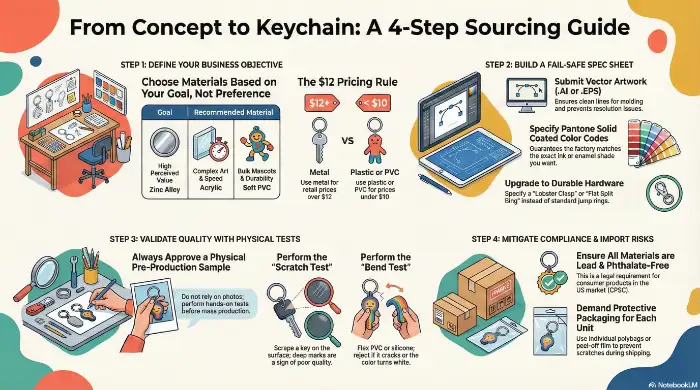
You understand the materials. Now you need a procurement strategy.
Factories will cut corners if you do not provide specific instructions. Use this four-step framework to move from concept to finished inventory without losing money.
Step 1: Define Your Business Objective
Select the material that drives your specific goal. Do not choose based on personal preference alone.
- High Perceived Value: Use Zinc Alloy. The heavy weight justifies a higher retail price point.
- Complex Art & Speed: Use Acrylic. It displays gradients and photos clearly. This method allows for rapid design changes.
- Bulk Mascots: Use Soft PVC. It is durable, cheap, and ideal for custom shapes.
- Tactile Appeal: Use Plush or leather. These materials are soft and safe. If you need a partner for soft goods, verify their expertise. Review our guides on plush toy manufacturers in China or specialized teddy bear manufacturers for miniaturized versions.
The Metal vs. Plastic Rule: Follow this pricing logic. If your retail price exceeds $12, use metal. If the item is a free giveaway or sold under $10, use plastic or PVC.
Step 2: Build a Fail-Safe Spec Sheet
Vague requests lead to bad samples. Create a detailed tech pack to prevent production errors.
- File Formats: Submit vector artwork. Use Adobe Illustrator (.AI) or .EPS files for clear lines. Refer to Adobe's guide on vector graphics to understand why resolution independence matters for molding.
- Color Targets: Do not rely on screen colors. Specify Pantone Solid Coated codes (e.g., PMS 186 C). This ensures the factory matches the exact ink or enamel shade.
- Thickness: Standard thickness is 3mm. Request 4mm for a premium feel.
- Hardware: Avoid standard jump rings. Specify a "Lobster Clasp" or "Flat Split Ring" for durability.
Step 3: Validate Quality With Physical Tests
Approve nothing until you inspect a pre-production sample. Perform these physical tests immediately upon arrival.
- The Scratch Test: Scrape a key across the surface of acrylic or plated metal. Reject the sample if deep marks appear.
- The Bend Test: Flex PVC or silicone parts. If the material turns white or cracks, the quality is too low.
- The Pull Test: Pull the attachment ring firmly. It must withstand roughly 5kg of force without snapping.
Require the factory to send clear photos of the final batch before they ship. For more on vetting partners, read our guide on how to find a toy manufacturer.
Step 4: Mitigate Compliance and Import Risks
Keychains often fall under strict safety regulations. You must ensure compliance to avoid customs seizures.
- Material Safety: Verify your product is lead-free and phthalate-free. This is a legal requirement under the CPSC (Consumer Product Safety Commission) for the US market. Check the CPSC regulatory robot to confirm your specific obligations.
- Protective Packaging: Acrylic scratches during transit. Demand individual polybags or peel-off protective films for every unit.
- Global Logistics: Plan for regional distribution early. We support brands globally, from plush toy manufacturers in Australia to the custom plush toy market in the UK.
Ready to start production? Stop guessing and start building. Get a direct quote for your design today. Contact LeelineToys for a Quote.
People Also Ask About Types of Keychains
1. What is the best material for promotional keychains?
Your choice depends on your target retail price and design complexity. Choose Zinc Alloy for premium items retailing over $15, as the heavy weight suggests high value.
Select Soft PVC for mascots or high-volume giveaways because it is flexible, waterproof, and shatterproof. Use Acrylic only if your design requires gradients or photographic prints. Avoid generic hard plastics for retail products, as they feel cheap and crack easily upon impact.
2. What file specifications do manufacturers need to quote accurately?
You must provide vector files (.AI, .EPS, or .PDF) for any mold-based production. We need mathematical vectors to cut the steel tooling; pixel-based images like JPEGs are unusable for molding.
For complex 3D figures in zinc alloy, provide a .STP or .OBJ 3D model. Always specify colors using the Pantone Matching System (PMS) to ensure the ink matches your brand guidelines exactly.
3. How do I reduce breakage and returns?
The most common failure point is the connection hardware. Standard "jump rings" pull open easily under stress.
To prevent this, specify a flat split ring or a reinforced lobster clasp in your tech pack. For surface protection, require a peel-off film on all acrylic units to stop scratching during transit. For enamel items, adding a clear epoxy dome protects the paint from chipping if the keys are dropped.
4. Can I sell keychains for children in the US or EU?
Yes, but only if you pass strict safety audits. Products intended for children under 12 must comply with CPSIA regulations in the US or EN71 in Europe.
This requires testing for total lead content, phthalates, and sharp edges. You must inform your manufacturer immediately if the end-user is a child so we can use certified non-toxic raw materials and conduct the necessary lab testing.
Stop guessing and start building. Get a direct quote for your design today.