

Very few stuffed animals sold in the United States are sewn there.
Of the eleven companies in this guide, three run real US production: Vermont Teddy Bear cuts, sews and stuffs its Classic line in Shelburne, Vermont; Big Plush makes a 100% Made in USA collection at its South Carolina facility; and Joyus Toyus fills, sews and finishes plush at its Myrtle Beach factory.
The other eight are US-based brands, wholesalers and custom platforms whose plush is manufactured overseas, or whose production location the company does not publish.
Under the FTC's Made in USA standard a product must be "all or virtually all" made in the United States, so imported plush cannot carry that claim. Every entry below is labelled by production route and links to the company's own site.
Last verified: 29 October 2026.
About this guide. LeelineToys is a custom plush factory in Suizhou, China. We publish this guide and we are not on the list.
If a Made in USA claim is a hard requirement for your channel, Group A is where to start. If it is not, the cost comparison further down explains when overseas production makes sense.
Key Takeaways
- Only three of the eleven companies run US production: Vermont Teddy Bear (Classic line, Shelburne, Vermont), Big Plush (select SKUs, Little River, South Carolina) and Joyus Toyus (US finishing, Myrtle Beach, South Carolina).
- The other eight are US-based, not US-made: they are brands, wholesalers or custom platforms whose plush is manufactured overseas, or whose production location is not published.
- "Made in USA" is a legal standard, not a marketing line: under 16 CFR Part 323 a product must be "all or virtually all" made in the United States, so imported plush cannot carry the claim.
- US production costs more: commonly 2–4× the landed cost of comparable Asian production, with US minimums running from single pieces to 1,000+ units.
- Overseas OEMs start lower: commonly 300–500 units for plush, with 5–7 day prototypes and 20–25 day bulk production.
- Verify origin before you pay: ask for the Children's Product Certificate and the test report, then check that the factory name on the report matches the company you are buying from.
The Eleven Companies at a Glance
| Company | Base | Production | Best For |
|---|---|---|---|
| Vermont Teddy Bear | Shelburne, VT | US-made (Classic line) | A genuine US-origin claim on a bear |
| Big Plush | Little River, SC | US-made (select SKUs), US-finished | Large plush, single pieces to short runs |
| Joyus Toyus | Myrtle Beach, SC | US-finished | US finishing and QC on a mixed programme |
| Douglas Cuddle Toys | Keene, NH | Made in Asia | Realistic animals for zoo and museum retail |
| Wild Republic | Independence, OH | Made overseas | Nature and wildlife ranges |
| Budsies / Stuffed Animal Pros | South Florida | Made in China | Artwork-to-plush and small-batch custom |
| The Bear Mill | Dalton Gardens, ID | Made overseas | Build-your-own-bear supplies |
| Plush in a Rush | Dallas, TX | Imported stock | Fast restock of standard plush |
| Fiesta Toy | Vernon, CA | US wholesaler | Seasonal and gift-shop ranges |
| Giftable World | Pomona, CA | US wholesaler, custom | Promotional and classic plush |
| Calplush | Vernon, CA | US wholesaler | Claw machine and carnival prizes |
Group A — Made or Finished in the USA
1. Vermont Teddy Bear
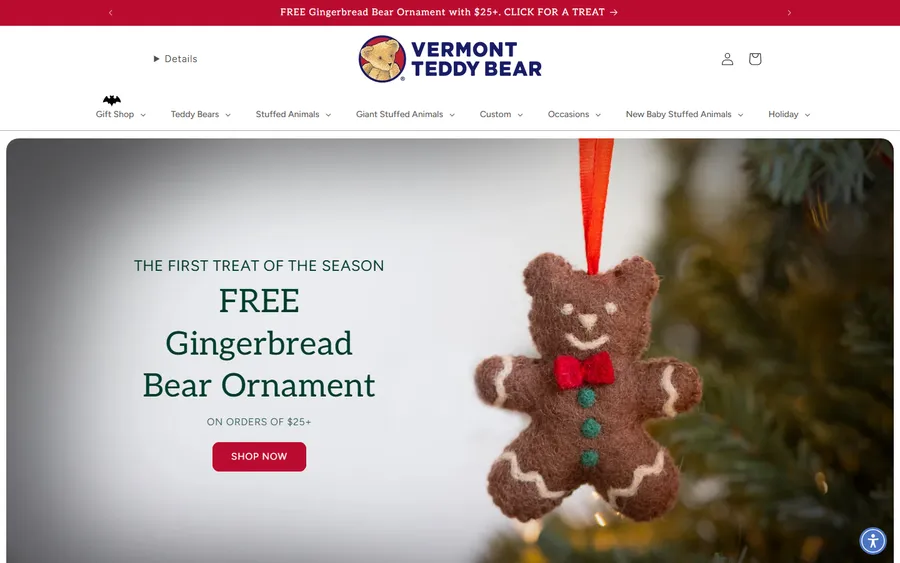
Base: Shelburne, Vermont. Production: two lines, and the difference matters.
Classic bears are cut, sewn, stuffed and stitched at the Shelburne factory. They are identified by their "Born in Vermont" eyes, and the joints, suede details and many furs are US-sourced, though the company notes that some furs come from China.
Hybrid bears — the Lil, Big and Giant Hunka Love lines — are designed in Vermont, cut and partly sewn in China, then stuffed and finished in Shelburne. Outfits and accessories are mostly made overseas.
Buyer note. If a US-origin claim matters, ask for the Classic line specifically and keep the distinction visible in your own product copy. This is a bear specialist.
For a broader custom teddy bear programme, or for other plush shapes and complex construction, the options further down are a better fit.
💡 Pro Tip: Before you approve a sample, ask for a photo of the care label and the "Born in Vermont" eyes. On a Classic bear those two details separate the Shelburne line from the Hybrid line — and that difference decides whether you can print a US-origin claim.
2. Big Plush
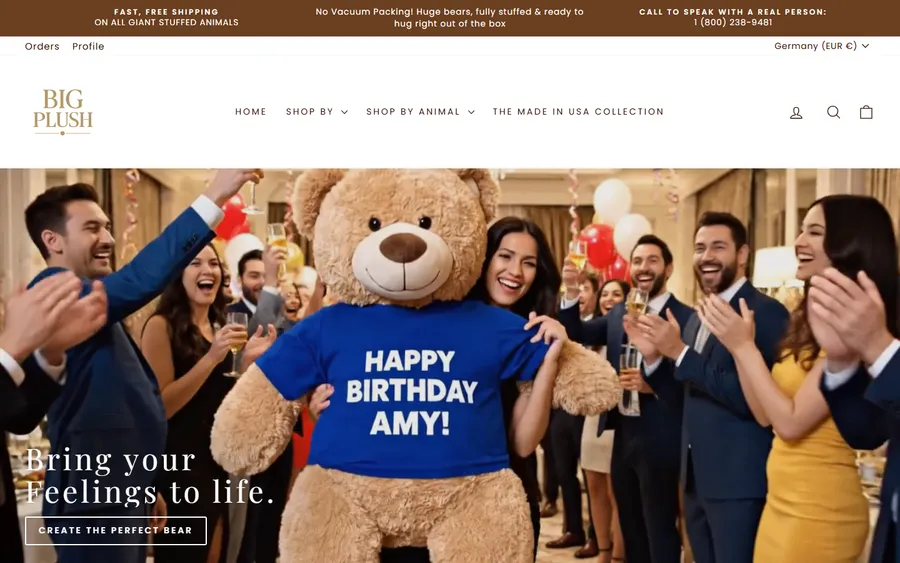
Base: Little River, South Carolina. Production: US manufacturing plus US finishing.
Big Plush manufactures at its South Carolina facility and sells both a 100% Made in USA collection and American-finished options, where imported shells are filled and finished in the US.
Its B2B page states that there is no minimum on commissions and larger production runs, and it runs drop-ship programmes for corporate clients. The range leans large — giant bears and oversized promotional plush.
Buyer note. Ask which collection a given SKU belongs to before you promise a US-made claim to a retailer. The two lines sit side by side on the same site and carry different claims.
3. Joyus Toyus
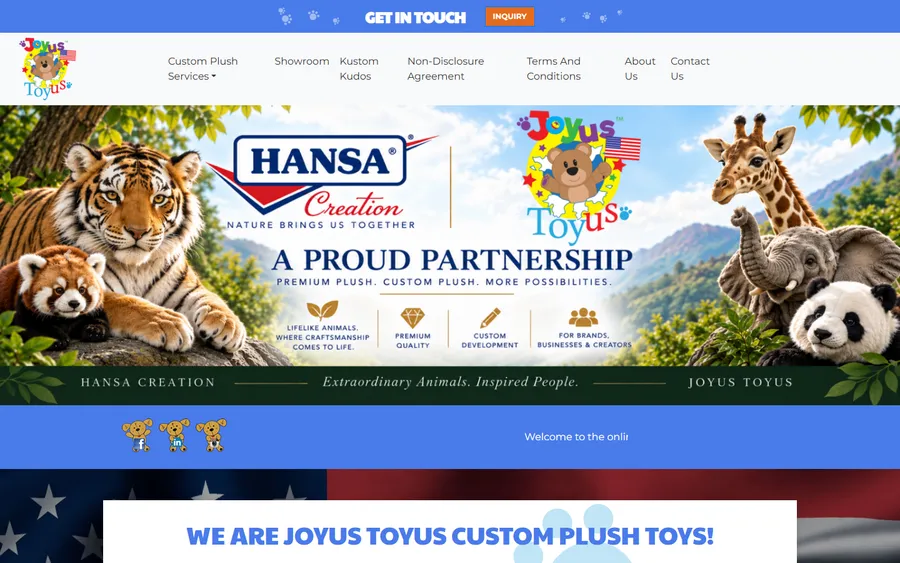
Base: Myrtle Beach, South Carolina. Production: US finishing on offshore shells.
Joyus Toyus runs a US factory that handles filling, sewing, finishing and inspection, working from shells fabricated in China — a China–USA hybrid the company describes openly.
Fully US-made production is, in its own words, generally limited to simpler plush designs. The Myrtle Beach showroom and factory take visits by appointment.
Buyer note. This is the middle path: US finishing and quality control without a fully domestic supply chain. It suits a buyer who wants American finishing but cannot budget a 100% US run.
Group B — US-Based Brands and Suppliers Producing Overseas
The eight companies below are US-based, but their plush is made overseas.
If you want a supplier that runs the whole custom build from the US rather than a US factory, our US plush manufacturer guide explains that route.
4. Douglas Cuddle Toys
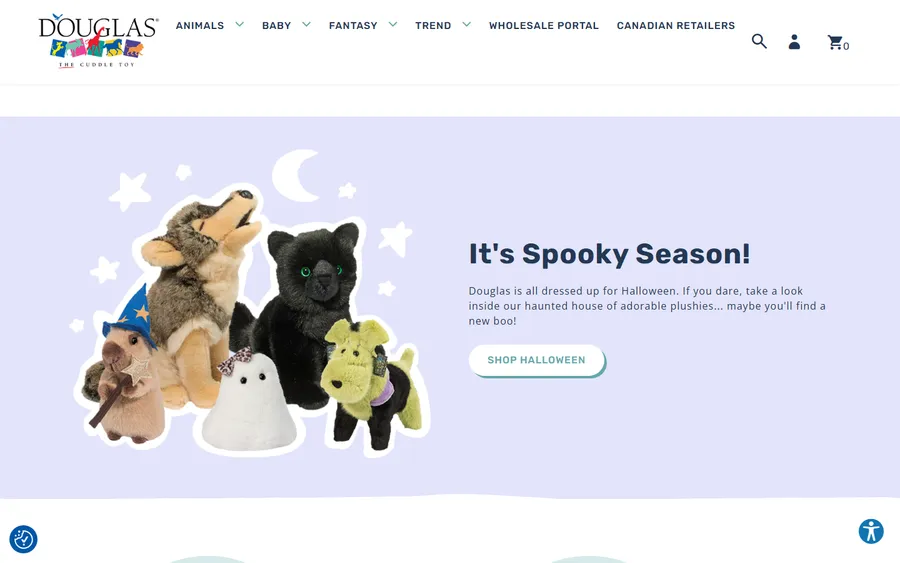
Base: Keene, New Hampshire. Founded: 1956. Production: designed in the US, manufactured in Asia.
Douglas designs in New Hampshire and, in the company's own words, manufactures in Asia to its specifications.
The range is realistic animal plush — more than 100 dog and cat breeds, birds and wildlife — sold through a wholesale catalogue to zoo, aquarium, nature-centre and gift retail. Certification paperwork is supplied to trade buyers on request.
Buyer note. Any list that calls Douglas a US manufacturer is wrong on the factory question. Buy here for the range and the design quality, not for a Made in USA label.
5. Wild Republic
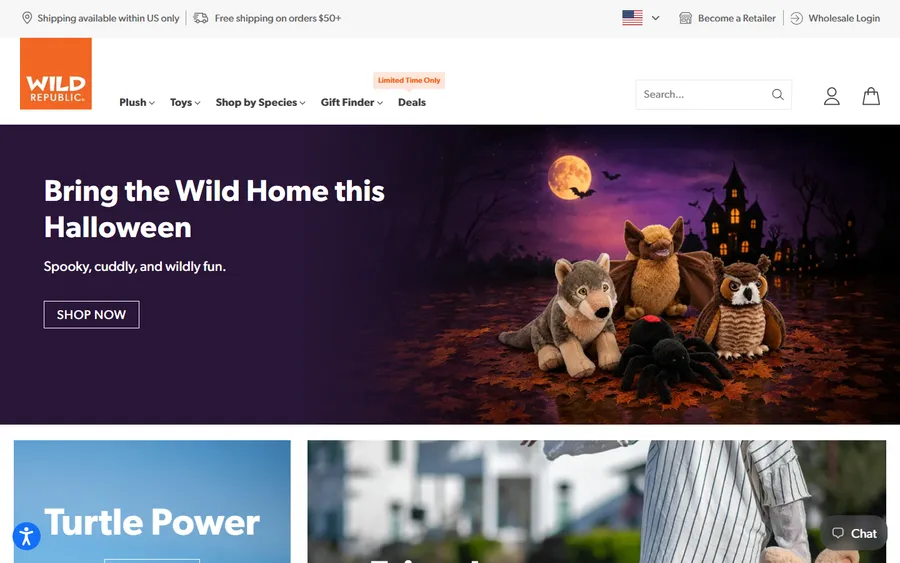
Base: Independence, Ohio. Founded: 1979, as K&M International. Production: overseas.
Wild Republic builds nature-themed plush for zoo, museum, aquarium and gift retail, with a long-standing focus on wildlife education and recycled materials.
Its plush is manufactured overseas; Chinese manufacture appears on recall notices for its products.
Buyer note. Ranges are catalogue-driven. Custom and private-label terms are not published, so confirm them in writing before you plan a branded line around the catalogue.
6. Budsies / Stuffed Animal Pros
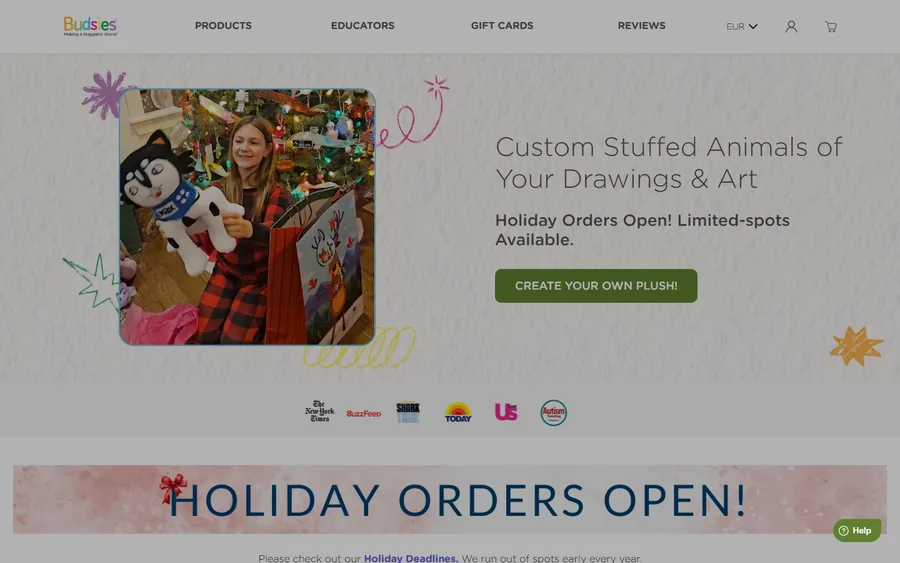
Base: South Florida. Production: designed in the US, cut and sewn in China.
Budsies turns artwork, photos and sketches into one-off plush and runs Petsies for pet replicas. Stuffed Animal Pros is the bulk arm of the same group, handling orders from small quantities up to several thousand.
Both design in the US and, according to Budsies' own help centre, carry out cutting and sewing in their overseas facilities in China. Stuffed Animal Pros describes its US team as the bridge to its overseas production team.
Buyer note. The strongest route here for artwork-to-plush and for testing a design before a larger run. It is not a route to a Made in USA claim.
7. The Bear Mill
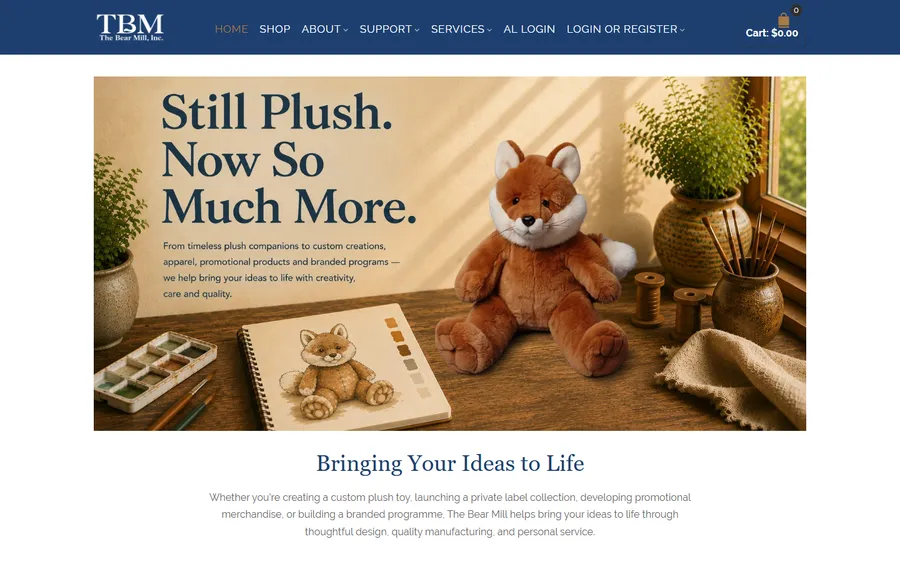
Base: Dalton Gardens, Idaho. Production: overseas.
The Bear Mill supplies the build-your-own-bear trade: unstuffed plush shells, stuffing machines, fibre fill, heart-ceremony accessories and clothing.
Its own FAQ states that it works with a team of suppliers in China that manufactures its products.
Buyer note. If you run stuff-your-own events or a retail experience, this is the specialist supplier. Ask for the factory named on the test report if you need to document origin.
8. Plush in a Rush
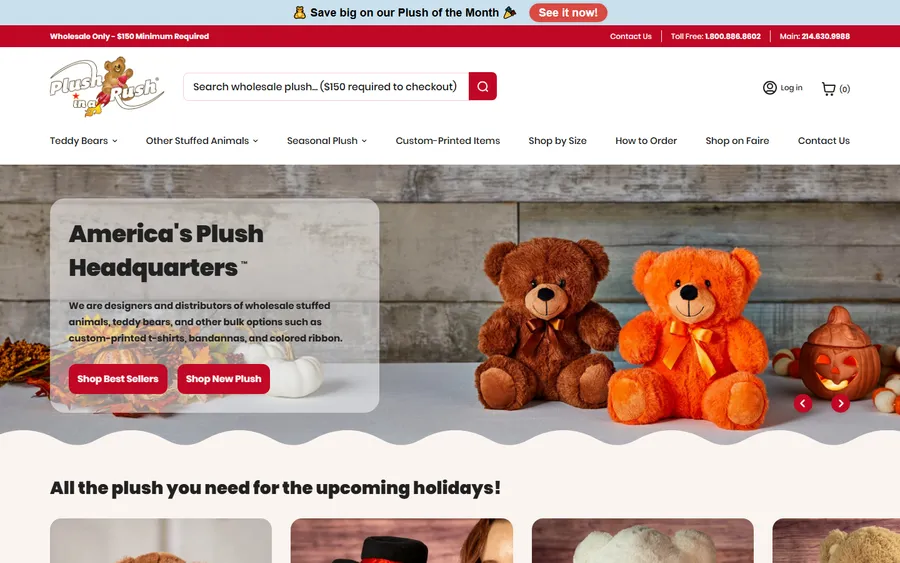
Base: Dallas, Texas. In wholesale since: 1992. Production: imported stock.
Plush in a Rush describes itself as a designer and distributor rather than a factory.
It sells standard plush in case packs with a six-piece minimum per style, offers samples so you can check quality before a larger order, and runs a seven-day return window on stocked items.
Buyer note. Best for restocking standard shapes quickly — claw machines, gift shops, seasonal displays. It is not a custom-development house.
9. Fiesta Toy
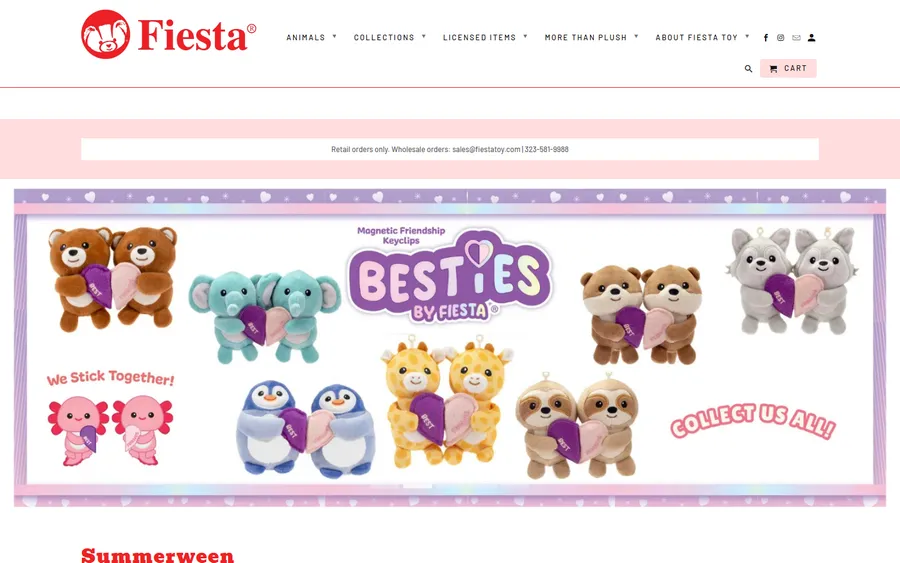
Base: Vernon, California. In wholesale since: 1972. Production: not stated by the company.
Fiesta Toy supplies seasonal and gift-shop plush — bunnies, ducks, frogs and its Lil' Huggy line.
The website sells retail; trade enquiries go through its sales team. The company does not publish where its plush is manufactured.
Buyer note. Ask for the manufacturer named on the Children's Product Certificate before you plan a US-origin claim. For custom development this is a catalogue supplier, not a development partner.
10. Giftable World (Formerly Adorable World)
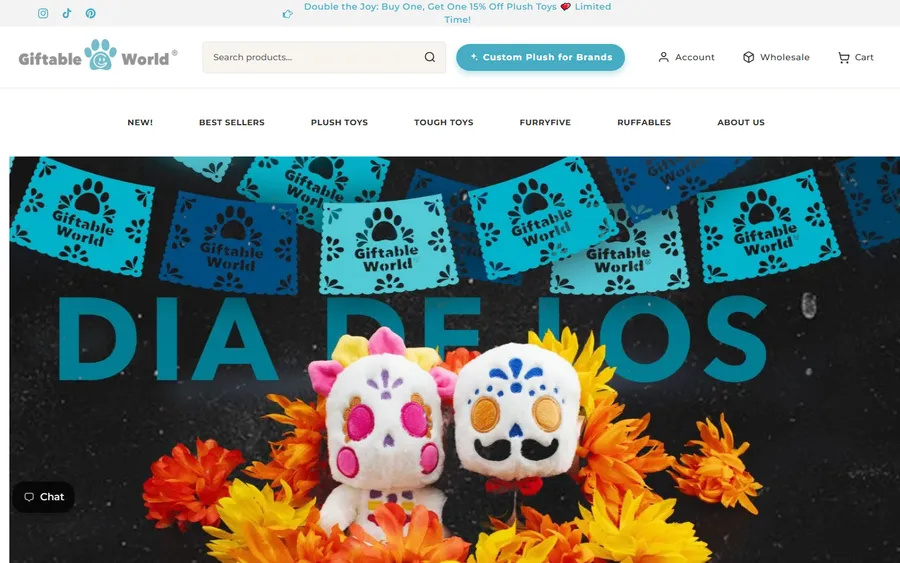
Base: Pomona, California. Production: not stated by the company.
Formerly Adorable World, Giftable World sells more than 300 wholesale plush SKUs and takes on custom design work.
Its homepage calls itself the factory rather than a middleman, but does not state where production takes place. The catalogue runs from keychain-size plush to large bears, with promotional and classic designs.
Buyer note. Worth a quote for promotional plush. Treat the "no middlemen" line as a sales claim until you see the factory named on the certificate.
11. Calplush
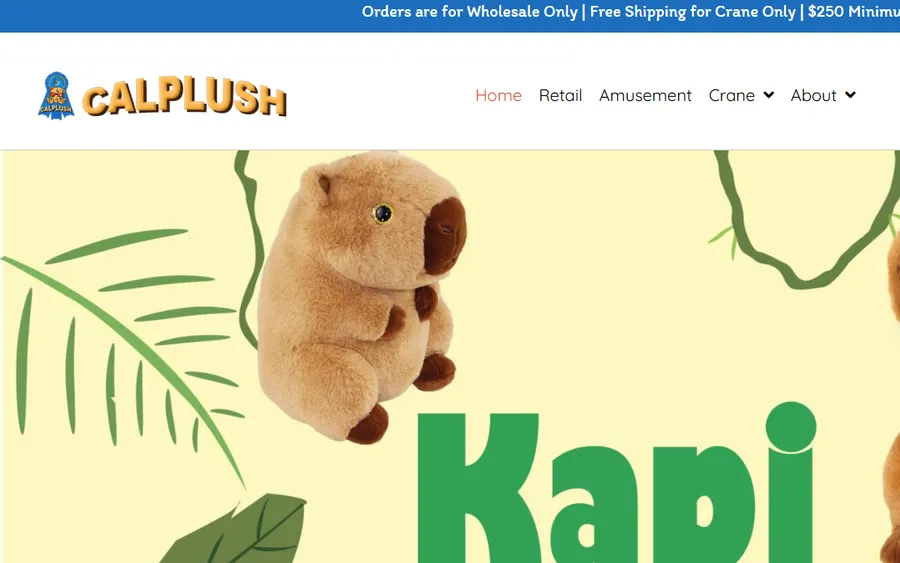
Base: Vernon, California. Production: not stated by the company.
Calplush runs wholesale showrooms in Vernon, supplying claw machines, redemption counters and carnival prize programmes with mixed cases by size, from small plush up to jumbo display pieces.
Sales are to licensed businesses, and it does not publish where its plush is manufactured.
Buyer note. A prize-supply specialist. Suitable for machine restock; not set up as a brand's custom-development partner.
How We Checked Each Company
We opened each company's own website — home page, About page, help centre, and where one existed, its origin or production page — and recorded only what those pages state.
Where a company publishes nothing about where its plush is made, this page says so rather than guessing.
We did not visit the factories and did not order paid samples for this comparison, so nothing here rests on a first-hand factory audit. Test reports and certificates are the only documents that settle the origin question, which is why every entry tells you to ask for them.
🧠 Expert Take: "Manufacturer" on a US plush company's site usually describes who designs and brands the product, not who sews it. The document that settles it is the Children's Product Certificate, because the factory that made the goods has to be named on it.
— Yvonne C., Senior Toy Safety and Compliance Specialist
Our fact-checking process sets out how corrections to this page are handled and dated.
The images in each entry are screenshots of the company's own homepage, captured on 29 October 2026, and remain the property of their respective owners.
Last verified: 29 October 2026. We re-check each company's official site every six months.
What "Made in USA" Actually Means for Plush
The FTC's Made in USA standard requires a product to be "all or virtually all" made in the United States. For plush that is a high bar.
Fabric, fibre fill, safety eyes, thread and hardware all count, and the assembly has to happen domestically too.
A bear designed in New Hampshire and sewn in Asia fails the test no matter how American the brand feels. So does a bear cut in China and only stuffed in the US, unless the finishing work is substantial and the claim is qualified.
Three labels are used in this guide:
- US-made — the company states the product is made in the USA and the product can meet that standard.
- US-finished — offshore shells are filled, sewn or finished in the US. A qualified claim such as "assembled in the USA from imported parts" may be available; an unqualified Made in USA claim is not.
- Made overseas — designed or branded in the US, manufactured elsewhere.
If your retail channel or a licensing contract requires an unqualified claim, only the first label is usable. 16 CFR Part 323 — the Made in USA Labeling Rule →
US Production vs Overseas: Cost, MOQ and Lead Time
Four numbers decide the route: unit cost, minimum order, prototype time and bulk lead time.
Before you compare them, it helps to know what actually drives a custom plush unit cost.
| US production | Overseas OEM | |
|---|---|---|
| Unit cost | Commonly 2–4× the landed cost of comparable Asian production | Baseline |
| Minimum order | Single pieces at some shops; hundreds to 1,000+ for a custom run | Commonly 300–500 units, lower in select categories |
| Prototype | Fast, but limited to shapes the domestic line already handles | 5–7 days for plush |
| Bulk lead time | 4–10 weeks, subject to factory scheduling | 20–25 days production plus freight |
| Origin claim | May qualify for Made in USA | Cannot carry a Made in USA claim |
| Best fit | Premium, licensed or government buyers that require US origin | Brands competing on cost, colour range and construction detail |
Cost and lead-time figures above are industry reference ranges compiled from published supplier information and trade sources.
They are not a LeelineToys quotation. Your actual cost depends on size, fabric, fill, components and order quantity, and is confirmed line by line in a written quote.
💡 Pro Tip: Compare US and overseas quotes on the same specification sheet — size, fabric weight, fill, embroidery stitch count and packaging. A US quote often looks two to four times higher partly because the overseas quote left packaging or testing out.
What US Buyers Need on Paper
US-bound plush for children needs more than a good sample. Passing US toy safety compliance means having four things ready before the first bulk shipment:
- ASTM F963 — the US toy safety specification covering mechanical hazards, flammability and heavy elements.
- CPSIA third-party testing — lead and phthalate limits, tested at an accredited laboratory.
- A Children's Product Certificate (CPC) — issued by the importer or manufacturer, naming the product, the standards and the test lab.
- A permanent tracking label — on the product or its packaging, identifying the batch and the manufacturer.
Also request the test report per SKU rather than only a certificate covering a range, the country-of-origin marking on the care label, and the factory name that appears on the report.
If a supplier cannot show the factory name on the report, the origin question has not been answered.
🧠 Expert Take: Read the manufacturer block on the test report, not the brand name on the invoice. If the name on the CPC does not match the company you are paying, you have bought from a trader, and the origin claim on your listing is not supported.
Companies We Removed, and Why
Earlier versions of this page listed Bobo's Toy & Gift as a California company. It is not.
Bobo's own About page states that it was established in 2014 in Yangzhou, China, and its plush is made there.
A Chinese factory does not belong on a US production list, so it has been removed. If you are comparing Chinese plush factories instead, start with our China plush manufacturer guide. Corrections are listed here rather than quietly deleted.
Overseas OEM Option: LeelineToys (Suizhou, China)
LeelineToys is a custom plush factory in Suizhou, China, and we publish this guide. We run 300–500 unit MOQ on plush — 100 units on vinyl, sensory, fidget and weighted plush — with 5–7 day prototypes and DDP delivery to 45+ countries.
Choose us if cost, low minimums and complex custom construction matter more than a Made in USA label.
Do not choose us if your channel, licence or customer contract requires a US-origin claim. Group A is for that case, and we would rather you start there than discover the gap after a deposit.
FAQs About Stuffed Animal Manufacturers USA
1. Which US Companies Actually Make Stuffed Animals in the USA?
Three of the eleven companies in this guide run US production. Vermont Teddy Bear cuts, sews and stuffs its Classic line in Shelburne, Vermont; Big Plush makes a 100% Made in USA collection at its South Carolina facility; and Joyus Toyus fills and finishes plush at its Myrtle Beach factory.
Fully US-made plush is otherwise limited to simpler designs.
2. Are Douglas Stuffed Animals Made in the USA?
No. Douglas designs its animals in Keene, New Hampshire, and states on its own site that they are manufactured in Asia to its specifications.
The brand and the design work are American; the cut-and-sew work is not.
3. What Does Made in USA Mean for Plush Toys?
Under the FTC standard a product must be all or virtually all made in the United States, including fabric, fill, eyes and hardware.
A bear designed in the US and sewn in Asia does not qualify, and a bear cut overseas and only stuffed in the US cannot carry an unqualified Made in USA claim.
4. What Safety Testing Do Stuffed Animals Need for the US Market?
US-bound plush for children needs ASTM F963 testing, CPSIA third-party testing for lead and phthalates, a Children's Product Certificate naming the standards and the lab, and a permanent tracking label.
Ask for the report per SKU and check that the factory named on the report is the company you are actually buying from.
5. How Much More Does US Production Cost Than Overseas?
US production commonly runs about two to four times the landed cost of comparable Asian production, and the gap widens on complex designs.
The premium buys speed, a US-origin claim and shorter freight, not a better stitch. Ask both routes for a written quote on the same specification before deciding.
6. What Is the Lowest MOQ for Custom Plush?
Some US shops take single pieces for simple shapes, while custom US runs usually start in the hundreds.
Overseas OEMs commonly start at 300 to 500 units, and lower in select categories such as vinyl, sensory, fidget and weighted plush. Fabric minimums are often what pushes a short run up.
7. Where Are Budsies Made?
Budsies designs in the United States and, according to its own help centre, carries out cutting and sewing in its overseas facilities in China.
The finished plush is not made in the USA.
8. How Do I Verify a Factory's Origin Before Paying a Deposit?
Ask for the Children's Product Certificate and the test report, then read the manufacturer name on the report rather than the brand name on the invoice.
Cross-check that name against the factory's own site and against recall notices, and ask for a photo of the care label showing the country of origin. If those three do not agree, stop.
Related Reading
- Teddy bear manufacturers USA: who really makes them
- US plush toy brands and wholesalers
- Types of plush toys explained
- Custom plush manufacturing with LeelineToys
Sources
Company pages were checked on 29 October 2026:
- Vermont Teddy Bear — Where It's Made
- Big Plush — B2B custom plush manufacturing
- Joyus Toyus — Made in USA
- Douglas Cuddle Toys — About us
- Wild Republic — Our story
- Budsies — Help centre: where are Budsies made
- Stuffed Animal Pros — About
- The Bear Mill — FAQ and About us
- Plush in a Rush — About us
- Fiesta Toy — About Fiesta Toy
- Giftable World — giftableworld.com
- Calplush — calplush.com
- US Consumer Product Safety Commission — Children's Product Certificate
- US Federal Trade Commission — 16 CFR Part 323, Made in USA Labeling Rule (eCFR)