
Sourcing inventory based solely on aesthetics creates safety risks and high return rates. You need a catalog strategy built on manufacturing reality. We analyzed the most profitable types of cat toys based on repeat purchase data and production scalability.
This guide details best-selling angles for 2026, specific material durability specs, and compliance frameworks like ASTM F963. Use these factory insights to secure high-margin SKUs that survive actual use.
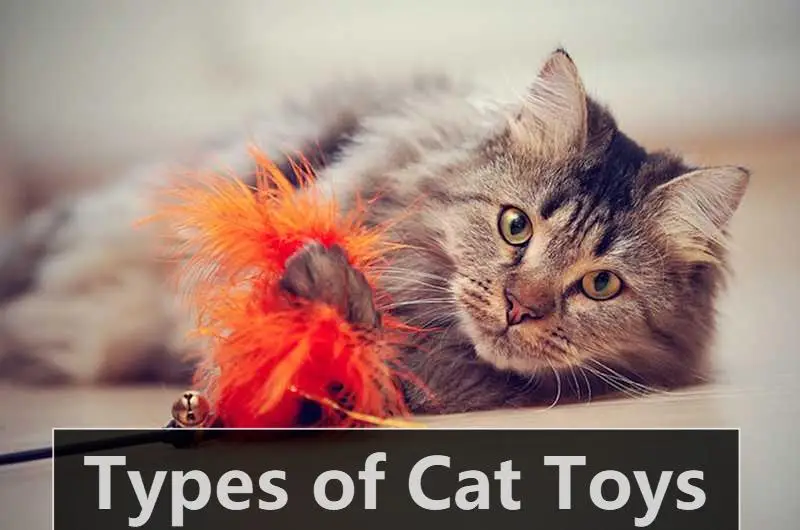
7 Types of Cat Toys
| Toy Category | What It Is | Key Features | Best For |
|---|---|---|---|
| Wand & Teaser Toys | Stick with feathers/ribbons attached | Interactive, replaceable parts, simulates prey | Active play, owner bonding |
| Electronic Motion Toys | Battery-powered moving toys (mice, balls, bugs) | Automatic movement, no supervision needed | Solo play, busy owners |
| Puzzle Feeders & Treat Dispensers | Toys that release food when solved | Slows eating, mental challenge, adjustable difficulty | Weight control, boredom |
| Laser Toys | Laser pointer (manual or automatic) | Light projection, timer settings, exercise | High energy cats, small spaces |
| Ball & Track Toys | Multi-level tracks with enclosed balls | Self-contained, no loose parts, durable | Independent play, all ages |
| Plush Mice & Catnip Toys | Soft toys filled with catnip/crinkle | Lightweight, washable, scent-driven | Comfort play, hunting instinct |
| Scratch-and-Play Toys | Scratching surface + toy combo | Protects furniture, cardboard/sisal options | Nail maintenance, space-saving |
1. Wand & Teaser Toys (Feathers, Ribbons, "Da Bird"-Style)
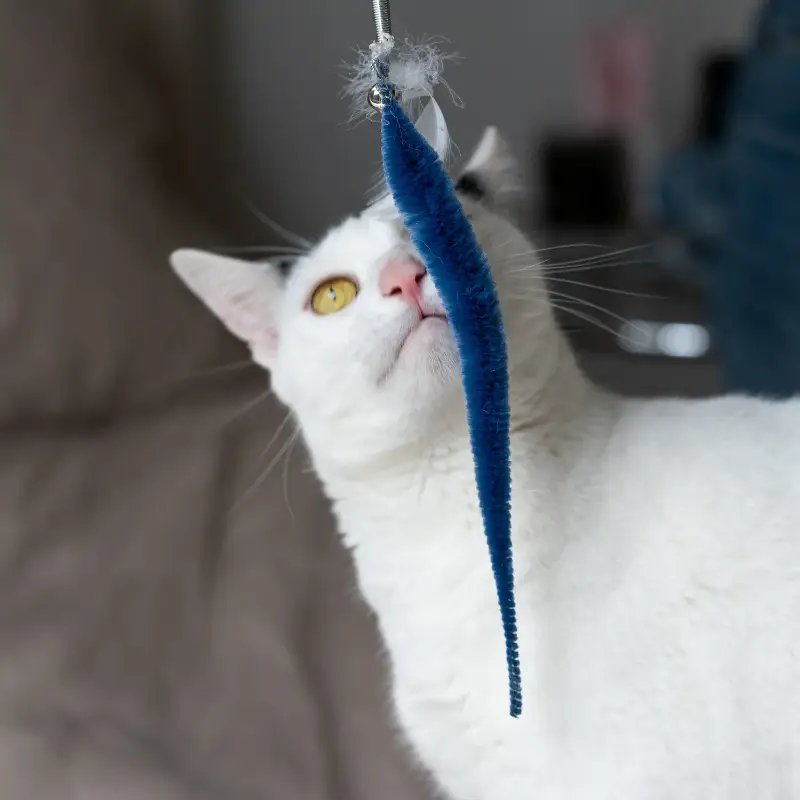
Wand toys generate massive sell-through volume because they are impulse-friendly and demonstrate well in video ads. Since "prey" attachments wear out, they also drive recurring revenue through replacement packs.
But this category carries the highest risk of safety failure. A cheap build leads to snapped rods, ingested components, and 1-star reviews.
Define Your Materials Explicitly
Factory defaults are often the cheapest option, not the most durable. You must specify the exact resin and fiber blend to ensure longevity.
- Rod: Specify fiberglass or carbon fiber. It offers superior "bend memory" and the necessary "whip" action. Standard plastic snaps, and aluminum bends permanently.
- Handle: Use ABS plastic. It feels rigid and premium. Polypropylene (PP) resists fatigue but feels cheap and flexible in the hand.
- Line: Use braided polyester or nylon. Never use thin monofilament (fishing line), which tangles easily and creates a cutting risk.
Factory Insight
The hidden danger in custom cat toy manufacturing is internal metal wire inside the lure. If a cat chews through the plush cover, they can ingest sharp wire or suffer from linear foreign body obstructions.
- Ban internal wires: Require fully encapsulated attachments or wire-free designs.
- Reinforce the anchor: The string attachment fails first. Mandate bar-tack stitching at the connection point.
- Pull Testing: Add a pull test requirement to your spec sheet (standard tension tests often require withstanding 15 lbs of force).
- Packaging: Clearly print "Supervised Play Only" warnings.
🚀 Actionable Insight: Request a "cut-open" inspection during QC. Ask your factory to slice a random finished unit in half on video to prove there is no hidden metal wire inside the prey attachment.
2. Electronic Motion Cat Toys (Robotic Mice, Flutter Bugs, Rolling Balls)
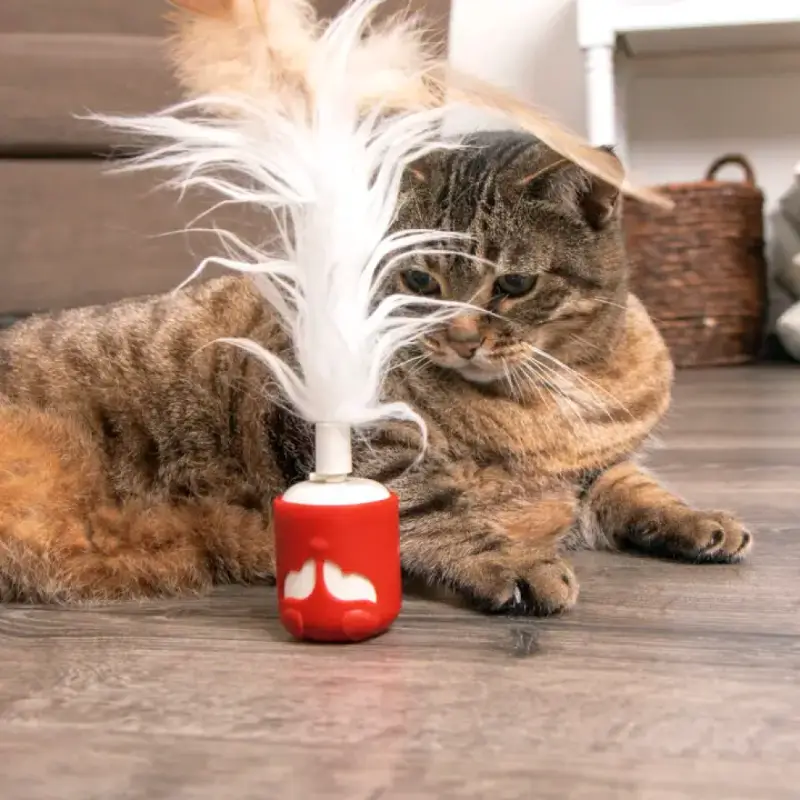
The "solo play" trend defines the 2026 demand pattern. Busy owners need automated solutions to entertain pets while they work, creating a high-margin opening for premium, giftable electronics.
These dynamic toys also generate strong User Generated Content (UGC) for marketing. However, this category carries the highest return risk due to motor burnout and gear failure. You must control the manufacturing specs.
Material Selection Determines Lifespan
- Housing: Specify ABS for crisp detail and a premium surface that accepts paint well. Use PP (Polypropylene) only for impact resistance on drop-prone items.
- Gears: Demand POM (Acetal) or Nylon. Standard plastics strip immediately when a cat physically stalls the motor.
- Safety: Battery doors require captive screws. This prevents choking hazards and aligns with ASTM F963 safety standards for accessible batteries.
Factory Insight
Electronics require more than a visual check. You must mandate the following:
- 100% Functional Test: Verify motor start/stop, sensor response, and charging on every unit.
- Burn-In Protocol: Run 5% of the batch continuously for 4 hours. This catches early PCB overheating and thermal shutdowns.
- Documentation: Secure RoHS (hazardous substances) and EMC reports. US Customs and Border Protection can seize electronics lacking compliance data.
If you need help vetting suppliers, read our guide on how to find the right factory.
3. Cat Puzzle Feeders & Treat-Dispensing Toys (Bulk-Friendly Enrichment)
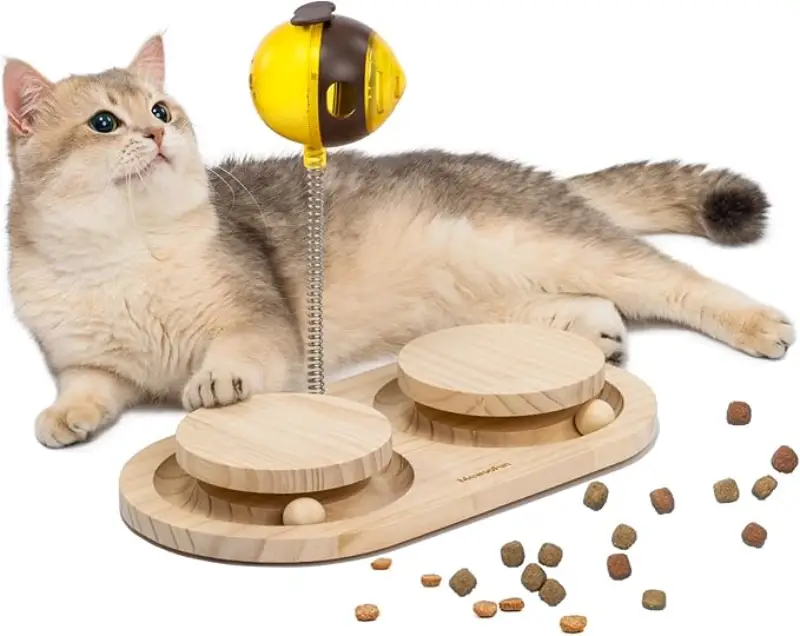
Stocking puzzle feeders isn't just about play—it is a strategy to boost Average Order Value (AOV). These products solve two major owner pain points: boredom and obesity, a condition affecting nearly 60% of domestic cats. This clear utility drives cross-sells with high-margin consumables like freeze-dried treats or specialized kibble.
Material Specs: Food Safety is Non-Negotiable
Since these toys touch food, your material choices must pass FDA food-contact standards.
- Food-Contact Plastics: Specify Polypropylene (PP) for the main body. It is tough, food-safe, and supports "living hinges" (flip lids) that won't snap after a week. Use ABS only for rigid bases requiring high-gloss detail.
- Non-Slip Solutions: Thermoplastic Rubber (TPR) is your cost-effective winner. It bonds directly to the base during molding. Silicone pads feel premium but require manual gluing, which spikes labor costs.
- Natural Options: If you choose wood or bamboo, demand a certified food-grade sealant. Unsealed wood absorbs saliva, breeds bacteria, and guarantees returns.
Factory Insight: Durability & Safety
Don't rely on generic quality checks. You need a specific testing protocol for enrichment toys.
- Bite Resistance: Cats gnaw on protruding pegs. Mandate a torque/pull test on all sliders. If a peg snaps, it is a recall-level choking hazard.
- Hygiene: Run repeated dishwasher cycles to verify label adhesion and colorfastness.
- Flash Removal: Complex molds often leave "flash" (excess sharp plastic) on edges. Define a strict "zero flash" tolerance to prevent tongue cuts.
Logistics & Sourcing
Shipping air kills margins. When you source cat puzzle feeders bulk or negotiate wholesale MOQs, prioritize modular designs that nest. Buyers need a category spec that avoids cracking complaints and supports private labeling with consistent tolerances.
⚡ Power Move: Request a "drop test" sample. Fill the feeder with kibble and drop it from 1 meter. If the hinge cracks or the lid flies open instantly, reject the mold design.
4. Laser Toys for Cats (Manual + Automatic)
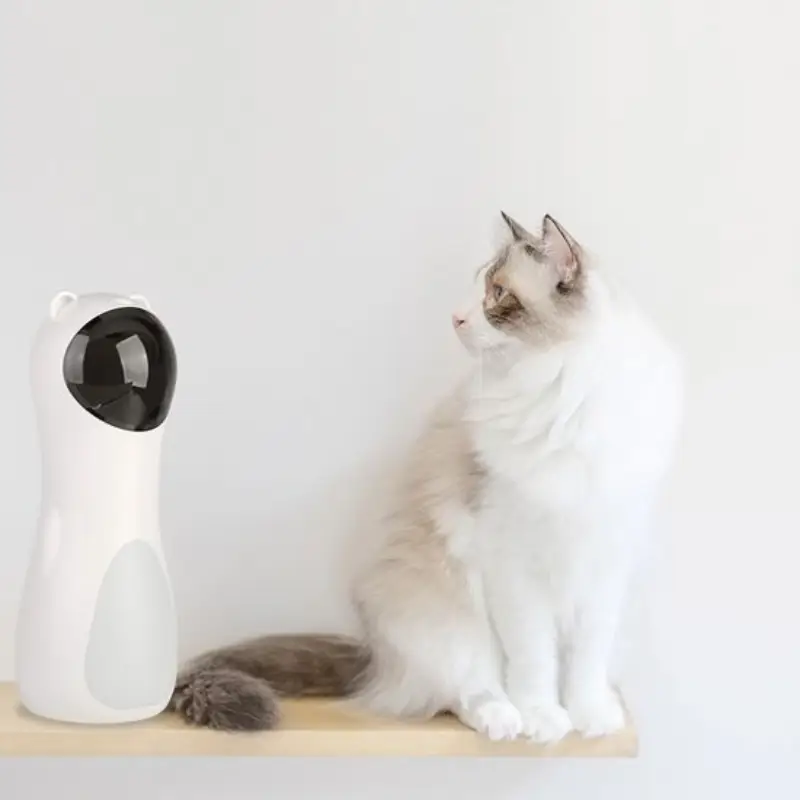
Retailers stock laser toys for their tiny footprint, low shipping costs, and high margin density. They promise "instant play," but safety concerns often drive negative reviews. You can keep the category profitable by engineering safety directly into the build.
Safety & Compliance Strategy
Direct eye exposure creates liability. Adhere to FDA laser safety regulations by including visible warnings on the device.
Address "uncatchable prey" frustration by detailing a "completion loop" in your manual: advise ending sessions with a physical treat to reduce pet anxiety. For automatic units, mechanically lock the vertical angle to keep beams low and away from faces.
Material & Build Specs
- Handheld Shells: Specify ABS. Its higher density provides a sturdy, premium feel compared to hollow-feeling polystyrene.
- Automatic Units: Use PP (Polypropylene). It flexes rather than shatters when kicked or dropped on hard floors.
- Switches: Cheap tact switches fail fast. Demand a cycle life test of 5,000+ clicks to prevent early returns.
Factory Insight: Sourcing for Compliance
The laser diode is your critical control point. Unregulated suppliers often swap in industrial diodes that exceed safe limits.
Require incoming inspection to ensure diodes meet laser toys for cats safety standards (typically Class 2, <1mW, per IEC 60825-1). Ensure battery compartments are screw-secured to meet ASTM F963 battery safety requirements.
5. Ball & Track / Circuit Toys
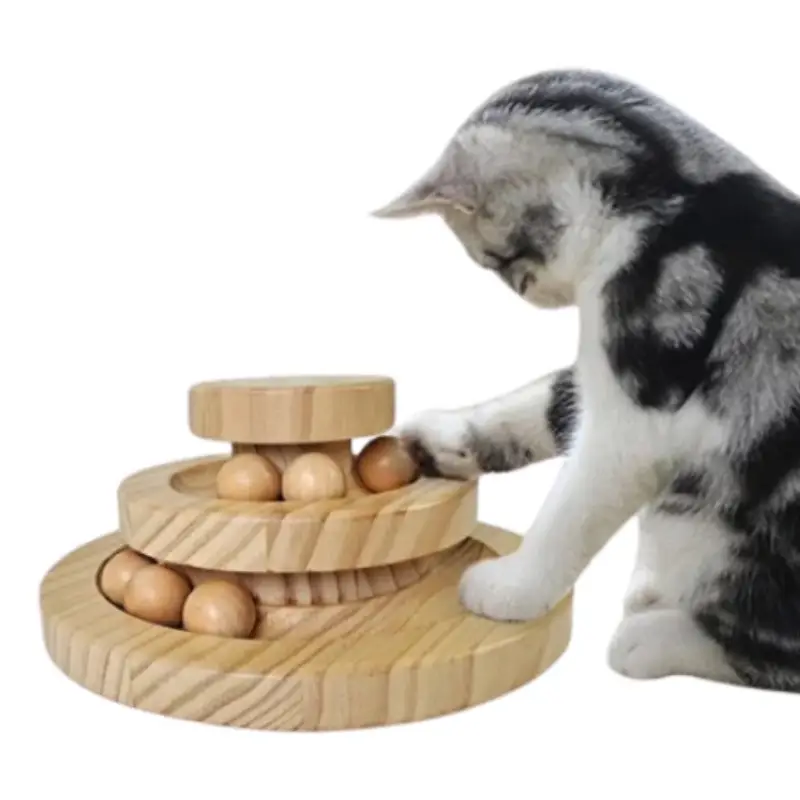
This category generates consistent volume without the headache of battery returns. It appeals to owners of inactive cats and multi-cat households because it offers independent play. However, engineering flaws—specifically balls popping out or jamming—can quickly turn this staple product into a 1-star review magnet.
Materials & Engineering Choices
Your choice of plastic defines the price point and longevity.
- Track Base: Use PP (Polypropylene) for impact resistance and flex at mass-market prices. Upgrade to ABS for thicker walls and a crisper, heavier feel.
- The Ball: Specify ABS or PP shells with an internal rattle. Ensure the sphere is fully sealed to prevent choking hazards; avoid external detachable bells.
- Anti-Slip: Specify TPR (Thermoplastic Rubber) feet. Cheap foam stickers slide on hard floors, while TPR provides actual grip.
Factory Insight: Durability Testing
The "tolerance gap" is your biggest risk. This is the space that holds the ball inside the track.
- Fit & Tolerance: If the gap is too wide, the ball pops out. If too tight, it jams. Require functional testing on 10% of the batch to ensure smooth rolling.
- Impact Testing: Stacked tracks often crack at connection tabs. Demand drop tests for fully assembled units.
- Edge Finishing: Molding "flash" (excess plastic) cuts paw pads. Mandate inspection of all gate points to comply with sharp edge safety standards.
Logistics Note
Shipping air destroys margins. Bulky tracks trigger high volumetric freight costs.
Prioritize designs where tracks nest inside each other. This efficiency can reduce landed costs by up to 20%.
6. Plush Mice, Kickers & Catnip Toys
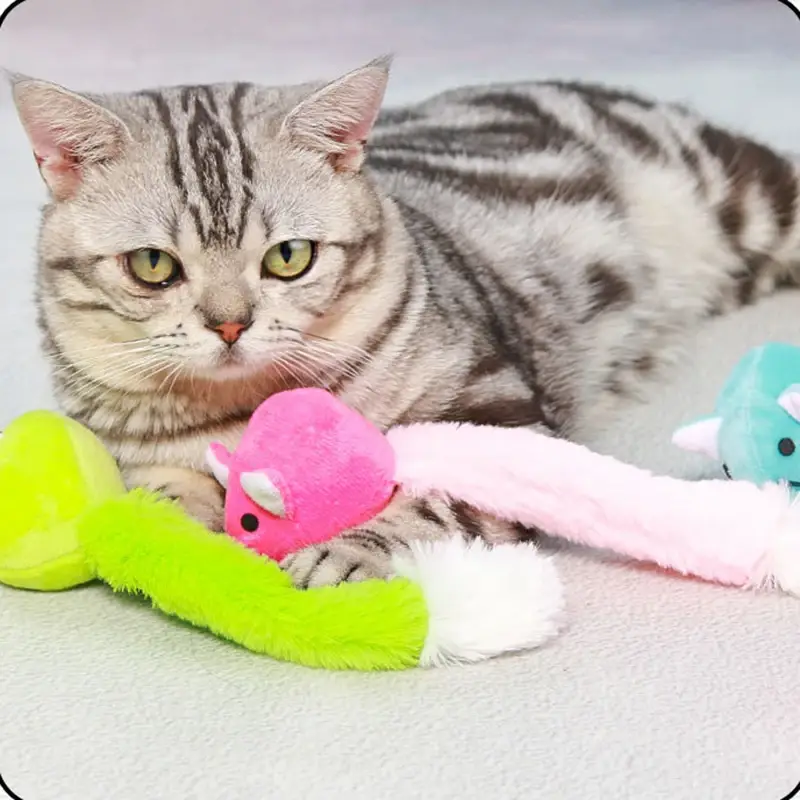
Retailers rely on plush toys to drive volume. They offer low unit costs, endless design variants, and work perfectly for "buy 3, save" bundles or holiday stocking stuffers.
But cheap manufacturing creates expensive returns. If a factory ignores seam allowance or uses low-density fabric, the toy sheds or tears within minutes.
Materials Expertise: Specify the Build
Do not settle for generic material specifications.
- Fabric density: Specify high GSM (Grams per Square Meter). Tightly woven fabrics like canvas or heavy polyester withstand claws; low-GSM velour tears instantly.
- The Fill: Standard PP cotton works for budget lines. For premium positioning, specify GRS-certified recycled polyester. It validates eco-friendly marketing claims based on global recycling standards.
- Catnip containment: Loose fill leaks and creates mess. Require a stitched inner cotton pouch or a secure refillable mechanism to keep the herb contained.
Factory Insight: Safety & Durability
Safety failures here usually involve choking hazards or toxicity.
- Reinforced seams: Standard running stitches fail under pressure. Mandate a backstitch on all closing seams. Verify durability with tension testing on high-stress zones like ears and tails, consistent with ASTM F963 tension standards.
- Small parts: Ban plastic safety eyes. Embroidery eliminates choking risks and lowers your liability.
- Chemical safety: Cats lick toys wet. Test for colorfastness and AZO-free dyes to ensure prints do not bleed or release toxins when exposed to saliva.
If you need a partner who understands these safety nuances, explore our specific capabilities as plush toy manufacturers in China.
🚀 Actionable Insight: Require a seam tension test (15 lbs pull force) and a torque test for any attached parts. If the factory cannot provide a pass/fail report for these stress tests, they are not building for pets.
7. Scratch-and-Play Toys (Cardboard, Sisal, Combo Designs)
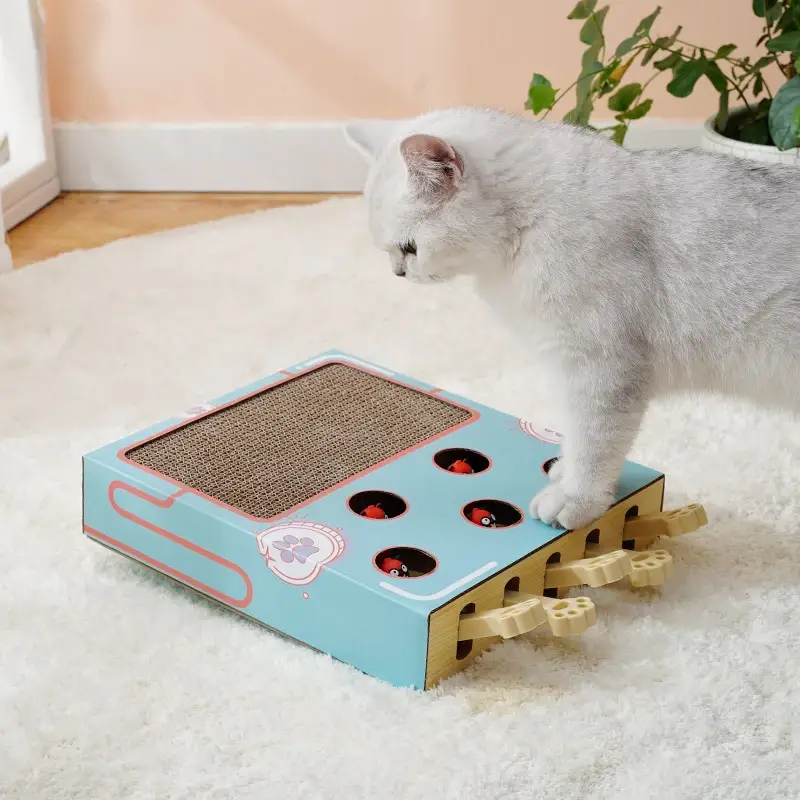
Scratchers act as consumable "couch insurance," creating a subscription-like replacement cycle. However, customers expect these products to last weeks, not days. Profitability relies strictly on material density and damage-proof logistics.
Material & Durability Specs
- Corrugated Density: Specify BB Flute or high-density board. Low-density options shred instantly, leaving debris on floors and causing negative reviews.
- Adhesive Chemistry: Industrial glue odors repel cats. Mandate cornstarch-based adhesives to ensure safety and product acceptance.
- Sisal Tension: Manual wrapping results in loose ropes that snag claws. Require mechanical winding to ensure consistent, tight application that resists unraveling.
- Frames: Use PP/ABS for "turbo scratcher" tracks; wood bases must be sanded and sealed to prevent splintering.
Factory Insight: QC & Safety
- Safety Compliance: Exposed staples are a severe hazard. Enforce staple-free assembly compliant with ASTM F963 safety standards, utilizing hidden mechanical fasteners or non-toxic glue instead.
- Edge Finishing: Ragged die-cut edges indicate dull tooling and can cut paws; inspect samples for clean, smooth cuts.
- Transit Protection: Cardboard corners crush easily. Standard polybags fail here—require shrink-wrap for dust control and reinforced corner guards in master cartons.
Expand Your Catalog
How to Build a Safe Supply Chain: A Retailer's Action Plan
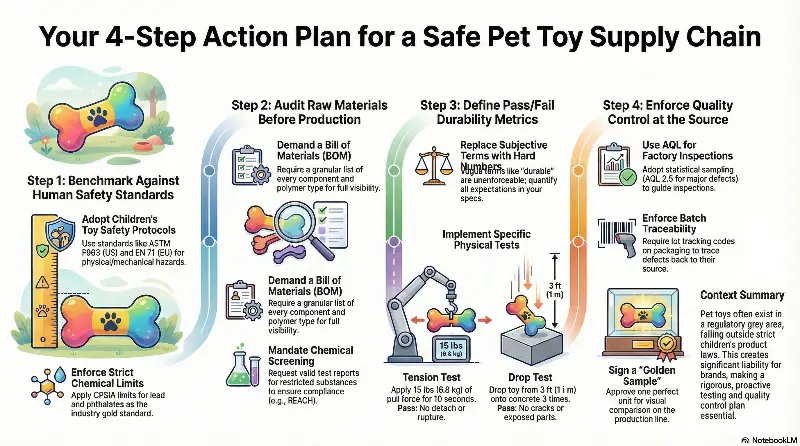
Pet toys often fall into a regulatory gap. Most jurisdictions classify them as general consumer goods rather than strictly regulated children's products.
This lack of clear legal definition creates significant liability for brands. Do not rely on a factory's verbal assurance of safety. Implement a rigorous testing framework to prevent recalls and protect your customers.
Step 1: Benchmark Against Human Safety Standards
Specify exact standards in your Purchase Order (PO). Use established protocols for children's toys as your baseline for mechanical and chemical safety.
- Reference ASTM F963: Use the ASTM F963 Standard Consumer Safety Specification as your primary guide for physical hazards in the US market. Apply its "small parts cylinder" test to determine choking risks for cats.
- Cite EN 71 Standards: Apply the EN 71 mechanical and physical properties benchmarks mandated by the EU Toy Safety Directive. This outlines precise torque and tension methods to ensure parts do not detach during play.
- Adopt CPSIA Limits: Enforce the lead and phthalate restrictions mandated by the Consumer Product Safety Improvement Act (CPSIA). While this law targets children's products, it serves as the industry gold standard for non-toxic pet supply chains.
Step 2: Audit Raw Materials Before Production
Control your inputs to guarantee safe outputs. You cannot verify compliance without full visibility into the material supply chain.
- Require a Bill of Materials (BOM): Demand a granular list of every component. Distinguish clearly between polymer types like ABS, PP, and PVC.
- Mandate Chemical Screening: Request valid test reports for restricted substances. Ensure materials meet REACH Regulation requirements if selling in the EU. Verify fiber content for all plush fabrics to avoid mislabeling penalties.
Step 3: Define Pass/Fail Durability Metrics
Subjective terms like "strong" or "durable" fail in quality disputes. Quantify your expectations in the product specification sheet.
- Perform Tension Tests: Attach a force gauge to feathers, bells, or tails. Apply 15 lbs (6.8 kg) of pull force for 10 seconds. Reject any unit where the component detaches or the seam ruptures.
- Conduct Drop Tests: Drop rigid plastic toys from a height of 3 feet (1 meter) onto a concrete surface. Repeat this cycle three times. Fail the lot if the casing cracks, creates sharp edges, or exposes the battery compartment.
- Test Seam Strength: Apply pressure to plush seams. Ensure the filling remains inaccessible to prevent ingestion hazards.
Step 4: Enforce Quality Control at the Source
Catch defects before they leave the factory floor. Returns and customs delays destroy net margins.
- Use AQL Inspection Tables: Adopt the ISO 2859-1 sampling procedures. Set an Acceptable Quality Limit (AQL) of 2.5 for major defects. This statistical method tells your inspector exactly how many random units to test per batch.
- Require Batch Traceability: Enforce lot tracking codes on all packaging. You must be able to trace a defective unit back to its specific production date and raw material batch.
- Sign a Golden Sample: Approve one final "perfect" unit before mass production begins. Instruct the factory to keep this sample on the production line for visual comparison.
Partnering with a manufacturer who understands these engineering requirements reduces your risk.
Contact LeelineToys for a Quote
FAQs About Types of Cat Toys
1. What are the best-selling cat toy types in 2026 for retailers?
High-volume inventories currently rely on a mix of high-turnover consumables and high-ticket hardware. Interactive wands drive volume through repeat purchases of replacement lures.
Enrichment feeders and hands-free electronic toys (smart balls, lasers) drive higher Average Order Value (AOV) by targeting the "guilt-free" ownership trend. A balanced assortment strategy uses a "Good/Better/Best" price ladder: stock simple plush mice as impulse buys (Good), wand toys as staples (Better), and robotic feeders as premium gifts (Best).
2. What should I ask a cat wand manufacturer to prove durability?
Do not rely on photos. Require these three specific validation points in your Request for Quotation (RFQ):· Reinforced Stitching: Demand bar-tack stitching at the connector loop to prevent snapping.· Pull Test Data: Request a lab report showing the attachment withstands 15 lbs (6.8 kg) of static tension.· Internal Safety Check: Explicitly ban internal metal wires in plush attachments. Ask for a "cut sample" video where a random unit is sliced open to prove the core is soft and safe.
3. Do I need CPSIA / ASTM F963 / EN71 tests for pet toys?
While pet toys often fall into a regulatory grey area compared to children's products, successful brands treat these tests as mandatory. Major retailers (Target, Chewy) and marketplaces (Amazon) frequently demand ASTM F963 (US) or EN71 (EU) compliance documents to mitigate liability. Even if not legally forced, you should maintain a technical file proving your materials are free from lead, phthalates, and heavy metals to survive insurance audits and customer safety inquiries.