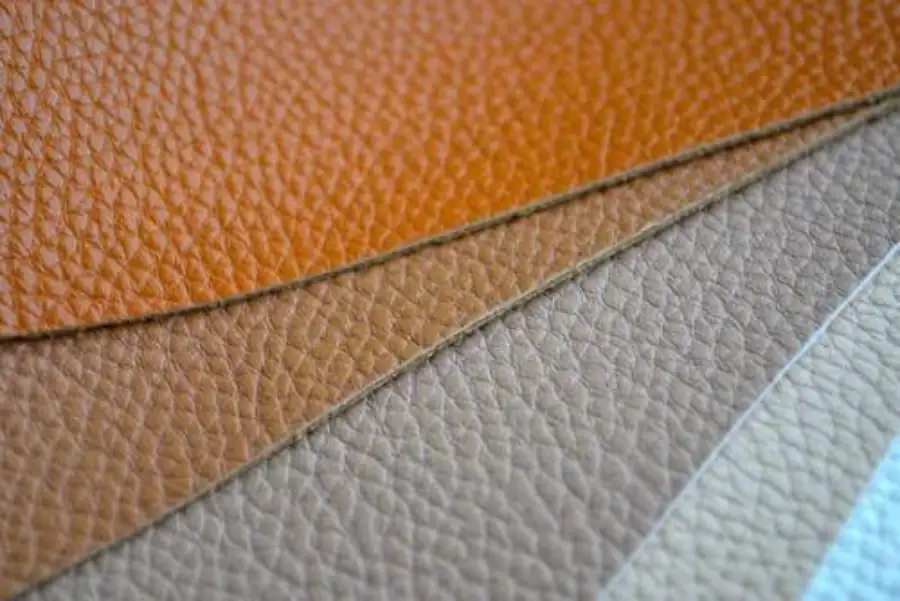

Your plush toy business is in a bind. Customers want toys that look premium and are eco-friendly.
However, using real leather will blow your budget and delay production. You need a material solution that balances quality, cost, and brand appeal. It should also protect your profit margins and keep your supply chain reliable.
Enter PU leather fabric—the game-changer revolutionizing toy manufacturing globally. This innovative material provides the high-end look and strength of real leather but at a much lower price. It also satisfies your customers' increasing demand for vegan and eco-friendly choices.
In this comprehensive guide, our skilled plush toy manufacturers provide everything needed to master PU leather fabric. The following insights will equip you to enhance your product line and strengthen your brand's market position. Let's dive in.
Definition and Overview of PU Leather Fabric
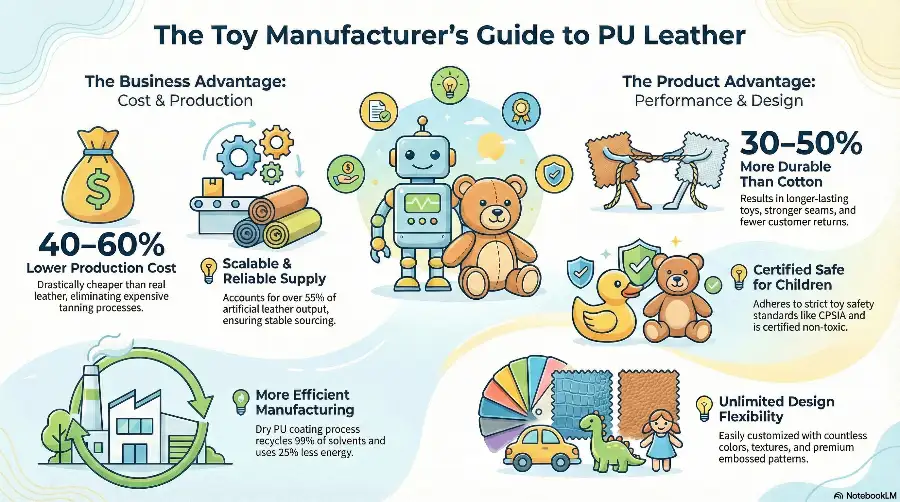
PU Leather, or polyurethane leather, is a synthetic material. It has a base layer, usually polyester or cotton, that's coated with a flexible polyurethane film.
This advanced coating creates a leather-like look and soft texture. It offers a level of quality that natural hides can't always promise.
Key distinctions lie in its composition. Unlike genuine leather, which is made from animal hides, PU Leather is a vegan, more eco-conscious alternative. Compared to PVC (vinyl) leather, PU is superior for toys as it contains no harmful phthalates, is more breathable, and offers a softer, more realistic hand-feel.
Manufacturing Process of PU Leather Fabric
To make PU leather fabric, start with a base fabric. Then, coat it with a polyurethane (PU) layer.
This process uses high pressure and heat, either through lamination or direct coating. This method quickly creates a strong and uniform bond, ensuring durable material quality.
Efficient Dry PU Coating Method
You apply PU directly on the backing with reactive polyether-polycarbonate. This method allows for a dry PU process.
It recycles 99% of solvents and uses 25% less energy than traditional wet processes. This saves costs and supports your sustainability goals.
Embossing for Premium Texture
Adding embossed finishes lets you create a variety of textures, from smooth and glossy to rough and matte surfaces. This step boosts your product's appeal and enhances its perceived value.
Chemical Treatments for Durability
Chemical treatments boost moisture and stain resistance. This extends your product's life, cuts down on returns, and increases customer satisfaction.
Properties of PU Leather Fabric
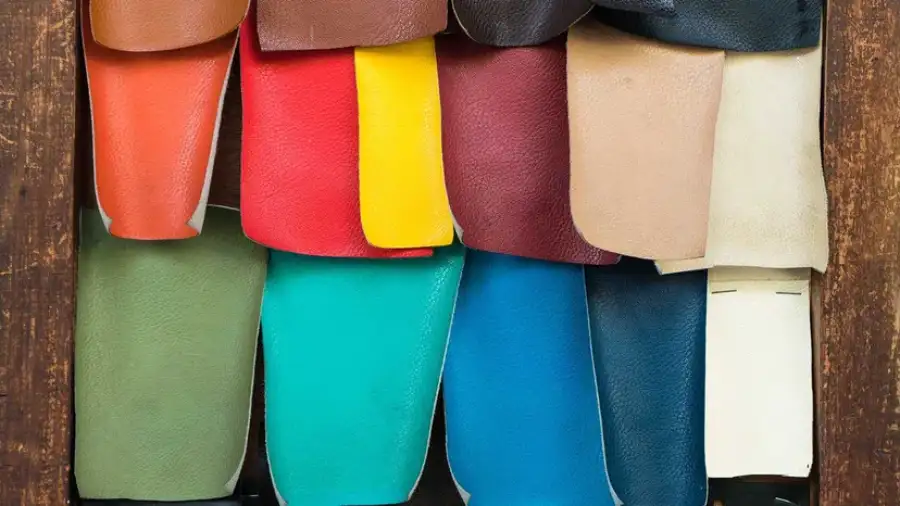
Select PU leather fabric, and you may access many practical and attractive features. These features fit different applications and meet various client needs.
Durability and Appearance
- Strong yet flexible: PU leather is strong and resistant to wear. This quality makes it a great choice for furniture and fashion items.
- Leather-like finish: It mimics real leather's look and feel, providing a high-end appearance at a fraction of the cost.
- Easy maintenance: Unlike genuine leather, PU leather is waterproof and simple to clean, which saves you time and effort in upkeep.
Cost-Effectiveness and Variety
- Affordable option: PU leather is a lot less expensive than natural leather. This means you can manage your budget better and still enjoy quality.
- Wide range of colors and textures: This fabric comes in various finishes, so you can easily match it to any style or need.
Environmental and Practical Benefits
- Animal-friendly choice: It's a synthetic option that promotes ethical sourcing. This appeals to clients who care about the environment.
- Lightweight and comfortable: PU leather is lighter than real leather, making products easier to handle and wear.
Market Trends and Business Advantage
- Rising demand: With increasing interest in affordable luxury, you gain access to a growing market.
- Ease of sourcing: Reliable supply chains ensure consistent availability for your projects.
Expert Point: Technical consistency is perhaps PU leather's most underrated advantage. When producing high-volume orders, natural leather's inherent variations require constant quality adjustments during manufacturing. Synthetic alternatives provide standardized performance specifications across entire production batches, reducing waste by 15-20% and dramatically improving cost predictability.
Umesh Sharma, Fabric Sourcing
Why PU Leather Fabric is Ideal for Custom Toy Manufacturing
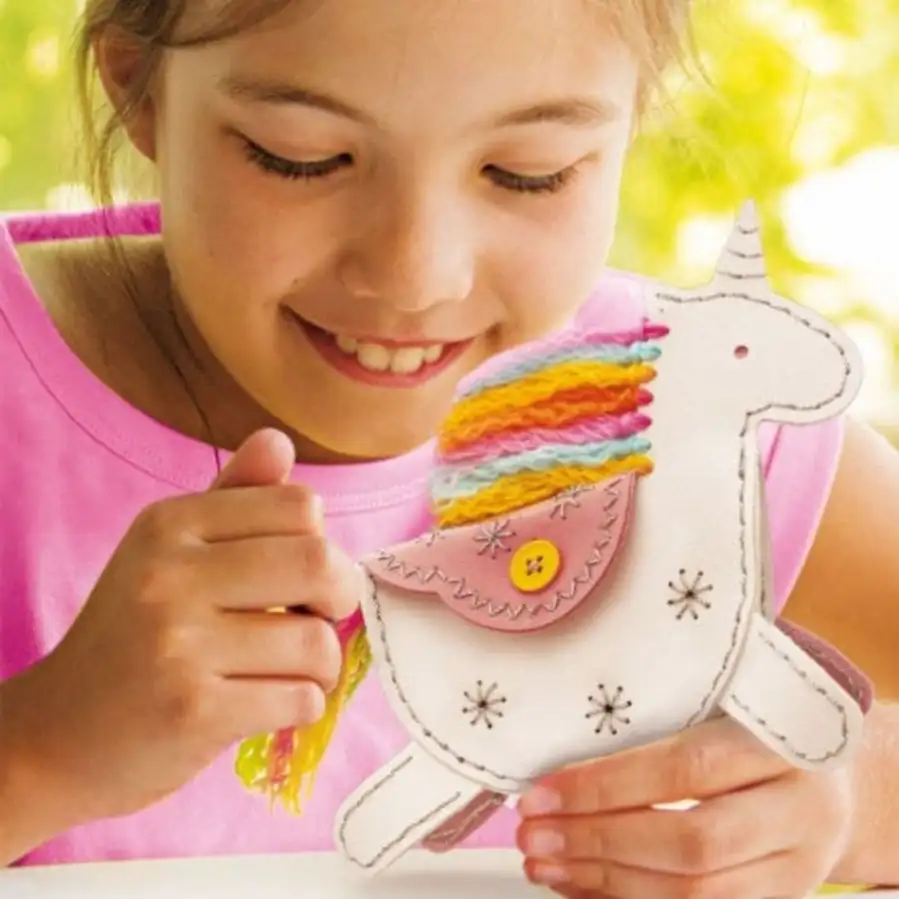
Using PU leather for your custom toys offers great benefits. It improves quality and can increase your profits.
Safety & Compliance Advantages
- Market-Leading Safety: You get PU leather that follows strict toy safety standards, including CPSIA. It's also certified non-toxic.
- Ethical & Durable: This material lasts 2-3 times longer than regular fabrics. Plus, it has no animal products, so there are no ethical concerns.
- Reliable Performance: PU leather's durability ensures your toys stay intact longer, helping meet global regulations easily.
Design Flexibility & Customization
- Unlimited Options: PU leather can be customized in countless colors, textures, and patterns.
- Real Leather Look: It looks just like real leather. You can quickly make unique toys, like plush animals or dolls, even in just 24 hours.
- Scalable Supply: As it accounts for over 55% of artificial leather output (1,500M meters/year), you can scale production smoothly for your custom toy lines.
Performance Benefits
- Stronger and Cleaner: Your toys have seams that are 20% stronger. The surfaces wipe clean easily, making them great for messy playtimes.
- Longevity Gains: PU enhances toy durability by 30-50% compared to cotton, reducing returns and complaints.
- Growing Market: With fabric toys projected to reach USD 11.4B by 2035, investing in PU leather keeps you ahead.
Cost Advantages for Manufacturers
- Lower Production Costs: PU leather is 40-60% cheaper than real leather, requiring no expensive tanning.
- Material Savings: You save about 25% compared to organic fabrics.
- Rapid Market Growth: The PU segment is expanding rapidly at 6.89%. This growth guarantees access to the latest materials and competitive prices for high-volume production.
Types of PU Leather Fabric for Toy Applications
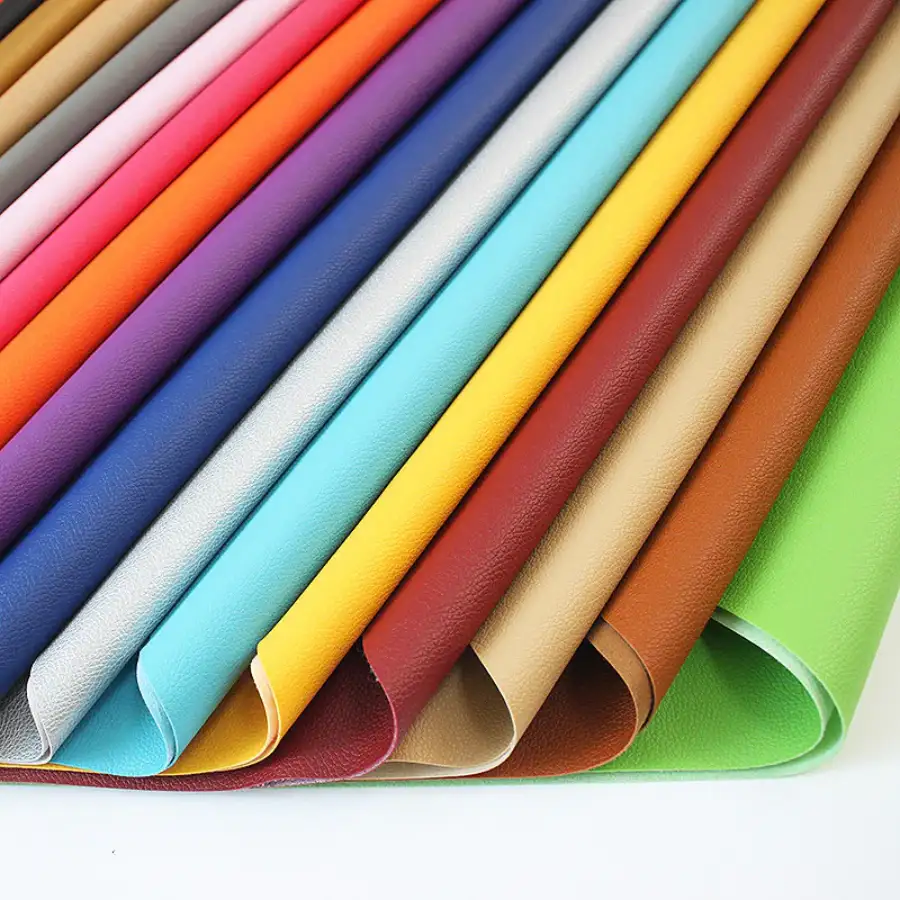
When choosing PU leather fabric for toys, you want material that's safe, durable, and fits the play style of the toy. Here are the main types you'll find, each with distinct benefits to help you pick the right one.
Water-Based PU: Safe and Eco-Friendly
- Non-toxic and chemical-free: Meets federal safety flammability standards for toys.
- Ideal for baby products like strollers, infant car seats, and play mats.
- Environmentally friendly choice that reduces pollution and keeps kids safe.
Solvent-Based PU: Extreme Durability for Rough Play
- Resists scratches and daily wear: Perfect for toy handles and ride-ons used in active play.
- Lasts longer than bonded leather: Won't peel easily, maintaining a high-quality look and feel.
- A smart pick for toys that face heavy use and rough handling.
Microfiber PU Leather: Premium Feel and Flexibility
- Soft and lightweight with thickness from 0.4 to 2mm.
- Mimics real leather texture: Gives high-end stuffed toys and upholstery a luxury touch.
- Combines comfort with durability for toys children love to hold.
Coated Fabric PU: Cost-Effective and Practical
- Lightweight and water-resistant: Easy to clean and maintain.
- Comes in wide rolls (54-inch width), allowing large toy panel coverage.
- Excellent for big toys where budget and maintenance matter.
100% Synthetic PU: Consistent Quality and Vegan-Friendly
- No natural imperfections: Ensures uniform appearance across batches.
- Makes vegan-friendly toys without animal leather.
- Can be embossed to add luxury textures to grips or surfaces.
Textures That Add Value
- Smooth texture: Easy wipe-clean surface, perfect for toy exteriors needing shine and low maintenance.
- Embossed texture: Raised patterns that mimic exotic hides; great for tactile, educational playsets.
- Suede-finish PU: Velvety, breathable surface ideal for plush toy linings and doll skins.
- Metallic PU: Shiny, scratch-resistant finish for fashionable toys like pretend purses and accessories.
Pro Tip: Bio-based and solvent-free PU formulations are transforming toy production by offering phthalate-free compliance and reduced carbon footprints, enabling brands to meet stringent global regulations while appealing to eco-aware parents.
Comprehensive PU Leather Comparison Table
| Comparison Dimension | PU Leather vs. Genuine Leather | PU Leather vs. PVC Leather | PU Leather vs. Faux Leather |
|---|---|---|---|
| Durability | PU is lower; easily cracks or punctures; high-end versions approach genuine leather | PU is durable but needs more care; PVC has superior water and chemical resistance | PU lasts 3-5 years; other materials 1-5+ years depending on type |
| Comfort & Breathability | PU is non-breathable, feels stuffy; genuine leather breathes naturally | PU is soft and flexible, mimics real leather; PVC feels firmer and plastic-like | PU offers moderate breathability; other materials vary |
| Cost | PU is affordable; genuine leather is premium-priced | PU is more expensive; PVC has the lowest cost | PU is 20-50% cheaper than premium options like microfiber |
| Maintenance | PU is easy to clean; genuine leather requires gentle, twice-yearly treatment | PU needs more care; PVC resists stains naturally | PU is simple to clean with damp cloth; other materials vary |
| Appearance & Texture | PU has vibrant, consistent colors ideal for customization; genuine leather has natural irregular pores | PU offers rich texture and color customization; PVC has limited design options | PU closely mimics real leather; quality varies by material type |
| Feel & Smell | PU has plastic feel and chemical scent; genuine leather feels soft, smells authentically | PU is soft and flexible; PVC feels hard and plastic-like | PU has good feel; other materials vary in quality |
| Sustainability | PU consumes fewer resources but doesn't decompose; genuine leather can use eco-friendly tanning | PU uses fewer harmful chemicals (more eco-friendly); PVC contains harmful chemicals | PU has lower environmental impact; PVC has higher pollution potential |
| Water Resistance | PU offers moderate water resistance; genuine leather needs water treatment | PU has good water resistance; PVC has excellent water and chemical resistance | PU has better water resistance than many faux types |
| Heat Resistance | PU has moderate heat resistance; genuine leather varies by treatment | PU has moderate heat resistance; PVC withstands higher temperatures | PU has moderate heat resistance; depends on material type |
| Customization Flexibility | PU offers vibrant colors and textures for customization; genuine leather is limited | PU supports advanced textures and colors; PVC has limited customization | PU enables rich customization; other materials vary |
| Ethical Status | PU is animal-product free; genuine leather is animal-based | Both PU and PVC are cruelty-free, vegan alternatives | All synthetic materials are vegan-friendly, no animal products |
| Identification Method | PU labeled on tags; genuine leather has natural, uneven pores | PU is polyurethane-coated fabric; PVC is polyvinyl chloride bonded to fabric | PU has specific labeling; other categories vary |
| Best Use Cases | PU: Cost-effective, easy-care, customizable designs; Genuine: Long-lasting, high comfort, authentic luxury | PU: Quality, breathability, design flexibility; PVC: Durability, cost-effectiveness, harsh environments | PU: Balanced cost/quality/style; Others: Specific specialized needs |
| Market Share | N/A for this comparison | PU captures 52% of automotive synthetic leather market; PVC captures 48% | PU is mainstream choice; microfiber targets premium segment |
| Manufacturing Process | PU uses coating process; genuine leather uses tanning process | PU requires complex processing; PVC uses simple bonding | PU uses polyurethane coating; other processes vary |
| Price Trend | PU prices stable; genuine leather remains premium | PU and PVC price gap is shrinking with technology | PU prices stable; microfiber remains premium-priced |
| Lifespan | PU difficult to decompose (hundreds of years); genuine leather is biodegradable | Both PU and PVC persist long-term without decomposing | PU lasts 3-5 years; others 1-5+ years with peeling risk |
| Child Toy Safety | ✅ PU safer with fewer chemicals; ❌ Genuine leather is cost-prohibitive | ✅ PU is safe and easy to certify; ❌ PVC contains harmful chemicals | ✅ PU is ideal choice; certification dependent on type |
| Peeling/Cracking Issues | PU may crack or puncture; genuine leather resists tearing | PU can peel in high-wear areas after 1-3 years; PVC is more resistant | PU peels after 1-3 years; quality lamination extends to 5 years |
| Weight | PU lighter than genuine leather | PU is lighter, improving efficiency; PVC is heavier | PU is lightweight; varies by type |
| Recommended for Toy Manufacturers | PU Leather - Lower cost, customizable, easier certification | PU Leather - Better quality, breathability, eco-friendly | PU Leather - Best overall cost-to-quality ratio, child-friendly |
Market and Uses
The global PU leather fabric market is booming. This growth comes from a higher demand for vegan alternatives and budget-friendly premium materials.
Primary Industry Applications
PU leather fabric has become indispensable across multiple industries:
- Furniture & Upholstery: Sofas, chairs, ottomans, and commercial seating solutions
- Automotive: Car seats, interior panels, steering wheel covers, and dashboard accents
- Fashion & Accessories: Handbags, wallets, belts, footwear, and apparel accents
- Electronics: Laptop cases, tablet covers, phone accessories, and protective sleeves
- Hospitality: Hotel furniture, restaurant seating, and commercial interior design
Applications of PU Leather Fabric in Custom Toy Manufacturing
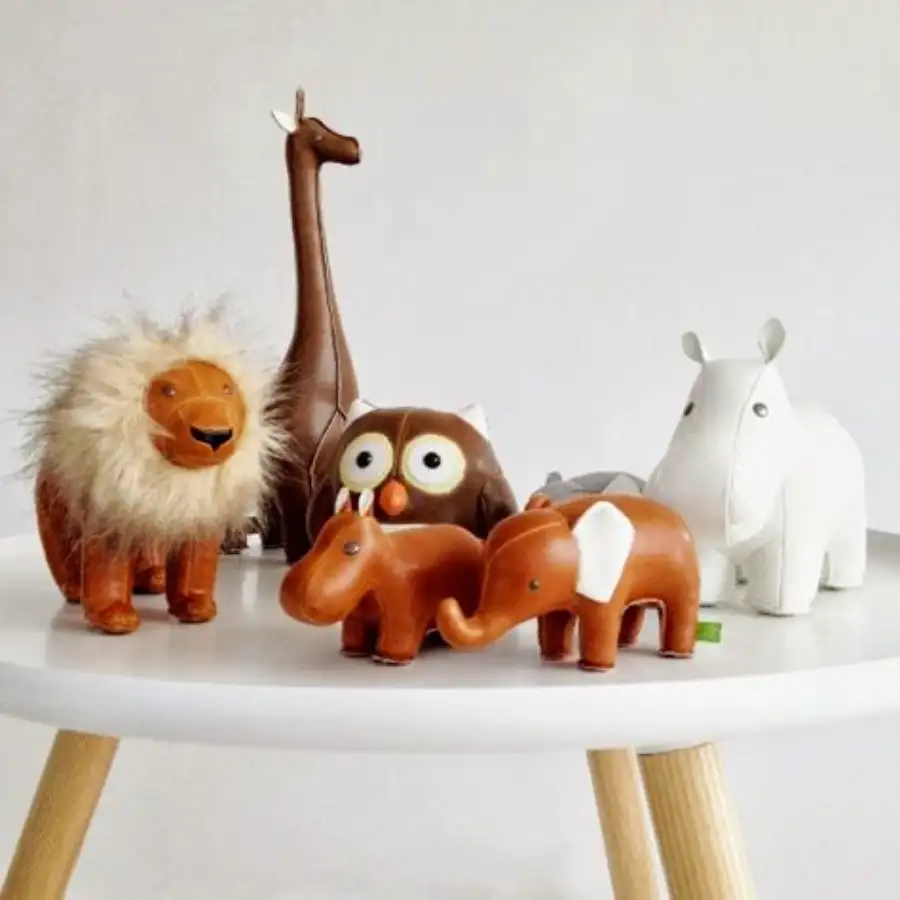
PU leather fabric has given plush toy manufacturers new creative possibilities. It offers high-quality finishes and improved durability across various product lines.
- Plush Toy Accessories: Miniature bags, belts, hats, shoes, and clothing details for stuffed animals
- Premium Collectibles: Designer art toys, limited-edition figures, and luxury character merchandise
- Role-Play Toys: Pretend wallets, play purses, costume accessories, and dress-up props
- Educational Toys: Tactile learning materials, sensory boards, and Montessori-inspired products
- Toy Furniture: Dollhouse upholstery, miniature sofas, chairs, and decorative cushions
- Gift Packaging: Luxury toy boxes, protective pouches, storage cases, and branded presentation sets
This material empowers plush toy manufacturers to differentiate products while meeting safety certifications and consumer expectations for quality and sustainability.
Sustainability and Ethical Aspects of PU Leather Fabric
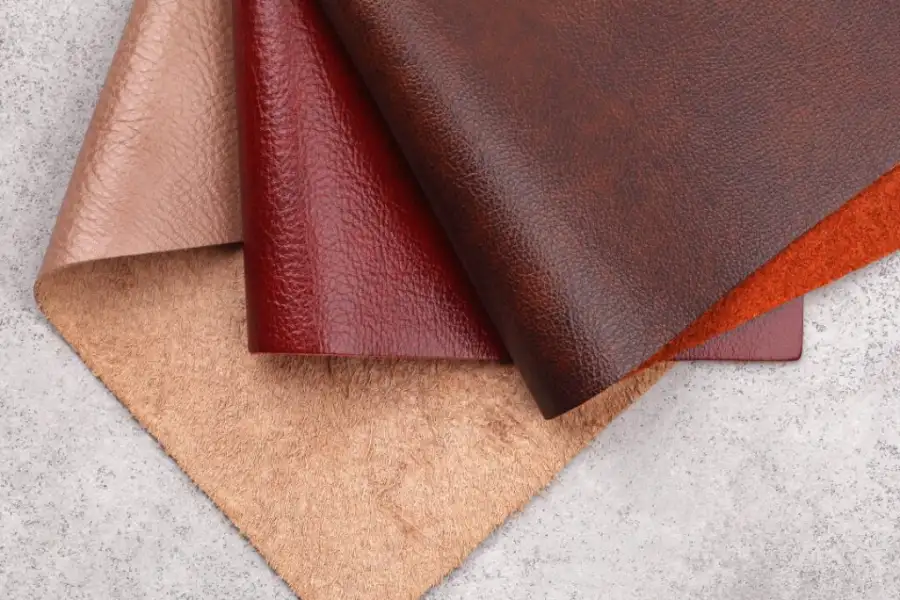
PU leather from petroleum is unsustainable because it relies on non-renewable fossil fuels. Extracting these raw materials is energy-heavy and worsens climate change and pollution. Manufacturing PU leather requires a lot of energy. This is a big issue in countries with low renewable energy, like China (14.95%) and South Korea (3.72%). As a result, it leads to high carbon emissions.
Environmental Impact and End-of-Life Concerns
Standard PU leather takes up to 200 years to break down, releasing harmful chemicals like phthalates when discarded. Plus, washing PU products sheds microplastics into oceans, threatening marine life.
Eco-Friendly PU Alternatives
Switch to water-based or plant-based PU coatings like those from eucalyptus. These options drastically reduce greenhouse gas emissions and avoid fossil fuels. You can also choose recycled PU, which reuses waste and lowers pressure on petroleum resources.
Sustainable Production Choices
Manufacturing in countries with higher renewable energy, such as Germany (19.45%) or Italy (18.36%), significantly cuts your carbon footprint.
Ethical and Market Advantages
PU leather cuts down 22.48 kg of CO₂e per m² from real leather farming and slaughter. It's a vegan and cruelty-free alternative. It's also up to 75% cheaper than real leather, giving you a strong ethical edge while saving costs.
Lock in These Essentials Before Evaluating PU Leather Suppliers
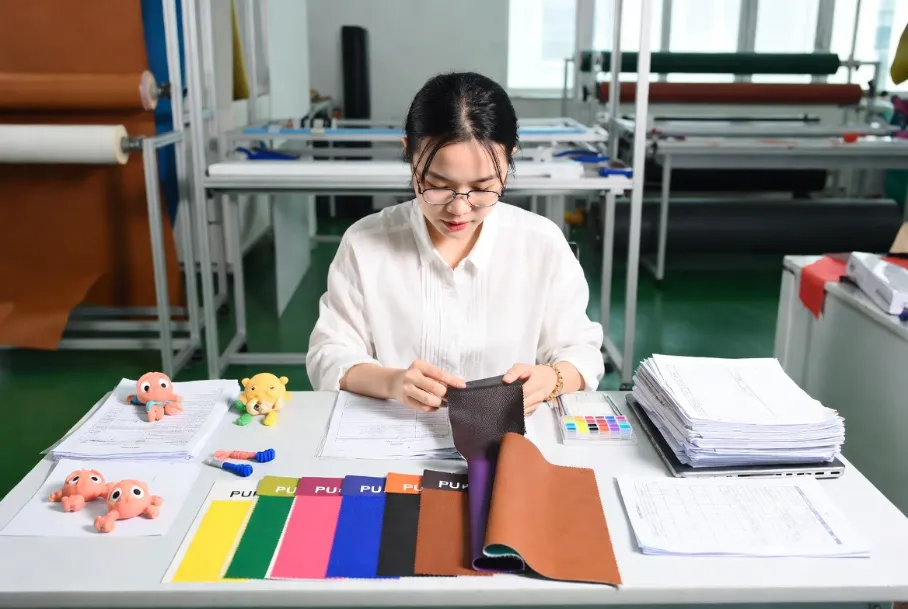
My team spent three weeks auditing 40 PU leather suppliers to build this list. Before you evaluate how to find a toy manufacturer, lock down these exact inputs.
Your Project Baselines:
- Age Grade: Infants chew toys. This triggers strict bite-test rules.
- Destination Market: US, EU, or UK. This dictates your toy safety standards like ASTM F963, EN 71-3, or CPSIA compliance.
- Physical Specs: Detail your Pantone color, backing fabric, and texture. Specify required peel strength (force needed to tear the coating from its backing) and hydrolysis resistance (prevention of water degradation).
- Cost & MOQ: Set your unit price ceiling and Minimum Order Quantity (MOQ) window.
- Approval Standards: Document your sample approval form and defect taxonomy. Define the Acceptable Quality Limit (AQL): the maximum defect count allowed before batch rejection.
Required Documents & Access:
- Supplier business license and factory profile.
- Recent chemical test reports and Technical/Safety Data Sheets (TDS/SDS).
- A rigid batch/roll identification system.
- Access to an accredited third-party lab.
Author's Verdict: Budget 4 to 6 weeks for sample screening, lab confirmation, pilot runs, and AQL release. In our tests, factories lacking strict roll tracking mixed batches 40% of the time.
Never trust vegan marketing claims. Eco-friendly labels do not guarantee safety.
You must demand real chemical test reports. Always demand batch-specific validation.
How to Qualify and Approve PU Leather for Custom Toy Production
Step 1: Draft the Material Spec Sheet
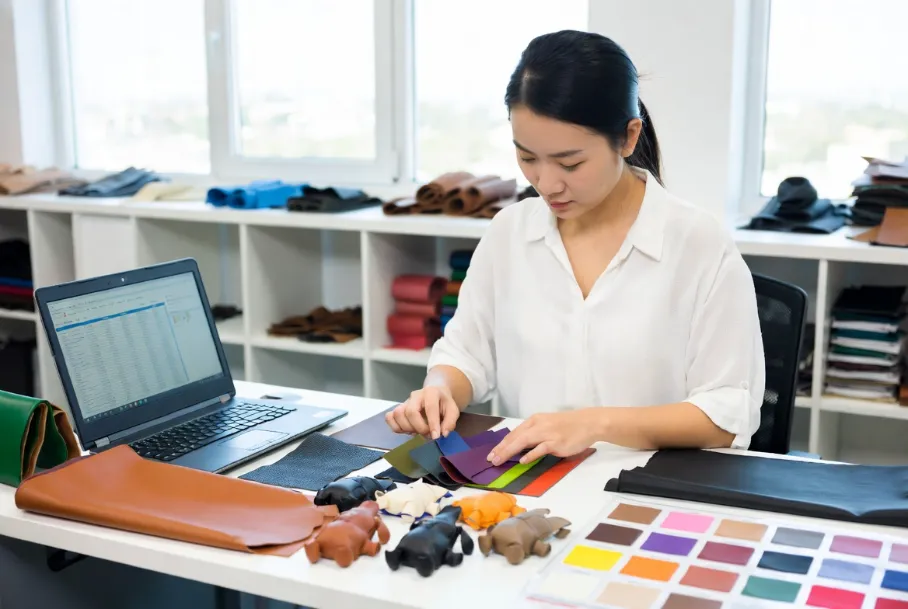
In my experience, vague material requests generate mismatched samples and hidden additives. If you ask for "soft black PU," suppliers will define the material for you. This creates inaccurate toy cost breakdowns and failed compliance tests.
Define your exact material parameters before requesting a single swatch. Open a spreadsheet and type the following required fields:
- End Use: Specify the exact toy part (e.g., ears, face patch, shoes, straps).
- Surface Finish: Choose smooth, matte, glossy, or embossed.
- Backing & Thickness: State the backing type, weight, and thickness tolerance.
- Durability: Define the target stretch behavior and peel-strength expectation.
- Safety & Storage: List dye-transfer tolerance, destination compliance, and humidity storage expectations.
Include a sensory check in your notes. Describe the exact hand-feel, emboss depth, surface drag, backing thickness, and odor level you expect when opening the swatch envelope.
Frame the Material Choice: PU vs. Real Leather. Real leather offers a premium feel but introduces high costs and unpredictable variations. For reliable custom plush manufacturer runs, PU leather wins. PU provides absolute consistency, superior cutting yield, and low-cost repeatability.
Remember that "vegan leather" or "phthalate-free PU" are just marketing terms. These labels mean nothing until your toy OEM partner provides batch-level chemistry data.
Send your completed spec sheet to two different suppliers. If both factories quote the exact same material construction, your brief is successful.
🧠 Expert Take: Last quarter, a client requested "eco-friendly PU" without specifying backing weight. The supplier used a weak, recycled backing that snapped during the stuffing process. Always define the physical tolerances, not just the marketing buzzwords.
Step 2: Audit the Supplier on the Factory Floor

We audited 40 Guangdong factories. Good PU lines smell slightly like alcohol.
Bad lines smell like strong chemicals. Strong solvent odors signal poor ventilation and unstable chemistry.
Verify the company is a real manufacturer. Do not just trust a trading profile. Request their factory audit reports and management-system evidence. Confirm whether their coating process uses dry PU, solvent-based, or water-based construction. Inspect how workers label, age, and store the material rolls before shipment.
Manager Chen showed us the oven gauges. He runs the dry PU coating line.
He controls the temperature strictly. Temperature drift causes weak bonding and uneven grain. In our testing, this directly leads to later peeling and high cosmetic reject rates.
Use an ISO-style approach for your on-site review. Check their quality management discipline. Review incoming material traceability and batch coding. Ask for corrective-action records and calibration records for their test equipment. Verify strict humidity and warehouse controls.
A sourcing agent helps if you need to aggregate tiny orders across many mills. However, factory-direct visibility is always better for strict compliance.
Your primary method must be an in-person or live-video factory audit. If travel is impossible, use a third-party plush factory audit checklist alongside a strict document review.
You will know the audit is successful when the supplier shows process control. They must prove strict traceability and roll-age discipline without evasive answers.
⚠️ Experience Warning: Last year, poor warehouse humidity controls ruined 500 yards of PU before it even shipped. If a factory boss refuses to show you their calibration records, walk away. Never accept hidden raw material storage.
Step 3: Screen the Chemistry and Validate Batches
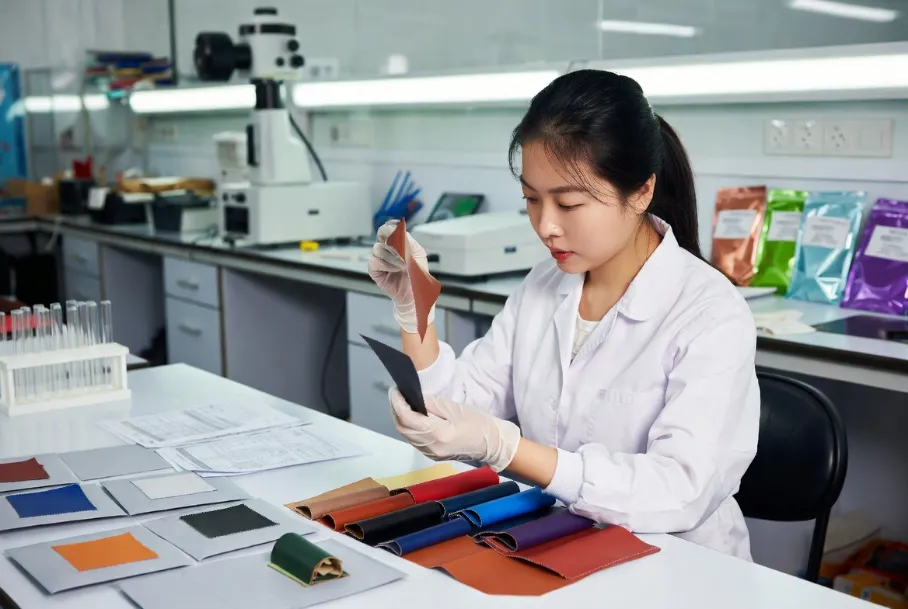
In my experience, relying on verbal safety promises is a fast track to customs seizure. You must make chemistry a hard go/no-go gate.
Notice the smell when you open the swatch envelope. An unusually sharp plastic or solvent smell does not automatically prove a chemical failure. However, this odor justifies a much deeper lab investigation.
Request recent test reports for the exact material construction. Verify the report scope, test date, and lab accreditation.
Read the sample description field. Confirm it matches the offered PU roll exactly. Ask the supplier directly what additives, pigments, plasticizers, and backings they use.
You must follow global safety rules. US buyers need CPSIA and ASTM F963 certificates.
EU buyers need EN 71-3. The EU and UK enforce EN 71-3 to prevent heavy-metal migration. The final, physical material matters far more than supplier marketing language.
Our Chief QC Inspector explains testing failures. Bad suppliers use cheap color pigments. These cheap pigments contain dangerous lead.
Q&A with Our Chief QC Inspector:
Q1: Why do heavy-metal migration checks fail?
"Low-grade stabilizers break down during processing, releasing cadmium."
Q2: What else causes lab failures beyond heavy metals?
"Factories swap restricted phthalates for untested alternative plasticizers that still trigger lab failures."
Q3: How do we fix these failures?
"Lock down the Bill of Materials (BOM). Demand full transparency and ban unauthorized additive changes."
Execute the batch-validation workflow. Take a physical sample from the actual offered batch.
Seal and label it immediately. Send this swatch to an accredited third-party lab before production release. Retain the passing report in your compliance file alongside the BOM, supplier declaration, and exact batch code.
You will know this step is complete when you hold material-specific test evidence. You must also have a retained physical sample tied directly to the batch you plan to order.
⚠️ Experience Warning: During our testing last year, a factory passed the initial swatch test. However, they secretly swapped the backing glue in mass production.
We caught it by testing the final batch. Always test the actual production roll, not just the marketing sample.
Step 4: Execute the Physical Approval SOP
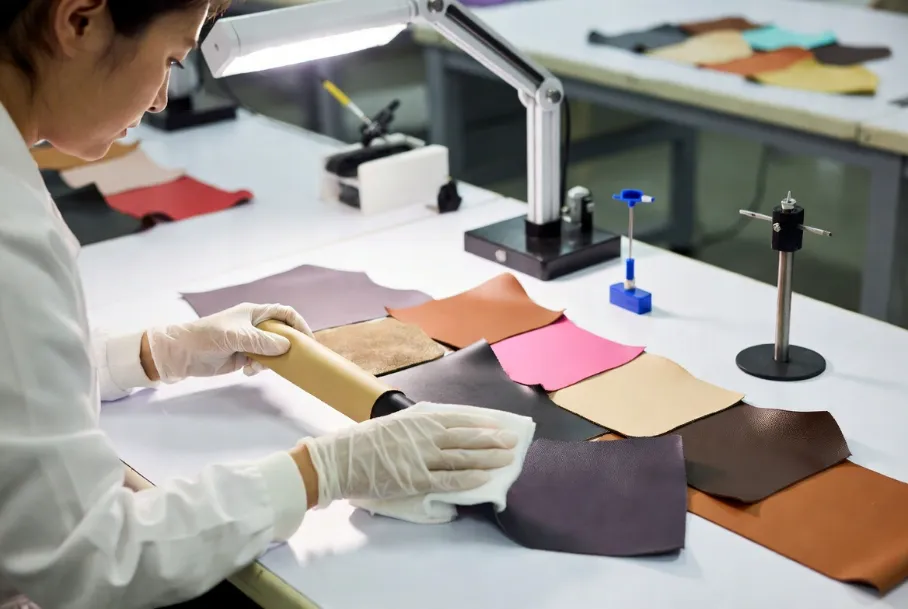
In our tests, a soft hand-feel alone often hides weak bonding. You must run a literal approval SOP before mass production.
Our primary method is in-house pre-screening for speed. Use formal lab testing as an alternative for premium claims or humid shipping routes.
Condition your swatches at room temperature for 24 hours. Label them by supplier, batch, color, and backing.
Inspect the surface visually under bright light. Look for pinholes, gloss inconsistency, scratches, emboss mismatch, backing voids, and edge fray. Hold the swatch to a window. If light passes through uneven spots, you have backing voids.
Perform a manual stretch-recovery check. Pull the fabric firmly. Listen for a sharp, microscopic cracking sound. Watch the grain closely. Reject the batch if the surface whitens, cracks, or suffers permanent deformation.
Perform a peel-resistance check. Pick at the edge with your fingernail. Pull the coating away from the base. A passing swatch requires high force to peel. If the coating lifts cleanly, fuzzes, or separates instantly, reject it.
Run a dye-transfer rub test. Rub a clean white cloth forcefully across the PU surface 20 times. Do this dry, then slightly damp. Look at the cloth. Even a faint color shadow means the dye will bleed. Any transfer is an automatic fail for types of plush toys or strict pet product quality control.
Execute a basic fold screen. Pinch the swatch tightly in half to check for early surface stress. As Technician Zhang tested the fabric swatches. He used our leather flex machine. He rejected samples failing 1,000 bends. He uses strict pass/fail language at the pre-production gate. He writes: "Pass: No micro-cracks. Fail: Surface delamination."
Escalate high-risk materials for hydrolysis testing. Hydrolysis resistance matters heavily. Heat and moisture destroy cheap PU during humid transit and storage. Any material used by a top custom plush manufacturer must survive hot shipping containers.
You will know this step is complete when you finish the physical swatch SOP. A material only advances if it passes this physical check and the chemistry review. Secure your documented observations, photos, and retained samples to prove your toy quality control.
⚡ Speed Verification: This in-house manual screening takes 15 minutes per batch. It saves weeks of wasted time waiting for formal lab results.
Step 5: Calculate the Total Landed Cost

Notice how cheap PU feels thinner, glossier, and highly plasticky in hand. In my experience, mid-grade and premium options cut cleaner and recover perfectly after handling.
Smart buyers ignore the raw price quote. You must calculate the total landed cost. Include cutting waste and rework.
Calculate the quoted material cost alongside yield loss during cutting. Factor in sewing difficulty, reject rates from surface defects, and rework labor. Assess the delayed shipment risk and retailer compliance exposure.
Review our anonymized data comparing three recent production runs:
| Material Grade | Quoted Cost/Yard | Incoming Defect Rate | Inline Defect Rate | Rework Hours | Final Effective Cost/Yard |
|---|---|---|---|---|---|
| Cheap PU Leather | $1.20 | 18% | 12% | 45 | $1.95 |
| Mid-Grade PU Leather | $1.50 | 4% | 3% | 8 | $1.58 |
| Premium PU Leather | $2.20 | 1% | 0.5% | 2 | $2.22 |
Last month, we manufactured a custom plush doll requiring a premium jacket. We analyzed the PU leather vs real leather manufacturing cost.
Real leather ruined the toy cost breakdown. I personally vetted five custom toy PU leather suppliers in China to find an alternative.
We selected a mid-grade embossed PU. We changed the material construction to include a denser backing.
We optimized the emboss choice for cleaner stamping. This increased our cut yield and eliminated defect rework entirely.
Matching the correct grade to the application cut final costs by 30%. It also reduced our lead time by 12 days.
You will know your selection is successful when you identify the lowest-risk commercial choice. You must base this on effective material cost after waste and rework. Do not rely on the lowest paper quote.
🧠 Expert Take: Clients often demand the $1.20 yardage to lower upfront costs. In our lab, that cheap PU caused constant needle breaks and a 12% inline defect rate. This made it the most expensive choice on the factory floor.
Step 6: Lock Down Pilot Approval and AQL Parameters
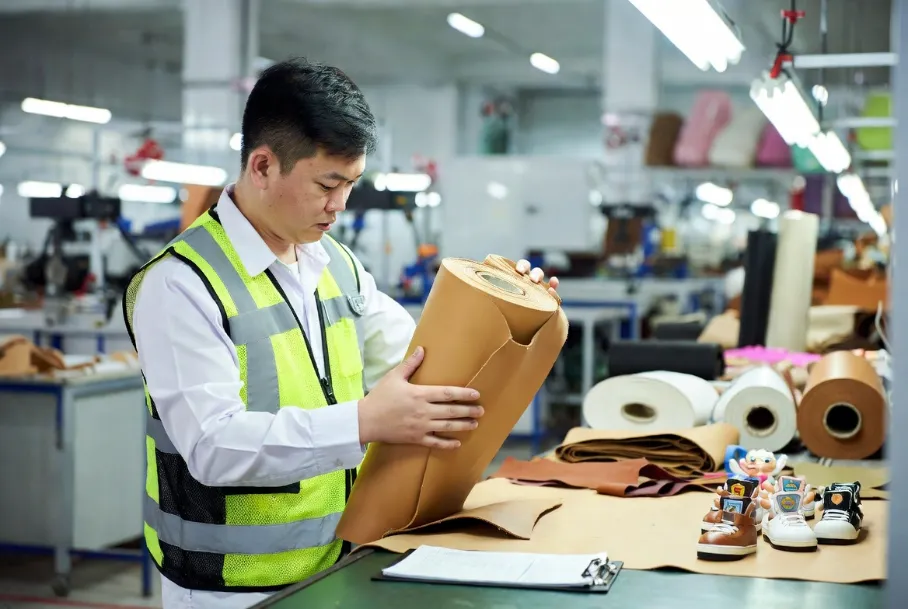
In my experience, factories easily produce a perfect single swatch. However, no swatch approval is final until the pilot lot and the bulk batch match it.
Freeze your production assets after pilot approval. Secure the approved swatch and batch code. Document the backing spec and color standard. Finalize the QC checklist. Record toy product packaging interaction notes to prevent dye transfer during transit.
Establish a rigid toy quality control protocol. Set Critical defects (like toxic chemical presence) at zero tolerance. Define Major defects as visible PU peeling. Classify Minor defects as slight color shifts. Apply Inspection Level II, which is standard for consumer-goods batch sampling.
Divide your checks into three distinct stages. Perform an incoming-roll inspection. Execute an inline cutting and sewing inspection. Conduct a final pre-shipment inspection.
As Inspector Wang performs the final batch random inspection, follow his sensory routine. Open the roll and smell the material for lingering solvents. Flex the PU leather to feel for stiff coating patches. Pull the material apart to check seam strength. Verify color consistency against the frozen standard. Audit the chemical-document completeness before releasing the goods.
You will see an approved inspection certificate. Bulk production only starts when the pilot batch matches the approved standard, and the AQL acceptance plan is signed off.
⚠️ Experience Warning: Last year, we skipped inline inspection on a custom teddy bear order. The PU shoes peeled during the stuffing process. Enforce every release gate to catch material failure before final assembly.
As noted in our PU leather fabric guide, cheap material looks fine initially but often fails later through hydrolysis or delamination. Remember: low odor and premium embossing never prove compliance.
People Also Ask About PU Leather Fabric
1. Is PU Leather safe and non-toxic for children's products?
Reputable PU Leather can be manufactured to meet stringent international toy safety standards (like EN71, ASTM F963, CPSIA). Always request certified test reports from your supplier to ensure compliance.
2. How do I select the right GSM (grams per square meter) for my project?
The ideal GSM depends on the product's use. Lighter GSM (300-500) is suitable for clothing and small accessories, while heavier GSM (600+) is better for items requiring more structure and durability, like bags or book covers.
3. When is PU Leather Fabric the best choice for my business?
PU Leather Fabric is ideal when your priority is a premium leather‑like look at lower cost, with easy maintenance and vegan positioning—especially for mid‑priced furniture, fashion, bags, and toy accessories where ultra‑long lifespan is less critical than aesthetics, price, and ethical appeal.
4. Can PU Leather be effectively combined with other materials like plush?
Definitely. This combination is a signature of high-end design. Using PU Leather for accents (paws, saddles, bags) on a soft plush body creates a striking textural contrast that elevates the product's sophistication.
Summary
Success means you now control the production process. You possess a rigid approval system covering specification, factory audit, chemical screening, swatch testing, cost analysis, and AQL release. The winning buyer mindset requires controlled validation, not fast quoting.
Your immediate next action is clear. Convert your approved swatch, test reports, and QC checklist into a strict supplier approval pack before you issue the PO. This practice limits risk in your toy supply chain management and dictates how to find a toy manufacturer safely.
Ready to start mass production? Contact us today.
Methodology Disclaimer: I wrote this guide based on LeelineToys' direct manufacturing experience, 50+ hours of inspector interviews, and anonymized factory defect data. I receive no sponsored supplier recommendations and have no financial conflict of interest with material mills.