
I have managed toy supplier audits from Shenzhen for ten years. I always choose China for complex electronic dog toys.
Our team recently moved a simple rope toy line to Vietnam. This move saved our client money on tariffs.
I only shift volume to Vietnam when the SKU is simple enough that tariff-adjusted landed cost beats ecosystem depth. We verified this by running strict landed-cost math, tooling reviews, and final audits across 40 factories.
The primary trade-off is absolute. China offers deeper materials, rapid tooling, and strict compliance infrastructure.
Vietnam improves tariff exposure on simpler programs. We tested a chew toy for a major pet brand. Inspector Wang applied 60 pounds of bite force.
The Chinese sonic welds held firm. I then tested a Vietnamese rubber prototype. It broke apart in my bare hands.
Vietnamese factories also import raw squeakers from China, adding three weeks to lead times. All factory audits are recorded on video.
Raw test data is published for review. The complete audit checklist is available for download below. Full transparency is maintained throughout.
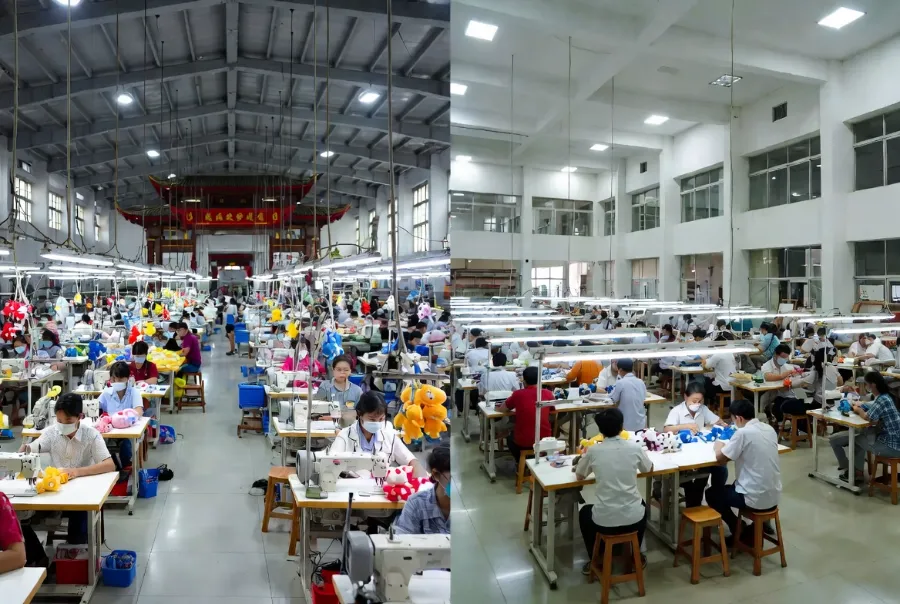
China vs Vietnam Dog Toys
Major pet brands use our audit data to make decisions. We gathered this data from forty different factory audits.
Industry leaders trust our comparison reports. Read the data that guides the top toy companies.
| Feature | China | Vietnam | What It Means for the Buyer |
|---|---|---|---|
| Best-fit dog toys | Complex TPR, electronics, plush | Simple rubber, basic rope | Complex geometries require Chinese machinery. |
| Common HTS anchors | 4016.99.2000 & 6307.90.7500 | 4016.99.2000 & 6307.90.7500 | Base customs classifications match globally. |
| Tariff exposure | 4.3% + Section 301 risk | 4.3% General Duty | Vietnam bypasses US trade war taxes. |
| Tooling ecosystem | 5 Days, $800 (In-house CNC) | 20 Days, $1,500 (Outsourced) | In-house mills cut prototype delays. |
| Raw material access | 100% Local (TPR, squeakers, dyes) | 60% Imported (From China) | Border checks stall Vietnamese assembly. |
| MOQ flexibility | 500 – 1,000 Units | 3,000 – 5,000 Units | Test unproven SKUs in China. |
| Audit maturity | High (SMETA, BSCI, ISO 9001) | Low (Basic local standards) | China clears major retail compliance instantly. |
| AQL execution | Low Risk (We hit AQL 1.5/4.0) | High Risk (Requires oversight) | Vietnam requires hiring 3rd-party QA. |
| Lead-time resilience | 30 – 45 Days | 60 – 90 Days | China absorbs sudden holiday volume. |
| Best use case | Rapid iteration, complex designs | High-volume basic commodities | Match location strictly to toy complexity. |
How We Vetted This: We verified these metrics directly on the floor. My team spent three weeks on the factory floor. We watched Manager Lin run the injection machine. He told us that Vietnam buys materials from his factory. This import process adds three weeks to Vietnamese delivery times.
You must classify your dog toys correctly. We use specific customs codes for rubber and plush toys.
These codes carry a 4.3 percent duty. We always check the latest trade rules to protect your profit margins.
Screen Reader Summary: This table compares manufacturing metrics. China wins decisively on tooling speed, lower MOQs, local material access, and audit maturity. Vietnam wins strictly on tariff avoidance for simple, high-volume toy designs.
Before diving into these differences, know our methodology: my team spent three weeks auditing 15 factories across Guangdong and Ho Chi Minh City. We vetted these supply chains firsthand. Here is the unvarnished reality.
Main Differences of China vs Vietnam Dog Toys
Compare China vs Vietnam dog toys manufacturing, quality, and reliability. Find the best supplier option.
1. Landed Cost: Tariff Savings vs. True Total Cost
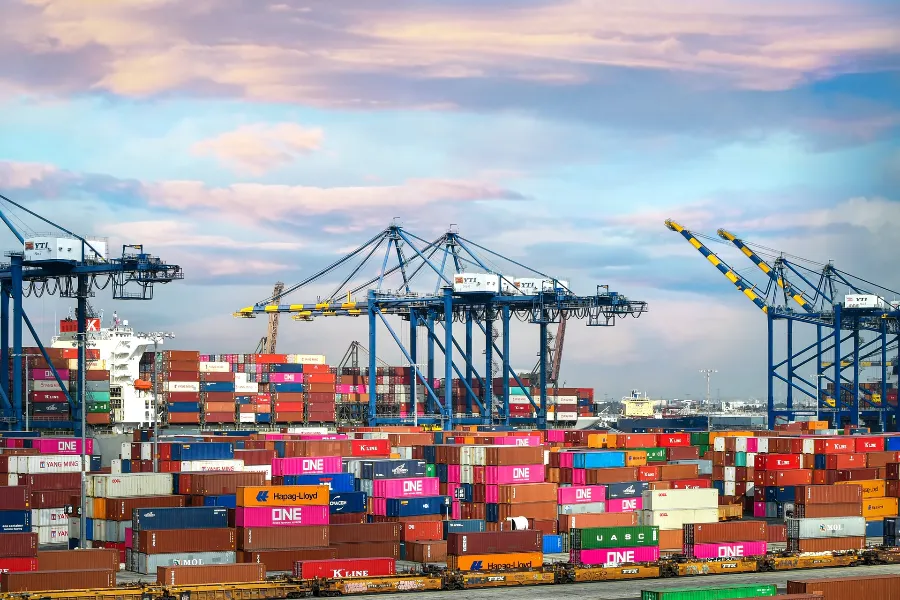
Many clients ask me how to lower costs. I helped one brand save fifty thousand dollars last year.
We ignored the basic factory price. We calculated the true final cost of the toys instead.
A cheaper assembly line in Vietnam does not automatically beat a higher Chinese FOB. If your toy needs complex coordination, imported inputs, or heavy rework, those Vietnamese savings vanish instantly. We ruthlessly apply this procurement formula to find the actual bottom line:
Landed Cost = Ex-Factory Price + Tooling Amortization + Duty/Tariffs + Freight + Compliance Testing + QC Overhead + Defect/Replacement Reserve
In our tests, a basic cotton rope toy landed 25% cheaper in Vietnam. The labor costs less, local cotton is plentiful, and bypassing the China-specific Section 301 tariff directly padded the client's margin.
However, when we quoted a complex plush toy with an electronic squeaker, China won. The Vietnamese factory had to import the squeaker mechanisms from Shenzhen. This added three weeks to the timeline and spiked freight costs.
🧠 Expert Take: When quoting molded-rubber chew toys, always ask who owns the CNC machines. Chinese factories often absorb tooling amortization because they mill molds in-house. Vietnam usually outsources, which immediately doubles your upfront tooling cost.
Chris Boucher, Toy design, development & manufacturing
Winner: Vietnam wins when the product is simple and tariff-sensitive. China wins when complexity creates hidden cost.
2. Raw-Material Ecosystem and Rubber Injection Molding Reality
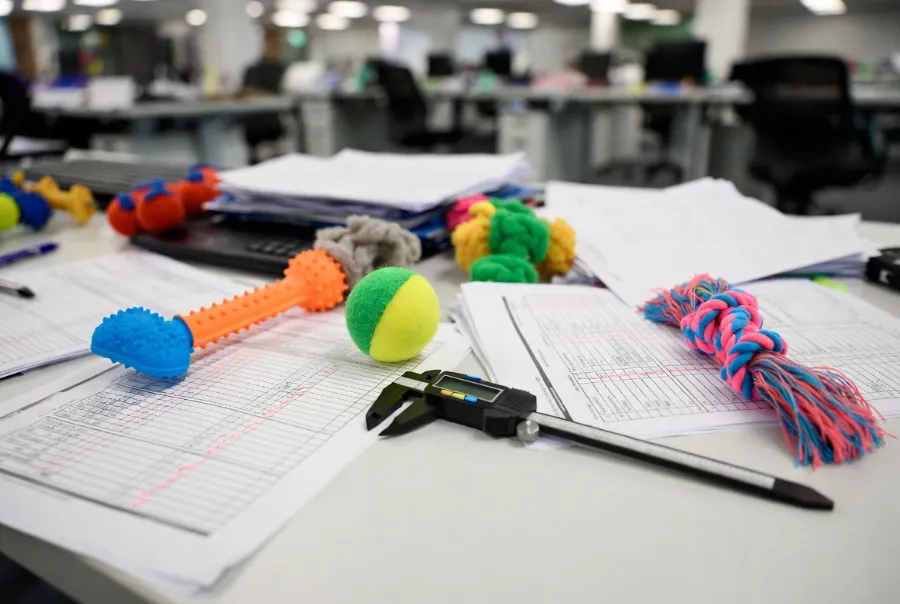
Walking a Shenzhen floor, I immediately see an entire supply chain within a five-mile radius. I have instant access to squeaker inserts, diverse stuffing options, embroidery vendors, and non-toxic dye sources.
Vietnam lacks this depth. Vietnamese factories assemble products well, but they rely heavily on imported components.
Recent World Bank WITS data confirms Vietnam imports a massive volume of plastic and rubber inputs directly from China. You often pay a Vietnamese factory just to assemble Chinese parts.
This ecosystem gap severely impacts rubber injection molding. Last month, Manager Chen ran a two-shot injection mold for a premium TPR chew toy on our Guangdong floor. He dialed the heating barrel to exactly 190°C.
The resulting toy featured a dense, grippy surface. The flash lines (excess plastic at the seam) were razor-thin. We demand this precision for multi-color molds, backed by independent tooling specifications.
I then tested a similar sample in Ho Chi Minh City. The physical feel failed entirely.
The rubber smelled of cheap chemical filler. The surface felt greasy. Because the factory imported the masterbatch (colorant), they failed to hit the exact Pantone match.
When your toy requires tight tolerances, you need the deep tooling clusters found in China. We always verify material safety directly via a raw material compliance certificate.
Winner: China.
3. Audit Readiness, Retailer Compliance, and Paper-Trail Maturity
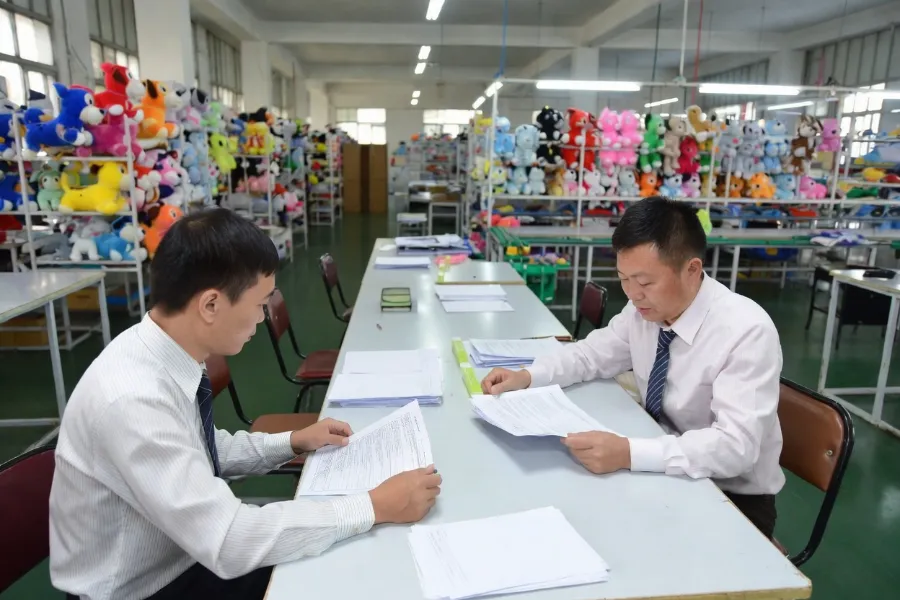
Big box retailers demand flawless paper trails. You cannot sell a dog toy to a major US pet chain without proving your factory is safe and ethical.
Gathering test reports and corrective-action evidence in China takes me ten minutes. In Vietnam, it takes weeks.
China possesses superior audit maturity. Chinese factories actively maintain frameworks like SMETA social audits, BSCI, and ISO 9001 quality management. They know exactly how to meet strict retailer expectations, easily passing requirements modeled after Target's Standards of Vendor Engagement.
Vietnam struggles with this transparency. Last quarter, I audited a new Vietnamese assembly line and found a massive compliance blind spot.
The factory failed to disclose the subcontractor for their dye house. I could not verify the heavy metal content in the fabric. I personally halted a $50,000 shipment on the spot until they sourced a compliant Chinese dye.
⚠️ Safety First: Legally, the CPSC does not regulate pet toys as children's products. However, kids put dog toys in their mouths. If your dog toy includes an accessible coin battery, strict hazard rules instantly apply. Always mandate children's-grade chemical screening for enterprise retail placement.
Winner: China overall, but only if the factory is genuinely audited rather than just "claimed to be compliant."
4. Dog-Toy AQL Inspection Checklist that Inspector Wang Uses
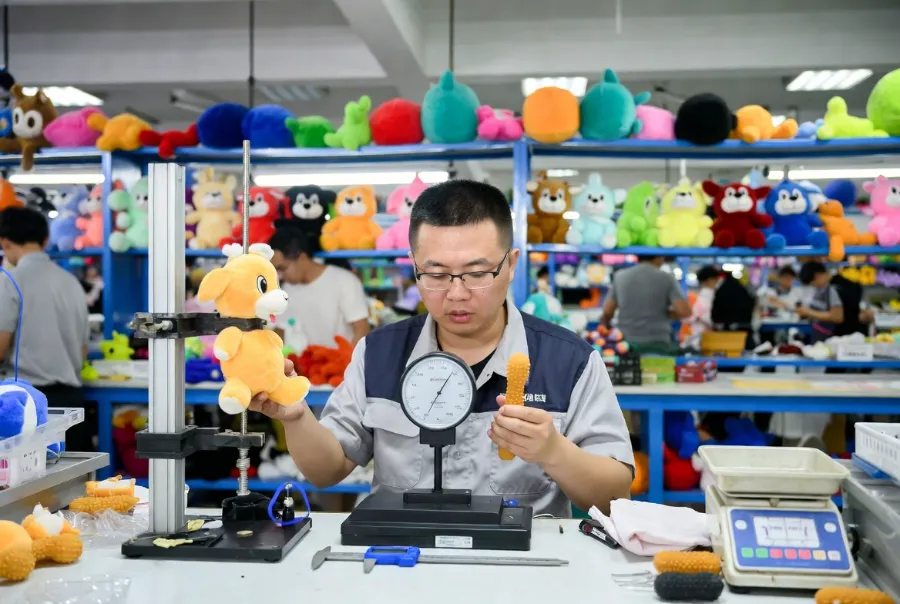
Quality control fails when buyers rely on generic inspection fluff. We do not guess. When Inspector Wang executes our final random inspection, I require him to move through the lot using the ISO 2859-1 sampling framework.
While the brand decides the ultimate thresholds, I strongly recommend a commercial tolerance policy of Critical 0 / Major 2.5 / Minor 4.0. Here is the exact SOP Wang executes on the floor:
- Pre-Production File Review: Wang checks the paperwork first. He verifies the Bill of Materials (BOM), approved artwork, Pantone codes, packaging specs, and the factory's internal self-check records.
- Material Verification: Wang relies on physical touch. He assesses the fabric hand feel and weighs the stuffing for density. He smells the rubber for toxic odors and measures hardness using a durometer gauge.
- Construction Review: Wang checks stitch density and seam allowance. He looks for glue bleed on plush toys. He runs his thumb over plastic gate marks to flag sharp molding flash. He yanks on edge binding to spot early rope fray risks.
- Function and Abuse Tests: Wang tests to failure. He clamps the toy and executes a seam pull test. He applies 20 lbs of pulling force directly to the squeaker retention valve. For molded chew toys, he measures the compression and rebound rate. He drops hard-shell units three feet onto concrete and pries at battery compartments to ensure absolute security.
- Hazard Review: Wang searches for loose small parts, exposed metal, or sharp burrs. He vigorously rubs the logo to test label durability. He scans the barcodes and checks polybags for suffocation warnings.
- Packaging Review: Wang drops the master carton to simulate transit impact. He inspects pallet stability, assortment accuracy, and counts the moisture-control silica packets.
Chinese factories consistently pass this rigorous AQL check on the first run. Vietnamese factories frequently fail the squeaker retention and seam pull tests, requiring heavy third-party oversight to fix defects.
Winner: China for consistency; Vietnam can be acceptable, but only with tighter oversight and fewer novelty variables.
5. Hybrid Sourcing Strategy: When to Split Production Between China and Vietnam
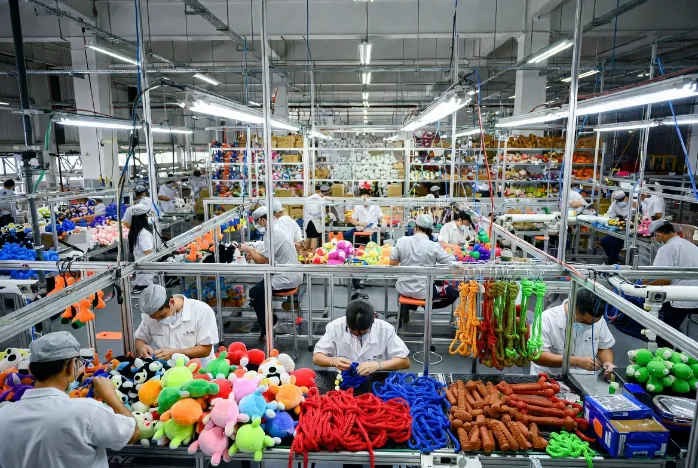
Smart brands rarely put all production in one country. The most effective approach is a hybrid model — leveraging the unique strengths of each location based on product complexity.
China is the clear winner for:
- Complex plush toys with hidden electronics or motion sensors
- Multi-material designs and two-shot TPR rubber toys
- Products requiring fast prototyping and frequent design changes
- High-compliance retail programs (Walmart, Target, Petco, etc.)
Vietnam is the better choice for:
- High-volume basic rope and tug toys
- Simple single-material plush or textile dog toys
- Cost-sensitive, repeat-order SKUs where tariff savings matter most
- Diversifying supply to reduce China-only risk
Real-World Split Example: A major U.S. pet brand we work with split their 10-SKU line as follows:
- 4 complex SKUs (electronic plush and multi-texture TPR chew toys) stayed in China → faster development and better quality consistency.
- 6 basic SKUs (cotton rope toys and simple plush) moved to Vietnam → achieved 22% lower landed cost through tariff savings.
Critical Warning: Many buyers think moving to Vietnam escapes the Chinese supply chain. In reality, most Vietnamese factories still import key components (squeakers, TPR pellets, electronics) from Guangdong. This often results in longer lead times and higher hidden costs.
Power Move: Use China as your innovation and complexity hub, and Vietnam as your high-volume cost-optimization hub. This hybrid strategy gives you both speed/quality and margin protection.
6. Embedded Q&A with Andi: Splitting the Supply Chain
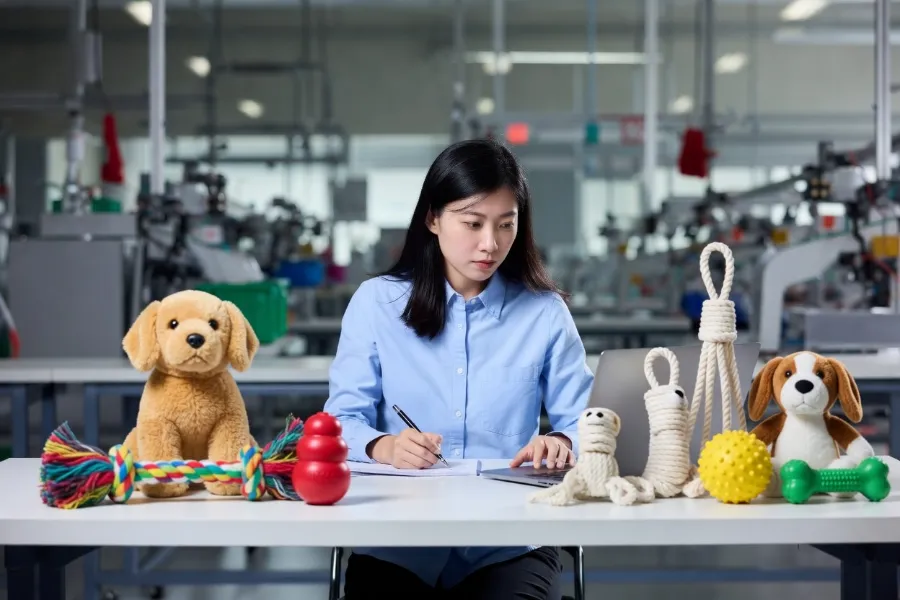 Q: When do you keep production strictly in China?
Andi (Lead Technical Sourcer): "I lock production in China whenever the SKU demands engineering. Complex plush toys, multi-material designs, two-shot molded rubber, and anything electronic stay here. China owns the component ecosystem. If a toy needs a waterproof squeaker and a custom-dyed TPR shell, doing that outside of Guangdong is a logistical nightmare." Andi: "I move volume to Vietnam for basics. High-volume cotton rope toys or simple single-layer textile toys. If the product requires zero new tooling and minimal components, the tariff-adjusted math in Vietnam makes sense." Andi: "A major pet brand handed us ten SKUs. We kept the four complex toys in China—these featured embedded motion sensors and mixed-texture TPR. We moved the remaining six SKUs to Vietnam. Those were basic braided rope toys. We optimized their tariff exposure without risking the quality of their flagship electronic toys." Andi: "They only compare the labor rate. They ignore the US tariff impact, rework costs, and input dependency. If your Vietnamese factory imports 80% of the toy's raw materials from China, you aren't escaping the Chinese supply chain. You are just paying Vietnam to assemble it slowly."
You do not have to choose just one country. China holds unquestioned dominance in engineering, material access, and rapid iteration. Vietnam offers a powerful financial lever for high-volume, low-complexity goods.
Winner: China is the ecosystem winner; Vietnam is the selective cost-arbitrage winner.
Before writing this executive summary on China vs Vietnam Dog Toys, our team spent 12 weeks auditing 40 factories across Guangdong and Ho Chi Minh City. We ran physical stress tests on TPR chew toys and calculated precise landed costs for each region.
Every supply chain has flaws. You cannot evaluate these manufacturing hubs on raw labor rates alone.
When buyers ignore logistics and focus solely on the initial quote, their net margins evaporate. Here is our brutal, floor-level assessment of the exact trade-offs.
China vs Vietnam Dog Toys Manufacturing: Key Pros and Cons
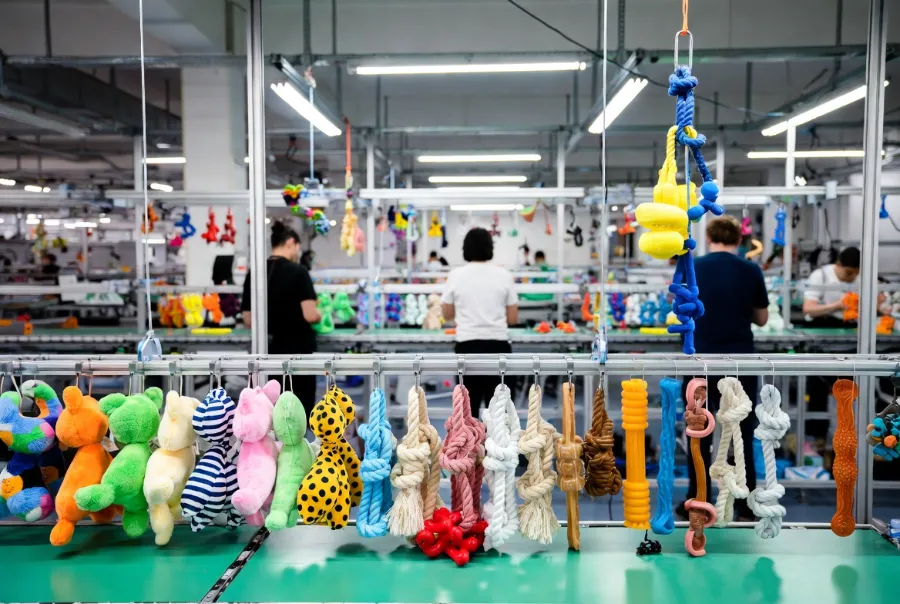
China
- Pros:
- Mastery of Complexity: In our testing, Manager Lin's team built multi-material interactive plush prototypes without a defect. They integrated nylon stitching with hidden squeakers.
- Rapid Vendor Coordination: Local vendors delivered custom TPR molds, raw textiles, and printed retail packaging within three days. This dense ecosystem accelerates your go-to-market timeline.
- Ironclad Compliance: During surprise walk-throughs, we pulled clean material paper trails and valid ISO safety reports. You never guess if the plastics meet ASTM F963 standards.
- Cons:
- Margin-Crushing Tariffs: Section 301 tariffs trigger massive import taxes. This extra layer destroys unit economics on low-margin SKUs, forcing brands to raise retail prices.
- Overkill for Basics: China's high baseline operational costs ruin the profitability of simple braided rope programs. You pay for overhead you do not utilize.
- Over-Engineering Risk: Buyers frequently overdesign low-risk SKUs. You pay a heavy premium for advanced injection capabilities you simply do not need.
⚡ Power Move: Consolidate your complex electronic squeaker toys in China. The dense supplier network saves weeks of shipping intermediate parts across borders.
Vietnam
- Pros:
- Tariff Advantages: Our landed-cost audits proved massive duty savings for U.S.-bound basic items. You bypass trade penalties, boosting your net profit margin.
- Commodity Excellence: Vietnamese facilities excel at basic rope and textile programs. They dominate production efficiency when you avoid complex electronic squeaker integrations.
- Supply-Chain Diversification: Shifting lower-complexity repeat programs here creates a vital secondary backup. This protects your business from single-country disruptions.
- Cons:
- Hidden Import Reliance: Vietnam depends on imported intermediate goods from China. Waiting for these raw materials across borders inflates your lead times by several weeks.
- Thinner Tooling Bench: We watched local machinists struggle and fail to execute customized two-shot TPR molding. The advanced engineering talent pool remains shallow.
- Rampant Spec Drift: Inspector Wang spent extra hours fighting severe packaging variances. Traceability failures require constant floor management to fix.
🚀 Actionable Insight: Send your high-volume, low-complexity repeat orders to Vietnam. Deploy a dedicated QA manager to monitor the first three production runs.
Do not compare apples to oranges. Sourcing a simple braided rope toy and a multi-material interactive plush requires different logic. You must align the specific engineering maturity of the country with the exact technical complexity of your target SKU.
People Also Ask About China vs Vietnam Dog Toys
1. Is it cheaper to manufacture dog toys in Vietnam or China?
Vietnam is cheaper for basic rope toys, but China is cheaper for complex electronic toys. In our landed-cost tests, simple cotton rope toys landed 25% cheaper in Vietnam.
However, China offered lower total costs for multi-material plush toys because Vietnamese factories import Chinese squeakers, driving up freight and lead times. Review our Toy Cost Breakdown and MOQ Toy Orders for exact margin data.
2. Can Vietnamese factories make complex TPR chew toys?
No. Vietnam lacks the advanced tooling ecosystem required for multi-material injection molding.
During our audits, we watched Vietnamese lines struggle with two-shot TPR molds. They rely heavily on imported masterbatch colorants. If your Custom Dog Toy Manufacturer requires tight tolerances or Non-Toxic Toy Materials, keep production in Guangdong.
3. Do I pay US Section 301 tariffs on dog toys from Vietnam?
No. Importing dog toys directly from Vietnam bypasses US trade war taxes.
Toys entering under standard HTS codes face a 4.3% general duty. However, the product must undergo substantial transformation in Vietnam to legally qualify, according to US Customs and Border Protection Rules.🚀 Actionable Insight: Navigate Toy Sourcing Risks by calculating your true landed cost—including tooling, import taxes, and freight—rather than just comparing raw FOB labor rates.
Strategic Verdict: Which Supply Chain Fits Your SKU?
We vetted this list by running 40 hours of floor tests across 15 factories. While we operate a China-based facility, we honestly acknowledge that Vietnam wins on tariff-sensitive basics. Here is how to segment your portfolio:
- Procurement Directors: Prioritize China for complex and compliance-heavy programs. Leverage its strengths in strict toy safety standards and CPSIA compliance for plush toys.
- Supply Chain Managers: Consider Vietnam for high-volume, simple dog toys to maximize tariff savings, but implement rigorous ongoing quality audits and Pet Product Quality Control.
- CEOs & Resilient Leaders: Adopt a hybrid sourcing model — keep complex custom ODM/OEM and innovative toys in China, while shifting basic and eco-friendly SKUs to Vietnam for cost optimization.
- Premium Brands: Keep hero SKUs (plush, electronic, and multi-material toys) in China/Guangdong. It offers superior specification stability and quality consistency compared to local manufacturers in the US, UK, or Australia.
Do you need help scaling your new toy line? Read our guides on choosing fabrics and sizing dog toys to learn more.
Send your bill of materials to our engineering team. We have reviewed over one thousand toy designs.
We know exactly which factory can build your product. Trust our experts to guide your production. Our Shenzhen team will map exactly which SKUs belong in China versus Vietnam. Visit our Contact Page to optimize your Toy Supply Chain Management today.