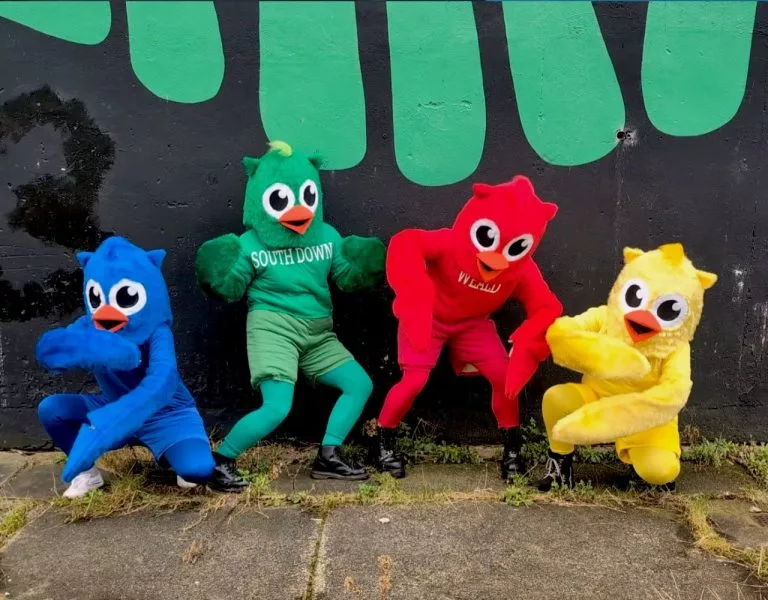

A concept sketch cannot predict if a performer will faint from heatstroke. To list the best custom mascot manufacturers in UK, we ignored the marketing fluff.
We evaluated studios based on commercial durability, vision lines, and safety compliance standards. As a manufacturer, I know that poor ventilation and weak seams ruin events.
We prioritized fabricators who handle repairs in-house. Use this technical shortlist to find a partner who guarantees comfort and longevity.
List of Custom Mascot Manufacturers in UK
| Company | Location | Core Products | Key B2B Highlights |
|---|---|---|---|
| Jellyhead Studios | UK | Bespoke mascots, props, and puppets | Specializes in high-end, highly detailed custom builds for brands and marketing campaigns. |
| Mascot Makers | UK / Global | Custom mascot costumes, custom plush toys | Offers a complete package from 2D concept to 3D mascot, plus bulk manufacturing of matching retail plush toys. |
| Rainbow Productions | UK | Bespoke mascots, licensed character appearances | Industry leader; offers licensed character management for events, plus comprehensive cleaning and refurbishment services. |
| Premier Mascots | UK | Custom mascots, character costumes | Focuses on corporate, sports, and charity mascots. Provides ongoing maintenance, cleaning, and repair services. |
| Picture to Puppet | UK (Scotland) | Custom puppets, soft toys, small batch production | Ideal for authors, illustrators, and smaller B2B projects. Offers CE/UKCA testing for safety compliance. |
| Frenzy Creative | UK | Promotional costumes, bespoke mascots | Uses advanced 3D CAD modeling software, allowing B2B clients to visualize and approve designs accurately before production. |
| Character Mascot | UK | Custom mascot manufacturing | Focuses on brand representation for schools, sports teams, and corporate events with lightweight, breathable materials. |
| Promotional Props & Costumes | UK | Experiential marketing props, PR costumes | Highly focused on PR agencies and marketing campaigns; builds unique, out-of-the-box promotional items and immersive props. |
| Loonie Times | UK | Custom mascot costumes, plush toys | Strong presence in North America. Caters to corporate brands, schools, and sports teams with design, production, and plush toy replicas. |
| Costumes with Character | UK | Corporate mascots, leisure/theme park costumes | Specializes in durable costumes for theme parks, holiday resorts, and sports clubs. Known for high durability for daily B2B use. |
1. Jellyhead Studios
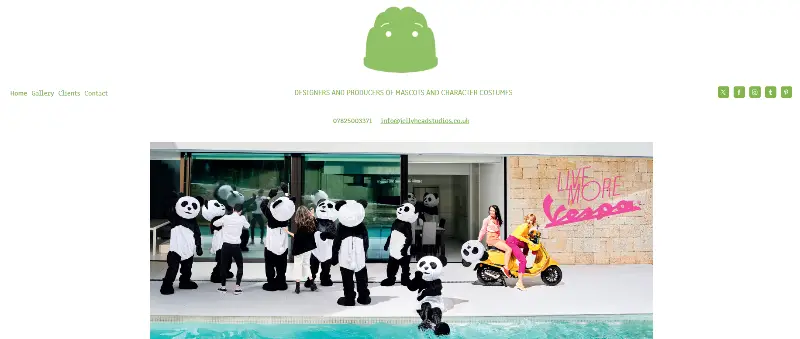
Best for: Bespoke characters and lifecycle maintenance.
Most buyers ignore the long-term maintenance costs of a mascot. I recommend Jellyhead Studios because they treat the costume as an asset, offering bespoke creation alongside a dedicated "Mascot Hospital."
When reviewing their work, look past the perfect studio lighting. Check their "real-world" event photos to verify fur consistency and how well the vision ports hide the performer.
Key questions to ask:
- 3D Process: Do they model concepts in 3D? This catches design flaws early.
- Ventilation: What active or passive cooling options do they use?
- Refurbishment: Can they replace specific wear items like zips, linings, and internal mesh?
Their aftercare service is the differentiator. Instead of buying a new suit every three years, you can extend the prop's life through its cleaning and repair programs.
🛡️ Author's Take: Prioritizing aftercare saves your budget. Confirm their repair warranty and lead times before signing—workshops often hit capacity just before major sporting seasons.
2. Mascot Makers
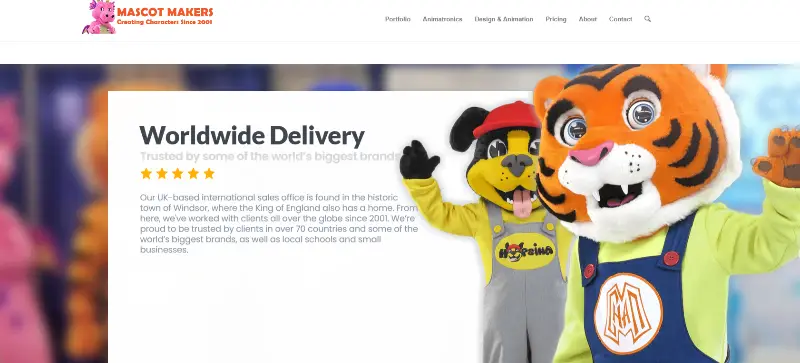
Best for: Marketing managers and club admins who need a predictable path from concept to delivery.
I recommend Mascot Makers for buyers who want a "set and forget" workflow. Unlike studios that leave you guessing, they prioritize responsiveness and clear milestones. Their portfolio shows a strong grasp of proportion consistency and movement-friendly design—essential if your performer needs to dance or run.
When vetting their work, I look for these usability signals:
- Sight Lines: Are vision ports integrated seamlessly or are they clumsy cutouts?
- Ventilation: Does the head unit manage heat exchange effectively?
- Independence: Can one person change in and out unassisted?
Quote Hygiene: Don't just look at the bottom line. Compare the "all-in" value. In my experience, cheaper quotes often exclude essentials like cooling vests, carry bags, or spare shoes. Always ask if spares and repairs are included.
🛡️ Our Verdict: Good communication prevents bad products. The most critical signal I look for is strict approval gates. Ensure the studio requires your sign-off on the clay sculpt before cutting any fur. If a studio tries to skip this step to save time, you risk a final product that looks nothing like your concept art.
3. Rainbow Productions
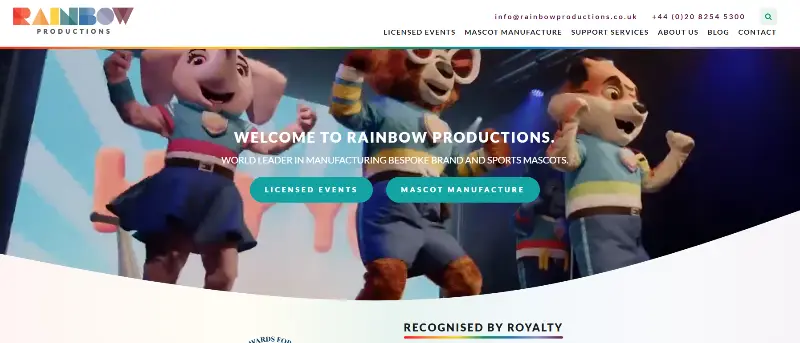
Rainbow Productions builds long-term brand assets, not just costumes. They are the strategic choice for sports organizations where visual consistency across multiple units is non-negotiable.
From a manufacturing perspective, their execution is "camera-ready." I look for high-density fabrics and invisible seam work that withstand HD broadcast lighting. If you order five versions of a character for a nationwide tour, their replication tolerances are tight—ensuring exact Pantone matching and silhouette uniformity across every unit.
Operational Readiness: Focus your vetting on performer support. Ask specifically about active ventilation systems and "second suit" backup protocols. Standard mascots often trap heat, but Rainbow's athletic builds feature internal structures designed for mobility during high-energy events.
🛡️ Our Verdict: Durability lowers Total Cost of Ownership. High upfront costs pay off. In our analysis, cheaper EPS foam suits degrade within 24 months of heavy rotation. Rainbow's structured builds withstand the physical friction of weekly sports performances, preventing the need for annual replacements.
4. Premier Mascots
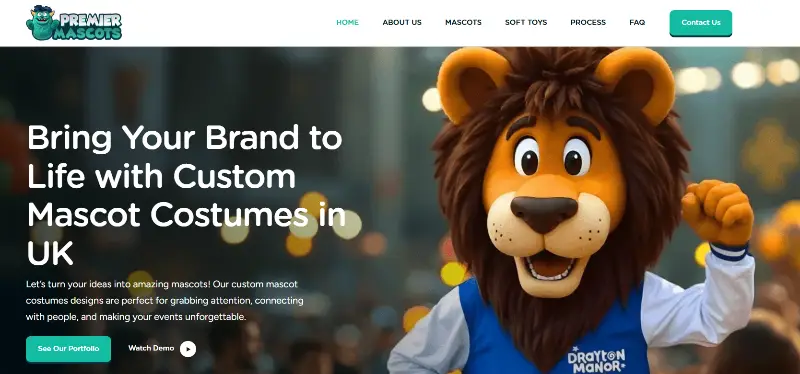
This option suits schools and clubs that plan procurement months in advance. Premier Mascots provides a detailed bespoke route, but you cannot rush the engineering.
Timeline Reality Check: Map approvals backward from your event. If you need a kit reveal in September, you must sign off on designs by May. Real manufacturing takes time.
Technical Build Prompts
- Durability: High-contact events rip weak seams. I always check stitching at stress points (underarms, knees) and request replaceable rubber soles to extend the suit's life.
- Comfort: Heat management determines performance. Ask specifically about ventilation ports and vision mesh placement to prevent performer fatigue.
🛡️ Our Verdict: Respect the critical path. A quality bespoke build requires 12 to 16 weeks. Be skeptical of studios promising 4-week turnarounds; in my experience, they often skip essential foam curing or pattern grading steps.
🚀 Buying Tip: Request an apples-to-apples quote that lists specific deliverables, a milestone schedule, and shipping terms (like DDP) to avoid hidden import fees.
5. Picture to Puppet
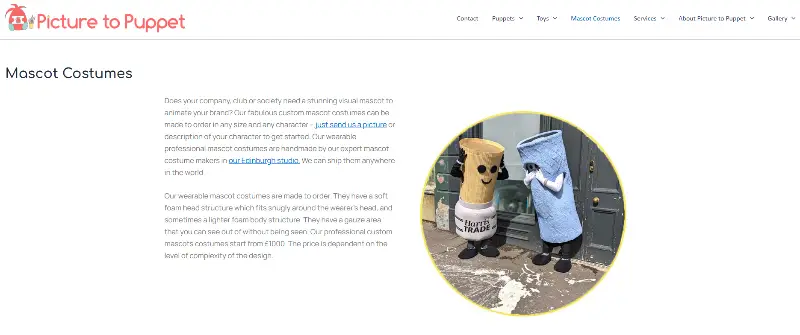
2D illustrations often cheat physics. A massive head on a tiny neck works on paper but creates a structural nightmare for the performer. Picture to Puppet excels at solving this specific engineering gap.
They are the best choice for teams with existing 2D artwork—like a brand character or school crest—that needs faithful translation. When I evaluate their portfolio, I look for how they handle "impossible" features. They successfully engineer tricky elements, like heavy beaks or large horns, without making the head dangerously unbalanced.
This focus on performance engineering ensures safe visibility and prevents neck strain. They also address the practical side of ownership by offering durable storage bags and repair services. This maintenance support is critical, as even high-quality foams degrade without proper care during transport.
🛡️ Author's Take: Never approve a flat sketch for production. Insist on a 3D clay maquette or digital render. In my manufacturing experience, this is the only way to catch blind spots and balance issues before you pay for the final foam cutting.
6. Frenzy Creative
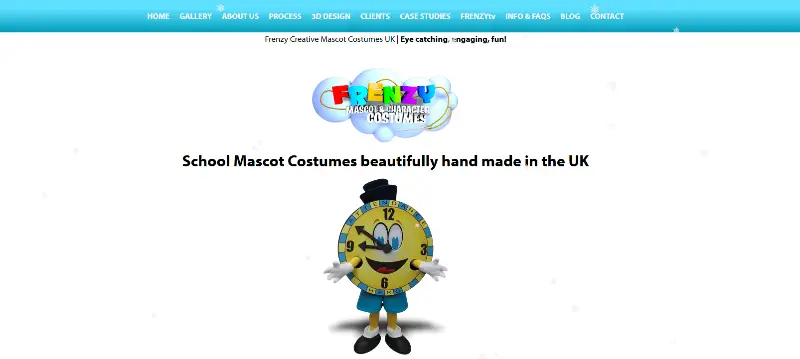
Frenzy Creative is ideal for marketing teams that want UK manufacturing combined with a modern risk-reduction workflow.
Most manufacturers rely on 2D sketches, which often hide engineering flaws. Frenzy uses a 3D design stage to validate sight lines, head scale, and movement clearance before fabrication.
In my projects, I've found that fixing a proportion issue digitally is free, whereas fixing it on the production line causes expensive delays. This ensures the final mascot is both comfortable and visually accurate.
Portfolio and aftercare: Review their gallery for fur finish consistency and seam quality. As a UK-based shop, they offer accessible maintenance, but you should confirm repair turnaround times during peak seasons to avoid downtime.
🛡️ Our Verdict: Use the 3D phase to check "accessory placement." I've seen mascots where a backpack blocks the performer's range of motion. Catching this digitally prevents ergonomic issues.
7. Character Mascot
I recommend Character Mascot for sports clubs and event coordinators who need reliable performance during high-tempo appearances. A costume that looks great in a photo but trips on the stairs is a liability.
When I vet a builder for active duty, I prioritize function over fluff. I specifically test mobility on stadium steps and hand dexterity.
Can the performer grip a t-shirt cannon or high-five a child? If the vision ports limit peripheral sight, the suit creates a safety hazard in crowds.
You must also check durability details. Ask how the manufacturer reinforces high-wear zones like soles and knees.
I insist on clear cleaning protocols because sweat destroys foam. If you cannot wash the lining or store the head without crushing it, the costume will degrade quickly.
🛡️ Our Verdict: Look beyond the initial price tag. Ensure the quote specifies included accessories like carry bags, cooling vests, and spare parts. It is much cheaper to replace a rubber sole than an entire foot unit.
8. Promotional Props & Costumes
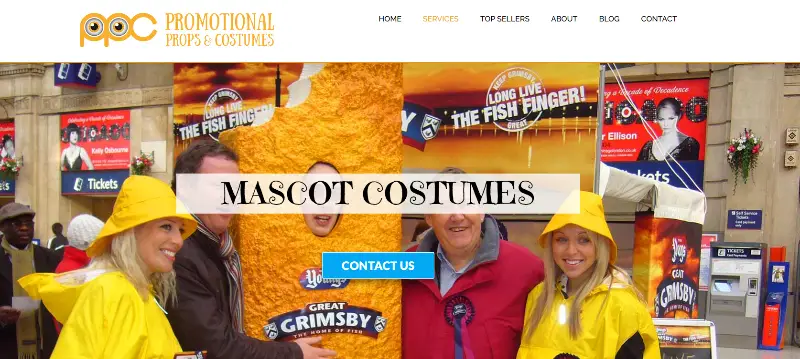
Best for: Integrated activations (Mascot + Props + Set Pieces).
If your activation requires a character holding a giant branded product or interacting with a set, I recommend Promotional Props & Costumes (PPC). Sourcing costumes and props from separate vendors often creates visual dissonance.
The "Integrated Build" Advantage: In my manufacturing experience, matching Pantone colors across different textures—like hard foam props versus soft plush fur—is nearly impossible with separate suppliers. PPC centralizes production, ensuring your character and props look like they belong in the same universe.
Logistics & Scoping: Complex builds fail during transport. I prioritize fabricators who design flight cases specifically for standard transit vans, not just shipping containers. You must also request an "on-site fix kit." Props get dropped. A kit with color-matched paint and quick-set glue saves the event.
🛡️ Our Verdict: The Budget Split: Prioritize the performer. When scoping a multi-asset project, it is easy to overspend on flashy props. I advise clients to lock in "must-have" costume specs (ventilation, vision) first. Treat props as "nice-to-haves." A static prop works fine; a fainting performer ruins the campaign.
9. Loonie Times
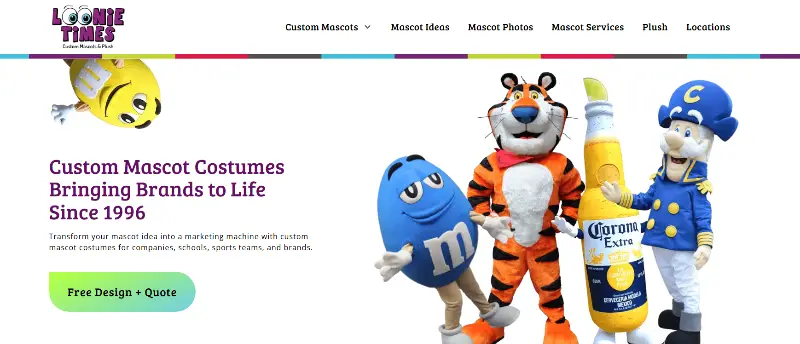
Best for: Brands requiring high memorability and strong character personality.
A bland mascot wastes budget. Loonie Times excels at silhouette readability—ensuring your character is distinct from 20 meters away.
Engineering reality check: Big personality usually means heavy foam structures. In my experience, top-heavy masks strain the performer's neck. You must verify that the internal helmet strapping is fully adjustable and vision ports align perfectly with the performer's eyes.
Maintenance & usage: High-volume suits trap heat. Plan for strict 20-minute performer limits to prevent overheating. Also, ask specifically about scuff repair. Large, smooth surface areas on bold characters show dirt instantly. You need a cleaning protocol that handles surface stains without waterlogging the inner foam core.
🛡️ Author's Take: The "Squint Test": Test the design before you build. I advise clients to squint at the concept art until it blurs. If the character's shape isn't instantly distinctive, send it back for exaggerated proportions.
10. Costumes with Character
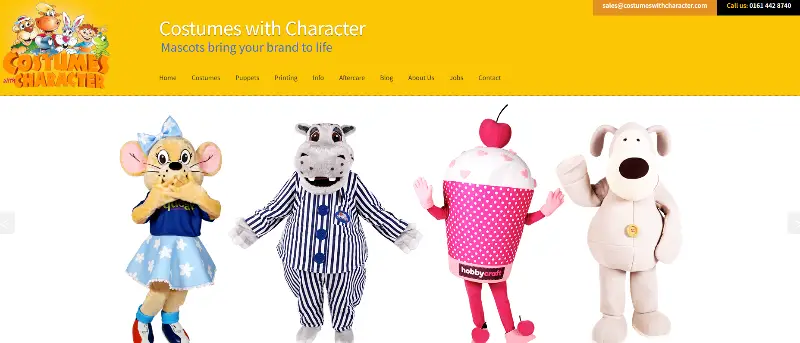
Best for: Schools, clubs, and organizations with rotating performers.
Schools often struggle when volunteers change weekly. I recommend Costumes with Character because their adjustable internal harnessing allows a suit to fit a 5'5" student or a 6'0" adult without distorting the character's shape.
Their real value is archival consistency. Unlike rapid-turnaround workshops, they archive material swatches for every build.
When I've managed long-term mascot programs, this attention to detail meant that a repair done three years later matched the original fur exactly. This prevents the "patchwork" look that often plagues older mascots after a few seasons.
For hygiene, they prioritize removable, washable linings and high-flow ventilation. This is critical for multi-user safety. I also recommend asking about their refurbishment cadence; scheduling a seasonal deep clean extends the suit's life significantly.
🚀 Actionable Insight: Request a "Build Bible." Ask for a written spec summary listing exact material codes and care instructions before production starts. This simplifies internal approvals and ensures future refurbishments match your brand standards perfectly.
Your 7-Step Mascot Procurement Action Plan
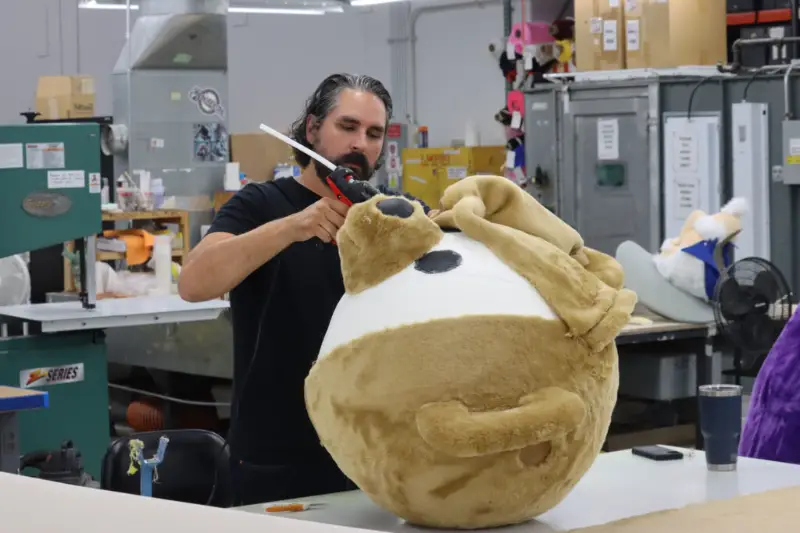
You have a shortlist of studios. Now you need to vet them.
We use this specific checklist to filter out hobbyists from professional fabricators. Follow these steps to protect your budget and your performer.
Step 1: Audit the Portfolio (Look Closer)
Do not just browse the gallery. You must audit the build quality. We zoom in on high-resolution photos to check the finish.
Check these specific details:
- Seam Consistency: Look for flat, hidden seams. Bulky or visible stitching suggests a lack of professional finishing tools.
- Expression Readability: The character must look friendly from 10 meters away.
- Real-World Context: Look for photos taken at rainy football matches. Studio lighting hides flaws that daylight reveals.
- The "Cookie-Cutter" Test: If every character in their portfolio has the exact same body shape but different colors, they likely use generic base suits. You want a custom build, not a recolored template.
Step 2: Lock Down the Workflow
Professional manufacturing requires a map. Ask the studio for their written process document. It must include these exact phases: Brief, Concept, 3D Render, Approvals, Build, and QA.
Insist on strict "approval gates." Do not let them cut foam until you sign off on the 3D model. If you do not understand how these stages work, read our guide on toy prototyping methods. It shows what a standard approval cycle looks like.
Step 3: Define Performer Comfort Specs
A mascot is a work uniform. If it is not comfortable, your performer will not wear it. Treat this as a "minimum viable pro build."
Require these specifics:
- Ventilation Strategy: Ask if they use active 12V exhaust fans or passive airflow through the mouth and ears. Heat exhaustion is a serious risk.
- Weight Balance: The head must sit on the shoulders. It should not hang off the neck.
- Visibility: Demand a wide field of view. Mesh offers better airflow than acrylic eyes.
Step 4: Plan for Repairs Before You Buy
Foam degrades. Zippers break. You need a maintenance plan before you pay the deposit.
- "Do you offer an annual deep clean service?"
- "What is your turnaround time for minor repairs like torn seams?"
- "Do you repair suits made by other manufacturers?"
Define your cleaning cadence now. Spot clean with enzymatic cleaners after every event. Schedule a professional refurbishment once a season.
Step 5: Ask About UK Safety Standards
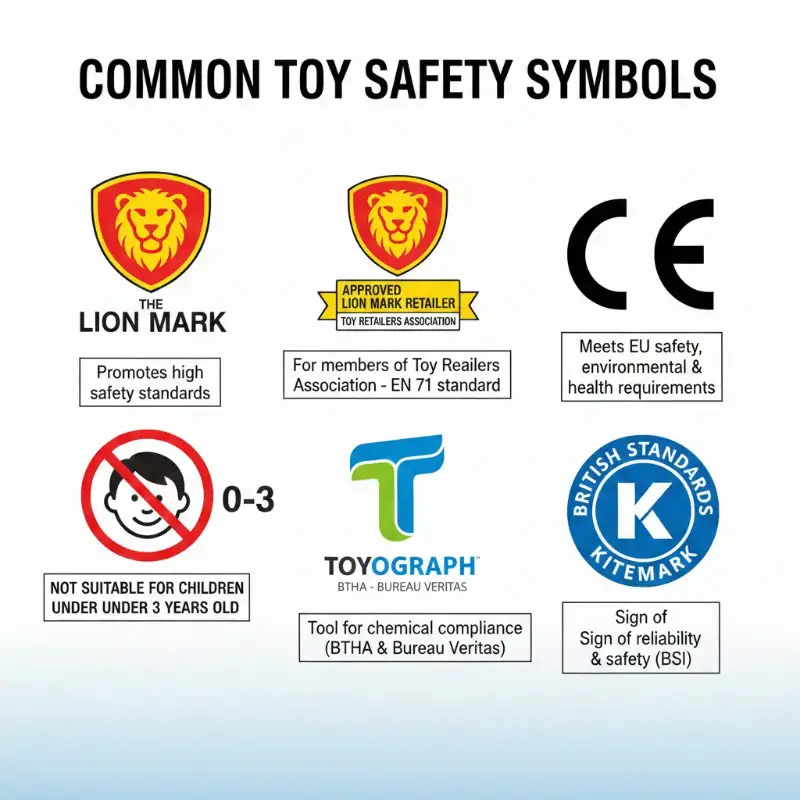
This is critical for schools and sports clubs. You have a duty of care to your staff and the children they interact with. Ask the vendor what safety standards they support.
Specifically, ask about compliance with EN 71-2. This is the standard for flammability in toys and costumes.
You can verify the specifics of these regulations on the UK Legislation website. Also, confirm they provide correct warning labels. For a deeper look at the rules we follow, review this breakdown of toy safety standards.
Step 6: Secure Your Intellectual Property (IP)
Many buyers miss this step. Who owns the patterns? If you part ways with this vendor, you must be able to take the design to another factory.
Include this clause: Ensure your contract states that you own the final character files, digitized patterns, and likeness rights. This allows you to commission a second suit or promotional merchandise from any supplier you choose.
Step 7: Use a Quote Comparison Template
Price does not equal value. One quote might be £2,000 cheaper but exclude shipping and storage cases. Use a standardized list to compare vendors fairly.
Ask each vendor to itemize:
- Inclusions: Gloves, shoes, internal fans, and carry bags.
- Spares: Do they include extra shoe soles?
- Shipping: Is it DDP (Delivered Duty Paid) or FOB? DDP is safer as the vendor handles customs.
- Warranty: What does it cover?
If you struggle to shortlist reliable vendors, use the vetting techniques in our guide on how to find a toy manufacturer.
Need Technical Help?
Translating a 2D drawing into a wearable, safe product is complex. If you need help turning your character into a manufacturing-ready specification with clear QA checkpoints, contact us. We help you build it right the first time.
FAQs About Custom Mascot Manufacturers in UK
1. How long does it take to make a custom mascot costume in the UK?
A professional bespoke build typically takes 8 to 12 weeks. In my experience, any studio promising delivery in under 4 weeks cuts corners.
They often skip critical steps like allowing foam glue to cure or properly grading the pattern for movement. You must factor in at least three weeks for the "approval loop" alone. This includes signing off on the 3D design, material swatches, and the clay sculpt before production begins.
2. What should be included in a professional mascot quote?
Never accept a single bottom-line number. A complete commercial quote must list every component to avoid hidden costs later. Ensure your quote includes:The Costume: Head, body suit, hands, and two pairs of feet (indoor and outdoor soles).Performer Safety: Internal cooling vest or head ventilation fan.Logistics: A durable carry bag or flight case.Aftercare: A repair warranty (usually 12 months) and cleaning instructions.Shipping: Delivered Duty Paid (DDP) terms if the factory is outside the UK.
3. Do schools need specific safety documentation for mascot costumes?
Yes. You have a duty of care to the performer.
Schools should request a flammability test report (often referenced against EN71-2 standards) for the fur and foam. You also need a written Risk Assessment from the manufacturer.
This document must outline visibility limits and maximum wear times to prevent heat exhaustion. I advise clients to treat the costume as heavy machinery. Do not let students wear it without a spotter.