
For an Amazon FBA seller, a 50,000-unit holiday drop is a make-or-break moment. One missing component triggers returns that kill listing visibility. For a brand managing subscription box fulfillment for toys, a delay in assembling multi-part figures means missing a non-negotiable monthly deadline.
These are not just logistics errors. They are profit killers.
Kitting services for toys are often treated as a commodity, but they act as your final line of defense. At its core, kitting is the process of compiling individual items into a ready-to-ship package. However, for toys, this requires precise toy assembly and packaging to meet strict safety protocols.
Here, we explain the difference between factory-level kitting and destination 3PLs, the specific QA controls you must demand, and how to execute complex promotional toy kits without the risk. If you need an immediate spec review, you can request one today.
What are Kitting Services for Toys?
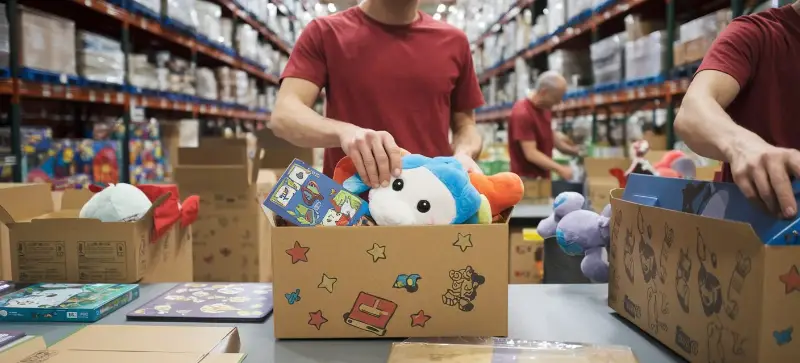
Kitting services for toys are the manufacturing processes that consolidate loose components—plastic parts, manuals, and accessories—into a single, saleable unit (one SKU).
Think of a LEGO set. It isn't just a random assortment of plastic; it is a precise count of bricks, decals, and instructions, bagged and boxed together. Without kitting, you simply have a bin of raw parts.
What the process includes
On our assembly lines, kitting transforms raw output into retail products through three steps:
- Assembly & Verification: We follow the BOM (Bill of Materials) to snap-fit parts, insert batteries, and verify counts (e.g., ensuring a board game has exactly two dice).
- Custom Bundling: We combine distinct products—like a doll and an extra outfit—into a unique "bundle" SKU.
- Retail Readiness: We apply barcodes, inner pack labels, and the mandatory tracking labels required by the CPSC.
Where kitting happens
New sellers often waste budget by shipping loose parts to the US for assembly. In our experience, location determines your margin:
- Factory-Level (China): The most efficient method. We kit goods during final production, often for pennies per unit.
- Forwarder Kitting: Best for minor, last-minute packaging tweaks before ocean freight.
- Destination 3PL: Flexible for swapping items, but US warehouse labor often costs $1.50+ per pick.
🌍 Real-World Context: Move kitting upstream. Finalizing the pack configuration in China allows you to ship retail-ready packaging directly to FBA, bypassing expensive local prep centers. For deeper details on compliance, review our toy safety baseline.
Core Concepts: The Mechanics of Factory-Level Kitting
To execute a 50,000-unit run without missing a single component, you must stop viewing kitting as "packing boxes." You must view it as a synchronized manufacturing cell.
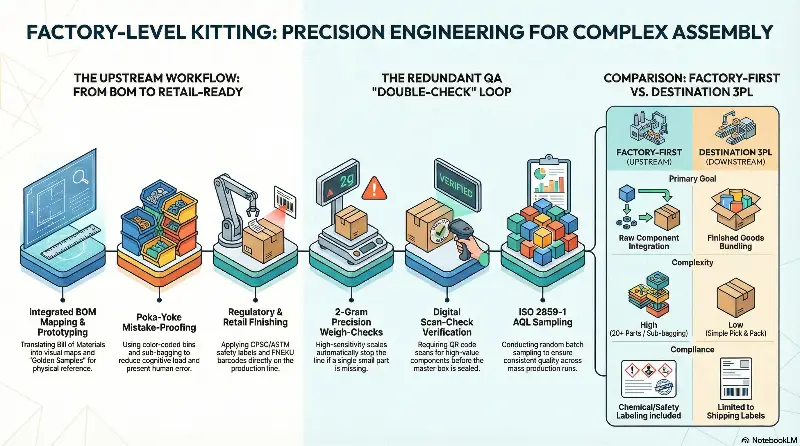
We engineer a workflow where Inputs (loose components) flow through a Process (assembly, verification, sealing) to create a Output (a retail-ready SKU). Below is the architectural breakdown of how this system functions on the factory floor versus a destination 3PL.
A. The Factory-First Workflow (China)
We operate upstream, handling raw materials before they become finished goods. This allows for chemical and physical integration that 3PLs cannot match.
- The "Recipe" (BOM & Inputs): We translate your Bill of Materials (BOM) into a visual map. We assign exact Component IDs to every screw, decal, and manual. If your kit involves complex assembly, we generate photo-based work instructions for every station.
- Golden Sample Prototyping: Before mass production, we build a Golden Sample. This physical reference defines the standard: the instruction fold, the figure orientation in the Blister Tray, and the twist-tie tension. We validate fit and drop-test resilience during the toy prototyping phase.
- Material Staging & Poka-Yoke: We organize components into color-coded bins. To prevent mix-ups, we use Poka-yoke (mistake-proofing). For example, a square battery pack receives a square bin slot, physically preventing a worker from grabbing the wrong voltage pack.
- Assembly & Micro-Component Insertion:
- Scenario (The "20+ Parts" Problem): A kit with 20 loose tokens invites human error.
- Solution: We implement Sub-Bagging. We heat-seal "Part Family A" and "Part Family B" into separate sub-bags upstream. The final assembler simply inserts "one Bag A" and "one Bag B," reducing cognitive load and driving error rates to near zero.
- Compliance Labeling: A toy is not a legal product until labeled. We apply Tracking Labels (manufacturer/location/date) directly to the product and packaging in accordance with CPSC guidance. We verify that ASTM F963 (US) or EN71 (EU) age warnings are visible through the shrink wrap.
- Retail Finishing: We apply the FNSKU (Amazon barcode), hang tabs, and tamper-evident seals. The unit leaves the line ready for the shelf.
B. Contrast: The Destination 3PL Workflow
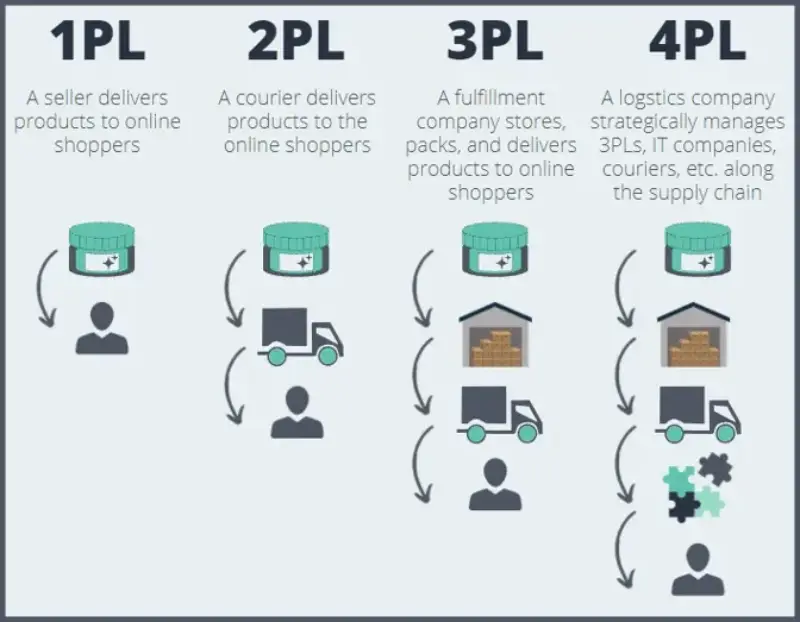
A 3PL (Third-Party Logistics) provider typically operates downstream. Their workflow involves receiving finished goods, picking them from inventory, and placing them into a shipping box.
- Use Case: Best for bundling two finished products (e.g., a "Shampoo + Conditioner" bundle).
- Limitation: They cannot handle raw component assembly, complex folding, or chemical safety labeling without significant cost premiums.
C. QA Protocols: The "Double-Check" Loop
Trusting a human count is risky; trusting a calibrated sensor is engineering. To prevent empty boxes, we implement a redundant verification loop.
- Weigh-Check: We program high-sensitivity scales with the exact weight of the Golden Sample. Every sealed kit passes over this scale. If a unit is light by even 2 grams (the weight of a missing die), the line stops automatically.
- Scan-Check: For high-value items, workers must scan the QR code of each sub-component before the system allows them to seal the master box.
- AQL Sampling: We use ISO 2859-1 standards to pull random samples from every batch.
D. Cost, MOQ, and Lead Time Logic
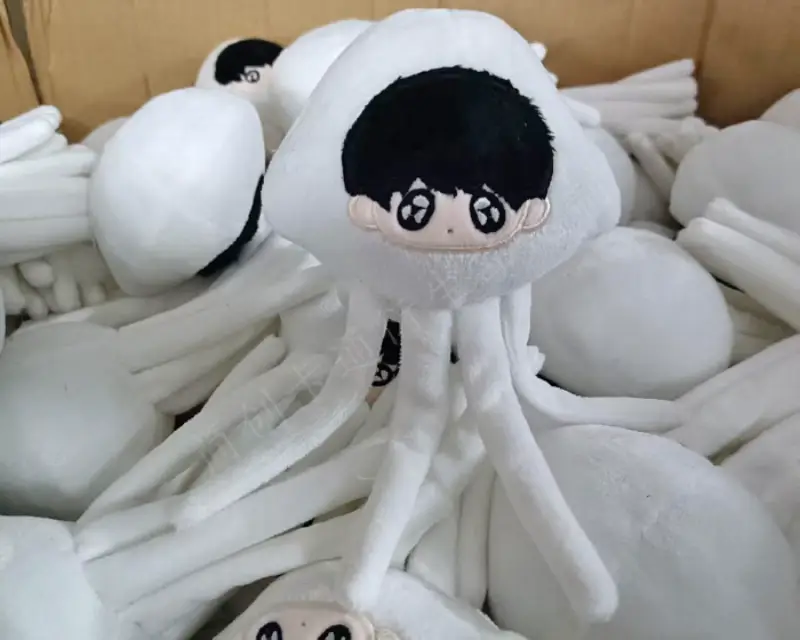
When you request a quote, we calculate Unit Labor Cost based on time and motion studies.
The Quote Formula:
Cost per Kit = (Seconds per Step × Total Steps × Labor Rate) + Material Cost + Overhead
MOQ Realities: Minimum Order Quantities are rarely dictated by assembly labor. They are dictated by packaging. Custom printed boxes often require a 1,000+ unit run to be cost-effective. We mitigate this by offering pilot runs using stock packaging with custom stickers until volume scales.
Lead Time Factors: The bottleneck is usually the Custom Packaging Supply Chain—thermoformed trays and printed boxes can take 15–20 days to manufacture. We run this process parallel to toy production so packaging arrives exactly when toys are ready for insertion.
⚙️ Technical Detail: Sourcing packaging in China is its own mini-supply chain. We verify Pantone color matching and card stock thickness (e.g., 350gsm vs 300gsm) to ensure the physical unboxing experience matches your digital design. See our packaging quality standards.
Key Benefits: Why Upstream Kitting Drives ROI
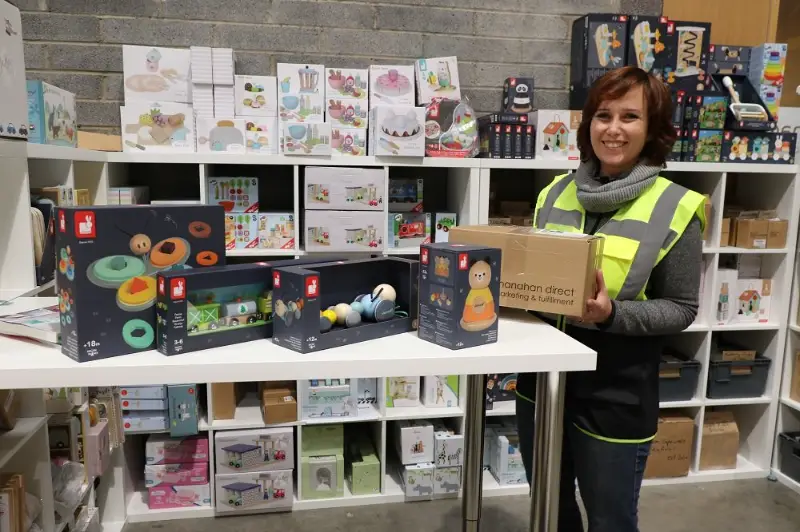
Upstream kitting transforms logistics from a variable cost center into a fixed competitive advantage. Moving assembly to the factory floor optimizes your supply chain before goods ever leave China.
Lowers Total Handling Costs
Consolidating components upstream drastically reduces toy distribution logistics expenses. Instead of paying a 3PL $2.50 to pick and pack five separate items, you pay a single "unit" fee for one pre-assembled SKU.
According to Gartner, upstream SKU consolidation can reduce warehousing operational costs by over 20%. You pay for one touchpoint, not five.
Accelerates Seasonal Scaling
Capacity planning often fails at local prep centers during Q4 surges. We produce, kit, and label simultaneously.
A 50,000-unit run leaves our factory sealed and ready for immediate induction. You bypass the standard 2-week "prep queue" at Amazon FBA, ensuring stock goes live the moment it docks.
Guarantees Retail-Ready Consistency
Loose items lead to damage claims. We enforce photo-verified SOPs for white label toy packaging to ensure rigid consistency.
This prevents "used sold as new" returns and elevates the unboxing experience. See our toy product packaging standards for details on quality control.
Stabilizes Subscription Economics
For subscription box fulfillment for toys, variable 3PL labor rates destroy margins. We lock in pricing for complex promotional toy kits upfront. Kitting becomes a predictable COGS line item rather than a fluctuating warehouse bill.
Final Verdict: The Strategic Blueprint for Kitting
Effective kitting is not merely a logistics task; it is the final, critical stage of manufacturing. Treating it as an afterthought introduces risks that destroy margins—from missing components to costly compliance recalls.
Our experience confirms that the winning formula is rigid and sequential: Define the BOM, Prototype the Kit, Lock Compliance, Enforce QA, Pilot, then Scale.
While the rigidity of factory-level kitting reduces last-minute marketing flexibility, the payoff is absolute consistency. For brands scaling beyond 1,000 units, the cost savings of upstream assembly in China far outweigh the agility of a local 3PL. We recommend prioritizing a "Golden Sample" approval process to ensure the product unboxing experience matches your digital design exactly.
Ready to build your kit? Get a Quote.