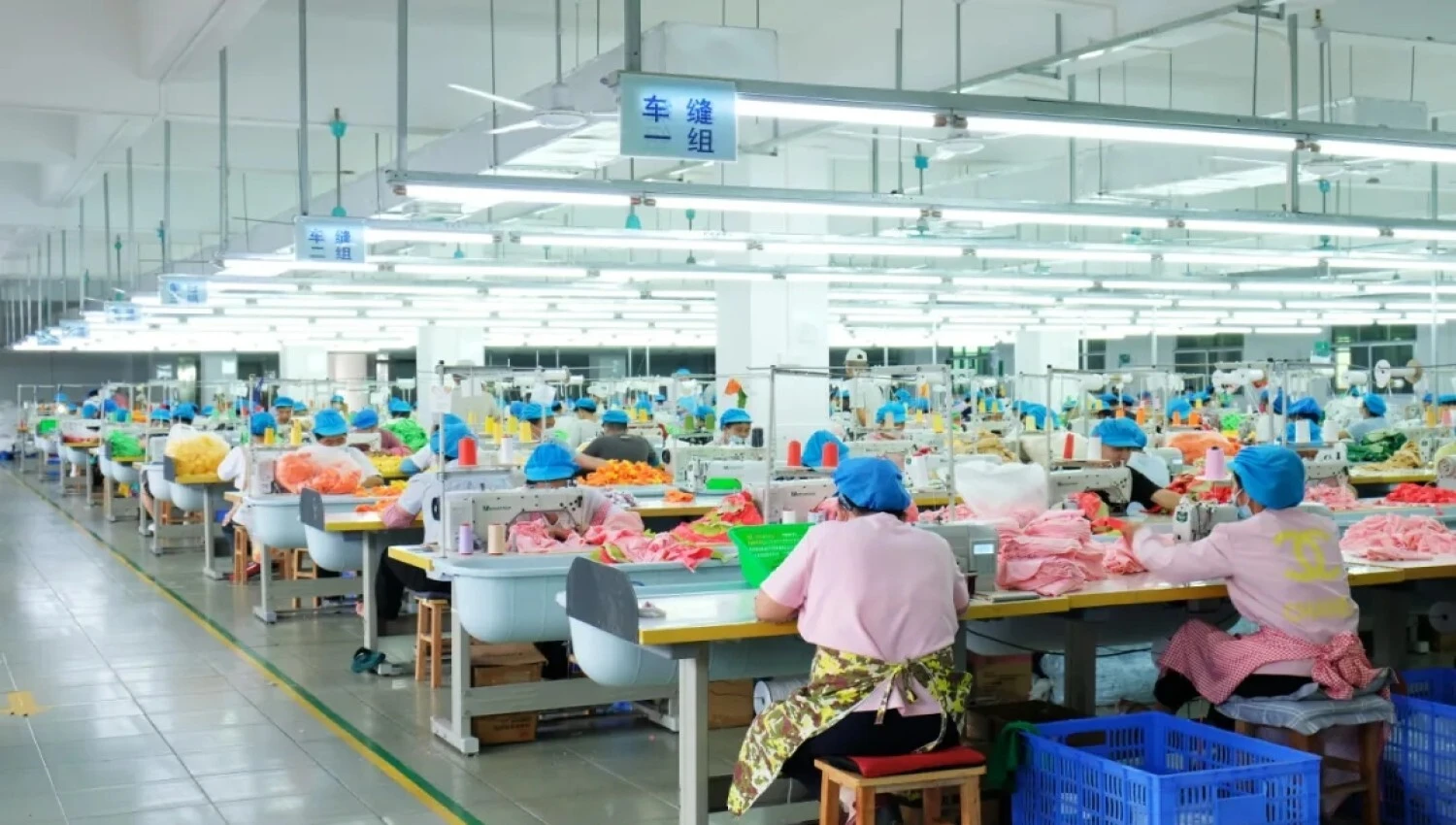

Moving from a handcrafted prototype to mass production is one of the biggest leaps in toy manufacturing — and one of the most misunderstood. That perfect sample you stitched together in your studio? It was never designed to be made ten thousand times on a factory floor.
The Prototype Illusion
Your prototype proves your idea works. It shows investors and buyers what the final product could look like. But it doesn't tell you anything about manufacturability.
A prototype is typically made with:
- Hand-cut patterns that haven't been graded for different sizes
- One-off materials that may not be available at scale
- Hours of manual labor that can't be replicated on a production line
- No consideration of safety testing requirements
The challenge isn't making one — it's making ten thousand that are all identical.
What Changes at Scale
Pattern Engineering
Hand-drawn patterns need to be digitally graded and optimized for cutting efficiency. A pattern that wastes 2% of fabric on one unit wastes 2% on ten thousand units — and that adds up fast. Professional pattern engineering can reduce material waste by 15-20%.
Material Substitution
That specialty fabric you found at the local craft store likely isn't available in the quantities you need. Factory sourcing means working with materials that:
- Are available in bulk (hundreds to thousands of meters)
- Meet safety standards (flammability, heavy metals, phthalates)
- Maintain consistency across dye lots
- Arrive on a reliable supply schedule
Safety Compliance
This is the one that catches most first-timers off guard. Every component — from the outer fabric to the thread to the stuffing — needs to pass safety testing for the target market. EN71 for Europe, ASTM F963 for the US, ISO 8124 internationally. That cute button eye? It needs a pull test. That scented stuffing? It needs chemical analysis.
The Solution: Design for Manufacturing
The smartest toy inventors bring manufacturing expertise in early. Before you finalize your prototype, talk to a factory partner about:
- Material options that meet your aesthetic and safety requirements
- Construction methods that scale efficiently
- Cost drivers you can optimize without sacrificing quality
- Testing requirements for your target markets
A good factory partner doesn't just execute your design — they help you design something that can be executed. That's the difference between a beautiful prototype and a successful product.